Leaf propagation is one of the most fascinating and satisfying techniques available to gardeners, allowing new plants to be generated from a single leaf or leaf section with minimal equipment and surprisingly little horticultural expertise. The ability of certain plants to regenerate an entire new individual from a single leaf reflects the remarkable totipotency of plant cells — the capacity of an individual cell to develop into any type of cell and ultimately into a complete organism — a capacity that is more readily expressed in some plant groups than in others. This remarkable biological capability has been exploited by gardeners and plant breeders for centuries, allowing the rapid multiplication of prized plants at minimal cost.
The success of leaf propagation varies considerably between plant species and depends on specific physiological factors including the concentration of natural rooting hormones within the leaf tissue, the plant’s natural tendency toward vegetative reproduction, and the conditions under which propagation is attempted. Studies in commercial propagation have found that success rates for leaf cuttings can exceed 85% in the most easily propagated succulent species when appropriate technique is used, while the same basic approach applied to plants less suited to leaf propagation might yield success rates of zero. The concentration of auxins, the primary rooting hormones in plants, within leaf tissue is a key determinant of whether a given species will root readily from leaf cuttings.
The commercial importance of leaf propagation is considerable, particularly within the succulent and houseplant industries where the technique is widely used to generate large quantities of new plants economically. The global houseplant market, which has grown dramatically in recent years particularly among younger consumers, relies heavily on cutting and leaf propagation techniques to produce the volumes of plants required to meet demand at accessible price points. A single established echeveria, for instance, can potentially yield dozens of new plants through leaf propagation within a single growing season, a multiplication rate that would be impossible through division and impractical through seed propagation for many cultivated varieties.
The following overview explores 30 plants that can be successfully propagated from leaves, ranging from familiar houseplants to specialist succulents and garden perennials, providing practical insight into one of horticulture’s most magical processes.
Also Read: Plants That Reproduce By Spores
Best Plants For Propagation From Leaf Cuttings
Echeveria
Echeveria is perhaps the plant most commonly associated with leaf propagation, with individual leaves gently removed from the rosette and laid on the surface of dry, gritty compost developing tiny plantlets from their base within a few weeks. This process is so reliable and straightforward that it has become many gardeners’ first leaf propagation experience.
The leaf should be removed by gently twisting it free from the stem to ensure the entire leaf base is intact, as leaves broken off partway along their length without the basal meristematic tissue will not produce plantlets. Within two to four weeks of laying the leaf on dry compost, tiny pink roots will emerge from the base followed by a miniature rosette that gradually grows as the parent leaf shrivels and eventually dies.
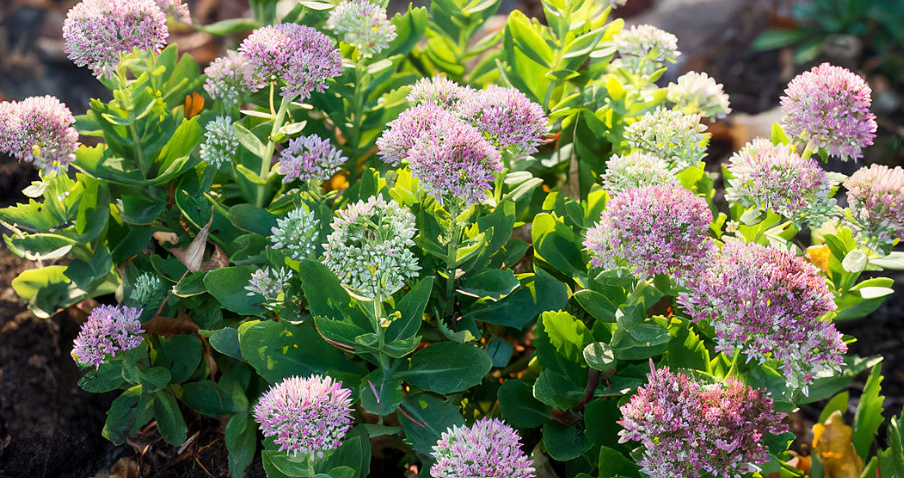
Sedum
Sedum propagates readily from leaves in a manner very similar to echeveria, with individual succulent leaves laid on gritty compost and developing roots and tiny plantlets from their bases over a period of several weeks. The extraordinary ease of sedum leaf propagation is reflected in its tendency to self-propagate from leaves that fall naturally from the plant.
The wide diversity of sedum species and cultivars means that propagators can experiment with many different leaf forms, colors, and textures, all of which propagate using the same basic technique. Sedum leaves that fall accidentally from the parent plant and land on suitable gritty compost will often root and produce plantlets entirely without human assistance.
Graptopetalum
Graptopetalum, closely related to echeveria, propagates from individual leaves with the same reliability and ease as its more famous relative, with the removed leaves developing roots and plantlets from their bases when laid on dry, gritty compost. The resulting plantlets often display the same attractive pastel coloring as the parent.
This genus is sometimes considered even easier to propagate from leaves than echeveria, with success rates approaching 100% under appropriate conditions. Graptopetalum leaves are somewhat fleshier and more robust than those of some echeveria species, making them slightly easier to remove intact from the parent rosette.
Graptosedum
Graptosedum is a hybrid genus created by crossing graptopetalum and sedum, combining the attractive rosette form of graptopetalum with some of the coloring and growth habits of sedum. Like both parent genera, graptosedum propagates readily from individual leaves laid on the surface of dry, gritty compost.
The hybrid nature of graptosedum sometimes means that leaf-propagated plants may display slightly different characteristics from the parent, but this variation is generally minor and the resulting plants are typically attractive regardless of any subtle differences from the original specimen.
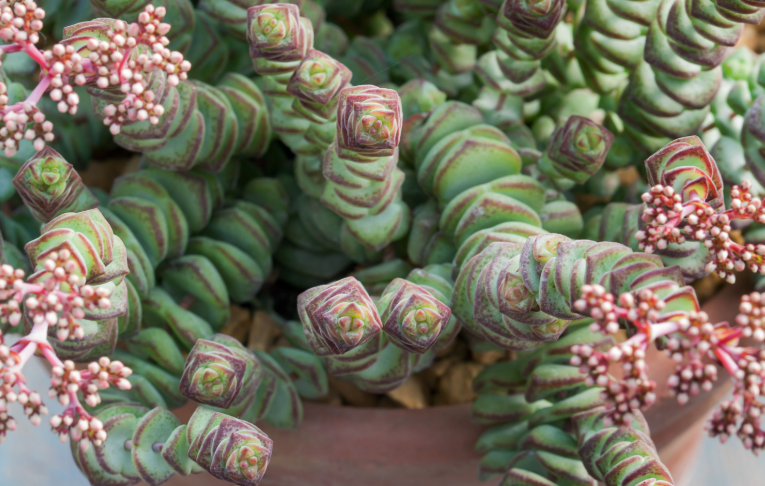
Crassula
Crassula, the jade plant family, propagates well from individual leaves, though the process is somewhat slower than for echeveria and sedum, with roots and tiny plantlets developing from the base of detached leaves over a period of several weeks to months. The thick, fleshy leaves of most crassula species contain abundant stored water that supports the development process.
Leaf cuttings should be allowed to callous for a day or two after removal before being laid on gritty compost, reducing the risk of rotting that can affect the somewhat succulent tissue. Crassula ovata, the jade plant, is among the most commonly propagated species within this genus, with its paired oval leaves rooting readily under appropriate conditions.
Also Read: Plants That Grow on Walls
Kalanchoe
Kalanchoe propagates readily from leaves, with the detached leaves developing roots and new plantlets from their bases when laid on moist compost. Some kalanchoe species also produce plantlets spontaneously along their leaf margins, making these among the most naturally inclined of all plants toward vegetative reproduction from leaf tissue.
The species known as mother of thousands, Kalanchoe daigremontiana, is famous for producing tiny plantlets along the toothed margins of its leaves while still attached to the parent plant, representing a natural leaf propagation process that requires no human intervention. These naturally produced plantlets drop to the ground and root wherever they land, demonstrating the extraordinary efficiency of leaf-based vegetative reproduction in this genus.
Sansevieria
Sansevieria, the snake plant, propagates from leaf sections rather than whole leaves, with individual leaves cut into sections of five to eight centimeters each and inserted upright into moist compost. Each section has the potential to produce roots and shoots from its base, though the process is slower than succulent leaf propagation.
An important consideration for variegated sansevieria varieties is that leaf sections will typically produce plants with plain green coloring rather than the variegated pattern of the parent, since the variegation is a chimeral characteristic maintained through cell division in the growing meristem rather than throughout the leaf tissue. Division or offsets are preferable for maintaining variegated forms.
Also Read: Plants That Grow From Tubers
African Violet
African violets are among the most classic and widely practiced subjects for leaf propagation, with individual leaves removed with their stalks and inserted into moist compost or water, developing tiny plantlets at the base of the leaf stalk within four to eight weeks. This technique has been used by generations of gardeners to multiply favorite varieties.
The leaf should be removed complete with its petiole, which is the leaf stalk, and can be inserted into compost or placed with the petiole in water until roots develop. Once several small plantlets are visible at the base of the petiole, they can be carefully separated and potted individually to grow on as independent plants identical to the parent.
Begonia Rex
Rex begonias can be propagated from leaf sections using several different techniques, including laying an entire leaf flat on moist compost and making cuts through the main veins, or cutting the leaf into small squares each containing a section of vein, which are then pressed into or laid on moist compost. Plantlets develop at the vein cuts.
This technique allows a single large rex begonia leaf to potentially produce dozens of new plants simultaneously, making it one of the most productive leaf propagation methods available. The resulting plantlets will typically display similar but not always identical leaf patterns and coloring to the parent plant due to the complex chimeral nature of rex begonia variegation.
Streptocarpus
Streptocarpus, commonly known as cape primrose, propagates remarkably well from leaf sections, with individual leaves cut across their width into sections of around three to five centimeters and inserted cut-end-down into moist propagation compost. Plantlets develop from the cut lower surface of each section.
An alternative technique involves cutting the central midrib out of the leaf lengthwise and inserting the two resulting leaf strips vertically in compost, with multiple plantlets developing along the cut edge. The cape primrose technique is particularly productive because each long leaf can be cut into many individual sections, each of which may produce multiple plantlets.
Haworthia
Haworthia propagates from individual leaves in a manner similar to echeveria and sedum, with the leaves developing roots and small offset plantlets from their bases when removed and laid on dry, gritty compost. Success rates are generally somewhat lower than for echeveria, and patience is required as the process can be slow.
The somewhat succulent nature of haworthia leaves means they contain sufficient stored water and nutrients to sustain the development of roots and plantlets for the extended period sometimes required. Leaves should be removed carefully by twisting gently sideways to ensure the entire leaf base is intact, as incomplete bases are less likely to produce plantlets.
Also Read: Plants That Grow From Rhizomes
Aloe
Aloe propagates primarily through offsets produced around the base of mature plants, but individual leaves can also be propagated, though with lower and less predictable success rates than other succulent genera. The cut end of a leaf cutting should be allowed to callous thoroughly before planting to reduce the risk of rotting.
Given aloe’s tendency to produce offsets readily, leaf propagation is generally a less efficient technique for this genus than simply detaching and potting the pups that form naturally around the parent. Leaf propagation may be useful when no offsets are available, though the success rate and speed of development are less reliable than in other succulent genera.
Gasteria
Gasteria, a genus of South African succulents related to aloe and haworthia, propagates from individual leaves removed from the plant and treated in the same manner as echeveria leaf cuttings, developing roots and small offset plantlets from their bases over a period of several months. Success rates are moderate but the technique is reliable enough to be worthwhile.
The relatively thick, fleshy leaves of gasteria store sufficient moisture and nutrients to support the development process over the extended timescale typically required. Gasteria leaf propagation is particularly useful for generating large numbers of plants from species that produce offsets slowly or infrequently.
Peperomia
Many peperomia species propagate well from individual leaves or leaf sections, with the technique varying somewhat depending on leaf size and structure. Small-leaved species can be propagated from whole leaves, while large-leaved species such as peperomia obtusifolia may propagate better from sections of leaf cut horizontally into strips.
The resulting plantlets develop from the cut base of the leaf or leaf section, appearing as tiny peperomia rosettes that gradually grow to transplantable size over a period of several weeks to months. Peperomia’s remarkable diversity of leaf textures, colors, and patterns makes leaf propagation a particularly rewarding technique, allowing collections of unusual varieties to be built up from single leaves.
Also Read: Plants that Grow From Corms
Hoya
Hoya can be propagated from individual leaves, though leaf propagation typically produces a rooted leaf without a growing shoot, a result described as a blind cutting that will not develop into a complete plant. For best results, cuttings should include a section of stem with at least one leaf and the axillary bud from which new shoots can develop.
Despite this limitation, leaf cuttings of hoya will sometimes produce new shoots if the leaf is removed with a sliver of stem containing axillary bud tissue, and some growers report reasonable success with whole leaf cuttings of certain hoya species. The extraordinary diversity and collector appeal of hoya makes any technique that increases multiplication rates valuable to enthusiasts.
Sedum morganianum
Sedum morganianum, the donkey’s tail or burro’s tail sedum, propagates with exceptional ease from individual leaves, with the plump, teardrop-shaped leaves developing roots and small rosettes from their bases within two to four weeks of being laid on dry, gritty compost. The leaves detach very readily from the trailing stems when handled.
This easy leaf detachment, while making the plant somewhat fragile to handle, also means that leaves often fall naturally from the trailing stems and root wherever they land on suitable substrate. Donkey’s tail is often recommended as an ideal first leaf propagation project for beginners due to its extremely reliable rooting and fast development.
Also Read: Plants That Grow Easily From Cuttings
Lithops
Lithops, the living stones, can technically be propagated from leaves, though this technique is rarely used in practice because the plant produces so few leaves and the leaves are so fundamental to the plant’s water storage that removing them significantly impacts the parent. Seed propagation is the more common method for this genus.
When leaf propagation of lithops is attempted, the entire leaf pair must be removed intact, which effectively destroys the parent plant in the process, making this a rarely justified approach except when the parent plant is already dying and its leaves can be salvaged for propagation. The resulting plants from leaf propagation develop extremely slowly.
Bryophyllum
Bryophyllum, sometimes classified within kalanchoe, is famous for its extraordinary leaf propagation characteristics, with plantlets developing spontaneously in the notches along the leaf margins while the leaf is still attached to the parent plant. These naturally produced plantlets require no human intervention, dropping off and rooting when they make contact with soil.
The species Bryophyllum pinnatum has been used in traditional medicine across multiple cultures and is so prolific in its vegetative reproduction from leaf margin plantlets that it has naturalized in tropical regions worldwide, demonstrating the extraordinary reproductive efficiency of this leaf-based strategy. A single leaf can produce over a hundred plantlets along its margins.
Tolmiea
Tolmiea menziesii, commonly known as the piggyback plant, produces its most distinctive characteristic at the junction of the leaf blade and the leaf stalk, where small plantlets develop on the surface of the mature leaf, giving the appearance of piggyback riders. These naturally produced plantlets can be detached for propagation.
The leaf bearing its attached plantlet can be used as a propagation unit, with the leaf petiole inserted into moist compost and the plantlet allowed to root and develop as the parent leaf gradually dies. This plant’s natural tendency to produce plantlets on its leaves makes it one of the most charming and accessible subjects for observing vegetative leaf reproduction in action.
Also Read: How to Grow Snowdrops From Bulbs
Ctenanthe
Ctenanthe propagates primarily through division, but certain species will produce plantlets from leaf sections placed on moist compost in warm, humid conditions, though this technique requires more care and attention than leaf propagation of succulent species. Maintaining high humidity around the leaf section is particularly important.
The striking, patterned foliage of ctenanthe species makes any propagation technique that allows multiplication of these ornamental plants worthwhile, even if the success rate and speed are less impressive than for more easily propagated subjects. Providing bottom heat significantly improves success rates for leaf propagation in this genus.
Saintpaulia
Saintpaulia, the African violet, is so reliably propagated from leaf cuttings that this technique has become essentially the standard method for multiplying these popular houseplants, with success rates approaching 90% under appropriate conditions. The technique is described in more detail under the African violet entry above.
The extraordinary reliability of saintpaulia leaf propagation has contributed significantly to the plant’s popularity as a houseplant, as new plants can be generated so easily that growers can share them generously with others. Many African violet enthusiasts maintain collections of dozens or even hundreds of varieties, many obtained through the exchange of leaf cuttings with other collectors.
Gloxinia
Gloxinia propagates from individual leaves removed with their stalks in a manner similar to African violet, with the leaf stalk inserted into moist compost or placed in water until roots and subsequently small plantlets develop at the base of the stalk. Success rates are generally good in warm, humid conditions.
The velvety, colorful flowers and attractive large leaves of gloxinia make it a worthwhile subject for leaf propagation, allowing new plants to be generated from a single leaf with modest effort. Providing bottom heat and maintaining high humidity around the leaf cutting during the rooting and plantlet development period significantly improves success rates.
Episcia
Episcia, commonly known as flame violet, propagates readily from leaves removed with their stalks, with the petiole inserted into moist compost developing plantlets at its base in a manner similar to African violet propagation. The plant also produces natural runners similar to strawberry plants that can be used for propagation.
The attractive, textured, often silver-patterned leaves and bright red, orange, or pink flowers of episcia make it a desirable houseplant, and the relative ease of leaf propagation allows collections to be built up quickly. Episcia requires warm, humid conditions both as a growing plant and during the leaf propagation process.
Primula
Certain primula species can be propagated from leaf sections placed on moist compost, though the technique is less reliable and more demanding than for the succulent and gesneriad species where leaf propagation is most commonly practiced. Maintaining high humidity and warmth around the leaf sections is essential for any success.
Primula leaf propagation works best for certain specialist varieties that are difficult to propagate by other means, rather than as a routine technique for the common garden primula varieties that are more easily and reliably propagated by division or seed. The technique requires patience and appropriate environmental conditions.
Also Read: Flowers That Grow From Bulbs
Fittonia
Fittonia, the nerve plant, can be propagated from leaves removed with a short section of stem, with success being more reliable when at least a small amount of stem tissue accompanies the leaf rather than attempting propagation from a leaf alone. Maintaining high humidity around the cutting is important.
The attractive, intricately veined leaves of fittonia, available in combinations of green and white, green and red, and other color combinations, make this a popular terrarium plant, and its propagation allows terrarium designers to generate quantities of this useful plant economically. Fittonia’s requirement for high humidity means it roots most readily when enclosed in a humid propagation environment.
Dischidia
Dischidia, a genus of small epiphytic plants related to hoya, can be propagated from leaves, though as with hoya the most reliable results come from cuttings that include stem tissue with axillary buds rather than from leaves alone. The thick, succulent leaves of some dischidia species contain sufficient moisture reserves to sustain root development.
The fascinating growth habits of dischidia species, including the ant plant varieties that develop hollow, pouched leaves that provide shelter for ants in their natural rainforest habitat, make these plants popular among specialist collectors for whom any effective propagation technique is valuable. The small size of most dischidia leaves means that stem sections are impractical to reduce further.
Oxalis triangularis
Oxalis triangularis, the purple shamrock, grows from tiny tubers but can sometimes be propagated from leaf sections placed on moist compost in warm conditions, though this technique is far less reliable than the division of the natural tubers that the plant produces readily. Leaf propagation may occasionally produce results but is not the recommended primary method.
The striking, deep purple, three-lobed leaves of this popular houseplant make it a plant many growers wish to multiply, and while leaf propagation is theoretically possible, the easy availability of tubers and the plant’s natural tendency to produce offsets make these a more practical route to generating additional plants in most circumstances.
Echeveria subsessilis
Echeveria subsessilis is a specific echeveria species noted for particularly easy and reliable leaf propagation, with its blue-green leaves developing roots and plantlets with unusual speed and reliability even for a genus already known for straightforward leaf propagation. This species is often recommended specifically as a starter leaf propagation subject.
The resulting plantlets develop quickly relative to some other echeveria species and can reach transplantable size within a few months of the initial leaf removal. As with all echeveria leaf propagation, the parent leaf gradually shrivels and dies as the new plantlet draws on its stored resources to fuel its initial growth.
Aeonium
Aeonium propagates more reliably from stem cuttings than from individual leaves, as the rosette-forming growth habit of this genus means that detached leaves often fail to produce plantlets with the same reliability as echeveria or sedum. Leaf propagation can be attempted but should be approached with lower success rate expectations.
When aeonium leaf propagation does succeed, the process follows a similar pattern to echeveria, with roots and a tiny plantlet developing from the base of the detached leaf. The higher failure rate compared to other rosette succulents reflects differences in the concentration and distribution of meristematic cells within the leaf base tissue.
Gasteria bicolor
Gasteria bicolor is a South African succulent that responds reasonably well to leaf propagation, with individual leaves removed and treated in the same manner as echeveria leaf cuttings developing roots and offset plantlets from their bases over a period of several months. Patience is required as the process is slower than for many other leaf-propagating succulents.
The attractive, mottled leaf pattern of gasteria bicolor, combined with the plant’s easy-going cultivation requirements, makes it a worthwhile subject for leaf propagation despite the slower development timeline. The technique allows multiple new plants to be generated from a single specimen that may be producing few or no natural offsets.