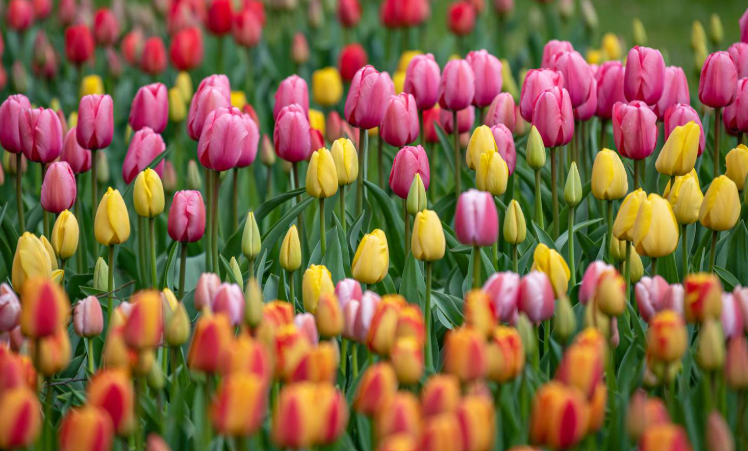
Flowers that grow from bulbs are cherished for their ability to store energy underground, ensuring vibrant blooms year after year. These plants emerge from specialized structures like true bulbs, corms, or tubers, which hold nutrients to fuel growth. Their life cycle often involves a period of dormancy, making them low-maintenance choices for gardeners.
The diversity of these flowers is remarkable, offering a spectrum of colors, shapes, and sizes. From delicate, star-shaped blossoms to bold, trumpet-like forms, they cater to various aesthetic preferences. Some produce fragrant blooms, while others are prized for their striking architectural shapes, perfect for borders, containers, or naturalized settings.
Bloom times vary widely, spanning late winter to fall, depending on the species and climate. Early bloomers may push through snow, signaling spring’s arrival, while others dazzle in summer or add color to autumn gardens. Heights range from a few inches to several feet, allowing for versatile placement in landscapes.
Most thrive in well-drained soil and prefer full sun to partial shade, though specific needs differ. Planting typically occurs in fall for spring blooms or spring for summer displays. In colder regions, tender types require lifting and storing over winter to protect them from frost.
These flowers are ideal for both novice and experienced gardeners due to their resilience and ability to naturalize. With proper care, such as allowing foliage to die back naturally to nourish the bulb, they can provide reliable beauty for years, enhancing gardens with minimal effort.
Also Read: Plants That Easily Grow From Leaves
Plants That Grow From Bulbs
Tulips
Tulips are among the most iconic spring bulbs in the world, beloved for their clean, cup-shaped blooms in virtually every colour of the spectrum. Originally from Central Asia and popularised during the Dutch Golden Age — famously triggering Tulip Mania in the 17th century — they now come in thousands of cultivars including single, double, parrot, and fringed forms. They are best planted in autumn for a spectacular late-spring display.
Daffodils
Daffodils, or narcissi, are cheerful harbingers of spring with their distinctive trumpet-shaped corona surrounded by six petals. Native to meadows and woodland edges of southwestern Europe, they naturalise beautifully in grass and return reliably year after year. Their cheerful yellow, white, and bicoloured blooms are toxic to most pests, making them one of the most trouble-free bulbs to grow in the garden.
Hyacinths
Hyacinths produce densely packed spikes of intensely fragrant flowers in shades of purple, pink, white, blue, and yellow. Their heady perfume is one of the most powerful in the plant kingdom and can fill an entire garden with scent from a single cluster. They are superb in containers and window boxes, and are among the most popular bulbs for indoor forcing, bringing their extraordinary fragrance inside during winter months.
Also Read: Plants That Reproduce By Spores
Crocus
Crocuses are delicate, low-growing bulbs among the first flowers to emerge in late winter and early spring, often pushing through frost and even snow to announce the changing season. Their goblet-shaped blooms in purple, white, yellow, and striped combinations naturalise effortlessly in lawns and between paving stones. The saffron crocus, flowering in autumn, provides the world’s most expensive spice from its vivid red stigmas.
Allium
Ornamental alliums produce perfect spherical heads of tiny star-shaped florets atop tall, elegant stems, creating a dramatic structural effect in the late-spring border. Ranging from the giant Allium giganteum to smaller species like Allium moly, they bridge the gap between spring and summer flowering. Their dried seed heads are equally beautiful and extend their visual interest into autumn, making them exceptional value for the garden.
Fritillary
Fritillaries are hauntingly beautiful spring bulbs with nodding, bell-shaped flowers in a remarkable range of patterns. The crown imperial carries whorls of orange or yellow bells beneath a topknot of leaves, while the snakeshead fritillary bears delicate chequered blooms of purple and white. They thrive in damp meadow conditions and are increasingly valued for their role in supporting early pollinators before many other flowers have opened.
Snowdrop
Snowdrops are among the earliest and most beloved of all bulbous plants, their small white pendant flowers appearing with extraordinary determination in the depths of winter. Galanthophilia — the passionate collecting of snowdrop varieties — has become a dedicated horticultural pursuit, with hundreds of named cultivars differing subtly in marking, size, and timing. They naturalise readily under deciduous trees and return with greater vigour each passing year.
Also Read: Plants That Grow From Tubers
Grape Hyacinth
Grape hyacinths, or muscari, produce tight clusters of tiny urn-shaped florets in vivid shades of cobalt blue, violet, and occasionally white, resembling miniature bunches of grapes. They are among the most reliable and undemanding of all spring bulbs, naturalising freely to form sweeping carpets of colour beneath trees and along pathways. Their compact size makes them ideal for edging, rockeries, and underplanting among taller spring-flowering bulbs.
Iris
Bulbous irises, including the reticulata and xiphium groups, produce elegant flowers of extraordinary structural complexity with distinctive falls, standards, and style branches. The dwarf reticulata irises bloom in late winter with vivid purple and blue flowers marked with intricate veining, while the taller Dutch irises follow in late spring. They are among the most refined and architectural of all bulbous flowers, equally beautiful in the garden and as cut flowers.
Lily
Lilies are among the grandest of all bulbous plants, producing tall stems laden with large, dramatically beautiful flowers in a sweeping palette of colours. Oriental lilies offer intoxicating fragrance, Asiatic lilies provide vivid colour without scent, and Trumpet lilies combine both qualities in magnificent scale. They are outstanding as cut flowers, capable of perfuming an entire room, and thrive in containers or mixed borders where their height creates bold vertical drama.
Dahlia
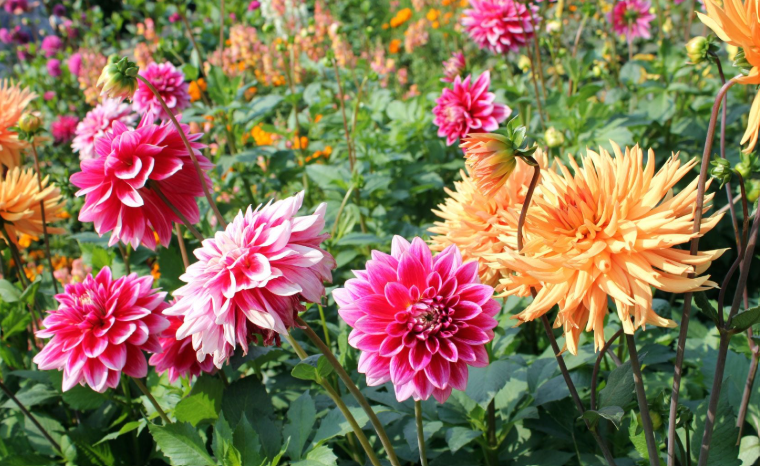
Dahlias grow from tuberous roots and offer perhaps the widest range of flower forms of any garden plant — from dinner-plate blooms the size of a human face to tight pompons and spidery cactus types. Native to Mexico, they flower prolifically from midsummer until the first hard frost, becoming more floriferous the more they are cut. They are the backbone of the late-summer cutting garden and come in virtually every colour except true blue.
Gladiolus
Gladioli produce magnificent vertical spikes of ruffled, funnel-shaped flowers that open progressively from the bottom upward, providing a display that lasts for weeks. Their stiff, sword-like foliage gives them an unmistakably bold architectural presence in the border, and they are superb cut flowers that last exceptionally well in the vase. Available in every conceivable colour combination, they are planted in succession for a continuous summer harvest.
Also Read: Plants That Grow From Rhizomes
Crocosmia
Crocosmias produce arching sprays of vivid tubular flowers in fiery shades of red, orange, and yellow that blaze through the late-summer border with extraordinary intensity. Growing from corms that multiply readily underground, they form spreading clumps of bold, sword-shaped foliage. The cultivar Lucifer is among the most celebrated, with its intense scarlet flowers on tall stems that reach up to a metre in height, attracting hummingbirds and bees alike.
Freesia
Freesias are exquisitely fragrant South African bulbs producing slender stems of funnel-shaped flowers in a wide range of pastel and vivid colours. Their scent is one of the most elegant and widely adored in the floral world, combining sweetness with a clean, almost citrus-like freshness. They are widely grown for the cut flower industry and are equally beautiful in the garden in warm climates, or in cool greenhouses and conservatories in colder regions.
Anemone
Bulbous anemones, particularly Anemone coronaria, produce brilliantly coloured poppy-like flowers with vivid petals surrounding a dark, almost black centre. The De Caen and St Brigid groups are the most popular for cutting and garden display, offered in rich reds, purples, blues, pinks, and white. They thrive in Mediterranean-style climates and have become one of the most commercially important cut flowers in the world, valued for their jewel-like intensity and long vase life.
Ranunculus
Ranunculus, growing from claw-like corms, produces extraordinarily layered blooms of tissue-paper-thin petals that build into flowers of astonishing fullness and delicacy. They are among the most highly prized flowers in the wedding and luxury cut flower trade for their romantic, peony-like quality without the seasonal limitations. Available in the softest pastels and the most vivid jewel tones, they bloom in late winter and spring in Mediterranean climates and are increasingly grown in polytunnels for early cutting.
Also Read: Plants That Grow Easily From Cuttings
Oxalis
Ornamental oxalis species grow from small bulbs or rhizomes and produce cheerful, five-petalled flowers above their characteristic clover-like foliage. Varieties like Oxalis triangularis add dramatic deep-purple foliage as a bonus, making them as valuable for their leaves as for their delicate pink blooms. They perform beautifully in containers, window boxes, and as ground cover, and many varieties close their flowers and fold their leaves at night in a charming daily rhythm.
Scilla
Scillas are small, delicate spring bulbs producing nodding or star-shaped flowers in striking shades of vivid blue, violet, and white. Scilla siberica is among the most brilliant blues in the entire plant kingdom, creating carpets of intense cobalt colour beneath deciduous trees in early spring. They naturalise freely and require virtually no maintenance, multiplying steadily over the years into sweeping drifts that rival the finest meadow plantings.
Chionodoxa
Chionodoxa, commonly known as glory-of-the-snow, is a charming early spring bulb producing delicate star-shaped flowers in shades of blue, pink, and white with a distinctive white centre. They are among the most cold-tolerant of all spring bulbs, blooming in late winter while snow may still be on the ground. They naturalise beautifully in grass, under trees, and at the front of borders, multiplying over time into generous, low-maintenance sweeps of early colour.
Leucojum
Leucojum, or snowflakes, are elegant relatives of the snowdrop producing nodding white bell-shaped flowers tipped with a distinctive green dot at the end of each petal. The spring snowflake blooms alongside tulips in mid-spring, while the summer snowflake extends the season further. They are notably more tolerant of damp conditions than most bulbs and naturalise beautifully beside streams, ponds, and in moisture-retentive borders where other bulbs might struggle.
Camassia
Camassias are statuesque North American bulbs producing tall spikes of star-shaped flowers in soft blues, lilacs, and white that appear in late spring after most other bulbs have faded. They bridge the seasonal gap between spring and summer with effortless elegance and are outstanding in naturalistic plantings where they sway gracefully among ornamental grasses. They also tolerate wetter soil conditions than most bulbs, making them invaluable in rain gardens and moisture-retentive borders.
Erythronium
Erythroniums, or dog’s tooth violets, are exquisite woodland bulbs producing reflexed, lily-like flowers in shades of yellow, white, pink, and purple above beautifully mottled foliage. They prefer cool, humus-rich conditions under deciduous trees and are one of the most elegant of all spring flowers, with a refined, almost orchid-like beauty. Named for the shape of their small white corm, they are at their finest when naturalised in large drifts through dappled woodland shade.
Puschkinia
Puschkinia, also called striped squill, is a small but jewel-like spring bulb producing pale blue-white flowers with a distinctive blue stripe running down each petal. It closely resembles scilla and chionodoxa and is equally effective when naturalised in grass or planted in drifts at the front of a border. Very hardy and completely trouble-free, it is a valuable addition to the early spring garden, blooming faithfully each year with minimal attention from the gardener.
Also Read: Plants that Grow From Corms
Ornithogalum
Ornithogalum, or star-of-Bethlehem, produces starry white flowers with a distinctive green stripe on the outside of each petal. The tender Ornithogalum thyrsoides, known as chincherinchee, is widely grown as a cut flower for its exceptional vase life of three weeks or more. The hardier species naturalise freely in grass and open ground, while tender varieties make elegant container plants and are among the most long-lasting cut flowers available to the florist.
Sparaxis
Sparaxis, or harlequin flowers, are South African bulbs that produce small but vivid funnel-shaped blooms in striking colour combinations of red, orange, yellow, and white, often with contrasting dark centres and markings. They thrive in warm, sunny conditions with well-drained soil and are best suited to Mediterranean climates or sheltered spots in cooler gardens. Their intense, jewel-like colours make them one of the most eye-catching small bulbs available for the spring border.
Ixia
Ixia, the African corn lily, produces slender, wiry stems bearing clusters of starry flowers in vivid shades of pink, red, orange, yellow, cream, and bicoloured combinations, often with a contrasting dark centre. Native to the Cape of South Africa, they demand excellent drainage and full sun to perform at their best. They are among the most prolific and free-flowering of all small bulbs when conditions suit them, and they make charming, long-lasting cut flowers.
Babiana
Babianas, or baboon flowers, are South African bulbs named because baboons are said to eat their corms. They produce short spikes of vivid flowers in rich blues, purples, reds, and bicoloured combinations above attractively pleated, hairy leaves. They require the same warm, dry conditions as ixia and sparaxis and are excellent in containers where drainage can be controlled. Their vivid colouring and compact growth habit make them a distinctive and underused small bulb for sheltered garden positions.
Amaryllis
The true amaryllis, Amaryllis belladonna, is a South African bulb producing large, trumpet-shaped blooms of deep pink on stout, leafless stems in late summer and autumn. Not to be confused with hippeastrum — widely sold as amaryllis for indoor winter display — it thrives outdoors in mild climates at the base of a warm wall. Its bare stems topped with clusters of fragrant blooms after the foliage has died down earn it the evocative common name of naked ladies.
Also Read: How to Grow Snowdrops From Bulbs
Hippeastrum
Hippeastrums are the spectacular large-flowered bulbs sold universally as amaryllis, prized for their ability to produce magnificent trumpet blooms indoors during winter. A single large bulb can produce two or more stems, each bearing up to four enormous blooms in reds, pinks, whites, salmons, and intricate picotee and striped combinations. They are among the most rewarding of all indoor bulbs, capable of reflowering reliably for many years with the right care and annual dormancy.
Nerine
Nerines are South African bulbs that produce their spidery, reflexed flowers in late autumn after their foliage has died down, delivering a spectacular surprise display just as the rest of the garden is fading. Nerine bowdenii is the hardiest species, producing shocking-pink blooms on tall stems and thriving at the base of a warm, south-facing wall in temperate gardens. Their iridescent petals catch the low autumn sun with a shimmer that gives them an almost magical quality.
Colchicum
Colchicums, commonly called autumn crocus, emerge from the bare ground in early autumn without any foliage — their large, goblet-shaped flowers in shades of lilac, pink, white, and chequered purple appearing seemingly from nowhere. Their large, lush leaves follow in spring and die back in summer before the cycle begins again. This curious habit of flowering before producing leaves gives them the evocative common name of naked boys, and they naturalise beautifully in short grass.
Cyclamen
Hardy cyclamen grow from flattened corms and produce dainty, reflexed flowers in shades of pink, cerise, and white above beautifully marbled, heart-shaped foliage. Cyclamen hederifolium flowers in autumn before the leaves fully emerge, while Cyclamen coum follows in winter and early spring. They naturalise with extraordinary grace under mature deciduous trees where little else will grow, carpeting the ground with months of subtle flower and leaf interest with virtually no maintenance required.
Sternbergia
Sternbergias are often called autumn daffodils or winter daffodils, though they are actually relatives of the amaryllis family. Their rich, golden-yellow goblet-shaped flowers emerge in early autumn alongside glossy, strap-shaped dark green leaves, creating a bold splash of warm colour in the fading garden. They require a hot, dry baking in summer to initiate flowering and thrive at the base of a sunny wall, where the combination of reflected heat and excellent drainage replicates their native Mediterranean habitat.
Galanthus
Galanthus is the genus encompassing all snowdrops, a group of small but culturally significant winter-flowering bulbs beloved by gardeners worldwide. Beyond the common snowdrop Galanthus nivalis, the genus contains around 20 species and hundreds of named cultivars, each distinguished by subtle differences in marking, petal shape, size, and flowering time. Galanthophiles — devoted snowdrop collectors — hold special snowdrop open days in late winter, a tradition that has become a beloved fixture of the horticultural calendar.
Puschkinia
Puschkinia scilloides is a charming small bulb from the Caucasus and Turkey, producing pale icy-blue flowers with a deeper blue central stripe in early spring. It is closely allied to scilla and chionodoxa and is equally at home naturalised in short grass or at the margins of a woodland garden. Completely hardy and entirely maintenance-free, it is one of those quietly reliable bulbs that rewards the gardener with increasing drifts of flower each successive year.
Eremurus
Eremurus, the foxtail lily, grows from a fleshy, star-shaped rhizomatous root and produces towering spikes of tiny flowers that can reach two metres in height, making it one of the most dramatically statuesque bulbous plants in cultivation. Flowering in early summer in shades of white, yellow, orange, and pink, the flower spikes create an extraordinary vertical accent in the border that nothing else can replicate at that scale. They require excellent drainage and a warm position to perform at their best.
Agapanthus
Agapanthus, the African lily, grows from fleshy rhizomes and produces large, rounded heads of tubular flowers in varying shades of blue, violet, and white on tall, arching stems. A stalwart of the late-summer border and an outstanding container plant, they flower most prolifically when their roots are slightly restricted. Hardy varieties have extended their cultivation into colder climates, and their clean, architectural form has made them a defining plant of contemporary garden design.
Canna
Cannas grow from thick rhizomes and produce large, tropical-looking foliage in shades of green, bronze, and striped combinations alongside vivid flowers in red, orange, yellow, and pink. They bring an exuberant, exotic energy to the summer garden that few other plants can match at their scale. Widely used in public planting schemes and private borders alike for their bold colour impact, they must be lifted and stored in frost-free conditions in colder climates before the first autumn freeze.
Begonia
Tuberous begonias produce some of the most sumptuously beautiful flowers of any summer bulb, with fully double blooms in shades of red, orange, yellow, pink, and white that rival camellias and peonies in their richness and fullness. They thrive in partial shade where few other summer bulbs perform well, making them exceptionally valuable for brightening darker corners of the garden or shaded patios. Trailing varieties are particularly spectacular in hanging baskets and window boxes.
Tigridia
Tigridia, or tiger flower, produces exotic three-petalled flowers of extraordinary beauty, each bloom lasting only a single day but produced in rapid succession over several weeks. The large outer petals in vivid orange, red, pink, yellow, or white surround a contrasting spotted and mottled centre cup that resembles the markings of a tiger or leopard. Each stem produces multiple buds, ensuring a continuous procession of these spectacular ephemeral flowers through the summer months.
Watsonia
Watsonias are statuesque South African corms producing tall, branching spikes of tubular flowers in shades of pink, red, orange, and white in a form closely resembling gladiolus. They are vigorous growers that naturalise freely in warm climates and produce their flowers over a long summer season. In colder gardens they are treated as tender bulbs and lifted after flowering, but in Mediterranean and subtropical conditions they form impressive clumps that return with increasing vigour year after year.
Sprekelia
Sprekelia formosissima, the Aztec lily or Jacobean lily, is a strikingly beautiful Mexican bulb producing a single vivid crimson flower of extraordinary elegance, with three upper petals forming a hood and three lower petals rolled into a tube, giving the whole flower a unique orchid-like appearance. It blooms reliably in containers and makes an outstanding specimen plant for a sunny conservatory or sheltered patio. The deep, rich red of its petals has a velvety intensity that commands immediate attention.
Rhodohypoxis
Rhodohypoxis are diminutive South African corms that produce a seemingly endless procession of small, flat-faced flowers in shades of deep pink, rose, and white throughout summer. Each flower has six petals arranged so closely over the centre that they appear to form a solid disc of colour. They are ideal for rockeries, raised beds, and containers where their compact scale can be appreciated, and they perform most prolifically when given a cool, dry winter dormancy and moisture during the growing season.
Also Read: Plants That Grow on Walls
Veltheimia
Veltheimia bracteata is a handsome South African bulb producing dense spikes of pendant, tubular flowers in soft pink and cream above glossy, wavy-edged foliage in winter and early spring. It is primarily grown as a container plant in cool greenhouses and conservatories in cold climates, where its out-of-season flowering is particularly welcome. The flower spikes are long-lasting and the foliage remains attractive throughout the growing season, making it one of the most ornamentally useful of all tender bulbs.
Lachenalia
Lachenalias, or Cape cowslips, are charming South African bulbs producing short, densely packed spikes of pendant tubular flowers in luminous shades of yellow, orange, red, blue, and multicoloured combinations in winter and early spring. They are primarily grown in cool greenhouses and alpine houses in cold climates, where their vivid colour brings warmth to the darkest months. Their attractively spotted and sometimes mottled foliage adds a further decorative quality that extends their interest beyond the flowering period alone.
Haemanthus
Haemanthus, the blood lily, is a dramatic South African bulb producing remarkable globe-shaped flower heads composed of dozens of vivid red or white stamens emerging from broad, fleshy bracts. Haemanthus coccineus produces its extraordinary scarlet blooms directly from bare ground in autumn before the broad, strap-like leaves emerge. These unusual and architecturally distinctive flowers have an almost alien appearance that makes them highly prized as specimen container plants in cool greenhouse or conservatory conditions.
Eucomis
Eucomis, the pineapple lily, is a distinctive South African bulb producing densely packed cylindrical spikes of star-shaped flowers topped with a rosette of leaf-like bracts that give the whole inflorescence an unmistakable resemblance to a pineapple. Available in shades of white, pale green, pink, and deep purple-black, they bloom in late summer and have attractive strap-like foliage throughout the growing season. They are increasingly hardy in temperate gardens and thrive in containers with excellent drainage.
Cardiocrinum
Cardiocrinum giganteum, the giant Himalayan lily, is one of the most magnificent of all bulbous plants, growing from a large bulb to produce stems that can reach four metres in height, topped with enormous fragrant white trumpet flowers marked with wine-red streaks. A true monocarpic plant, each bulb flowers once and then dies, but produces offsets that carry on the cycle over the following years. It requires a cool, humus-rich woodland setting and is one of the great spectacles of the summer garden.
General Tips for Growing Bulb Flowers
- Planting Time: Most bulbs are planted in fall for spring blooms, except for summer-blooming bulbs like gladiolus, which are planted in spring.
- Storage: In cold climates, tender bulbs (e.g., gladiolus, freesia) should be dug up after foliage dies and stored in a cool, dry place over winter.
- Watering: Bulbs generally need moderate water during growth but dislike waterlogged soil.
- Fertilization: Apply a balanced fertilizer in early spring to support growth and blooming.