Ornamental Kale Plants: Beautiful Varieties for Fall and Winter Gardens
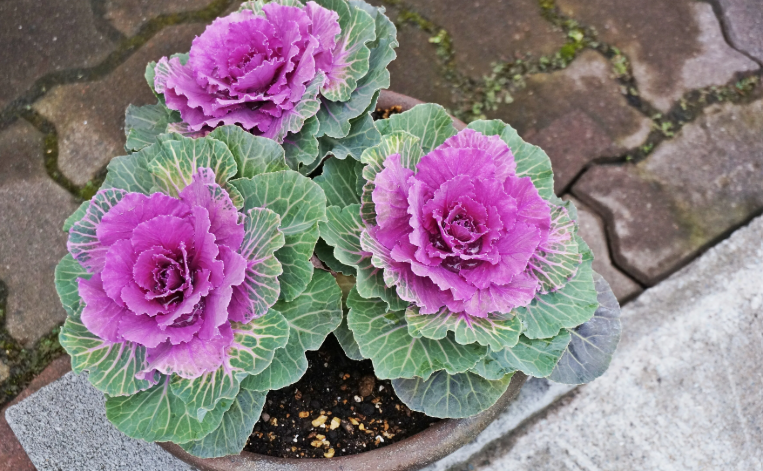
Ornamental kale is one of those garden plants that becomes more interesting as the weather gets colder. While many plants lose their leaves or stop flowering in autumn, ornamental kale develops intense shades of white, pink, purple, red, and green. Its tightly packed leaves form attractive rosettes that can brighten containers, flower beds, borders, balconies, and winter landscapes.
Ornamental kale belongs to the same species as edible kale, Brassica oleracea, but it has been selected primarily for its decorative foliage rather than food production. Most ornamental types develop their strongest colors when temperatures fall. Cool weather can therefore make the plants look better rather than worse.
Despite their name, ornamental kales are not simply “kale with colorful leaves.” They include numerous cultivated forms with differences in leaf shape, rosette size, color distribution, plant height, and texture. Some resemble giant flowers, while others develop deeply fringed leaves that look almost like feathers.
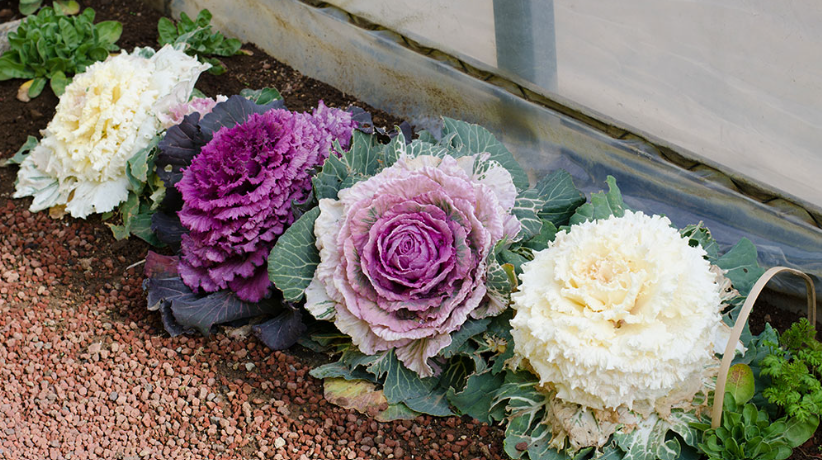
Below are 15 ornamental kale plants worth knowing if you want colorful foliage during the cooler months.
1. Osaka Ornamental Kale
Osaka kale is known for its broad, relatively smooth leaves and compact rosette. The inner leaves can become white, pink, or purple while the outer leaves remain green, creating a flower-like appearance.
The plant usually stays fairly compact, making it useful for containers, edging, window boxes, and small flower beds. Its symmetrical form is particularly attractive when several plants are grown together.
Osaka types are often sold in mixed-color combinations, allowing gardeners to create displays containing several shades without planting different species.
2. Nagoya Ornamental Kale
Nagoya ornamental kale is distinguished by its heavily ruffled foliage. The leaves have a frilly appearance that gives the plant considerably more texture than smooth-leaved types.
The central portion of the plant can develop shades of pink, purple, red, or white as temperatures decrease. The strongly curled foliage makes Nagoya particularly useful when a garden needs texture as well as color.
It works well in containers and can also be planted among evergreen shrubs where its colorful center becomes a seasonal focal point.
3. Tokyo Ornamental Kale
Tokyo ornamental kale forms rounded, relatively uniform rosettes. Its leaves tend to be broader and less dramatically frilled than those of Nagoya types.
The center may develop white, pink, or purple coloration surrounded by green outer foliage. Because of its neat shape, Tokyo kale is particularly effective when planted in rows or geometric patterns.
It is a good choice for formal autumn displays, patio containers, and raised beds.
4. Peacock Ornamental Kale
Peacock kale is one of the most distinctive ornamental kales because its leaves are deeply divided and finely fringed.
Instead of forming a simple cabbage-like head, the plant develops narrow, feather-like leaves radiating outward. Depending on the cultivar, the foliage may combine green with white, pink, purple, or red.
The unusual leaf structure makes Peacock kale especially valuable as a texture plant. It can provide visual contrast when planted alongside pansies, chrysanthemums, ornamental grasses, or plants with broad leaves.
5. Red Peacock Kale
Red Peacock is a colorful form of the Peacock group. Its deeply cut leaves develop reddish-purple to magenta tones toward the center of the plant.
The outer foliage generally remains greener, creating a gradual transition between the two colors. The finely divided leaves give the plant a softer appearance than traditional broad-leaved ornamental kale.
Because of its intricate foliage, Red Peacock can also be used as a centerpiece in large containers.
6. White Peacock Kale
White Peacock develops the same finely divided leaf structure associated with Peacock types but features a much paler center.
The inner leaves can become creamy white or bright white as temperatures cool. The contrast between the white center and green outer foliage gives the plant the appearance of a pale flower.
White Peacock is particularly effective in moon gardens, winter containers, and planting schemes dominated by cool colors.
7. Pigeon Purple Ornamental Kale
Pigeon Purple is a compact ornamental kale characterized by a purple or reddish-purple center surrounded by green foliage.
Its relatively tidy growth habit makes it suitable for mass planting. When several plants are placed close together, their colored centers can create a pattern resembling a bed of oversized flowers.
The purple coloration generally becomes more pronounced during cool weather.
8. Pigeon Red Ornamental Kale
Pigeon Red develops a rich reddish-purple center that contrasts strongly with its green outer leaves.
The plant forms a compact rosette rather than producing a tall central stem. This makes it useful for edging paths, filling gaps in autumn flower beds, or adding seasonal color to containers.
It is also a useful companion for yellow and orange fall flowers because the dark foliage provides a strong contrast.
9. Pigeon White Ornamental Kale
Pigeon White produces a bright white center surrounded by green leaves.
The central leaves become increasingly attractive as temperatures drop, often producing a flower-like appearance without the plant actually producing a conventional flower.
Because white works well with almost any other garden color, Pigeon White can be combined with purple pansies, yellow chrysanthemums, burgundy foliage, or evergreen plants.
10. Kamome Ornamental Kale
Kamome kale is another frilly-leaved ornamental type. Its leaves are heavily curled and create a dense, textured rosette.
The name is associated with cultivars that develop contrasting green outer leaves and colorful centers. Depending on the selection, the center may be white, pink, or red.
Kamome is especially attractive when planted close enough together that the individual rosettes form a continuous carpet of foliage.
11. Coral Queen Ornamental Kale
Coral Queen is valued for its finely divided foliage and vivid coloring. The leaves can develop purple, pink, and green shades that become more intense during cool weather.
Its foliage resembles the branching structure of coral, which explains the cultivar’s descriptive name.
The intricate leaves give Coral Queen a completely different appearance from broad-leaved ornamental kale varieties, making it useful for gardens where texture is a priority.
12. Coral Prince Ornamental Kale
Coral Prince is closely associated with the Coral group of ornamental kale. It has narrow, deeply cut leaves and a strongly textured appearance.
The foliage typically develops a colorful center surrounded by greener outer leaves. Its upright, finely divided leaves can add height and movement to autumn containers.
Coral Prince is especially effective when planted with smooth-leaved plants because the difference in foliage texture becomes immediately noticeable.
13. Crane Pink Ornamental Kale
Crane Pink is an ornamental kale type that produces a tall, relatively narrow plant compared with the rounded rosette forms.
The center develops pink coloration, while the surrounding leaves remain green. Because of its upright growth, Crane Pink can look more like a flowering plant than a miniature cabbage.
Its shape makes it particularly useful for cut-flower-style arrangements and containers where a vertical element is desirable.
14. Crane Red Ornamental Kale
Crane Red has a similar upright growth habit to Crane Pink but develops deeper red to reddish-purple coloration toward the center.
The narrow form makes it useful where gardeners want ornamental kale without the broad footprint of large rosette cultivars.
Several Crane plants can also be grown together to create a dense, colorful display in beds and large containers.
15. Crane White Ornamental Kale
Crane White completes the Crane group with a pale central rosette surrounded by green foliage.
The upright plant develops a white or creamy center that can become increasingly noticeable as temperatures fall.
Its vertical form works particularly well in containers and formal displays, where it can be combined with lower-growing pansies, violas, or trailing plants.
What Makes Ornamental Kale Different From Edible Kale?
Ornamental kale and edible kale belong to the same species, Brassica oleracea, but they have been selected for different characteristics.
Edible kale is primarily bred for tender leaves, flavor, productivity, and nutritional value. Ornamental kale, on the other hand, is selected for traits such as:
- Bright leaf coloration
- Compact rosette formation
- Frilled or deeply divided foliage
- Attractive leaf patterns
- Cold-weather color
- Uniform plant shape
- Decorative appearance
Some ornamental kale is technically edible, but that does not mean it is grown or sold as a food crop. Plants purchased as ornamentals may have been treated with products that are not intended for edible crops, so ornamental plants should not automatically be harvested for food.
Why Does Ornamental Kale Change Color?
Temperature is one of the most important factors behind the dramatic color changes seen in ornamental kale.
During warmer weather, many plants remain predominantly green. As temperatures fall, pigments in the inner leaves become more visible. The exact colors depend on the cultivar and its genetics.
This is why ornamental kale is often at its most attractive in autumn and early winter rather than during the warmer part of the growing season.
Cold weather can therefore transform an ordinary-looking green plant into one with a brilliant white, pink, purple, or red center.
How to Grow Ornamental Kale
Ornamental kale is relatively straightforward to grow when given suitable conditions.
Choose a Sunny Location
Most ornamental kale develops its best color in full sun. A location receiving around 6 hours or more of direct sunlight is generally ideal.
Some afternoon shade can be tolerated, particularly in warmer climates, but insufficient light may produce weaker growth and less impressive coloration.
Use Well-Drained Soil
The plants prefer fertile soil that drains well. Waterlogged conditions can encourage root problems, especially when temperatures are cool.
Adding compost before planting can improve soil structure and provide organic matter.
Keep the Soil Consistently Moist
Ornamental kale needs regular moisture while it is establishing. Water when the upper layer of soil begins to dry rather than allowing the plant to remain constantly saturated.
Container-grown plants may require more frequent watering because their relatively small amount of soil dries faster.
Allow Cool Weather to Bring Out the Color
There is little reason to worry when ornamental kale becomes more colorful as temperatures fall. Cool conditions are part of what makes these plants attractive.
In many climates, the foliage can remain decorative well into winter.
Where to Use Ornamental Kale
The versatility of ornamental kale is one reason it has become a popular seasonal bedding plant.
Containers
Compact types such as Osaka, Tokyo, and Pigeon varieties work particularly well in containers.
A large pot can combine ornamental kale with pansies, violas, trailing plants, or evergreen foliage.
Flower Beds
Ornamental kale can replace annual flowers that have finished flowering in autumn. Planting several rosettes together creates a colorful seasonal display.
Borders
Low-growing cultivars can be used along paths, patios, driveways, and garden borders.
Winter Gardens
In climates with relatively mild winters, ornamental kale can continue providing foliage color after many flowering annuals have disappeared.
Balcony Gardens
Because many cultivars remain compact, ornamental kale can be grown successfully in pots and window boxes.
Ornamental Kale vs. Ornamental Cabbage
The terms ornamental kale and ornamental cabbage are often used interchangeably in garden centers, but there is a practical difference.
Ornamental kales tend to have ruffled, frilled, or deeply divided leaves, while ornamental cabbages generally have smoother, broader leaves arranged into tight heads.
However, both are cultivated forms of Brassica oleracea, and the boundary between the two can become blurred in commercial horticulture.
Do Ornamental Kale Plants Survive Frost?
Many ornamental kale cultivars tolerate cold considerably better than typical warm-season bedding plants.
A light frost may actually improve their appearance by intensifying their colors. Their ability to remain attractive during cool weather is one of their major advantages as seasonal landscape plants.
However, prolonged severe freezing can eventually damage the foliage, particularly when temperatures fall well below the plant’s normal tolerance.
Common Problems With Ornamental Kale
Although ornamental kale is relatively hardy, it is still a member of the cabbage family and can attract several common brassica pests.
Cabbage Worms
Caterpillars can chew holes through the leaves. Regular inspection is one of the simplest ways to catch an infestation before the foliage becomes heavily damaged.
Aphids
Aphids may gather around young leaves and tender growth. Strong water sprays can sometimes dislodge small populations.
Slugs and Snails
These pests may become troublesome in damp gardens, particularly when ornamental kale is planted close to the ground.
Fungal Problems
Poor air circulation and consistently wet foliage can encourage fungal diseases. Adequate spacing and good drainage help reduce the risk.
Final Thoughts
Ornamental kale offers something unusual in the garden: foliage that becomes more colorful as the growing season winds down. The 15 types discussed here range from compact Pigeon cultivars and broad-leaved Osaka types to highly textured Peacock and Coral selections and the upright Crane group.
For a classic flower-like appearance, Osaka, Tokyo, and Pigeon types are excellent choices. If dramatic texture is more important, Peacock, Coral, and Kamome cultivars are worth considering. For containers or vertical displays, Crane types provide a different silhouette.
Whether used alone or combined with pansies, chrysanthemums, violas, ornamental grasses, and evergreen plants, ornamental kale can turn an otherwise fading autumn garden into a colorful display that lasts well into the colder months.