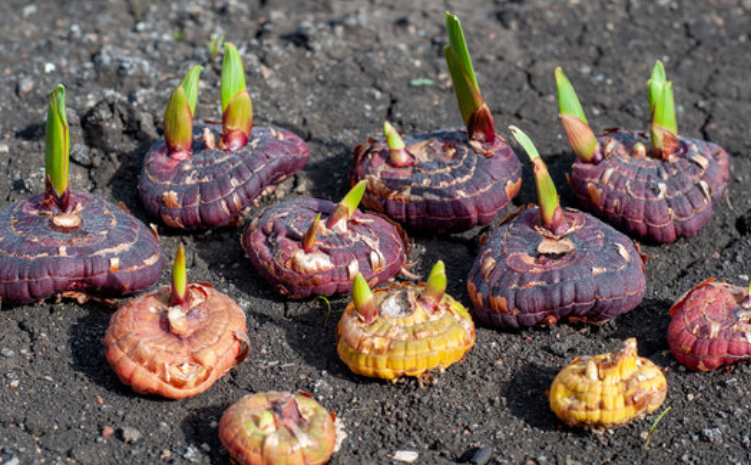
Corms are solid, swollen underground storage organs that allow certain plants to survive periods of cold, drought, or other unfavorable conditions by storing nutrients and energy in a compact, protected form beneath the soil surface. Unlike bulbs, which are composed of layers of modified leaves surrounding a central bud, corms are solid structures made of swollen stem tissue, often covered by a papery outer tunic that provides some protection against drying out and physical damage. This fundamental structural difference gives corms distinct growth characteristics compared to other underground storage organs such as true bulbs, tubers, and rhizomes.
The ecological significance of corms lies in their ability to allow plants to retreat entirely below ground during unfavorable seasons, reemerging with remarkable speed when conditions become favorable again, drawing on the stored nutrients within the corm to fuel rapid growth and flowering before the plant has had significant time to develop substantial leaf area for photosynthesis. This survival strategy has proven highly successful across a remarkably diverse range of plant families, with corm-producing plants found on every continent except Antarctica and in habitats ranging from Mediterranean scrubland to tropical forests and alpine meadows. Studies of corm-bearing plants in South Africa’s Cape Floristic Region alone have identified over 1,000 species that produce corms or corm-like structures.
The horticultural importance of corm-bearing plants is considerable, with several of the world’s most significant commercial cut flower industries built around corm-producing species. The global gladiolus market, for instance, generates billions of dollars in annual trade, with gladiolus corms planted on an industrial scale across multiple continents to supply the international cut flower trade. Freesia and crocosmia are among other corm-producing plants of significant commercial importance, while numerous other species have become garden staples valued by home gardeners across all climate zones.
Corms multiply naturally through the production of smaller corms called cormels or cormlets, which form around the base of the parent corm during the growing season and can be separated and grown on to flowering size over one to several seasons. This natural multiplication, combined with the ease of storage and transportation that the compact, dormant corm allows, has contributed significantly to the widespread cultivation of corm-bearing plants throughout the world’s gardening traditions. Many corm-producing species have been in continuous cultivation for centuries or even millennia, with historical records of crocus, gladiolus, and other corm-bearing plants in cultivation dating back to ancient civilizations.
The following overview explores 30 plants that grow from corms, spanning the full range of seasons and climates in which these remarkable underground storage organs allow plants to thrive.
Also Read: Plants That Grow Easily From Cuttings
Plants that Grow From Corms
Crocus
Crocus is one of the most beloved and widely recognized corm-bearing plants, producing cup-shaped flowers in shades of purple, lilac, white, yellow, and striped combinations that emerge in late winter or early spring, often pushing through snow and frozen ground before most other garden plants have begun to stir. Their early appearance makes them invaluable for providing color at the bleakest time of year.
The corms of crocus are small and produce one or a few flowers each, but planted in groups of dozens or hundreds they create impressive sweeps of early color that can naturalize effectively in lawns and under deciduous trees. Both spring-flowering crocuses and the autumn-flowering species, which bloom in September and October without leaves, grow from corms that multiply steadily over time.
Gladiolus
Gladiolus produces tall, elegant flower spikes bearing multiple funnel-shaped blooms arranged along one side of the stem, making them among the most widely grown cut flowers in the world and a dominant presence in summer garden borders. Their corms, called gladiolus corms or incorrectly referred to as bulbs in common usage, are planted in spring for summer flowering.
Each gladiolus corm produces a single flower spike and then dies, being replaced by a new corm that forms above the original and several small cormlets around its base. Lifting and storing these replacement corms and their associated cormlets over winter in regions with cold or wet winters allows them to be replanted the following spring.
Freesia
Freesia produces delicate, funnel-shaped flowers arranged along arching stems in a wide range of colors including white, yellow, orange, pink, red, and purple, prized above all for their intensely sweet fragrance that has made them a staple of the cut flower industry worldwide. Their corms are planted in autumn for winter or spring flowering.
Freesias perform best in cool, bright growing conditions and are commonly grown as pot plants or in cool greenhouses in colder climates, while in frost-free regions they can be grown outdoors as reliable garden perennials. The corms multiply steadily over time, with established clumps producing increasing numbers of flowers with each passing season.
Crocosmia
Crocosmia produces arching stems bearing small, tubular flowers in vivid shades of orange, red, and yellow in mid to late summer, with the most widely grown cultivar, Lucifer, being particularly prized for its intensely scarlet red blooms. Despite being commonly referred to as growing from corms, crocosmia technically produces corm-like structures linked in chains.
These plants spread vigorously over time, forming large clumps that can be divided regularly to control their spread and provide additional plants. Crocosmia’s warm-toned flowers and arching foliage create a dramatic late-summer display that combines well with other perennials in mixed borders.
Also Read: Flowers That Grow From Bulbs
Ixia
Ixia, commonly known as the African corn lily, produces slender stems bearing star-shaped flowers in striking colors including white, cream, yellow, orange, pink, and red, often with contrasting dark centers that create a dramatic visual effect. These South African natives grow from small corms planted in autumn for spring flowering.
Ixia flowers are long-lasting both in the garden and as cut flowers, making them a valued addition to both garden borders and floral arrangements. In frost-free climates they naturalize readily, spreading over time to create generous drifts of color in sunny, well-drained positions.
Sparaxis
Sparaxis, commonly known as the harlequin flower, produces cup-shaped blooms with distinctive bold markings in combinations of red, orange, pink, purple, white, and yellow, often with contrasting yellow centers. These South African natives grow from small corms and produce their colorful spring flowers in rapid succession.
The striking color patterns within individual sparaxis flowers make this plant one of the most visually exciting of all corm-bearing species, with each flower displaying bold contrasting zones of color that earned the plant its harlequin common name. Sparaxis grows best in warm, sunny, well-drained conditions similar to its native habitat.
Watsonia
Watsonia produces tall, elegant spikes of tubular flowers in shades of pink, red, orange, and white, native to South Africa and closely related to gladiolus in its overall appearance and growth habit. These corms produce plants that can reach impressive heights, creating dramatic vertical accents in suitable climates.
In frost-free climates watsonia can naturalize and spread over time to form impressive large clumps, while in cooler regions the corms must be lifted and stored over winter in a manner similar to gladiolus. Watsonia’s tall, graceful flower spikes and range of warm colors make it a valuable addition to gardens in suitable climates.
Babiana
Babiana, commonly known as baboon flower, produces fragrant, cup-shaped flowers in shades of blue, purple, pink, red, and white in spring, growing from small corms and producing pleated, ribbed leaves that are among the most distinctive of any corm-bearing plant. Its common name reportedly derives from baboons eating the corms.
These South African natives are particularly valued for the range of blue and violet tones available within the genus, colors that are relatively less common among other corm-bearing plants. Babiana grows best in warm, sunny, well-drained conditions and can naturalize in suitable climates.
Colchicum
Colchicum, often mistakenly called autumn crocus, produces large, goblet-shaped flowers in shades of pink, purple, lilac, and white in autumn, remarkably without any leaves, which emerge separately in spring after the flowers have completely disappeared. This unusual timing makes colchicum one of the most surprising plants in the autumn garden.
The large, robust corms of colchicum produce flowers of considerable size relative to the corm itself, creating an impressive display from corms that appear to bloom from bare earth. Colchicum corms are toxic if ingested, an important consideration when planting in gardens accessible to children or animals.
Tigridia
Tigridia, known as the tiger flower or Mexican shell flower, produces extraordinarily exotic-looking blooms with three large outer petals in vivid colors surrounding a spotted, cup-shaped center, each individual flower lasting only a single day but replaced by successive blooms over a long flowering period. These Mexican natives grow from corms planted in spring.
The dramatic, exotic appearance of tigridia flowers combined with their vivid colors in shades of red, orange, yellow, pink, and white makes them one of the most visually striking of all corm-bearing plants. Corms must be lifted and stored frost-free over winter in cooler climates.
Gladiolus callianthus
Gladiolus callianthus, formerly known as Acidanthera and sometimes called the peacock orchid or Abyssinian gladiolus, produces slender, graceful white flowers with distinctive dark purple centers on long stems, bearing an intense sweet fragrance that distinguishes this species from most other gladiolus relatives. This Ethiopian native grows from corms planted in spring.
The combination of elegant white flowers and intense, exotic fragrance makes Gladiolus callianthus particularly prized among gardeners who value fragrance alongside visual beauty. Corms must be lifted before the first autumn frost in cool climates and stored dry and frost-free through winter.
Chasmanthe
Chasmanthe produces tall spikes of tubular orange or red flowers in late winter or spring, growing vigorously from corms in mild climates where it can naturalize and spread to form impressive clumps. Its bright, warm-colored flowers appear early in the season when relatively few other plants are in bloom.
These South African natives grow vigorously in suitable climates, sometimes becoming quite invasive in regions with mild winters and dry summers similar to their native habitat. The early flowering season of chasmanthe makes it particularly valuable for providing color during the late winter and early spring period.
Tritonia
Tritonia produces slender, branching stems bearing small, cup-shaped flowers in shades of orange, pink, and red in summer, with the corms planted in spring for summer flowering in cooler climates or in autumn for winter flowering in frost-free regions. These South African natives are closely related to freesia and crocosmia.
The delicate, branching flower stems of tritonia give the plant a more airy, graceful appearance than some of its more robust relatives such as gladiolus and watsonia. Tritonia performs best in well-drained, sunny conditions similar to its native South African habitat.
Lapeirousia
Lapeirousia is a less commonly grown genus of South African corm-bearing plants producing small, starry flowers in shades of red, pink, purple, and white, with some species displaying distinctive markings that add to their visual appeal. These plants grow from small corms that multiply steadily over time.
While less widely known than many other South African corm-bearing genera, lapeirousia species offer interesting possibilities for gardeners in suitable climates seeking to explore the remarkable diversity of South Africa’s corm-producing flora. These plants grow best in warm, sunny, well-drained conditions.
Romulea
Romulea produces small, crocus-like flowers in a wide range of colors including white, yellow, pink, purple, and red, often with contrasting throat markings, growing from small, rounded corms. The genus contains many species, particularly well represented in South Africa’s Cape Floristic Region.
These small but charming plants are particularly suitable for rock gardens and raised beds where their relatively modest size can be appreciated at close range. Romulea corms multiply over time and can naturalize in suitable dry, sunny positions in regions with mild winters.
Moraea
Moraea produces iris-like flowers in a wide range of colors including yellow, white, purple, blue, and orange, often with intricate markings that give individual species considerable visual appeal. These South African natives grow from corms and produce their flowers in spring.
The iris-like flower form of moraea makes this genus appealing to gardeners who admire iris but live in climates where true irises can be challenging to grow. Moraea species grow best in well-drained, sunny positions and can naturalize in suitable climates.
Aristea
Aristea produces small, bright blue flowers on branching stems, growing from corm-like structures and flowering in spring and early summer. The vivid blue color of aristea flowers is particularly striking and relatively uncommon among corm-producing plants, making this genus stand out within its color range.
These South African natives are valued specifically for their contribution of true blue tones to garden color palettes, a color that is rarely achieved with equal intensity in corm-bearing plants outside this genus. Aristea grows best in well-drained, sunny to partially shaded positions.
Dierama
Dierama, commonly known as angel’s fishing rod or wandflower, produces long, gracefully arching stems bearing pendulous, bell-shaped flowers in shades of pink, purple, and white that sway dramatically in the breeze, creating one of the most elegant effects of any corm-bearing plant. These South African natives grow from corms.
The graceful, pendulous flower stems of dierama create a distinctive weeping effect that makes this plant immediately recognizable and highly sought after by gardeners seeking plants with exceptional grace and movement. Dierama is best left undisturbed once established, as the corms resent disturbance and can take time to recover after division.
Also Read: How to Grow Snowdrops From Bulbs
Schizostylis
Schizostylis, commonly known as the Kaffir lily or river lily, produces elegant, star-shaped flowers in shades of pink, red, and white in autumn and early winter, filling a valuable gap in the flowering calendar when relatively few other corm-bearing plants are in bloom. These South African natives grow from corm-like rhizomatous structures.
Unlike most other corm-bearing plants, schizostylis prefers consistently moist conditions, growing naturally alongside streams and in damp grassland habitats rather than the dry, well-drained positions preferred by the majority of South African corm-bearing plants. This moisture preference makes schizostylis a useful corm-bearing plant for damper garden positions.
Bulbocodium
Bulbocodium vernum, the spring meadow saffron, produces lilac-pink flowers in very early spring, often emerging alongside the earliest snowdrops and crocuses to provide some of the first color of the new gardening year. Its corms are small but produce flowers of surprisingly substantial size.
This European native is less commonly grown than many other corm-bearing plants but offers considerable charm in rock gardens and at the front of borders where its early flowers can be appreciated at close range. Bulbocodium corms multiply slowly over time, gradually forming small clumps.
Hesperantha
Hesperantha, formerly classified within the genus Schizostylis, produces star-shaped flowers in shades of pink, red, and white that open in the afternoon and evening, giving some species the common name evening flower. These South African natives grow from small corms.
The late-opening flowers of hesperantha make them particularly interesting in garden positions where they can be observed during the afternoon and evening hours when the flowers are at their most attractive. Several hesperantha species provide valuable late-season color in garden borders.
Oxalis
While many oxalis species grow from bulbs or rhizomes, numerous species within this large and diverse genus grow from corms, including several that have become garden favorites for their attractive clover-like foliage and cheerful cup-shaped flowers in shades of pink, yellow, white, and purple. Oxalis triangularis, with its striking purple foliage, is among the most popular corm-growing species.
The corms of garden oxalis species multiply readily over time, sometimes too vigorously in suitable conditions where certain species can become invasive. The combination of attractive foliage and long-lasting flowers makes corm-growing oxalis species valuable for containers as well as garden beds.
Tecophilaea
Tecophilaea cyanocrocus, the Chilean blue crocus, is one of the rarest and most sought-after of all corm-bearing plants, producing flowers of an extraordinarily intense gentian blue that is considered among the most vivid blues available in any garden plant. These Chilean natives grow from small corms.
The extraordinary blue color of Tecophilaea flowers makes them highly prized among bulb and corm collectors, with individual corms sometimes commanding premium prices due to the plant’s rarity in cultivation. Tecophilaea grows best in well-drained, sunny conditions with some protection from the wettest winter weather.
Syringodea
Syringodea is a small genus of South African corm-bearing plants producing crocus-like flowers in shades of pink, purple, and white in autumn, closely related to romulea and sharing its preference for well-drained, sunny conditions. These small plants are best appreciated in rock gardens or raised beds.
The autumn flowering season of syringodea makes it a useful companion for other autumn-flowering corm-bearing plants such as colchicum and autumn-flowering crocus species, extending the season of interest for gardeners who specialize in corm-bearing plants. Syringodea corms are small and delicate.
Canna
While commonly described as growing from rhizomes, certain canna varieties produce structures with characteristics more closely resembling corms, and the plant is frequently grouped with corm-producing plants in horticultural contexts due to its broadly similar cultivation requirements. Cannas produce bold, tropical-looking foliage and large, spectacular flowers.
Canna’s dramatic combination of large, sometimes purple or striped foliage and vivid flower spikes in red, orange, yellow, and pink makes it one of the most visually striking plants in this broadly defined group. In frost-prone climates, canna storage organs must be lifted and stored frost-free over winter.
Liatris
Liatris, commonly known as blazing star or gayfeather, grows from a corm-like structure called a caudex and produces distinctive flower spikes that open from the top downward, the opposite of most spike-flowering plants. Its purple, pink, or white flower spikes are attractive to pollinators.
The unusual top-down flowering sequence of liatris spikes creates an interesting visual progression as the flowers open over a period of several weeks during mid to late summer. Liatris is an excellent cut flower and also attracts butterflies and bees, adding ecological value to its ornamental qualities.
Eranthis
Eranthis, commonly known as winter aconite, produces bright yellow, buttercup-like flowers surrounded by a ruff of green leafy bracts in late winter, making it one of the earliest of all flowering plants to emerge each year. These small plants grow from tiny corms.
Winter aconite naturalizes readily under deciduous trees and in other areas where it receives sun during its brief winter and early spring growing season before the leaf canopy develops overhead. The cheerful yellow flowers of eranthis are a particularly welcome sight emerging alongside snowdrops.
Muscari
While muscari, the grape hyacinth, is technically grown from a bulb rather than a true corm, it is frequently grouped with corm-bearing plants by gardeners due to its similar size, cultivation requirements, and growth habit. Its dense spikes of tiny blue or white flowers are a spring garden staple.
Muscari naturalizes readily and multiplies over time to create dense, carpet-like plantings of spring color, particularly effective when combined with other early spring-flowering bulbs and corms. The intense blue of many muscari varieties provides valuable contrast to the yellows and whites typical of many early spring flowering plants.