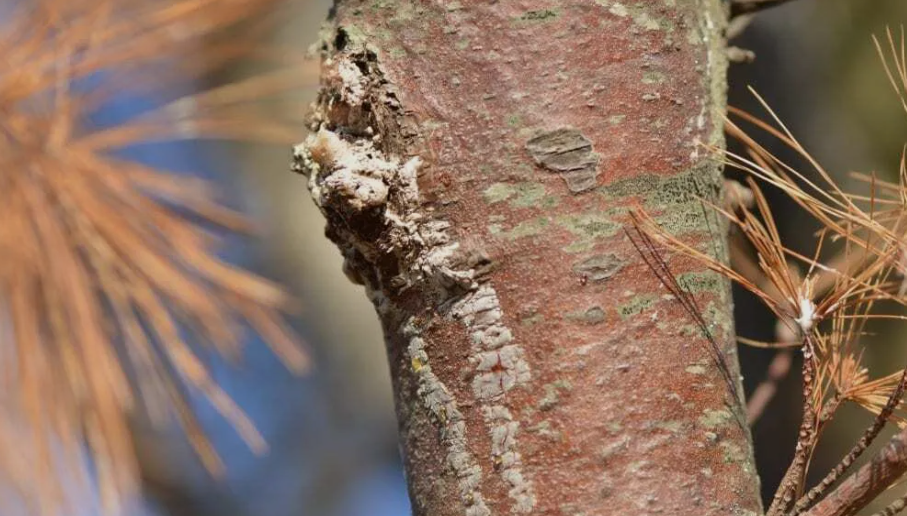
Pine trees have a reputation for toughness, and in many ways they’ve earned it, surviving drought, poor soil, and harsh winters that would kill more delicate ornamentals. That reputation, though, hides a less convenient truth: pines are host to one of the longer pest and disease lists of any common landscape or forest tree, and forestry agencies monitoring bark beetle activity have documented outbreaks capable of killing millions of acres of pine forest within a single decade when conditions align. A mature pine can take 25 to 30 years to reach full size, and a single untreated bark beetle infestation can undo that growth in a matter of months, since beetles work from the inside of the trunk where damage stays hidden until the canopy is already turning brown. Needle diseases move slower but compound over time, and a pine that loses a large share of its needles two years running often takes three or four seasons to fully recover its density, if it recovers at all.
What makes pine problems particularly tricky to diagnose is that many of the early warning signs look nearly identical across completely different causes. Yellowing needles, thinning crowns, and resin flow can point to insects, fungal disease, root stress, or simple drought, and misidentifying the cause often means treating the wrong problem while the real one continues unchecked. The list below walks through 21 of the most common pests and diseases affecting pine trees, organized so you can compare symptoms side by side, along with the control approach that actually addresses each one.
1. Southern Pine Beetle
Southern pine beetle is widely regarded as the most destructive insect pest of pine forests in the southeastern United States, capable of killing a mature, otherwise healthy tree within two to four weeks of a successful attack. Adult beetles bore through the bark and construct S-shaped tunnels called galleries in the inner bark, and a heavily attacked tree can host tens of thousands of beetles across a single trunk. Infested trees show pitch tubes, small popcorn-shaped globs of resin, dotting the bark, followed by a rapid crown color change from green to yellow to reddish-brown. Because beetles spread rapidly to neighboring trees, the standard control response is a cut-and-remove strategy applied to infested trees and a buffer zone around them before the beetles can emerge and disperse.
2. Mountain Pine Beetle
Mountain pine beetle attacks tend to unfold more slowly than southern pine beetle but have caused some of the largest documented forest die-offs in western North America, with outbreak years affecting millions of acres of lodgepole and ponderosa pine. Beetles introduce a blue-stain fungus during attack that clogs the tree’s water-conducting tissue, and the combination of larval feeding and fungal blockage is usually what kills the tree rather than either factor alone. Preventive trunk sprays applied before beetle flight season begins offer protection for high-value individual trees, while thinning dense stands to reduce competition and stress remains the primary large-scale management tool.
3. Pine Engraver Beetle (Ips Beetle)
Pine engraver beetles typically target trees already weakened by drought, storm damage, or recent pruning, making them more of a secondary opportunist than a primary killer of healthy trees, though heavy populations can still overwhelm otherwise vigorous pines. Adults construct distinctive Y- or H-shaped egg galleries under the bark, visible if a section of bark is peeled back from a recently killed branch or trunk. Because slash piles and freshly cut pine logs are prime breeding material, promptly removing or chipping storm-damaged wood and avoiding pruning during peak beetle activity in spring are the most effective preventive steps available to homeowners.
4. White Pine Weevil
White pine weevil larvae feed inside the leading terminal shoot of young pines, causing the shoot to wilt into a distinctive shepherd’s-crook shape and eventually die, which forces one or more side branches to compete for dominance and permanently distorts the tree’s form. Damage is concentrated on trees under 20 feet tall growing in full sun, since adult weevils are drawn to the warmth of sun-exposed terminals for egg-laying in early spring. Pruning and destroying infested leaders before adult weevils emerge in early summer, combined with a preventive insecticide application timed to early spring egg-laying, are the two most reliable controls for young, high-value trees.
5. European Pine Sawfly
European pine sawfly larvae feed in groups on old needles in early spring, often stripping entire branches while leaving new growth untouched, which can make an infestation look worse than it actually is since the tree typically recovers using that spared new growth. A single female can lay 75 to 100 eggs inserted directly into needle tissue, and the resulting larvae feed communally for several weeks before dropping to the soil to pupate. Because the larvae feed in visible clusters, hand removal or a strong water spray works well for light infestations on smaller trees, while Bacillus thuringiensis or a labeled insecticide handles larger populations.
6. Nantucket Pine Tip Moth
Nantucket pine tip moth larvae tunnel into and kill the growing tips of young pines, and repeated seasonal infestations can cause serious stunting and forked, bushy growth in trees under 15 feet tall, while mature trees generally tolerate the damage with little long-term effect. The moth produces two to five overlapping generations per year depending on regional climate, meaning damage can appear in multiple waves across a single growing season rather than as one discrete event. Pruning out and destroying infested tips before larvae complete development, along with a systemic insecticide applied to young plantations during peak moth flight, are the standard control combination.
7. Pine Needle Scale
Pine needle scale insects attach themselves to needles and appear as small, white, elongated bumps that can coat heavily infested branches so thickly the needles appear to have been dusted with rice grains. Because scale feeds by piercing needle tissue and removing sap, heavy infestations cause needles to yellow, thin, and drop prematurely, weakening the tree’s overall vigor over consecutive seasons. Dormant oil applied in late winter smothers overwintering eggs before they hatch, and because the young crawler stage is the only mobile and vulnerable life stage, timing a follow-up insecticide application to egg hatch in mid-spring significantly improves control compared to spraying at random.
8. Pine Spittlebug
Pine spittlebugs are easy to spot thanks to the frothy, spit-like masses nymphs produce around themselves on twigs and branches as protective cover while they feed on sap. While the foamy masses look alarming, spittlebug feeding rarely causes serious harm to an otherwise healthy pine, and most infestations are treated as a cosmetic rather than structural concern. A strong spray of water is usually enough to dislodge both the foam and the nymphs inside it, and insecticidal soap provides additional control for the relatively rare cases where populations are dense enough to be a genuine concern.
9. Spruce Spider Mite
Despite the name, spruce spider mites are one of the most common mite pests of pines, feeding on needles and causing a stippled, bronze-yellow discoloration that’s often mistaken for drought stress or nutrient deficiency. Unlike many spider mites that thrive in hot weather, this species is most active during the cool temperatures of spring and fall, with populations often crashing during peak summer heat, which catches some gardeners off guard when they assume mites are strictly a summer problem. A simple test involves tapping a branch over a sheet of white paper; mites will appear as tiny moving specks, confirming an infestation before treating with horticultural oil or a miticide.
10. Pine Bark Aphid (Woolly Pine Aphid)
Pine bark aphids cluster on bark, branches, and the base of needles, producing a white, waxy, cotton-like coating that makes infested areas look as though they’ve been dusted with snow. Heavy infestations produce large amounts of sticky honeydew that coats lower branches and anything beneath the tree, which frequently leads to sooty mold growth as a secondary problem. Populations are usually kept in check naturally by ladybugs and lacewings, and in most home landscape situations a strong water spray combined with encouraging these predators resolves the problem without needing chemical treatment.
11. Pine Wilt Disease (Pinewood Nematode)
Pine wilt disease is caused by a microscopic nematode spread by pine sawyer beetles, and it remains one of the fastest-killing pine diseases known, capable of turning a healthy tree’s entire crown from green to grayish-brown within just a few weeks during hot summer conditions. The nematode multiplies rapidly inside the tree’s resin canals, blocking water movement so thoroughly that affected trees often show almost no resin flow when the trunk is wounded, a diagnostic detail that helps distinguish pine wilt from beetle attack. There is no effective treatment once a tree is infected, so management focuses entirely on prompt removal and destruction of infected trees to eliminate the nematode’s breeding source before sawyer beetles can carry it to healthy neighbors.
12. Diplodia Tip Blight
Diplodia tip blight kills new shoots as they emerge in spring, causing stunted, browned needles clustered at branch tips while older growth further back on the branch remains unaffected, giving infected trees a distinctive tufted appearance. The fungus overwinters in old cones and dead branch tissue, and wet spring weather during the two- to three-week period around bud break is the single biggest factor determining how severe an infection year will be. Removing and destroying infected shoots and fallen cones, improving air circulation through pruning, and applying a protective fungicide during bud break in high-risk years form the core of effective management.
13. Dothistroma Needle Blight
Dothistroma needle blight causes distinctive yellow to tan bands to form across otherwise green needles, and as the disease progresses, the needle tips beyond the band die back while the base near the trunk stays green, creating a two-toned look that’s fairly easy to identify once you know what to look for. Severe, repeated infections can cause enough needle loss to seriously weaken or kill a tree over several years, particularly in dense plantings with poor air movement. Fungicide applications timed to new needle emergence in spring, combined with pruning lower branches to improve airflow and reduce humidity within the canopy, are the standard control measures used by both homeowners and commercial growers.
14. Brown Spot Needle Blight
Brown spot needle blight produces small, dark spots on needles that expand and often girdle the needle, causing the tip beyond the spot to turn brown and die while the needle base remains green, a pattern that closely resembles dothistroma blight and sometimes requires lab confirmation to tell apart. The disease is especially damaging to longleaf pine seedlings, where repeated infections can keep young trees trapped in the grass stage for years longer than normal. Prescribed burning in fire-adapted pine ecosystems helps reduce brown spot pressure by removing infected lower needles, while fungicide treatment is generally reserved for high-value ornamental or nursery plantings.
15. White Pine Blister Rust
White pine blister rust requires an alternate host, typically currant or gooseberry plants, to complete its life cycle, which makes it one of the few pine diseases where controlling a completely different plant species in the surrounding landscape directly reduces infection risk. On pines, the disease produces orange, blister-like cankers on the bark that eventually girdle and kill branches or entire trunks, and infections on the main stem of young trees are frequently fatal. Removing susceptible currant and gooseberry plants within several hundred feet of white pines, along with pruning out infected branches well below visible canker tissue, remains the most practical control available to most growers.
16. Annosum Root Rot
Annosum root rot spreads through spores that infect freshly cut stumps and then move through root grafts into neighboring healthy trees, making it a particular concern in thinned or recently harvested pine stands. Infected trees show gradual crown thinning, reduced growth, and increased vulnerability to wind-throw as the root system decays internally, often with no external symptoms visible until the tree is already significantly compromised. Treating fresh stump surfaces with a registered fungicide or borax immediately after cutting is the most effective preventive measure, since it blocks the fungus from colonizing the stump before spores have a chance to establish.
17. Pitch Canker
Pitch canker causes resin-soaked, sunken cankers to form on branches and trunks, often accompanied by wilting and dieback of the branch beyond the infection point, and the disease can affect trees of any age from nursery seedlings to mature forest specimens. The fungus can enter through wounds created by insects, pruning cuts, or storm damage, which is why insect control and careful pruning practices play a meaningful role in reducing new infections. Pruning out and destroying infected branches well below visible canker tissue, avoiding pruning during wet weather when spores spread most easily, and managing bark beetle populations that can carry the fungus between trees are the main tools available for control.
18. Lophodermium Needle Cast
Lophodermium needle cast causes older, previous-year needles to turn brown and drop in spring, often leaving current-year growth clustered at branch tips while the rest of the branch looks bare, a pattern that can alarm homeowners who mistake normal disease-driven needle drop for a dying tree. Small black fruiting bodies, visible as tiny dark specks lined up along the fallen or infected needles, are the clearest diagnostic sign distinguishing this disease from simple drought stress or natural needle aging. Raking and destroying fallen needles to reduce spore levels, along with a protective fungicide application in fall when new spores are released, are the primary management strategies.
19. Western Gall Rust
Western gall rust produces round, woody galls on branches and trunks that expand slowly year over year, sometimes reaching several inches across on older infections, and can weaken or snap the branch at the gall site under wind or snow load. Unlike white pine blister rust, this disease doesn’t require an alternate host plant, spreading directly from pine to pine, which makes it somewhat more difficult to interrupt through landscape-level management. Pruning out galled branches while they’re still small, ideally before they reach an inch in diameter, prevents the galls from becoming large enough to structurally weaken the branch or serve as a major spore source.
20. Armillaria Root Rot
Armillaria root rot, also known as honey fungus, attacks pine root systems much as it does other tree species, causing gradual decline, resin flow at the base of the trunk, and eventual death, often with honey-colored mushroom clusters appearing at the tree’s base in fall as the clearest above-ground sign of infection. Trees already stressed by drought, poor drainage, or root damage are considerably more susceptible to establishing infection than vigorously growing trees. There’s no chemical cure for an active infection, so management focuses on removing infected root material, avoiding replanting susceptible species in the same location for several years, and correcting drainage issues that favor the fungus.
21. Sooty Mold
Sooty mold itself isn’t a true pathogen of pine tissue but a fungus that grows on the sugary honeydew excreted by aphids, scale insects, and other sap-feeding pests, coating needles and bark in a black, powdery film that can look alarming even though the fungus doesn’t directly infect the tree. The bigger concern is that a heavy coating can reduce the amount of light reaching needle surfaces, mildly impacting the tree’s ability to photosynthesize during a severe, prolonged infestation. Because sooty mold is entirely dependent on the insect honeydew beneath it, controlling the underlying aphid or scale population is the only real fix, after which the mold typically weathers away on its own within a season.
Why Regional Climate Changes Which Pine Problems Matter Most
Unlike many ornamental trees where the same handful of pests dominate everywhere, pine problems shift dramatically by region and even by elevation. Southern pine beetle and pitch canker are primarily concerns in warmer, humid climates, while mountain pine beetle and western gall rust are largely western and higher-elevation issues tied to specific pine species like lodgepole and ponderosa. Needle blights such as dothistroma and brown spot tend to worsen in years with wet spring weather regardless of region, while pine wilt disease has expanded its range significantly over recent decades as sawyer beetle populations shift with changing climate patterns. Because of this regional variation, the single most useful diagnostic step for any pine problem is checking with a local extension office or forestry service about which pests and diseases are currently active in your specific area, since that context narrows a long list like this one down to the handful of issues actually worth watching for.
Frequently Asked Questions
How do I know if my pine tree is dying from beetles or disease? Bark beetle attacks typically show pitch tubes, small resin globs on the bark, along with boring dust in bark crevices, while disease-driven decline more often shows gradual needle discoloration, cankers, or fungal fruiting bodies without the resin tubes associated with beetle entry points. Peeling back a small section of bark to check for tunneling galleries is one of the most reliable ways to distinguish the two.
Can a pine tree recover from needle blight? Most pines can recover from a single season of needle blight, especially if only older needles are affected and new growth remains healthy, but repeated infections over consecutive years significantly weaken the tree and increase the time needed for full recovery, sometimes by three to four growing seasons.
Why is sap oozing from my pine tree trunk? Resin flow, sometimes mixed with boring dust, is one of the most common signs of bark beetle attack, though it can also occur in response to mechanical wounds, pruning cuts, or certain canker diseases like pitch canker. The presence of small pitch tubes specifically, rather than a general sap ooze, points more strongly toward beetle activity.
Is it normal for pine needles to turn brown and drop in the fall? Yes, to a degree. Pines naturally shed their oldest, innermost needles each fall as part of normal growth, which can look alarming but isn’t cause for concern. The distinction to watch for is whether the drop is limited to older interior needles, which is normal, or affects new growth and outer branch tips as well, which more often points to disease or pest activity.
What’s the single most important thing I can do to prevent pine pests and diseases? Maintaining tree vigor through proper watering during drought, avoiding soil compaction and root damage, and not overcrowding trees does more to prevent serious pest and disease problems than any single treatment, since the majority of the most damaging pine pests and pathogens preferentially attack trees that are already stressed rather than healthy ones.