
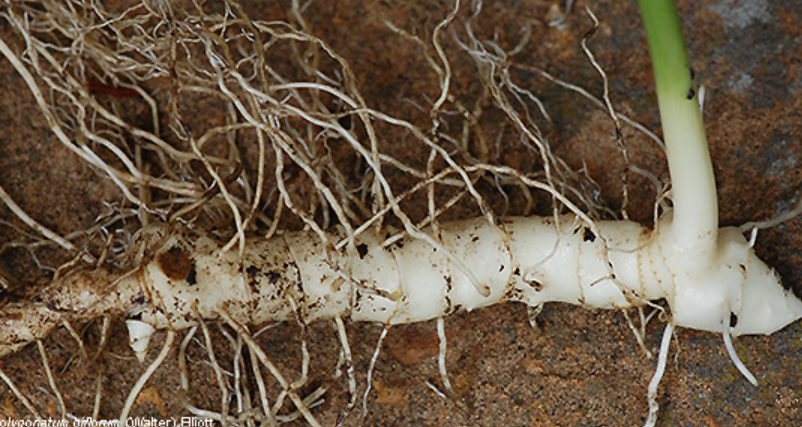
A rhizome is a modified stem that grows horizontally beneath or along the surface of the soil, serving as a storage organ for nutrients and energy while also functioning as a means of vegetative spread. Unlike bulbs and corms, which are compact, rounded structures, rhizomes are elongated and often branching, sometimes growing just beneath the soil surface and sometimes spreading just above it. This horizontal growth habit allows rhizome-bearing plants to colonize new ground steadily over time, creating expanding clumps or spreading colonies that can cover significant areas.
The ecological success of rhizomatous plants is evident in their extraordinary diversity and worldwide distribution, with rhizome-bearing species found in virtually every terrestrial habitat on Earth, from tropical rainforests to arctic tundra, from desert margins to freshwater wetlands. Some of the world’s most ecologically dominant plant species spread through rhizomes, including various grasses and sedges that form the structural foundation of grassland, prairie, and wetland ecosystems across multiple continents. Estimates suggest that rhizomatous grasses alone cover approximately 40% of the Earth’s land surface, illustrating the extraordinary ecological success of this growth strategy.
The commercial importance of rhizome-bearing plants is immense and spans multiple industries. The global ginger market, driven by one of the world’s most extensively grown rhizomatous plants, was valued at over $4 billion in recent years, while turmeric, another rhizomatous plant, generates billions more in annual trade as a spice, dye, and medicinal ingredient. In the ornamental horticulture sector, bearded irises grown from rhizomes represent one of the largest categories of perennial plants sold, with thousands of named cultivars available to gardeners worldwide.
Rhizomes have been exploited by humans for thousands of years for food, medicine, and materials, with archaeological evidence suggesting that the rhizomes of plants such as lotus and various iris species were harvested and used by ancient civilizations across Asia, the Middle East, and the Mediterranean. The horizontal spread of rhizomatous plants also has significant implications for land management and agriculture, as some rhizomatous species can become problematic weeds when introduced outside their native ranges, using their spreading underground stems to colonize large areas rapidly and resist conventional control methods.
From the fragrant rhizomes of iris and ginger to the spreading groundcovers of lily of the valley and the dramatic foliage of canna, the following 30 plants illustrate the remarkable versatility of the rhizome as a plant structure.
Also Read: Plants that Grow From Corms
Plants that Spread by Rhizome
Bearded Iris
Bearded iris is one of the most extensively cultivated rhizomatous plants in the world, with over 30,000 named cultivars available in virtually every color of the rainbow, grown from thick, fleshy rhizomes that spread slowly across the soil surface. The rhizomes must be planted partially exposed above the soil surface to prevent rotting.
These plants produce their spectacular, ruffled flowers in late spring and early summer, with individual blooms lasting several days and the overall flowering period of an established clump extending over two to three weeks. Dividing bearded iris rhizomes every three to four years rejuvenates the planting and prevents the center of the clump from becoming congested and reducing flowering vigor.
Ginger
Ginger is one of the world’s most important spice crops, grown commercially across tropical Asia, India, Nigeria, and other regions for its aromatic, pungent rhizomes that are used fresh, dried, and powdered in culinary, medicinal, and beverage applications. The global ginger harvest exceeds several million tonnes annually.
The rhizomes of ginger are planted in spring in warm climates or started indoors in cooler regions, developing into attractive plants with lance-shaped leaves and, in some varieties, ornamental flowers before the rhizomes are harvested in autumn. Growing ginger from purchased rhizomes found in grocery stores is a straightforward and rewarding project for home gardeners in suitable climates.
Turmeric
Turmeric is a tropical rhizomatous plant closely related to ginger, grown for its brilliant orange-yellow rhizomes that provide one of the world’s most important natural dyes, culinary spices, and traditional medicinal ingredients. India produces approximately 80% of the world’s turmeric supply.
The rhizomes of turmeric are planted in spring in warm climates and develop into tall, attractive plants with large, paddle-shaped leaves and, occasionally, pale yellow flowers, before the rhizomes are harvested when the leaves begin to die back in autumn. Turmeric’s striking rhizome color comes from the compound curcumin, which has attracted significant scientific research interest for its potential health properties.
Galangal
Galangal is a rhizomatous plant closely related to ginger, grown primarily in Southeast Asia where its aromatic rhizomes are an essential ingredient in Thai, Indonesian, and other regional cuisines. Its rhizomes have a more piney, citrusy flavor compared to the warm, pungent flavor of common ginger.
Two main species are used culinarily, greater galangal and lesser galangal, with the two differing in flavor intensity, rhizome size, and growth habit. Galangal requires warm, humid growing conditions similar to ginger, making it best suited to tropical and subtropical climates or indoor cultivation in cooler regions.
Canna
Canna produces some of the most dramatically tropical-looking foliage available in temperate garden plants, with large paddle-shaped leaves in green, bronze, purple, and striped combinations rising from thick, fleshy rhizomes, topped by vivid flower spikes in red, orange, yellow, and pink. A single rhizome can develop into an impressive clump within a single growing season.
In frost-prone climates, canna rhizomes must be dug up after the first autumn frost and stored in frost-free conditions through winter before replanting in spring. The rapid growth of canna from its stored rhizomes allows these dramatic tropical-effect plants to create impressive displays from late spring through to autumn frost.
Also Read: Plants That Grow Easily From Cuttings
Lily of the Valley
Lily of the Valley produces delicate, intensely fragrant white bell-shaped flowers on slender arching stems above pairs of broad, oval leaves, spreading slowly through the garden by means of slender, creeping rhizomes called pips. The fragrance of its flowers is among the most beloved of any garden plant.
This plant thrives in shaded positions where many other plants struggle, making it invaluable as a ground cover beneath trees and in other shaded areas of the garden. Lily of the valley spreads steadily over time to form a dense carpet of foliage that effectively suppresses weeds once established.
Mint
Mint spreads aggressively through gardens by means of slender, far-reaching rhizomes that can extend considerable distances from the parent plant in a single growing season, making containment in pots or beds enclosed by root barriers essential for most garden situations. This rhizomatous spread is what gives mint its reputation as an invasive garden plant.
The vigorous rhizome spread of mint reflects the plant’s natural adaptation to colonizing disturbed ground, stream banks, and other environments where spreading rapidly gives a competitive advantage. Growing mint in containers is the most practical approach for most garden situations, though the rhizomes will eventually fill even a large pot and require division.
Bamboo
Bamboo represents one of the most dramatic examples of rhizomatous growth in the plant kingdom, with running bamboo species spreading through extensive underground rhizome systems that can extend many meters from the parent plant in a single year. The global bamboo industry is valued at tens of billions of dollars annually.
Running bamboos require careful containment through physical root barriers to prevent them from spreading into unwanted areas, while clumping bamboos spread much more slowly through shorter, less invasive rhizomes. Bamboo rhizomes produce the characteristic hollow culms above ground with extraordinary speed, with some tropical species capable of growing over a meter per day under optimal conditions.
Solomon’s Seal
Solomon’s seal produces elegant, arching stems bearing hanging pairs of white tubular flowers along their length, rising from slowly spreading rhizomes that create increasingly impressive colonies in shaded garden positions over time. Its graceful arching form makes it one of the most attractive plants for woodland garden settings.
The thick, fleshy rhizomes of Solomon’s seal can be divided in autumn or spring to create additional plants, with each rhizome section bearing at least one growing bud establishing readily when replanted in suitable shaded conditions. The plant’s tolerance for dry shade makes it particularly valuable in difficult garden positions where few other plants perform well.
Also Read: Flowers That Grow From Bulbs
Hosta
Hostas grow from slowly spreading rhizomes that form expanding clumps over time, with the rhizome system eventually becoming quite dense and congested in established plants that have not been divided for many years. Division every three to five years both rejuvenates the plant and provides additional specimens.
The enormous diversity of hosta cultivars, with thousands of named varieties differing in leaf size, color, texture, and variegation pattern, makes this one of the most extensively collected of all rhizomatous ornamental plants. Hostas thrive in shaded and partially shaded positions where their often dramatic foliage can be fully appreciated.
Agapanthus
Agapanthus produces impressive rounded heads of blue or white tubular flowers on tall stems above strap-like leaves, growing from thick, fleshy rhizomes that form increasingly large and impressive clumps over time. Established clumps that have become pot-bound often flower most prolifically.
The thick rhizomes of agapanthus store significant quantities of water and nutrients, contributing to the plant’s drought tolerance once established. Dividing agapanthus clumps every five to seven years when they become very congested maintains plant vigor and provides additional specimens.
Asparagus
Asparagus is a vegetable crop grown from rhizome-like root crowns, with established plants producing the edible young shoots called spears that emerge from the crowns each spring. A well-established asparagus bed can remain productive for twenty years or more with appropriate care.
Once an asparagus bed is established, the rhizomatous root system develops into an extensive network that expands gradually each year, supporting increasingly productive harvests as the root system matures. Patience is required in the early years, as asparagus plants should not be harvested in the first two years after planting to allow the root system to develop fully.
Comfrey
Comfrey grows from deep, fleshy rhizomes and is prized in organic gardening as a dynamic accumulator, with its extensive root system drawing up minerals from deep in the soil that are then released when the large leaves are used as mulch or liquid fertilizer. Its rhizome system is extraordinarily persistent.
The deep, fleshy rhizomes of comfrey are notoriously difficult to eradicate once established, with even small fragments regenerating into new plants if left in the soil, making careful consideration of planting position essential. This persistence makes comfrey both a highly effective permanent addition to a garden’s nutrient cycling system and a plant that requires thoughtful placement.
Lotus
The lotus is one of the most culturally significant rhizomatous plants in the world, revered across multiple Asian cultures for its spiritual symbolism while also being cultivated for its edible rhizomes, which are widely consumed in Asian cuisines, and its ornamental flowers. Lotus rhizomes are an important food crop across Asia.
The rhizomes of lotus grow in the mud of shallow ponds and water features, producing the magnificent large flowers on tall stems above circular, water-repelling leaves that have made the lotus one of the most celebrated of all flowering plants. Growing lotus in large containers of heavy soil submerged in a garden pond allows this remarkable plant to be cultivated in a wide range of garden settings.
Waterlily
Waterlilies grow from rhizomes anchored in the mud of pond bottoms, sending up long stems that carry the floating leaves and flowers to the water surface. Both tropical and hardy varieties are available, with hardy waterlily rhizomes capable of surviving freezing water temperatures as long as the rhizome itself does not freeze solid.
The rhizomes of waterlilies spread gradually across the pond bottom over time, eventually filling the available space if not divided periodically. Lifting and dividing waterlily rhizomes every three to five years prevents overcrowding that can reduce flowering and maintaining water clarity.
Cyperus
Cyperus, including both the ornamental umbrella plant and the historically significant papyrus, grows from rhizomes that spread in wet and boggy conditions, producing distinctive umbrella-like arrangements of leaves at the tops of tall, triangular stems. Papyrus was one of the most important plant materials in ancient Egyptian civilization.
The spreading rhizomes of cyperus allow these plants to colonize the margins of water bodies and consistently moist garden positions, creating impressive stands of dramatic foliage that provide vertical interest in water garden designs. Both the moisture-loving papyrus and smaller ornamental relatives are popular for pond margins and container water garden features.
Also Read: Flowers That Look Like Lilies (But Aren’t)
Equisetum
Equisetum, commonly known as horsetail, is one of the most ancient plant genera on Earth, with fossil records dating back over 300 million years, and spreads vigorously through deep, persistent rhizomes that make it extremely difficult to eradicate once established. It has been on Earth longer than dinosaurs.
Horsetail’s deep rhizome system allows it to regrow rapidly after any attempt at removal, with the rhizomes capable of extending several meters deep and regenerating from the smallest fragments. Despite its aggressive spread, horsetail’s distinctive prehistoric appearance has led to its deliberate use in contemporary garden design, where its rhizome spread can be controlled by growing it in sunken containers.
Lilyturf
Lilyturf, known botanically as Liriope, grows from short rhizomes to form dense, evergreen clumps of grass-like foliage topped by spikes of small purple or white flowers in late summer and autumn, followed by dark berries. Its tolerance for shade and drought makes it one of the most versatile groundcover plants available.
The spreading rhizomes of lilyturf allow it to gradually colonize shaded areas beneath trees where other groundcovers struggle, creating dense weed-suppressing mats of evergreen foliage. Lilyturf’s relatively restrained spread compared to some other rhizomatous groundcovers makes it easier to manage in garden settings.
Japanese Knotweed
Japanese knotweed is one of the most notorious invasive plants in the world, spreading through extraordinarily persistent and extensive rhizome systems that can extend several meters from the parent plant and penetrate through concrete, tarmac, and building foundations. In the United Kingdom alone, Japanese knotweed infestations are estimated to cost hundreds of millions of pounds in treatment and property damage annually.
The rhizomes of Japanese knotweed can remain viable in the soil for many years and can regenerate from even very small fragments, making control and eradication a major challenge requiring sustained effort over several years. This plant is included not as a gardening recommendation but as an important example of how rhizomatous spread can enable a plant to become ecologically and economically damaging when introduced outside its native range.
Couch Grass
Couch grass is a common garden weed that spreads through pale, wiry rhizomes that extend through the soil in all directions, regenerating rapidly from any fragment left behind during weeding. It is one of the most persistent and difficult-to-eradicate garden weeds in temperate climates.
The rhizome system of couch grass allows it to spread readily through established garden beds, with the rhizomes threading between the roots of other plants in a way that makes removal by hand extremely tedious. Understanding couch grass as a rhizomatous plant helps gardeners appreciate why thorough removal of every rhizome fragment during soil cultivation is essential for effective control.
Calla Lily
Calla lily grows from fleshy rhizomes that spread gradually to form clumps of attractive, arrow-shaped leaves and produces the distinctive funnel-shaped flowers, technically a spathe surrounding a central spadix, in white and in numerous colored varieties. The rhizomes multiply steadily over time.
In frost-free climates calla lily rhizomes can remain in the ground year-round, spreading to form increasingly impressive clumps, while in cooler climates they are treated similarly to dahlia tubers, being lifted after the first frost and stored frost-free through winter. Colored calla lily varieties have become particularly popular in the cut flower trade.
Bergenia
Bergenia grows from thick, creeping rhizomes that spread along the soil surface, producing large, rounded, leathery leaves that are evergreen in mild climates and turn attractive reddish or bronze tones in cold weather, along with clusters of pink, red, or white flowers in early spring. This tough plant earns its common name elephant’s ears.
The surface-creeping rhizomes of bergenia allow it to spread slowly into a weed-suppressing groundcover in shaded or partially shaded positions, making it one of the most useful plants for difficult dry shade conditions. Bergenia’s ability to thrive in positions where little else will grow makes it an invaluable plant for challenging garden spots.
Chameleon Plant
The chameleon plant, Houttuynia cordata, particularly the colorful variegated form, grows from spreading rhizomes and produces attractive heart-shaped leaves with striking multicolored variegation in green, red, yellow, and cream. Its spread through rhizomes can become aggressive in moist conditions.
The rhizomes of the chameleon plant spread enthusiastically in moist, shaded positions, requiring containment to prevent it from overwhelming other garden plants. Despite its invasive tendencies, the chameleon plant’s dramatic foliage coloring makes it popular for containers and situations where its spread can be controlled.
Sweet Flag
Sweet flag, Acorus calamus, is an aquatic and marginal plant that grows from aromatic rhizomes in shallow water and consistently moist soils, historically valued for its fragrant rhizomes which have been used in traditional medicine, perfumery, and as a strewing herb for centuries. Both green and variegated forms are available.
The rhizomes of sweet flag spread gradually along pond margins and in boggy ground, creating dense stands of upright, grass-like leaves that provide valuable habitat and erosion control along water edges. The fragrance released when sweet flag rhizomes or leaves are bruised or crushed is distinctive and pleasant.
Ostrich Fern
The ostrich fern is one of the most dramatic of all rhizomatous ferns, producing tall, elegant fronds that unfurl in spring from a central crown connected to short, spreading rhizomes that gradually extend the plant’s spread in shaded, moist garden positions. The young unfurling fronds, called fiddleheads, are edible.
The rhizomes of ostrich fern spread steadily in suitable conditions to create impressive colonies of large, vase-shaped frond clusters, providing dramatic structure in shaded garden areas. This fern is one of the tallest commonly cultivated hardy ferns, with fronds that can reach over a meter and a half in height in optimal conditions.
Ribbon Grass
Ribbon grass, Phalaris arundinacea, is an ornamental grass that spreads vigorously through rhizomes, producing attractive green and white striped leaves that create bright, airy effects in garden borders and particularly in moist positions beside water features. Its spread requires management in most garden situations.
The variegated forms of ribbon grass are among the most attractive of rhizomatous ornamental grasses, but the plant’s vigorous rhizome spread means it must be divided regularly and contained if it is not to overwhelm neighboring plants. Growing ribbon grass in containers submerged in pond margins provides both containment and an attractive marginal planting.
Acanthus
Acanthus, commonly known as bear’s breeches, grows from deep, fleshy rhizomes that make it extremely persistent once established, producing large, deeply lobed, architectural leaves and tall spikes of purple-hooded white flowers that have been celebrated since ancient times. The acanthus leaf inspired the decorative motif used on Corinthian column capitals.
The deep rhizome system of acanthus makes it difficult to move or eradicate once established in a garden, as even small rhizome fragments left behind can regenerate into new plants. This persistence makes careful consideration of planting position essential, but also means that once established, acanthus will reliably return year after year with minimal attention.
Celandine
Greater celandine and lesser celandine are both rhizomatous plants, with lesser celandine in particular being a common and sometimes invasive early spring wildflower that spreads rapidly through short rhizomes and small tubers. The bright yellow flowers of lesser celandine provide important early nectar for pollinoes.
While lesser celandine can become invasive in garden borders, its very early flowering in late winter and early spring provides valuable resources for early-emerging pollinators and creates attractive sweeps of yellow in naturalized areas and under trees. Containing its spread by removing the plant from areas where it is not wanted while allowing it to naturalize in wilder garden areas is the most practical management approach.