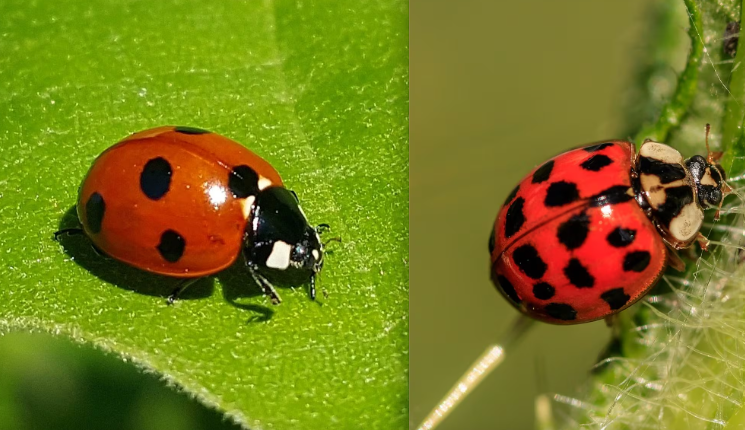
Ladybugs, also known as ladybirds or lady beetles, are among the most recognizable insects in the world, celebrated for their round, dome-shaped bodies and bold red or orange coloring with black spots. However, their distinctive appearance is shared by a surprisingly large number of other insects, leading to frequent misidentification. With over 5,000 known species of ladybugs worldwide and countless other beetles and bugs that mimic their shape or coloring, it is easy to see why confusion is so common among gardeners, homeowners, and nature enthusiasts alike.
The ladybug’s iconic appearance is not accidental. Their bright red and black coloring is a form of aposematism, a natural warning signal to predators that advertises their unpleasant taste and mild toxicity. Many other insects have evolved to mimic this color pattern through a process known as Batesian mimicry, gaining protection from predators without actually being toxic themselves. This evolutionary strategy means that a wide variety of beetles, true bugs, and even some moths have developed strikingly similar appearances to ladybugs, making identification a genuine challenge even for experienced entomologists.
Misidentifying ladybug lookalikes can have real consequences, particularly in agriculture and home pest control. For example, the Mexican bean beetle and the squash beetle are both harmful agricultural pests that closely resemble beneficial ladybugs, and mistaking one for the other can lead to crop losses. Research indicates that beneficial ladybugs consume between 200 and 500 aphids during their larval stage alone, making their protection important to farmers and gardeners. Knowing how to distinguish true ladybugs from their many lookalikes is therefore a valuable and practical skill.
Also Read: Bugs That Look Like Termites
Bugs That Look Like Ladybugs
1. Asian Lady Beetle (Harlequin Ladybird)
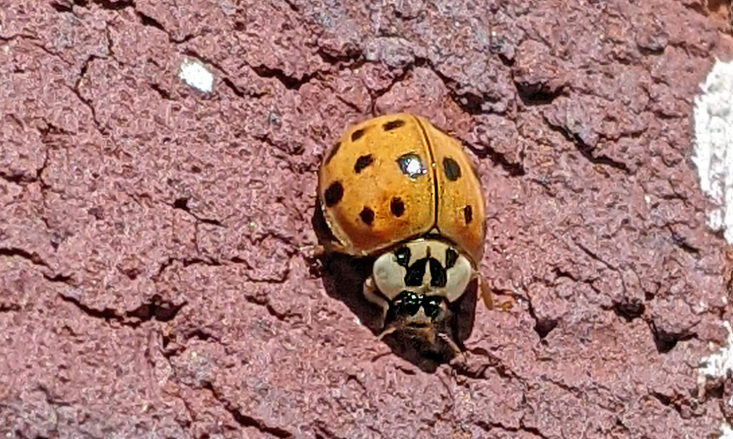
The Asian lady beetle is the most commonly confused species with the native ladybug, and is itself a member of the lady beetle family. It was intentionally introduced in North America and Europe to control agricultural pests but has since become an invasive nuisance. It varies widely in color from pale yellow to deep orange-red with variable spot patterns, and can be identified by the distinctive white M-shaped marking behind its head.
2. Mexican Bean Beetle
The Mexican bean beetle is one of the most damaging agricultural pests in North America and bears a striking resemblance to a ladybug with its rounded, dome-shaped body and yellowish-orange coloring with sixteen black spots. Unlike ladybugs, which are predatory and beneficial, Mexican bean beetles feed destructively on bean plant foliage, skeletonizing leaves from the underside. They are a serious concern for vegetable gardeners and farmers growing legume crops.
3. Squash Beetle
The squash beetle is a close relative of the Mexican bean beetle and shares the same rounded, ladybug-like body form with a pale yellow to orange coloring dotted with black spots. It is a pest of squash, cucumber, and other cucurbit plants, feeding on leaves and causing significant damage to home gardens and commercial crops. Its resemblance to a beneficial ladybug means it is often overlooked until damage to plants becomes severe.
4. Spotted Cucumber Beetle
The spotted cucumber beetle has a bright yellow-green body adorned with twelve distinctive black spots, giving it a strong visual similarity to a ladybug at first glance. It is a serious agricultural pest that damages cucumber, melon, squash, and corn plants, and also serves as a vector for bacterial wilt disease. Its spots and rounded appearance are the primary features that lead to confusion with true ladybugs.
Also Read: Bugs That Look Like Cockroaches But Aren’t
5. Pine Ladybird
The pine ladybird is a native European species that closely resembles common red ladybugs but has a darker, reddish-brown to black body with red or orange spots rather than the reverse pattern. It is primarily found on pine and other coniferous trees, where it feeds on scale insects and adelgids. Its similar size and dome-shaped body make it a frequent source of confusion with more familiar ladybug species.
6. Larch Ladybird
The larch ladybird is a relatively large ladybug lookalike found across Europe and parts of Asia, with a creamy yellow body and numerous small black spots scattered across its wing covers. It is associated primarily with larch and other coniferous trees and feeds on conifer aphids and scale insects. Its pale coloring distinguishes it from typical red ladybugs, yet its overall body shape and spot pattern invite easy confusion.
7. Steelblue Ladybird
The steelblue ladybird is a striking Australian species with a metallic blue-black body and red or orange spots, making it an unusual but unmistakable ladybug lookalike. It is a voracious predator of mealybugs and scale insects, making it highly beneficial in orchards and gardens. While its coloring is quite different from the classic red ladybug, its rounded body shape and spotted pattern are classic ladybug characteristics.
8. Tortoise Beetles
Tortoise beetles are a group of leaf beetles with a wide, flattened, shield-like body that extends well beyond their legs, giving them a rounded appearance similar to a ladybug. Many species are brightly colored in gold, red, or orange with dark markings, further adding to the resemblance. They feed on the leaves of sweet potato, bindweed, and other plants, and some species can even change color when disturbed.
9. Milkweed Beetles
Milkweed beetles are elongated red and black beetles that feed exclusively on milkweed plants and share the bold warning coloration of ladybugs. Their bright red bodies with black spots or markings are a clear example of aposematic coloring, advertising their toxicity derived from milkweed sap. While their body shape is more elongated than a true ladybug, their vivid color pattern is a common cause of misidentification in garden settings.
10. Scarlet Lily Beetle
The scarlet lily beetle is a brilliantly red beetle with a jet-black underside, legs, and head, making it visually similar to a ladybug at a distance. It is a highly destructive pest of lilies and fritillaries, capable of completely defoliating plants within days of infestation. Native to Europe and Asia, it has become an invasive pest in North America, and its ladybug-like red coloring often delays its identification as a harmful species.
Also Read: Bugs with Lots of Legs
11. Colorado Potato Beetle
The Colorado potato beetle has a rounded, dome-shaped body with bold yellow and black stripes running lengthwise across its wing covers, giving it a superficial resemblance to a spotted ladybug in terms of body shape and warning coloration. It is one of the most significant agricultural pests worldwide, capable of devastating potato, tomato, and eggplant crops. Its ability to develop resistance to pesticides makes it a particularly challenging pest to manage.
12. Firebugs
Firebugs are true bugs rather than beetles, with a flattened, oval body decorated in vivid red and black patterns that closely mimic the warning coloration of ladybugs. They are commonly found in Europe and Asia, typically gathering in large clusters around lime and mallow plants on which they feed. Their striking coloring and rounded appearance frequently lead to confusion with ladybugs, particularly in early spring when they emerge in large numbers.
13. Boxelder Bugs
Boxelder bugs have a flattened, oval body with bold black and red-orange markings that give them a visual similarity to ladybugs when seen from above. They feed primarily on boxelder, maple, and ash trees and are most noticeable in autumn when they gather in large numbers on sunny walls and enter homes seeking warmth. Though harmless to humans and structures, their red and black coloring makes them a frequent subject of ladybug misidentification.
14. Raspberry Beetle
The raspberry beetle is a small, oval-shaped beetle with a light brown to tawny coloring and subtle spotting that can resemble a pale or unusual ladybug to the casual observer. It is a significant pest of raspberries, blackberries, and loganberries, with its larvae tunneling into the fruits and causing widespread damage in berry gardens and commercial farms. Its rounded body form and small size are the primary features that invite comparison with ladybugs.
15. Fungus Beetles
Fungus beetles belonging to the family Endomychidae are sometimes called false ladybirds due to their striking resemblance to true lady beetles. Many species display the same rounded, convex body shape and vivid red or orange coloring with black spots that define the classic ladybug appearance. They feed on fungal growths on decaying wood and bark rather than aphids, but their physical similarity to ladybugs is remarkable and can easily fool even careful observers.
16. Elm Leaf Beetle
The elm leaf beetle is a small, oval beetle with a yellowish-green to olive body marked with black stripes and spots, giving it a patchy, spotted appearance reminiscent of some ladybug species. It is a destructive pest of elm trees, with both adults and larvae feeding on leaf tissue and causing significant defoliation. Repeated infestations can weaken and eventually kill elm trees, making early and accurate identification especially important.
17. Vedalia Beetle
The vedalia beetle is a true ladybug species but is so distinctive in its red and white marbled patterning that it is often not recognized as a ladybug at all, or conversely, mistaken for one by people who expect the typical spotted pattern. It was famously introduced to California in the 1880s to control cottony cushion scale insects devastating citrus crops, becoming one of the great success stories of biological pest control. Its irregular red and white markings make it a visually unique member of the ladybug family.
Also Read: Common Bugs With Pinchers
18. Swamp Milkweed Leaf Beetle
The swamp milkweed leaf beetle is a brilliantly colored beetle with a deep red or orange body and a broad black stripe along each wing cover, creating a bold pattern reminiscent of a ladybug’s warning coloration. It feeds exclusively on swamp milkweed and other milkweed species, absorbing the plant’s toxic compounds for its own defense. Its vivid coloring and rounded body make it a convincing ladybug lookalike in wetland and meadow habitats.
19. Red Pumpkin Beetle
The red pumpkin beetle is a small, rounded, bright red to orange beetle with a smooth, glossy body that bears a strong resemblance to a spotless ladybug. It is a serious agricultural pest in Asia and Africa, feeding on cucurbits such as pumpkin, cucumber, and melon at both the adult and larval stage. Its shiny, dome-shaped body and vivid coloring are the features most responsible for its frequent confusion with true ladybugs.
20. Spotted Asparagus Beetle
The spotted asparagus beetle is a small, attractive beetle with a metallic blue-black body dotted with six cream or yellowish spots on its wing covers, set against a contrasting red-orange border. This bold spotted pattern on a rounded body is strongly reminiscent of a ladybug’s classic appearance. It is a pest of asparagus plants and is found across Europe and North America, where its larvae feed on asparagus berries and stems.
21. Cactus Ladybird
The cactus ladybird is an Australian native species that feeds on mealybugs and scale insects on cacti and other succulent plants. It has the classic rounded ladybug body shape but displays highly variable spot patterns and colorings ranging from orange-red to deep crimson. It is often mistaken for the introduced Asian lady beetle in Australian gardens but is an entirely native and beneficial species.
22. Kidney Spot Ladybird
The kidney spot ladybird is a European species with a glossy black body marked with two distinctive red kidney-shaped spots on its wing covers, making it a reverse image of the typical red ladybug with black spots. It is primarily found on the bark of ash, willow, and poplar trees, where it feeds on scale insects. Its unusual black-and-red coloration can confuse observers expecting the more familiar red-and-black pattern of common ladybugs.
23. Checkered Beetles
Checkered beetles of the family Cleridae display vivid red, orange, black, and white banding or spotted patterns across their elongated bodies, creating a striking resemblance to the warning coloration of ladybugs. They are predatory beetles found on flowers, bark, and wood, where they hunt other insects including wood-boring beetle larvae. Their bold coloring and predatory habits make them beneficial insects that are frequently mistaken for ladybugs by gardeners.
24. Twice-Stabbed Lady Beetle
The twice-stabbed lady beetle is a true member of the ladybug family but is so visually striking that it often surprises those expecting a red ladybug. It has a jet-black, highly glossy rounded body adorned with just two vivid red spots, one on each wing cover, creating a minimalist reverse of the classic ladybug pattern. Despite its unusual appearance, it is a highly beneficial predator of scale insects and is particularly valued in orchards and vineyards for natural pest control.
Also Read: Beetles With Red and Black