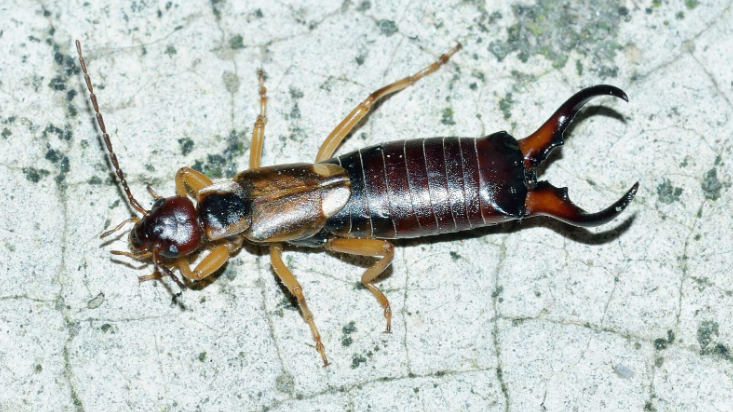
Insects and arthropods equipped with pinchers — also known as forceps, chelicerae, mandibles, or cerci — represent a fascinating and diverse array of species spanning multiple orders and families. These gripping appendages serve a remarkable range of functions including defence, prey capture, mating competition, and nest building. They are found across beetles, earwigs, scorpions, centipedes, and many other arthropod groups, demonstrating how convergent evolution has repeatedly produced this highly effective body feature.
Earwigs alone account for around 2,000 described species worldwide within the order Dermaptera, and are among the most recognisable pincher-bearing insects. Stag beetles, arguably the most iconic pincher beetles, belong to the family Lucanidae, which contains over 1,200 species globally. In many species, the size and curvature of pinchers is directly linked to reproductive success, with larger males consistently outcompeting rivals for access to mates.
Pinchers can vary enormously in form and function across species — from the symmetrical, curved forceps of earwigs used for folding wings and deterring predators, to the massively enlarged mandibles of male stag beetles used almost exclusively for wrestling competitors. Some species, such as certain ground beetles and water beetles, use powerful toothed mandibles to subdue live prey many times their own size. Across arthropods as a whole, pincher-bearing species are found on every continent except Antarctica and occupy ecosystems ranging from tropical rainforests to temperate woodlands and coastal wetlands.
Also Read: Beetles With Pinchers
Bugs with Pinchers
Common Earwig (Forficula auricularia)
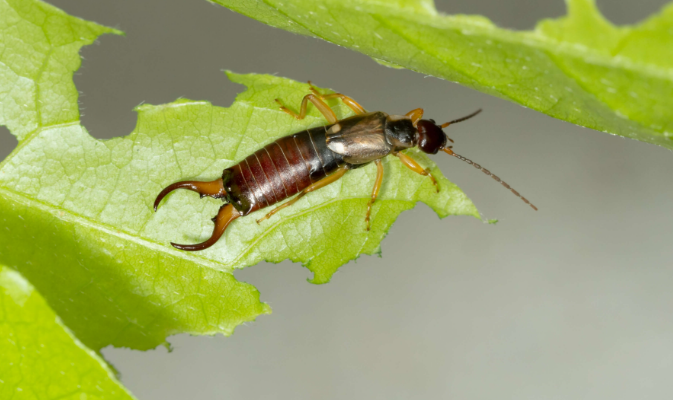
The common earwig is one of the most widespread and recognisable pincher-bearing insects in the world, found across Europe, Asia, North America, and Australia. Its curved abdominal forceps are used for defence, prey capture, and folding its surprisingly large hindwings beneath short, leathery forewings. Females are notable among insects for showing genuine maternal care, guarding and licking their eggs until they hatch.
Stag Beetle (Lucanus cervus)
Europe’s largest terrestrial beetle, the stag beetle is renowned for the enormous, antler-like mandibles displayed by males, which can reach half the total body length. These impressive pinchers are used almost exclusively for grappling with rival males during competition for females, rarely causing serious injury but effectively wrestling opponents off branches and logs. Larvae spend up to seven years developing inside decaying oak wood before emerging as adults.
Giant Stag Beetle (Lucanus elaphus)
Native to the southeastern United States, the giant stag beetle rivals its European cousin in size and the dramatic development of its male mandibles. The elongated, toothed pinchers are used in the same wrestling contests observed in European stag beetles, with larger mandibles conferring a significant competitive advantage. Despite their fearsome appearance, adults feed primarily on tree sap and decaying fruit juices.
Pinacate Beetle (Eleodes species)
These North American darkling beetles possess sturdy, curved mandibles capable of delivering a firm pinch when handled. Better known for their defensive headstand posture and foul-smelling chemical spray, their mandibles serve as a secondary defence and are used to process tough plant material and carrion. They are found across arid desert environments of the American Southwest and Mexico.
European Earwig (Forficula lesnei)
A close relative of the common earwig, this species is found across western Europe and shares the distinctive curved abdominal forceps of its family. Males display notably asymmetrical cerci, with one pincher often longer and more curved than the other — a trait that remains an active subject of study among entomologists. Like its relatives, it is omnivorous and plays a role in natural pest suppression in gardens and orchards.
Antlion (Myrmeleon species)
The larval stage of the antlion is a fearsome ambush predator equipped with large, sickle-shaped mandibles that function as hollow pinching jaws. Hidden at the base of conical sand pits they excavate, antlion larvae seize passing ants and other small insects with their crossed pinchers and drain them of fluids. A single larva may inhabit its pit trap for up to three years before metamorphosing into a delicate, dragonfly-like adult.
Dobsonfly (Corydalus cornutus)
The male dobsonfly of North America possesses extraordinarily elongated, curved mandibles that can reach several centimetres in length, giving it one of the most dramatic appearances of any pincher insect. Despite their intimidating size, the male’s mandibles are too weak to break skin and are used primarily during courtship and mating. Females, by contrast, have shorter but far more powerful mandibles capable of delivering a painful bite.
Water Scavenger Beetle (Hydrophilus triangularis)
One of North America’s largest aquatic beetles, the water scavenger beetle carries powerful, curved mandibles adapted for processing both plant material and animal prey in freshwater habitats. Though primarily a scavenger, it can actively pinch and subdue small aquatic invertebrates when the opportunity arises. Its streamlined body and paddle-like legs make it a capable swimmer in ponds, marshes, and slow-moving streams.
Violin Beetle (Mormolyce phyllodes)
This extraordinary Southeast Asian beetle has a bizarrely flattened, violin-shaped body and long, curved mandibles used to prey on invertebrates found beneath tree bark and within fungal fruiting bodies. Its unusual body shape allows it to slip into the tightest crevices in search of prey, which it seizes and holds firmly with its pinching jaws. It is a prized species among insect collectors due to its striking and unique appearance.
Titan Beetle (Titanus giganteus)
The titan beetle of the South American Amazon basin is one of the largest beetles on Earth, reaching up to 17 cm in length, and possesses immensely powerful mandibles capable of snapping pencils and cutting into human flesh. Adults do not feed at all during their brief adult lives but rely on energy reserves built up during their larval stage, which is thought to last several years deep within tropical hardwoods. The mandibles are used purely for defence against predators.
Ground Beetle (Carabus violaceus)
The violet ground beetle is a large, iridescent European predator armed with sharp, forcep-like mandibles used to seize and subdue earthworms, slugs, caterpillars, and other soil invertebrates. It is a fast-moving, nocturnal hunter that patrols garden beds, hedgerows, and woodland floors with considerable speed. Gardeners widely regard it as one of the most beneficial insects a garden can host.
Scorpion (Pandinus imperator)
The emperor scorpion of West Africa is one of the world’s largest scorpions, reaching up to 20 cm in length, and is equipped with massive, crab-like pedipalps — powerful pinching claws used for grasping prey and opponents. Despite its imposing size, its venom is relatively mild, and it relies primarily on its pinchers to crush and immobilise prey. It is one of the most commonly kept exotic invertebrate pets worldwide.
Pseudoscorpion (Chelifer cancroides)
Pseudoscorpions are tiny arachnids, typically just 1–8 mm long, that closely resemble miniature scorpions with their prominent pedipalp pincers but lack a tail and stinger. The book pseudoscorpion is the most commonly encountered species, found in libraries, old houses, and bird nests, where it uses its venomous pinchers to prey on dust mites, book lice, and small flies. Despite their fierce appearance, they are entirely harmless to humans.
Rhinoceros Beetle (Dynastes hercules)
The Hercules beetle of Central and South America is the world’s longest beetle, reaching up to 17 cm including its dramatic horns, and possesses broad, toothed mandibles used in conjunction with its horns to grip and flip rival males. The combined leverage of mandibles and horn allows males to exert remarkable force against competitors during encounters over food resources and mates. Larvae develop within rotting logs and can spend up to two years underground.
Deer Beetle (Dorcus parallelipipedus)
A smaller relative of the stag beetle, the lesser stag or deer beetle is found across Europe and Asia and displays noticeably enlarged, toothed mandibles in males, though less exaggerated than in the true stag beetle. Males use these mandibles to fight over sap runs and mating sites on the trunks of beech, ash, and apple trees. Larvae develop within the damp, rotting wood of deciduous stumps and take several years to complete their development.
Camel Spider (Solifugae order)
Camel spiders, also called wind scorpions or sun spiders, are arachnids whose most striking feature is their enormous, segmented chelicerae — powerful pinching jaws that can make up nearly one-third of their total body length. Found across arid regions of the Middle East, Africa, and the Americas, they use these formidable appendages to tear apart insects, lizards, and even small rodents. Despite numerous myths about their size and aggression, they are not venomous and pose no serious threat to humans.
Stag Beetle (Odontolabis gazella)
This large Indo-Malayan stag beetle is notable for the remarkable range of mandible sizes observed within the male population, from small, minor males to large, major males with dramatically elongated toothed pinchers. This variability, known as male polymorphism, is driven by larval nutrition and allows different male body types to pursue alternative reproductive strategies. It is found in tropical lowland forests across Southeast Asia.
Giant Water Bug (Lethocerus americanus)
The giant water bug is among North America’s largest true bugs, reaching up to 6.5 cm, and is armed with powerful, raptorial forelegs that function like pinchers to seize and hold prey. It ambushes tadpoles, small fish, aquatic invertebrates, and even small frogs, injecting digestive saliva and consuming the liquefied contents. Capable of delivering an intensely painful bite to humans, it has earned the colloquial name “toe biter.”
Stonefly (Perla bipunctata)
Stonefly nymphs are aquatic insects that possess small but functional pincer-like mouthparts used to tear apart leaf litter, algae, and smaller invertebrates on stream beds. They are highly sensitive to water quality and are widely used as bioindicators of clean, well-oxygenated freshwater systems. With over 3,500 described species worldwide, stoneflies represent one of the most diverse orders of aquatic insects.
Ant Lion Beetle (Distenia species)
Certain longhorn beetles in tropical regions possess elongated, curved mandibles that give them a pincher-like appearance similar to that of antlion larvae. These mandibles are used both for defence and for processing bark and woody plant tissue during feeding. They represent an interesting example of mandible enlargement in a group not typically associated with pinching behaviour.
Velvet Worm (Peripatidae family)
Velvet worms are ancient, soft-bodied invertebrates found in tropical forests and are equipped with a pair of jaw-like appendages derived from the same evolutionary lineage as true arthropod mandibles. They use these pinching mouthparts to process prey that has been immobilised by jets of sticky slime fired from oral papillae. Living fossils that have remained essentially unchanged for over 500 million years, they are considered a critical link between annelids and arthropods.
Forcepfly (Merope tuber)
The forcepfly is a rare North American insect belonging to the enigmatic order Mecoptera, and the male possesses elaborate, forcep-like genital claspers at the tip of its abdomen that resemble earwig cerci. These structures are used during mating and give the species its common name. Very little is known about the biology and behaviour of this cryptic woodland insect, and it remains one of the least-studied insects in North America.
Centipede (Scolopendra gigantea)
The Amazonian giant centipede is the world’s largest centipede, reaching up to 30 cm, and delivers venom through a pair of powerful, fang-like forcipules — modified legs just behind the head that function as pinching, venomous claws. It uses these formidable appendages to subdue large prey including mice, bats, frogs, and lizards. Its venom can cause significant pain and localised tissue damage in humans, though fatalities are extremely rare.
Harvester Ant (Pogonomyrmex barbatus)
Red harvester ants are equipped with large, serrated mandibles used to crack open hard seeds, excavate soil for their extensive underground nests, and deliver painful bites to perceived threats. A single colony can contain tens of thousands of workers, all capable of biting with sufficient force to draw blood. Their mandibles also play a critical role in carrying nest material, seeds, and debris — demonstrating the remarkable multi-functionality of insect pinchers.
Longhorn Beetle (Macrodontia cervicornis)
Found in the rainforests of South America, this massive cerambycid beetle possesses extraordinary toothed mandibles that closely resemble those of a stag beetle, giving it its species name meaning “deer-horned.” It is one of the longest beetles in the world when mandible length is included in the measurement. The mandibles are capable of delivering a powerful pinch and are used for defence and, in males, for competition over mating sites.
Earwig (Labidura riparia)
The shore earwig is one of the largest earwig species in the world, reaching up to 5 cm in length, and is found on sandy shorelines and riverbanks across Europe, Asia, Africa, and North America. Its large, robust abdominal forceps are used to capture small invertebrates, making it more predatory than many of its relatives. The forceps are also deployed aggressively when the insect is disturbed, and can deliver a noticeable pinch to human skin.
Bark Scorpion (Centruroides sculpturatus)
The Arizona bark scorpion is the most venomous scorpion in North America and, like all scorpions, uses its pedipalp pincers to grasp and restrain prey before delivering a sting. The pinchers are slender relative to other scorpions — indicating reliance on venom rather than crushing force — and are used with precision to hold insects, spiders, and other prey. It is the only scorpion in North America whose sting can be life-threatening to humans, particularly children.
Mole Cricket (Gryllotalpa gryllotalpa)
The European mole cricket possesses a pair of powerful, blade-like forelegs that function similarly to pinchers for excavating soil tunnels, but it also has robust mandibles capable of gripping and biting firmly. Found in moist, sandy soils across Europe and Asia, it is considered a significant pest of lawns, sports turf, and root vegetables. A single mole cricket can tunnel up to 5 metres of underground gallery in a single night.
Trap-Jaw Ant (Odontomachus bauri)
The trap-jaw ant of Central and South America possesses the fastest-moving appendages in the animal kingdom — its mandibles can snap shut at speeds of up to 230 km/h, generating forces over 300 times the ant’s own body weight. These extraordinary pinchers are used to capture fast-moving prey, defend against attackers, and even propel the ant into the air by snapping against the ground. The mandibles can also be used to crack open tough seed coatings and process food.
Japanese Stag Beetle (Lucanus maculifemoratus)
Arguably the most culturally celebrated pincher insect in the world, the Japanese stag beetle has been kept as a pet and used in staged fighting competitions in Japan for centuries. Males display powerfully built, branched mandibles used to grip and throw rivals during territorial encounters over sap-producing wounds on oak trees. The species commands high prices in the Japanese exotic insect market, with large males sometimes selling for hundreds of dollars.