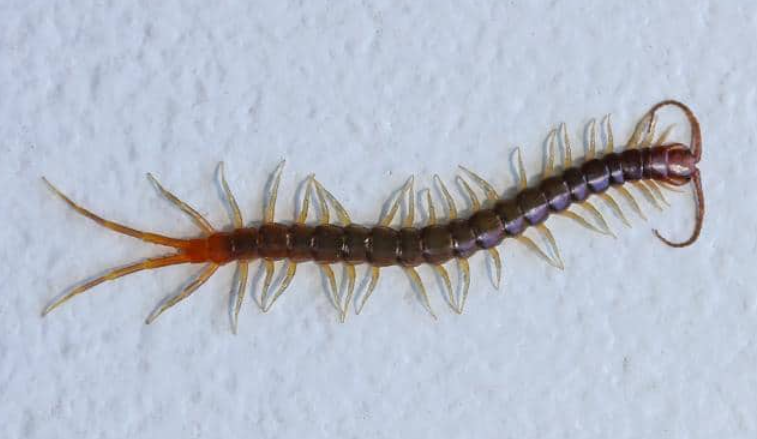
Arthropods with notably high leg counts represent some of the most ancient and structurally fascinating creatures on Earth, spanning several distinct classes including Myriapoda, Arachnida, and Crustacea. Unlike insects, which are strictly limited to six legs, these multi-legged creatures can possess anywhere from eight legs in spiders and scorpions to theoretically over a thousand in certain millipede species. The very word “arthropod” derives from the Greek for “jointed foot,” a fitting name for a group defined above all else by its segmented, leg-bearing body plan.
Millipedes alone comprise over 12,000 described species worldwide, with estimates suggesting the true number could exceed 80,000 species yet to be formally identified. The record for the most legs on any living animal belongs to the millipede species Eumillipes persephone, discovered in Western Australia in 2020, which possesses an astonishing 1,306 legs across 330 body segments. Centipedes, by contrast, always have an odd number of leg pairs, meaning no centipede ever has exactly 100 legs despite the name — most common species have between 30 and 100 legs, while larger tropical species can carry up to 354.
Multi-legged arthropods occupy nearly every terrestrial and freshwater ecosystem on the planet, from deep cave systems and rainforest floors to alpine meadows and desert soils. Many species are critical decomposers, breaking down leaf litter and organic matter and returning nutrients to the soil — millipedes alone are estimated to process up to 33% of leaf litter in some tropical forest ecosystems. Others, particularly centipedes and certain arachnids, sit near the top of invertebrate food chains as voracious predators, playing essential roles in controlling populations of insects, worms, and other small invertebrates.
Also Read: Common Bugs With Pinchers
Bugs with Lots of Legs
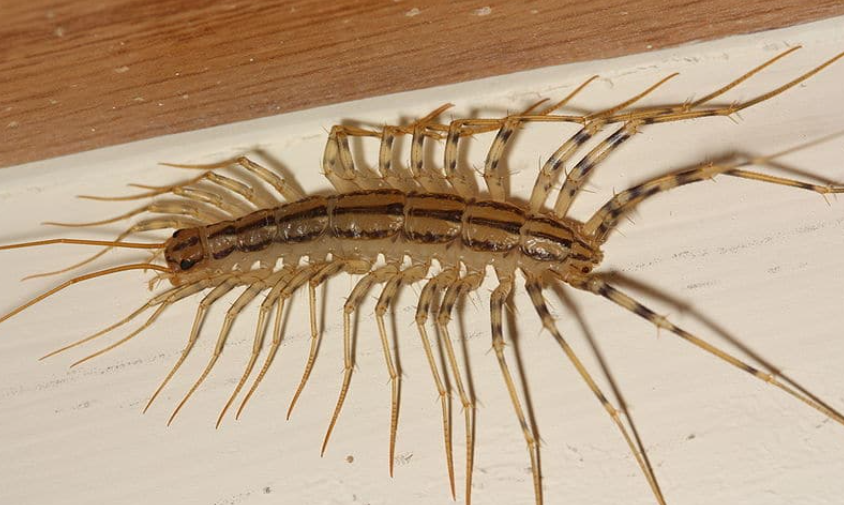
House Centipede (Scutigera coleoptrata)
The house centipede is one of the most immediately striking multi-legged creatures a person is likely to encounter indoors, sporting 15 pairs of extraordinarily long, banded legs that give it a fringed, almost ethereal appearance as it moves. It is native to the Mediterranean but has spread to homes worldwide, where it actively hunts cockroaches, moths, flies, and spiders with remarkable speed. Despite its alarming appearance, it is entirely harmless to humans and is considered a highly effective natural pest controller indoors.
Giant African Millipede (Archispirostreptus gigas)
The giant African millipede is the world’s largest millipede species, reaching up to 38 cm in length and carrying between 300 and 400 legs along its heavily armoured cylindrical body. Found across sub-Saharan Africa, it spends its life on the forest floor consuming decaying plant material and recycling nutrients back into the soil. When threatened, it coils into a tight spiral and secretes a mildly toxic fluid from glands along its sides as a chemical defence against predators.
Amazonian Giant Centipede (Scolopendra gigantea)
The largest centipede species on Earth, this South American predator can reach up to 30 cm in length and carries 21 to 23 pairs of legs — 42 to 46 legs in total — each pair slightly longer than the one before it, giving it a tapered, dynamic appearance. It is a powerful and aggressive predator capable of taking down mice, bats, frogs, and lizards, immobilising prey with venomous forcipules located just behind the head. Encounters with humans can result in extremely painful bites with localised swelling and, rarely, more serious systemic reactions.
Pill Millipede (Glomeris marginata)
The pill millipede is a compact, heavily armoured European species that closely resembles the unrelated pill woodlouse but can be distinguished by its greater number of legs — typically 17 to 19 pairs compared to the woodlouse’s seven pairs. When disturbed, it rolls into a near-perfect sphere, using its broad, overlapping tergite plates to shield its soft underside from predators. It plays an important role in deciduous woodland ecosystems as a decomposer of leaf litter and decaying wood.
Flat-Backed Millipede (Polydesmida order)
Flat-backed millipedes are a diverse order of over 3,500 species found worldwide, characterised by their dorsally flattened body with broad lateral projections called paranota that give them a distinctly ribbon-like silhouette. Most species carry between 18 and 22 pairs of legs, and many produce hydrogen cyanide from specialised glands as a potent chemical defence against predators. They are among the most important decomposers in forest ecosystems across tropical and temperate regions.
Stone Centipede (Lithobius forficatus)
The brown stone centipede is one of the most commonly encountered centipedes in European gardens and woodlands, with 15 pairs of legs and a flattened, reddish-brown body that allows it to slip beneath stones, bark, and leaf litter with ease. It is a swift and effective nocturnal predator of earthworms, slugs, spiders, and small insects. Despite its small size — typically 2 to 3 cm — it can deliver a mildly painful bite if handled carelessly.
Soil Centipede (Geophilomorpha order)
Soil centipedes are blind, thread-like centipedes adapted for burrowing through compacted soil and leaf litter, and are notable for having the highest leg counts within the class Chilopoda, with some species carrying over 177 pairs of legs — more than 350 legs in total. They are found on every continent except Antarctica and are among the most abundant predatory invertebrates in garden and agricultural soils. Their slender, elongated bodies and numerous legs allow them to navigate the tightest soil pores in search of worms and insect larvae.
Tailless Whip Scorpion (Amblypygi order)
Tailless whip scorpions are ancient arachnids with eight walking legs plus an extraordinarily elongated front pair of legs modified into sensory whips that can reach many times the body length, giving the impression of a creature with ten or more legs. Found in tropical and subtropical regions worldwide, they are entirely harmless to humans despite their spine-chilling appearance. They are nocturnal ambush predators of insects and other invertebrates, using their whip-like front legs to detect vibrations and guide prey toward their chelicerae.
Harvestman (Phalangium opilio)
Often mistaken for spiders, harvestmen are arachnids with eight extremely long, spindly legs relative to their tiny, fused body — creating the illusion of a body suspended impossibly high above the ground. Unlike spiders, they have no venom, no silk glands, and only a single pair of eyes. They are found across every continent except Antarctica in over 6,500 described species and feed on a varied diet of small invertebrates, plant material, fungi, and carrion.
Also Read: Beetles With Red and Black
Pill Woodlouse (Armadillidium vulgare)
The pill woodlouse, or roly-poly bug, is a terrestrial crustacean rather than a true insect, carrying seven pairs of legs — 14 legs in total — along its segmented, armoured body. Found across Europe, North America, and beyond, it is one of the few crustaceans fully adapted to life on land and plays a critical role in breaking down decaying plant material in garden soils. When threatened, it rolls into a perfectly smooth sphere, using its overlapping armour plates for protection in a manner strikingly similar to the pill millipede.
Red-headed Centipede (Scolopendra polymorpha)
Common across the southern United States and Mexico, the red-headed centipede is a robust, fast-moving predator with 21 pairs of legs and a striking reddish-orange head contrasting with a yellow-green body. It is one of the most frequently encountered large centipede species in North American deserts and grasslands, sheltering beneath rocks, logs, and debris during the day and emerging at night to hunt. Its venomous bite is painful but rarely dangerous to healthy adults.
Millipede (Narceus americanus)
The American giant millipede is the largest millipede species native to North America, reaching up to 10 cm in length and carrying over 100 pairs of legs. It is found in deciduous forests across the eastern United States, where it feeds on decaying leaves, fungi, and rotting wood. When disturbed, it releases a reddish-brown secretion containing cyanide compounds that stains skin and deters most predators, though it is entirely harmless to handle with clean hands.
Sea Spider (Pycnogonida class)
Sea spiders are marine arthropods found in oceans worldwide, from shallow tide pools to depths exceeding 7,000 metres, and most species carry four pairs of walking legs though some deeper-water species possess five or six pairs — giving them 8 to 12 legs in total. Their bodies are so reduced that their digestive and reproductive organs extend into their legs, as the trunk itself is too small to contain them. Despite resembling terrestrial spiders, they belong to an entirely separate arthropod lineage and feed on soft-bodied marine invertebrates such as sea anemones and bryozoans.
Scutigerella (Scutigerella immaculata)
The garden symphylan, or garden centipede, is a tiny, fast-moving soil arthropod with 12 pairs of legs that is frequently mistaken for a small centipede but belongs to its own distinct class, Symphyla. Measuring just 2 to 8 mm in length, it lives in the top layers of agricultural and garden soils, where it feeds on the roots and seedlings of crops, sometimes causing significant damage in large numbers. A single square metre of fertile garden soil may contain hundreds of individual symphylans.
Desert Centipede (Scolopendra heros)
The giant desert centipede of North America is the continent’s largest centipede, reaching up to 20 cm in length, with 21 to 23 pairs of striking yellow and black banded legs. Found across the arid landscapes of the southwestern United States and northern Mexico, it is a powerful predator of insects, lizards, frogs, and small rodents. It is considered one of the more medically significant centipedes in North America, with bites producing intense, prolonged pain and occasional swelling.
Vinegaroon (Mastigoproctus giganteus)
The giant vinegaroon is a large arachnid found in the southern United States and Mexico with eight walking legs plus a heavily modified front pair of appendages that function as sensory probes, giving it a total of ten functional limb-like structures. When threatened, it sprays a mixture of acetic acid — essentially concentrated vinegar — from glands at the base of its whip-like tail, which gives the group its evocative common name. Despite its fearsome appearance, it is entirely harmless to humans beyond the acrid spray.
Cave Centipede (Thereuopoda longicornis)
This long-legged cave-dwelling centipede found across Southeast Asia and the Pacific is closely related to the house centipede and similarly carries 15 pairs of remarkably elongated legs, allowing it to sprint across cave walls and ceilings with surprising agility. It is a top invertebrate predator within cave ecosystems, feeding on cave crickets, cockroaches, and other arthropods that shelter in subterranean environments. Some individuals are recorded at over 10 cm in body length, with their legs extending the apparent span considerably further.
Rusty Millipede (Trigoniulus corallinus)
The rusty millipede is a small, vibrantly coloured species found across Southeast Asia and the Pacific, with a distinctive reddish-orange body and approximately 30 to 40 pairs of pale legs. It is one of the most commonly kept millipede species in the exotic pet trade due to its compact size, hardy nature, and striking appearance. In its natural habitat, it is a prolific decomposer of leaf litter and decaying wood on the floors of tropical forests and gardens.
Whip Scorpion (Typopeltis species)
Asian whip scorpions are arachnids with eight walking legs and a long, whip-like tail, found in humid forest environments across South and East Asia. Like their New World relatives, they produce acetic acid as a defensive spray and use their powerful, pincer-bearing pedipalps to grasp and subdue prey. They are nocturnal hunters that prey on insects, worms, and slugs, using chemosensory information from their front legs and tail filament to navigate in complete darkness.
Bark Centipede (Cryptops hortensis)
The cryptopid or bark centipede is a small, eyeless European species typically measuring just 2 to 3 cm, with 21 pairs of legs and a pale, straw-coloured body adapted for life beneath the bark of rotting logs and within compacted leaf litter. Its lack of eyes is compensated for by highly sensitive antennae that detect chemical and vibrational cues from prey and predators alike. It is a common and beneficial predator of small insects, worms, and soil invertebrates in garden and woodland habitats.
Banded Millipede (Apheloria virginiensis)
One of North America’s most visually striking millipedes, the banded millipede displays vivid black, orange, and yellow warning colouration and can produce significant quantities of hydrogen cyanide from glands along its body when threatened. It is found in deciduous forests of the eastern United States, where it moves through leaf litter processing decaying organic matter. Birds and small mammals quickly learn to avoid this species after a single unpleasant encounter with its chemical defences.
Long-legged Cave Cricket (Diestrammena asynamora)
Though technically an insect with only six legs, the camel cricket or cave cricket earns its place on this list through the extraordinary length and number of its visible leg-like appendages — six true legs plus massively elongated antennae and prominent ovipositor filaments that create the impression of a creature with ten or more limbs. Found in caves, basements, and dark outbuildings across Asia, Europe, and North America, it navigates in complete darkness using its antennae as tactile sensors. Its remarkable jumping ability, powered by its enlarged hind legs, allows it to leap distances of up to three feet to escape predators.