Ticks are small, blood-feeding arachnids belonging to the order Ixodida, and their distinctive oval, flattened body shape, eight legs, and small head have been replicated across a surprisingly wide range of unrelated arthropods through convergent evolution. Many insects, arachnids, and other invertebrates share the tick’s characteristic low-profile silhouette, dark colouration, and rounded abdomen — features that frequently cause alarm when encountered in gardens, homes, and on pets. With over 900 described tick species worldwide, the template they represent is well established in the public consciousness, making tick-like appearance one of the more common sources of misidentification among arthropods.
The confusion surrounding tick lookalikes has genuine public health implications, as ticks are vectors of over 16 significant human diseases including Lyme disease, Rocky Mountain spotted fever, and tick-borne encephalitis. In the United States alone, approximately 476,000 people are diagnosed and treated for Lyme disease annually, driving widespread anxiety about any small, dark, oval-bodied arthropod found on skin, clothing, or pets. This heightened awareness, while important, also leads to the frequent misidentification of completely harmless insects and arachnids as ticks, causing unnecessary concern.
Tick lookalikes span multiple arthropod classes and orders, from true arachnids such as spider beetles and pseudoscorpions to insects including louse flies, carpet beetles, and certain true bugs. The shared features that create confusion include a broadly oval to teardrop-shaped body, a small or partially hidden head, a flattened dorsal profile, brown to reddish-black colouration, and slow deliberate movement. Understanding which common arthropods mimic the tick’s appearance — and how to distinguish them — is a genuinely useful skill for anyone spending time outdoors or working with animals.
Also Read: Bugs with Lots of Legs
Bugs That Look Like Ticks
Clover Mite (Bryobia praetiosa)
The clover mite is one of the most commonly mistaken tick lookalikes, a tiny red to reddish-brown arachnid measuring just 0.75 mm that invades homes in vast numbers during spring and autumn. Unlike ticks, it has eight legs with the front pair notably elongated and held forward like antennae, and it feeds exclusively on plant sap rather than blood. Clover mites leave a distinctive red stain when crushed and pose absolutely no health risk to humans or animals, but their sudden mass appearances on windowsills and walls cause significant alarm.
Spider Beetle (Mezium americanum)
The spider beetle is a small stored-product beetle with a glossy, rounded abdomen and long legs that give it a superficial resemblance to both a spider and a tick when viewed from above. Found in pantries, warehouses, and old buildings worldwide, it feeds on dried organic matter including flour, spices, seeds, and animal products. Its dark reddish-brown to black colouration, oval body, and slow movement frequently cause it to be mistaken for a feeding tick, particularly when found on or near pets or bedding.
Bat Fly (Nycteribia species)
Bat flies are highly specialised, blood-feeding parasites of bats that have lost their wings entirely and evolved a flattened, oval body with long, crab-like legs — creating a remarkably tick-like silhouette. Found in bat roosts across Europe, Asia, and beyond, they spend their entire lives on their bat hosts and are rarely encountered by humans except when inspecting bat colonies. Their appearance is so convincingly tick-like that entomologists themselves occasionally double-check before making an identification.
Also Read: Common Bugs With Pinchers
Louse Fly (Hippobosca equina)
The forest fly or louse fly is a flattened, winged or partially winged parasitic fly found on horses, deer, and cattle across Europe and Asia, with a leathery, broadly oval body that closely mimics a tick’s profile when it presses flat against host skin. It is a strong flier but immediately flattens and grips tightly upon landing on a host, making it feel and look very much like an attached tick. Its legs are powerful and claw-tipped, allowing it to resist removal in a manner that further reinforces the resemblance.
Poplar Weevil (Cimberis attelaboides)
This small European weevil has a compact, oval reddish-brown body with a relatively small head that, when viewed from above, closely resembles a partially engorged tick. Found on pollen-bearing catkins of willows and poplars, it moves slowly and deliberately along stems and foliage. While its elongated snout distinguishes it on close inspection, a casual glance at this small, dark, rounded beetle on skin or clothing is sufficient to cause genuine tick-related anxiety.
Drugstore Beetle (Stegobium paniceum)
The drugstore beetle is a small, broadly oval stored-product beetle with a humped thorax that partially conceals its head when viewed from above, giving it a deceptively tick-like profile. Found worldwide in pantries, libraries, and homes, it infests an extraordinary range of dry goods including bread, spices, books, and even pharmaceutical tablets. Its reddish-brown colour and slow crawling movement on kitchen surfaces regularly prompts worried tick inquiries, particularly in households with pets.
Variegated Carpet Beetle (Anthrenus verbasci)
The variegated carpet beetle is a tiny, rounded beetle patterned in white, black, and yellowish-brown scales that create a mottled appearance somewhat resembling certain tick species. At just 2 to 4 mm in length, it is found worldwide in homes, museums, and warehouses, where larvae damage natural fibres, taxidermy, and stored food products. The adult’s oval shape, small head, and slow movement on surfaces make it a regular candidate for tick misidentification, especially in spring when adults emerge indoors.
Psocid (Liposcelis bostrychophila)
Booklice or psocids are tiny, soft-bodied insects measuring just 1 to 2 mm with a broadly oval abdomen, small head, and pale to yellowish-brown colouration. Found in humid environments including old books, stored grains, and bathroom walls, they feed on moulds, fungi, and organic debris. While not especially tick-like in structure, their size, flattened profile, and habit of moving slowly across skin and surfaces in groups causes frequent misidentification, particularly among people already alert to tick exposure.
Bedbug (Cimex lectularius)
The common bedbug is perhaps the most convincingly tick-like insect in the domestic environment, sharing the tick’s broadly oval, mahogany-brown, dorsally flattened body and blood-feeding lifestyle. At 4 to 7 mm when unfed, it falls squarely within the size range of many common tick species, and its habit of emerging at night to feed on sleeping humans amplifies the confusion with biting ticks. The key distinction is that bedbugs have six legs and a more distinctly segmented abdomen with a characteristically banded appearance.
Also Read: Insects That Glow at Night
Sheep Ked (Melophagus ovinus)
The sheep ked is a wingless, parasitic fly that lives permanently in the wool of sheep and goats across most of the world, with a leathery, flattened, oval body and powerful gripping legs that make it essentially indistinguishable from a tick at a casual glance. Farmers and vets routinely find sheep keds during tick checks and must examine the number of legs — six for the ked versus eight for a tick — to make a correct identification. Despite being a fly, it feeds on blood and can cause anaemia and skin irritation in heavily infested animals.
Deer Louse Fly (Lipoptena cervi)
The deer ked is a parasitic fly that sheds its wings after landing on a deer host and spends the rest of its life as a flattened, wingless, tick-like parasite buried within the animal’s coat. In regions where deer populations are high, deer keds increasingly land on and attempt to parasitise humans, causing considerable alarm due to their tick-like appearance and determined burrowing behaviour through hair. Unlike ticks, they cannot successfully feed on human blood for extended periods, but their presence is deeply unsettling and can cause localised skin reactions.
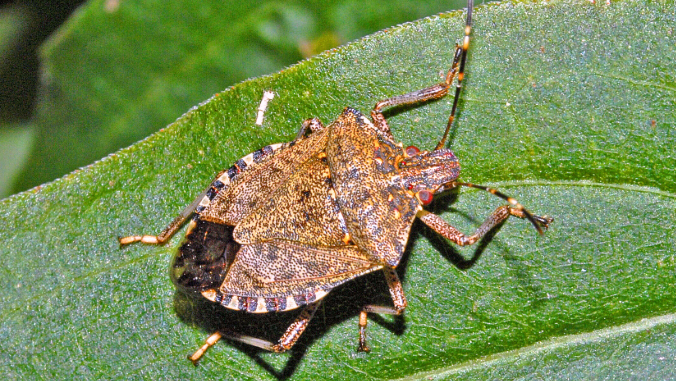
Brown Marmorated Stink Bug (Halyomorpha halys)
The nymph stages of the brown marmorated stink bug are small, oval, reddish-brown insects that bear a passing resemblance to certain tick species before their characteristic shield shape and colour pattern fully develop. Originating from East Asia and now invasive across North America and Europe, the nymphs are flat, rounded, and move slowly across plant surfaces. While an adult stink bug is immediately recognisable, early-instar nymphs found on skin or clothing are frequently reported as possible ticks by concerned homeowners.
Soft Tick (Ornithodoros species)
Soft ticks themselves are frequently mistaken for hard ticks and vice versa, but their leathery, wrinkled, bean-shaped body without a visible scutum creates a distinctly different — and often more alarming — appearance. Found in animal burrows, bird nests, caves, and rustic cabins across Africa, the Americas, and Central Asia, they feed rapidly on hosts for minutes rather than days. Several species are vectors of relapsing fever bacteria, making correct identification genuinely important rather than merely academic.
Mite (Trombidium holosericeum)
The red velvet mite is a large, brilliantly scarlet arachnid found in garden soil and leaf litter across Europe, Asia, and North America, and while its vivid red colouration sets it apart from ticks, its broadly oval body, eight legs, and arachnid build cause regular misidentification among unfamiliar observers. Adults are actually predators of small arthropods and insect eggs, while larvae are parasitic on insects. The combination of its size — up to 4 mm — and its sudden appearance on skin during outdoor work is a reliable source of tick-related alarm.
False Spider Mite (Brevipalpus species)
False spider mites are tiny, flattened, reddish to brownish arachnids that closely resemble miniature ticks under magnification, with the same eight-legged, oval-bodied plan and slow deliberate movement across plant surfaces. Several species are significant agricultural pests, transmitting plant viruses to citrus, tea, and ornamental plants across tropical and subtropical regions worldwide. Their tick-like appearance under a hand lens frequently causes concern among gardeners and horticulturalists unfamiliar with the group.
Seed Bug (Rhyparochromus vulgaris)
The seed bug is a small, oval, dark reddish-brown true bug found across Europe and increasingly in North America, where it has established invasive populations. Its flattened, oval body, small head, and habit of wandering indoors during autumn closely mimics the profile of a deer tick to the casual observer. It feeds entirely on plant seeds and poses no risk whatsoever to humans or animals, but its tendency to aggregate on walls and enter homes in large numbers during cooler months generates significant tick-related concern.
Plum Curculio (Conotrachelus nenuphar)
This North American weevil has a broadly rounded, humped body with a mottled brownish-grey pattern and a partially concealed head, giving it a convincing tick-like silhouette when found on skin or fruit. It is a significant agricultural pest of stone fruits and apples across the eastern United States and Canada, with females cutting characteristic crescent-shaped scars in developing fruit to lay their eggs. The weevil’s habit of dropping and playing dead when disturbed — landing on forearms and hands — is a particularly reliable source of tick misidentification in orchards.
Poultry Mite (Dermanyssus gallinae)
The red poultry mite is a blood-feeding arachnid found in chicken coops and bird nests worldwide, measuring just 0.6 to 1 mm but swelling to a visible red dot after a blood meal. It shares the tick’s eight-legged arachnid body plan and blood-feeding lifestyle, and infestations in backyard chicken flocks are consistently mistaken for tick problems. It is primarily nocturnal, hiding in cracks and perches during the day and emerging to feed on roosting birds at night, though it will bite humans given the opportunity.
Flat Bug (Aradus species)
Flat bugs are extraordinarily dorsally compressed true bugs found beneath bark and in fungal fruiting bodies across temperate forests worldwide, with a body so flattened and oval that they present an almost perfect tick-like silhouette from above. They feed on fungal hyphae rather than blood and are entirely harmless to animals and humans. Their dark brown to black colouration, small concealed head, and slow movement across bark surfaces make them one of the more convincing tick mimics in woodland environments.
Also Read: Beetles With Red and Black
Hairy Fungus Beetle (Mycetophagus quadripustulatus)
This small European and North American fungus beetle has a compact, oval, reddish-brown body patterned with darker markings that create a mottled appearance somewhat reminiscent of the patterning seen on certain tick species. Found beneath bark and in fungal growth on decaying wood, it feeds exclusively on fungal material and spores. Its size, shape, and habit of moving slowly across wood surfaces and occasionally onto hands during outdoor work make it a recurring source of tick confusion.
Itch Mite (Sarcoptes scabiei)
The scabies mite is a microscopic eight-legged arachnid that burrows into human and animal skin, causing the intensely itchy condition known as scabies. While far too small to be visible to the naked eye — measuring just 0.2 to 0.4 mm — the sensation of its burrowing and the resulting rash are frequently attributed to ticks by affected individuals before a medical diagnosis is made. Globally, scabies affects over 200 million people at any given time, making this the most medically significant tick lookalike in terms of public health impact.
Oak Mite (Pyemotes herfsi)
The oak leaf itch mite is a microscopic predatory mite that feeds on the larvae of midges within oak leaf galls, but readily bites humans who disturb infested trees or fallen leaves during autumn. Though invisible to the naked eye, the intensely itchy welts it produces are almost universally attributed to ticks by affected individuals, leading to widespread misdiagnosis during outbreak years. In 2004, an outbreak in Kansas affecting thousands of people was initially widely reported as a tick infestation before the true culprit was identified.
Booklouse (Liposcelis decolor)
This pale, almost translucent psocid is found in humid homes, greenhouses, and stored grain facilities worldwide, with a soft, broadly oval body, small head, and six legs. Its rounded abdomen and pale brownish colouration give it a tick-like silhouette when discovered in bedding or on skin, particularly in households already anxious about tick exposure. It is entirely harmless, feeding on mould, fungi, and starchy organic material, and its presence is almost always an indicator of excess humidity rather than any parasitic infestation.
Bat Mite (Spinturnix species)
Bat mites are specialised ectoparasites of bats, with a broadly oval, pale to yellowish-brown body and eight legs that create a convincing tick-like appearance on the wing membranes and fur of their hosts. When bat colonies roost in attics or roof spaces and are disturbed, bat mites sometimes migrate into living areas and bite human occupants, causing localised irritation. Their presence is almost invariably misidentified as a tick infestation by homeowners, requiring professional entomological assessment to distinguish them from medically significant species.
Strawberry Root Weevil (Otiorhynchus ovatus)
This small, rounded, shiny black weevil has a compact, oval body with a small, partially tucked head that creates an almost perfect tick-like silhouette at first glance. It is found across North America and Europe, where larvae feed on the roots of strawberries, raspberries, and ornamental plants, and adults regularly wander indoors during summer evenings. Its tendency to be found on skin and clothing after garden work, combined with its size and dark colouration, makes it one of the most frequently misidentified tick lookalikes in temperate gardens.
Chicken Louse (Menopon gallinae)
The shaft louse is a flattened, pale yellowish-brown insect parasite of domestic chickens found worldwide, with a broadly oval abdomen, small head, and clinging legs that give it a tick-like profile when discovered during poultry handling. Unlike ticks, it has six legs and feeds on feather barbules and skin scales rather than blood, spending its entire life cycle on its host. Backyard poultry keepers frequently confuse it with ticks during routine health checks, particularly when unfamiliar with the range of external parasites that affect birds.
Cheese Mite (Tyrophagus casei)
Cheese mites are tiny, pale arachnids with eight legs and a broadly oval body that inhabit aged cheeses, cured meats, and stored grain products worldwide. At just 0.5 mm in length, they are barely visible to the naked eye but become noticeable as a moving, dusty layer across the surface of infested food products. Their eight-legged arachnid body plan, rounded shape, and occasional occurrence on human skin during food handling make them a minor but recurring source of tick-related concern among food producers and home cheesemakers.
Tortoise Beetle (Cassida species)
Tortoise beetles are a group of leaf beetles whose broad, dome-shaped elytra and pronotum extend well beyond the body margins, completely concealing the head and legs when the insect presses flat against a leaf surface — creating a remarkably convincing imitation of an engorged tick. Found across Europe, Asia, and the Americas on plants in the bindweed and thistle families, different species display greens, golds, and reddish-browns that mimic the colouration of various tick species. When dislodged onto skin, their flat, oval profile and habit of remaining motionless causes immediate tick-related alarm in most observers.