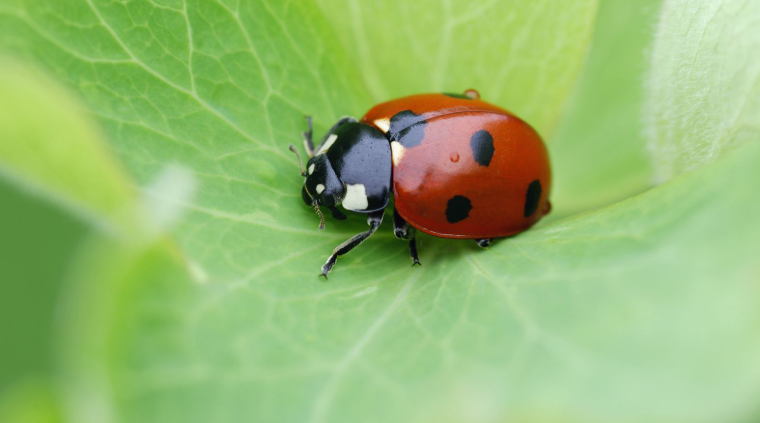
Ladybugs, also known as ladybirds or lady beetles, are small, brightly colored beetles belonging to the family Coccinellidae. Found on every continent except Antarctica, there are over 6,000 species worldwide, making them one of the most diverse beetle families on Earth. Their iconic appearance — dome-shaped bodies with bold patterns of red, orange, or yellow — has made them universally recognized and widely beloved across many cultures.
These insects are celebrated as some of nature’s most effective pest controllers. A single ladybug can consume up to 5,000 aphids during its lifetime, making them invaluable allies for farmers and gardeners alike. They also feed on mites, scale insects, whiteflies, and other soft-bodied pests. Because of this appetite for agricultural nuisances, ladybugs have been used in biological pest control programs across North America, Europe, and Asia for well over a century.
Ladybugs undergo complete metamorphosis — egg, larva, pupa, and adult — and their life cycle typically spans one to two years depending on species and climate. Females can lay up to 1,000 eggs in a single season, usually depositing small yellow clusters on the undersides of leaves near aphid colonies. Their bright colors serve as a warning to predators, a strategy known as aposematism, signaling that they taste unpleasant. When threatened, they can also release a foul-smelling fluid from their leg joints in a defense mechanism called reflex bleeding.
Despite their small size — most species measure between 1 mm and 10 mm — ladybugs have significant ecological and economic importance. In the United States alone, they are estimated to save farmers billions of dollars annually in pest damage prevention. Their populations, however, are under growing pressure from habitat loss, pesticide use, and the spread of invasive species. Conservation efforts in Europe and North America are increasingly focused on monitoring native ladybug populations, several of which have declined sharply over the past two decades.
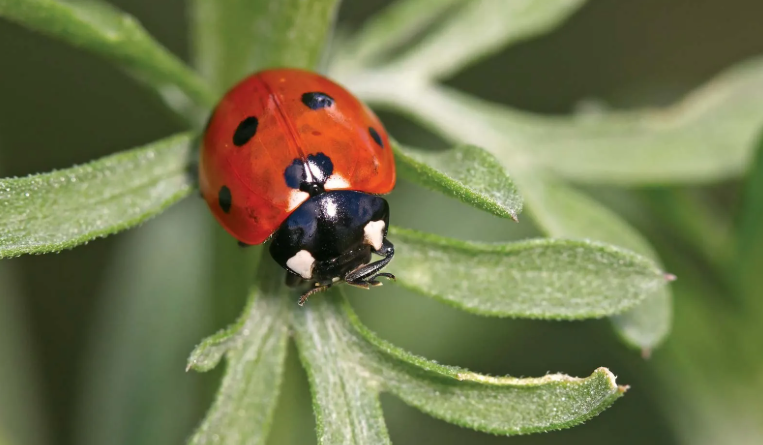
Also Read: Bugs That Look Like Ladybugs
Types of Ladybug
Seven-Spotted Ladybug (Coccinella septempunctata)
The seven-spotted ladybug is perhaps the most iconic species in the world, featuring a vivid red body adorned with seven black spots. Native to Europe and Asia, it was intentionally introduced to North America in the mid-20th century as a biological control agent. It is one of the largest common ladybugs, reaching up to 8 mm, and is highly effective at controlling aphid populations in both agricultural and garden settings.
Two-Spotted Ladybug (Adalia bipunctata)
The two-spotted ladybug is a small, highly variable species that can appear in red with black spots or black with red spots depending on temperature and genetics. Native to Europe and North America, it is a prolific aphid predator and one of the most studied ladybug species in the world. Its population has declined sharply in parts of the UK and Europe due to competition from introduced species.
Asian Lady Beetle (Harmonia axyridis)
Originally native to Asia, this species was introduced to North America and Europe as a biological control agent but has since become invasive in many regions. It is larger and more aggressive than most native ladybugs and is known for its habit of invading homes in large numbers during autumn to overwinter. Its presence has been linked to the decline of several native ladybug populations across the Northern Hemisphere.
Nine-Spotted Ladybug (Coccinella novemnotata)
Once the most common ladybug in North America and the official state insect of New York, the nine-spotted ladybug has experienced a dramatic population collapse since the 1980s. Scientists believe its decline is linked to the introduction of competing non-native species and changes in agricultural land use. Conservation programs have been working to locate remaining populations and reintroduce the species to parts of its former range.
Convergent Lady Beetle (Hippodamia convergens)
Named for the two converging white lines on its pronotum, this species is one of the most common and commercially harvested ladybugs in North America. It congregates in enormous overwintering aggregations in mountain foothills, sometimes numbering in the millions, and is widely sold for garden pest control. A single adult can consume hundreds of aphids per day, making it a highly valued natural predator.
Twenty-Two-Spotted Ladybug (Psyllobora vigintiduopunctata)
Unlike most ladybugs, the twenty-two-spotted species feeds on mildew and fungus rather than insects, giving it a unique ecological role. It is bright yellow with exactly twenty-two black spots and is found across Europe and parts of Asia. Its small size — typically around 3 to 4 mm — makes it easy to overlook, but it is a common sight on low-growing plants and grasses.
Scarlet Lily Beetle (Lilioceris lilii)
Though closely related to ladybugs, the scarlet lily beetle is actually a leaf beetle known for the significant damage it causes to lily plants and fritillaries. Brilliantly red with a black underside, it is native to Europe and Asia but has become an invasive pest in North America. Gardeners and horticulturalists consider it one of the most destructive insects to ornamental bulb plants.
Also Read: Beetles With Red and Black
Orange Ladybug (Halyzia sedecimguttata)
Also known as the orange ladybird, this species is distinguished by its pale orange color and cream-colored spots — a pattern that sets it apart from the typical red-and-black design. Native to Europe, it feeds primarily on mildew found on sycamore and ash trees rather than on insect prey. It has actually benefited from the spread of ash dieback disease in some regions, as the resulting fungal growth provides an abundant food source.
Fourteen-Spotted Ladybug (Propylea quatuordecimpunctata)
This small but charming European species features a yellow or cream body with rectangular black spots that can sometimes merge to create a checkerboard-like pattern. It is commonly found in grasslands, hedgerows, and woodland edges and is an active predator of aphids and other small insects. Its variable spot pattern makes individual identification particularly interesting for entomologists and naturalists.
Cream-Streaked Ladybird (Harmonia quadripunctata)
A relatively large species found across Europe and parts of Asia, the cream-streaked ladybird has a pale pinkish-red base color decorated with black spots and distinctive cream-colored streaks on its pronotum. It tends to favor coniferous and mixed woodland habitats and is frequently found on pine trees. Though not as commonly studied as other species, it plays a meaningful role in controlling insect pests on forest trees.
Striped Ladybug (Myzia oblongoguttata)
One of the largest ladybug species found in Europe, the striped ladybug features a warm brown or chestnut-red base color with elongated cream-colored streaks rather than round spots. It is strongly associated with pine forests and spends much of its time high in the canopy hunting pine aphids. Its size and habitat preference make it a distinctive species among European ladybug enthusiasts.
Eyed Ladybird (Anatis ocellata)
The eyed ladybird is the largest native ladybug species in Britain and one of the most visually striking, featuring red wing covers with black spots each surrounded by a pale cream ring, giving the impression of eyes. It is closely associated with pine trees and coniferous forests, where it hunts aphids and scale insects at height. Its impressive size — up to 9 mm — and distinctive patterning make it unmistakable in the field.
Hieroglyphic Ladybug (Coccinella hieroglyphica)
This small, rare species is found in heathland habitats across northern Europe and is named for its unusual, irregular spot patterns that resemble ancient script or hieroglyphs. It is strongly associated with heather plants and the insects that feed on them, making it vulnerable to heathland degradation and loss. In the United Kingdom, it is classified as a species of conservation concern.
Pink-Spotted Ladybug (Coleomegilla maculata)
Unlike the typical round body of most ladybugs, the pink-spotted ladybug has a more elongated oval shape and a distinctive pink or light red color with black spots. It is common across North America and is notable for being one of the few ladybug species that supplements its insect diet with pollen, giving it broader ecological flexibility. This omnivorous habit helps it survive in environments where aphid populations are temporarily low.
Transverse Ladybug (Coccinella transversalis)
Native to Australia, New Zealand, and parts of Asia, the transverse ladybug is a highly adaptable and widespread species recognized by its red body and black markings that often run transversely across the wing covers. It is a voracious predator of aphids, scale insects, and mites and is considered one of the most important native biocontrol agents in Australian agriculture. It thrives in both natural bushland and cultivated environments.
Steel-Blue Ladybug (Halmus chalybeus)
One of the more unusual-looking species, the steel-blue ladybug is a small, metallic blue-green beetle native to Australia that looks strikingly different from the typical red-spotted image most people associate with ladybugs. It was deliberately introduced to New Zealand as a biocontrol agent against citrus scale insects and has established itself successfully there. Its jewel-like appearance makes it a favorite among insect photographers.
Vedalia Beetle (Rodolia cardinalis)
The vedalia beetle holds a celebrated place in the history of biological pest control, becoming the first insect ever deliberately used to control an agricultural pest when it was introduced to California in 1888 to combat the cottony cushion scale devastating citrus crops. Its dramatic success — virtually eliminating the pest within two years — is considered a landmark moment in integrated pest management. Native to Australia, it remains an important biocontrol agent in citrus-growing regions worldwide.
Larch Ladybug (Aphidecta obliterata)
As its name suggests, the larch ladybug is intimately associated with larch trees and coniferous forests, where it preys on aphids that infest the needles and branches. It has an unusually pale brown or tan coloring with faint spots, making it one of the less conspicuous ladybug species in European forests. Its camouflaged appearance is thought to offer better protection against predators in the bark and wood environments it inhabits.
Parenthesis Ladybug (Hippodamia parenthesis)
Named for the curved, parenthesis-shaped markings on its red wing covers, this North American species is a widespread and ecologically important predator of aphids and other soft-bodied plant pests. It is commonly found in meadows, roadsides, and gardens and is one of several native Hippodamia species that have been displaced from parts of their range by invasive competitors. Despite this pressure, it remains a reasonably common sight across much of the continent.
Also Read: Bugs That Look Like Ticks But Aren’t
Spotless Ladybug (Cycloneda sanguinea)
The spotless ladybug defies the classic ladybug image by having a completely plain red or orange body with no spots whatsoever. It is found across the Americas, from the southern United States down through South America, and is a highly effective predator of aphids and citrus-damaging insects. Its clean, unmarked appearance makes it one of the easiest ladybug species to identify despite — or because of — its lack of distinguishing spots.
Ash Gray Ladybug (Olla v-nigrum)
The ash gray ladybug is a fascinating species that comes in two distinct color forms: a pale gray variety with black spots and a much rarer black variety with two red spots. Found across North and Central America, it is particularly associated with mesquite and acacia trees in arid and semi-arid regions. It feeds primarily on psyllids — tiny sap-sucking insects — making it a valuable predator in desert and dryland ecosystems.
Three-Banded Ladybug (Coccinella trifasciata)
Native to North America, the three-banded ladybug is recognizable by its reddish-orange wing covers marked with black spots that are sometimes arranged in three distinct transverse bands. It is found in a range of habitats including meadows, gardens, and agricultural fields and feeds predominantly on aphids and other small pest insects. Like several other native North American species, its populations have faced pressure from introduced competitors in recent decades.
Glowing Ladybug (Illeis galbula)
Found in Australia and parts of Southeast Asia, the glowing ladybug is a vivid yellow species that feeds almost entirely on powdery mildew rather than aphids, placing it in the same fungus-feeding ecological niche as the twenty-two-spotted ladybug of Europe. Its bright yellow coloring serves as a warning to potential predators, advertising its unpalatable defensive chemicals. It is commonly found in gardens and vegetable patches where mildew problems arise on cucurbits and other plants.
Thirteen-Spotted Ladybug (Hippodamia tredecimpunctata)
A medium-sized species found across Europe, Asia, and North America, the thirteen-spotted ladybug inhabits wetlands, riverbanks, and marshy areas more than most other ladybug species. It has a particularly elongated body shape compared to the classic round profile and feeds on the aphids that colonize reeds, rushes, and moisture-loving plants. Its preference for wetland habitats makes it sensitive to the draining and degradation of these ecosystems.
Five-Spotted Ladybug (Coccinella quinquepunctata)
This small European species is found across a range of open habitats including river shingle banks, grasslands, and heathlands, with a preference for sandy or gravelly ground. It has a bright red body with five black spots and is a swift, agile predator of aphids. Although widespread across continental Europe, it is considered scarce in some northern parts of its range and is monitored as part of wider ladybug conservation initiatives.
Also Read: Different Types of Beetles
Kidney-Spot Ladybug (Chilocorus renipustulatus)
Distinguished by its jet-black body and two striking red kidney-shaped spots on its wing covers, this species is one of the most visually distinctive ladybugs in Europe. It is closely associated with trees and shrubs affected by scale insects, which form the primary part of its diet. The kidney-spot ladybug can often be found on willows, hawthorns, and other woody plants where it hunts scale colonies beneath loose bark.
Rhyzobius Forestieri (Rhyzobius forestieri)
This small, hairy-looking brown ladybug from Australia has become an important biocontrol agent in Mediterranean climates around the world, particularly in controlling soft scale insects in citrus and olive groves. Unlike the sleek, smooth appearance of most ladybugs, its dense covering of fine hairs gives it an almost fuzzy texture that makes it easily distinguishable. It has been successfully introduced to parts of southern Europe and California for scale control programs.
Water Ladybug (Anisosticta novemdecimpunctata)
Also known as the nineteen-spotted ladybug, this slender European species is uniquely adapted to life in wetland habitats, spending much of its time among reeds and sedges along rivers and lake edges. Its body is more elongated than most ladybugs, with a pale pink or cream base color marked with numerous small black spots. It overwinters by burrowing into reed litter and leaf debris at the water’s edge, a behavior that sets it apart from most of its relatives.
Harlequin Ladybug (Harmonia axyridis f. succinea)
While the harlequin is the same species as the Asian lady beetle, this particular color form deserves individual recognition for its highly variable and striking appearance — ranging from yellow-orange with numerous small black spots to bold black with four orange spots. It is the most invasive ladybug on the planet and has been documented in over 40 countries outside its native range. Conservation scientists regard it as one of the most significant threats to native ladybug biodiversity globally.
Mealy Plum Aphid Predator (Coccinula quatuordecimpustulata)
This small, pale-spotted European species is a specialist predator found in orchards and scrubland, where it feeds on mealy aphids that colonize plum, hawthorn, and related fruit trees. Its cream or yellowish base color with black spots provides effective camouflage against pale bark surfaces. Though not widely known outside entomological circles, it is a beneficial presence in fruit-growing regions across central and eastern Europe.
Coccidophilus citricola
A tiny, inconspicuous ladybug native to South America, this species has been widely deployed as a biocontrol agent for armored scale insects in citrus plantations across tropical and subtropical regions. Measuring just 1 to 2 mm in length, it is one of the smallest commercially used ladybug species and is barely visible to the naked eye. Despite its diminutive size, it has proven highly effective in reducing populations of citrus snow scale in Brazil and other citrus-producing countries.
Epilachna Varivestis — Mexican Bean Beetle
Unlike the vast majority of ladybug species, the Mexican bean beetle is a plant-feeder rather than a predator, making it a pest rather than a garden ally. Its larvae and adults feed directly on the leaves and pods of bean plants, skeletonizing foliage and causing significant crop losses. Native to Mexico and Central America, it has spread into the United States and is now considered one of the most damaging pests of legume crops in eastern North America.
Subalpine Ladybug (Coccinella montana)
As its name suggests, the subalpine ladybug is adapted to high-altitude environments and is found in mountainous regions across Europe and Central Asia, often at elevations above 2,000 metres. It has a compact, robust build suited to the short alpine summers and cool temperatures of its habitat and feeds on the aphids that colonize high-altitude plant communities. Its restricted and specialized habitat makes it vulnerable to the effects of climate change and the upward shift of temperature zones.
Hieroglyphic Lady Beetle (Diomus pumilio)
This tiny ladybug, measuring barely 1 mm in some specimens, is found across tropical regions of the Americas and is one of the smallest members of the Coccinellidae family. Despite its minute size, it is an effective predator of mealybugs and soft scale insects on crops including coffee, cacao, and cassava. Its small size allows it to access colonies in tight spaces and among dense plant tissue where larger predatory insects cannot reach.
Polished Lady Beetle (Cycloneda munda)
Found across the eastern and central United States, the polished lady beetle shares the spotless red-orange appearance of its close relative Cycloneda sanguinea, distinguishing itself through subtle differences in body markings around the pronotum. It is a common garden and woodland species that preys on aphids and small soft-bodied insects and is considered beneficial in both natural and cultivated landscapes. Its clean, glossy appearance makes it a visually pleasing and often photographed species.
Twice-Stabbed Ladybug (Chilocorus stigma)
Named for the two red spots set against a black body — appearing as if the beetle has been “stabbed” twice — this North American species is a specialist predator of armored scale insects on trees. It is commonly found on fruit trees, forest hardwoods, and ornamental shrubs where scale colonies form beneath bark and on stems. Pest managers value it highly as a natural control agent for San Jose scale and oyster shell scale in orchards.
Variable Ladybug (Coelophora inaequalis)
Native to Australia and widely distributed across Southeast Asia and the Pacific Islands, the variable ladybug lives up to its name by displaying enormous variation in its color patterns — from solid red to red-with-black spots to almost entirely black individuals. It is a highly mobile species capable of dispersing over long distances, which has aided its spread to numerous island ecosystems. It is a generalist predator feeding on a wide range of aphids, mites, and small insects.
Sasajiscymnus tsugae
This tiny specialist ladybug, native to Japan, gained international attention when it was introduced to the eastern United States as a biocontrol agent against the hemlock woolly adelgid — an invasive pest devastating hemlock forests across Appalachia. It is one of the few ladybug species with such a narrow prey focus, feeding almost exclusively on adelgids. Ongoing release programs in several American states are assessing its long-term effectiveness in protecting hemlock tree populations.
Mulsant’s Ladybug (Stethorus punctillum)
One of the tiniest members of the ladybug family at just 1.3 mm, Mulsant’s ladybug is a highly specialized predator of spider mites — the microscopic pests that cause serious damage to fruit trees, strawberries, and ornamental plants. Despite its near-invisible size, it can consume dozens of mites per day and is considered one of the most valuable natural enemies of spider mite infestations in commercial horticulture. It is found across Europe, North America, and parts of Asia.
Fortunate Ladybug (Adalia decempunctata)
Also known as the ten-spotted ladybug, the fortunate ladybug is a widely distributed European species with a remarkably varied appearance — individuals can range from orange with black spots to brown, gray, or even almost entirely black. It is found in a broad range of habitats including woodlands, gardens, and hedgerows and feeds on aphids across a variety of host plants. Its color variability has made it a classic subject of study in genetics and evolutionary biology.
Spotless Nine-Spotted Ladybug (Coccinella unifasciata)
Found across alpine and subalpine zones in central Europe, this uncommon species is distinguished by a reduced or absent spot pattern compared to its close relatives, with markings that can fade to near-invisibility on some individuals. It inhabits rocky grasslands and mountain meadows where it preys on aphids colonizing low-growing alpine vegetation. Its restricted high-altitude range makes it one of the more rarely observed members of the European Coccinellidae.
Tortoise Ladybug (Epilachna chrysomelina)
One of the plant-feeding ladybug species rather than a predator, the tortoise ladybug is found across the Mediterranean region, the Middle East, and parts of Africa, where it feeds on cucurbit plants including melons, cucumbers, and squash. Both adults and larvae damage leaves by consuming the soft tissue between the veins, leaving a characteristic skeletonized pattern. It is considered an agricultural pest in warm-climate farming regions where cucurbits are grown commercially.
Red Collared Ladybug (Olla abdominalis)
Native to the southern United States and Central America, this species features a striking contrast between its black wing covers and its vivid reddish-orange pronotum, giving the impression of a bright collar around its neck. It is an active predator of aphids, whiteflies, and psyllids and is frequently found in trees and tall shrubs. Its bold coloring and distinctive two-tone pattern make it one of the more eye-catching ladybug species in North American collections.
Mealybug Destroyer (Cryptolaemus montrouzieri)
Despite its fierce name, the mealybug destroyer is a small, unassuming ladybug native to Australia that has become one of the most commercially important biocontrol agents in the world. It was introduced to California as early as 1892 to combat citrus mealybugs and is now produced in large quantities by insectaries for release in greenhouses and orchards globally. Its larvae mimic the appearance of mealybugs — covered in white waxy filaments — allowing them to infiltrate and feed within mealybug colonies undetected.
Steelyard Ladybug (Microweisea misella)
An exceptionally tiny North American species measuring less than 1 mm in length, the steelyard ladybug is a highly specialized feeder on armored scale insects found on pine and other coniferous trees. Its minute size allows it to navigate beneath the protective armor plates of scale insects with ease, making it a uniquely effective predator where larger ladybugs cannot reach. Though rarely noticed by casual observers, it is an important component of the natural pest regulation system in North American pine forests.
Golden Spotted Ladybug (Oenopia conglobata)
A widespread and visually elegant species found across Europe and Central Asia, the golden spotted ladybug has a pale cream or yellowish base color adorned with a variable arrangement of black spots, giving it a delicate, refined appearance compared to the bolder coloring of many relatives. It is typically found in warm, dry habitats including scrubland, vineyards, and open woodland edges where it preys on aphids and small scale insects. Its preference for warmer microclimates has led to range expansions in some European regions as temperatures rise.
Also Read: Bugs with Lots of Legs
Rhyzobius litura
This small, inconspicuous brown ladybug native to Europe is one of the few species that specializes almost entirely in feeding on scale insects and mealybugs on woody plants such as apple, pear, and hawthorn. Unlike its more colorful relatives, it lacks the bold warning colors of most Coccinellidae and instead blends into bark and wood surfaces with its dull, mottled brown appearance. It is a beneficial species in orchards and nurseries across Europe, providing quiet but consistent control of scale populations.
Four-Spotted Ladybug (Brumus quadripustulatus)
Found across northern and central Europe, this small, dark species has a predominantly black body decorated with four distinct reddish-orange spots — an inversion of the classic ladybug color scheme that gives it a striking and unusual appearance. It inhabits woodland margins, hedgerows, and scrub and is associated particularly with hawthorn and blackthorn shrubs. Its darker coloration compared to most ladybugs is thought to help with heat absorption in the cooler climates of its northern range.
Exochomus quadripustulatus — Pine Ladybird
The pine ladybird is a small black ladybug with four red or orange spots found widely across Europe and Asia, strongly associated with pine trees and other conifers. It is a specialist predator of scale insects and adelgids that infest pine bark, spending most of its life in the upper canopy where its dark coloring provides camouflage against bark. Despite its modest size of around 3 to 4 mm, it plays a disproportionately important role in maintaining the health of coniferous woodland ecosystems.
Twenty-Spotted Ladybug (Psyllobora vigintimaculata)
The North American counterpart to the European twenty-two-spotted ladybug, this small cream-colored species is similarly a fungus-feeder rather than an insect predator, grazing on powdery mildew on the surfaces of leaves and stems. It is found across a broad range of habitats from gardens and grasslands to woodland edges and is often overlooked due to its pale, understated coloring. Its role as a mildew consumer rather than an aphid predator distinguishes it ecologically from the majority of the Coccinellidae family.