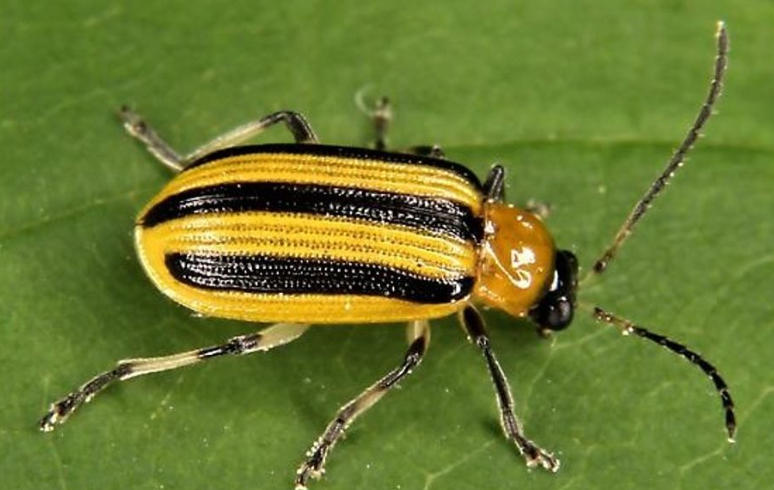
Beetles are the largest order of insects on Earth, belonging to the order Coleoptera, a name derived from the Greek words for “sheath” and “wing.” With over 400,000 known species, they account for roughly 40% of all insect species and about 25% of all known animal species on the planet. Scientists estimate that one in every four animals on Earth is a beetle, a statistic that prompted the biologist J.B.S. Haldane to famously remark that nature has “an inordinate fondness for beetles.”
Beetles are found on every continent except Antarctica, thriving in habitats ranging from tropical rainforests and freshwater ponds to arid deserts and alpine meadows. Their defining feature is the hardened pair of forewings called elytra, which fold over the body like a protective shell and cover the delicate flying wings beneath. This armor-like adaptation has made beetles extraordinarily resilient, allowing them to survive in conditions that would be lethal to many other insects. They range in size from the tiny feather-winged beetles measuring just 0.3 mm to the Goliath beetle of Africa, which can weigh up to 100 grams.
Beetles play vital roles in nearly every ecosystem they inhabit. Many are decomposers, breaking down dead wood, animal dung, and organic matter to recycle nutrients back into the soil. Others are important pollinators, predators of pest insects, or seed dispersers. However, some species are significant agricultural and forestry pests, causing billions of dollars in crop and timber losses each year. Their diversity, adaptability, and ecological importance make beetles one of the most studied and fascinating groups in the animal kingdom.
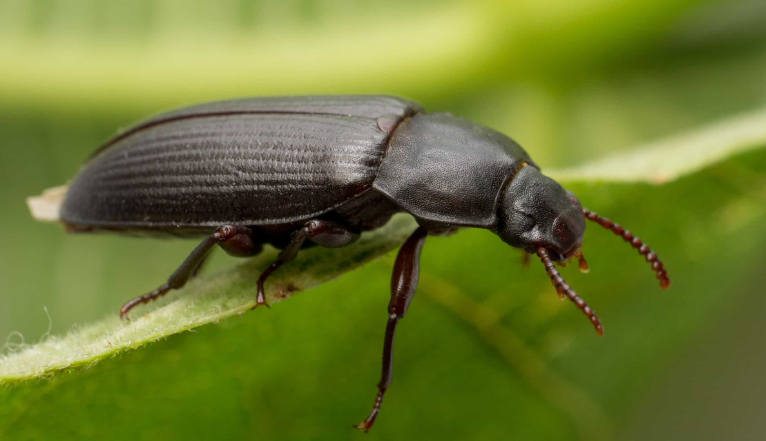
Also Read: Different Types of Black Bugs
Beetle Species – Identification Guide
1. Ladybird Beetle (Coccinellidae)
Ladybird beetles, commonly known as ladybugs, are small, dome-shaped beetles recognized by their bright red or orange wing covers marked with black spots. These beetles are celebrated as natural pest controllers, with a single ladybird capable of consuming up to 5,000 aphids during its lifetime. There are roughly 6,000 species worldwide, and they are considered symbols of good luck in many cultures.
2. Dung Beetle (Scarabaeidae)
Dung beetles are remarkable insects that feed on and breed within the feces of larger animals, playing a critical role in nutrient recycling and soil aeration. Some species are famous for rolling dung into perfectly round balls, navigating using the Milky Way — making them the only known non-human animals to use the galaxy for orientation. They are found on every continent except Antarctica and have been revered since ancient Egypt, where the scarab became a sacred symbol.
3. Goliath Beetle (Goliathus)
The Goliath beetle of Central and West Africa is one of the heaviest insects in the world, with adults weighing up to 100 grams and reaching lengths of up to 11 cm. Despite their extraordinary bulk, they are capable fliers, using powerful muscles housed beneath their protective elytra. Larvae are protein-hungry feeders and are even consumed as a food source by local human communities in parts of Africa.
4. Hercules Beetle (Dynastes hercules)
The Hercules beetle is the longest beetle species in the world, with males reaching lengths of up to 17 cm including their impressive horn. Native to the rainforests of Central and South America, males use their elongated thoracic horn to battle rivals for mating rights, wrestling opponents off tree branches. Despite their intimidating appearance, they are harmless to humans and are popular in the exotic pet trade.
5. Stag Beetle (Lucanidae)
Stag beetles are named for the enormous, antler-like mandibles of the males, which are used in combat with rival males during mating season. Found across Europe, Asia, and the Americas, they are among the largest beetles in their respective regions, with some European species reaching 9 cm in length. Their larvae spend several years feeding on decaying wood underground before emerging as adults, making dead wood habitats critical to their survival.
6. Tiger Beetle (Cicindelinae)
Tiger beetles are among the fastest running insects on Earth, with some species capable of sprinting at speeds of up to 9 km/h relative to their body size — the equivalent of a human running at over 700 km/h. They are active, visual predators that chase down prey such as ants, flies, and small spiders in open sandy or rocky habitats. Their iridescent, patterned wing covers make them strikingly beautiful, and they are often used as indicator species for habitat health.
7. Firefly (Lampyridae)
Fireflies, also called lightning bugs, are soft-bodied beetles famous for their ability to produce cold bioluminescent light from specialized organs in their abdomens. With over 2,000 species found worldwide, each uses a unique pattern of flashes to attract mates in the darkness, making summer evenings in tropical and temperate regions glow with natural light displays. Despite their name, they are true beetles, and their light-producing chemistry has become an important tool in medical and genetic research.
Also Read: Beetles That Eat Wood
8. Bombardier Beetle (Brachinus)
Bombardier beetles possess one of the most extraordinary defense mechanisms in the insect world — the ability to explosively spray a boiling chemical mixture from their abdomen at temperatures nearing 100°C. The spray is produced by a rapid chemical reaction between hydrogen peroxide and hydroquinones in a specialized chamber, and the beetle can discharge it up to 500 times in succession. This scalding jet is accurate enough to deter predators such as frogs, ants, and spiders.
9. Weevil (Curculionidae)
Weevils form the largest family of beetles — and indeed the largest family of any organism on Earth — with over 97,000 described species. They are instantly recognizable by their elongated snouts, called rostrums, which are used to bore into plant tissue for feeding and egg-laying. While many species are significant agricultural pests devastating grain stores, cotton, and stored products, others play vital roles in plant pollination and forest ecology.
Also Read: Common Lawn Bugs
10. Ground Beetle (Carabidae)
Ground beetles are one of the most diverse beetle families, comprising over 40,000 species found in virtually every terrestrial habitat on Earth. Most are nocturnal predators that hunt insects, worms, and other small invertebrates on the soil surface, making them valuable allies in natural pest management. Many species are equipped with powerful mandibles and can run swiftly across the ground in pursuit of prey.
11. Click Beetle (Elateridae)
Click beetles are named for their remarkable ability to snap a spine on their thorax into a notch, producing a loud clicking sound and propelling themselves into the air — a trick used to right themselves when flipped upside down. There are around 11,000 species worldwide, found in a wide range of habitats from forests to grasslands. The larvae of many species, known as wireworms, are serious pests of grain crops, damaging plant roots underground.
12. Bark Beetle (Scolytinae)
Bark beetles are small but ecologically powerful insects that bore into the bark and cambium layer of trees to lay their eggs, creating distinctive engraved gallery patterns beneath the bark. In recent decades, outbreaks of bark beetles such as the mountain pine beetle have devastated millions of hectares of conifer forests across North America and Europe, partly driven by warmer temperatures reducing tree resistance. They also play a role in forest renewal by killing weakened trees and accelerating the nutrient cycle.
13. Longhorn Beetle (Cerambycidae)
Longhorn beetles are distinguished by their extraordinarily long antennae, which in some species can be two to three times the length of their entire body. With over 35,000 species, they are found on every continent except Antarctica and are typically associated with trees, where their larvae bore deep tunnels through wood as they feed. Some species, like the Asian longhorn beetle, are invasive pests that have caused severe damage to hardwood forests in North America and Europe.
14. Colorado Potato Beetle (Leptinotarsa decemlineata)
The Colorado potato beetle is one of the most notorious agricultural pests in the world, originally native to the Rocky Mountain region of North America before spreading globally through potato cultivation. Both adults and larvae feed voraciously on the foliage of potato, tomato, and eggplant plants, and the species has developed resistance to over 50 different insecticides — more than any other pest insect. A single female can lay up to 800 eggs in her lifetime, making infestations rapid and difficult to control.
15. Jewel Beetle (Buprestidae)
Jewel beetles are celebrated for their dazzling, iridescent wing covers that shimmer in metallic shades of green, blue, gold, and red, making them among the most visually striking insects in the world. With around 15,500 species, they are found in forests and woodlands worldwide, where larvae bore into woody plant tissue. Their wing cases have been used for centuries in decorative arts and jewelry across Asia, Southeast Asia, and among Indigenous peoples of the Americas.
16. Whirligig Beetle (Gyrinidae)
Whirligig beetles are aquatic insects that skate rapidly across the surface of ponds and streams in chaotic, swirling groups — a behavior that gives them their name and serves as a predator confusion strategy. Their eyes are uniquely divided into upper and lower halves, allowing them to simultaneously see above and below the water surface. There are around 700 species worldwide, and they feed on small insects that fall onto the water surface, detecting ripples using their sensitive antennae.
17. Scarab Beetle (Scarabaeidae)
Scarab beetles are a large and diverse family of over 30,000 species that include dung beetles, chafers, and rhinoceros beetles. They are perhaps most famous for their cultural significance in ancient Egypt, where the scarab — modeled on the dung-rolling Scarabaeus sacer — was a sacred symbol of renewal, transformation, and the rising sun. Today, scarabs remain important ecologically as decomposers, nutrient cyclers, and in some regions as pollinators of flowering plants.
18. Diving Beetle (Dytiscidae)
Diving beetles are highly efficient aquatic predators found in freshwater ponds, lakes, and streams across the world, with around 4,300 described species. They carry a supply of air beneath their elytra for breathing underwater and are voracious hunters of aquatic invertebrates, tadpoles, and even small fish. Their streamlined, oval bodies and powerful, oar-like hind legs make them exceptionally swift swimmers.
19. Blister Beetle (Meloidae)
Blister beetles are named for their chemical defense — when threatened, they release a toxic compound called cantharidin through their joints, which causes painful blisters on human skin and can be lethal to horses if consumed in hay. With around 7,500 species, they are found on every continent except Antarctica and often display bright warning coloration to deter predators. Cantharidin has also been used historically in medicine and has been studied for potential anticancer properties.
20. Rove Beetle (Staphylinidae)
Rove beetles are one of the largest beetle families, with over 63,000 species, making them the most species-rich family of any organism on Earth. They are recognized by their characteristically short elytra that leave most of the abdomen exposed, giving them a superficially ant-like appearance. Most are predators or scavengers found in decaying organic matter, dung, carrion, and soil, where they play an important role in decomposition and pest suppression.
Also Read: Beetles With Stripes on Their Back
21. Rhinoceros Beetle (Dynastinae)
Rhinoceros beetles are among the largest insects in the world and are named for the prominent horns that males sport on their heads and thoraxes, used in pushing matches to win mating rights. Despite their formidable appearance, they are entirely harmless to humans and feed on fruit, nectar, and plant sap as adults. They are famously strong for their size — capable of carrying up to 850 times their own body weight — and are prized in some Asian cultures for beetle-fighting competitions.
22. Flour Beetle (Tribolium)
Flour beetles are small but economically damaging stored-product pests that infest grain stores, flour mills, and pantries around the world. Two species — the red flour beetle and the confused flour beetle — are among the most common and destructive pantry pests globally, capable of contaminating large quantities of grain with their secretions and shed skins. They are also widely used as model organisms in genetics and ecology research due to their rapid life cycle and ease of laboratory rearing.
23. Carpet Beetle (Anthrenus)
Carpet beetles are small household pests whose larvae are capable of causing significant damage to natural-fiber products including wool carpets, silk, leather, museum specimens, and stored food products. Adults are harmless and feed on pollen outdoors, but larvae can silently destroy clothing, taxidermy, and insect collections over months or years. They are one of the most serious threats to museum natural history collections worldwide, requiring careful monitoring and climate-controlled storage to prevent infestations.
24. Bark-gnawing Beetle (Trogossitidae)
Bark-gnawing beetles are a family of predatory and fungivorous beetles that live beneath the bark of dead and dying trees, where they hunt bark beetle larvae and other wood-boring insects. They play an important role as natural regulators of bark beetle populations in forest ecosystems. Most species are flattened in body shape, an adaptation that allows them to move efficiently through the narrow galleries beneath tree bark.
25. Net-winged Beetle (Lycidae)
Net-winged beetles are soft-bodied beetles known for their intricately sculptured, net-patterned elytra and their striking orange, red, and black warning coloration. They are unpalatable to predators and are commonly mimicked by other insects — a classic example of Batesian mimicry — where harmless species evolve to resemble the beetle’s appearance for protection. They are found in forest habitats across tropical and subtropical regions worldwide.
26. Soldier Beetle (Cantharidae)
Soldier beetles, sometimes called leatherwings for their soft, flexible elytra, are common flower visitors that feed on nectar and pollen while also hunting soft-bodied insects such as aphids and caterpillars. They were nicknamed “soldier beetles” in Britain due to the red-and-black coloration of one common species, which resembled the uniforms of 18th-century soldiers. With over 5,000 species worldwide, they are ecologically important as both pollinators and predators in meadow and garden habitats.
27. Glow-worm (Lampyris noctiluca)
Glow-worms are a type of firefly beetle native to Europe and Asia, where the wingless, larva-like females are well known for producing a steady green bioluminescent glow from their abdomens to attract winged males on warm summer nights. Unlike the flashing signals of North American fireflies, the glow-worm’s light is a continuous beacon, sometimes bright enough to read by in complete darkness. Their populations have declined sharply across Europe due to light pollution, habitat loss, and pesticide use.
28. Tortoise Beetle (Cassidinae)
Tortoise beetles are a group of leaf beetles named for their rounded, shield-like shape and expanded margins that allow them to clamp tightly to leaf surfaces like a tortoise retreating into its shell. Many species display spectacular, jewel-like iridescent coloration in life that is produced by light interference through layers of fluid beneath the transparent elytra — though this color fades after death. They feed on the leaves of plants including sweet potato, morning glory, and bindweed.
Also Read: Beetles That Glow at Night
29. Flea Beetle (Alticini)
Flea beetles are small, jumping beetles named for their greatly enlarged hind legs, which allow them to leap powerfully when disturbed — much like fleas. They are significant agricultural pests that feed on the leaves of vegetables, flowers, and crops, leaving characteristic small round holes in the foliage. With thousands of species distributed worldwide, they attack a wide variety of plants including cabbage, radish, eggplant, potato, and corn.
30. Ambrosia Beetle (Xyleborini)
Ambrosia beetles are wood-boring beetles that do not feed on wood itself but instead cultivate specialized fungal gardens within their galleries to feed themselves and their larvae. They carry fungal spores in specialized structures called mycangia and inoculate the tunnel walls as they bore — creating a miniature underground farm. Some introduced species, such as the redbay ambrosia beetle in the United States, have caused catastrophic damage to native tree species by introducing lethal fungal pathogens.
31. Oil Beetle (Meloe)
Oil beetles are large, flightless blister beetles that produce cantharidin as a defensive secretion and are notable for an extraordinarily complex life cycle involving multiple larval stages known as hypermetamorphosis. The first larval stage, called a triungulin, must locate and hitch a ride on a solitary bee to gain access to the bee’s nest, where it will feed on eggs, pollen, and nectar stores. Populations have declined significantly across Europe due to the decline of solitary bee populations on which they depend.
32. Predatory Diving Beetle (Cybister)
Cybister diving beetles are large aquatic predators that rank among the most formidable hunters in freshwater ecosystems, capable of catching and subduing prey as large as small frogs and fish. They fly at night to colonize new water bodies and are attracted to lights and reflective surfaces, sometimes landing on wet roads or greenhouse roofs mistaken for ponds. In parts of East Asia, some species are collected and consumed as a traditional food source.
33. Museum Beetle (Anthrenus museorum)
The museum beetle is a small carpet beetle whose larvae are among the most destructive pests of natural history collections, taxidermy, dried insects, feathers, and animal skins preserved in museums. Their ability to enter sealed cabinets through tiny gaps and their slow, inconspicuous feeding makes them extremely difficult to detect until substantial damage has already occurred. Museum conservators worldwide employ integrated pest management strategies and regular inspections to combat infestations.
34. Leaf Beetle (Chrysomelidae)
Leaf beetles are one of the largest beetle families, comprising over 37,000 species, and include some of the most colorful and numerous plant feeders in the insect world. Both adults and larvae feed on plant foliage, roots, and stems, and the family includes well-known pests such as the Colorado potato beetle and the flea beetles, as well as the spectacular, metallic-colored Dogbane beetle. Despite their pest reputation, many leaf beetles are important components of plant–insect ecological networks.
35. Harlequin Beetle (Acrocinus longimanus)
The harlequin beetle is a large and visually spectacular longhorn beetle native to Central and South America, recognized by the males’ extraordinarily long forelegs — sometimes longer than the entire body — and the intricate black, red, and yellow pattern on their elytra. They inhabit tropical rainforest trees, where females lay eggs in the bark of fig and other trees and males compete fiercely for mating sites. The complex mosaic pattern on their backs has been likened to abstract art and is unique among beetles.
36. Deathwatch Beetle (Xestobium rufovillosum)
The deathwatch beetle is a wood-boring species that infests old hardwood timbers in historic buildings, churches, and ancient furniture, where its larvae tunnel slowly through the wood for up to twelve years before emerging as adults. The knocking or ticking sound made by adults banging their heads against wood as a mating signal — once heard in quiet rooms near the dying in old houses — gave rise to the name “deathwatch” and centuries of superstitious dread. Infestations have caused serious structural damage to heritage buildings across Europe.
37. Violin Beetle (Mormolyce phyllodes)
The violin beetle of Southeast Asian rainforests is one of the most extraordinarily shaped insects in the world, with a dramatically flattened body, wide, wing-like elytra extensions, and an elongated head that together create a silhouette resembling a violin or fiddle. These beetles live under the shelf fungi growing on fallen rainforest logs, where the flat body is perfectly adapted to slipping into thin crevices. They are rarely seen and poorly studied due to their cryptic habits and forest habitat.
Also Read: Types of Beetles With Pincers
38. Dor Beetle (Geotrupes stercorarius)
The dor beetle is a large, metallic blue-black dung beetle native to Europe and Western Asia that buries dung underground as a food source for its larvae — a behavior that makes it an important soil aerator and nutrient recycler. The name “dor” derives from an Old English word meaning a buzzing or droning sound, a reference to the loud hum of its flight. Despite its hardworking ecological role, the species has declined in parts of its range due to the widespread use of antiparasitic veterinary drugs that render livestock dung toxic to dung beetles.
39. Furniture Beetle (Anobium punctatum)
The furniture beetle, commonly called the woodworm, is responsible for the familiar tiny holes seen in antique furniture, wooden beams, and flooring across Europe and North America — the exit holes left by emerging adult beetles after years of larval tunneling. Its larvae can spend between three and five years eating through dry, seasoned hardwood and softwood before pupating and emerging as adults. Infestations of historic wooden structures and antique collections represent a significant conservation challenge.
40. Carrion Beetle (Silphidae)
Carrion beetles are ecologically vital decomposers that locate, feed on, and breed within the carcasses of dead vertebrates, competing with flies, bacteria, and other scavengers to break down animal remains. Some species in the genus Nicrophorus, known as burying beetles, are remarkable for their cooperative parenting behavior — a pair will bury a small animal carcass, then tend the eggs and feed the larvae together, a level of parental care rare among beetles. They are also studied in forensic entomology to help determine time of death.
41. Giant Water Scavenger Beetle (Hydrophilus piceus)
The giant water scavenger beetle is one of the largest aquatic insects in Europe and North America, with adults reaching up to 5 cm in length. Despite being a scavenger as its name suggests, adults are also predatory and will actively hunt aquatic invertebrates, snails, and small fish. Females construct elaborate silk egg cases that float on the water surface, attached to a mast-like stalk above the waterline.
42. Tortoise Dung Beetle (Copris)
Copris dung beetles, sometimes called “minotaur beetles” or tortoise dung beetles, are stout, rounded scarabs that bury deep chambers beneath dung piles in which they provision carefully shaped dung balls for their larvae. Unlike the well-known ball-rolling dung beetles, Copris species are tunnelers that work directly beneath the dung source. They play a significant role in burying and recycling dung in African and Asian grassland ecosystems, and their tunneling activity dramatically improves soil structure.
43. Pine Sawyer Beetle (Monochamus)
Pine sawyer beetles are large longhorn beetles whose larvae bore extensive galleries through the wood of conifer trees — principally pines and firs — for one to three years before emerging as adults. They are important vectors of the pine wood nematode, a microscopic worm that causes pine wilt disease and has devastated conifer forests in Japan, China, Korea, and Portugal. The adults are strong fliers and can disperse widely, spreading the nematode to new forests.
44. Emerald Ash Borer (Agrilus planipennis)
The emerald ash borer is a metallic green jewel beetle native to Asia that has become one of the most destructive invasive insect pests in North American history since its accidental introduction in the early 1990s. Its larvae feed on the inner bark of ash trees, disrupting water and nutrient transport and killing the tree within a few years of infestation. By 2023, it had killed hundreds of millions of ash trees across North America and was continuing its westward spread.
45. Horned Passalus (Odontotaenius disjunctus)
The horned passalus, or bess beetle, is a large, shiny black beetle of North American forests that lives in family groups within rotting logs — a highly unusual level of social organization for beetles. Adults and larvae communicate using an elaborate system of at least 17 distinct sounds, produced by stridulation, making them one of the most acoustically communicative of all beetles. Adults chew wood into a paste that feeds the larvae, and older larvae even help their parents care for younger siblings.
46. Six-spotted Tiger Beetle (Cicindela sexguttata)
The six-spotted tiger beetle is a brilliantly iridescent green predatory beetle common in woodland paths and forest clearings of eastern North America. Adults run and fly in bursts to chase down ant and fly prey, and their large compound eyes give them exceptional visual acuity for tracking fast-moving targets. The six white spots on their elytra, from which they take their name, vary in size and number between individuals.
47. Sacred Scarab (Scarabaeus sacer)
The sacred scarab is the dung beetle that ancient Egyptians observed rolling balls of dung across the ground and interpreted as a symbol of Khepri, the god of the rising sun. Images and amulets of the scarab became one of the most ubiquitous symbols in Egyptian art, religion, and funerary practice, used as protective charms and seals for thousands of years. The beetle itself rolls dung balls larger than its own body, burying them as food stores for its larvae in underground chambers.
48. Hister Beetle (Histeridae)
Hister beetles are small, highly polished, often jet-black beetles that are specialist predators of fly larvae found in dung, carrion, decaying fungi, and the galleries of bark beetles. With around 3,900 species worldwide, they are valuable agents of biological control in both natural ecosystems and agricultural settings, feeding voraciously on blow fly maggots in livestock dung. They are distinguished by their truncated elytra and ability to retract all appendages tightly into a compact, impenetrable ball when threatened.
49. Glowworm Beetle (Phengodidae)
Glowworm beetles of the family Phengodidae are North and South American relatives of fireflies in which the wingless, larva-like females produce a striking bioluminescent display — glowing green from their eyes and in segments along the sides of their bodies, earning them the nickname “railroad worm.” Males, which are winged and look like typical beetles, are rarely seen and far less luminescent than females. The larvae are active predators of millipedes, whose defensive chemicals they are apparently immune to.
50. Featherwing Beetle (Ptiliidae)
Featherwing beetles are the smallest beetles — and among the smallest insects — in the world, with some species measuring as little as 0.3 mm in length. They get their name from their delicate, feather-like wings, in which the flight surface is reduced to a central shaft with hair-like fringes rather than a membrane — an adaptation that allows flight at minute scales using air viscosity rather than aerodynamic lift. Most species feed on fungal spores in leaf litter, rotting wood, and damp soil.
51. Golden Tortoise Beetle (Charidotella sexpunctata)
The golden tortoise beetle, native to North America, is famous for its extraordinary ability to change color — shifting from a brilliant, mirror-like gold to red with black spots when disturbed or during mating, by altering the moisture content of fluid beneath its transparent outer layer. This color-change mechanism, which is entirely reversible, has attracted significant scientific interest as a model for adaptive photonic coloration. Both adults and larvae feed on the leaves of morning glory and sweet potato plants.
52. Horned Dung Beetle (Onthophagus taurus)
The horned dung beetle is a small but exceptionally powerful scarab notable for being one of the strongest animals on Earth relative to body weight — males can pull up to 1,141 times their own body weight. Males develop either large curved horns or no horns depending on their body size, with large-horned males guarding tunnel entrances and small, hornless males using alternative “sneaker” mating strategies to access females. This species has become a model organism for studying the evolution of alternative reproductive tactics.
Also Read: Beetles With Red and Black
53. Water Scavenger Beetle (Berosus)
Water scavenger beetles of the genus Berosus are small, streamlined aquatic beetles found in ponds, marshes, and slow-moving streams worldwide, where they feed on algae, plant material, and decaying organic matter. They surface headfirst to collect air in a bubble beneath their elytra — the reverse of diving beetles, which surface tail-first — a distinction that is useful for field identification. Many species are used as bioindicators of freshwater quality, as they are sensitive to pollution and habitat degradation.
54. Titan Beetle (Titanus giganteus)
The titan beetle of the Amazon rainforest in South America is the largest beetle in the world by body length, with the biggest recorded specimens reaching 17 cm from head to the tip of the abdomen. Adults do not feed at all during their brief adult lives, surviving entirely on fat reserves built up during a larval stage that is so rarely observed it has never been formally documented in the wild. Their powerful mandibles are capable of snapping pencils and cutting into human flesh, and they are highly sought after by insect collectors worldwide.
55. Stink Beetle (Eleodes)
Stink beetles, also known as pinacate beetles or desert stink beetles, are flightless ground beetles native to the arid deserts and scrublands of western North America. When threatened, they adopt a distinctive defensive posture — standing on their head with the abdomen raised into the air — and release a foul-smelling quinone secretion from glands at the tip of the abdomen. Despite their unpleasant odor, they play a useful ecological role as decomposers, feeding on decaying plant matter, fungi, and organic debris in desert soils.
56. Checkered Beetle (Cleridae)
Checkered beetles are a family of around 3,500 species recognized by their often brightly colored, patterned bodies in combinations of red, orange, blue, and black — patterns that serve as warning coloration or mimicry of stinging insects. Most species are predatory as both adults and larvae, hunting bark beetle larvae beneath tree bark and making them valuable natural regulators of bark beetle populations in forests. A few species, however, feed on pollen or stored animal products such as dried meat and hides.
57. Bess Beetle (Passalidae)
Bess beetles, also called patent leather beetles for their smooth, glossy black surface, are large tropical and subtropical beetles that live in tight-knit family groups within decomposing logs — one of the few examples of genuine subsocial behavior in beetles. Adults and larvae communicate through a remarkable repertoire of stridulatory sounds, and adults actively care for their young by chewing wood into a soft pulp for the larvae to eat. Found across tropical regions of the Americas, Africa, and Asia, they are important decomposers of dead hardwood in forest ecosystems.
58. Ant-like Flower Beetle (Anthicidae)
Ant-like flower beetles are a family of small, narrow-bodied beetles whose shape and movement closely mimic ants — a form of protective mimicry that deters predators that avoid the acidic sting of ants. With around 3,700 species distributed worldwide, they are found in a wide variety of habitats including flowers, leaf litter, decaying wood, and sandy shores. Many species accumulate cantharidin — the toxic defensive compound of blister beetles — from their environment, using it as their own chemical defense without being able to produce it themselves.
59. Trox Beetle (Trogidae)
Trox beetles, commonly called hide beetles or skin beetles, are a small family of scavenging beetles specialized in feeding on the dry, tough remains of animal carcasses — particularly dried skin, hair, feathers, horn, and bone — long after other scavengers have abandoned the site. Their rough, warty, soil-colored surface provides exceptional camouflage against the ground, and they play dead with great conviction when disturbed, remaining motionless for extended periods. They are among the last insects to colonize a carcass and are therefore valuable indicators in forensic entomology for estimating the later stages of decomposition.
60. Pigweed Flea Beetle (Disonycha glabrata)
The pigweed flea beetle is a small, shiny leaf beetle native to North America that feeds almost exclusively on plants in the amaranth family, particularly pigweed (Amaranthus species). Like other flea beetles, it possesses enlarged hind legs for jumping and causes characteristic shothole damage to leaf surfaces through its feeding activity. It has attracted scientific interest as a potential biological control agent for invasive amaranth species that have become aggressive agricultural weeds in crop fields across the United States and Canada.