Bugs, in the broadest sense, encompass an enormous diversity of small invertebrate creatures including insects, arachnids, and other arthropods that inhabit virtually every ecosystem on Earth. With an estimated 10 quintillion individual insects alive at any given moment and over 1 million described insect species representing approximately 80 percent of all known animal species, bugs constitute the most diverse and numerically dominant group of animals on the planet. Their ecological roles are extraordinarily varied, encompassing pollination, decomposition, predation, parasitism, and serving as a critical food source for countless bird, reptile, amphibian, and mammal species.
The relationship between bugs and humans is deeply complex, encompassing both benefit and harm in roughly equal measure. Beneficial insects including bees, butterflies, and hoverflies pollinate approximately 75 percent of the world’s flowering plants and contribute an estimated 577 billion dollars annually to global food production through their pollination services alone. Conversely, pest insects cause an estimated 70 billion dollars in agricultural damage each year in the United States alone, highlighting the dual nature of humanity’s relationship with the insect world.
Black-colored bugs represent a particularly diverse group of insects and other arthropods found across gardens, homes, forests, and agricultural environments worldwide. Black coloration in bugs serves multiple evolutionary purposes, including camouflage against dark soil and bark, heat absorption in cool climates, and warning coloration in species that are toxic or unpalatable to predators. Understanding the identity and habits of common black bugs is valuable knowledge for gardeners, homeowners, and naturalists seeking to manage their environments effectively and responsibly.
Also Read: Lawn Bugs that Eat Grass Roots
40 Common Types of Black Bugs
Black Garden Ant (Lasius niger)
Black garden ants are among the most familiar and widely distributed insects in the world, forming large underground colonies of up to 15,000 workers beneath lawns, paths, and garden beds. They are omnivorous scavengers that feed on sweet substances, small insects, and organic debris, playing an important role in soil aeration and organic matter decomposition. In gardens, black ants are often associated with aphid infestations, as they actively farm aphids for their honeydew secretions. While generally harmless, large colonies beneath paving or plant roots can occasionally cause structural disturbance.
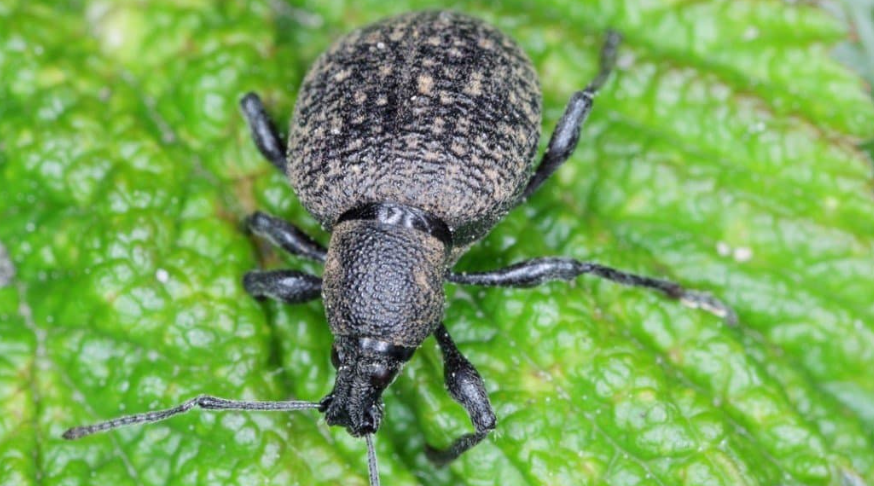
Black Vine Weevil (Otiorhynchus sulcatus)
Black vine weevil is one of the most damaging garden pests, with its cream-colored larvae causing the most serious harm by feeding on the roots of a wide range of ornamental and edible plants. Adult weevils are dull black with a characteristic snout and notched leaf margins are the telltale sign of their nocturnal feeding activity. Container-grown plants are particularly vulnerable to larval damage, which can kill plants rapidly by destroying their root systems. Biological control using pathogenic nematodes is one of the most effective and environmentally responsible management strategies available.
Black Bean Aphid (Aphis fabae)
Black bean aphids are small, shiny black insects that form dense colonies on the tender growing tips and undersides of leaves of beans, beets, and many other garden plants. They weaken plants by sucking sap, excreting sticky honeydew that promotes sooty mold growth, and potentially transmitting plant viruses. A single aphid can reproduce without mating and produce up to 80 offspring per week under warm conditions, allowing populations to explode with alarming speed. Natural predators including ladybugs, lacewings, and parasitic wasps provide effective biological control when garden biodiversity is maintained.
Flea Beetle (Phyllotreta species)
Flea beetles are tiny, shiny black jumping insects that cause characteristic small, round holes in the leaves of brassicas, radishes, and other vegetable crops. Their name refers to their enlarged hind legs that allow them to jump considerable distances when disturbed. Young seedlings are most vulnerable to flea beetle damage, which can be severe enough to kill plants in the early stages of establishment. Row covers and sticky traps provide effective physical protection, while growing plants under cover until they are large enough to tolerate some feeding damage is a practical management strategy.
Black Blister Beetle (Epicauta pennsylvanica)
Black blister beetles are medium-sized, elongated black insects that can cause severe skin blistering through the release of cantharidin, a toxic defensive chemical, when handled or crushed. They feed on flowers and foliage of garden plants including tomatoes, potatoes, and various ornamentals, sometimes causing significant defoliation when present in large numbers. Cantharidin is extremely toxic to horses and livestock if blister beetles contaminate hay, making them a serious concern in agricultural settings. Handling these beetles should always be avoided, and protective gloves worn if removal by hand is necessary.
Black Soldier Fly (Hermetia illucens)
Black soldier flies are large, wasp-like black flies whose larvae are extraordinarily valuable in organic waste decomposition and sustainable food production. The larvae can consume organic waste at remarkable rates and are themselves exceptionally rich in protein and healthy fats, making them an increasingly important ingredient in animal feed and aquaculture. Adult black soldier flies do not feed and are harmless to humans, pets, and plants, making them one of the most entirely beneficial insects associated with human activities. Black soldier fly composting systems are gaining popularity worldwide as an efficient and sustainable organic waste management solution.
Darkling Beetle (Tenebrio molitor)
Darkling beetles are medium-sized, hard-shelled black beetles found in stored grain, compost heaps, and beneath garden debris worldwide. Their larvae, commonly known as mealworms, are widely cultivated as a protein-rich food source for birds, reptiles, and fish, and are increasingly explored as a sustainable human food ingredient. Adult darkling beetles play a useful role in garden ecosystems as decomposers, breaking down organic matter and contributing to nutrient cycling. While they can become pests in stored grain or poultry houses, in garden settings they are generally considered beneficial.
Black Carpenter Ant (Camponotus pennsylvanicus)
Black carpenter ants are large, powerful ants that excavate galleries in moist or rotting wood to establish their nests, making them a significant concern for homeowners with timber structures. Unlike termites, carpenter ants do not eat wood but simply remove it to create their nesting chambers, expelling characteristic sawdust-like frass from their galleries. They are actually beneficial in forest ecosystems, accelerating the decomposition of dead wood and contributing to nutrient cycling. In homes and gardens, addressing moisture problems and removing rotting wood are the most effective long-term management strategies.
Black Widow Spider (Latrodectus mactans)
Black widow spiders are among the most venomous spiders in North America, recognizable by their glossy black bodies and the characteristic red hourglass marking on the underside of the female’s abdomen. Their venom contains powerful neurotoxins that can cause severe pain, muscle cramps, and systemic symptoms in humans, though fatalities are extremely rare with modern medical treatment. Black widows typically inhabit dark, sheltered locations such as woodpiles, garden sheds, and the undersides of outdoor furniture. Wearing gloves when working in areas where black widows may be present is a simple and effective precaution.
Ground Beetle (Carabidae family)
Ground beetles are a large and diverse family of mostly black, glossy beetles that are among the most beneficial predatory insects in garden and agricultural ecosystems. They feed voraciously on soil-dwelling pests including slug eggs, root aphids, and various insect larvae, providing valuable natural pest control throughout the growing season. Most species are nocturnal, hiding beneath stones, logs, and garden debris during the day and hunting actively at night. Maintaining areas of undisturbed ground cover and log piles encourages ground beetle populations, significantly improving natural pest management in the garden.
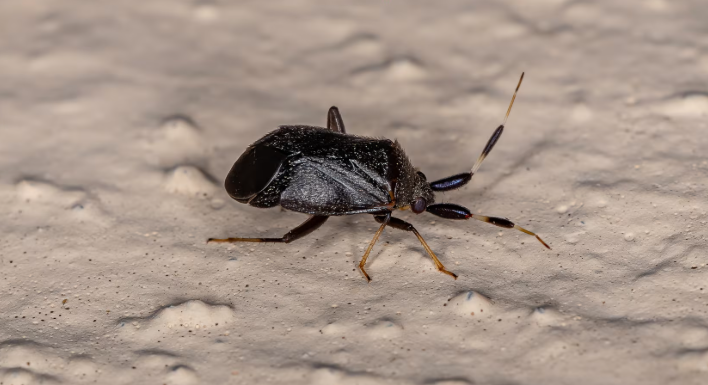
Black Stink Bug (Proxys punctulatus)
Black stink bugs are shield-shaped black insects that release a strong, unpleasant odor when disturbed or threatened, as a defensive mechanism against predators. They feed on plant sap using piercing mouthparts and can cause distorted growth, discoloration, and fruit damage on a range of garden and agricultural crops. Black stink bugs are increasingly problematic in some regions where they have established invasive populations outside their native range. Exclusion netting and physical removal are the most practical management strategies in garden settings.
Black Fungus Gnat (Bradysia species)
Black fungus gnats are tiny, delicate black flies whose larvae live in moist potting soil and feed on organic matter, algae, and plant roots. They are one of the most common pest insects affecting houseplants and greenhouse-grown seedlings, where overwatering creates the damp soil conditions their larvae require. Adult gnats are primarily a nuisance, but larval feeding on delicate roots can weaken or kill young seedlings. Allowing potting soil to dry between waterings, applying sticky yellow traps, and using biological control with predatory nematodes are the most effective management approaches.
Black Scale (Saissetia oleae)
Black scale is a common sap-sucking pest that forms hard, dark brown to black dome-shaped coverings on the stems and branches of citrus, olive, and many ornamental plants. Heavily infested plants show yellowing foliage, stunted growth, and sticky honeydew deposits that promote sooty mold development on leaves and fruit. Black scale is spread through contact between plants and by crawlers, the mobile juvenile stage that moves to new feeding sites. Horticultural oil sprays applied during the crawler stage provide the most effective chemical management approach.
Black Turpentine Beetle (Dendroctonus terebrans)
Black turpentine beetles are serious pests of pine trees, boring through the outer bark to create galleries in the inner bark where they lay their eggs. Infested trees typically show characteristic pitch tubes of crystallized resin at the base of the trunk where the beetles have entered. Stressed, weakened, or recently transplanted pine trees are most vulnerable to attack, as healthy trees can often repel attacks with their resin flow. Maintaining tree health through proper watering and nutrition is the most effective preventive strategy against this damaging bark beetle.
Black Citrus Aphid (Toxoptera aurantii)
Black citrus aphids are shiny black insects that colonize the tender new growth of citrus plants, coffee, and many tropical ornamentals, causing leaf curling, distortion, and the development of sooty mold on honeydew deposits. They are particularly problematic as vectors of citrus tristeza virus, one of the most damaging citrus diseases worldwide. Natural predators including parasitic wasps and ladybugs provide useful biological control when chemical pesticide use is minimized. Regular inspection of new growth on susceptible plants allows early detection before infestations become established and difficult to manage.
Black Fly (Simulium species)
Black flies are small, hump-backed biting flies that breed in fast-flowing streams and rivers, emerging in enormous numbers in late spring and early summer in many temperate regions. Female black flies require a blood meal for egg development and their bites can cause severe allergic reactions, significant discomfort, and in some parts of the world transmit the parasitic disease onchocerciasis. Their larvae play an important ecological role as filter feeders in stream ecosystems, contributing to nutrient cycling in aquatic environments. Protective clothing and insect repellents containing DEET are the most effective personal protection measures during peak black fly season.
Black Imported Fire Ant (Solenopsis richteri)
Black imported fire ants are aggressive stinging ants introduced to the southeastern United States, where they have established invasive populations that cause significant agricultural and ecological damage. Their painful stings can cause severe allergic reactions in sensitive individuals, and multiple simultaneous stings from disturbed colonies have caused fatalities. They feed on seeds, plants, and small animals, disrupting native ant communities and reducing populations of ground-nesting birds and reptiles. Management is challenging due to their aggressive nature and large colony sizes, typically requiring professional pest control intervention.
Black Thrips (Haplothrips species)
Black thrips are tiny, slender black insects that feed on pollen and plant tissue, causing silvery stippling, distortion, and scarring on the flowers and foliage of a wide range of garden plants. Some species are primarily fungal feeders and are actually beneficial in garden ecosystems. Pest species can transmit serious plant viruses including tospoviruses that cause significant crop losses in agricultural settings. Reflective mulches, sticky blue traps, and judicious use of insecticidal soap are among the most practical management tools available to gardeners dealing with thrips infestations.
Black Flour Beetle (Tribolium madens)
Black flour beetles are common stored product pests found in kitchens, pantries, and food storage facilities worldwide, infesting flour, cereals, dried fruits, and other stored goods. They do not bite or sting but contaminate food products with their bodies, cast skins, and excrement, making infested food unpalatable. Maintaining food in airtight containers, regularly cleaning pantry shelves, and disposing of old or infested food products are the most effective prevention and management strategies. In commercial settings, temperature treatments and insecticide applications in non-food contact areas may be necessary for severe infestations.
Black Peach Aphid (Brachycaudus persicae)
Black peach aphids colonize the roots and shoots of peach, plum, and related stone fruit trees, causing significant weakening of young trees through sap extraction. Root-feeding colonies are particularly damaging as they are invisible and difficult to detect until significant root damage has already occurred. Above-ground colonies cause curling and distortion of young shoots and leaves during spring growth flushes. Systemic insecticides applied to the soil can reach root-feeding populations, while contact insecticides manage above-ground infestations effectively.
Black Corsair Bug (Melanolestes picipes)
Black corsair bugs are predatory insects belonging to the assassin bug family, typically found beneath bark, in leaf litter, and around garden debris. They are beneficial predators that feed on other insects including various garden pests, but can deliver a painfully sharp bite if handled carelessly. Their bite, while not medically dangerous, can cause significant local pain and discomfort that may last for several hours. In garden settings, they are generally considered beneficial insects that contribute to natural pest management and should be left undisturbed.
Black Millipede (Tachypodoiulus niger)
Black millipedes are elongated, cylindrical black arthropods with numerous pairs of legs, commonly found beneath stones, logs, and garden debris in moist, organic-rich soils. They are primarily decomposers, feeding on decaying plant matter and contributing to nutrient cycling and soil structure improvement. While generally beneficial, they occasionally feed on seedling roots and the soft tissues of strawberry fruits in contact with damp soil. In healthy garden ecosystems with good drainage and soil structure, millipede populations rarely reach problematic levels.
Black Psyllid (Trioza vitreoradiata)
Black psyllids are tiny jumping insects related to aphids that suck sap from the leaves of specific host plants, causing characteristic pitting, cupping, and distortion of affected foliage. Some psyllid species are serious agricultural pests, including the Asian citrus psyllid which vectors the devastating citrus greening disease. Affected leaves often show yellow or red discoloration around feeding sites and may drop prematurely. Reflective mulches, kaolin clay applications, and biological control using parasitic wasps are among the most effective management approaches available.
Black Earwig (Chelidurella acanthopygia)
Black earwigs are dark-colored earwigs found in garden debris, under bark, and in crevices in many parts of the world. Despite their somewhat fearsome appearance and the myths surrounding them, earwigs are omnivores that feed on both plant material and small insects including aphids and mites. Their role as partial predators makes them beneficial in many garden situations, though they can occasionally damage soft flower petals and young seedlings. Damp cardboard rolls placed in the garden as refuge traps allow populations to be monitored and managed if necessary.
Black Vine Aphid (Aphis gossypii)
Black vine aphids affect a wide range of plants including cotton, cucumbers, melons, and many ornamentals, colonizing growing tips and leaf undersides and causing distortion, yellowing, and honeydew contamination. They are among the most significant vectors of plant viruses in agricultural settings, transmitting over 50 different viral diseases to susceptible crops. Natural enemies including parasitic wasps, ladybugs, and lacewings provide effective biological control when conditions support their populations. Insecticidal soap and neem oil applications manage infestations effectively while minimizing harm to beneficial insects.
Black Carpet Beetle (Attagenus unicolor)
Black carpet beetles are small, oval, shiny black beetles whose larvae cause significant damage to natural fiber products including wool carpets, silk, leather, and stored museum specimens. Adult beetles feed on pollen outdoors but females seek indoor locations to lay eggs near suitable larval food sources. Larvae are covered in characteristic brown hairs and feed slowly over extended periods, causing irregular holes and damage that may not be noticed until significant destruction has occurred. Regular vacuuming, dry cleaning of susceptible items, and cedar products that repel adults are effective preventive management strategies.
Black Cutworm (Agrotis ipsilon)
Black cutworm moth larvae are dark, greasy-looking caterpillars that shelter in the soil by day and emerge at night to sever young plant stems at soil level, causing the characteristic toppling damage that gives them their name. They are particularly damaging to newly transplanted vegetable seedlings and young lawn grass in spring, when their populations peak in many regions. Parasitic nematodes applied to moist soil provide effective biological control of soil-dwelling larvae. Physical collars placed around transplant stems at soil level prevent cutworms from accessing the plant.
Black Grain Stem Sawfly (Trachelus tabidus)
Black grain stem sawflies are slender black insects whose larvae bore into the stems of wheat, barley, and other grass crops, causing the characteristic dead heart symptom in spring and white ear syndrome during grain filling. Infested stems are easily detected by the presence of larval feeding damage and frass within the hollowed stem. Crop rotation and selecting resistant varieties are the most effective long-term management strategies in agricultural settings. In garden settings, they rarely reach economically damaging population levels and are managed adequately by maintaining healthy, vigorous plant growth.
Black Turban Snail (Tegula funebralis)
While technically a marine mollusk rather than a true bug, black turban snails are commonly encountered in coastal rock pool environments and are occasionally confused with terrestrial garden pests. They graze on algae from rock surfaces and play an important role in regulating algal growth in intertidal ecosystems. Their hard, spiraling black shells provide habitat for numerous small invertebrates after the snail has died. In coastal garden settings near the sea, they occasionally venture onto land but cause no significant plant damage.
Black Aphid on Broad Beans (Aphis fabae)
The black aphid species that specifically targets broad beans is one of the most significant and widely recognized garden pest problems in temperate vegetable gardens. Colonies typically establish first on the tender growing tips of broad bean plants in late spring, rapidly spreading down the stems if not managed promptly. Pinching out the growing tips of broad bean plants once they reach full height removes the primary infestation site and is the single most effective cultural management technique. Encouraging natural predator populations through diverse planting and avoiding broad-spectrum insecticide use provides the most sustainable long-term management approach.
Black Horse Fly (Tabanus atratus)
Black horse flies are large, powerful biting flies that inflict painful bites on livestock, horses, and humans, with females requiring a blood meal for egg development. Their bites cut through skin rather than piercing it, causing bleeding wounds that attract other insects and can become infected if not treated. They breed in moist soil near water bodies and are most active during warm, sunny summer days in open rural environments. Protective clothing, insect repellents, and physical barriers are the most practical personal protection measures against this persistent biting fly.
Black Fungus Beetle (Bolitophagus reticulatus)
Black fungus beetles are dark, flattened beetles found living within bracket fungi growing on dead and dying trees in woodland and forest environments. They are specialist decomposers that play a specific ecological role in the breakdown of woody fungi and the dead wood they grow upon. As primarily woodland insects, they are rarely encountered in gardens unless dead tree stumps with bracket fungi are present. Their presence is generally an indicator of a healthy woodland ecosystem with adequate dead wood habitats for specialist decomposer species.
Black Longhorn Beetle (Monochamus sutor)
Black longhorn beetles are striking insects characterized by their elongated black bodies and extremely long antennae that can equal or exceed their body length. Their larvae bore into the wood of pine and other conifer trees, creating extensive galleries that can weaken and eventually kill infested trees. In forests, they play a natural role in breaking down dead and dying trees, but can become pests in commercial timber plantations and urban tree settings. Infested timber should not be moved between regions, as this is the primary mechanism by which longhorn beetles spread into new areas.
Black Hoverfly (Cheilosia species)
Black hoverflies are beneficial insects whose adults are important pollinators, visiting a wide range of flowering plants for nectar and pollen. Unlike many other hoverfly species, black hoverflies lack the yellow banding that mimics wasps and bees, having instead uniformly dark coloration. Their larvae have diverse feeding habits depending on the species, with some feeding on decaying plant matter, others on bulbs, and some on aphid colonies. As pollinators and in many cases predators of garden pests, black hoverflies are welcome visitors to diverse garden plantings.
Black Mirid Bug (Deraeocoris ruber)
Black mirid bugs are small but important predatory insects in garden ecosystems, feeding actively on aphids, spider mites, small caterpillars, and other soft-bodied pest insects on a wide range of plants. Their small size and dark coloration make them easy to overlook, but their presence indicates a healthy garden ecosystem supporting diverse beneficial insect communities. Unlike many plant bugs in the same family, black mirid bugs are primarily predatory rather than phytophagous, making them unambiguously beneficial in most garden situations. Maintaining diverse plantings with flowering herbs and perennials encourages their presence and population development.
Black Scavenger Fly (Sepsidae family)
Black scavenger flies are small, shiny black flies commonly seen running and wing-waving on animal dung, compost heaps, and decaying organic matter, where they breed and develop. Their larvae are important decomposers that accelerate the breakdown of organic waste and contribute to nutrient cycling in garden and agricultural ecosystems. Adults are frequently observed in large numbers on sunny compost heaps and manure piles, performing the characteristic wing-waving behavior used in courtship displays. Despite their association with dung and compost, they pose no direct threat to garden plants or human health.
Black Soldier Beetle (Cantharis species)
Black soldier beetles are slender, elongated beetles found on flowers and foliage in gardens and hedgerows during summer months. Adult beetles feed on nectar, pollen, and occasionally smaller insects, while their larvae are soil-dwelling predators that feed on the eggs and larvae of other insects including many garden pests. Their presence in the garden is generally considered beneficial due to both the pollination services of the adults and the pest control activities of the soil-dwelling larvae. Maintaining diverse flowering plantings encourages black soldier beetle populations throughout the summer months.
Black Bark Louse (Graphopsocus cruciatus)
Black bark lice are tiny, soft-bodied insects found on the bark of trees and shrubs, where they feed on algae, lichen, fungi, and organic debris accumulated on bark surfaces. Despite their name, they do not parasitize humans or animals and do not infest homes or stored products. They are entirely harmless to the trees on which they live and are actually beneficial in small ways, helping to clean bark surfaces of algae and fungal growth. Their sudden appearance in large numbers on tree bark following wet weather often alarms gardeners unnecessarily, as they pose no threat to plant health.
Black Assassin Bug (Pselliopus cinctus)
Black assassin bugs are predatory insects that use their powerful curved beak to pierce and inject paralytic saliva into prey insects, dissolving their internal tissues for consumption. They are valuable garden predators that target a wide range of pest insects including aphids, caterpillars, and beetle larvae. However, they can deliver a painfully sharp defensive bite to humans if handled carelessly, making them best admired from a distance rather than handled directly. Their presence in the garden is a positive indicator of a diverse and healthy predatory insect community.