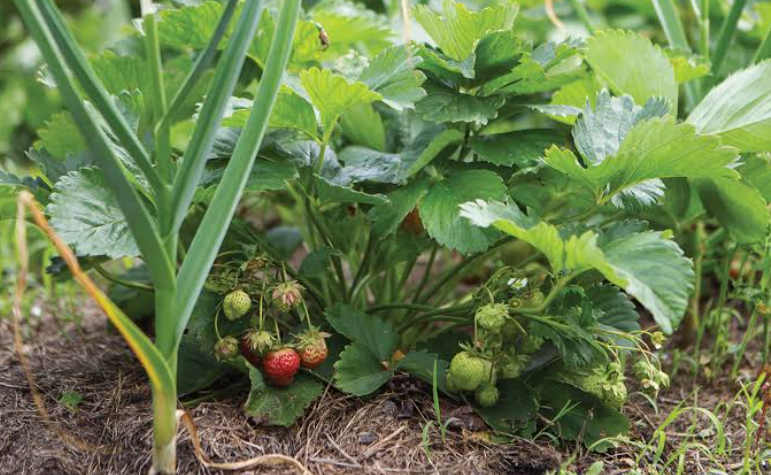
Strawberries are among the most rewarding fruits to grow in a home garden, producing sweet, low-growing berries that mature within 4 to 6 weeks of flowering under favorable conditions. Because strawberry plants have shallow root systems and spread through runners, they benefit enormously from thoughtful placement near other species that support their growth, deter pests, or improve soil health. This is where companion plants for strawberries become so valuable, since the right neighboring plants can increase yields by attracting pollinators, repelling insects, and reducing competition for nutrients. A single strawberry plant can produce anywhere from 200 to 500 grams of fruit per season when growing conditions are optimized, and companion planting is one of the simplest ways to push those numbers higher without relying on synthetic chemicals.
The practice of companion planting dates back centuries and rests on a few core principles: pest confusion, nutrient sharing, physical protection, and pollinator attraction. Some plants release strong scents that mask the smell of ripening strawberries, keeping away common pests such as aphids, slugs, and spider mites, which can damage up to 30 percent of a strawberry crop if left unchecked. Other companions fix nitrogen in the soil, feeding the shallow-rooted strawberry plants without the need for additional fertilizer applications. Ground-covering companions can also suppress weeds, which otherwise compete with strawberries for the limited moisture in the top 6 to 8 inches of soil where strawberry roots concentrate their growth.
Not every plant makes a good neighbor for strawberries, and gardeners have long noted that certain species, particularly those in the cabbage family, tend to stunt strawberry growth when planted too closely. The best companions instead tend to come from the herb, allium, legume, and flowering ornamental groups, each offering a distinct benefit. Strawberry beds that incorporate 3 to 5 different companion species often report noticeably fewer pest problems and more consistent fruit set across the growing season. The following 50 plants represent some of the most reliable and popular choices for gardeners looking to build a thriving, biodiverse strawberry patch.
Also Read: Companion Plants For Cucumbers
Plants That Grow Well Together With Strawberries
Borage
Borage is one of the most frequently recommended companions for strawberries, prized for its ability to attract pollinating bees in large numbers. Its blue star-shaped flowers bloom continuously for up to 10 weeks, drawing in beneficial insects that improve pollination rates across the entire strawberry bed. Gardeners have reported yield increases of nearly 20 percent in beds where borage grows nearby, largely because of the boost in pollinator activity. Borage also has deep taproots that pull trace minerals up from lower soil layers, making those nutrients available to the shallow-rooted strawberries growing beside it.
Thyme
Thyme is a low, spreading herb that works well as a living mulch around strawberry plants, helping to retain soil moisture during dry spells. Its strong aromatic oils are known to repel worms and certain beetles that would otherwise target ripening berries. A single thyme plant can spread to cover nearly 12 inches of ground within a season, making it an efficient groundcover that also suppresses weed growth. Because thyme thrives in the same well-drained, slightly acidic soil that strawberries prefer, the two plants rarely compete for resources.
Spinach
Spinach grows quickly, often reaching harvestable size within 40 to 45 days, and its broad leaves provide light shade that helps keep strawberry roots cool during hot spells. This fast turnaround means spinach can be planted and harvested multiple times in a single strawberry growing season without disturbing the berries. Spinach also has relatively shallow roots, so it does not compete aggressively with strawberries for water in the topsoil layer. Many gardeners plant spinach in the early rows between strawberry plants to make efficient use of garden space.
Lettuce
Lettuce is another fast-growing leafy companion, typically ready for harvest in 30 to 70 days depending on the variety, allowing gardeners to fill in gaps between young strawberry plants. Its low, spreading growth habit helps shade the soil and reduce moisture evaporation, which benefits the shallow strawberry root zone. Lettuce and strawberries share similar watering needs, requiring roughly 1 to 1.5 inches of water per week, which simplifies irrigation planning. Because lettuce matures and is removed relatively quickly, it does not crowd out strawberry plants as they spread later in the season.
Bush Beans
Bush beans are legumes capable of fixing atmospheric nitrogen into the soil through nodules on their roots, adding as much as 100 pounds of nitrogen per acre over a growing season. This natural fertilization benefits the nutrient-hungry strawberry plants growing nearby without the need for synthetic feed. Bush beans also grow compactly, rarely exceeding 20 inches in height, so they do not shade out the lower-growing strawberries. Their dense foliage additionally helps suppress weeds that would otherwise compete with strawberry runners for space.
Onions
Onions release sulfur compounds that are highly effective at repelling aphids, spider mites, and certain fungal pathogens that commonly affect strawberry plants. Their upright, narrow growth habit means they take up minimal horizontal space, allowing gardeners to tuck them between strawberry rows without sacrificing yield. Onions typically mature in 90 to 120 days, giving them enough time to establish strong pest-repelling properties throughout most of the strawberry fruiting period. Studies on companion planting have shown pest damage reductions of up to 25 percent in beds where alliums like onions are interplanted with strawberries.
Garlic
Garlic is widely regarded as one of the strongest pest-repelling companions available, with its pungent sulfur compounds deterring aphids, spider mites, and even some burrowing rodents. A single garlic clove planted in autumn will typically mature into a full bulb within 8 to 9 months, coinciding well with the strawberry growing calendar. Garlic’s antifungal properties in the surrounding soil can also help reduce the incidence of gray mold, a common strawberry disease that can destroy up to 15 percent of a harvest in humid conditions. Its narrow, upright leaves make it easy to plant along the borders of strawberry beds without shading the fruit.
Chives
Chives produce a mild onion-like scent that helps mask the aroma of ripening strawberries from pests such as aphids and Japanese beetles. This perennial herb can be harvested repeatedly, with regrowth occurring within 2 to 3 weeks after cutting, providing a renewable source of pest protection throughout the season. Chives also produce edible purple flowers that attract pollinating bees, supporting better fruit set on nearby strawberry plants. Their clumping growth habit, rarely exceeding 12 inches in height, makes them easy to fit into tight spaces along strawberry bed borders.
Also Read: Companion Plants For Zucchini
Marigolds
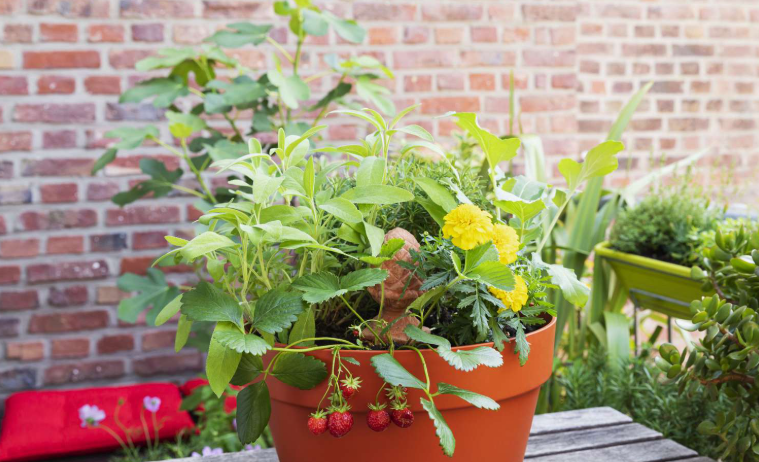
Marigolds are among the most popular companion flowers in vegetable gardening, largely because their roots release compounds that suppress harmful soil nematodes. Research trials have shown marigolds can reduce nematode populations by more than 90 percent in some soil types, directly protecting the root systems of nearby strawberry plants. Their bright orange and yellow blooms also attract pollinators while repelling certain flying pests through their strong scent. Marigolds are fast growing, often flowering within 45 to 50 days of planting, making them a quick and effective addition to any strawberry bed.
Nasturtiums
Nasturtiums function as a trap crop, luring aphids away from strawberry plants and onto their own leaves instead. This sacrificial planting strategy can reduce aphid damage on strawberries by a significant margin, with some gardeners reporting drops of over 40 percent in pest presence on their berries. Nasturtiums also spread quickly, with vining varieties covering up to 10 feet in a single season, providing dense groundcover that suppresses weeds. Their peppery, edible flowers and leaves make them a popular dual-purpose companion for both pest control and culinary use.
Sage
Sage is a hardy, woody herb whose strong aromatic oils are effective at repelling slugs and certain moths that might otherwise damage strawberry foliage and fruit. It thrives in well-drained soil with a similar pH range to strawberries, typically between 5.5 and 6.5, making the two easy to grow side by side. Sage plants can live for 4 to 5 years once established, providing long-term pest protection without the need for frequent replanting. Its silvery leaves also reflect sunlight, which can help reduce heat stress on nearby strawberry plants during peak summer months.
Caraway
Caraway is valued for its ability to attract beneficial predatory insects, including parasitic wasps that feed on common strawberry pests such as aphids and mites. Its deep taproot, which can extend more than 12 inches into the soil, helps break up compacted earth and improve drainage around shallow-rooted strawberry plants. Caraway typically takes about 2 years to fully mature and flower, making it a longer-term companion suited to permanent strawberry beds. Its feathery foliage and white flower clusters add structural diversity that supports a wider range of pollinators.
Yarrow
Yarrow is a hardy perennial that attracts ladybugs, lacewings, and other predatory insects known to feed on aphids and spider mites at rates of up to 50 aphids per day for a single ladybug. Its flat-topped flower clusters bloom for extended periods, often 4 to 6 weeks at a time, providing a steady food source for beneficial insects throughout the strawberry growing season. Yarrow is also drought tolerant, requiring minimal supplemental watering once established, which makes it a low-maintenance addition to strawberry beds. Its finely divided leaves add texture and height variation that can help diversify the microclimate of the bed.
Bee Balm
Bee balm produces vivid red, pink, or purple flowers that are highly attractive to bees, butterflies, and hummingbirds, all of which improve pollination rates for nearby strawberry blossoms. A well-established bee balm plant can produce over 50 individual blooms in a single season, offering an extended nectar source that keeps pollinators active in the garden. Its strong minty scent also has mild pest-repelling properties against certain aphids and gnats. Bee balm prefers similar moisture levels to strawberries, needing consistent watering of about 1 inch per week.
Buckwheat
Buckwheat is often used as a fast-growing cover crop, reaching flowering stage in as little as 4 to 6 weeks, which makes it useful for quickly attracting pollinators and beneficial insects to a new strawberry bed. Its dense root system helps improve soil structure and can suppress weed germination by blocking sunlight from reaching the soil surface. Buckwheat flowers are particularly attractive to hoverflies, whose larvae can consume up to 400 aphids over their development period. Because it is not frost hardy, buckwheat is typically grown as a seasonal companion rather than a permanent fixture in the strawberry bed.
Radishes
Radishes mature extremely quickly, often ready for harvest within 20 to 30 days, making them an efficient way to break up soil and mark rows before strawberry runners spread. Their rapid root growth helps aerate compacted soil, improving drainage for the shallow strawberry root systems nearby. Radishes are also sometimes used as trap crops for flea beetles, which prefer the radish leaves over strawberry foliage. Because they are harvested so quickly, radishes can be planted multiple times throughout a single strawberry growing season without ever crowding the berries.
Peas
Peas are nitrogen-fixing legumes capable of adding significant amounts of usable nitrogen to the soil, often improving fertility for several months after the plants are removed. They typically climb using tendrils and can be trained onto low trellises, keeping their footprint compact and non-competitive with spreading strawberry plants. Pea plants mature in about 60 to 70 days, allowing an early harvest before strawberry runners fully establish across the bed. Their flowers also attract early-season pollinators, helping support fruit set on the first strawberry blossoms of spring.
Also Read: Companion Plants For Cucumbers
Rhubarb
Rhubarb is a long-lived perennial that can remain productive in the same location for 8 to 10 years, making it a stable, low-maintenance neighbor for perennial strawberry beds. Its large leaves, which can grow over 12 inches wide, provide light shade that helps protect strawberry roots from overheating in peak summer. Rhubarb’s strong-smelling foliage has also been noted to help deter certain slugs and aphids from the surrounding area. Because rhubarb prefers slightly richer soil, it is often planted at the edges of strawberry beds rather than directly among the rows.
Horseradish
Horseradish is well known among gardeners for its strong root and leaf compounds that help repel potato beetles, aphids, and certain fungal pathogens from nearby plants. A single horseradish root can produce a new plant within one growing season, spreading modestly but reliably along bed borders. Its deep taproot, which can reach over 24 inches into the soil, helps break up compacted earth without competing with the shallow strawberry root zone. Because horseradish can be invasive if left unchecked, gardeners typically plant it in contained areas at the corners of strawberry beds.
Catmint
Catmint produces a strong aromatic oil that has been shown to repel aphids and certain beetles at rates comparable to some synthetic repellents in small-scale trials. Its silvery-green foliage and purple flower spikes bloom for extended periods, often 6 to 8 weeks, providing consistent nectar for pollinators visiting the strawberry bed. Catmint is highly drought tolerant, needing significantly less water than strawberries, which makes it easy to place along bed edges without affecting irrigation planning. Its mounding growth habit, usually reaching 12 to 18 inches tall, adds structure without shading the lower-growing strawberry plants.
Lavender
Lavender’s fragrant oils are effective at repelling aphids, moths, and certain beetles, while its purple flower spikes attract large numbers of bees essential for strawberry pollination. A mature lavender plant can produce hundreds of individual flower spikes in a single season, offering an extended bloom period that supports pollinator activity for weeks at a time. Lavender prefers drier, well-drained soil, which pairs well with strawberry beds that are not overwatered. Because lavender is a woody perennial that can live for 10 to 15 years, it provides long-term structure and pest protection at the borders of a strawberry patch.
Foxglove
Foxglove is a tall, striking flower that attracts bumblebees in particularly high numbers due to the shape of its tubular blooms, which are especially suited to larger pollinating insects. A single foxglove spike can produce over 20 individual flowers, each opening in sequence over several weeks to provide a sustained nectar source. Its height, often reaching 3 to 5 feet, makes it best suited for the back or border of a strawberry bed rather than directly among the rows. Because all parts of foxglove are toxic if ingested, it should be planted with care in gardens accessible to children or pets.
Leeks
Leeks share the same sulfur-based pest-repelling compounds found in onions and garlic, helping to deter aphids and certain soil-borne pests from strawberry roots. They have a long growing season, often taking 120 to 150 days to mature, which means they remain in the ground and providing protection for the majority of the strawberry fruiting period. Their upright, narrow leaves take up very little horizontal space, allowing them to be planted closely alongside strawberry rows. Leeks also tolerate cooler temperatures well, making them a useful companion for early spring and late fall strawberry beds.
Pyrethrum Daisies
Pyrethrum daisies contain natural insecticidal compounds in their petals that have been used for over a century in organic pest control formulations. Simply growing these daisies near strawberries can help reduce populations of aphids, spider mites, and certain beetles through the natural release of these compounds into the surrounding soil and air. The flowers themselves bloom for roughly 4 to 6 weeks, attracting pollinators during that window while also offering pest protection. Pyrethrum daisies prefer full sun and well-drained soil, conditions that align closely with the needs of strawberry plants.
Chamomile
Chamomile is often called a “physician plant” in companion gardening circles because of its reputation for improving the health and vigor of neighboring plants, including strawberries. Its essential oils have mild antifungal properties that may help reduce the spread of certain strawberry diseases such as botrytis, which can affect up to 20 percent of unprotected crops in humid climates. Chamomile flowers bloom repeatedly over a 6 to 8 week period, attracting hoverflies and other beneficial insects. Its low, feathery growth habit, rarely exceeding 12 inches, makes it easy to tuck between strawberry plants without shading them.
Cilantro
Cilantro, when allowed to bolt and flower, produces small white blooms that are highly attractive to hoverflies and parasitic wasps, both of which prey on common strawberry pests. The plant grows quickly, often ready for leaf harvest within 45 days, after which it can be left to flower and continue supporting beneficial insects. Cilantro’s flowers are particularly effective at attracting hoverflies, whose larvae can consume dozens of aphids daily during their development. Because cilantro tends to bolt quickly in hot weather, it works especially well as an early-season companion before summer heat sets in.
Basil
Basil is a popular companion herb known for its strong scent, which can help mask the smell of ripening strawberries from certain pests, including thrips and aphids. It grows well in full sun and consistently moist soil, conditions that align closely with strawberry growing requirements. Basil typically reaches harvestable size within 60 to 90 days and can be trimmed repeatedly throughout the season to encourage bushier growth and prolonged pest-repelling benefits. Its flowers, when allowed to bloom, also attract pollinators that support fruit set on nearby strawberry blossoms.
Also Read: Companion Plants For Tomatoes
Oregano
Oregano is a low-growing, spreading herb that works well as a living mulch around strawberry plants, helping to retain soil moisture and suppress weeds. Its strong aromatic oils have shown some effectiveness at repelling certain beetles and aphids in small garden trials. Oregano is a hardy perennial capable of living for 5 or more years once established, providing long-term groundcover benefits without needing to be replanted annually. Because it tolerates poor soil and minimal watering, oregano rarely competes with strawberries for nutrients or moisture.
Alyssum
Alyssum is a low, spreading flower that blooms almost continuously from spring through fall, often producing hundreds of tiny flowers per plant that attract hoverflies and other beneficial predatory insects. Its dense, mat-like growth habit, usually staying under 6 inches tall, makes it an excellent living mulch that helps retain soil moisture around strawberry roots. Hoverfly larvae attracted by alyssum blooms can consume large numbers of aphids during the strawberry fruiting season, offering significant natural pest control. Because alyssum self-seeds readily, a single planting can continue providing benefits across multiple growing seasons.
Cosmos
Cosmos flowers are tall, airy bloomers that attract a wide range of pollinators and beneficial insects, including ladybugs and lacewings that prey on common strawberry pests. A single cosmos plant can produce dozens of blooms over a season lasting from early summer until the first frost, offering an extended nectar source. Its height, often reaching 3 to 4 feet, makes it best suited for the back of a strawberry bed where it will not shade the lower-growing berries. Cosmos is also relatively drought tolerant, requiring less frequent watering than the strawberries growing nearby.
Zinnias
Zinnias are vibrant, fast-growing flowers that bloom within 60 to 70 days of planting and continue producing new flowers throughout the summer, drawing in bees and butterflies that improve strawberry pollination. Their bright colors and simple flower structure make them particularly attractive to a wide range of pollinating insects. Zinnias also attract ladybugs, which can consume as many as 5,000 aphids over the course of their lifetime, offering substantial pest control benefits. Because zinnias come in a wide range of heights, they can be positioned at the back or sides of a strawberry bed depending on the variety chosen.
Dianthus
Dianthus, commonly known for its clove-scented blooms, attracts butterflies and bees while its low, mounding growth habit rarely interferes with spreading strawberry runners. The plant typically blooms for 8 to 10 weeks during the growing season, providing a sustained source of nectar for pollinators visiting the strawberry bed. Dianthus prefers well-drained, slightly alkaline soil, which can help balance out the more acidic preferences of strawberry plants when grown in the same bed. Its compact size, usually under 12 inches tall, makes it easy to fit along the borders of a strawberry patch without shading the fruit.
Asparagus
Asparagus is a long-lived perennial vegetable that can remain productive in the same bed for 15 to 20 years, making it a stable companion for permanent strawberry plantings. Its tall, feathery foliage provides light dappled shade during the hottest part of the day, which can help protect strawberry plants from heat stress. Asparagus and strawberries have complementary root systems, with asparagus roots growing much deeper than the shallow strawberry roots, reducing competition for water and nutrients. Because asparagus is harvested in spring before its ferny foliage fully develops, it does not interfere with strawberry fruiting later in the season.
Swiss Chard
Swiss chard is a colorful leafy vegetable that grows well in the same soil conditions as strawberries, typically reaching harvestable size within 50 to 60 days of planting. Its broad leaves provide some ground shading that helps retain soil moisture for the shallow-rooted strawberries nearby. Chard can be harvested repeatedly by cutting outer leaves, allowing it to continue producing for several months without needing to be replanted. Because chard has a relatively small footprint at the base, it can be interplanted closely with strawberries without significant competition for space.
Parsley
Parsley is a biennial herb that, when allowed to flower in its second year, attracts parasitic wasps and hoverflies that help control aphid populations on nearby strawberry plants. It grows well in partial shade, making it a useful companion for planting on the shadier sides of a strawberry bed where berries might otherwise experience overheating. Parsley typically takes about 70 to 90 days to reach full size from seed, after which it can be harvested continuously for several months. Its low, clumping growth habit, usually under 12 inches, ensures it does not shade out the lower-growing strawberry plants.
Dandelion
Dandelion is often overlooked as a beneficial companion, but its deep taproot, which can extend more than 10 inches into the soil, helps break up compacted earth and bring up trace minerals for shallow-rooted strawberries to access. Its bright yellow flowers bloom early in the season, often before many other companion plants, providing an important early nectar source for pollinators emerging from winter dormancy. Dandelion is also edible in its entirety, offering an additional culinary benefit to gardeners who choose to cultivate it intentionally. Because dandelion can spread aggressively, most gardeners limit it to controlled patches near, rather than directly within, strawberry beds.
Comfrey
Comfrey is valued for its deep taproot, which can reach over 3 feet into the soil, pulling up nutrients such as potassium and calcium that benefit the shallow root systems of nearby strawberry plants. Its large leaves are often harvested and used as a nutrient-rich mulch, which can be laid around strawberry plants to slowly release nutrients as it decomposes. Comfrey can produce several cuttings of leaves per season, each regrowing within 4 to 5 weeks after cutting. Because comfrey can become invasive if allowed to seed, many gardeners choose sterile cultivars specifically for companion planting purposes.
Clover
Clover is a nitrogen-fixing groundcover that can add significant amounts of usable nitrogen to the soil, often improving fertility for strawberry plants without any additional fertilizer application. Its low, spreading growth habit, usually under 6 inches tall, makes it an effective living mulch that suppresses weeds and retains soil moisture around strawberry roots. Clover flowers also attract bees and other pollinators, supporting better fruit set on strawberry blossoms nearby. Because clover can compete for space if left unchecked, it is often mowed or trimmed periodically to keep it from overtaking young strawberry plants.
Sunflowers
Sunflowers are tall, fast-growing companions capable of reaching heights of 6 to 10 feet in a single season, providing structural support and light afternoon shade for strawberry beds in particularly hot climates. Their large flower heads attract pollinators in high numbers, with a single sunflower capable of producing thousands of individual florets that support extended bee activity. Sunflowers are also sometimes used as trap crops, drawing certain beetles and aphids away from the lower-growing strawberry plants. Because of their height, sunflowers are typically planted along the northern edge of a strawberry bed to avoid excessive shading.
Calendula
Calendula, often called pot marigold, produces bright orange and yellow blooms that attract hoverflies and ladybugs known to prey on aphids affecting strawberry plants. It blooms prolifically over a period of 8 to 10 weeks, offering one of the longest flowering windows among common companion flowers. Calendula petals also contain mild antifungal compounds that may help reduce the spread of certain soil-borne pathogens near strawberry roots. Its low, bushy growth habit, usually staying under 18 inches, makes it easy to interplant along strawberry rows without significant shading.
Bachelor’s Buttons
Bachelor’s buttons, also known as cornflowers, are cheerful blue blooms that attract bees and butterflies throughout a flowering period that can last 6 to 8 weeks. Their slender stems and modest height, typically 12 to 24 inches, allow them to be planted among strawberries without significantly shading the lower fruit. Bachelor’s buttons are also known to attract predatory insects such as lacewings, whose larvae can consume dozens of aphids per day. Because they are relatively drought tolerant, bachelor’s buttons require less frequent watering than the strawberries growing nearby.
Also Read: Simple Guide to Watering Strawberries With a Sprinkler Head
Verbena
Verbena produces clusters of small, vividly colored flowers that bloom continuously from late spring through the first frost, offering one of the longest nectar sources available to garden pollinators. Its sprawling, low growth habit makes it a useful groundcover option that can help shade soil and retain moisture around strawberry roots. Verbena is particularly attractive to butterflies, and a single well-established plant can host multiple butterfly visits per hour during peak bloom. Because verbena tolerates heat and drought well, it pairs easily with strawberries without requiring significant additional irrigation.
Phlox
Phlox produces dense clusters of fragrant flowers that are highly attractive to butterflies and moths, some of which act as important nighttime pollinators for strawberry blossoms. Depending on the variety, phlox can bloom for 6 to 10 weeks, providing a long-lasting nectar source throughout much of the strawberry growing season. Its moderate height, generally between 12 and 24 inches, allows it to be planted near strawberry beds without casting excessive shade. Phlox also prefers similar moisture levels to strawberries, simplifying irrigation planning when the two are grown together.
Anise Hyssop
Anise hyssop produces tall spikes of purple flowers that are highly attractive to bees, with some studies noting it as one of the most bee-attractive plants available for home gardens. Its licorice-scented foliage may also help deter certain pests through its strong aromatic oils. Anise hyssop typically blooms for 8 to 10 weeks, offering sustained pollinator activity that benefits strawberry fruit set throughout much of the season. Its upright growth habit, often reaching 2 to 3 feet, works best when planted at the back of a strawberry bed.
Winter Savory
Winter savory is a hardy, low-growing herb whose strong aromatic oils have been noted to help repel bean beetles and certain aphids from nearby plants. It thrives in the same well-drained soil conditions preferred by strawberries and requires minimal additional care once established. Winter savory is a perennial capable of living for several years, providing long-term groundcover and pest-repelling benefits without needing to be replanted annually. Its compact size, usually under 12 inches, allows it to be tucked easily between strawberry plants.
Tansy
Tansy is a vigorous perennial known for its strong-smelling foliage, which has traditionally been used to repel ants, beetles, and certain flying insects that might otherwise trouble strawberry plants. Its clusters of small, button-like yellow flowers bloom for 6 to 8 weeks, attracting beneficial insects such as ladybugs and parasitic wasps. Tansy can grow quite tall, often reaching 3 feet or more, so it is best positioned at the border rather than directly among strawberry rows. Because tansy can spread aggressively through its root system, many gardeners contain it in a designated area near, rather than within, the strawberry bed.
Also Read: Guide to Strawberry Irrigation: When And How To Do It
Sweet Woodruff
Sweet woodruff is a low, shade-tolerant groundcover that can help retain soil moisture around strawberry plants growing in partially shaded areas of the garden. Its small white flowers bloom in spring, coinciding with early strawberry blossoms and providing an additional nectar source for pollinators. Sweet woodruff spreads via underground rhizomes, typically covering about 12 to 18 inches within a season, making it an efficient living mulch. Because it tolerates cooler, shadier conditions better than strawberries themselves, it works particularly well along the shaded edges of a bed.
Corn
Corn, when planted sparingly along the edges of a strawberry bed, can serve as a windbreak that protects delicate strawberry blossoms from damaging gusts during the early flowering period. Its tall stalks, often reaching 6 to 8 feet, also provide some afternoon shade that can help reduce heat stress on strawberry plants in particularly warm climates. Corn typically takes 60 to 100 days to mature depending on the variety, giving it enough time to establish protective height during the peak of the strawberry season. Because corn is a heavy feeder, it is usually planted at a distance from strawberries to avoid excessive competition for soil nutrients.
Shallots
Shallots share the same sulfur-based pest-repelling properties found in onions and garlic, helping to protect strawberry plants from aphids and certain fungal pathogens. They mature relatively quickly compared to other alliums, often ready for harvest within 90 to 100 days of planting. Their narrow, upright growth habit allows them to be planted closely alongside strawberry rows without competing for horizontal space. Shallots also tend to multiply underground, with a single planted clove often producing a cluster of 4 to 8 new bulbs by harvest time.
Marjoram
Marjoram is a fragrant, low-growing herb whose aromatic oils have mild pest-repelling properties against aphids and certain beetles. It thrives in the same well-drained, sunny conditions preferred by strawberries, making the two easy to grow together without competing needs. Marjoram can be harvested repeatedly throughout the season, with new growth typically appearing within 2 to 3 weeks after trimming. Its compact size, usually staying under 12 inches tall, makes it a convenient border plant that does not shade out nearby strawberry fruit.
Also Read: When to Plant Strawberries