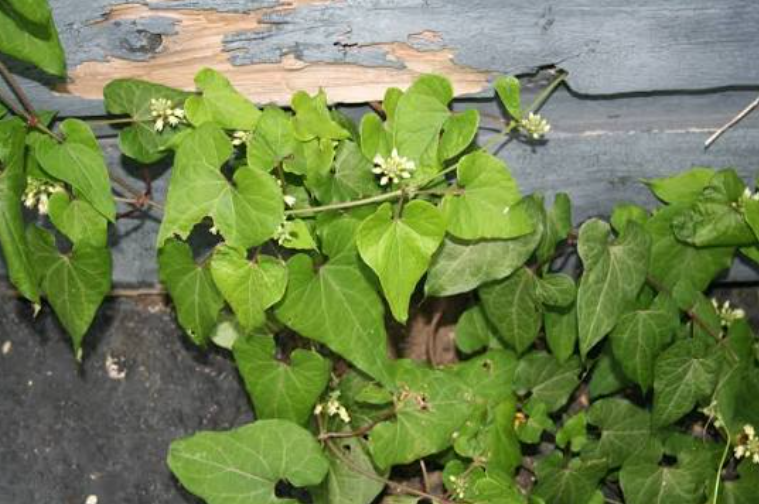
Types of weeds that grow like vines share a single defining trait, a climbing or trailing growth habit that lets them reach light and space other plants can’t, but the mechanisms behind that habit vary enormously from one species to the next. Some twine their entire stem around a support, some cling with adhesive tendrils or aerial rootlets, some simply sprawl and scramble over whatever’s nearby, and one genuinely strange entry on this list has no green tissue at all, surviving instead by draining nutrients directly out of its host.
That range of strategies is part of why vining weeds are so difficult to manage as a single category, since a technique that works on a twining vine like bindweed does little against a rootlet-climbing vine like English ivy, and neither approach touches a parasitic vine that isn’t rooted in soil at all. Several of the plants here were originally introduced as ornamentals specifically for their vigorous climbing habit, only to escape cultivation once that same vigor turned into an uncontrollable spread.
These weeds span forest edges, home foundations, and agricultural fields across most of North America. What follows covers 21 types of weeds that grow like vines, along with where each one grows and the data behind its spread.
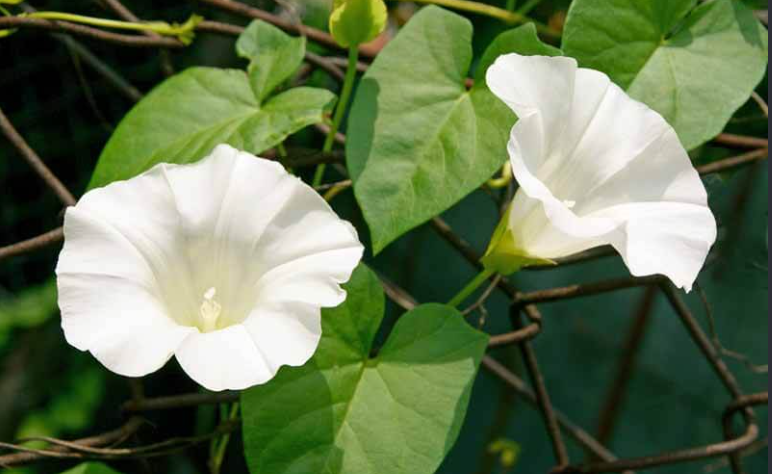
Kudzu
Kudzu produces large, 3-lobed leaves on vigorous vines capable of growing 60 to 100 feet in a single season, engulfing trees, utility poles, and abandoned structures beneath a dense green blanket. It was deliberately planted across roughly 3 million acres of the southern United States by 1946 for erosion control before its uncontrolled spread became a defining image of the region.
It grows extensively throughout the southeastern United States, its massive underground tuber reserves making it one of the hardest vines to eliminate once established.
Oriental Bittersweet
Oriental bittersweet produces round, glossy leaves on a woody, twining vine capable of climbing 60 feet or more into a tree canopy, eventually girdling and killing its host through sheer weight and constriction. Its bright orange-yellow seed capsules split open in fall to reveal the striking red seeds inside, a display that’s made the vine popular, if problematic, for autumn wreaths.
It grows extensively throughout the eastern United States, particularly along forest edges and disturbed woodland.
American Bittersweet
American bittersweet, native across most of the eastern and central United States, closely resembles its invasive Oriental relative, and according to the North Carolina Extension Gardener Plant Toolbox, it grows as a vigorous woody vine reaching 20 to 25 feet when given something to climb, considerably less aggressive than the Oriental species that has largely displaced it. Its round capsules mature to a bright yellow-orange before splitting to reveal red seeds inside.
It grows throughout the eastern and central United States, and native populations have declined significantly due to competition from its introduced relative.
English Ivy
English ivy produces glossy, lobed evergreen leaves on a climbing or trailing vine capable of forming a dense mat that smothers everything from garden perennials to entire tree trunks. Once a vine climbs high enough into full sun, its leaf shape changes from the familiar lobed form to a simpler, unlobed adult leaf, a stage that also allows it to flower and fruit.
It grows throughout most of the United States as both a cultivated groundcover and an escaped woodland invasive.
Field Bindweed
Field bindweed produces arrow-shaped leaves and funnel-shaped white to pink flowers on a twining vine that wraps tightly around any nearby plant, fence, or structure it encounters. Its root system can extend more than 20 feet deep and horizontally in every direction, making it one of the most difficult weeds to fully eliminate once established.
It grows throughout fields, gardens, and disturbed ground across most of the United States.
Black Bindweed
Black bindweed closely resembles field bindweed in its twining growth habit, distinguished by smaller, greenish-white flowers and heart-shaped rather than arrow-shaped leaves. Unlike its perennial relative, it’s an annual that relies entirely on seed rather than a persistent root system to return each year.
It grows throughout cultivated fields and gardens across most of the United States and Canada.
Porcelain Berry
Porcelain berry produces lobed, grape-like leaves on a vine capable of growing more than 25 feet in a single season, tolerating both shade and full sun as it spreads. Its berries pass through a striking sequence of colors, from pale lilac to turquoise-blue, before finally ripening to purple in fall.
It grows throughout the eastern United States, particularly along streambanks, forest edges, and disturbed ground.
Wild Grape
Wild grape produces broad, lobed leaves and curling tendrils on a woody vine capable of climbing 50 feet or more into a forest canopy. Checking for its characteristic shredding bark and forked tendrils helps rule out toxic look-alikes like Canada moonseed, which produces similar-looking fruit.
It grows throughout most of North America, commonly found climbing trees at woodland edges.
Canada Moonseed
Canada moonseed produces smooth, lobed leaves and blue-black fruit closely resembling wild grape, but each berry contains a single crescent-moon-shaped seed rather than the multiple round seeds found in true grapes. The fruit is toxic if ingested, making that seed-shape check an important safety step before eating any similar-looking wild fruit.
It grows throughout floodplain forests and riverbanks across the eastern and central United States.
Virginia Creeper
Virginia creeper produces palmately compound leaves in groups of 5 leaflets on a vine that climbs using small adhesive discs rather than twining or thorns, allowing it to scale smooth surfaces like brick and stone. It’s frequently confused with poison ivy despite the clear difference in leaflet count, and its berries, held on distinctive bright red stems in fall, are toxic to humans due to concentrated oxalate crystals.
It grows throughout the eastern and central United States and Canada, capable of climbing 30 feet or more up a supporting structure.
Poison Ivy
Poison ivy produces glossy, compound leaves arranged in groups of exactly 3 leaflets, growing as a climbing vine, low shrub, or ground cover depending on its setting. According to University of Illinois Extension, correctly identifying dangerous look-alike plants matters just as much for common vines like this one, since its oily resin, urushiol, remains active and capable of causing an allergic rash for months on contaminated tools, clothing, or even the dead, leafless winter stems of the plant.
It grows throughout woodlands, fence rows, and disturbed edges across most of the United States and Canada.
Chinese Wisteria
Chinese wisteria produces cascading clusters of fragrant purple flowers each spring on a woody, climbing vine capable of covering entire trees and structures as its stems reach 25 feet or more in length. Its combined weight and girdling growth habit can eventually kill even large, mature trees over a period of years.
It grows throughout much of the eastern United States, commonly escaping cultivation from garden plantings into adjacent woodland.
Trumpet Creeper
Trumpet creeper produces compound leaves and large, trumpet-shaped orange-red flowers on an aggressive, woody vine that climbs using aerial rootlets similar to English ivy. A single established plant can spread rapidly via underground runners in addition to seed, often popping up several feet from the original planting.
It grows throughout the eastern and southeastern United States, favoring fence lines and woodland edges where it can climb toward full sun.
Morning Glory
Morning glory, particularly ivyleaf and tall morning glory, produces heart-shaped or lobed leaves and funnel-shaped blue, purple, or white flowers on a fast-growing twining vine that germinates fresh from seed each year. It’s a significant problem in row crop fields, where its vigorous climbing habit can wrap around and interfere with mechanical harvesting equipment.
It grows throughout agricultural fields and gardens across much of the United States.
Mile-a-Minute Weed
Mile-a-minute weed, and according to Penn State Extension, it’s a trailing vine with barbed stems and distinctly triangular leaves, first reported in York County, Pennsylvania, in the 1930s in contaminated nursery soil. It’s an herbaceous annual capable of growing several inches per day, with seeds that can remain dormant in the soil for up to 6 years.
It grows throughout the mid-Atlantic and northeastern United States, favoring moist soil and full sun along forest edges, wetlands, and streambanks.
Japanese Honeysuckle
Japanese honeysuckle produces oval leaves and intensely fragrant, tubular white-to-yellow flowers on a twining, semi-evergreen vine capable of forming dense mats over shrubs and small trees. Its vines can girdle and kill woody host plants over time, and its berries, though attractive to birds, help spread the vine rapidly into new areas.
It grows throughout the eastern United States, remaining green well into winter in milder climates.
Greenbrier
Greenbrier produces glossy, heart-shaped leaves on a thorny, woody vine that climbs using coiled tendrils, forming dense, nearly impassable thickets in the forests it colonizes. Its sharp, hooked thorns make it one of the more physically unpleasant vines to clear by hand, even as its young shoots and tendrils are edible.
It grows throughout the eastern United States, commonly tangled through the understory of mixed hardwood forests.
Dodder
Dodder, and according to University of Minnesota Extension, is a twining, stem-climbing parasitic annual vine with yellow to reddish-brown, thread-like stems that develop suckers to penetrate a host plant. It has no roots of its own once established and survives entirely on nutrients drained from the plants it wraps around, with seeds capable of remaining dormant in the soil for several years.
It grows in landscape plantings, gardens, and agricultural fields across most of North America, classified as a federal noxious weed given how rapidly it can spread and how much damage it can do to a host crop.
Bittersweet Nightshade
Bittersweet nightshade produces purple, star-shaped flowers with a prominent yellow center, followed by oval berries that ripen from green to bright red on a sprawling, semi-woody vine. Every part of the plant, including the strikingly colored ripe berries, is toxic if eaten, a genuine hazard given how attractive the fruit looks to children and pets alike.
It grows throughout hedgerows and disturbed woodland edges across much of the United States.
Virgin’s Bower
Virgin’s bower, a native wild clematis, produces compound leaves and small, fragrant white flowers on a climbing vine that relies on twisting leaf stalks rather than tendrils or rootlets to grip its support. Its fluffy, silvery seed heads persist well into fall, giving the vine a second, distinctly different ornamental phase after the flowers fade.
It grows throughout the eastern and central United States, commonly found scrambling over fences and through streamside thickets.
Wild Hop
Wild hop produces rough, deeply lobed leaves and papery, cone-like flower clusters on a twining vine capable of climbing 20 feet or more in a single growing season. Its young spring shoots are edible cooked, traditionally prepared similarly to asparagus in parts of Belgium and France.
It grows throughout much of the United States, historically associated with Kent-style hop cultivation before becoming a common escapee along riverbanks and fence lines.
Further References
- Vining Weeds — University of Minnesota Extension — A useful identification resource covering vining weeds such as field bindweed, wild buckwheat, dodder, wild cucumber, Virginia creeper, wild grape, and poison ivy.
- Field Bindweed — University of Minnesota Extension — Provides identification details for field bindweed, including its twining growth, arrow-shaped leaves, funnel-shaped flowers, and creeping roots.
- The Noxious, Persistent, Invasive, and Perennial Bindweeds — Penn State Extension — Covers hedge bindweed and field bindweed, including their climbing habits, leaves, flowers, roots, and spread.
- Virginia Creeper — University of Maryland Extension — Useful for identifying this vigorous woody vine, including its five-leaflet foliage, tendrils, climbing habit, flowers, and berries.
- Weed Identification — NC State Extension — Explains practical weed-identification methods and emphasizes using photographs, vegetative characteristics, and identification keys when distinguishing unfamiliar weeds.