Heat tolerant plants keep growing, flowering and looking healthy when summer temperatures climb into the 90s and beyond. Many common garden plants stall in that kind of weather. Their leaves wilt or scorch, their flowers drop, and their pollen stops working.
Heat stress happens when high temperatures last long enough to damage a plant’s cells. Water evaporates faster from leaves and soil, so heat and drought usually strike together. Plants beside pavement, walls and other reflective surfaces suffer the most.
Heat-loving plants have evolved ways around the problem. Desert plants often have thick, fleshy leaves, tiny leaves or no leaves at all, and some open their pores only at night to save water. Tropical plants from places with long, steamy summers simply keep growing in heat that would stop a cool-climate plant.
Most of these plants come from Mexico, the American Southwest, the Mediterranean, Africa and the tropics. Even the toughest still need water to get established and do best in well-drained soil. The 40 plants below include flowers, shrubs, succulents, trees, grasses and vegetables, and each entry notes where the plant is native.
1. Vinca
Vinca is one of the toughest summer flowers. Its flowers are flat, five-petaled and about 2 inches across. They come in pink, red, purple, white and near-black. Its leaves are glossy and dark green. It grows 6 to 18 inches tall. It blooms nonstop from late spring until frost.
Clemson University describes the annual vinca as really heat and drought tolerant. It needs no deadheading to keep flowering. It dislikes wet, cool soil and can rot in rainy springs. It is toxic if eaten. It is also called Madagascar periwinkle. It is native to Madagascar and is grown as a summer annual worldwide.
2. Zinnia
The zinnia is a cheerful, easy annual. Its flowers range from small buttons to blooms 6 inches across. They come in almost every color except blue. Its stems are stiff and good for cutting. It grows 1 to 4 feet tall. It flowers from early summer until frost.
It grows quickly from seed sown directly in warm soil. Butterflies visit its flowers heavily. Newer types resist powdery mildew, its main disease. Cutting the flowers encourages more blooms. It thrives in full sun and heat. It is native to Mexico and Central America.
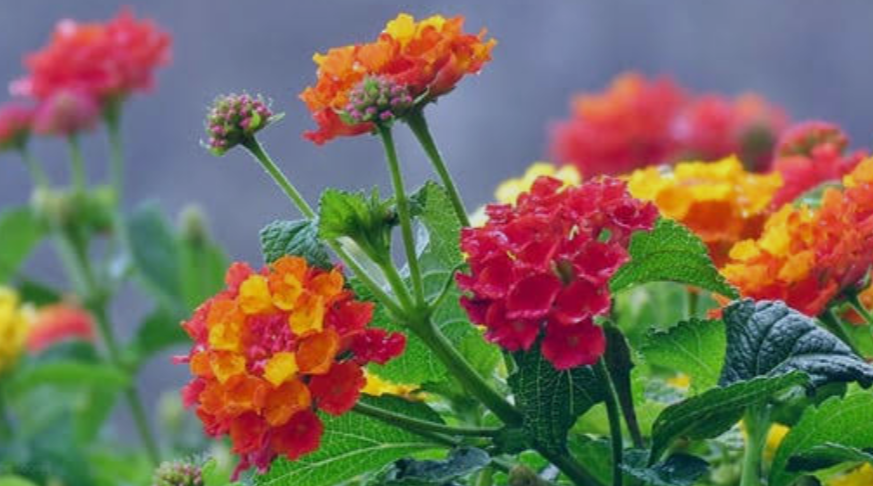
3. Lantana
Lantana is a shrubby plant with clusters of tiny flowers. Its flowers are often two-toned. They come in yellow, orange, red, pink, purple and white. They often change color as they age. Its leaves are rough and aromatic. It grows 1 to 6 feet tall.
It thrives in heat and tolerates drought once established. It attracts butterflies and hummingbirds. It prefers lean, well-drained soil. Its leaves and berries are toxic to people and animals. It is invasive in Florida, Hawaii and many tropical regions. It is native to the tropical Americas.
4. Pentas
Pentas is a flowering plant with star-shaped blooms. Its flowers form flat-topped clusters. They come in red, pink, lavender and white. Its leaves are fuzzy and bright green. It grows 1 to 3 feet tall. It blooms all summer.
It is one of the best plants for attracting butterflies and hummingbirds. It needs regular water during dry spells. It grows as a perennial in frost-free climates and as an annual elsewhere. It is also called Egyptian star cluster. It thrives in heat and humidity. It is native to tropical Africa and the Arabian Peninsula.
5. Portulaca
Portulaca is a low, succulent annual. Its flowers are bright, silky and rose-like. They come in pink, red, orange, yellow and white. They open in sun and close in the evening. Its leaves are small, fleshy and needle-like. It stays under 8 inches tall.
The University of Florida notes that portulaca keeps flowering without removing spent blooms. It thrives in hot, dry spots where few plants survive. It suits rock gardens, containers and the edges of paths. It needs very little water. It is also called moss rose. It is native to Argentina, southern Brazil and Uruguay.
6. Purslane
Purslane is a trailing succulent closely related to portulaca. Its leaves are flat, fleshy and paddle-shaped. Garden forms have large flowers in bright colors. Wild purslane has tiny yellow flowers. It spreads in a low mat. It grows only a few inches tall.
It thrives in the hottest, driest spots. It is also an edible plant, with lemony, crunchy leaves. It is rich in omega-3 fatty acids. It roots wherever its stems touch the ground. Wild purslane is a common garden weed. It is believed to be native to North Africa, the Middle East and India and now grows worldwide.
7. Angelonia
Angelonia is a summer flower with upright spikes. Its flowers look like small snapdragons. They come in purple, pink, white and bicolors. Its foliage has a faint grape scent. It grows 1 to 2 feet tall. It blooms all summer without deadheading.
It is also called summer snapdragon. It thrives in hot, sunny spots. It tolerates both drought and humidity. It suits beds, borders and containers. It is deer resistant. It is native to Mexico and the West Indies.
8. Celosia
Celosia is a flowering annual with velvety blooms. Its flowers come in three forms. Plume types look like feathers, crested types look like brains, and spike types look like wheat. They are bright red, orange, yellow, pink and purple. It grows 6 inches to 3 feet tall. It blooms all summer.
It thrives in full sun and heat. Its flowers dry well for arrangements. It needs well-drained soil. Some types are grown as leafy greens in Africa. It is also called cockscomb. It is native to tropical regions, probably in Africa.
9. Globe Amaranth
Globe amaranth is an annual with round, clover-like flowers. Its flower heads are papery and hold their color for weeks. They come in purple, pink, red, white and orange. They sit on wiry stems above the leaves. It grows 1 to 2 feet tall. It blooms from summer until frost.
It thrives in heat and drought. Its flowers are excellent for drying. It attracts butterflies. It needs full sun and well-drained soil. It is also called gomphrena. It is native to Central America.
10. Marigold
The marigold is a classic summer annual. Its flowers are yellow, orange, red or bicolored. They range from small singles to large pompoms. Its leaves are finely cut and strongly scented. It grows 6 inches to 3 feet tall. It blooms from early summer until frost.
North Carolina State University lists marigold among excellent heat-tolerant annuals. It grows easily from seed. Deadheading keeps it flowering. Its roots can suppress some soil pests. It is widely used in festivals in Mexico and India. It is native to Mexico and Central America.
11. Mandevilla
Mandevilla is a flowering vine with trumpet-shaped blooms. Its flowers are pink, red or white. They are 3 to 4 inches across. Its leaves are glossy and dark green. It climbs trellises and posts. It blooms all summer.
The University of Missouri describes it as a heat-tolerant vine that loves Missouri heat. It needs full sun and regular water. Its milky sap can irritate skin. It can be brought indoors for winter. It is a favorite for patio containers. It is native to Central and South America, including Brazil.
12. Bougainvillea
Bougainvillea is a thorny vine with vivid color. Its color comes from papery bracts that surround tiny white flowers. The bracts are magenta, red, orange, pink, purple or white. It climbs walls, fences and arbors. It can grow 20 to 30 feet in warm climates. It blooms in waves.
It thrives in heat and drought. It flowers best when kept slightly dry. Too much water and fertilizer give leaves instead of flowers. Its thorns are sharp. It can be grown in pots in cooler regions. It is native to Brazil and neighboring parts of South America.
13. Tropical Hibiscus
Tropical hibiscus is a shrub with huge, showy flowers. Its flowers are 4 to 8 inches across. They come in red, pink, orange, yellow and blends. Each flower lasts only a day or two. Its leaves are glossy and dark green. It grows 4 to 8 feet tall.
It thrives in heat and humidity. It blooms through the summer. It needs regular water and feeding. It can be overwintered indoors in cold regions. It is the state flower of Hawaii. It is native to East Asia and is grown throughout the tropics.
14. Black-Eyed Susan
Black-eyed Susan is a cheerful native wildflower. Its flowers are golden yellow with dark brown centers. They are 2 to 4 inches across. Its leaves are rough and hairy. It grows 2 to 3 feet tall. It blooms from midsummer into fall.
Colorado State University recommends a large-flowered selection of it among heat-loving plants. It tolerates heat, drought and poor soil. It attracts butterflies and bees. Its seeds feed birds in fall. It spreads by self-sowing. It is native to eastern and central North America.
15. Purple Coneflower
Purple coneflower is a classic prairie perennial. Its flowers have drooping pink-purple petals. They surround a spiky, orange-brown cone. It grows 2 to 4 feet tall. It blooms from early summer to fall. It lives for many years.
It tolerates heat, drought and poor soil once established. Its flowers attract bees and butterflies. Goldfinches eat its seeds. Many new colors have been bred. It is used in herbal remedies. It is native to the eastern and central United States.
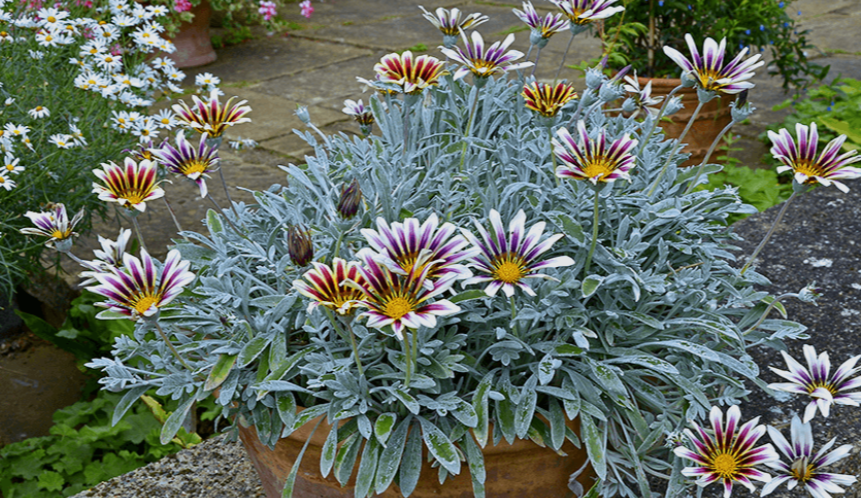
16. Blanket Flower
Blanket flower is a bright, daisy-like perennial. Its flowers are red with yellow tips. Some forms are all red or all yellow. It grows 1 to 2 feet tall. It blooms from early summer until frost. It is short-lived but reseeds.
It thrives in heat, drought and sandy soil. Rich, wet soil shortens its life. It attracts butterflies. It is used along roadsides and in beach plantings. It is the state wildflower of Oklahoma. It is native to the central and western United States and northern Mexico.
17. Russian Sage
Russian sage is a tall, airy perennial. Its stems are silvery white. Its leaves are gray-green and aromatic. Its flowers are tiny, lavender-blue and held in long sprays. It grows 3 to 5 feet tall. It blooms from midsummer into fall.
It thrives in heat, drought and alkaline soil. It is rarely bothered by deer. It needs full sun. It should be cut back in spring. It is not a true sage. It is native to Central Asia, from Afghanistan to Pakistan and Tibet.
18. Yarrow
Yarrow is a tough perennial with flat-topped flower clusters. Its flowers are white in the wild. Garden forms come in yellow, pink, red and orange. Its leaves are finely divided and fern-like. It grows 1 to 3 feet tall. It blooms through the summer.
It tolerates heat, drought and poor soil. It spreads by underground stems. Its flowers dry well. It attracts beneficial insects. It has been used in folk medicine for thousands of years. It is native across the Northern Hemisphere, including Europe, Asia and North America.
19. Mealycup Sage
Mealycup sage is a heat-loving salvia. Its flowers are blue, violet or white. They grow on slender, upright spikes. Its stems are covered in a pale, powdery coating. It grows 1 to 3 feet tall. It blooms all summer.
It thrives in heat and tolerates drought. It is grown as an annual in cold regions and a perennial in mild ones. It attracts bees and butterflies. Its flowers are good for cutting and drying. It is deer resistant. It is native to Texas, New Mexico and northern Mexico.
20. Autumn Sage
Autumn sage is a shrubby perennial salvia. Its flowers are tubular and red, pink, coral, purple or white. They bloom in spring and again in fall. Its leaves are small and aromatic. It grows 2 to 3 feet tall. It forms a rounded, woody shrub.
It thrives in heat, drought and rocky soil. It is a favorite of hummingbirds. It is deer resistant. It needs excellent drainage. It is widely planted across Texas and the Southwest. It is native to Texas and northeastern Mexico.
21. Lavender
Lavender is a fragrant Mediterranean herb. Its flowers are purple, blue, pink or white. They grow on slender spikes above the leaves. Its leaves are narrow and silver-gray. It grows 1 to 3 feet tall. It blooms in early summer.
It thrives in heat, sun and dry, rocky soil. It suffers in humid summers and wet soil. Its flowers are used in perfume, cooking and sachets. Bees visit it heavily. It is deer resistant. It is native to the Mediterranean region.
22. Rosemary
Rosemary is an evergreen herb shrub. Its leaves are needle-like and strongly scented. Its flowers are small and blue, pink or white. It grows 2 to 6 feet tall. Some forms trail over walls. It blooms in winter and spring.
It thrives in heat and drought once established. It needs excellent drainage. It is used widely in cooking. It is deer resistant. It is grown as a hedge in warm climates. It is native to the Mediterranean region.
23. Century Plant
The century plant is a large, dramatic agave. Its leaves are thick, gray-green and edged with sharp teeth. Each leaf ends in a stiff spine. The rosette can reach 6 feet across. After 10 to 30 years it sends up a flower stalk up to 25 feet tall. The plant dies after flowering.
It thrives in extreme heat and drought. It stores water in its thick leaves. It opens its pores at night to save water. Its spines make it dangerous near paths. It produces offsets that replace the parent. It is native to Mexico and the southwestern United States.
24. Adam’s Needle
Adam’s needle is a hardy yucca. Its leaves are stiff, sword-shaped and edged with curly threads. They form a dense rosette. In summer it sends up a tall stalk of creamy, bell-shaped flowers. The stalk can reach 5 to 8 feet. It forms clumps over time.
It tolerates heat, drought and poor, sandy soil. It is also cold-hardy. Its flowers are pollinated by yucca moths. Its leaf tips are sharp. Its fibers were once used for cord and baskets. It is native to the southeastern United States.
25. Aloe Vera
Aloe vera is a succulent known for its soothing gel. Its leaves are thick, fleshy and gray-green. They have small teeth along the edges. It forms a stemless rosette. It grows 1 to 2 feet tall. It produces tall spikes of yellow flowers.
It thrives in heat, sun and drought. It stores water in its leaves. Its gel is used on minor burns. Its yellow sap is toxic to pets. It grows outdoors in frost-free climates. It is thought to be native to the Arabian Peninsula.
26. Red Yucca
Red yucca is not a true yucca but a related succulent. Its leaves are narrow, arching and grass-like. They form a dense clump. Tall, wand-like stalks carry coral-red flowers. The stalks reach 3 to 5 feet. It blooms from spring through fall.
It thrives in extreme heat and drought. Hummingbirds visit its flowers. Its leaves are not spiny, unlike true yuccas. It is widely used in Texas and Southwest landscapes. It tolerates reflected heat from pavement. It is native to Texas and northern Mexico.
27. Texas Sage
Texas sage is a silvery desert shrub. Its leaves are small and gray. Its flowers are purple, pink or white. They burst open after summer rains. It grows 4 to 6 feet tall. It is also called cenizo.
It thrives in extreme heat, drought and alkaline soil. It is sometimes called barometer bush because it blooms when humidity rises. It needs excellent drainage. Too much water makes it leggy. It is not a true sage. It is native to Texas and northern Mexico.
28. Oleander
Oleander is an evergreen shrub with abundant flowers. Its flowers are pink, red, white or yellow. They bloom from spring into fall. Its leaves are long, narrow and leathery. It grows 6 to 20 feet tall. It forms dense screens.
It thrives in heat, drought and salty soil. It is widely planted along highways in hot climates. All parts of the plant are highly poisonous. Smoke from burning it is also toxic. It should be kept away from children and pets. It is native to the Mediterranean region and southern Asia.
29. Crape Myrtle
Crape myrtle is a flowering tree of hot summers. Its flowers are crinkled like crepe paper. They come in pink, red, purple, lavender and white. They bloom for months in summer. Its bark peels to reveal smooth, mottled trunks. It grows 3 to 30 feet tall.
It thrives in heat and humidity. It is drought tolerant once established. It is one of the most planted trees in the southern United States. Hard pruning is unnecessary and weakens its form. Powdery mildew can affect older varieties. It is native to China and Korea.
30. Desert Willow
The desert willow is a small flowering tree. Its leaves are long and narrow, like willow leaves. Its flowers are trumpet-shaped and pink, lavender or white. They bloom through the hot season. It grows 15 to 25 feet tall. It is not a true willow.
It thrives in extreme heat and drought. Hummingbirds and bees visit its flowers. It is deciduous in winter. It grows along dry washes in the wild. It suits small desert gardens. It is native to the southwestern United States and northern Mexico.
31. Palo Verde
The palo verde is a desert tree with green bark. Its trunk and branches are smooth and green. Its leaves are tiny and drop in drought. It carries out photosynthesis through its bark. In spring it is covered in yellow flowers. It grows 15 to 30 feet tall.
The University of Arizona notes that many desert plants survive heat and drought with adaptations such as small leaf area. The palo verde is a good example. Its name means green stick in Spanish. It is the state tree of Arizona. Its seeds were eaten by native peoples. It is native to the Sonoran Desert of Arizona, California and northwestern Mexico.
32. Pink Muhly Grass
Pink muhly grass is a native ornamental grass. Its leaves are fine and wiry. In fall it produces clouds of pink to purple flower plumes. The plumes look like mist above the leaves. It grows 2 to 3 feet tall. It forms neat clumps.
It thrives in heat, drought and sandy soil. It tolerates salt spray. It needs full sun for the best color. It is used in mass plantings and coastal gardens. It needs little care. It is native to the eastern and central United States.
33. Sweet Potato Vine
Sweet potato vine is grown for its colorful leaves. Its leaves are heart-shaped or deeply lobed. They are chartreuse, purple, bronze or variegated. The vines trail and spread. It grows quickly. It fills containers and beds.
It thrives in heat and humidity. It needs regular water in containers. Its tubers are edible but not very tasty. It is the same species as the edible sweet potato. It suits hanging baskets and window boxes. It is native to the tropical Americas.
34. Sun Coleus
Sun coleus is a heat-tolerant form of coleus. Its leaves are boldly patterned. They come in red, purple, lime, orange and pink. Newer sun types tolerate full sun. It grows 1 to 3 feet tall. It is grown for foliage, not flowers.
It thrives in heat and humidity. It needs regular water. Pinching off its flower spikes keeps it bushy. It is easy to grow from cuttings. It suits beds and containers. It is native to Southeast Asia and Malaysia.
35. Okra
Okra is a heat-loving vegetable. Its plants grow 3 to 6 feet tall. Its flowers are large, pale yellow and hibiscus-like. Its pods are green or red and ridged. They are picked young and tender. It produces until frost.
It thrives in hot summers when other vegetables struggle. It needs warm soil to germinate. Pods should be picked every day or two. Older pods become tough. It is used in gumbo and fried dishes. It is native to Africa, probably Ethiopia or West Africa.
36. Southern Pea
The southern pea is a heat-loving bean. It is also called the cowpea and black-eyed pea. Its plants are bushy or vining. Its pods are long and slender. Its seeds are cream with a dark eye or other colors. It grows quickly in summer.
It thrives in heat and tolerates drought. It improves soil by fixing nitrogen. Its peas are eaten fresh or dried. Its young leaves are also edible. It is a staple crop in Africa and the American South. It is native to Africa.
37. Hot Pepper
Hot peppers love summer heat. Their plants grow 1 to 3 feet tall. Their fruit ranges from tiny and fiery to large and mild. The fruit ripens from green to red, orange or yellow. Their heat comes from a compound called capsaicin. They produce until frost.
They need warm soil and long, hot summers. Extreme heat can cause flowers to drop. They resume fruiting when temperatures ease. They are grown in containers and gardens. They are among the world’s most widely used spices. They are native to the Americas, from Mexico to South America.
38. Eggplant
Eggplant is a heat-loving vegetable. Its plants grow 2 to 4 feet tall. Its flowers are purple and star-shaped. Its fruit is glossy purple, white, green or striped. The fruit can be round, oval or long. It needs a long, hot season.
It needs warm soil and full sun. It stalls in cool weather. Flea beetles often damage its leaves. Its fruit is picked while glossy. It is used in cuisines around the world. It is native to India and Southeast Asia.
39. Basil
Basil is a heat-loving herb. Its leaves are bright green and fragrant. Some types are purple or lemon-scented. It grows 1 to 2 feet tall. It produces spikes of small white or purple flowers. It is killed by frost.
It thrives in heat and sun. It dislikes cool nights. Pinching off flowers keeps the leaves tender. It needs regular water. It is essential in Italian and Thai cooking. It is native to tropical Asia and Africa.
40. Sunflower
The sunflower is a classic summer flower. Its flower heads are huge, yellow and daisy-like. They can be a foot or more across. Its stems are thick and hairy. It grows 2 to 12 feet tall. It blooms in mid to late summer.
It thrives in heat and full sun. Its deep roots help it tolerate drought. Its seeds feed birds and people. Young flower heads follow the sun across the sky. It is grown for oil, seeds and cut flowers. It is native to North America.
Further References:
- Clemson University: Summer Flowering Annuals
- University of Florida: Summer Bedding Plants
- North Carolina State University: Heat-Tolerant Annuals That Shine All Summer
- University of Missouri: Hot Plants That Are Cool
- Colorado State University: Heat Loving Replacement Annuals for Containers
- University of Arizona: drought and heat stress in trees
- Texas A&M AgriLife: High temperatures take toll on Texas crops