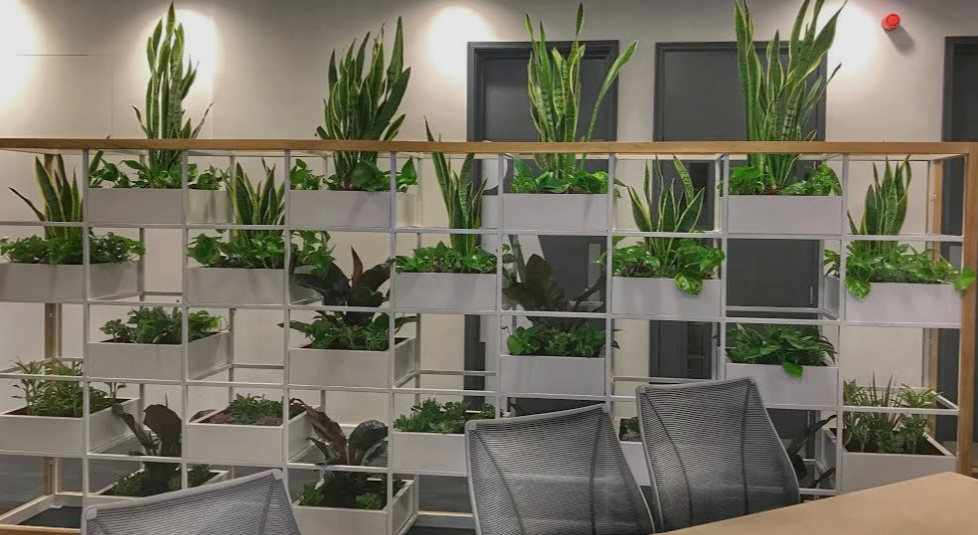
Plants that can survive in office lighting are the shade-loving species that evolved under the canopy of tropical forests. Most offices are lit by overhead fluorescent tubes or LED panels instead of sunlight. Those lights are designed for people reading screens and paper, not for plants making food from light.
The light levels are low by plant standards. The University of Florida notes that an office lit only by fluorescent bulbs often receives 40 foot-candles or less, while a north-facing window may reach 400 and outdoor winter noon light can exceed 4,000. Few plants can live long below about 50 foot-candles.
Office plants have one advantage, which is time. Lights in many workplaces stay on 10 to 14 hours a day, and plants respond to the total amount of light they receive over the day. A plant that gets weak light for many hours can collect as much energy as one that gets brighter light for a shorter time.
The best office plants are understory species that grow slowly, store water and tolerate missed waterings. Placing them within a few feet of a light fixture or a window helps a great deal. The 35 plants below are the ones most often recommended for artificial office light, and each entry notes where the plant is native.
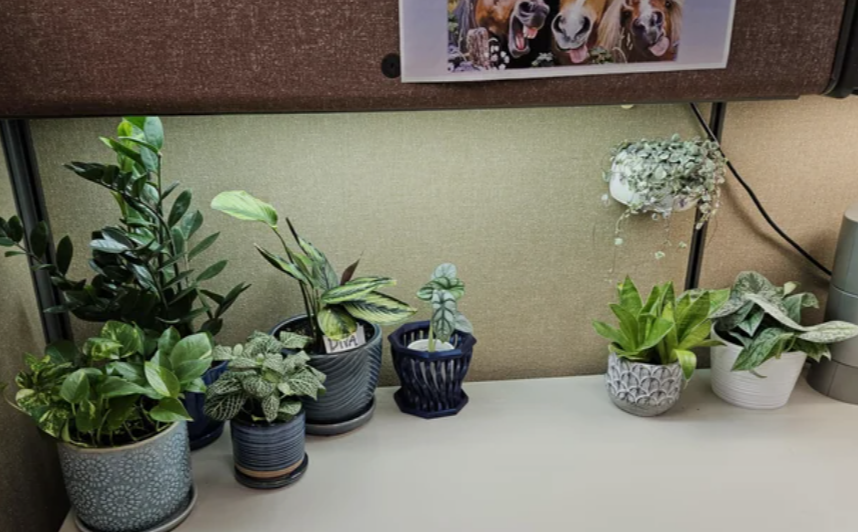
1. ZZ Plant
The ZZ plant is often called the toughest office plant. Its leaves are glossy, waxy and dark green. They grow in two neat rows along stiff, upright stems. The plant stores water in thick, potato-like underground stems. It grows 2 to 3 feet tall. It grows slowly and keeps a tidy shape.
The University of Illinois notes that it prefers bright, indirect light but tolerates extremely low light. The same source says a little extra light from a fluorescent bulb can make a big difference. It can go two to three weeks or more without water. Overwatering is its main danger. It is toxic to pets if chewed. It is native to eastern Africa, from Kenya to South Africa.
2. Snake Plant
The snake plant is a classic for desks and dim corners. Its leaves are stiff, upright and sword-shaped. They are dark green with lighter gray-green bands. Many forms have bright yellow edges. It grows 1 to 4 feet tall. It spreads slowly by underground stems.
The University of Minnesota lists it as a low-light plant and notes that it grows as an understory plant in the wild. It opens its leaf pores mainly at night to save water. It can survive a month or more between waterings. It is mildly toxic to pets. It tolerates dry office air very well. It is native to tropical Africa, Madagascar and southern Asia.
3. Golden Pothos
Golden pothos is one of the few plants that survive very dim offices for long periods. Its leaves are heart-shaped and glossy green. They are marbled with yellow. Its vines trail from shelves, cabinets and hanging pots. It grows quickly. Its stems can reach many feet long.
The University of Kentucky notes that only a few plants, including pothos, Chinese evergreen and parlor palm, can tolerate 50 to 100 foot-candles for more than six months. Its yellow markings fade in very low light. It roots easily from cuttings in a glass of water. It is toxic to pets. It is also called devil’s ivy. It is native to Mo’orea in French Polynesia.
4. Marble Queen Pothos
Marble Queen pothos is a heavily variegated form of pothos. Its leaves are streaked and speckled with creamy white. Some leaves are almost half white. The vines trail like those of golden pothos. It grows more slowly because of its pale tissue. It brightens drab desks and shelves.
Mississippi State University lists it among plants for low light. It needs somewhat more light than golden pothos to keep its white color. In very dim spots its new leaves become greener. It is toxic to pets if chewed. It is easy to grow from cuttings. It is a selection of the same species native to Mo’orea in French Polynesia.
5. Chinese Evergreen
Chinese evergreen is a colorful plant for low-light offices. Its leaves are oval and pointed. They are patterned in green, silver, cream, pink or red. The plant forms a dense, upright clump. It grows 1 to 3 feet tall. It handles neglect well.
The University of Kentucky names it among the few plants that tolerate very low light for months. The University of Minnesota notes that it grows well in fluorescent-lit places such as office lobbies. Green and silver forms tolerate the least light. Red and pink forms need brighter spots. It dislikes cold drafts from air vents. It is native to the tropical forests of southeastern Asia and New Guinea.
6. Cast-Iron Plant
The cast-iron plant earned its name by surviving almost anything. Its leaves are long, broad and dark green. They rise straight from the soil on short stalks. The plant forms a dense clump. It grows 2 to 3 feet tall. It grows very slowly.
Mississippi State University lists it among plants suited to low light of 25 to 75 foot-candles. It tolerates deep shade, dry air, cool rooms and irregular watering. It was a favorite in dim Victorian parlors. It is safe for pets. Its small purple flowers bloom at soil level and are rarely seen. It is native to Japan and Taiwan.
7. Parlor Palm
The parlor palm is a small palm for desks and floors. Its fronds are delicate, feathery and bright green. It grows on slender, cane-like stems. It reaches 2 to 4 feet tall indoors. It grows slowly. It is often sold as several seedlings in one pot.
The University of Kentucky lists it among the few plants that tolerate 50 to 100 foot-candles for more than six months. It has been a popular indoor palm since Victorian times. It is safe for pets. It prefers evenly moist soil. Spider mites can attack it in dry air. It is native to the rainforests of southern Mexico and Guatemala.
8. Peace Lily
The peace lily is one of the few flowering plants that cope with office light. Its leaves are glossy, dark green and lance-shaped. Its flowers are white hoods around a cream spike. It grows 1 to 3 feet tall. It wilts visibly when it needs water. It recovers quickly once watered.
Iowa State University lists it among plants for low light. It flowers less in dim offices but keeps its handsome leaves. Placing it near a window or under a light fixture encourages blooms. Its leaves irritate the mouth of pets and children. It prefers evenly moist soil. It is native to the tropical rainforests of Central and South America.
9. Heartleaf Philodendron
Heartleaf philodendron is an easy trailing vine. Its leaves are heart-shaped and glossy green. The vines trail from shelves or climb a support. It grows quickly. It tolerates frequent moving. It is very forgiving of missed waterings.
It is one of the most reliable vines for fluorescent-lit offices. In low light its stems stretch and its leaves grow smaller. Pinching the tips keeps it bushy. It is toxic to pets if chewed. It roots easily from cuttings. It is native to Central America, the Caribbean and northern South America.
10. Philodendron Brasil
Philodendron Brasil is a variegated form of heartleaf philodendron. Its leaves are heart-shaped and dark green. Each has a bright lime or yellow stripe down the center. The vines trail or climb. It grows quickly. It brightens dull corners.
It needs a little more light than the plain form to keep its stripes. Under weak office light its new leaves may come in greener. It is easy to grow from cuttings. It is toxic to pets. It prefers to dry slightly between waterings. It is a selection of a species native to Central America, the Caribbean and northern South America.
11. Spider Plant
The spider plant is a cheerful, arching plant. Its leaves are long and narrow. They are green, often with white stripes. Mature plants send out long stems carrying small white flowers. Baby plantlets form at the ends of those stems. It looks best on a high shelf or in a hanging pot.
It tolerates a wide range of light, including fluorescent office light. It grows best near a light source. It is safe for cats and dogs. Its leaf tips brown with fluoride in tap water. Its plantlets root easily to make new plants. It is native to tropical and southern Africa.
12. Janet Craig Dracaena
Janet Craig dracaena is a durable, leafy office plant. Its leaves are glossy, dark green and strap-shaped. They grow in rosettes on upright canes. It grows 3 to 6 feet tall indoors. It grows very slowly. It holds its leaves for years.
It is one of the most widely used plants in office interiors. It tolerates low light better than most dracaenas. Its leaf tips brown in dry air or with fluoride in tap water. It is toxic to pets. It needs watering only when the top of the soil dries. It is native to tropical Africa.
13. Corn Plant
The corn plant is a tall, cane-style dracaena. Its leaves are broad, arching and corn-like. The popular form has a yellow stripe down each leaf. It grows on thick, woody canes. It can reach 6 feet or more. It is also called mass cane.
Iowa State University lists it among plants for low light. It suits office floors and reception areas. Its variegated forms need slightly more light than the plain green form. It is toxic to pets. Mature plants sometimes produce fragrant white flowers at night. It is native to tropical Africa, from Sudan to Mozambique and west to the Ivory Coast.
14. Dragon Tree
The dragon tree is a slender, palm-like dracaena. Its leaves are narrow and stiff. They are green with red edges. They form tufts on the tips of thin, twisting stems. It grows 5 to 8 feet tall indoors. It is also called red-edged dracaena.
Iowa State University lists it among plants for low light. It is one of the most drought-tolerant dracaenas. Its stems can be trained into interesting curves. It is toxic to pets. It sheds lower leaves as it grows, which is normal. It is native to Madagascar.
15. Lucky Bamboo
Lucky bamboo is a dracaena that looks like bamboo. Its stems are green and jointed. Its leaves are narrow and twisted. It is often grown in water with pebbles. Its stems are trained into spirals, braids and towers. It stays small on a desk.
It is associated with good fortune in Chinese tradition and is a popular office gift. It tolerates low light. Its water should be changed every week or two. It is toxic to pets. It grows slowly in dim light. It is native to Central Africa, especially Cameroon.
16. Kentia Palm
The kentia palm is the classic palm for offices and hotel lobbies. Its fronds are long, dark green and gracefully arching. It grows from a single slender trunk. It can reach 10 feet indoors over many years. It grows slowly. It tolerates dry indoor air.
Iowa State University lists it among plants for low light. The same publication notes that fluorescent lights have little effect on plants more than a foot away. Placing it near a window or under a fixture keeps it fuller. It is safe for pets. It dislikes soggy soil. It is native only to Lord Howe Island, between Australia and New Zealand.
17. Bamboo Palm
The bamboo palm is a slender, clumping palm. Its stems are thin and cane-like. Its fronds are dark green and feathery. It grows 4 to 7 feet tall indoors. It forms a narrow, upright clump. It is also called reed palm.
Mississippi State University lists it among plants for low light. It tolerates lower light than most palms. It is safe for pets. It needs regular watering and good drainage. Spider mites can be a problem in dry air. It is native to Mexico and Central America.
18. Lady Palm
The lady palm is an elegant, slow-growing palm. Its leaves are fan-shaped and divided into broad segments. Its stems are wrapped in brown fiber. It grows 4 to 7 feet tall indoors. It forms a dense clump. It holds its leaves for years.
It tolerates low light very well. It grows slowly and needs little pruning. It is safe for pets. It prefers moist, well-drained soil. It is more expensive than most palms because it grows so slowly. It is native to southern China and Taiwan.
19. Arrowhead Plant
The arrowhead plant is a compact vine with arrow-shaped leaves. Its leaves are green, cream, pink or bronze. Young leaves are arrow-shaped, and older ones become lobed. The plant starts bushy and later trails or climbs. It grows quickly. It is easy to propagate.
The University of Illinois lists it among common houseplants. It tolerates moderate to low light. Pinching keeps it compact. It is toxic to pets. It prefers evenly moist soil. It is native to tropical forests from Mexico to Bolivia.
20. Dumb Cane
Dumb cane is a bold foliage plant for office floors. Its leaves are large and oval. They are green splashed with cream or white. The plant grows on thick, upright stems. It reaches 3 to 6 feet indoors. It grows fairly quickly.
It tolerates moderate light and brightens dim spaces. Its sap contains crystals that cause painful swelling of the mouth. It should be kept away from pets and children. It drops lower leaves as it grows. It can be cut back to regrow from the base. It is native to the tropical Americas, from Mexico to Argentina.
21. Satin Pothos
Satin pothos is a trailing vine with silvery leaves. Its leaves are heart-shaped and matte dark green. They are speckled with shimmering silver spots. The vines trail from shelves or climb a support. It grows more slowly than golden pothos. It is also called silver vine.
It is often recommended for low-light offices. Its leaves curl when it needs water. It prefers to dry slightly between waterings. It is toxic to pets if chewed. It roots easily from stem cuttings. It is native to Southeast Asia, from India and Thailand to Malaysia, Borneo and the Philippines.
22. Prayer Plant
The prayer plant is a colorful plant that moves each day. Its leaves are oval and patterned. They show green blotches and red veins. At night the leaves fold upward like praying hands. The plant grows about a foot tall. It spreads slowly.
It naturally grows on the dim forest floor. It tolerates office light but dislikes dry air. Its leaf edges brown in low humidity. It is safe for pets. It prefers evenly moist soil. It is native to the tropical forests of Brazil.
23. Rattlesnake Plant
The rattlesnake plant is a striking patterned foliage plant. Its leaves are long and wavy-edged. They are light green with dark green spots. Their undersides are deep purple. The plant forms an upright clump. It grows 1 to 2 feet tall.
It is a forest floor plant that tolerates low and medium light. Its leaves fold slightly at night. It needs steady moisture and humidity. It is safe for pets. Direct sun scorches its leaves. It is native to the rainforests of Brazil.
24. Bird’s Nest Fern
The bird’s nest fern has broad, undivided fronds. Its fronds are glossy, bright green and wavy. They grow in a rosette around a central crown. The crown looks like a bird’s nest. It grows 1 to 3 feet across. It grows slowly.
It tolerates lower light and drier air than most ferns. That makes it one of the best ferns for offices. Water should not be poured into its central crown. It is safe for pets. It prefers evenly moist soil. It is native to tropical Asia, eastern Africa, northern Australia and Polynesia.
25. Rubber Plant
The rubber plant is a bold indoor tree. Its leaves are large, thick and glossy. They are dark green, burgundy or variegated. New leaves emerge from red sheaths. It can grow 6 to 10 feet tall indoors. It branches when pruned.
Iowa State University lists it among plants for low light. Dark-leaved forms tolerate lower light than variegated ones. Its leaves should be wiped to remove dust. Its milky sap can irritate skin. It is toxic to pets. It is native from northeastern India and Nepal to Myanmar, southern China, Malaysia and Indonesia.
26. Baby Rubber Plant
The baby rubber plant is a compact peperomia for desks. Its leaves are thick, round and glossy. They are green or variegated with cream. The plant forms a bushy mound. It grows about a foot tall. It stores water in its leaves.
It tolerates moderate and artificial light. It prefers to dry out between waterings. It is safe for pets. It suits small desks and shelves. It grows slowly and needs little pruning. It is native to southern Florida, Mexico, the Caribbean and northern South America.
27. English Ivy
English ivy is a classic trailing vine. Its leaves are dark green, glossy and lobed. Many forms have white, cream or gold variegation. Indoors it is grown in hanging baskets and on frames. It grows moderately fast. It prefers cool rooms.
The University of Illinois lists it among common houseplants. It tolerates medium light and cool, air-conditioned offices. Warm, dry air invites spider mites. Its leaves are toxic if eaten. Outdoors it is invasive in parts of North America. It is native to Europe, western Asia and North Africa.
28. Grape Ivy
Grape ivy is a vigorous climbing vine. Its leaves are divided into three glossy, toothed leaflets. Young growth is covered in reddish-brown hairs. It climbs with curling tendrils. It grows quickly. It suits hanging baskets and trellises.
It has long been used in offices and public buildings for its tolerance of low light. It handles cooler temperatures well. It drops leaves if overwatered. It is generally considered safe for pets. It can be pruned hard to keep it compact. It is native to tropical forests from Mexico to Brazil.
29. Swiss Cheese Vine
Swiss cheese vine is a climbing plant with holes in its leaves. Its leaves are heart-shaped and bright green. Each is perforated with oval openings. The vines trail or climb a pole. It grows quickly. It is smaller than the common monstera.
It tolerates medium and filtered artificial light. Its holes may be fewer in very low light. It prefers moist soil and some humidity. It is toxic to pets. It roots easily from cuttings. It is native to the tropical forests of Central and South America.
30. Bromeliad
Bromeliads bring color to fluorescent-lit offices. The most common types have bright red, orange, pink or yellow flower bracts. The bracts last for months. The leaves form a central cup that holds water. Each rosette flowers once and then produces offsets. The plants grow 1 to 2 feet tall.
Mississippi State University lists the silver vase bromeliad among plants for medium light of 75 to 150 foot-candles. Office plant services often rotate bromeliads as long-lasting color. They are safe for pets. Their central cup should be refreshed with clean water. They need little root watering. They are native to the tropical Americas, from Mexico to Brazil.
31. Inch Plant
The inch plant is a fast-growing trailing plant. Its leaves are oval and striped. They are silver and green above and purple beneath. Its stems trail from hanging pots. It grows quickly. It is easy to root.
Mississippi State University lists it among indoor plants. It tolerates fluorescent light but keeps its best color closer to a light source. In dim light its stems stretch and its stripes fade. Its sap can irritate sensitive skin. Pinching keeps it full. It is native to Mexico and Central America.
32. Aluminum Plant
The aluminum plant is a small foliage plant with silver markings. Its leaves are oval and quilted. They are green with raised, metallic silver patches. The plant forms a bushy clump. It grows about a foot tall. It grows quickly.
It tolerates medium and artificial light. Pinching keeps it compact and full. It prefers evenly moist soil. It is generally considered safe for pets. It becomes leggy if not trimmed. It is native to southern China and Vietnam.
33. Nerve Plant
The nerve plant is a small, colorful plant for humid spots. Its leaves are oval and soft. They are netted with bright white, pink or red veins. The plant forms a low, spreading mat. It grows only a few inches tall. It wilts dramatically when dry.
It grows naturally on the dim rainforest floor. It tolerates low and artificial light well. It needs constant moisture and humidity. It thrives in a closed terrarium on a desk. It is safe for pets. It is native to the rainforests of Peru, Colombia, Ecuador and Bolivia.
34. Bird’s Nest Snake Plant
The bird’s nest snake plant is a dwarf form of the snake plant. Its leaves are short, broad and pointed. They form a low, cup-shaped rosette. They are dark green with gray-green bands. Some forms have gold or silver edges. It grows only about 6 inches tall.
It has all the toughness of the full-sized snake plant. Its small size suits crowded desks. It tolerates low light and missed waterings. It is mildly toxic to pets. It spreads slowly by offsets. It is a selection of a species native to tropical West Africa.
35. Raven ZZ Plant
Raven ZZ plant is a dark-leaved form of the ZZ plant. Its new leaves emerge bright green. They age to a glossy, nearly black purple. The stems are upright and stiff. It grows 2 to 3 feet tall. It grows slowly.
It shares the ZZ plant’s tolerance of low light and drought. Its dark color makes a dramatic contrast with light-colored office furniture. It needs watering only every few weeks. It is toxic to pets if chewed. It is often more expensive than the green form. It is a selection of a species native to eastern Africa.
Further Sources:
- University of Florida: Light for Houseplants
- University of Illinois: ZZ Plant
- University of Minnesota: Light requirements for houseplants
- University of Kentucky: Light for Plant Growth in the Classroom
- Mississippi State University: Care and Selection of Indoor Plants
- Iowa State University: Lighting and Houseplants
- Colorado State University: Interior Plants, Light
- University of Illinois: Houseplant Lighting