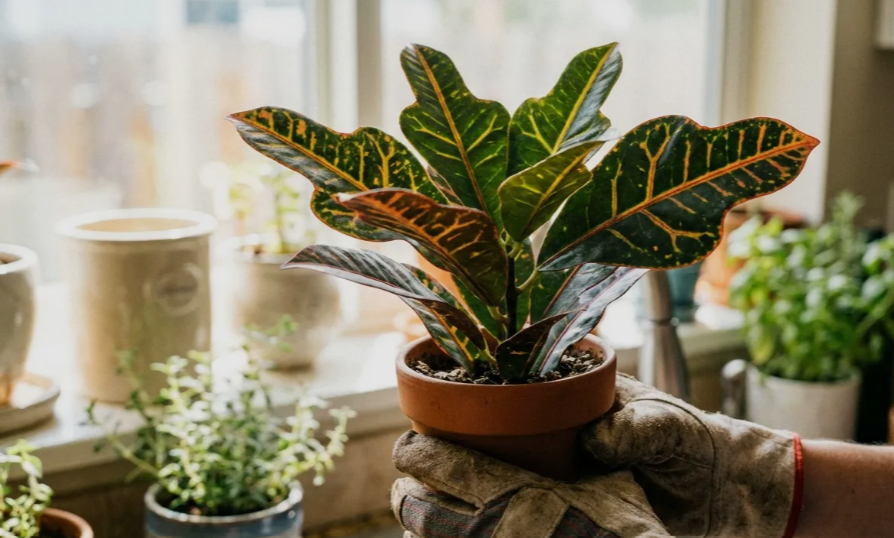
Croton plants are some of the most colorful foliage plants grown anywhere. Their thick, leathery leaves are splashed, spotted, veined and banded in red, orange, yellow, pink, purple and green, often all on one plant. Gardeners grow them for leaves alone, since their small, star-shaped flowers are easy to miss.
Nearly every garden croton belongs to a single species in the spurge family. Its common name is a historical mistake, because the plant was once classified in a different genus called Croton and the name stuck. It is native to Malaysia, Indonesia, northern Australia and the islands of the western Pacific, where it grows as a shrub up to 8 feet tall.
Crotons need warmth, humidity and bright light to show their best colors. They suffer below about 50°F, so they grow outdoors year-round only in places such as southern Florida, Hawaii, Puerto Rico, Southeast Asia and other tropical regions. Elsewhere they are grown as houseplants or as summer container plants.
Hundreds of cultivars exist, and crotons are traditionally sorted by leaf shape as much as by color. Their milky sap can irritate skin and is mildly toxic if eaten, so gloves are a good idea when pruning. The 28 crotons below include the most popular named varieties, and each entry notes where they are grown.
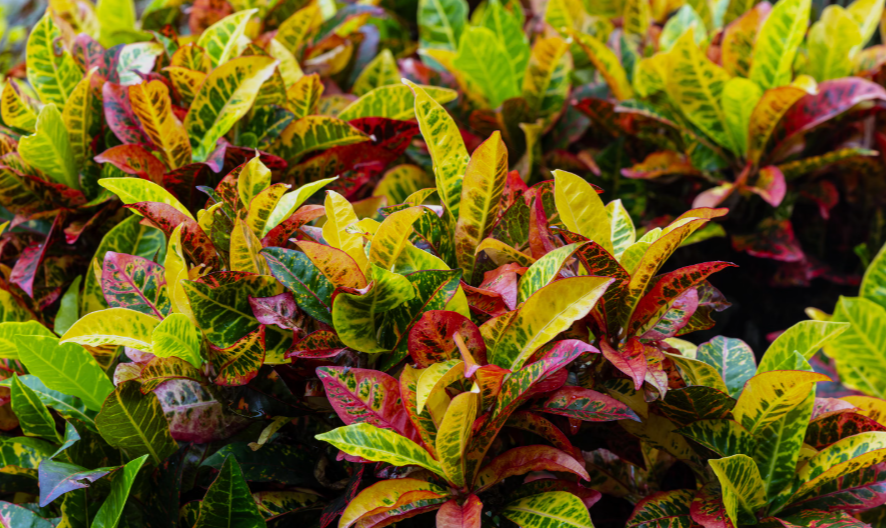
1. Petra
Petra is the most widely sold croton. Its leaves are large, broad and pointed ovals. They are dark green with bold yellow, orange and red veins and edges. Older leaves often turn bronze and burgundy. The plant grows into an upright, bushy shrub. It reaches 3 to 5 feet tall in pots.
The University of Florida lists it among the main croton cultivars and pictures it as an example of the plant’s many leaf shapes and colors. Its colors intensify in bright light. It is widely used in landscapes, offices and floral arrangements. It drops leaves when moved to darker spots. Its sap can irritate skin. It is grown in southern Florida, Hawaii, the Caribbean and as a houseplant worldwide.
2. Mammy
Mammy is a croton with twisted, curling leaves. Its leaves are long and narrow, about 8 inches long and an inch wide. They spiral and curl like corkscrews. They are deep green, red, purple and orange. The plant forms a compact, upright shrub. It grows 2 to 4 feet tall.
The University of Florida lists it among the standard croton cultivars. Its dark, curling leaves give it a dramatic look. It suits containers and mixed tropical plantings. It needs bright light to keep its reds and purples. It is also spelled Mammie. It is grown in Florida, Hawaii, Southeast Asia and indoors worldwide.
3. Gold Dust
Gold Dust is a croton with spotted leaves. Its leaves are smaller than those of most crotons. They are bright to deep green and densely speckled with gold. The spots look like splashes of paint. The plant grows as a bushy shrub. It is also called sun-spot croton.
It is one of the most common landscape crotons in frost-free regions. It tolerates a bit more shade than many colorful types. Its gold spots brighten dim areas. It grows 3 to 5 feet tall outdoors. It also does well indoors. It is grown in southern Florida, Hawaii, the Caribbean and Central America.
4. Zanzibar
Zanzibar is a croton with grass-like leaves. Its leaves are very long, narrow and arching. They are splashed with purple, red, orange, gold and green. The plant has a fountain-like shape. It resembles a colorful ornamental grass. It grows 2 to 4 feet tall.
Its fine texture contrasts with broad-leaved plants. It looks good in tall containers where its leaves can cascade. It needs bright light for strong color. It grows more slowly than broad-leaved types. Its leaves can be damaged by strong wind. It is grown in Florida, Hawaii and as a houseplant in North America and Europe.
5. Eleanor Roosevelt
Eleanor Roosevelt is a croton with long, slender, spotted leaves. Its leaves are medium green dotted with golden yellow. As they age, the spots and leaves turn dark red and purple. A single plant shows many shades at once. It grows into an upright shrub. It is also called sloppy painter.
The University of Wisconsin describes its leaves as long, slender and medium green, dotted with golden yellow spots that change to dark red with age. It is an older, classic cultivar. It needs at least a few hours of sun for its best color. It grows 3 to 5 feet tall outdoors. It is named after the former first lady. It is grown in Florida, Hawaii and the Caribbean.
6. Franklin Roosevelt
Franklin Roosevelt is a companion to the Eleanor Roosevelt croton. Its leaves are also long and slender. They are splashed with yellow, orange and pink. The colors are brighter and warmer than those of Eleanor Roosevelt. The plant grows into an upright shrub. It reaches 3 to 5 feet outdoors.
The University of Wisconsin notes that it is similar to Eleanor Roosevelt but splashed with yellow, orange and pink. It is less common in garden centers. Collectors often grow the two side by side. It needs bright light to color well. It is named after the former president. It is grown mainly in Florida, Hawaii and collector gardens.
7. Oakleaf
Oakleaf is a croton with lobed leaves. Its leaves are deeply cut into three to five lobes. They resemble the leaves of an oak tree. They are dark green with yellow, orange and red veins. Older leaves turn bronze. It grows 3 to 5 feet tall.
Its leaf shape sets it apart from oval-leaved crotons. Its leaves are thick and leathery. It needs bright light for full color. It is popular as a houseplant and patio plant. It makes a bold accent in mixed plantings. It is grown in Florida, Hawaii, Southeast Asia and indoors worldwide.
8. Banana
Banana is a small croton with narrow, twisting leaves. Its leaves are lance-shaped and slightly curved. They are gray-green splashed with bright banana yellow. The plant stays compact. It grows about 2 to 3 feet tall. Its neat size suits containers.
The University of Florida lists it among the main croton cultivars. Its yellow streaks resemble a ripening banana. It is a popular choice for desks and windowsills. It also works as a low hedge in warm climates. It needs bright light to keep its yellow. It is grown in Florida, Hawaii and as a houseplant worldwide.
9. Magnificent
Magnificent is a croton with large, spotted leaves. Its leaves are broad and oval. They are green splashed with yellow, orange and red. They resemble those of Gold Dust but are larger and more colorful. The plant grows into a bold shrub. It reaches 4 to 6 feet outdoors.
Its big leaves make it a strong focal point. It suits large containers and tropical borders. It needs bright light. It drops leaves in cold drafts. It is often confused with similar cultivars in the nursery trade. It is grown in Florida, Hawaii and the Caribbean.
10. Gold Star
Gold Star is a croton with narrow, spotted leaves. Its leaves are long and slender. They are deep green covered in gold specks. The specks look like a field of stars. The plant forms an upright shrub. It grows 3 to 5 feet tall.
The University of Florida pictures it as one of its featured cultivars. It resembles Gold Dust but with much narrower leaves. It is popular as a houseplant. It tolerates slightly lower light than many colorful crotons. Its spots stay gold instead of turning red. It is grown in Florida, Hawaii and indoors in North America and Europe.
11. Norma
Norma is a croton with broad, colorful leaves. Its leaves are oval and pointed. They are green with yellow, red and orange veins. The colors spread across the leaf as it ages. The plant grows into a full, rounded shrub. It reaches 3 to 5 feet tall.
The University of Florida lists it among the standard croton cultivars. It is a common landscape croton in southern Florida. It is similar in style to Petra. It needs bright light for strong color. It is also grown for cut foliage. It is grown in Florida, the Caribbean and as a houseplant.
12. Sunny Star
Sunny Star is a croton with bright yellow leaves. Its leaves are narrow to medium in width. They are mostly yellow with green markings. The plant has a sunny, cheerful look. It grows into an upright shrub. It reaches 3 to 4 feet tall.
The University of Florida lists it among the main croton cultivars. Its yellow color brightens shady corners of gardens. It holds its color in somewhat lower light than red-leaved types. It is used in containers and borders. It contrasts well with dark-leaved plants. It is grown in Florida, Hawaii and as a houseplant worldwide.
13. Yellow Icing
Yellow Icing is a croton with green and yellow leaves. Its leaves are oval and wavy-edged. They are green with yellow centers and margins. In strong sun some leaves flush red. The plant forms a compact mound. It grows 2 to 3 feet tall.
The University of Florida pictures it among its featured cultivars. Its compact habit suits containers and small beds. It is a popular nursery plant in Florida. It needs bright light for best color. It tolerates heat well. It is grown in Florida, the Gulf Coast and as a houseplant.
14. Iceton
Iceton is a croton whose leaves change color dramatically. Its leaves are pointed ovals. They emerge bright yellow. As they mature they turn pink, red and orange. A plant shows a range of colors at once. It is often sold as Red Iceton or Mrs. Iceton.
North Carolina State University notes that crotons can reach 8 feet in their narrow native climate range. Iceton grows 4 to 6 feet tall outdoors in warm regions. It needs strong light for its reds to develop. It is popular in southern Florida landscapes. Spider mites can attack it indoors. It is grown in Florida, Hawaii and the Caribbean.
15. Florida Select
Florida Select is a croton bred for landscape use. Its leaves are medium-sized, pointed ovals. They are green veined in orange, red and yellow. The veins widen and spread as the leaf ages. The plant grows into a dense shrub. It reaches 3 to 5 feet tall.
It was selected for reliable color in Florida gardens. It is sturdy and holds its leaves well outdoors. It suits hedges and mass plantings. It needs bright light. It is also sold as a houseplant. It is grown mainly in Florida and the southern United States.
16. Bush on Fire
Bush on Fire is a croton with blazing colors. Its leaves are long and fairly narrow. They are spotted and splashed with purple, gold, orange and red. The plant looks as if it is glowing. It grows into an upright shrub. It reaches 3 to 5 feet tall.
It is one of the most vividly colored crotons. It needs full sun or very bright light to color well. It makes a striking specimen in tropical gardens. It suits large patio pots. It drops leaves when moved indoors abruptly. It is grown in Florida, Hawaii and the Caribbean.
17. Evening Embers
Evening Embers is a croton with unusually dark leaves. Its leaves are metallic blue-black. They are highlighted with red and green. The dark color sets it apart from bright crotons. The plant grows as a medium shrub. It reaches 3 to 4 feet tall.
The University of Wisconsin describes it as having unusual metallic blue-black leaves highlighted in red and green. It makes a dramatic contrast with yellow and lime plants. It needs bright light to keep its sheen. It suits modern containers. It is less common than other cultivars. It is grown in Florida, Hawaii and as a collector’s houseplant.
18. Andreanum
Andreanum is an old croton with broad yellow leaves. Its leaves are broadly oval. They are yellow with gold veins and margins. Some leaves show green patches. The plant grows into a full shrub. It reaches 4 to 6 feet outdoors.
The University of Wisconsin describes its leaves as broadly oval and yellow with gold veins and margins. It is one of the older named varieties. Its bright yellow color stands out in shade gardens. It tolerates slightly less light than red types. It is used as a hedge in the tropics. It is grown in Florida, Hawaii and Southeast Asia.
19. Majesticum
Majesticum is a croton with drooping branches. Its leaves are long and narrow. They hang from arching stems. Each has a yellow midrib. The leaves mature from deep green to red. The plant has a graceful, weeping look.
The University of Wisconsin describes it as having pendulous branches and linear leaves with yellow midrib veins that mature from deep green to red. It suits hanging displays and raised planters. Its fine texture softens bold plantings. It needs bright light. It grows 3 to 5 feet tall. It is grown in Florida, Hawaii and tropical Asia.
20. Thai String
Thai String is a croton with extremely narrow leaves. Its leaves are thin and string-like. They are multicolored in green, yellow, orange and red. They twist and tangle as they grow. The plant forms a loose, airy shrub. It grows 2 to 4 feet tall.
The University of California notes that crotons grown outdoors can reach 6 feet or more and stay 2 to 3 feet indoors. Thai String is among the most unusual leaf forms. Collectors prize it. It needs bright light for color. It suits containers and tropical collections. It is grown in Thailand, Florida, Hawaii and by collectors elsewhere.
21. Irene Kingsley
Irene Kingsley is a colorful broad-leaved croton. Its leaves are pointed ovals. They are green with heavy yellow, orange and red markings. The colors spread to cover much of the leaf. The plant grows into a dense shrub. It reaches 4 to 6 feet outdoors.
The University of Wisconsin pictures it among croton cultivars. It is a favorite in southern Florida landscapes. Its leaves are thick and glossy. It needs full sun or bright light. It is used in hedges and borders. It is grown in Florida, the Caribbean and Hawaii.
22. Ramshot
Ramshot is a croton with slender, spotted leaves. Its leaves are long and narrow. They are green speckled with yellow and red. Older leaves become more heavily colored. The plant grows into an upright shrub. It reaches 3 to 5 feet tall.
The University of Wisconsin pictures it among croton cultivars. It is grown mostly by collectors and tropical gardeners. Its fine leaves give it a delicate look. It needs bright light. It grows well in large containers. It is grown in Florida, Hawaii and collector gardens.
23. Picasso’s Paintbrush
Picasso’s Paintbrush is a croton with very thin, pointed leaves. Its leaves are long and narrow like brush strokes. They are green, yellow, orange, red and purple. The colors blend along each leaf. The plant has a loose, spiky shape. It grows 2 to 4 feet tall.
Its fine leaves give it a delicate texture. It is a newer, popular container croton. It needs bright light for color. It suits mixed pots and modern interiors. Its leaves can tangle as the plant grows. It is grown in Florida, Hawaii and as a houseplant.
24. Mother and Daughter
Mother and Daughter is a croton with oddly shaped leaves. Each long leaf narrows to a thin stalk partway along. A small second leaf grows from the end. The second leaf looks like a daughter hanging from its mother. The leaves are green, yellow and red. It grows 3 to 5 feet tall.
It belongs to a group of crotons with interrupted leaves. Collectors grow it as a curiosity. Its leaf shape is consistent on mature plants. It needs bright light. It suits specimen pots. It is grown in Florida, Hawaii and tropical Asia.
25. Excellent
Excellent is a croton with lobed leaves. Its leaves are three-lobed and oak-like. They are green with yellow veins. In bright light they turn red, orange and purple. The plant grows into a full shrub. It reaches 3 to 5 feet tall.
It resembles Oakleaf but often has more yellow. It is a common landscape croton in Florida. It is also sold as a houseplant. It needs bright light for strong color. It tolerates heat and humidity well. It is grown in Florida, Hawaii and the Caribbean.
26. Tamara
Tamara is a croton with soft, pastel colors. Its leaves are oval and pointed. They are green, cream and pink. The colors are softer than those of most crotons. The plant forms a compact shrub. It grows 2 to 3 feet tall.
A University of California Master Gardener notes that croton sap is a skin irritant and can cause contact dermatitis. Tamara has the same sap as other crotons. Its pale variegation makes it more sensitive to strong sun. It suits bright indoor rooms. It is a popular houseplant. It is grown in Florida and as a houseplant in North America and Europe.
27. Revolutions
Revolutions is a croton with twisted, spiraling leaves. Its leaves are narrow and curl tightly. They are green, yellow, orange and red. The spirals give the plant a textured look. It forms a compact shrub. It grows 2 to 3 feet tall.
It is similar in habit to Mammy but with more yellow and orange. It is grown mainly as a container plant. It needs bright light for full color. Its leaves stay twisted as they mature. It is a collector’s favorite. It is grown in Florida, Hawaii and tropical plant nurseries.
28. Wild Croton
The wild croton is the plant from which all garden crotons come. In the wild its leaves are often plain green or lightly spotted. They are thick, glossy and variable in shape. The plant grows as a shrub up to 8 feet tall. Its small, star-shaped flowers bloom on long stalks. It produces small, three-part seed capsules.
It grows in open forests and scrub. A Dutch naturalist introduced it to Western gardens in the 1600s. It has been planted around villages and temples throughout the tropics for centuries. Its milky sap is mildly toxic. Its huge range of leaf forms gave rise to hundreds of cultivars. It is native to Malaysia, Indonesia, northern Australia and the islands of the western Pacific.
Further References:
- University of Florida: Croton Production and Use
- University of Wisconsin: Croton
- North Carolina State University: Croton
- University of California Master Gardeners: Croton
- University of California Master Gardeners: Colorful Croton
- Melinda Myers: Croton
- Some Magnetic Island Plants: Croton
- Gardening Know How: Different Croton Plants