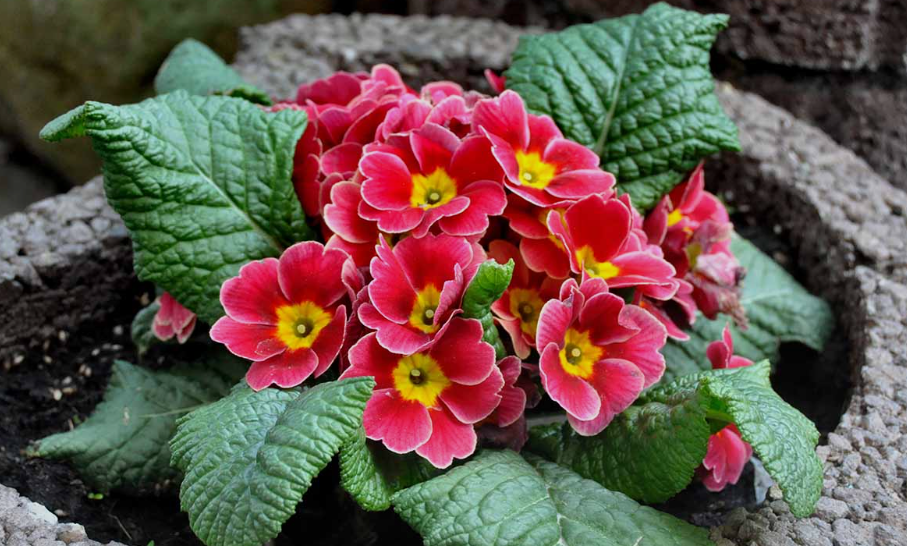
Primroses are among the first flowers of spring, and their name says as much. It comes from the Latin word for “first,” a reference to how early many of them bloom. The group includes the pale yellow wildflower of English hedgerows as well as tall, colorful bog plants, tiny alpines and potted flowers sold in late winter.
All true primroses belong to a single genus with roughly 430 to 500 species. Most are low perennials with a rosette of crinkled leaves and five-petaled flowers on short stalks or tall stems. Some are dusted with a white, powdery coating called farina.
Primroses grow mainly in the cooler parts of the Northern Hemisphere, from Europe and Asia to North America. The great center of diversity is the eastern Himalayas and western China, which hold about three-quarters of all species. A few reach the tropical mountains of Ethiopia, Java and Sumatra.
In gardens, primroses prefer cool weather, light shade and soil that stays moist but drains well. Many struggle in hot, dry summers, though some are grown as potted plants anywhere. The 24 primroses below include the best-known species and hybrids, and each entry notes where the plant comes from.
1. Common Primrose
The common primrose is the classic wild primrose of Europe. Its flowers are pale yellow with a deeper yellow eye. Each flower sits on its own short stalk. They rise from a rosette of wrinkled, bright green leaves. The plant grows only about 6 inches tall. It blooms in early spring.
Penn State Extension describes it as semi-evergreen and long-lived. It is also called English primrose. Garden forms come in white, pink, purple, red and blue. It grows on banks, hedgerows and woodland edges in the wild. It is a parent of many garden hybrids. It is native to western and southern Europe, western Asia and North Africa.
2. Cowslip
The cowslip is a meadow primrose with nodding yellow flowers. Its flowers are small, deep yellow and fragrant. They hang in one-sided clusters at the top of a stalk 6 to 10 inches tall. Each flower has an orange spot at its base. Its leaves are wrinkled and form a rosette. It blooms in mid to late spring.
It tolerates drier conditions than most primroses. It was once abundant in pastures across Europe. Its flowers were used to make cowslip wine. It is one of the parents of the polyanthus hybrids. It reseeds and forms drifts in grassy areas. It is native to Europe and western Asia.
3. Oxlip
The oxlip is a woodland primrose related to the cowslip. Its flowers are pale yellow and larger than a cowslip’s. They hang in loose, one-sided clusters. Its stems are taller than those of the cowslip. Its leaves are wrinkled and form a rosette. It blooms very early in spring.
It prefers moist, rich woodland soil. In Britain it grows wild only in a small area of eastern England. It is often confused with a natural hybrid of cowslip and primrose. It is hardy and long-lived in gardens. It suits woodland and shade plantings. It is native to central and eastern Europe and western Asia.
4. Polyanthus
Polyanthus is the most widely sold garden primrose. It is a hybrid of the common primrose and the cowslip. Its flowers are large and carried in clusters on short stems. They come in almost every color, including red, pink, purple, blue, yellow and white. Most have a yellow eye. The plant grows 6 to 12 inches tall.
It was developed in England around 300 years ago. It is sold in bloom in late winter as a potted plant and bedding plant. It is often wrongly called English primrose. It grows best in cool weather and light shade. Gold-laced forms with dark petals edged in gold are prized by collectors. It is grown in gardens across Europe, North America and other cool-temperate regions.
5. Auricula
The auricula is an alpine primrose famous for its detailed flowers. Its flowers are flat and often patterned in rings of color. They come in nearly every shade, including green, brown and near-black. Many have a white, powdery center. Its leaves are thick, fleshy and often dusted with powder. It grows about 6 inches tall.
The Memorial University of Newfoundland Botanical Garden notes that auriculas form a rosette of leaves from a stout rhizome and need more sun than polyanthus types. In 18th-century England they were displayed on shelves called auricula theaters. Show types are grown under cover to protect their powdery coating. Border types are tougher and grow outdoors. It is also called bear’s ear. It is native to the mountains of central Europe, including the Alps.
6. Drumstick Primrose
The drumstick primrose has round, ball-shaped flower heads. Its flowers are packed into globes about 2 inches across. They come in lilac, purple, pink, red and white. The globes sit on single, upright stems. It grows 8 to 12 inches tall. It blooms in early spring.
Its flower heads look like drumsticks. Its leaves grow larger after flowering. It prefers moist, rich soil. It is good for cutting. It is one of the easiest Himalayan primroses to grow. It is native to the Himalayas, from Afghanistan to southwestern China.
7. Japanese Primrose
The Japanese primrose is a tall candelabra primrose. Its flowers grow in tiers, one ring above another, on tall stems. They come in magenta, pink, red and white. The stems can reach 1 to 2 feet. Its leaves are large and form a rosette. It blooms in late spring and early summer.
It thrives in wet soil where many plants would drown. It is hardy to cold winters. It reseeds readily to form large stands. It suits streamsides, bogs and pond edges. Popular varieties include a pale pink and a deep crimson form. It is native to Japan.
8. Siebold’s Primrose
Siebold’s primrose is a delicate woodland primrose. Its flowers are flat with frilly or deeply cut petals. They come in pink, purple, magenta and white. They are carried in loose clusters on slender stems. Its leaves are soft and scalloped. It grows about 6 to 9 inches tall.
It has been cultivated in Japan for hundreds of years. Hundreds of named forms exist there. It goes dormant and disappears in summer. It returns in spring from underground stems. It needs light shade and moist soil. It is native to Japan, Korea, northeastern China and eastern Siberia.
9. Beesian Primrose
The Beesian primrose is a colorful candelabra primrose. Its flowers grow in several tiers on tall stems. They are rose-purple to magenta with a yellow eye. The stems are often dusted with white powder. It grows 1 to 2 feet tall. It blooms in early summer.
It is named after a British seed company that sponsored plant hunting in China. It needs constantly moist soil. It thrives beside streams and ponds. It crosses easily with related species. It reseeds in good conditions. It is native to Yunnan and Sichuan in southwestern China.
10. Bulley’s Primrose
Bulley’s primrose is an orange candelabra primrose. Its flowers grow in tiers on tall stems. Its buds are red and open to bright orange-yellow. The tiers open from the bottom upward. It grows 1 to 2 feet tall. It blooms in early summer.
It is named after the British businessman who sponsored its collection. It needs moist to wet soil and light shade. It crosses with the Beesian primrose to produce hybrids in pastel colors. It suits bog gardens and streamsides. It reseeds in the right conditions. It is native to Yunnan and Sichuan in southwestern China.
11. Mealy Primrose
The mealy primrose is a tall candelabra primrose with powdery stems. Its stems are coated with white farina. Its flowers are deep crimson to pink with a dark eye. They grow in tiers on stems up to 3 feet tall. Its leaves are large and toothed. It blooms in early summer.
Its white stems make its flowers stand out. It needs constantly moist soil. It is one of the tallest candelabra primroses. It suits wet woodland and pond margins. Pink and white forms are also grown. It is native to Sichuan in western China.
12. Orchid Primrose
The orchid primrose looks nothing like a typical primrose. Its flowers grow in a dense, narrow spike. Its buds are bright red. They open to violet-purple flowers from the bottom upward. The spike looks like a small red-hot poker. It grows 1 to 2 feet tall.
It blooms in early summer, later than most primroses. It needs moist, rich soil and light shade. It goes dormant in winter and emerges late in spring. It is short-lived in many gardens. It is also called Vial’s primrose and pagoda primrose. It is native to Yunnan and Sichuan in southwestern China.
13. Giant Cowslip
The giant cowslip is the largest primrose. Its flowers are sulfur-yellow, bell-shaped and fragrant. They hang in large clusters at the top of stems up to 3 feet tall. Its leaves are big and glossy. It blooms in summer. Orange and red forms also exist.
It thrives in wet soil and even shallow water. It is one of the best primroses for bog gardens. It was discovered in Tibet in the 1920s. It is named after the wife of the plant hunter who found it. It reseeds in good conditions. It is native to southeastern Tibet.
14. Sikkim Cowslip
The Sikkim cowslip is a Himalayan primrose with nodding flowers. Its flowers are pale yellow, bell-shaped and fragrant. They hang in clusters at the top of slender stems. The stems grow 1 to 2 feet tall. Its leaves are bright green. It blooms in early summer.
It grows in wet meadows and along streams in the wild. It needs moist soil and cool summers. It resembles a smaller giant cowslip. It is short-lived in warm gardens. It reseeds in good conditions. It is native to the Himalayas, including Sikkim, Nepal, Bhutan, Tibet and southwestern China.
15. Julia’s Primrose
Julia’s primrose is a tiny, creeping primrose. Its flowers are bright magenta-purple with a yellow eye. Each flower sits on its own short stalk. Its leaves are small, round and bright green. It spreads into a low mat. It grows only 2 to 4 inches tall.
It blooms in early spring. It was discovered in the early 1900s. It is named after the woman who found it. It is a parent of many popular garden hybrids. It spreads by creeping stems. It is native to the Caucasus Mountains of Georgia and northeastern Turkey.
16. Wanda Primrose
The Wanda primrose is a popular, tough garden hybrid. Its flowers are bright magenta-purple with a yellow eye. They are carried just above the leaves. Its leaves are small and often bronze-tinged. It forms a low, spreading clump. It grows about 4 inches tall.
It is a cross between Julia’s primrose and the common primrose. It is one of the easiest primroses to grow. It blooms very early and for a long time. It spreads steadily into mats. Many similar hybrids are sold under other names. It originated in gardens in Europe and is grown across Europe and North America.
17. German Primrose
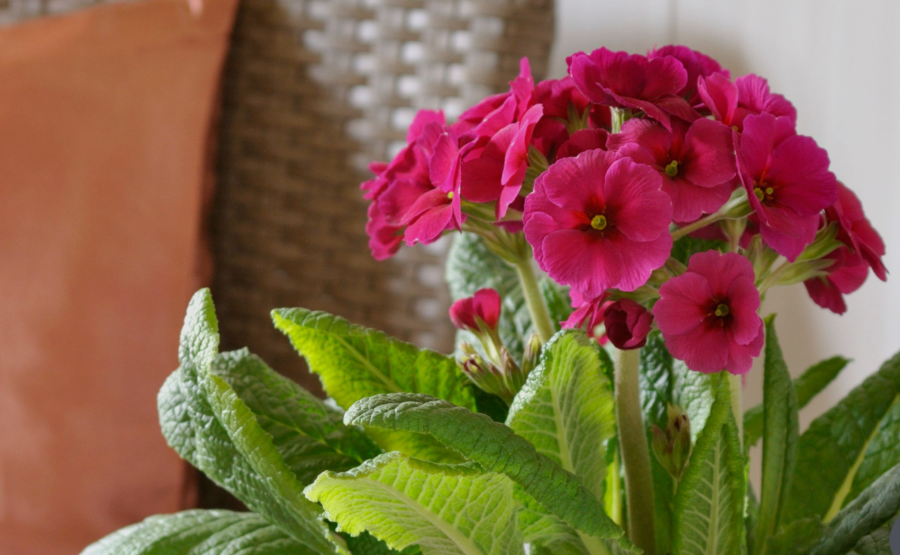
The German primrose is a popular potted primrose. Its flowers are large and carried in round clusters. They come in blue, lilac, pink, salmon, red and white. They bloom for months indoors. Its leaves are soft, rounded and covered in tiny hairs. It grows about 1 foot tall.
North Carolina State University notes that its leaves can cause contact dermatitis, so gloves should be worn when handling it. The irritant is a compound called primin. Some modern varieties are bred to be primin-free. It is grown mainly as a houseplant and florist plant. Despite its name, it does not come from Germany. It is native to China.
18. Fairy Primrose
The fairy primrose is a delicate potted primrose. Its flowers are small and carried in airy tiers. They come in pink, lavender, red and white. The tiers rise on slender stems. Its leaves are soft and pale green. It grows about 1 foot tall.
It is grown as a winter and spring potted plant. It is used as a cool-season bedding plant in mild climates. It needs cool temperatures to flower well. It is short-lived and usually grown as an annual. Its flowers are often lightly fragrant. It is native to Yunnan in southwestern China.
19. Chinese Primrose
The Chinese primrose is an old potted primrose. Its flowers are large, flat and often frilled. They come in pink, red, purple and white. They are carried in clusters above the leaves. Its leaves are soft, lobed and hairy. It grows about 8 to 12 inches tall.
It was one of the earliest Asian primroses grown in European greenhouses. It was very popular in Victorian times. It is less common today than the German and fairy primroses. It needs cool, bright conditions indoors. It is grown as a winter-flowering houseplant. It is native to central China.
20. Scottish Primrose
The Scottish primrose is one of Britain’s rarest flowers. Its flowers are tiny and deep purple with a yellow eye. They grow in small clusters. Its leaves are small and dusted with white powder underneath. The plant is only 1 to 4 inches tall. It blooms in late spring and again in summer.
It grows in short, grazed grassland near the sea. It is threatened by changes in land use. It is protected in Scotland. It is difficult to grow in gardens. It is a symbol of Scotland’s northern coast. It is native only to the far north of Scotland and the Orkney Islands.
21. Bird’s-Eye Primrose
The bird’s-eye primrose is a small, powdery primrose. Its flowers are pink to lilac with a yellow eye. They grow in small clusters on short stems. Its leaves are dusted with white powder underneath. The plant grows 3 to 6 inches tall. It blooms in late spring.
Its name comes from the bright eye at the center of each flower. It grows in damp, limestone grassland and fens. It has declined in many areas. It is grown in rock gardens. It needs moist, alkaline soil. It is native to northern Europe and the mountains of central Europe and Asia.
22. Parry’s Primrose
Parry’s primrose is a showy wild primrose of the American West. Its flowers are bright magenta with a yellow eye. They are carried in clusters on stems up to a foot tall. Its leaves are long, fleshy and bright green. It blooms in early summer. It grows beside cold mountain streams.
Its flowers have an unpleasant, skunky scent. It grows at high elevations near snowmelt. It is one of the largest native primroses in North America. It is difficult to grow outside its mountain home. It is named after a 19th-century botanist. It is native to the Rocky Mountains, from Montana to Arizona and New Mexico.
23. Shooting Star
The shooting star is a North American wildflower now classed as a primrose. Its flowers have swept-back petals and a pointed center. They look like small comets or falling stars. They are pink, magenta, lavender or white. They hang in clusters on bare stems. It grows 8 to 20 inches tall.
It was long placed in its own genus but is now included with the primroses. It blooms in spring. It goes dormant and disappears by midsummer. Bees pollinate it by vibrating its flowers. It suits woodland and prairie gardens. It is native to North America, from the eastern woodlands to the prairies and the West.
24. Kew Primrose
The Kew primrose is a famous garden hybrid. Its flowers are bright yellow and fragrant. They are carried in tiers on stems about 1 foot tall. Its leaves and stems are dusted with white powder. It blooms in winter and spring. It is usually grown under glass.
It arose at the Royal Botanic Gardens, Kew, in 1898. It is a cross between two species from the Himalayas and the Middle East. The first plants were sterile. A fertile form appeared later, allowing seed to be produced. It is an important example in the study of plant genetics. It originated in England and is grown in greenhouses in Europe and North America.
Sources:
- Penn State Extension: Pick a Primrose for a Pop of Perfection
- Memorial University of Newfoundland Botanical Garden: Primulas
- North Carolina State University: German Primrose
- The Old Farmer’s Almanac: Primrose Primer
- American Primrose Society: Starter list of Primula
- Journal of Threatened Taxa: Primula in western Arunachal Pradesh
- Wikipedia: Primula