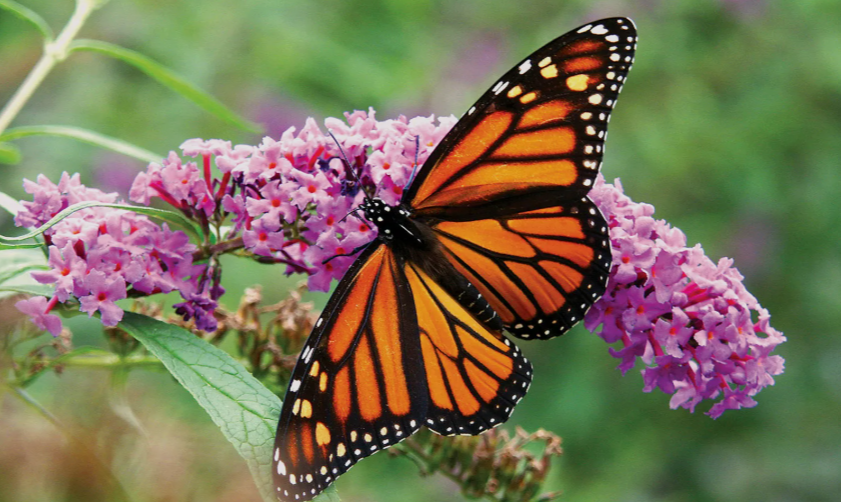
The types of monarch butterflies are easier to understand once you know that the monarch is one species with many different populations. It is an orange-and-black milkweed butterfly with a wingspan of about 3.5 to 4 inches, and its name is thought to honor King William III of England, whose secondary title was Prince of Orange. Scientists group it with a handful of close relatives in the same genus, and several of those relatives look very much like it.
North American monarchs make one of the longest insect migrations on Earth. It can take four generations of monarchs to complete the trip from Mexico to Canada or the northern United States and back. Monarch caterpillars feed only on milkweed, and they store the plant’s toxins in their bodies. The bright orange-and-black pattern warns birds that the adults taste bad. mongabay
Monarchs are native to the Americas, but they spread across the Atlantic and Pacific in the 1800s. They were first seen in Hawaii in the 1840s, spread through the South Pacific in the 1850s and 1860s, and reached Australia and New Zealand in the early 1870s. Most populations outside North America do not migrate at all. They breed year-round wherever milkweed and mild weather allow. squarespace
Strictly speaking, some references recognize 3 monarch species: the monarch, the southern monarch and the Jamaican monarch. This article reaches 30 by covering 19 regional populations and color forms of the true monarch, the 2 other species called monarchs, and 9 close relatives and look-alikes. Here are the 30 types, along with where each one is found.
1. Eastern Migratory Monarch
The eastern migratory monarch is the best-known monarch and the one that makes the famous trip to central Mexico. Its forewings are larger and more angular than those of western monarchs. During the 2025–2026 winter, it occupied 2.93 hectares of oyamel fir forest in Mexico, about 64 percent more than the year before. That works out to more than 61 million monarchs, though eastern monarchs have declined about 80 percent since the 1980s. monarchjointventuremongabay
It breeds across the eastern United States and southern Canada, east of the Rocky Mountains. Each autumn, it funnels south through Texas and into the mountain forests of Michoacán and the State of Mexico. Research suggests at least 6 hectares of winter habitat are needed for a stable population. The US Fish and Wildlife Service proposed a threatened listing in December 2024, and under a lawsuit settlement it now has until June 6, 2030 to decide. monarchjointventuredtnpf
2. Western Migratory Monarch
The western migratory monarch lives west of the Rocky Mountains and spends the winter in coastal groves in California. It is slightly smaller than the eastern monarch, although there is no genetic difference between the two migratory populations. Its numbers have collapsed. The Western Monarch Count in late 2025 tallied just 12,260 monarchs across 249 sites, the third-lowest total since the count began in 1997. wikipediamonarchjointventure
It breeds across the western states and winters in eucalyptus, Monterey pine and cypress groves from Santa Cruz to San Diego, and a small number reach Baja California. Some western monarchs stay inland and do not migrate at all. The western population has fallen by more than 95 percent since the 1980s. Protecting its overwintering trees and planting native milkweed are the main conservation efforts. mongabay
3. Florida Resident Monarch
The Florida resident monarch lives in southern Florida and does not migrate. Monarchs are found year-round in Florida. Resident monarchs breed whenever milkweed is available, so butterflies and caterpillars can be seen in every month. Wing shapes tend to be smaller and rounder than those of migrants. wikiwand
Its classification is debated. Most sources say the migratory subspecies is the only one in the United States, but some say south Florida monarchs belong to the Caribbean subspecies. Warmer temperatures and plantings of tropical milkweed are also causing more Florida, Texas and California monarchs to stop migrating. It lives in gardens, pinelands, coastal hammocks and roadsides throughout the southern part of the state. inaturalistinaturalist
4. Caribbean Monarch
The Caribbean monarch, also called the Greater Antilles monarch, is a non-migratory form. It is found from Florida and Georgia southward through the Caribbean and Central America to the Amazon River. It has smaller wings than the migratory monarch because it never has to fly long distances. It is a year-round resident that breeds continuously. eecc
It lives on islands such as Cuba, the Bahamas and the Cayman Islands. It uses coastal scrub, gardens, farmland edges and forest clearings where milkweed grows. Many taxonomists treat several island forms as color variations of this one subspecies. It is one of the best examples of how monarchs lose the urge to migrate in warm climates.
5. Puerto Rican Monarch
The Puerto Rican monarch is a non-migratory form named for the island of Puerto Rico. It looks much like other Caribbean monarchs, with a slightly richer or darker orange in some individuals. Some experts think it is only a form of the Caribbean subspecies. It breeds all year in the tropical climate. butterfliesofamerica
It lives in coastal areas, gardens, pastures and forest edges across the island. Caterpillars feed on milkweeds, including tropical species that grow in disturbed areas. Researchers have used Puerto Rican monarchs in studies of how wing size changes after migration is lost. Samples from the island have been important in monarch genetic research.
6. Virgin Islands Monarch
The Virgin Islands monarch is a small island form named from specimens collected on St. Thomas. It is found in the Virgin Islands and the northern Leeward Islands, and it may be just a form of the Caribbean subspecies. It is non-migratory. Its look is close to that of other Caribbean monarchs. butterfliesofamerica
It lives in dry scrub, hillsides, gardens and coastal areas where milkweed grows. Island monarchs depend on a small number of host plants, so populations can rise and fall with rainfall. Hurricanes also affect them. It is a good example of how minor local differences led to extra names.
7. Tobago Monarch
The Tobago monarch is a non-migratory form named for the island of Tobago. It was described in 1941 along with the Puerto Rican form. It is a small resident population with a typical orange-and-black pattern. Like other tropical monarchs, it breeds year-round. eecc
It lives on Tobago, off the northeastern coast of Venezuela, in gardens, forest edges and open country. Caterpillars feed on local and introduced milkweeds. Many scientists consider this form part of the Caribbean subspecies. It is rarely studied compared with North American monarchs.
8. Andean Monarch
The Andean monarch, a South American form, differs noticeably from its northern cousins. Its ground color is a darker, duller brown, the upper half of the forewing cell is black, and the diagonal band of spots near the wing tip is white rather than pale brown. The black lines along the veins are heavier, and the forewings are less elongated. It is non-migratory. learnbutterflies
It lives on both sides of the Andes, from Colombia to central Peru. In Ecuador, it is mainly found in disturbed areas of mid-elevation forest in the western Andes. In Peru, it occurs in valleys and gorges in the eastern Andes. It is the only monarch form found at high elevations in mountain valleys. learnbutterflies
9. Hawaiian Monarch
The Hawaiian monarch is a non-migratory population that has lived in Hawaii since the 1840s. Because the islands offer no place to migrate to, these monarchs breed throughout the year. They are generally smaller than migratory monarchs. Experiments raising Hawaiian monarchs alongside migratory ones showed that wings shrink over time once migration is lost. eurekalert
It lives on all of the main islands, in gardens, lowland pastures, roadsides and forest edges. It uses introduced milkweeds such as crown flower and tropical milkweed. Hawaii also hosts a special white color form of the monarch. The islands were a stepping stone for monarchs spreading across the Pacific.
10. White Monarch
The white monarch is a rare color form in which the orange areas are replaced by grayish white. The black veins and borders remain, giving it a ghostly look. It makes up about 1 percent or less of monarchs overall, but it reaches as high as 10 percent on Oahu in Hawaii. It is a natural variation, not a separate species. wikiwand
It is most often seen in Hawaii, particularly on Oahu, though it appears at low levels in other places, including parts of the mainland. White monarchs may have an advantage on islands where fewer birds prey on them. Because the form is inherited, it can become common in a small population. Photographers and butterfly enthusiasts prize sightings of it.
11. South Pacific Monarch
The South Pacific monarch refers to the island populations that spread across Oceania in the mid-1800s. Monarchs spread through the South Pacific in the 1850s and 1860s. Genetic work supports a stepwise spread across the Pacific, island by island. These monarchs do not migrate. squarespaceescholarship
Monarchs have been recorded in places such as American Samoa, the Cook Islands, Fiji, French Polynesia, New Caledonia, Samoa, the Solomon Islands and Tonga. They live in gardens, farmland and forest edges where milkweed has been introduced. Populations are usually small and breed all year. They show how far a single species can travel by wind and island hopping. frontiersin
12. Mariana Islands Monarch
The Mariana Islands monarch is a western Pacific population that reached Guam and its neighbors from Hawaii. Researchers documented an expansion from Hawaii into the Mariana Islands, where monarchs do not migrate. It is part of the long chain of island colonizations. Its look is similar to that of other Pacific monarchs. escholarship
It lives on islands such as Guam and the Commonwealth of the Northern Mariana Islands. It uses garden milkweed and weedy roadsides. Guam monarchs were among those used in experiments on wing size in island populations. Predation and habitat disturbance on the islands affect their numbers.
13. Australian Monarch
The Australian monarch, known locally as the wanderer, arrived in Australia in the early 1870s. It lives mainly along the eastern and southern coasts and parts of the west. In southern Australia, monarchs move seasonally and form overwintering clusters, an exception to the usual non-migratory pattern outside North America. Some populations breed all year in the north. escholarship
It uses introduced milkweeds, including swan plant and balloon cotton, in gardens and along roadsides. Cold winters push southern monarchs to gather in sheltered groves. Australia also has its own related species, the lesser wanderer. The monarch is a familiar sight in suburban gardens across the east coast.
14. New Zealand Monarch
The New Zealand monarch has lived in the country since the 1870s, and it is a much-loved garden visitor. Monarchs are present in New Zealand during summer but absent the rest of the year. They gather in clusters in winter and spend that season in a resting state. The country has even set up a New Zealand Monarch Trust. classicistranierilibertyunbound
Larvae on New Zealand and other islands use introduced plants such as swan plant, moth plant and blue-flowered Oxypetalum. Gardeners often grow swan plant to feed the caterpillars. The butterfly is most common in northern and coastal regions. Cold winters limit its range in the south. frontiersin
15. Canary Islands Monarch
The Canary Islands monarch is a European resident population of the species. In Europe, it is resident in the Canary Islands, except Lanzarote. A local population has been recorded in the Canary Islands since at least 1880. It breeds year-round in the mild climate. classicistraniericore
It lives on islands such as Tenerife, La Palma and Gran Canaria, in gardens, parks, ravines and coastal areas. Caterpillars feed on introduced milkweeds. Visitors often see it around the town of Puerto de la Cruz. It is one of the westernmost monarch populations in the Old World.
16. Madeira Monarch
The Madeira monarch lives on the Portuguese island of Madeira and nearby Porto Santo. It is resident in Madeira. Late-stage caterpillars have been found on both Madeira and the Canary Islands. It is a non-migratory population that breeds in warm weather. classicistraniericore
It lives in gardens, terraces, valleys and coastal areas. The monarch likely reached the island in the 1800s, carried by wind or ships. The population is small but stable. It is part of the Atlantic island group that includes the Canaries and the Azores.
17. Iberian Monarch
The Iberian monarch refers to the monarchs that turn up in Spain, Portugal, Gibraltar and nearby Morocco. They are found as migrants in the Azores, Portugal and Spain. Some breed in southern Spain and Portugal, where milkweed has been planted or has escaped. They are smaller and less migratory than their North American relatives. classicistranieri
Observations have also been recorded in the United Kingdom and Morocco. Researchers have documented a new host plant in Europe. The monarch is sometimes blown across the Atlantic in autumn. It lives in gardens, coastal scrub and warm southern valleys. torontofieldnaturalists
18. Azores Monarch
The Azores monarch is a small and variable population in the Portuguese islands. It was an occasional visitor to the islands, and the first confirmed breeding there occurred in 1994 on the island of Faial. Since then, it has become a regular sight in some years. It likely arrives on wind currents from North America. core
It lives in gardens, parks and coastal meadows. Caterpillars feed on introduced milkweeds. Numbers depend on the weather and on how many butterflies arrive each season. It is the most remote European monarch population.
19. Bermuda Monarch
The Bermuda monarch is a non-migratory population on the mid-Atlantic island. It is one of the non-migratory populations studied in the western Atlantic. It breeds in the island’s mild climate. Monarchs also arrive on autumn winds from North America. nih
It lives in gardens, parks and open spaces, where it feeds on nectar from many flowers. Caterpillars use milkweed in yards and roadsides. Genetic samples from Bermuda have helped researchers understand how monarchs spread across the Atlantic. It is one of the closest monarch populations to the American coast.
20. Southern Monarch
The southern monarch is a South American species that looks much like the migratory monarch. It is found in the tropical and subtropical parts of South America, mainly in Brazil, Uruguay, Paraguay, Argentina, Bolivia, Chile and southern Peru. Some researchers believe it split from the monarch about 2 million years ago. It moves seasonally in some regions. eecc
It lives in grasslands, farmland, open woodland and gardens. Caterpillars feed on milkweeds and related plants. In some places, it shares a range with the Andean monarch form. It is among the most similar species to the North American monarch.
21. Jamaican Monarch
The Jamaican monarch is a Caribbean species that is closely related to the monarch. It ranges from Jamaica to Hispaniola. Two subspecies are recognized. It is darker and less well known than the migratory monarch. eeccWikipedia
It lives in forests and wooded hills on Jamaica, Haiti and the Dominican Republic. It is a non-migratory butterfly that stays close to its host plants. Because its range is limited to a few islands, it is vulnerable to habitat loss. The International Union for Conservation of Nature has assessed it, though little recent data exists.
22. Queen
The queen is a close relative of the monarch with a deep brown-orange color and white spots on the wing edges. It lacks the black veins that mark the monarch’s wings. It also feeds on milkweed as a caterpillar and is distasteful to predators. It is resident in south Texas, parts of the southwest and southern Florida, and it wanders north. bugguide
It lives in open country, desert washes, roadsides and gardens. It is common in tropical and subtropical areas of the Americas. Queens often visit the same flowers as monarchs. They are easy to mistake for monarchs at a glance.
23. Soldier
The soldier, also called the tropical queen, is another close relative of the monarch. It has a darker, brownish-orange color and some white markings on the underside of the hindwing. It is a North American butterfly that overlaps in range with the monarch. Like its relatives, its caterpillars feed on milkweeds. Wikipedia
It occurs in southern Florida, southern Texas, Mexico, the Caribbean, Central America and South America. It lives in tropical thickets, hammocks, fields and gardens. In the United States, it is mainly seen in the far south. It is sometimes confused with the queen and the monarch. wikiwand
24. Plain Tiger
The plain tiger, also called the African monarch or African queen, is an Old World relative of the monarch. It is a medium-sized orange butterfly with black wing tips marked by white spots. It lives in Asia, Australia and Africa. Its range runs from Africa and southern Europe east through Sri Lanka, India and Myanmar to China and Sulawesi, and it is somewhat migratory. Wikipediaclassicistranieri
It lives in dry open country, scrub, farmland and gardens. Caterpillars feed on milkweeds and related plants such as calotropis. It forms a Müllerian mimicry pair with the common tiger, meaning both are toxic and look alike. It is one of the most widespread butterflies in its range.
25. Common Tiger
The common tiger is an orange butterfly with black veins and a pattern that resembles the monarch’s. It is found from Sri Lanka and Myanmar through Southeast Asia to Australia, except for New Guinea. In India it is also called the striped tiger, to tell it apart from the plain tiger. It is also known as the Indian monarch or orange tiger. WikipediaWikipedia
It lives in forests, scrub, gardens and farmland, and it is often seen near water. Caterpillars feed on a range of milkweed-family vines. It is one of the more common butterflies in South Asia. It benefits from toxins in its food plants, just like the monarch.
26. Lesser Wanderer
The lesser wanderer is an Australian relative of the monarch. It lives in Australia. It is smaller than the monarch, with a similar orange color and dark wing edges. The name wanderer is also used for the monarch in Australia. riteme
It lives in tropical and subtropical regions, including northern Queensland and the Top End. It uses open woodland, gardens and coastal areas, and its caterpillars feed on native milkweed vines. It is often seen alongside the common tiger. It is a reminder that monarch-like butterflies evolved in several parts of the world.
27. White Tiger
The white tiger is a butterfly of Asia and the Pacific, with a mix of white and orange coloring. Its pattern is paler than that of most relatives. It occurs from Assam in eastern India through Southeast Asia to Indonesia, east to the Philippines and across southern China to Taiwan. It is sometimes treated as a form of the common tiger. riteme
It lives in forests, scrub, gardens and rice-growing areas. Caterpillars feed on milkweed-family plants. It is strong-flying and often seen near flowers. It is a good example of how the monarch genus has spread across Asia.
28. Malay Tiger
The Malay tiger, also called the swamp tiger, is a Southeast Asian relative of the monarch. It is listed in the monarch genus as the Malay tiger. It has a darker orange or brown color and broad, dark borders. It is often found near water and wetlands. encyclopedia
It lives in mangroves, swamps, coastal areas and lowland forests from Southeast Asia to the Australian region. Caterpillars feed on milkweed-family vines found in wet habitats. It is less well known than the common tiger. Wetland loss is the main threat to its habitat.
29. Viceroy
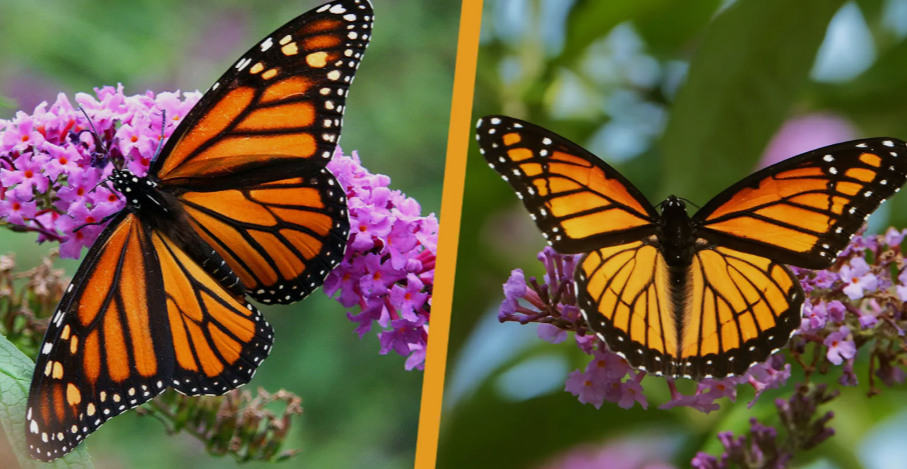
The viceroy is a North American butterfly that looks very much like the monarch, but it belongs to a different group. It is similar in color and pattern but is markedly smaller and has an extra black stripe across each hindwing. The two are Müllerian mimics, meaning both are unpleasant to predators. Its caterpillars feed on willows and poplars, not milkweed. freedomboxeecc
It lives across much of North America, from southern Canada through most of the United States and into northern Mexico. Its habitat includes wet meadows, marshes, streamsides and wood edges. Viceroys are often mistaken for monarchs. A quick way to tell them apart is the black line on the hindwing.
30. Dorippus Tiger
The dorippus tiger is an African and Arabian butterfly that was once considered part of the plain tiger. It is now listed as a separate species in the monarch genus. It has an orange body color and dark wing tips, much like its relatives. It is sometimes seen alongside the plain tiger. encyclopedia
It lives in dry savanna, scrub and semi-desert in northeastern Africa and the Arabian Peninsula. Caterpillars feed on milkweed-family plants such as calotropis. It is a good example of the range of milkweed butterflies outside the Americas. Details of its range and status are less well known than those of most other entries.
Sources:
- Monarch Butterfly, Wikipedia
- Danaus Butterfly Genus, Wikipedia
- Monarch Subspecies, Butterflies of America
- The Monarch, Learn About Butterflies
- Monarch Subspecies, iNaturalist Journal
- Monarch Butterflies: Global Distribution, Frontiers in Ecology and Evolution
- Population Genetics of a Recent Range Expansion and Loss of Migration in Monarchs, UC eScholarship
- Monarch Butterfly in the Azores, Arquipélago Life and Marine Sciences
- Monarch Population Genetics Across the World, PMC
- Non-Migratory Monarch Butterflies, Bug of the Week, University of Maryland
- Eastern Monarch Overwintering Population Increases, Monarch Joint Venture
- Population Trends and Western Monarch Count, Monarch Joint Venture
- Eastern Monarch Populations Increase in 2025, Mongabay
- Monarch Listing Decision Due by 2030, DTN Progressive Farmer
- Jamaican Monarch, Wikipedia
- Soldier, Wikipedia
- Common Tiger, Wikipedia
- Plain Tiger, Wikipedia (2007 snapshot)
- Danaus Species List, Encyclopedia.pub
- Danaus Taxonomic Tree, BioLib