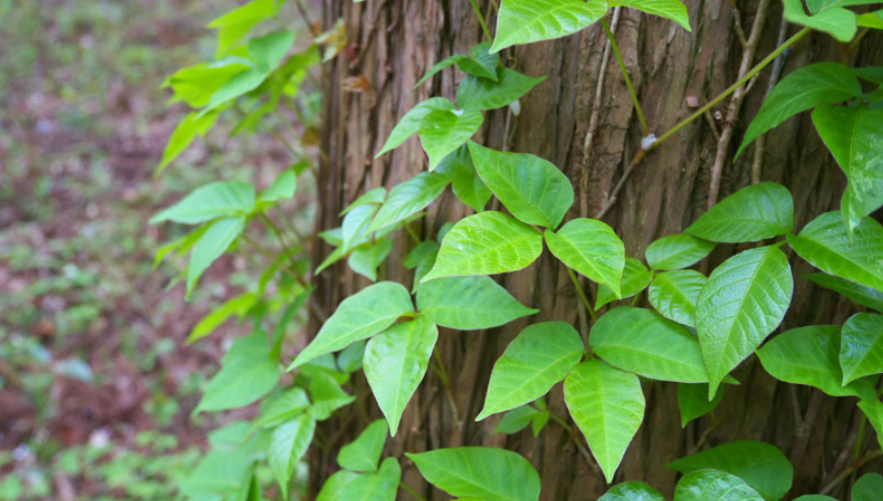
Invasive vines that kill trees generally rely on one of 3 mechanisms to do it, and according to Mississippi State University Extension, a vine like bushkiller can grow into dense mats over a host’s canopy that block or reduce the quality and quantity of sunlight reaching the tree below. Others kill more slowly through sheer physical weight, eventually snapping branches or girdling a trunk as the vine’s own stem thickens over years of growth, while still others simply outcompete a young tree for light before it ever gets the chance to establish.
That distinction matters for anyone managing a woodlot or natural area, since a fast, light-blocking vine can kill a mature tree within a single growing season, while a slow-girdling woody vine might take a decade or more to finish the job. Several of the vines here were deliberately planted as ornamentals specifically for their vigorous, fast-covering growth habit, the exact trait that later made them a serious threat once they escaped into surrounding forest.
These vines span the eastern woodlands, Gulf Coast forests, and Pacific Northwest understories of the United States. What follows covers 27 invasive vines that kill trees, along with where each one grows and the data behind its spread.
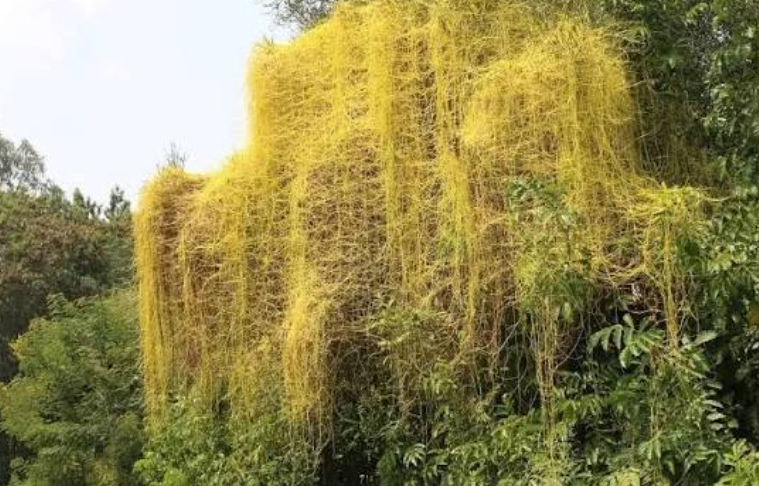
Kudzu
Kudzu produces large, 3-lobed leaves on vigorous vines capable of growing 60 to 100 feet in a single season, engulfing entire trees beneath a dense green blanket that blocks out sunlight. It was deliberately planted across roughly 3 million acres of the southern United States by 1946 for erosion control before its uncontrolled spread became a defining image of the region.
It grows extensively throughout the southeastern United States.
Oriental Bittersweet
Oriental bittersweet produces round, glossy leaves on a woody, twining vine capable of climbing 60 feet or more into a tree canopy, eventually girdling and killing its host through a combination of constriction and sheer accumulated weight. Its bright orange-yellow seed capsules split open in fall to reveal the striking red seeds inside, a display that’s helped it spread further as a popular, if problematic, choice for autumn wreaths.
It grows extensively throughout the eastern United States, particularly along forest edges.
English Ivy
English ivy produces glossy, lobed evergreen leaves on a climbing vine capable of forming a dense mat that eventually smothers an entire tree trunk and canopy, blocking the sunlight the tree needs to survive. The added weight of a mature ivy infestation also makes a heavily covered tree far more likely to topple during high winds or ice storms.
It grows throughout most of the United States as both a cultivated groundcover and an escaped woodland invasive.
Chinese Wisteria
Chinese wisteria produces cascading clusters of fragrant purple flowers each spring on a woody, climbing vine capable of covering entire trees as its stems reach 25 feet or more in length. Its combined weight and constricting growth habit can eventually kill even large, mature trees over a period of years as the vine’s stem thickens around the trunk.
It grows throughout much of the eastern United States, commonly escaping cultivation from garden plantings into adjacent woodland.
Japanese Wisteria
Japanese wisteria closely resembles its Chinese relative in both appearance and the tree damage it causes, distinguished by vines that twine in the opposite direction around their support. It’s similarly capable of girdling a host tree’s trunk over time as the woody stem continues to thicken year after year.
It grows throughout much of the eastern United States, frequently sold and planted as an ornamental despite its documented invasive behavior.
Japanese Honeysuckle
Japanese honeysuckle produces oval leaves and intensely fragrant, tubular white-to-yellow flowers on a twining, semi-evergreen vine capable of forming dense mats over shrubs and small trees. Its vines can girdle and kill woody host plants over time, and its berries, though attractive to birds, help spread the vine rapidly into new areas.
It grows throughout the eastern United States, remaining green well into winter in milder climates.
Porcelain Berry
Porcelain berry produces lobed, grape-like leaves on a vine capable of growing more than 25 feet in a single season, smothering the trees and shrubs it climbs over by blocking sunlight from reaching their leaves. Its berries pass through a striking sequence of colors, from pale lilac to turquoise-blue, before finally ripening to purple in fall.
It grows throughout the eastern United States, particularly along streambanks and forest edges.
Mile-a-Minute Weed
Mile-a-minute weed, and according to Penn State Extension, it’s a trailing vine with barbed stems and triangular leaves capable of growing several inches per day, quickly smothering young trees and seedlings before they have a chance to establish. It was first reported in York County, Pennsylvania, in the 1930s in contaminated nursery soil, and its seeds can remain dormant in the soil for up to 6 years.
It grows throughout the mid-Atlantic and northeastern United States, favoring moist soil along forest edges and streambanks.
Trumpet Creeper
Trumpet creeper produces compound leaves and large, trumpet-shaped orange-red flowers on an aggressive, woody vine that climbs using aerial rootlets capable of eventually adding enough weight to weaken or topple a smaller host tree. A single established plant can spread rapidly via underground runners in addition to seed.
It grows throughout the eastern and southeastern United States, favoring fence lines and woodland edges.
American Bittersweet
American bittersweet, native across most of the eastern and central United States, and according to the North Carolina Extension Gardener Plant Toolbox, grows as a vigorous woody vine reaching 20 to 25 feet when given something to climb. While considerably less aggressive than its invasive Oriental relative, a heavy infestation can still add enough weight to stress or damage a smaller host tree over time.
It grows throughout the eastern and central United States, its native populations increasingly displaced by the more damaging Oriental species.
Wintercreeper
Wintercreeper produces small, glossy evergreen leaves on a climbing vine that clings to tree bark using aerial rootlets similar to English ivy, eventually smothering the canopy of a mature tree if left unchecked. Its evergreen foliage gives it a competitive advantage over deciduous native vines, since it continues photosynthesizing even through winter months.
It grows throughout much of the eastern United States as an escaped ornamental groundcover.
Akebia
Akebia, also called chocolate vine, produces delicate, rounded leaflets and small, chocolate-scented purple flowers on a twining vine capable of growing 20 to 40 feet, quickly overtopping and shading out the smaller trees and shrubs it climbs. Its dense growth can completely obscure a host plant within just a couple of growing seasons once established.
It grows in scattered infestations throughout the eastern United States, commonly escaping from ornamental garden plantings.
Air Potato
Air potato, and according to University of Florida IFAS Gardening Solutions, is a vigorously twining vine with stems that can rapidly grow to 60 feet in length, climbing tree canopies and smothering the vegetation beneath. It’s now illegal to plant in Florida, though it continues spreading on its own through hundreds of potato-like bulbils each plant produces.
It grows throughout the southeastern United States, particularly widespread across all of Florida.
Cat’s Claw Vine
Cat’s claw vine produces small, hooked, claw-like tendrils that allow it to climb smooth surfaces and tree bark alike, forming a dense covering capable of smothering a host tree’s canopy within a few seasons. Its tuberous root system stores enough energy to allow rapid regrowth even after the visible vine has been cut back.
It grows throughout the Gulf Coast and southeastern United States.
Skunk Vine
Skunk vine produces small, opposite leaves that release a distinctly unpleasant odor when crushed, growing as a twining vine capable of forming dense mats over shrubs and trees that block sunlight from reaching the host’s foliage. Its seeds are readily spread by birds, allowing new infestations to establish well beyond the original planting.
It grows throughout Florida and other parts of the southeastern United States.
Chinese Yam
Chinese yam, a relative of air potato, produces heart-shaped leaves and small aerial bulbils on a twining vine capable of climbing well into a tree canopy, gradually shading out the host’s foliage. Its bulbils, along with an extensive underground tuber, allow it to persist and resprout even after the visible vine has been removed.
It grows throughout much of the eastern and midwestern United States.
Bushkiller Vine
Bushkiller vine, and according to Mississippi State University Extension, becomes quite large in the absence of severe cold weather, climbing trees and structures with dense foliage that blocks the quality and quantity of sunlight reaching whatever it covers. Its common name comes directly from its documented ability to kill the trees and shrubs it grows over once established.
It grows in scattered infestations throughout the Gulf Coast states, particularly Texas, Louisiana, and Mississippi.
Sweet Autumn Clematis
Sweet autumn clematis produces small, fragrant white flowers in late summer on a fast-growing, woody vine capable of covering an entire tree or fence within a couple of seasons. Its dense growth can shade out a smaller host tree’s foliage, and its prolific, wind-dispersed seed allows it to spread well beyond its original planting site.
It grows throughout much of the eastern United States as an escaped ornamental.
Old Man’s Beard
Old man’s beard, also called traveller’s joy, produces small white flowers followed by fluffy, silver seed heads on a vigorous, woody climbing vine capable of overtopping and eventually collapsing mature trees under its accumulated weight. It’s become a particularly severe problem in New Zealand and parts of the Pacific Northwest, where it lacks the natural checks found in its native range.
It grows in scattered infestations throughout parts of the Pacific Northwest United States.
Ivy Gourd
Ivy gourd produces heart-shaped leaves and small yellow flowers on a fast-growing, tendril-climbing vine capable of quickly covering and shading out the trees and shrubs it grows over. A single plant can produce an extensive network of vines from just one deep, tuberous root system.
It grows throughout southern Florida, Texas, and Hawaii.
Climbing Fig
Climbing fig produces small, dense, glossy leaves on a vine that clings tightly to bark and other surfaces using aerial rootlets, eventually forming a thick mat capable of smothering the foliage of a smaller host tree. Its vigorous, self-clinging growth habit, prized in ornamental settings, is the same trait that allows it to escape and spread into surrounding trees.
It grows throughout the Gulf Coast and southeastern United States.
Bittersweet Nightshade
Bittersweet nightshade produces purple, star-shaped flowers followed by oval berries that ripen from green to bright red on a sprawling, semi-woody vine capable of climbing into and shading out smaller shrubs and young trees. Every part of the plant, including the strikingly colored ripe berries, is toxic if eaten.
It grows throughout hedgerows and disturbed woodland edges across much of the United States.
Japanese Climbing Fern
Japanese climbing fern produces delicate, lacy fronds on a vine-like stem capable of climbing 90 feet or more into a tree canopy, forming a dense blanket that blocks sunlight from reaching the host’s leaves. Unlike a true vine, it spreads via wind-dispersed spores rather than seed, allowing it to establish new infestations at considerable distance from the original plant.
It grows throughout the southeastern United States, particularly along forest edges and disturbed wetland margins.
Old World Climbing Fern
Old world climbing fern closely resembles its Japanese relative in its climbing habit and canopy-smothering behavior, considered one of the most damaging invasive plants in southern Florida’s natural areas. Its dense mats can act as a ladder fuel during wildfires, carrying fire up into a tree canopy that would otherwise have been spared.
It grows throughout central and southern Florida.
Periwinkle
Periwinkle, in its larger, more vigorous form, produces glossy evergreen leaves and pale blue-violet flowers on a trailing to loosely climbing vine capable of forming a dense mat that smothers tree seedlings and saplings before they can establish. Its evergreen foliage allows it to outcompete native groundcover species even through the winter months.
It grows throughout most of the United States as an escaped ornamental groundcover.
Balloon Vine
Balloon vine produces delicate, finely divided leaves and distinctive inflated, papery seed pods on a fast-growing, tendril-climbing vine capable of covering and shading out the smaller trees and shrubs it climbs over. Its buoyant seeds can float, allowing the vine to spread readily along waterways.
It grows throughout the southeastern and south-central United States.
Chinese Trumpet Creeper
Chinese trumpet creeper closely resembles the native trumpet creeper in its aerial-rootlet climbing habit and large, showy flowers, sold widely as an ornamental despite its capacity to add substantial weight to a host tree over time. Its vigorous growth and dense foliage can shade out a smaller tree’s canopy within just a few seasons.
It grows in scattered ornamental and escaped populations throughout the eastern United States.
Further References
- Introduction to Invasive Plants in Maryland — University of Maryland Extension — Particularly relevant because it identifies kudzu, porcelainberry, wisteria, Japanese honeysuckle, English ivy, and Oriental bittersweet as invasive vines that can eventually kill trees.
- English Ivy — University of Maryland Extension — Explains how English ivy climbs tree trunks, can loosen bark, retain moisture against trunks, contribute to decay, and increase the risk of tree breakage.
- Oriental Bittersweet — University of Maryland Extension — Provides identification information and explains how this woody vine can tightly wrap around trees, severely disfigure or girdle trunks, and contribute to tree death.
- Invasive Vine and Groundcover Control — University of Maryland Extension — Covers several invasive vines, including Oriental bittersweet and mile-a-minute, and explains how dense vines can engulf, smother, and damage vegetation.
- Oriental Bittersweet — Penn State Extension — Provides photographs and identification information while explaining how Oriental bittersweet can smother native plants and strangle trees through its twining stems and trunks.