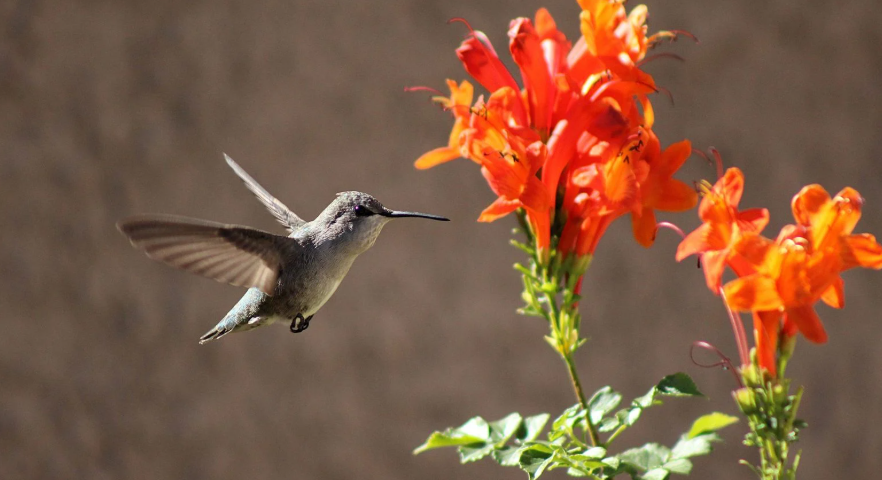
The best flowering vines for hummingbirds tend to share a specific flower shape, a long, narrow, tubular bloom that fits a hummingbird’s bill and tongue far better than the wide, flat flowers most bees and butterflies prefer. Red and orange tones are an added draw, since hummingbirds see that part of the color spectrum especially well, but shape matters at least as much as color when it comes to which vines actually earn repeat visits.
Choosing which vine to plant matters for reasons beyond the birds themselves, since several of the most familiar hummingbird vines sold at garden centers are the same aggressive invasive species capable of genuinely damaging the trees and structures they climb. According to Mississippi State University Extension, native coral honeysuckle is an even more beautiful, non-invasive alternative to Japanese honeysuckle, and hummingbirds love it just as much. This list favors those kinds of well-behaved natives and garden-friendly cultivars wherever a genuinely invasive alternative exists.
These vines span native woodland edges, prairie gardens, and warm-climate tropical borders across the United States. What follows covers 28 of the best flowering vines for hummingbirds.
Trumpet Vine
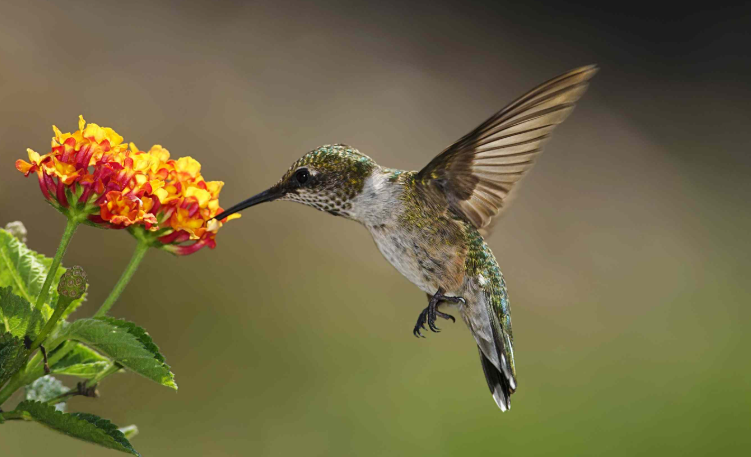
Trumpet vine, also called trumpet creeper, is native to the eastern and southeastern United States, producing large, trumpet-shaped orange-red flowers that hummingbirds find irresistible throughout summer. A mature vine can climb 30 to 40 feet using aerial rootlets, and its vigorous growth means it benefits from a sturdy support and plenty of room to spread.
It grows throughout the eastern and southeastern United States, favoring full sun for its best flowering display.
Coral Honeysuckle
Coral honeysuckle, also called trumpet honeysuckle, is native to the eastern United States, and according to Rutgers Cooperative Extension, its red tubular flowers bloom from late spring through fall and attract hummingbirds, bees, and butterflies, offering a genuinely non-invasive alternative to Japanese honeysuckle. A mature vine typically climbs 10 to 20 feet, twining gently around its support rather than clinging with damaging rootlets.
It grows throughout the eastern United States, tolerating a range of soil types in full sun to partial shade.
Crossvine
Crossvine is native to the southeastern United States, producing large, trumpet-shaped orange and yellow flowers in spring, often blooming early enough to greet the first hummingbirds returning north. A mature vine climbs using adhesive tendrils, capable of reaching 30 to 50 feet on a sturdy support.
It grows throughout the southeastern United States, tolerating both sun and partial shade.
Passionflower
Passionflower, also called maypop, is native to the southeastern United States, producing intricate, otherworldly purple and white flowers that hummingbirds visit for nectar throughout summer. A mature vine spreads via underground runners and can die back to the ground each winter before regrowing vigorously the following spring.
It grows throughout the southeastern United States, also serving as the host plant for several native butterfly species.
Red Passion Flower
Red passion flower, a tropical relative of maypop, produces vivid scarlet blooms considered among the most reliable hummingbird magnets in the entire passionflower family. A mature vine can climb 15 to 20 feet in frost-free climates, though it’s typically grown as an annual or container plant farther north.
It grows as a perennial vine in South Florida and other frost-free regions and as a warm-season annual elsewhere.
American Wisteria
American wisteria is native from Virginia to Texas, and according to LSU AgCenter, its flower clusters reach 4 to 6 inches long and support bees and butterflies, offering a genuinely non-invasive alternative to the aggressive Chinese and Japanese wisterias sold at many nurseries. NC State Extension similarly recommends it as equally beautiful and serving the same landscape functions without the extreme problems Chinese wisteria causes in natural areas. A mature vine flowers on new growth, blooming later in spring than its invasive relatives and continuing sporadically through summer.
It grows throughout much of the eastern United States, favoring full sun for the best flower production.
Cardinal Climber
Cardinal climber produces small, star-shaped scarlet flowers and finely divided, fern-like leaves on a fast-growing annual vine that hummingbirds visit constantly through summer and early fall. A mature vine can climb 10 to 15 feet from seed in a single growing season.
It grows as a garden annual throughout temperate regions of the United States.
Cypress Vine
Cypress vine closely resembles cardinal climber in its delicate, feathery foliage and small red trumpet-shaped flowers, a fast-growing annual that reseeds readily once established in a garden bed. A mature vine typically reaches 10 to 20 feet in a single season.
It grows as a garden annual throughout temperate regions of the United States.
Scarlet Runner Bean
Scarlet runner bean is native to the mountainous regions of Central America, producing clusters of bright red flowers that hummingbirds visit readily throughout the growing season, with edible beans following later in summer. A mature vine can climb 10 to 15 feet in a single season.
It grows as a garden annual throughout temperate regions of North America.
Morning Glory
Morning glory, in its cultivated garden forms, produces large, funnel-shaped flowers in shades of blue, purple, pink, and red, opening fresh each morning to greet the day’s first hummingbird visitors. A mature vine can climb 10 to 15 feet from seed in a single season.
It grows as a garden annual throughout temperate regions of the United States.
Coral Vine
Coral vine produces cascading sprays of small, bright pink flowers on a fast-growing tendril-climbing vine that blooms heavily from summer through fall. A mature vine can climb 30 to 40 feet in frost-free climates.
It grows as a perennial vine throughout the Gulf Coast and southern United States and as a warm-season annual farther north.
Firecracker Vine
Firecracker vine produces small, tubular red and yellow flowers along arching stems lined with deeply lobed leaves, blooming heavily from midsummer through the first frost. A mature vine can climb 10 to 15 feet in a single growing season.
It grows as a garden annual throughout temperate regions of the United States.
Mandevilla
Mandevilla produces large, glossy leaves and showy, trumpet-shaped flowers in shades of red, pink, and white, blooming continuously through the warm season on a twining vine. A mature plant typically reaches 8 to 10 feet where winter-hardy, though it’s commonly grown as a container annual in cooler climates.
It grows as a perennial vine in South Florida and other frost-free regions and as a warm-season container plant elsewhere.
Black-Eyed Susan Vine
Black-eyed Susan vine produces cheerful, tubular flowers in shades of orange and yellow with a distinctive dark center, blooming continuously from summer through fall on a twining annual vine. A mature vine typically reaches 6 to 8 feet in a single growing season.
It grows as a garden annual throughout temperate regions of the United States.
Texas Clematis
Texas clematis produces distinctive, thick-petaled, urn-shaped red flowers considerably different from the flatter blooms of most other clematis species, a shape that suits hummingbird feeding particularly well. A mature vine typically climbs 6 to 10 feet using twisting leaf stalks.
It grows as a garden perennial throughout much of the central and southern United States.
Hyacinth Bean Vine
Hyacinth bean vine produces clusters of fragrant purple-pink flowers followed by striking deep purple seed pods, blooming heavily from midsummer through fall on a vigorous annual vine. A mature vine can climb 10 to 15 feet in a single growing season.
It grows as a garden annual throughout temperate regions of the United States.
Butterfly Pea Vine
Butterfly pea vine produces vivid blue, pea-shaped flowers on a twining vine that draws hummingbirds throughout its long summer bloom period. A mature vine typically climbs 6 to 10 feet in warm climates.
It grows as a perennial vine in frost-free regions and as a warm-season annual throughout the rest of the United States.
Snapdragon Vine
Snapdragon vine produces small, tubular flowers in shades of pink, purple, and white, resembling a climbing version of the familiar garden snapdragon. A mature vine can climb 6 to 10 feet in a single growing season.
It grows as a garden annual throughout temperate regions of the United States.
Canary Creeper
Canary creeper produces distinctive, fringed yellow flowers resembling small birds in flight, blooming from summer through fall on a delicate, fast-growing annual vine. A mature vine typically climbs 6 to 12 feet.
It grows as a garden annual throughout temperate regions of the United States.
Chilean Glory Vine
Chilean glory vine produces clusters of small, tubular orange-red flowers on a fast-growing vine with delicate, fern-like foliage, blooming nearly continuously through the warm season. A mature vine can climb 10 to 15 feet where winter-hardy.
It grows as a perennial vine in mild coastal climates and as a warm-season annual throughout the rest of the United States.
Carolina Jessamine
Carolina jessamine is native to the southeastern United States, producing fragrant, bright yellow, trumpet-shaped flowers in very early spring, often blooming before most other nectar sources are available to returning hummingbirds. A mature vine can climb 10 to 20 feet, remaining evergreen through mild winters.
It grows throughout the southeastern United States, and every part of the plant is toxic if ingested.
Cup and Saucer Vine
Cup and saucer vine produces large, bell-shaped flowers that open pale green before maturing to a deep purple, blooming continuously from summer through fall on a fast-growing annual vine. A mature vine can climb 15 to 25 feet in a single growing season.
It grows as a garden annual throughout temperate regions of the United States.
Pandorea
Pandorea, also called bower vine, produces clusters of trumpet-shaped pink or white flowers with a contrasting throat, blooming through much of the warm season on a twining vine. A mature vine can reach 15 to 20 feet in frost-free climates.
It grows as a perennial vine in South Florida and other frost-free regions and as a container annual elsewhere.
Bleeding Heart Vine
Bleeding heart vine produces clusters of striking red and white flowers resembling tiny hearts, blooming through much of the warm season on a twining tropical vine. A mature plant typically reaches 6 to 15 feet where winter-hardy.
It grows as a perennial vine in frost-free regions and as a container plant elsewhere in the United States.
Rangoon Creeper
Rangoon creeper produces fragrant clusters of tubular flowers that open white and gradually deepen to pink and red over several days, all 3 colors often visible on the same cluster at once. A mature vine can climb 20 feet or more in frost-free tropical climates.
It grows as a perennial vine in South Florida and Hawaii and as a container plant elsewhere.
Bougainvillea
Bougainvillea produces small true flowers surrounded by large, vividly colored papery bracts in shades of pink, purple, orange, and red, with hummingbirds visiting the true flowers tucked inside for nectar. A mature vine can climb 15 to 40 feet in warm, frost-free climates.
It grows as a perennial vine throughout the southernmost United States and as a container plant elsewhere.
Dutchman’s Pipe
Dutchman’s pipe produces unusual, pipe-shaped flowers beneath a dense canopy of large, heart-shaped leaves, with hummingbirds occasionally visiting for nectar even though the plant is better known as a host for pipevine swallowtail butterflies. A mature vine can climb 20 to 30 feet on a sturdy support.
It grows throughout the eastern United States, thriving in full sun to partial shade.
Climbing Hydrangea
Climbing hydrangea produces broad, lacy clusters of small white flowers on a slow-growing, self-clinging vine that hummingbirds visit for nectar during its early summer bloom period. A mature vine can eventually climb 30 to 50 feet, though it often takes several years to begin flowering.
It grows as a garden perennial throughout temperate regions of the United States, tolerating shade better than most other flowering vines.
Further References
- Hummingbirds in the Garden — University of Wisconsin–Madison — Provides a list of plants attractive to hummingbirds, including trumpet vine, coral honeysuckle, and scarlet runner bean.
- Native Vine to Attract Hummingbirds and Pollinators — University of Maine Cooperative Extension — Discusses trumpet honeysuckle and trumpet creeper as flowering vines for hummingbirds and notes their growth characteristics.
- Vines for Maryland Gardens — University of Maryland Extension — Covers coral honeysuckle and other garden vines, including growing conditions and their value as nectar sources for hummingbirds.
- Hummingbirds of Florida — UF/IFAS Extension — Specifically lists hummingbird-attracting vines such as cross vine, trumpet vine, coral honeysuckle, scarlet morning glory, and cypress vine, along with their flowering seasons.
- Attracting Hummingbirds — Penn State Extension — Provides guidance on hummingbird-friendly plants and includes flowering vines such as morning glory, scarlet runner bean, and trumpet creeper.