The Easter cactus is a small, cheerful plant that flowers in spring, when many houseplants are only beginning to grow again. Its branching stems carry star-shaped blooms in red, pink, orange, white, and yellow, often in such numbers that the foliage almost disappears under them. Many people know it as a close cousin of the Christmas cactus, and the two plants are easy to confuse, but the Easter cactus has its own look, its own bloom season, and its own care rhythm.
Like its relatives, the Easter cactus is a forest plant rather than a desert cactus. It grows on tree branches in shaded, humid habitats, collecting water from rain and moist air. Its flowering depends on seasonal changes in light and temperature, so growers who understand that cycle can encourage the plant to bloom reliably and keep it looking vigorous for many years.
Where the Easter Cactus Comes From
The Easter cactus was once classified in the genus Rhipsalidopsis, but it is now usually placed in Hatiora, a genus named by the botanists Nathaniel Lord Britton and Joseph Nelson Rose in 1923. The genus name is widely noted to be an anagram of the name of Thomas Harriot, an English mathematician and astronomer who studied the plants of the Americas. The species name gaertneri honors the gardener and horticulturist associated with the plant’s early cultivation in Europe.
Wild populations are found in southeastern Brazil, in the Atlantic coastal forests of the Serra do Mar. There the plants grow as epiphytes, anchored to tree branches and rocky outcrops in filtered light. The forest canopy shelters them from harsh sun, and seasonal rains keep the roots moist without leaving them waterlogged for long. Those conditions shape nearly every aspect of how the plant should be grown at home.
Also Read: Different Types of Cactus Plants
Recognizing an Easter Cactus
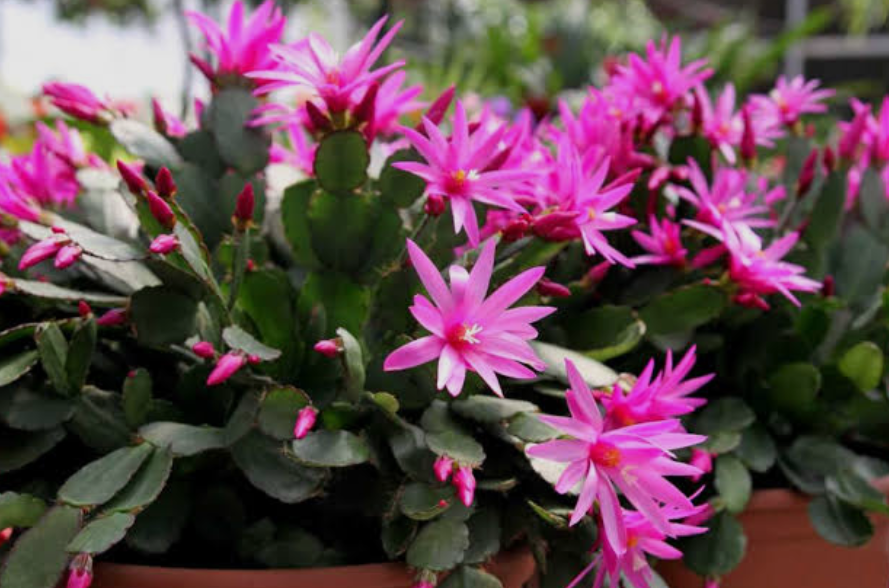
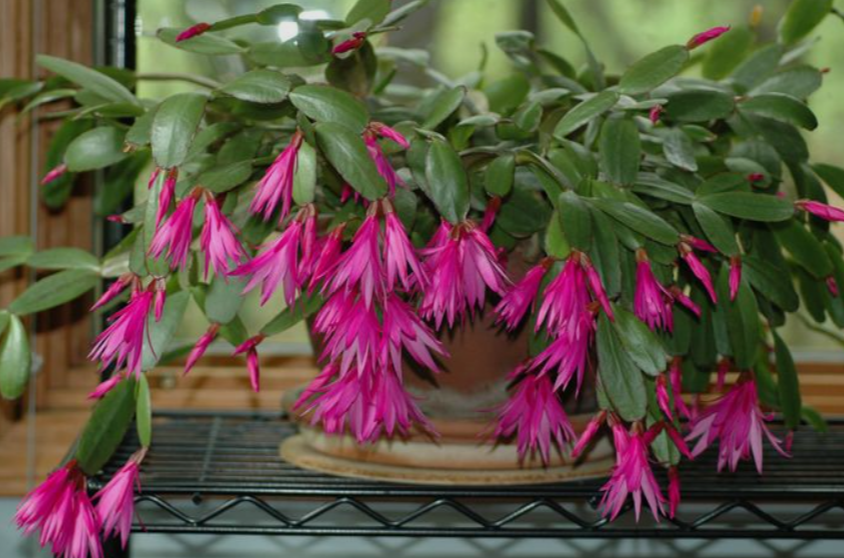
The stems are the first clue. Easter cactus segments are flattened and jointed, similar to the stems of the Christmas cactus, but the edges are more rounded and often scalloped, with shallow notches along the margins. The segments are typically smaller and less bristly than those of many desert cacti, and the plant tends to look more compact and bushy. Over time, the stems can form a spreading mound that hangs gracefully from a container.
The flowers are the most striking feature. Easter cactus blooms are funnel-shaped to star-shaped, with pointed or narrow petals that flare outward from a central throat. They appear at the tips of the segments, often in profusion, and come in red, pink, orange, white, and yellow. Each flower may last several days, and a healthy plant can carry blooms for several weeks in spring.
The plant produces no true leaves. Small bristles appear on the areoles, the tiny cushion-like structures along the margins of the stems, but these are not functional leaves. The stems handle photosynthesis and store water, so they should feel firm and full. Segments that become soft, shriveled, or discolored usually indicate a problem with watering or drainage.
Facts About the Easter Cactus
- Scientific name: Hatiora gaertneri, formerly placed in Rhipsalidopsis
- Genus name: Hatiora, named by Britton and Rose in 1923, widely noted as an anagram of Thomas Harriot
- Plant family: Cactaceae, though it is a forest cactus rather than a desert species
- Native range: the Atlantic coastal forests of southeastern Brazil
- Growth habit: epiphytic, growing on tree branches in shaded, humid forest
- Stem structure: flattened, jointed segments with scalloped or rounded edges
- Flower colors: red, pink, orange, white, and yellow
- Bloom season: typically spring, around the Easter period
- Common confusion: often mistaken for the Christmas cactus, which blooms in winter and has more pointed segment tips
- Pet safety: generally listed as non-toxic to cats and dogs by the ASPCA
- Lifespan: well-kept plants can live for decades
Growing Considerations
Bright, filtered light suits the Easter cactus best. An east-facing window is often ideal, and a spot a few feet back from a south or west window works well when the light is filtered by a sheer curtain. Direct hot sun can bleach the stems and dry them out, while deep shade leads to weak, leggy growth and few blooms. Rotating the pot every few weeks keeps the plant balanced, since the segments tend to lean toward the light.
Watering should follow the plant’s forest background. Let the top inch of the potting mix dry before watering thoroughly, then empty the saucer so the roots are never left sitting in water. The plant should be watered more regularly while it is in bud and bloom, and watering can be reduced slightly after flowering and during the warmer months when growth slows. Root rot is the most common problem with this plant, and it usually appears as soft, dark, or collapsing segments. When in doubt, allow the soil to dry a little longer.
Temperature and rest determine when the plant flowers. During the growing season, a range of about 60 to 75°F (16 to 24°C) suits it well. To set buds, the plant needs cooler nights of roughly 50 to 55°F (10 to 13°C) and shorter days over several weeks in autumn, which is why it is often placed in a bright but cool room for the fall. Once buds form, avoid moving the plant, turning it, or exposing it to drafts and heat sources, since sudden changes can cause buds to drop before they open.
Potting, feeding, and propagation are straightforward. Use a loose, well-draining mix, such as a standard potting soil blended with perlite or bark, in a container with drainage holes that is only slightly larger than the root ball. Repot every two to three years after flowering, when the plant has finished blooming and new growth begins. Feed monthly during spring and summer with a balanced liquid fertilizer at half strength, then stop feeding in early autumn as the plant prepares to set buds. To propagate, twist off two or three healthy segments, allow the cut ends to dry for a day, then insert them into moist potting mix. Roots usually form within a few weeks, and new plants often bloom within a year or two.
Also Read: Difference Between Thanksgiving And Christmas Cactus
Frequently Asked Questions
How is an Easter cactus different from a Christmas cactus?
The Easter cactus has scalloped, rounded segment edges and star-shaped flowers, and it blooms in spring. The Christmas cactus has more pointed segment tips and blooms in winter. Checking the bloom time and the segment shape usually makes the difference clear.
Why does my Easter cactus lose its buds?
Bud drop is most often caused by a sudden change in temperature, light, or location, or by letting the soil dry out completely while the plant is in bud. Keep the plant in a steady spot once buds appear.
How do I get my Easter cactus to bloom in spring?
Give it cool, slightly shorter days and cooler nights in autumn, roughly 50 to 55°F at night, for several weeks. Stop feeding in early autumn, and avoid moving the plant once buds form. Bringing it back to a warmer, brighter spot after bud set allows it to flower.
Why are the segments turning reddish or yellow?
Reddish or yellowish tones usually come from too much direct sun or, in some cases, cold exposure. Move the plant to a brighter but filtered location, and keep it away from cold windows and drafts.
Is the Easter cactus safe around pets?
The ASPCA generally lists the Easter cactus as non-toxic to cats and dogs. Pets may still chew on the segments and develop mild stomach upset, so it is wise to keep the plant out of reach.
Can I grow an Easter cactus from a cutting?
Yes. Twist off two or three healthy segments, let the cut ends dry for a day, and place them in moist potting mix. Roots usually form in a few weeks, and the new plant can bloom within a year or two under suitable conditions.
1 thought on “Easter Cactus (Hatiora gaertneri): Identification & Growing Guide”