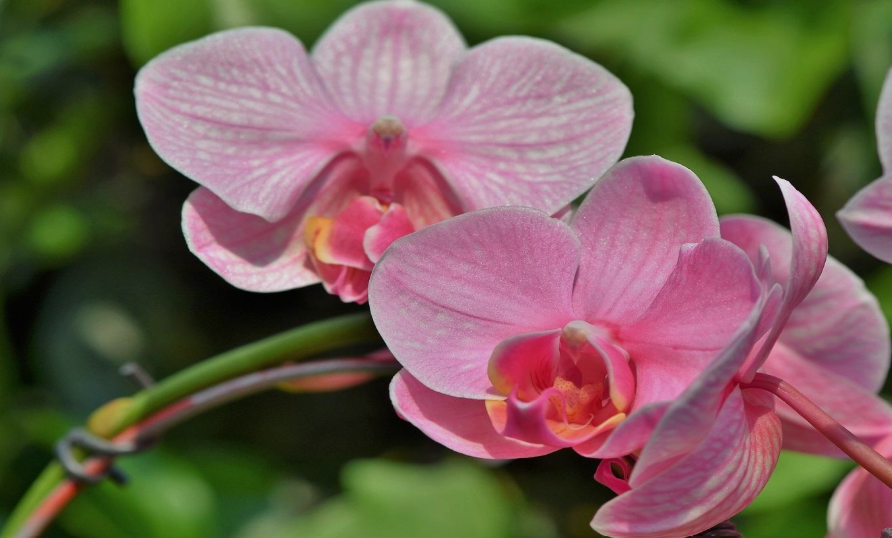
The moth orchid is the orchid most people picture when they think of the plant: a slender arching spike covered in flat, round blooms that can stay open for two to three months. It is also the orchid most often sold in supermarkets, garden centers, and gift shops, and its popularity rests on a combination of long-lasting flowers, a manageable size, and a wide range of colors. Few houseplants reward a single purchase with so many weeks of bloom.
Behind that easy display is a plant with a specific natural life. The moth orchid is an epiphyte that grows on tree trunks and branches in humid forests, not in soil. Its roots, leaves, and flowers are adapted to draw water from rain and humid air, and once a grower understands that habit, most care decisions become straightforward. The plant is less fragile than its delicate look suggests, but it does respond quickly to mistakes in watering, light, and temperature.
Where the Moth Orchid Comes From
The genus Phalaenopsis was named by the Dutch botanist Carl Ludwig Blume in 1825, and its name comes from the Greek for “moth-like,” a reference to the flowers’ resemblance to moths resting on a branch. Wild species are found across Southeast Asia, from northern India and southern China through Taiwan, the Philippines, and Indonesia, reaching into northern Australia and New Guinea. Most of these habitats are warm, humid, and shaded by a forest canopy, with seasonal rainfall that keeps the roots moist without leaving them waterlogged for long.
The orchids sold today are mostly hybrids. Breeders have worked with species such as Phalaenopsis amabilis, Phalaenopsis schilleriana, and Phalaenopsis stuartiana for more than a century, combining their traits to produce plants with larger flowers, stronger stems, and a wide range of colors from white and pink to yellow, purple, and striped patterns. Because of this breeding history, modern moth orchids are generally tolerant of average home conditions, though they still reflect the forest habitat of their wild ancestors.
Recognizing a Moth Orchid
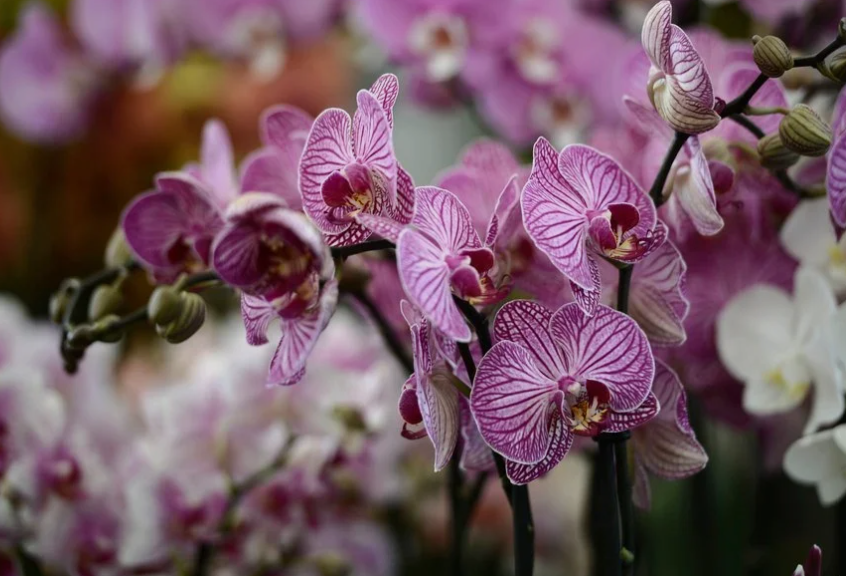
The plant has a short, compact stem called the crown, from which thick, leathery leaves grow in two opposite rows. The leaves are usually broad and glossy, and a healthy plant produces three to five of them at a time. Older leaves at the base are normal to shed over time, but new leaves should emerge steadily from the center.
The roots are one of the most useful features for judging health. Moth orchid roots are thick, flat, and covered with a silvery outer layer called velamen, which absorbs moisture from the air and rain. When the roots are well watered they turn bright green, while dry roots look silver or pale brown. Firm roots are a good sign, whereas roots that are soft, black, or mushy indicate rot.
The flower spike, or inflorescence, grows from a node along the stem and can carry many blooms, often arranged in a graceful arch. Each flower has three sepals, two broad petals, and a central lip, and the sepals and petals are usually the same size and color. Flowers from a healthy plant can last two to three months, and after the spike finishes, the plant can often produce new flowers from the same stem.
Also Read: Different Types of Purple Orchids
Facts About the Moth Orchid
- Scientific name: Phalaenopsis, named by Carl Ludwig Blume in 1825
- Plant family: Orchidaceae
- Native range: Southeast Asia, southern China, Taiwan, the Philippines, northern Australia, and New Guinea
- Growth habit: epiphytic, growing on trees and absorbing moisture through its roots
- Root feature: a silvery velamen layer that absorbs water and turns green when wet
- Bloom duration: flowers often last two to three months on a healthy plant
- Pet safety: generally listed as non-toxic to cats and dogs by the ASPCA
- Common colors: white, pink, purple, yellow, and striped varieties
Growing Considerations
Light is best kept bright but indirect. An east-facing window or a spot a few feet back from a south or west window usually works well. Leaves that are dark green and stiff often mean the plant needs more light, while leaves that turn yellowish green or show reddish streaks can indicate too much direct sun. Moth orchids do not need deep shade, and the goal is to give enough brightness for steady leaf growth without scorching the foliage.
Watering should follow the plant’s epiphytic habit. Water thoroughly when the bark-based mix is nearly dry, usually about once a week in a warm home, and allow the water to drain completely. Avoid letting water collect in the crown, since trapped moisture there can lead to rot. Many growers find it easier to check the roots and the weight of the pot than to follow a fixed calendar, because water needs change with season, temperature, and humidity.
Temperature plays a role in flowering as well as health. Moth orchids generally do well in daytime temperatures of about 70 to 80°F (21 to 27°C) and nighttime temperatures around 60 to 65°F (16 to 18°C). A modest drop at night helps trigger the development of flower spikes. Humidity around 50 percent or higher supports healthy roots and leaves, and a humidity tray or a location in a bathroom or kitchen can help when indoor air is dry. Keep plants away from cold drafts, heaters, and air conditioners.
Potting, feeding, and rebloom require a steady routine. Use a coarse orchid mix made from bark, since the roots need air as well as moisture, and repot every one to two years, ideally after flowering when new root growth begins. Feed lightly during active growth, using a balanced orchid fertilizer at quarter to half strength, roughly every two to four weeks. When the flowers fade, cut the spike just above a node below the lowest flower, which can encourage a new branch and additional blooms. If the spike turns brown and dry, cut it off at the base, since the plant will not flower from that stem again.
Also Read: How to Grow Orchids From SEEDs
Frequently Asked Questions
Why are the flowers falling off my moth orchid?
Bud and flower drop is often caused by sudden changes in temperature, cold drafts, low humidity, or a shift in location. Keeping the plant in a stable spot with consistent conditions usually prevents further loss.
Why are the leaves wrinkled?
Wrinkled leaves usually point to underwatering or root damage. Check the roots first: if they are dry and silver, water thoroughly. If they are soft or rotting, trim away the damaged roots and repot in fresh mix.
Can a moth orchid rebloom?
Yes. A healthy plant can flower again from the same spike if the stem stays green after blooming. Cut the spike above a node below the lowest flower, and new blooms may appear in a few months. A spike that turns brown should be removed at the base.
Do moth orchids need to be repotted every year?
Not always. Repotting every one to two years is common, and it is best done after flowering or when the bark has broken down and the roots have outgrown the container. A plant in fresh, airy bark tends to perform better than one in old, compacted mix.
Is the moth orchid safe around pets?
The ASPCA lists the moth orchid as non-toxic to cats and dogs. Pets can still chew on plant material and cause mild stomach upset, so it is wise to place the plant out of reach.
Why does my moth orchid have no flowers?
Moth orchids usually need a stable routine and a nighttime temperature drop to produce flower spikes. Adequate light, regular feeding, and a healthy root system also matter. A mature, healthy plant that is still not flowering often needs a few weeks of cooler nights and steady light to set a new spike.
1 thought on “Moth Orchid (Phalaenopsis): Identification & Growing Guide”