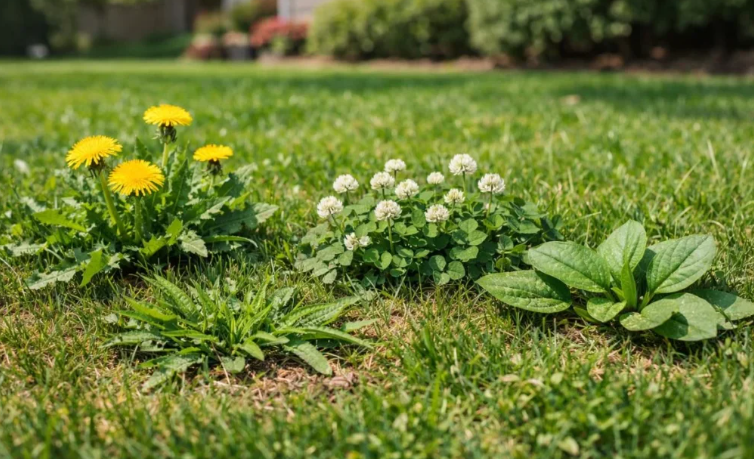
Not every unwanted plant in a yard behaves the same way, and according to University of Florida IFAS Extension, weeds fall into 3 broad structural categories: broadleaf weeds, grasses, and sedges, each requiring a different approach to control. Broadleaf weeds are dicots with netted leaf veins and typically showy flowers, grasses are monocots with parallel veins and hollow, rounded stems, and sedges, according to Texas A&M AgriLife Extension, can be distinguished by their solid, triangular stems, a trait sedges have but grasses lack entirely.
That structural split matters for more than just identification, since a broadleaf herbicide that wipes out dandelion and clover will do nothing at all to a patch of nutsedge, and a product formulated for grassy weeds is equally useless against a sedge. Life cycle adds another layer on top of shape, with weeds classified as summer annuals that germinate in spring and die by fall, winter annuals that do the reverse, or true perennials that persist in the same spot year after year regardless of season.
This list draws from all 3 structural categories and a range of life cycles, spanning common lawn invaders, aggressive vining plants, noxious rangeland species, and a few genuinely dangerous ones worth knowing on sight. What follows covers 50 types of weeds.
Dandelion
Dandelion is instantly recognizable by its deeply toothed leaves arranged in a low rosette and its bright yellow flower head, which later transforms into the familiar puffball of wind-dispersed seeds. A single plant can produce between 150 and 200 seeds from just one flower head, and its long, thick taproot regrows readily from broken fragments left behind after pulling.
It thrives in lawns, meadows, and any disturbed ground with reasonable sunlight, tolerating close, repeated mowing far better than most turfgrass itself.
Broadleaf Plantain
Broadleaf plantain grows as a low rosette of oval, deeply veined leaves, sending up a narrow, leafless flowering spike that can release thousands of seeds in a single season. Its leaves are noticeably ribbed with parallel veins running the length of the leaf, an unusual trait for a broadleaf species that otherwise fits the dicot mold in every other respect.
It’s one of the most compaction-tolerant lawn weeds around, thriving specifically in the packed, worn soil along paths, gates, and driveways where turfgrass struggles to compete.
White Clover
White clover forms a low, creeping mat of 3-part leaflets, each often marked with a pale chevron, and produces small, round white flower heads that stay in bloom for much of the growing season. As a legume, it fixes atmospheric nitrogen through bacteria in its roots, which is part of why patches of clover in a lawn often stay noticeably greener than the surrounding turf.
It grows readily in lawns and pastures across nearly every climate in North America, tolerating both close mowing and light foot traffic.
Chickweed
Chickweed forms a sprawling, low mat of small, oval leaves and tiny white, star-shaped flowers, favoring the cool, moist conditions of early spring and fall. A single line of fine hairs runs down one side of its stem, alternating sides at each leaf node, a small but reliable identification feature that separates it from several similar-looking low weeds.
It grows throughout lawns and gardens across most of the United States and Canada, often disappearing entirely once summer heat sets in.
Purslane
Purslane grows as a low, spreading succulent with thick, paddle-shaped leaves and reddish stems, thriving specifically in the hottest, driest stretches of summer when many other weeds struggle. A single plant can produce up to 240,000 seeds over a season, and any pulled stem left in contact with moist soil can re-root and continue growing.
It grows throughout gardens and disturbed sandy or loamy soil across the United States, particularly common in vegetable beds.
Lamb’s Quarters
Lamb’s quarters produces diamond-shaped leaves dusted with a distinctive whitish, powdery coating on their undersides, growing upright to several feet tall in nutrient-rich soil. Its coating is water-repellent, causing droplets to bead and roll off the leaf surface, a feature that also makes many contact herbicides less effective against it.
It’s one of the most common weeds of cultivated gardens and agricultural fields throughout North America.
Common Mallow
Common mallow produces round, slightly fuzzy, lobed leaves and small pink to lavender flowers, sprawling low across compacted ground rather than growing upright. Its small, round seed pods, sometimes called “cheeses” for their resemblance to a wheel of cheese, are edible and were a common childhood foraged snack in earlier generations.
It grows throughout lawns and disturbed, compacted soil across most of North America.
Ground Ivy
Ground ivy, also called creeping Charlie, spreads across the ground on square, mint-family stems lined with small, scalloped, kidney-shaped leaves that release a sharp minty scent when crushed. It roots at every leaf node it touches, which is part of what makes it spread so quickly and makes pulling it by hand a genuinely frustrating task.
It thrives in the moist, shaded portions of lawns throughout most of North America, often outcompeting turfgrass in exactly the spots where grass grows thinnest.
Henbit
Henbit produces scalloped, rounded leaves and small, tubular purple flowers, standing slightly more upright than its close relative purple deadnettle despite sharing the same square mint-family stem. It’s one of the first weeds to flower each year, often blooming while frost is still a regular overnight occurrence.
It grows throughout lawns and cultivated fields across most of the United States during the cooler months of the year.
Purple Deadnettle
Purple deadnettle closely resembles henbit, distinguished by its upper leaves taking on a distinct purplish-red tint and its overall slightly hairier texture. Unlike true nettle, it carries no sting at all, a fact that surprises many people the first time they handle it expecting otherwise.
It grows throughout lawns and gardens across much of the United States, commonly emerging in the same cool-season window as henbit.
Shepherd’s Purse
Shepherd’s purse produces a low rosette of deeply lobed leaves and a tall, thin flowering stalk lined with distinctive flat, heart-shaped seed pods that give the plant its common name. It can complete an entire life cycle from germination to seed in as little as several weeks under favorable conditions, allowing multiple generations in a single growing season.
It grows throughout disturbed gardens and fields across nearly all of North America.
Common Sowthistle
Common sowthistle produces clasping, spiny-looking but soft leaves and small, dandelion-like yellow flower heads atop a hollow stem that oozes a milky sap when broken. Despite its prickly appearance, the young leaves are tender enough to be eaten, a fact that makes it a favorite among foragers and rabbit keepers alike.
It grows throughout agricultural fields and gardens across most of the United States.
Wild Violet
Wild violet produces heart-shaped leaves and small purple or white flowers low to the ground, spreading via both seed and short underground rhizomes to form persistent lawn colonies. Beyond its visible flowers, it also produces hidden, self-pollinating flowers at the soil surface that never open, a reproductive strategy that helps it persist even in years with poor pollinator activity.
It grows throughout lawns and shaded garden beds across the eastern and central United States.
Yellow Wood Sorrel
Yellow wood sorrel produces clover-like, heart-shaped leaflets and small yellow flowers, easily confused with true clover until its seed pods appear, since they explosively eject seeds several feet when ripe and disturbed. Its leaflets fold shut at night, a movement that helps distinguish it from clover even without waiting for flowers or seed pods.
It grows throughout lawns, gardens, and disturbed ground across most of the United States and Canada.
Canada Thistle
Canada thistle produces spiny-edged, deeply lobed leaves and small purple flower heads atop an extensive, far-reaching underground root system capable of sending up new shoots many feet from the original plant. A single root system can spread outward and colonize an entire field within a few growing seasons if left unmanaged.
It grows throughout pastures, fields, and roadsides across most of the northern United States and Canada, classified as a noxious weed in many states.
Common Ragweed
Common ragweed produces finely divided, fern-like leaves and inconspicuous green flower spikes responsible for a significant share of late-summer seasonal allergy symptoms across the country. A single plant can release around a billion grains of wind-dispersed pollen over a season, a scale that dwarfs the pollen output of nearly any other allergy-triggering plant.
It grows throughout disturbed fields and roadsides across nearly all of the United States.
Common Milkweed
Common milkweed produces broad, opposite leaves and rounded clusters of fragrant pink flowers, releasing a thick, white, mildly toxic sap whenever its stem or leaves are broken. That same toxic sap, sequestered by monarch caterpillars that feed exclusively on the plant, becomes a defense the caterpillars carry with them into adulthood.
It grows throughout fields and prairie habitats across most of the eastern and central United States.
Pokeweed
Pokeweed produces large, smooth leaves on thick, reddish-purple stems, developing clusters of dark purple-black berries by late summer that are toxic to humans despite being readily eaten by birds. A mature plant can reach up to 10 feet tall in a single growing season from a single perennial root.
It grows throughout disturbed fields, fence rows, and woodland edges across most of the eastern and central United States.
Common Mullein
Common mullein spends its first year as a low rosette of thick, fuzzy, felt-textured leaves before sending up a single towering flower spike covered in small yellow flowers in its second year. The dense hairs covering its leaves were historically used as tinder for fire-starting and even as makeshift lantern wicks.
It grows throughout dry, rocky, disturbed ground across most of the United States and Canada.
Queen Anne’s Lace
Queen Anne’s lace, also called wild carrot, produces finely divided, carrot-scented foliage and a flat-topped cluster of tiny white flowers, often marked with a single dark purple floret at its center. As the direct wild ancestor of the cultivated carrot, its root can be eaten, though it’s considerably tougher and more fibrous than a garden carrot.
It grows throughout fields and disturbed meadows across most of the United States and Canada.
Field Bindweed
Field bindweed produces arrow-shaped leaves and funnel-shaped white to pink flowers on a twining vine that wraps tightly around any nearby plant, fence, or structure it encounters. Its root system can extend more than 20 feet deep and horizontally in every direction, making it one of the most difficult weeds to fully eliminate once established.
It grows throughout fields, gardens, and disturbed ground across most of the United States.
Curly Dock
Curly dock produces long, wavy-edged leaves and a tall flowering stalk that matures into a distinctive rust-brown cluster of seeds persisting well into winter. Its young leaves carry a tangy, lemony flavor from oxalic acid, making it edible in moderation once cooked.
It grows throughout disturbed pastures and fields across most of North America.
Common Burdock
Common burdock produces enormous first-year leaves before sending up a spiny, second-year flowering stalk topped with the familiar hooked burs that famously inspired the invention of hook-and-loop fastener technology. Its taproot, dug while the plant is still in its first year, is a genuine root vegetable in Japanese cuisine.
It grows throughout fences, trails, and disturbed pasture edges across most of North America.
Wild Mustard
Wild mustard produces bright yellow, 4-petaled flowers atop stems lined with somewhat coarse, lobed leaves, capable of forming dense stands that overwhelm cereal grain fields if left unmanaged. Its seeds can remain dormant but viable in the soil for many years, surfacing to germinate whenever the ground is disturbed by tilling.
It grows throughout agricultural fields and roadsides across much of North America.
Redroot Pigweed
Redroot pigweed, a common type of wild amaranth, produces broad, slightly rough leaves on a stem that reveals a distinctive reddish taproot once pulled from the ground. A single plant can produce well over 100,000 seeds in a season, giving it an enormous capacity to rebuild its population even after aggressive control efforts.
It grows throughout cultivated fields and gardens across nearly all of North America.
Common Chicory
Common chicory produces a rosette of dandelion-like leaves and a tall, wiry flowering stem lined with distinctive sky-blue flowers that typically close by early afternoon each day. Its root has a long history of being roasted and ground as a coffee substitute or additive, a practice that persists in parts of the American South today.
It grows throughout roadsides and disturbed ground across most of the United States and southern Canada.
Yellow Toadflax
Yellow toadflax, sometimes called butter and eggs, produces narrow, blue-green leaves and snapdragon-like yellow flowers marked with a contrasting orange throat. Its extensive underground root system allows a single plant to spread into a dense colonial patch capable of crowding out native rangeland vegetation.
It grows throughout roadsides and rangeland across much of the northern United States and Canada.
Poison Ivy
Poison ivy produces glossy, compound leaves arranged in groups of exactly 3 leaflets, a defining feature behind the old warning rhyme “leaves of 3, let it be.” Its oily resin, called urushiol, remains active and capable of causing an allergic rash for months on contaminated tools, clothing, or even the dead, leafless winter stems of the plant.
It grows throughout woodlands, fence rows, and disturbed edges across most of the United States and Canada, taking the form of a climbing vine, low shrub, or ground cover depending on its setting.
Poison Hemlock
Poison hemlock produces finely divided, fern-like leaves on a smooth, hollow stem marked with distinctive purple blotches that darken as the plant matures. Every part of the plant is highly toxic if ingested, and the purple-spotted stem is one of the most reliable features separating it from safer carrot-family relatives it closely resembles.
It grows throughout roadsides, ditches, and disturbed fields across most of the United States and Canada.
Stinging Nettle
Stinging nettle produces coarsely toothed, deep green leaves covered in fine, hollow hairs that inject an irritating chemical cocktail on contact, causing an itching, burning welt within seconds. Once thoroughly cooked, dried, or wilted, those same stinging compounds fully deactivate, making the leaves safe to eat and notably rich in iron and protein.
It grows throughout moist, nutrient-rich soil along stream banks across most of North America.
Giant Hogweed
Giant hogweed produces enormous, deeply lobed leaves and a thick, hollow, purple-blotched stem capable of towering well over head height, among the largest herbaceous plants found anywhere in North America. Its sap contains compounds that react violently with sunlight on exposed skin, causing severe burns and blistering that can take months to fully heal.
It grows in scattered infestations primarily in the northeastern United States and parts of the Pacific Northwest.
Bull Thistle
Bull thistle spends its first year as a spiny rosette before sending up a heavily branched, second-year flowering stalk topped with vivid purple-pink flower heads. Its dense covering of sharp spines runs along the leaf edges, stems, and even the bracts surrounding each flower, making the entire plant genuinely uncomfortable to handle without gloves.
It grows throughout overgrazed pastures and disturbed roadsides across most of North America.
Horseweed
Horseweed, also called marestail, produces a single tall, unbranched stem lined with narrow leaves, capable of shooting up several feet in a single season from a small rosette. It’s become notorious among farmers for developing resistance to glyphosate and other common herbicides faster than almost any other agricultural weed.
It grows throughout agricultural fields and disturbed ground across nearly all of the United States.
Crabgrass
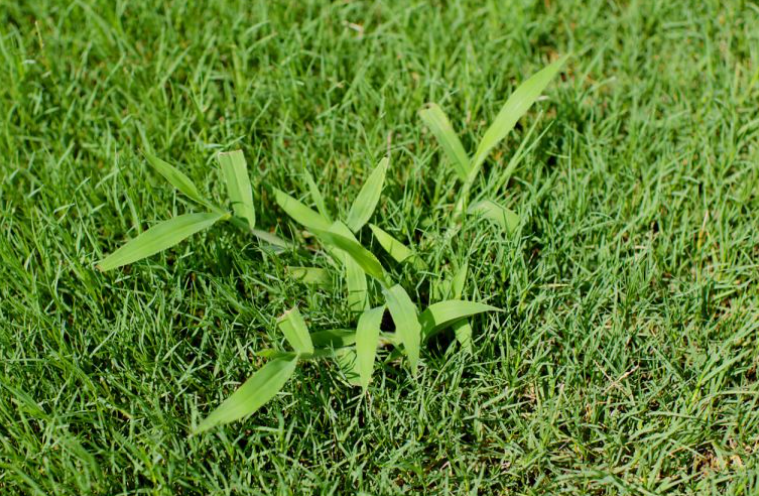
Crabgrass produces sprawling, wide-bladed stems that root wherever they touch soil, forming a low, star-shaped mat that becomes especially noticeable once cooler fall weather turns it purplish. A single plant can produce tens of thousands of seeds, which is part of why a small patch left untreated in early summer can spread across an entire lawn by fall.
It grows throughout lawns and turf across nearly all of the United States, thriving specifically in thin, stressed grass during the hottest part of summer.
Goosegrass
Goosegrass forms a flattened, whitish-centered clump of tough, wide blades radiating outward like the spokes of a wheel, distinguishing it from crabgrass even before either plant flowers. Its notably tough, silvery-white stem base, sometimes compared to a zipper in texture, makes it considerably more resistant to standard crabgrass herbicides.
It grows throughout compacted, poorly drained turf across much of the southern and eastern United States.
Foxtail
Foxtail produces a distinctive bristly, cylindrical seed head resembling the tail of its namesake animal, growing from a clump of otherwise unremarkable narrow grass blades. Its sharp, barbed seeds pose a genuine hazard to pets, capable of working their way into paws, ears, and nasal passages if not removed promptly.
It grows throughout lawns, fields, and disturbed ground across most of the United States.
Johnsongrass
Johnsongrass produces tall, coarse blades and an extensive underground rhizome system, capable of reaching 8 to 10 feet tall under favorable conditions. Under drought stress or after a frost, its foliage can accumulate dangerous levels of prussic acid, a real hazard for livestock grazing on damaged or stressed stands.
It grows throughout the southern and central United States, classified as one of the world’s most problematic agricultural weeds.
Quackgrass
Quackgrass spreads through an aggressive network of underground rhizomes, sending up narrow, somewhat coarse blades that closely resemble desirable turfgrass at a casual glance. Its rhizomes can regenerate an entirely new plant from even a small broken fragment left in the soil, making mechanical removal alone a losing battle.
It grows throughout lawns and agricultural fields across the northern United States and Canada.
Wild Oat
Wild oat closely resembles cultivated oat in its overall appearance, distinguished by a drooping, loosely branched seed head covered in stiff, twisted bristles once the plant matures. It ranks among the most economically damaging weeds in cultivated grain fields worldwide, competing aggressively with the very crop it resembles.
It grows throughout grain-producing regions across nearly all of North America.
Yellow Nutsedge
Yellow nutsedge produces grass-like foliage arranged in distinctive sets of 3 from a solid, triangular stem, a feature that immediately separates it from any true grass growing nearby. Its underground tubers, sometimes called nut grass for their small, hard, nutty growths, allow it to survive and resprout even after the visible top growth is removed.
It grows throughout moist, poorly drained turf and agricultural fields across most of the United States.
Purple Nutsedge
Purple nutsedge closely resembles its yellow-flowered relative, distinguished by its reddish-purple flower clusters and a more aggressive, interconnected chain of underground tubers. It’s widely regarded by agricultural researchers as one of the most difficult weeds to eradicate anywhere in the world, given how readily its tubers survive standard cultivation and herbicide treatment.
It grows throughout warm, moist regions of the southern United States.
Kudzu
Kudzu produces large, 3-lobed leaves on vigorous vines capable of growing 60 to 100 feet in a single season, engulfing trees, utility poles, and abandoned structures beneath a dense green blanket. It was deliberately planted across roughly 3 million acres of the southern United States by 1946 for erosion control before its uncontrolled spread became a defining image of the region.
It grows extensively throughout the southeastern United States.
Japanese Knotweed
Japanese knotweed produces hollow, bamboo-like stems marked with reddish speckling at each swollen node, capable of pushing through cracks in pavement and even building foundations as a colony expands. Its underground rhizome network can extend well beyond the visible canes, making it one of the most expensive invasive plants to fully remove once established.
It grows throughout the northeastern and Pacific Northwest United States.
Oriental Bittersweet
Oriental bittersweet produces round, glossy leaves on a woody, twining vine capable of climbing 60 feet or more into a tree canopy, eventually girdling and killing its host through sheer weight and constriction. Its bright orange-yellow seed capsules split open in fall to reveal the striking red seeds inside, a display that’s made the vine popular, if problematic, for autumn wreaths.
It grows extensively throughout the eastern United States.
English Ivy
English ivy produces glossy, lobed evergreen leaves on a climbing or trailing vine capable of forming a dense mat that smothers everything from garden perennials to entire tree trunks. Once a vine climbs high enough into full sun, its leaf shape changes from the familiar lobed form to a simpler, unlobed adult leaf, a stage that also allows it to flower and fruit.
It grows throughout most of the United States as both a cultivated groundcover and an escaped woodland invasive.
Field Horsetail
Field horsetail produces jointed, hollow, leafless stems in 2 distinct forms, a fertile spring stalk that releases spores and a separate, bushier sterile stalk that appears afterward. It’s one of the most ancient plant lineages still found growing today, having changed relatively little in overall form since long before flowering plants existed.
It grows throughout moist, disturbed ground across much of North America, notoriously difficult to eliminate due to deep, brittle rhizomes.
Water Hyacinth
Water hyacinth produces rounded, glossy leaves atop inflated, spongy stems that keep the entire plant afloat, forming dense mats capable of covering the surface of an entire pond or slow-moving river. It was introduced to the United States at the 1884 World’s Fair in New Orleans before spreading into Florida’s waterways, where it eventually choked off river commerce entirely.
It grows throughout warm, slow-moving waterways across the southern United States.
Cattail
Cattail produces tall, flat, sword-shaped leaves and the unmistakable brown, cylindrical seed head that gives the plant its name, forming dense colonies along the edges of ponds and marshes. A single mature plant can release well over 200,000 wind-dispersed seeds from just one seed head.
It grows throughout wetland margins across nearly all of North America.
Prostrate Knotweed
Prostrate knotweed forms a dense, wiry mat of small, blue-green leaves that hugs the ground so tightly it can survive being walked on repeatedly, thriving in exactly the compacted soil found along sidewalks and driveways. Its tiny, inconspicuous flowers appear in the leaf joints along the stem rather than in any showy cluster.
It grows throughout compacted, poor soil across the United States, often the only plant tough enough to survive in a well-worn path.
Bermudagrass
Bermudagrass, prized as a durable lawn and pasture grass throughout the South, becomes a genuine weed the moment it invades a flower bed or a lawn planted with a different turf species, spreading aggressively via both underground rhizomes and above-ground runners. A single, unmanaged patch can expand a foot or more per month during peak summer growth, overtaking neighboring plantings with startling speed.
It grows throughout the southern United States, a clear reminder that whether a plant counts as a weed often depends entirely on where it’s growing rather than what species it is.
Spotted Knapweed
Spotted knapweed produces grayish-green, deeply divided leaves and thistle-like purple-pink flower heads ringed with distinctive black-tipped bracts that give the plant its common name. It releases an allelopathic compound from its roots that suppresses the germination and growth of neighboring plants, giving it a competitive edge that helps explain how quickly it can take over an entire pasture.
It grows throughout rangeland and disturbed ground across the western and northern United States, classified as a noxious weed in numerous states.
Leafy Spurge
Leafy spurge produces narrow, blue-green leaves and small yellow-green flower bracts on a plant that oozes a thick, milky, irritating sap the moment any part of it is broken. Its root system can extend more than 15 feet deep, with lateral roots capable of sending up new shoots many feet from the original plant, making even aggressive digging a poor long-term control method.
It grows throughout rangeland and pastures across the northern United States and Canada, considered one of the most economically damaging weeds of western grazing land.
Musk Thistle
Musk thistle produces spiny, deeply lobed leaves and a large, nodding purple flower head that droops noticeably to one side once fully open, distinguishing it from the more upright blooms of bull thistle. A single plant can produce over 10,000 seeds in a season, most of which remain viable in the soil for several years after dropping.
It grows throughout pastures and roadsides across most of the United States, classified as a noxious weed in dozens of states.
Creeping Buttercup
Creeping buttercup produces glossy, deeply lobed leaves and bright, waxy yellow flowers, spreading across damp ground via long, above-ground runners that root at each leaf node. Its foliage contains a compound called protoanemonin that’s genuinely irritating to the mouth and digestive tract, making it a weed that grazing livestock generally learn to avoid on their own.
It grows throughout damp lawns, pastures, and ditches across much of the northern United States and Canada.
Wild Parsnip
Wild parsnip produces yellow, umbrella-shaped flower clusters atop a grooved, hollow stem, its foliage releasing sap containing compounds that react with sunlight to cause severe burns and blistering on exposed skin. Unlike the purple-spotted stem of poison hemlock, its stem stays a uniform green, a helpful distinction for anyone trying to tell the 2 dangerous carrot-family relatives apart.
It grows throughout roadsides and disturbed fields across most of the northern and central United States.
Bittersweet Nightshade
Bittersweet nightshade produces purple, star-shaped flowers with a prominent yellow center, followed by oval berries that ripen from green to bright red on a sprawling, semi-woody vine. Every part of the plant, including the strikingly colored ripe berries, is toxic if eaten, a genuine hazard given how attractive the fruit looks to children and pets alike.
It grows throughout hedgerows and disturbed woodland edges across much of the United States.
Black Medic
Black medic produces small, clover-like leaflets and tight clusters of tiny yellow flowers, often mistaken at a glance for clover or the early growth of wood sorrel. Its small, coiled, black seed pods, which give the plant its common name, are a reliable way to distinguish it from either look-alike once flowering has finished.
It grows throughout lawns and disturbed ground across most of the United States.
Creeping Bellflower
Creeping bellflower produces heart-shaped lower leaves and tall spikes of drooping, violet-blue bell-shaped flowers, spreading aggressively through a deep, brittle, white root system. Any small fragment of root left behind after pulling can regenerate an entirely new plant, which is part of why it’s become such a persistent escapee from ornamental garden plantings.
It grows throughout lawns and garden beds across the northern United States and Canada.
Wild Garlic
Wild garlic produces slender, hollow, round leaves and small underground bulbs that release a strong garlic odor the moment any part of the plant is crushed or cut. It’s especially conspicuous in early spring and late winter, when its bright green shoots stand out sharply against still-dormant lawn grass.
It grows throughout lawns and fields across the eastern and central United States, and its bulbs survive mowing far better than the leaves alone would suggest.
Common Groundsel
Common groundsel produces ragged, deeply lobed leaves and small, tubular yellow flower heads that rarely fully open, maturing into miniature dandelion-like seed puffs. It contains pyrrolizidine alkaloids genuinely toxic to grazing livestock, particularly damaging to the liver with repeated exposure over time.
It grows throughout gardens and disturbed ground across much of the United States, capable of completing several generations in a single growing season.
Wintercress
Wintercress, also called yellow rocket, produces glossy, deeply lobed leaves and clusters of small yellow flowers, often among the very first weeds to bloom each spring. Its peppery young leaves grow considerably more bitter once the plant flowers, narrowing the brief window during which it’s worth foraging.
It grows throughout fields and gardens across the northeastern and midwestern United States.
Annual Bluegrass
Annual bluegrass produces light green, boat-tipped blades and small white seed heads that can appear scattered across a lawn even under very low mowing heights. It germinates in cool fall weather and dies back once summer heat arrives, leaving small, unsightly dead patches behind in lawns where it had temporarily blended in.
It grows throughout lawns and turf across nearly all of the United States, considered one of the most widespread turfgrass weeds in the country.
Velvetleaf
Velvetleaf produces enormous, heart-shaped leaves covered in a soft, velvety fuzz, growing upright on a sturdy stem that can tower over surrounding crop plants. Its seeds can remain dormant yet viable in the soil for decades, occasionally germinating in a field many years after the last mature plant was removed.
It grows throughout cultivated fields across much of the central and eastern United States, a persistent problem in corn and soybean production.
Multiflora Rose
Multiflora rose produces arching, thorny canes lined with small compound leaves and clusters of small white flowers, forming a dense, impenetrable thicket wherever it’s left unmanaged. A single mature shrub can produce close to 500,000 seeds in a year, dispersed widely by birds that eat its small red hips.
It grows throughout the eastern and midwestern United States, now classified as a noxious weed in several states despite once being recommended for erosion control and living fences.
Key Takeaways
Knowing the common types of weeds makes it easier to recognize unwanted plants before they become established. Leaf shape, flower color, stem characteristics, growth habit, and root structure can all provide useful clues for identification.
Weeds vary considerably in appearance and can be found in lawns, gardens, fields, cracks in sidewalks, and disturbed areas. Some are broadleaf plants, while others resemble grasses, sedges, or other desirable plants.
Correct identification is important before choosing a control method. Different weeds respond differently to hand removal, mowing, mulching, cultivation, or other management approaches, so identifying the plant first can save time and prevent unnecessary treatments.
With so many weed species, learning a few common characteristics can make identification much easier. Regularly checking your garden or lawn and removing weeds while they are young can also help prevent them from producing seeds and spreading.
Further References
- Weed ID — University of Maryland Extension — A comprehensive starting point for identifying common weeds, with links to photo guides and weed identification databases.
- Weed Identification Fact Sheets — Iowa State University Extension — Provides identification information for numerous grasses, sedges, broadleaf weeds, and other common weed groups.
- Weed ID — NC State Extension — Includes recommended weed identification guides, photographs, identification keys, and resources covering many common weed species.
- Weed Identification — Cornell University — Offers weed identification tools and information on hundreds of common and economically important weeds, including resources based on plant characteristics.
- Weeds — NC State Extension Publications — Explains major weed categories, including grasses, sedges, rushes, and broadleaf weeds, and discusses characteristics useful for identifying unfamiliar weeds.