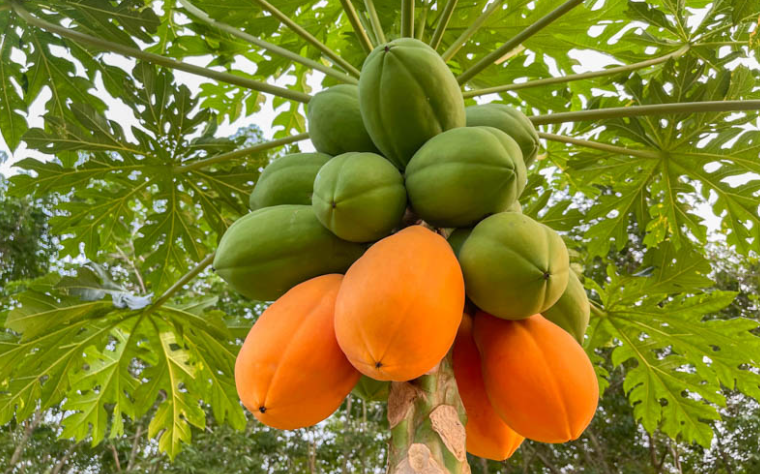
Papaya, scientifically classified as Carica papaya, is believed to have originated in the lowlands of southern Mexico and Central America, long before Spanish explorers carried its seeds across the Caribbean and eventually around the world during the age of global maritime trade. India has grown into the largest papaya producer on Earth by a wide margin, harvesting more than 6 million tons annually, considerably more than the combined output of the next several largest producing countries.
Papaya’s biology adds an unusual layer of complexity to its cultivation, since the species can produce separate male, female, or self-pollinating hermaphrodite plants, and commercial growers generally favor hermaphrodite varieties specifically because they reliably produce the more uniformly shaped fruit that fresh markets prefer.
The crop’s history took a particularly dramatic turn in Hawaii during the 1990s, when papaya ringspot virus devastated the state’s papaya industry so severely that scientists developed a genetically modified variety specifically engineered with viral resistance, effectively saving Hawaiian papaya farming from near collapse.
This article explores 50 types of papaya, spanning the Hawaiian varieties at the center of that agricultural turning point, major commercial cultivars from Latin America, Asia, and Australia, and several close botanical relatives grown under the same common name around the world.
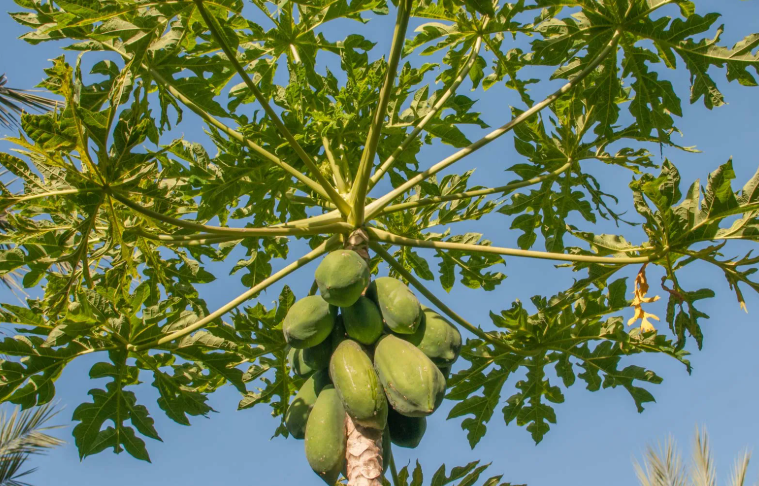
Different Papaya Varieties
Solo
Solo is the foundational Hawaiian papaya variety from which most of the state’s modern commercial cultivars were eventually developed, prized historically for producing a compact, single-serving fruit ideally suited to fresh retail sale. This variety typically produces pear-shaped fruit weighing around 1 pound, small enough that a single papaya reasonably serves one or two people, a trait that gave the variety its name.
Solo papaya features sweet, orange-fleshed fruit with good flavor, though it has largely been succeeded by more refined selections bred directly from its genetic line. This variety remains historically significant as the parent stock behind Sunrise, Sunset, and most of the other well-known Hawaiian Solo-type papayas still grown commercially today.
Sunrise Solo
Sunrise Solo is one of the most widely recognized Hawaiian papaya varieties, producing pear-shaped fruit with vivid reddish-orange flesh and a notably sweet, rich flavor that has made it a benchmark for papaya quality in international markets. This variety typically weighs around 1 to 2 pounds per fruit, fitting the compact, single-serving size associated with the broader Solo group.
Sunrise Solo became especially important commercially after papaya ringspot virus devastated Hawaiian orchards, since it served as one of the parent varieties used in developing virus-resistant genetically modified papaya lines. This variety remains one of the most commonly exported Hawaiian papayas, widely available in mainland United States grocery stores today.
Also Read: Types of Passion Fruit
Sunset Solo
Sunset Solo is closely related to Sunrise Solo, distinguished primarily by its deeper orange-red flesh color and a flavor profile many growers consider slightly richer and sweeter than its close relative. This variety produces similarly compact, pear-shaped fruit suited to the same fresh retail markets that favor the broader Solo group’s convenient single-serving size.
Sunset Solo performs well in Hawaii’s tropical lowland growing conditions, sharing much of its genetic background with the other Solo-type cultivars developed throughout the 20th century. This variety continues to be grown commercially in Hawaii, though it has become somewhat less common than Sunrise Solo in mainstream export markets.
Kapoho Solo
Kapoho Solo takes its name from the Kapoho region of Hawaii’s Big Island, once a major center of papaya production before volcanic activity in the area significantly disrupted local agriculture in recent decades. This variety produces smooth-skinned, pear-shaped fruit with sweet, orange flesh consistent with the broader Solo lineage it descends from.
Kapoho Solo was historically one of the dominant commercial varieties grown in the region, valued for reliable production and good fruit quality suited to Hawaii’s export papaya industry. This variety’s connection to a now-altered volcanic landscape gives it a somewhat poignant historical footnote within the broader story of Hawaiian papaya cultivation.
Waimanalo
Waimanalo is a Hawaiian papaya variety developed for improved disease resistance and consistent fruit quality compared to older Solo-type selections available at the time of its release. This variety produces medium-sized, pear-shaped fruit with sweet, deep orange flesh and a flavor profile well regarded among Hawaiian growers and consumers alike.
Waimanalo has served as an important parent variety in subsequent Hawaiian papaya breeding programs, contributing genetic material to later cultivars developed for improved yield and virus tolerance. This variety remains an important part of Hawaii’s broader papaya breeding lineage, even as newer cultivars have taken over much of current commercial production.
Higgins
Higgins is a Hawaiian papaya variety recognized for producing fruit with excellent internal quality, including a favorable balance of sweetness and firm, well-textured flesh suited to fresh eating. This variety fits within the broader Solo-type category, producing compact, single-serving fruit typical of Hawaii’s historically dominant papaya breeding direction.
Higgins has been used in various breeding programs aimed at improving overall fruit quality within the Hawaiian papaya industry. This variety, while less internationally recognized than Sunrise or Sunset Solo, represents part of the extensive genetic diversity developed within Hawaii’s long papaya breeding history.
Line 8
Line 8 refers to a specific experimental breeding line developed during Hawaii’s extensive papaya improvement research, eventually contributing genetic material toward some of the state’s more widely recognized commercial cultivars. This variety was evaluated primarily for traits like disease resistance, fruit quality, and yield consistency rather than being marketed directly as a standalone commercial variety in most cases.
Line 8 illustrates the extensive, methodical breeding work that occurred behind the scenes before a handful of standout Hawaiian papaya varieties were eventually selected for widespread commercial release. This designation remains primarily of interest to agricultural researchers and papaya breeding historians rather than to everyday consumers.
Rainbow
Rainbow is a genetically modified papaya variety developed in the late 1990s specifically to resist papaya ringspot virus, a devastating disease that had crippled Hawaii’s papaya industry and threatened to wipe out commercial production entirely. This variety was created by inserting a small piece of the ringspot virus’s own genetic material into papaya, triggering a natural immune response in the plant that provides strong, lasting resistance to infection.
Rainbow papaya produces fruit similar in size, shape, and flavor to its non-modified Solo-type parent varieties, since the genetic modification specifically targeted disease resistance rather than any change to fruit characteristics. This variety is widely credited with saving Hawaii’s papaya industry from collapse, and it remains one of the most well-documented success stories in the history of genetically modified food crops.
Also Read: Different Types of Mangoes
SunUp
SunUp is the genetically modified parent variety developed alongside Rainbow, also engineered for resistance to papaya ringspot virus using the same underlying genetic technology. This variety produces solid red-fleshed fruit and, unlike the hybrid Rainbow, breeds true from seed, making it useful for further breeding work within virus-resistant papaya development programs.
SunUp played a critical role in the broader effort to rescue Hawaiian papaya farming during the ringspot virus crisis, working alongside Rainbow to reestablish viable commercial production. This variety remains an important reference point in agricultural biotechnology, frequently cited as one of the first genetically engineered fruit crops to achieve significant commercial success.
Laie Gold
Laie Gold is a Hawaiian papaya variety developed with an emphasis on rich flavor and attractive golden-orange flesh, distinguishing it visually from some of the more common red-fleshed Solo-type varieties. This variety produces medium-sized fruit suited to fresh eating, contributing to the diversity of flavor and appearance options available within Hawaii’s broader papaya industry.
Laie Gold reflects ongoing efforts among Hawaiian growers to differentiate their papaya offerings in an increasingly competitive global fresh fruit market. This variety remains a more specialized offering compared to the widely exported Sunrise and Sunset Solo varieties, often marketed specifically for its distinctive golden flesh color.
Maradol
Maradol is one of the most widely grown papaya varieties in Mexico and Central America, prized for producing notably large fruit, often weighing 3 pounds or more, considerably bigger than the compact Hawaiian Solo-type varieties. This variety features deep reddish-orange flesh with a rich, sweet flavor that has made it one of the most popular papayas sold throughout Mexican, Central American, and increasingly United States grocery markets.
Maradol trees are known for vigorous growth and reliable production, contributing to the variety’s widespread commercial popularity throughout Latin America. This variety has become so dominant in Mexican papaya production that it is now one of the most commonly encountered papaya types in supermarkets across North America.
Red Maradol
Red Maradol refers to a specific strain of the standard Maradol variety selected for especially deep red-orange flesh coloring, considered by some growers to be more visually appealing and marketable than standard Maradol. This variety shares Maradol’s large fruit size and sweet flavor profile, with the primary distinction being its more intense internal color.
Red Maradol has become a preferred selection among some commercial growers specifically targeting markets where deep, vivid flesh color is considered a strong indicator of ripeness and quality. This variety continues to be grown alongside standard Maradol throughout much of Mexico’s substantial papaya-growing regions.
Caribbean Red
Caribbean Red is a large-fruited papaya variety popular throughout the Caribbean and increasingly grown in Florida and other warm parts of the southeastern United States. This variety produces fruit with deep red-orange flesh and a rich, sweet flavor comparable to Maradol, to which it is closely related in both appearance and growing characteristics.
Caribbean Red trees tend to be vigorous and productive, performing well in the hot, humid subtropical conditions found throughout much of Florida and the broader Caribbean basin. This variety has become one of the more commonly recommended papaya cultivars for home growers in Florida specifically seeking a large, flavorful, and reliably productive tree.
Caribbean Sunrise
Caribbean Sunrise is a papaya variety related to Caribbean Red, sharing much of the same large fruit size and sweet, richly colored flesh while offering slightly different growing characteristics favored by some regional growers. This variety has been promoted specifically for home garden use throughout Florida and other subtropical regions of the United States.
Caribbean Sunrise produces reliably within a single growing season under favorable warm-climate conditions, an important trait for home growers hoping for a relatively quick harvest after planting. This variety remains a popular choice among backyard papaya growers in Florida seeking the flavor and size associated with Caribbean-type papayas.
Cariflora
Cariflora is a papaya variety developed in Florida specifically for improved resistance to papaya ringspot virus, a disease that has significantly affected papaya production throughout Florida and the broader Caribbean region. This variety produces medium to large fruit with good flavor, developed with disease tolerance as a primary breeding objective rather than pure fruit characteristics alone.
Cariflora has become an important variety for growers in regions where ringspot virus poses an ongoing production risk, offering a degree of protection that older, more susceptible varieties lack. This variety reflects the broader agricultural research effort aimed at developing non-genetically-modified virus tolerance in papaya, an alternative approach to the genetic engineering used in Hawaii’s Rainbow and SunUp varieties.
Also Read: Different Types of Bananas
Mexican Yellow
Mexican Yellow is a papaya variety distinguished by its bright yellow flesh rather than the more common orange or red coloring found in most commercial papaya varieties. This variety produces fruit with a milder, less intensely sweet flavor compared to red-fleshed types like Maradol, appealing to consumers who prefer a more subtly flavored papaya.
Mexican Yellow is grown throughout parts of Mexico alongside more dominant red-fleshed commercial varieties, offering a point of flavor and visual differentiation within the country’s substantial papaya industry. This variety remains a regional specialty rather than a major international export crop compared to Mexico’s dominant Maradol production.
Mexican Red
Mexican Red serves as a general regional term for the red-fleshed papaya varieties, closely related to Maradol, that dominate commercial papaya production throughout Mexico. This variety produces large fruit with sweet, deep red-orange flesh, characteristics that have made Mexican-grown red papayas a significant presence in United States grocery stores.
Mexican Red papayas are typically grown using similar cultivation practices to standard Maradol, given the close genetic relationship between the varieties marketed under both names. This variety category reflects Mexico’s position as one of the world’s most significant papaya-exporting countries, particularly to United States markets.
Tainung No. 1
Tainung No. 1 is a Taiwanese papaya variety developed as part of Taiwan’s extensive papaya breeding program, known for producing large, elongated fruit with good disease tolerance suited to the region’s humid growing conditions. This variety features sweet, firm flesh well suited to both fresh eating and the unripe green papaya preparations common throughout Southeast Asian cuisine.
Tainung No. 1 has been widely distributed to other tropical growing regions beyond Taiwan, contributing to the broader spread of Taiwanese papaya genetics throughout global commercial production. This variety remains an important reference point within the broader Formosa group of large-fruited Asian papaya cultivars.
Tainung No. 2
Tainung No. 2 builds on the breeding work behind Tainung No. 1, offering further improvements in disease resistance and fruit quality developed through Taiwan’s ongoing papaya research programs. This variety produces large, elongated fruit with sweet, firm flesh similar to its predecessor, maintaining the general characteristics that have made Taiwanese papaya varieties popular in tropical growing regions worldwide.
Tainung No. 2 has become one of the more widely planted commercial varieties throughout parts of Asia and other tropical regions that have adopted Taiwanese papaya genetics. This variety reflects the continuous, incremental improvement approach common in modern commercial fruit breeding programs.
Known-You No. 1
Known-You No. 1 is a papaya variety developed by a prominent Taiwanese seed company specializing in tropical fruit and vegetable breeding, contributing significantly to the global spread of high-quality Taiwanese papaya genetics. This variety produces large, sweet fruit with good disease tolerance, characteristics that have made it popular among commercial growers throughout tropical Asia and beyond.
Known-You No. 1 has served as parent stock for several other papaya varieties developed and marketed internationally under the same company’s broader breeding program. This variety represents the significant, if less publicly recognized, role private seed companies have played in advancing modern commercial papaya cultivation worldwide.
Red Lady 786
Red Lady 786, commonly just called Red Lady, is one of the most widely grown commercial papaya hybrids in the world today, developed in Taiwan and prized for its consistent hermaphrodite flowering, which ensures reliable fruit production without requiring separate male and female plants. This variety produces medium to large fruit with deep red-orange flesh and notably good flavor and firmness, traits that have made it especially popular for both fresh market sales and processing.
Red Lady 786 has been widely adopted throughout India, Southeast Asia, and other major papaya-growing regions specifically because of its dependable hermaphroditic flowering habit, which simplifies commercial orchard planning considerably. This variety is currently considered one of the most commercially significant papaya hybrids grown anywhere in the world.
Formosa
Formosa refers to a broader category of large-fruited papaya varieties, generally tracing back to Taiwanese breeding programs, known for producing notably big, elongated fruit compared to the compact Hawaiian Solo-type varieties. This variety group typically features sweet, firm, orange to red flesh well suited to both fresh consumption and use in green papaya salads when harvested unripe.
Formosa-type papayas are widely grown throughout Brazil, parts of Asia, and other tropical regions, often marketed simply under the Formosa name regardless of the exact specific cultivar involved. This variety group represents one of the two broad commercial papaya categories, alongside the smaller Solo type, that dominate global fresh papaya markets today.
Also Read: Different Types of Mangoes
Pusa Delicious
Pusa Delicious is an Indian papaya variety developed by the Indian Agricultural Research Institute, valued for producing medium-sized fruit with excellent sweetness and rich orange flesh well suited to India’s large domestic fresh fruit market. This variety has become a popular commercial choice throughout parts of India, contributing to the country’s position as the world’s largest papaya producer.
Pusa Delicious trees are known for reasonably reliable production under a range of Indian growing conditions, an important trait given the country’s considerable climate diversity across major papaya-growing states. This variety remains one of several well-regarded Pusa-series papaya cultivars developed specifically for Indian growing conditions and consumer preferences.
Pusa Dwarf
Pusa Dwarf is a compact papaya variety developed specifically for smaller growing spaces and home garden use, producing full-sized fruit on a notably shorter, more manageable tree than standard papaya varieties. This variety typically reaches a mature height of just 3 to 4 feet before beginning to fruit, considerably shorter than the 8 to 10 feet or more common among standard papaya cultivars.
Pusa Dwarf has become popular among home gardeners in India and other warm climates specifically because its short stature makes harvesting considerably easier and reduces the tree’s vulnerability to wind damage. This variety demonstrates how dwarf breeding, common in many other fruit tree categories, has also been successfully applied to papaya cultivation.
Also Read: Types of Plums
Pusa Nanha
Pusa Nanha is an especially compact dwarf papaya variety, developed in India with an even shorter mature height than Pusa Dwarf, making it particularly well suited to container growing and very small garden spaces. This variety produces medium-sized fruit despite the plant’s diminutive overall stature, offering home growers a genuine harvest from a tree that takes up minimal space.
Pusa Nanha’s extremely compact growth habit has made it popular among urban gardeners in India working with limited rooftop or balcony growing space. This variety represents one of the more extreme examples of dwarf breeding applied specifically to papaya cultivation for space-constrained growing situations.
Pusa Giant
Pusa Giant is an Indian papaya variety bred specifically for large fruit size, developed to complement the smaller-fruited Pusa Dwarf and Pusa Nanha varieties within the broader Pusa breeding program. This variety produces notably large fruit with good flavor, targeting commercial and market segments that specifically favor bigger papayas over the more compact Solo-type fruit preferred in some other markets.
Pusa Giant reflects the diversity of breeding objectives pursued within India’s extensive papaya research programs, ranging from dwarf home garden varieties to large commercial fruit types. This variety remains an important option for Indian growers specifically targeting markets that value substantial fruit size.
Pusa Majesty
Pusa Majesty is a more recently developed Indian papaya variety, bred with an emphasis on disease resistance and consistent yield alongside good overall fruit quality. This variety produces medium to large fruit with sweet, well-colored flesh suited to India’s substantial domestic papaya market.
Pusa Majesty reflects the continuous refinement occurring within India’s papaya breeding programs, incorporating lessons learned from earlier Pusa-series varieties into an improved, more modern cultivar. This variety remains part of the ongoing effort to strengthen India’s already dominant position in global papaya production through continuous varietal improvement.
Coorg Honey Dew
Coorg Honey Dew is a papaya variety associated with the Coorg region of southern India, recognized for producing notably sweet fruit with a flavor reminiscent of honeydew melon, an unusual comparison among typically tropical-flavored papaya varieties. This variety produces medium to large fruit with pale yellow to orange flesh, distinguishing it visually from many of the deeper red-orange varieties more commonly grown elsewhere in India.
Coorg Honey Dew has developed a strong regional following specifically due to its distinctive, notably mild and sweet flavor profile. This variety remains a specialty regional cultivar rather than a major nationally distributed commercial variety within India’s broader papaya industry.
Washington
Washington is a papaya variety historically grown in parts of India and other tropical regions, valued for producing good-quality fruit suited to general fresh consumption. This variety has been cultivated for generations in some regions, predating many of the more modern hybrid varieties that have since become commercially dominant.
Washington papaya typically produces medium-sized fruit with characteristics generally comparable to other traditional, non-hybrid papaya varieties grown throughout South Asia. This variety remains primarily of regional and historical interest rather than representing a major share of current commercial papaya production.
Madhu Bindu
Madhu Bindu is an Indian papaya variety whose name translates roughly to honey drop, reflecting the fruit’s reputation for notable sweetness among growers and consumers in the regions where it is traditionally cultivated. This variety produces medium-sized fruit with rich, sweet flesh considered a desirable trait for both fresh eating and local market sales.
Madhu Bindu has maintained a following among growers specifically seeking traditional Indian papaya varieties with a strong reputation for flavor. This variety adds to the considerable diversity of named papaya cultivars developed and maintained throughout India’s extensive papaya-growing history.
CO 1
CO 1 is one of the earliest papaya varieties released by Tamil Nadu Agricultural University in southern India, part of an extensive numbered series of cultivars developed specifically for regional growing conditions. This variety produces medium-sized fruit suited to South Indian climate and soil conditions, reflecting the university’s focus on developing locally adapted commercial cultivars.
CO 1 helped establish the foundation for the subsequent CO-series varieties that followed, each incorporating improvements based on ongoing research and grower feedback. This variety remains historically significant within South India’s papaya breeding program as one of its earliest formal releases.
Also Read: Different Types Of Kumquat
CO 2
CO 2 followed CO 1 in Tamil Nadu Agricultural University’s numbered papaya breeding series, offering incremental improvements in fruit quality or disease tolerance based on continued research findings. This variety produces fruit generally consistent with the broader CO-series focus on practical, regionally adapted commercial characteristics suited to South Indian growing conditions.
CO 2 contributed to the ongoing refinement process that has produced an extensive lineup of CO-numbered papaya varieties over subsequent decades. This variety remains part of the historical record of South India’s methodical, university-led approach to papaya variety development.
CO 3
CO 3 continued Tamil Nadu Agricultural University’s papaya breeding program, incorporating further refinements aimed at improving yield, fruit quality, or resistance to regional pest and disease pressures. This variety produces fruit suited to the specific growing conditions found throughout Tamil Nadu and neighboring South Indian agricultural regions.
CO 3 represents another incremental step in the university’s long-running, systematic effort to develop papaya varieties specifically suited to local farmer needs. This variety, like its numbered predecessors, remains primarily significant within the regional context of South Indian commercial papaya production.
CO 5
CO 5 is a more advanced release within Tamil Nadu Agricultural University’s extensive CO-series papaya breeding program, generally reflecting further improvements accumulated through years of selective breeding and field testing. This variety produces fruit tailored to the specific commercial and climatic needs of South Indian papaya growers.
CO 5 contributes to the broader lineage of regionally developed papaya cultivars that have helped support South India’s significant role within the country’s overall papaya production. This variety continues the university’s long-standing tradition of developing practical, farmer-focused papaya releases.
CO 7
CO 7 represents one of the later releases within the CO-series program, incorporating accumulated breeding knowledge aimed at further improving fruit quality, yield, and resilience under South Indian growing conditions. This variety produces fruit suited to both fresh market sales and local processing needs common throughout the region.
CO 7 reflects the ongoing, decades-long commitment Tamil Nadu Agricultural University has maintained toward continuously improving papaya varieties for regional farmers. This variety remains an important, if regionally specific, contribution to India’s overall papaya breeding landscape.
CO 8
CO 8 is among the more recent releases in Tamil Nadu Agricultural University’s long-running CO-series papaya program, incorporating the latest available breeding advances at the time of its development. This variety produces fruit reflecting current best practices in regional papaya breeding, balancing yield, disease tolerance, and consumer-preferred fruit characteristics.
CO 8 continues the systematic, decades-spanning breeding effort that has produced numerous sequentially numbered papaya varieties specifically suited to South Indian agricultural conditions. This variety represents the ongoing evolution of one of India’s most methodical and long-running regional fruit breeding programs.
Khak Dam
Khak Dam is a Thai papaya variety commonly grown for use in green papaya salad, known locally as som tam, one of Thailand’s most iconic and widely eaten dishes. This variety is typically harvested while still unripe and green, valued for its firm, crunchy texture that holds up well to the shredding and pounding process central to traditional som tam preparation.
Khak Dam papaya trees are widely grown throughout Thai home gardens and small farms specifically to supply the enormous domestic demand for green papaya used in everyday cooking. This variety illustrates how papaya cultivation priorities can shift entirely toward unripe fruit texture rather than the sweetness and ripe flesh color that dominate breeding priorities in most other papaya-growing regions.
Khak Nuan
Khak Nuan is another Thai papaya variety commonly used for green papaya preparations, sharing Khak Dam’s emphasis on firm texture suited to unripe harvesting rather than sweet, ripe fresh eating. This variety is widely grown throughout Thailand specifically to supply the country’s substantial culinary demand for green papaya in salads and other savory dishes.
Khak Nuan papaya plants are typically grown in home gardens and smaller commercial operations rather than as a large-scale export crop, since its culinary use is concentrated primarily within Thai and broader Southeast Asian cuisine. This variety underscores the significant culinary and cultural role papaya plays throughout Southeast Asia beyond its more internationally familiar role as a sweet fresh fruit.
Holland Papaya
Holland papaya, despite its European-sounding name, is a commercial papaya variety widely grown in Thailand specifically valued for its firm texture in both ripe and unripe forms, making it versatile for fresh eating as well as green papaya salad preparation. This variety produces medium to large fruit with good flavor when allowed to ripen fully, alongside the firm texture needed for traditional Thai green papaya dishes when harvested early.
Holland papaya has become one of the most commonly grown commercial varieties throughout Thailand, valued for this dual-purpose versatility across the country’s diverse culinary uses for the fruit. This variety’s name is believed to trace back to its original introduction or breeding connection to Dutch horticultural trade networks, despite papaya having no genuine historical association with the Netherlands’ own growing climate.
Also Read: Different Types of Apples
Cavite Special
Cavite Special is a papaya variety associated with the Cavite province of the Philippines, recognized for producing good-quality fruit suited to the country’s substantial domestic papaya market. This variety has been cultivated within Philippine agriculture for its reliable production and fruit quality under local tropical growing conditions.
Cavite Special contributes to the Philippines’ broader papaya industry, which supplies both fresh consumption and processing needs throughout the country. This variety remains primarily significant within Philippine agriculture rather than as a major internationally exported commercial cultivar.
Sinta
Sinta is a Philippine papaya variety developed through the country’s national agricultural research programs, aimed at improving fruit quality and production reliability for Filipino farmers. This variety produces fruit suited to the specific tropical growing conditions found throughout the Philippine archipelago.
Sinta represents part of the Philippines’ ongoing effort to develop locally adapted papaya cultivars rather than relying entirely on imported varieties from other major papaya-breeding countries. This variety continues to be grown throughout parts of the Philippines as part of the country’s broader domestic papaya production.
Bettina
Bettina is an Australian papaya variety, sometimes grown as an ornamental as well as a fruiting plant, known for reasonably compact growth and good fruit production under Australian subtropical and tropical growing conditions. This variety produces medium-sized fruit suited to Australia’s domestic fresh papaya market, which remains considerably smaller in scale than the massive papaya industries found in India, Brazil, or Mexico.
Bettina has been grown throughout Queensland and other suitable Australian growing regions as part of the country’s modest but steady papaya production. This variety reflects Australia’s smaller-scale but still meaningful contribution to global papaya cultivar diversity.
Guinea Gold
Guinea Gold is an Australian papaya variety recognized for producing sweet, richly colored fruit suited to the country’s fresh market papaya sector, primarily concentrated in Queensland’s tropical growing regions. This variety has been cultivated for its reliable flavor and production characteristics under Australian growing conditions.
Guinea Gold contributes to the relatively limited but well-established range of papaya varieties grown commercially within Australia. This variety remains primarily known within Australian horticultural circles rather than as a widely recognized international commercial cultivar.
RB1
RB1 is an Australian red-fleshed papaya hybrid developed specifically for improved flavor and fruit quality suited to the country’s domestic fresh market. This variety produces fruit with rich, sweet red-orange flesh, aiming to compete favorably with imported and other locally grown papaya varieties available in Australian supermarkets.
RB1 reflects ongoing breeding efforts within Australia’s smaller but active papaya industry to develop distinctive, high-quality varieties suited to local growing conditions and consumer preferences. This variety adds to the diversity of red-fleshed papaya hybrids developed independently across different papaya-growing regions worldwide.
Baixinho de Santa Amália
Baixinho de Santa Amália is a Brazilian dwarf papaya variety, whose name translates roughly to little one from Santa Amália, developed specifically for compact growth suited to smaller commercial orchards and home garden use. This variety produces medium-sized fruit on a notably shorter tree than standard Brazilian commercial papaya varieties, simplifying harvest and reducing the tree’s vulnerability to wind damage.
Baixinho de Santa Amália has become a popular choice among smaller-scale Brazilian growers specifically seeking the practical benefits of dwarf growth habit without sacrificing meaningful fruit production. This variety reflects Brazil’s own parallel development of dwarf papaya breeding, similar in concept to India’s Pusa Dwarf and Pusa Nanha varieties developed independently on the other side of the world.
TR Hovey
TR Hovey is a papaya variety developed in Florida specifically for home garden use, valued for producing good-quality fruit on a tree well suited to Florida’s warm, humid subtropical growing conditions. This variety produces medium to large fruit with sweet, orange flesh comparable to other popular Florida and Caribbean papaya cultivars.
TR Hovey has become a recommended variety among University of Florida extension resources for home gardeners specifically interested in growing papaya successfully in the state’s specific climate and soil conditions. This variety represents part of the broader effort by American land-grant universities to develop and recommend regionally appropriate fruit varieties for home gardeners.
Tastylee
Tastylee is a papaya variety developed by University of Florida researchers specifically for improved tolerance to papaya ringspot virus, addressing the same disease pressure that devastated Hawaii’s papaya industry decades earlier. This variety produces good-quality, sweet fruit while offering Florida growers a degree of protection against a disease that continues to threaten papaya production throughout the southeastern United States and Caribbean.
Tastylee was developed through conventional breeding methods rather than genetic modification, offering an alternative disease-management approach to the genetically engineered Rainbow and SunUp varieties developed in Hawaii. This variety reflects Florida’s ongoing, university-supported effort to maintain viable papaya production despite persistent regional disease pressure.
Golden Papaya
Golden Papaya is a commercial variety name used prominently by Brazilian growers, particularly the country’s largest papaya exporter, to market a specific selection valued for its consistent size, flavor, and appearance suited to international export markets. This variety produces medium-sized fruit with sweet, orange flesh marketed specifically toward the premium fresh fruit segment in destinations like the United States and Europe.
Golden Papaya reflects Brazil’s significant and growing role as a major papaya exporter, supplying fresh fruit to international markets well beyond its substantial domestic consumption. This variety name has become closely associated with consistent quality specifically because of its use as a standardized commercial brand rather than as an informally named farm variety.
Babaco
Babaco is a seedless papaya relative native to Ecuador, technically classified in a related genus rather than as a true Carica papaya, though it is commonly referred to using the papaya name due to its similar appearance and flavor. This fruit produces elongated, five-sided fruit with pale yellow skin and juicy, mildly sweet flesh often compared to a blend of papaya, pineapple, and strawberry flavors.
Babaco is entirely seedless, an unusual trait among papaya relatives, since it developed as a naturally occurring hybrid that lost the ability to produce viable seeds. This fruit has been introduced to cultivation in New Zealand and parts of Europe, where it is sometimes marketed under the name champagne fruit due to its distinctive, refreshing flavor profile.
Mountain Papaya
Mountain papaya, also called Andean papaya or chamburo, is a cold-tolerant papaya relative native to the high-altitude valleys of the Andes, capable of growing at elevations far too cool for true tropical papaya to survive. This fruit produces smaller, more oval fruit than standard papaya, with firm, tart flesh generally considered too acidic for fresh eating without added sugar.
Mountain papaya is typically cooked into jams, preserves, or desserts rather than eaten raw, reflecting its more tart, less immediately sweet flavor profile compared to lowland tropical papaya varieties. This fruit demonstrates how the broader papaya family extends well beyond the tropical lowlands most people associate with the fruit, adapting successfully to the cooler mountain climates found throughout much of South America’s Andean region.