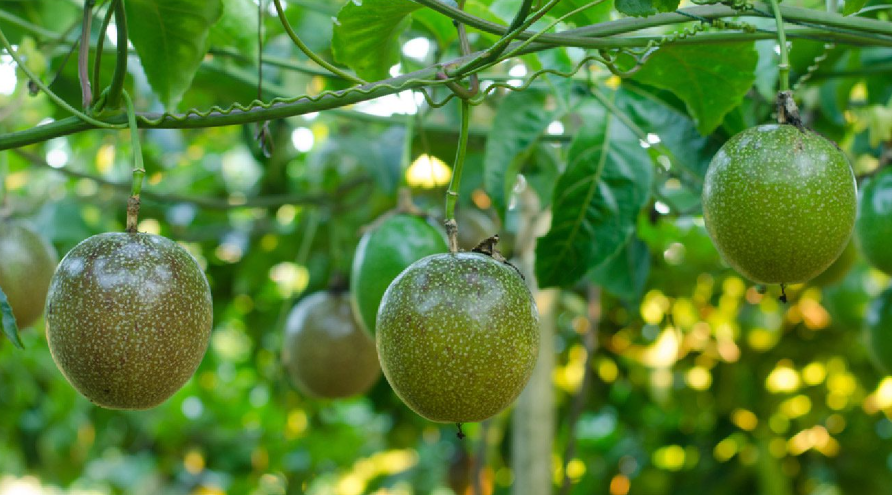
Passion fruit has one of the more recognizable profiles in the tropical fruit world, typically appearing as a round to oval fruit somewhere between 2 and 3 inches across, with a rind that ranges from smooth and taut when fresh to deeply wrinkled once fully ripe, encasing a mass of juicy, seed-filled pulp inside.
This distinctive combination of size, shape, and seedy interior has made it a common reference point whenever shoppers or foragers encounter an unfamiliar fruit at a farmers market, specialty grocery store, or while traveling abroad, since a surprising number of unrelated tropical and subtropical fruits share one or more of these same visual traits despite belonging to entirely different plant families.
Some of these lookalikes share passion fruit’s compact, egg-like shape and smooth rind, others share its deep purple or golden-orange coloring, and still others share the specific internal texture of juicy pulp packed with small, edible seeds, even when the fruit itself has nothing botanically in common with true passion fruit.
Global trade in specialty tropical produce has grown considerably over the past two decades, meaning more of these visually similar fruits are now turning up outside their native growing regions, increasing the odds of a genuine case of mistaken identity at the produce counter.
This article explores 16 fruits that look like passion fruit, explaining exactly which visual traits create the resemblance and how each fruit actually differs once it’s cut open.
Fruits That Look Like Passion Fruit
Lulo
Lulo, also called naranjilla, produces a round, bright orange fruit roughly 2 inches in diameter, closely matching the size and rounded shape most people associate with a ripe passion fruit. This fruit’s exterior is covered in fine, fuzzy hairs when freshly picked, which are typically rubbed off before selling, leaving behind a smooth orange skin that looks remarkably similar to a yellow passion fruit from a short distance.
Lulo’s interior reveals green, tomato-like pulp segmented into sections and packed with small edible seeds, a texture that shares passion fruit’s juicy, seed-filled quality even though the flavor profile leans more tart and citrus-like than tropical. This fruit is a staple ingredient throughout Colombia and Ecuador, where it is prized for juices and desserts despite its case of mistaken visual identity with passion fruit outside the region.
Kiwano
Kiwano, commonly known as the African horned melon, features an oval, yellow-orange rind covered in distinctive spikes, a detail that sets it apart from passion fruit at first glance but becomes less obvious once the fruit is sliced open. This fruit’s interior is where the resemblance becomes striking, revealing bright green, gelatinous pulp packed with edible seeds, an appearance and texture almost identical to what’s found inside a ripe passion fruit.
Kiwano is a member of the cucumber and melon family rather than any relative of true passion fruit, making the similarity a case of convergent appearance rather than shared botany. This fruit’s mildly sweet, cucumber-like flavor is considerably milder than passion fruit’s characteristic tartness, despite the two fruits sharing an almost identical interior texture.
Tamarillo
Tamarillo, sometimes called tree tomato, produces an egg-shaped fruit typically 2 to 3 inches long in shades of deep red, orange, or purple, closely matching passion fruit’s size range and, in its purple form, its coloring as well. This fruit’s smooth, glossy skin gives it a more polished appearance than a wrinkled ripe passion fruit, though unripe or firm passion fruits share a similarly taut, smooth rind before wrinkling develops.
Tamarillo’s interior reveals soft, juicy flesh surrounding small edible seeds arranged in a pattern reminiscent of a tomato rather than the free-floating seed mass typical of passion fruit pulp. This fruit is native to South America and is commonly used in savory chutneys and sauces, reflecting its closer botanical relationship to tomatoes and eggplants than to any true passion fruit species.
Pepino Melon
The pepino melon produces an egg-shaped fruit with pale yellow skin streaked with purple lines, a coloring pattern and overall shape that gives it a passing resemblance to certain passion fruit varieties, particularly at a glance in a mixed fruit display. This fruit’s smooth, waxy rind differs texturally from passion fruit’s characteristic wrinkling, though the size and rounded, slightly elongated shape remain quite similar between the two.
Pepino melon’s interior reveals pale yellow, juicy flesh with a small central cavity of edible seeds, offering a milder, more melon-like sweetness than passion fruit’s intensely tart pulp. This fruit is native to South America and has become an increasingly common specialty item in grocery stores, often causing confusion among shoppers unfamiliar with its resemblance to more widely known tropical fruits.
Mangosteen
Mangosteen produces a round fruit roughly 2 to 3 inches in diameter with a thick, deep purple-maroon rind, a color and size combination that closely mirrors a ripe purple passion fruit from the outside. This fruit’s rind is considerably thicker and firmer than passion fruit’s rind, requiring a knife or firm hand pressure to crack open rather than the simple slice needed for passion fruit.
Mangosteen’s interior reveals bright white, segmented flesh arranged like a small citrus fruit, a dramatic departure from the loose, seed-filled orange pulp found inside passion fruit despite the two fruits sharing such a similar exterior appearance. This fruit is native to Southeast Asia and is often described as having one of the most delicately sweet flavors of any tropical fruit, quite different from passion fruit’s assertive tartness.
Star Apple
The star apple, or caimito, produces a round fruit typically 2 to 4 inches across in shades of deep purple or pale green, closely matching the size range of passion fruit and, in its purple form, sharing a similar rind coloring as well. This fruit’s smooth, glossy skin gives it a more uniform, polished appearance compared to the textured wrinkling typical of a fully ripe passion fruit.
Star apple gets its common name from the distinctive star-shaped pattern revealed when the fruit is sliced crosswise, showing sections of translucent, jelly-like flesh arranged around a central core, a very different internal structure from passion fruit’s loose seed mass. This fruit is native to the Caribbean and Central America and is typically eaten by scooping out the sweet, milky flesh with a spoon.
Persimmon
Persimmons produce a round to slightly flattened fruit typically 2 to 3 inches in diameter with smooth, glossy orange skin, a coloring and size combination that gives them a reasonable resemblance to a yellow passion fruit, particularly the rounder Fuyu variety. This fruit’s rind remains notably smoother and firmer than passion fruit’s characteristic wrinkled texture, even at full ripeness, giving persimmons a more uniformly polished appearance.
Persimmon’s interior reveals soft, sweet, jelly-like flesh in astringent varieties like Hachiya, or firmer, crisp flesh in non-astringent varieties like Fuyu, both quite different from passion fruit’s tart, seed-packed pulp. This fruit belongs to the ebony family and has no close botanical relationship to passion fruit, making the resemblance purely a matter of similar size and coloring.
Pomegranate
Pomegranates produce a round fruit typically 2 to 5 inches in diameter with a tough, leathery rind ranging from reddish-orange to deep red, a size range that overlaps with larger passion fruit varieties even though the coloring tends toward red rather than passion fruit’s typical purple or yellow. This fruit’s thick, rigid rind requires considerably more effort to open than passion fruit’s simple slice-and-scoop preparation, generally needing to be cracked or scored before the interior can be accessed.
Pomegranate’s interior reveals hundreds of small, juicy seed sacs called arils packed tightly together, a texture that shares passion fruit’s fundamental concept of juicy pulp surrounding numerous small seeds, even though the arrangement and eating experience differ considerably. This fruit’s ancient Mediterranean and Middle Eastern origins place it in an entirely different botanical family from tropical American passion fruit.
Cherimoya
Cherimoya, sometimes called custard apple, produces a round to heart-shaped fruit typically 3 to 5 inches long with pale green skin marked by a distinctive scaled or bumpy pattern, giving it a size range that overlaps with larger passion fruit varieties despite a notably different surface texture. This fruit’s skin remains firm and intact rather than developing the deep wrinkling characteristic of a ripe passion fruit, even when the fruit inside has become fully soft and ready to eat.
Cherimoya’s interior reveals creamy white flesh with a texture often compared to custard, studded with large, shiny black seeds that are spit out rather than eaten, a texture reminiscent of the seed-studded pulp found in sweet granadilla, one of passion fruit’s closest relatives. This fruit is native to the Andean valleys of South America and is prized for a flavor often described as tasting like a blend of banana, pineapple, and strawberry.
White Sapote
White sapote produces a round to oval fruit typically 3 to 4 inches across with smooth, thin skin in shades of green to pale yellow, a size and coloring combination that shares some overlap with larger yellow passion fruit varieties. This fruit’s skin stays notably smoother and less textured than a ripe passion fruit’s characteristically wrinkled rind, maintaining a more uniform appearance right up until it’s cut open.
White sapote’s interior reveals soft, custard-like flesh surrounding a small number of large seeds, a texture and internal structure quite different from passion fruit’s abundant small seeds suspended in loose, juicy pulp. This fruit is native to Mexico and Central America and is typically eaten fresh with a spoon once it has softened to a ripe, custard-like consistency.
Feijoa
Feijoa, also known as pineapple guava, produces an oval, egg-shaped fruit typically 2 to 3 inches long with smooth, dull green skin, closely matching passion fruit’s overall size and shape even though the coloring differs from passion fruit’s typical purple or yellow tones. This fruit’s rind stays firm and matte rather than developing the glossy sheen or characteristic wrinkling of a ripening passion fruit, giving it a more understated visual profile.
Feijoa’s interior reveals translucent, jelly-like flesh surrounding a small core packed with tiny edible seeds, a texture bearing a genuine resemblance to passion fruit pulp despite the fruit’s considerably milder, more floral flavor. This fruit is native to South America but has become closely associated with New Zealand, where it is widely grown and eaten as a beloved seasonal specialty.
Black Sapote
Black sapote, sometimes called chocolate pudding fruit, produces a round to slightly flattened fruit typically 3 to 4 inches in diameter with smooth green skin that darkens considerably as the fruit ripens, offering a size range comparable to larger passion fruit varieties. This fruit’s skin remains notably smoother than passion fruit’s wrinkled rind, even at full ripeness, when the fruit has become extremely soft to the touch.
Black sapote’s interior reveals dark brown, custard-like flesh with a texture and color often compared directly to chocolate pudding, surrounding a handful of large seeds quite unlike passion fruit’s mass of small edible seeds. This fruit is native to Mexico and Central America and is typically eaten fresh with a spoon or blended into desserts once it has fully ripened and softened.
Ambarella
Ambarella, also called golden apple or Jew plum, produces an oval fruit typically 2 to 3 inches long with smooth, golden-yellow to orange skin, a size and coloring combination that gives it a reasonable resemblance to a ripe yellow passion fruit from a short distance. This fruit’s rind stays firm and glossy rather than developing passion fruit’s characteristic wrinkling, maintaining a more polished, uniform appearance throughout ripening.
Ambarella’s interior reveals crisp, juicy, slightly fibrous flesh surrounding a large, spiky central pit, a structure entirely different from passion fruit’s loose mass of small seeds suspended in pulp. This fruit is native to Southeast Asia and the South Pacific and is commonly eaten both firm and crisp like an apple or fully ripe and soft, depending on regional preference.
Governor’s Plum
Governor’s plum, also known as ramontchi, produces a small, round fruit typically 1 to 1.5 inches in diameter with smooth, waxy skin in shades of yellow, red, or dark purple, offering a similar rounded shape to passion fruit on a notably smaller scale. This fruit’s glossy, taut skin looks distinctly different from a wrinkled ripe passion fruit, more closely resembling a small plum or cherry in overall surface texture.
Governor’s plum’s interior reveals juicy, somewhat tart flesh surrounding a single hard seed, a structure that differs considerably from passion fruit’s abundant small seeds distributed throughout loose pulp. This fruit is native to Madagascar and parts of Asia and is typically eaten fresh or made into jams and preserves in the regions where it is commonly grown.
Ceylon Gooseberry
Ceylon gooseberry produces a small, round fruit typically 1 to 1.5 inches across with smooth, orange to reddish skin covered in fine hairs, giving it a coloring similar to a small yellow passion fruit, even though its size falls well short of a typical full-grown passion fruit. This fruit’s fuzzy surface texture sets it apart visually from passion fruit’s smooth or wrinkled but hairless rind, offering an easy way to distinguish the two once examined up close.
Ceylon gooseberry’s interior reveals juicy, tart, orange flesh surrounding several small seeds, a texture that shares some conceptual similarity with passion fruit’s seedy pulp despite the fruit’s considerably smaller overall size. This fruit is native to South Asia and is typically used in jams, chutneys, and preserves rather than eaten fresh, owing to its notably sour flavor.
Jaboticaba
Jaboticaba produces a small, round fruit typically 1 inch in diameter with thick, deep purple to black skin, closely mirroring the coloring of a ripe purple passion fruit despite being considerably smaller in overall size. This fruit’s smooth, glossy skin looks similar to an unripe passion fruit’s taut rind before any wrinkling develops, though the two fruits diverge quickly in scale once placed side by side.
Jaboticaba’s interior reveals sweet, translucent white pulp surrounding one to four seeds, a soft, juicy texture that shares some resemblance to passion fruit pulp despite lacking the same abundance of small, crunchy seeds. This fruit is native to Brazil and has one of the more unusual growth habits in the fruit world, since it grows in dense clusters directly on the trunk and older branches of its tree rather than among the leaves.