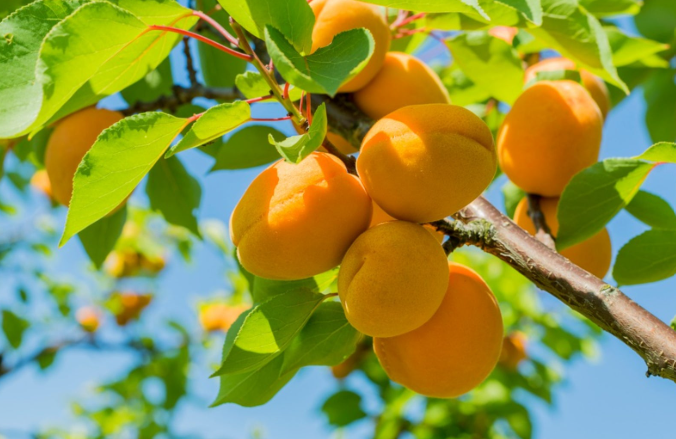
Growing fruit trees in USDA Zone 5 can be highly rewarding, but it requires more planning than growing fruit in many warmer regions. Zone 5 includes areas where average annual minimum winter temperatures can fall to approximately -20°F to -10°F (-28.9°C to -23.3°C). That level of cold eliminates many popular fruit trees, but it still leaves gardeners with a surprisingly large selection of productive species and cultivars.
The key is to remember that hardiness zone is only one part of the equation. A tree may survive a Zone 5 winter yet fail to produce fruit because its flowers open too early and are damaged by spring frost. Fruit-tree buds can be particularly vulnerable once they begin swelling in spring. For example, Nebraska Extension reports that at certain early bud stages, temperatures around 28°F can cause approximately 10% injury in some fruit crops, while temperatures around 24°F can cause much greater damage.
Pollination is another important consideration. Some fruit trees can produce fruit with their own pollen, while others require a compatible second cultivar nearby. Even self-fruitful trees can often produce a heavier crop when cross-pollinated. Iowa State University Extension emphasizes that pollination is particularly important when selecting and planting backyard fruit trees.
The good news is that Zone 5 gardeners can grow much more than just apples. Depending on the local microclimate and cultivar, choices include pears, plums, sour cherries, peaches, apricots, pawpaws, mulberries, quinces, persimmons and several other fruiting trees. The important distinction is between trees that are reliably suited to Zone 5 and those that can succeed only in favorable microclimates or with careful cultivar selection. The following 28 choices cover both dependable performers and more adventurous possibilities.
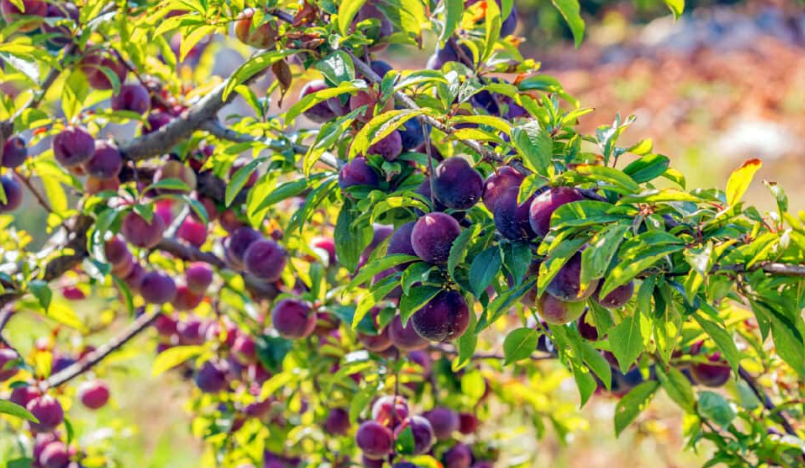
Fruit Trees for USDA Zone 5
1. Apple Tree (Malus domestica)
Apples are arguably among the best fruit trees for USDA Zone 5. Many cultivars are extremely cold hardy, and apples also offer an enormous range of fruit sizes, colors, flavors and harvest periods.
Cold-hardy cultivars such as Honeycrisp, Liberty, Empire, Cortland, McIntosh, Northern Spy and Red Delicious can be considered depending on the local climate and pollination requirements.
Apples generally need full sun and well-drained soil. Many cultivars require a compatible pollinator, so planting two compatible varieties is often the safest approach. Commercial apple production is concentrated in areas rated Zone 5a or warmer where sufficient winter chilling occurs.
2. European Pear (Pyrus communis)
European pears are another strong choice for Zone 5. They are generally hardier than peaches and sweet cherries and can tolerate winter conditions considerably better than many tender fruit trees.
Popular cultivars include Bartlett, Bosc, Anjou and Seckel, although gardeners should select cultivars specifically recommended for their local climate.
Pears prefer full sun, deep soil and good drainage. Many varieties benefit from cross-pollination, so planting two compatible cultivars can substantially improve fruit production.
3. Asian Pear (Pyrus pyrifolia)
Asian pears are less consistently reliable in cold areas than European pears, but selected cultivars can perform well in the warmer parts of Zone 5.
Examples include Shinseiki, Chojuro and Korean Giant. North Carolina State Extension lists Asian pear cultivars with hardiness extending into Zone 5.
The main challenge is that Asian pears often need a sufficiently long growing season for their fruit to mature properly. Choose early- or mid-season cultivars in areas with short summers.
4. Tart Cherry (Prunus cerasus)
Tart or sour cherries are among the hardiest commonly grown cherry trees. They are particularly valuable for pies, preserves, sauces and baking.
Montmorency is one of the classic tart cherry cultivars. Tart cherries generally tolerate colder winter conditions than sweet cherries, although their early flowering can expose them to spring frost.
University extension sources place sour cherries around Zones 3–5 or similar ranges, making them particularly attractive for colder gardens.
5. Sweet Cherry (Prunus avium)
Sweet cherries are more challenging in Zone 5, but some cultivars can succeed in favorable locations.
Cold tolerance is only part of the problem. Sweet cherries flower relatively early, so late spring freezes can destroy the crop even when the tree itself survives the winter.
Choose cultivars and rootstocks recommended specifically for Zone 5 and plant in a protected location with excellent air drainage.
6. European Plum (Prunus domestica)
European plums are among the more dependable stone fruits for Zone 5. They include cultivars grown for both fresh eating and processing.
Stanley, Italian, Green Gage and Damson are examples worth investigating.
Utah State University notes that European plums are commonly grown in Zones 5–8 and that many are self-fruitful, although cross-pollination can increase productivity.
7. American Plum (Prunus americana)
American plum is a particularly cold-hardy native species that can be grown for its small, flavorful fruits.
It tends to form a spreading tree or large shrub and can also produce attractive spring flowers. Its fruit is generally smaller than that of many cultivated European plums but can be excellent for jams, jellies and other preparations.
American plums are among the hardiest common deciduous fruit trees, with some capable of tolerating temperatures around -30°F.
8. Peach Tree (Prunus persica)
Peaches are possible in Zone 5, but they are definitely more challenging than apples or pears.
Cold-hardy cultivars such as Contender, Reliance and Intrepid are worth considering. Some can survive considerably colder temperatures than conventional peach cultivars.
The major problem is winter injury and spring frost. Peaches can be damaged at temperatures that hardy apples and pears tolerate easily.
Choose the warmest protected site available, preferably one with good air drainage and plenty of sunlight.
9. Apricot (Prunus armeniaca)
Apricots can survive cold winters surprisingly well, but they often struggle to produce consistent crops in Zone 5 because they flower very early.
A late spring freeze can destroy flowers before fruit develops. For this reason, late-blooming cultivars are especially valuable.
Cultivars such as Harcot, Harglow, Harlayne and Hargrand are examples of apricots developed for colder climates.
10. Pawpaw (Asimina triloba)
Pawpaw is one of the most interesting fruit trees for Zone 5. It is native to eastern North America and produces large, soft fruits with a flavor often described as a mixture of banana, mango and melon.
Pawpaw naturally grows as an understory tree and tolerates partial shade when young, although mature trees generally produce the best fruit in good sunlight.
USDA-related horticultural references commonly place pawpaw within approximately Zones 5–9.
Planting two genetically different pawpaws is generally recommended for better fruit production.
11. American Persimmon (Diospyros virginiana)
American persimmon is another native fruit tree that can tolerate cold conditions.
The tree can eventually become quite large, with University of Maryland Extension giving a mature height of approximately 30–60 feet.
Its orange fruits become much softer and sweeter as they ripen. Because male and female flowers can occur on separate trees, fruit production may require appropriate pollination arrangements.
12. Mulberry (Morus spp.)
Mulberries are fast-growing fruit trees that can produce large quantities of sweet berries.
Red mulberry is native to North America, while white mulberry originated in Asia. University of Maryland Extension notes that white mulberry is considered invasive in some regions, so gardeners should investigate local recommendations before planting it.
Mulberries can be extremely productive and are useful for fresh eating, baking, preserves and wildlife gardens.
13. Black Mulberry (Morus nigra)
Black mulberry produces exceptionally flavorful dark fruits but is considerably less cold hardy than red mulberry.
It is therefore a more experimental choice for Zone 5 and is best attempted only in favorable microclimates or with appropriate protection.
In colder locations, red mulberry is generally the safer choice.
14. Quince (Cydonia oblonga)
Quince is an old-fashioned fruit tree that deserves more attention.
It produces aromatic, yellow fruits that are generally too hard and acidic to eat like an apple but become wonderfully fragrant and flavorful when cooked.
Quince is commonly listed around Zones 5–6 and can be grown as either a small tree or large shrub.
It prefers full sun and well-drained soil.
15. Crabapple (Malus spp.)
Crabapples are closely related to cultivated apples and can be grown in many Zone 5 landscapes.
Although often planted primarily for their spring flowers and ornamental fruit, some crabapple varieties produce fruit suitable for jelly, preserves and cider.
They can also provide valuable food for birds.
16. Nanking Cherry (Prunus tomentosa)
Nanking cherry is technically more shrub-like than a conventional orchard tree, but it is an excellent cold-climate fruiting plant.
It produces small red cherries that can be eaten fresh or used for jams, jellies and pies.
Its dense growth habit and attractive spring flowers also give it ornamental value.
17. Cornelian Cherry (Cornus mas)
Cornelian cherry is actually a species of dogwood rather than a true cherry.
It produces small, elongated red fruits that mature in summer. The fruits can be eaten fresh when fully ripe or used for preserves and syrups.
The plant is also exceptionally attractive in early spring, when its yellow flowers appear before the leaves.
18. Serviceberry (Amelanchier spp.)
Serviceberries are small native trees or large shrubs that produce blueberry-like fruits.
Several species are extremely cold hardy, and they can be excellent choices for Zone 5 gardens.
The fruits are useful for fresh eating, baking and preserves, while birds also appreciate them. Their spring flowers and autumn foliage add ornamental value.
19. Juneberry (Amelanchier canadensis)
Juneberry is another name used for several serviceberry species.
The fruits mature around early summer and are generally sweet when fully ripe.
Because serviceberries remain relatively modest in size, they are particularly suitable for smaller gardens where a full-sized apple or pear tree would take up too much space.
20. Black Locust? No—Black Elderberry Is Not a Tree
Although often listed among cold-hardy edible plants, black elderberry (Sambucus nigra) is generally a large shrub rather than a fruit tree. It is therefore not included in the core tree choices.
For a Zone 5 garden, it can still be valuable, but gardeners looking specifically for trees should distinguish between true fruit trees and woody shrubs.
21. Siberian Crabapple (Malus baccata)
Siberian crabapple is valued for its extreme cold tolerance, spring flowers and small fruits.
Its crabapples are not as large as conventional apples, but they can be useful for jellies and wildlife.
The tree can also serve as a pollination partner for some compatible apple varieties, although compatibility should always be confirmed for the specific cultivars being grown.
22. Russian Mulberry (Morus alba selections)
Cold-tolerant mulberry selections can be productive in Zone 5.
However, because Morus alba is considered invasive in some regions, gardeners should check local regulations and extension recommendations before planting.
Where appropriate, mulberries can provide abundant fruit with relatively little specialized care once established.
23. Cold-Hardy Nectarine
Nectarines are essentially smooth-skinned peaches and are generally more difficult to grow in Zone 5.
Some exceptionally cold-hardy cultivars can be attempted, but they are not among the safest choices.
WSU Extension notes that peaches and nectarines are substantially more winter-sensitive than apples, tart cherries and American plums.
They should therefore be considered an adventurous Zone 5 option, not a dependable orchard staple.
24. Hardy Hybrid Plum
Hybrid plums developed from combinations involving American, Japanese and European plum genetics can provide useful cold tolerance.
Cultivars vary substantially, so gardeners should focus on varieties specifically recommended by regional nurseries or extension services.
Hybrid plums can also offer interesting fruit colors and flavors unavailable from traditional European varieties.
25. Beach Plum (Prunus maritima)
Beach plum is a small native North American fruiting shrub that can tolerate cold conditions and poor soils.
It produces small dark purple fruits that are particularly useful for preserves.
Although it is naturally associated with coastal environments, selected plants can be useful in appropriate inland gardens as well.
26. Hawthorn (Crataegus spp.)
Several hawthorn species produce small edible fruits known as haws.
They are not comparable to apples or peaches in fruit size, but they can be useful for jellies, preserves and wildlife plantings.
Hawthorns also provide spring flowers and attractive fruit, making them multipurpose landscape plants.
27. Medlar (Mespilus germanica)
Medlar is an unusual old-world fruit tree that can tolerate cold conditions and is generally associated with approximately Zone 5 and warmer climates.
Its fruits are unusual and traditionally allowed to soften after harvest before eating.
Medlar is particularly appealing to gardeners interested in historical or unusual fruit crops rather than supermarket-style fruit.
28. Hardy Fig in a Protected Zone 5 Microclimate
Figs are not reliably hardy throughout USDA Zone 5, but exceptionally protected sites and cold-hardy selections can sometimes allow gardeners to experiment with them.
University of Maryland Extension notes that figs generally require winter protection in most regions outside their normal range.
A fig planted outdoors in an exposed Zone 5 location is likely to suffer serious winter damage. Container culture or substantial winter protection is therefore more realistic than treating figs as dependable Zone 5 orchard trees.
How to Choose Fruit Trees for Zone 5
Choosing the right variety is often more important than simply choosing the right species.
A tree may technically be rated for Zone 5 but still struggle in a particular garden because of late spring freezes, inadequate summer heat, poor soil drainage, disease pressure or insufficient pollination.
One of the best strategies is to select late-blooming cultivars. This is particularly important for apricots, peaches, cherries and plums because their flowers can be damaged by spring frost. Nebraska Extension specifically recommends late-blooming fruit-tree cultivars for areas prone to spring frost.
Planting Site Matters
Choose the sunniest practical location, ideally receiving at least 6 hours of direct sunlight daily.
Good air drainage is equally important. Cold air behaves much like water and tends to settle in low areas, creating frost pockets. Virginia Cooperative Extension recommends avoiding low, wet locations and frost pockets when establishing fruit trees.
A gentle slope can therefore be preferable to the bottom of a valley.
Soil drainage is another critical factor. Deep, well-drained soil is generally much easier to manage than poorly drained ground.
Pollination Should Be Planned Before Planting
Do not assume that every fruit tree will produce a crop by itself.
Apples, pears, many plums and sweet cherries often benefit from having a compatible second cultivar nearby. Some are self-fruitful, but even self-fruitful varieties can produce better crops when cross-pollination occurs.
Before buying trees, check the nursery’s pollination chart and make sure the selected varieties bloom at overlapping times.
Protecting Zone 5 Fruit Trees From Winter and Frost
Winter hardiness and spring frost resistance are not the same thing.
A tree may survive -20°F during winter but lose its entire fruit crop after a brief freeze in April or May. Fruit buds become progressively more vulnerable as they develop.
This is why site selection, cultivar selection and bloom timing are so important.
Mulching around the root zone can help moderate soil temperature and conserve moisture, while young trees may require additional protection in severe winters.
Final Thoughts
USDA Zone 5 is not a limitation that prevents gardeners from growing fruit; it simply demands more careful selection.
The safest choices include apples, pears, tart cherries, European plums, American plums, pawpaws, serviceberries and hardy mulberries. Peaches, apricots, sweet cherries and some other fruit trees are possible but require more careful cultivar and site selection.
The biggest lesson is to look beyond the species name. A cold-hardy cultivar planted in a sunny, well-drained location with good air drainage can outperform a supposedly suitable tree planted in a frost pocket or poorly drained soil.
With the right combination of hardiness, bloom timing, pollination, soil, sunlight and microclimate, a Zone 5 garden can support a surprisingly diverse home orchard.