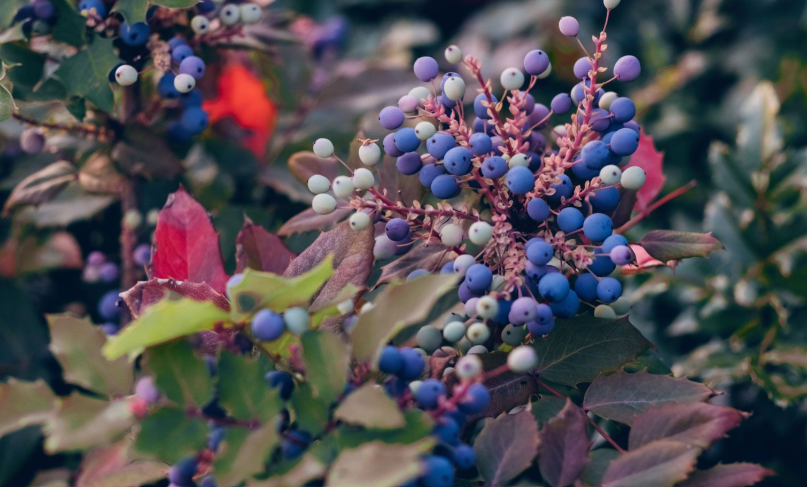
Growing berry bushes in USDA Zone 5 can be a rewarding way to produce fresh fruit while adding attractive shrubs to the landscape. Zone 5 includes regions where average annual minimum temperatures can reach approximately -20°F to -10°F (-28.9°C to -23.3°C). While those winter temperatures can eliminate many tender fruiting plants, a surprisingly wide range of berries can thrive when the right varieties are selected.
One advantage of berry bushes is that many occupy considerably less space than traditional fruit trees. A mature blueberry, currant, gooseberry, or raspberry planting can fit into areas where an apple or pear tree would be impractical. Some also produce fruit within just a few years of planting, allowing gardeners to establish productive edible gardens without waiting for a large tree to mature.
However, hardiness is not the only consideration in Zone 5. Soil type, drainage, sunlight, winter exposure, spring frost, pollination, and summer moisture can all influence fruit production. Some berries prefer strongly acidic soil, while others tolerate neutral or alkaline conditions. Choosing a plant that matches the existing soil can save considerable work and improve long-term performance.
The 16 berry bushes below include some of the most useful choices for Zone 5 gardens, ranging from familiar favorites such as blueberries and raspberries to less common options such as honeyberry, aronia, and buffalo berry. Although hardiness varies among cultivars, these plants can provide an excellent starting point for building a cold-climate berry garden.
1. Highbush Blueberry (Vaccinium corymbosum)
Highbush blueberry is one of the most popular berry bushes for home gardens. It produces clusters of sweet blue berries during summer and also provides attractive foliage that can turn brilliant shades of red, orange, or purple in autumn.
Many northern highbush blueberry cultivars are suitable for Zone 5. Popular choices include ‘Bluecrop,’ ‘Jersey,’ ‘Duke,’ ‘Patriot,’ and ‘Northland’.
The biggest challenge is soil. Blueberries prefer strongly acidic soil, generally around pH 4.5–5.5. If garden soil is naturally alkaline, gardeners may need to amend the planting area or use raised beds and acidic growing media.
Blueberries perform best in full sun, consistent moisture, and well-drained soil. Planting more than one compatible cultivar can extend the harvest season and often improves fruit production.
2. Lowbush Blueberry (Vaccinium angustifolium)
Lowbush blueberry is a smaller, spreading species that is exceptionally well suited to cold climates.
Unlike highbush blueberries, which can become substantial shrubs, lowbush blueberries often remain only around 1–2 feet tall. They spread through underground stems and can eventually form attractive groundcover-like colonies.
The small berries are intensely flavored and excellent for fresh eating, baking, jams, and pancakes.
Lowbush blueberry requires the same basic acidic conditions as other blueberries, so a soil pH of approximately 4.5–5.5 is ideal.
It is particularly useful for small gardens where large berry bushes would take up too much space.
3. Raspberry (Rubus idaeus)
Raspberries are among the easiest berries to grow in many Zone 5 gardens.
Summer-bearing varieties produce a heavy crop on second-year canes, while everbearing or fall-bearing varieties can produce fruit on newer growth later in the season.
Popular cultivars include ‘Latham,’ ‘Boyne,’ ‘Killarney,’ ‘Heritage,’ and ‘Polana’.
Raspberries generally prefer full sun and fertile, well-drained soil. They spread vigorously, so providing a dedicated planting area and some type of support system can make maintenance much easier.
Individual canes may live for only a few years, but the plant continually produces new canes from the crown and roots.
4. Blackberry (Rubus fruticosus hybrids)
Blackberries can be grown in Zone 5, but cultivar selection is particularly important because many blackberries are less cold hardy than raspberries.
Cold-tolerant varieties such as ‘Darrow,’ ‘Illini Hardy,’ and certain Chester-type selections may be suitable for favorable Zone 5 locations.
Blackberries require full sun and well-drained soil. Many varieties also benefit from trellising because their long canes can become difficult to manage without support.
In the coldest parts of Zone 5, gardeners may need to protect canes from severe winter temperatures.
5. Gooseberry (Ribes uva-crispa)
Gooseberries are excellent cold-climate berry bushes and can produce fruit even where some more tender berries struggle.
The plants typically remain relatively compact, often reaching approximately 3–5 feet tall.
Depending on the cultivar, berries can be green, yellow, red, or purple. Their flavor ranges from sharply tart to pleasantly sweet when fully ripe.
Gooseberries can tolerate partial shade better than many fruiting shrubs, although full sun usually produces better crops.
They prefer fertile, well-drained soil with consistent moisture.
6. American Gooseberry (Ribes hirtellum)
American gooseberry is a native North American relative of the European gooseberry.
It is naturally adapted to cold climates and can be particularly useful for gardeners who prefer native or locally adapted plants.
The fruits are generally smaller than some cultivated European gooseberries but can be excellent for pies, jams, jellies, and fresh eating.
The bushes usually remain relatively compact, making them suitable for small home gardens.
7. Black Currant (Ribes nigrum)
Black currants are among the most cold-hardy berry bushes available to home gardeners.
They produce clusters of small, dark berries with an intense flavor. Fresh black currants can be quite tart, but they are excellent for jams, jellies, syrups, baked goods, and beverages.
The shrubs typically reach around 3–5 feet tall.
Black currants tolerate partial shade, although full sun usually encourages stronger fruit production. They prefer moist, fertile soil and should not be allowed to dry out severely.
8. Red Currant (Ribes rubrum)
Red currant produces attractive clusters of translucent red berries that hang from the branches like strings of jewels.
The fruit is generally tart and works particularly well in jellies, sauces, desserts, and baked goods.
Red currants are very cold hardy and can perform well in Zone 5.
They are also attractive ornamental shrubs, particularly when the bright red fruit contrasts with their green foliage.
A location receiving morning and afternoon sun with some protection from intense heat can work particularly well.
9. White Currant (Ribes rubrum cultivars)
White currants are essentially color variants of the red currant group, producing pale yellow, cream, or translucent berries.
Their fruit is usually somewhat milder and sweeter than traditional red currants.
They have the same general growing requirements as red currants and are suitable for cold climates.
Because the berries are relatively small and produced in hanging clusters, white currants are particularly attractive when grown where the fruit can be seen easily.
10. Elderberry (Sambucus canadensis)
American elderberry is a vigorous native shrub that can thrive in cold climates.
It can become considerably larger than many other berry bushes, often reaching 6–12 feet tall under favorable conditions.
The plant produces large clusters of small dark berries following attractive white flower clusters.
Elderberries are generally cooked or processed before consumption rather than eaten raw in large quantities. They are commonly used in syrups, jams, jellies, pies, and other preparations.
Because elderberries can spread and become quite large, give them adequate room.
11. Aronia or Chokeberry (Aronia melanocarpa)
Black chokeberry is an exceptionally hardy native shrub with several useful landscape characteristics.
It generally grows about 3–8 feet tall, depending on cultivar and growing conditions.
White flowers appear in spring, followed by dark purple-black berries in late summer and fall. The foliage can become brilliant red in autumn.
The berries are notably astringent when eaten fresh, but they can be processed into juices, jams, jellies, and other products.
Aronia is also highly attractive to gardeners interested in plants that provide both ornamental and wildlife value.
12. Honeyberry or Haskap (Lonicera caerulea)
Honeyberry, also called haskap, is one of the most exciting berry plants for very cold climates.
It is exceptionally winter hardy, with some cultivars capable of tolerating temperatures far below those experienced in typical Zone 5 winters.
The elongated blue fruits resemble elongated blueberries but have a distinctive flavor.
Honeyberries flower very early in spring, however, so late frosts can occasionally affect production.
For good pollination, gardeners should generally plant at least two compatible cultivars that bloom at the same time.
Honeyberries are particularly valuable where gardeners want an unusual berry that ripens early in the season.
13. Juneberry or Serviceberry (Amelanchier spp.)
Serviceberries are native shrubs or small trees that produce sweet, blueberry-like fruits.
Depending on the species, plants can range from approximately 6 feet to more than 20 feet tall, so gardeners should check the mature size of the particular species or cultivar.
The fruits ripen in early summer and can be eaten fresh or used in pies, jams, and baked goods.
Serviceberries also produce attractive white flowers in spring and colorful foliage in autumn, making them excellent multipurpose landscape plants.
Species such as downy serviceberry (Amelanchier arborea) and Canadian serviceberry (Amelanchier canadensis) can be suitable in cold regions.
14. Buffalo Berry (Shepherdia canadensis)
Canadian buffalo berry is a hardy North American shrub that is particularly valuable for wildlife-friendly landscapes.
It can tolerate cold temperatures, drought, and relatively challenging conditions once established.
The small red or orange fruits are not usually grown as a conventional supermarket-style berry, but they have traditional uses and provide food for wildlife.
Buffalo berry is dioecious, meaning male and female plants are separate. A female plant therefore requires a suitable male plant nearby for fruit production.
This is an excellent choice for gardeners interested in native plants and ecological landscaping.
15. Nanking Cherry (Prunus tomentosa)
Nanking cherry is technically a fruiting shrub rather than a traditional berry bush, but it deserves a place in a Zone 5 edible landscape.
It produces abundant small red cherries in early summer and is extremely cold hardy.
The shrub typically grows around 6–10 feet tall, developing a rounded form.
White or pale pink flowers appear in spring before the cherries develop.
The fruit can be eaten fresh or used for jams, jellies, pies, and other preparations.
Nanking cherry is also useful as a hedge or informal screen.
16. Sea Buckthorn (Hippophae rhamnoides)
Sea buckthorn is an unusual fruiting shrub that can withstand harsh conditions.
It produces clusters of bright orange berries along thorny branches. The fruits are highly acidic and are usually processed into juices, sauces, jams, or other products rather than eaten like strawberries.
The shrub can reach approximately 10–20 feet tall, depending on growing conditions.
Sea buckthorn is dioecious, so male and female plants are needed for fruit production. Typically, one male can pollinate several female plants if they are positioned appropriately.
Because of its thorns and vigorous growth, it should be planted where there is adequate space.
How to Choose Berry Bushes for Zone 5
The best berry bush for your garden depends on more than its USDA hardiness rating.
Consider Soil pH
Soil pH is particularly important for blueberries.
Blueberries generally prefer highly acidic soil around pH 4.5–5.5, whereas many currants, raspberries, gooseberries, and elderberries are comfortable in soils closer to mildly acidic or neutral conditions.
A soil test before planting can therefore prevent many problems.
Consider Sunlight
Most berry bushes produce their best crops in full sun.
Aim for approximately 6–8 hours of direct sunlight whenever possible. Some plants, including currants, gooseberries, and serviceberries, tolerate partial shade better than others.
Shade can reduce fruit production even when the plant itself remains healthy.
Provide Good Drainage
Cold-hardy does not mean tolerant of permanently wet roots.
Most berries prefer soil that retains moisture while allowing excess water to drain away.
Raised beds can be useful where native soil is heavy clay or poorly drained.
Think About Pollination
Pollination requirements vary considerably.
Some berry bushes are self-fruitful, while others produce much better crops when another compatible cultivar is planted nearby.
Honeyberries are a particularly important example because planting two compatible varieties is usually recommended.
Sea buckthorn requires both male and female plants.
Before purchasing plants, check whether the cultivar requires a pollination partner.
Protect Plants From Winter Damage
Zone 5 winters can be severe, particularly during periods when temperatures fall toward the lower end of the zone’s range.
Mulching the root zone with organic material can help insulate the soil and reduce temperature fluctuations.
Blackberries are more vulnerable than many other berries, and gardeners in colder areas may need to protect their canes during winter.
Avoid planting tender berry bushes in exposed locations where strong winter winds can cause additional drying and damage.
Watch for Spring Frost
Winter hardiness and spring frost tolerance are different things.
A plant can survive extremely cold winter temperatures but still lose flowers or developing fruit after a late spring freeze.
Honeyberries, for example, flower very early. In some gardens, this can expose blossoms to late frosts.
Choosing the planting location carefully can help. Avoid low areas where cold air collects, and consider gentle slopes or elevated locations with good air movement.
Which Berry Bushes Are Easiest for Zone 5?
For gardeners looking for relatively dependable choices, raspberries, currants, gooseberries, aronia, elderberries, honeyberries, serviceberries, and hardy blueberries are excellent starting points.
Blueberries require more attention to soil acidity, while raspberries and blackberries need regular pruning and support.
Gardeners interested in native plants may particularly enjoy serviceberry, American gooseberry, elderberry, aronia, and buffalo berry.
For something unusual, honeyberry and sea buckthorn are worth considering.
Final Thoughts
Zone 5 may have cold winters, but that does not prevent gardeners from growing an impressive range of berry-producing plants. With careful selection, a small garden can produce everything from familiar blueberries and raspberries to unusual fruits such as honeyberries and sea buckthorn.
The most important factors are cultivar hardiness, soil conditions, sunlight, drainage, pollination, and winter protection. Matching each plant to its preferred conditions is more reliable than choosing solely according to a USDA zone number.
For a productive home berry garden, consider combining several species with different harvest periods. Early honeyberries and serviceberries can provide the first fruits, followed by currants, gooseberries, raspberries, blueberries, and blackberries later in the season. This approach can extend the harvest window while also creating a more diverse and attractive landscape.