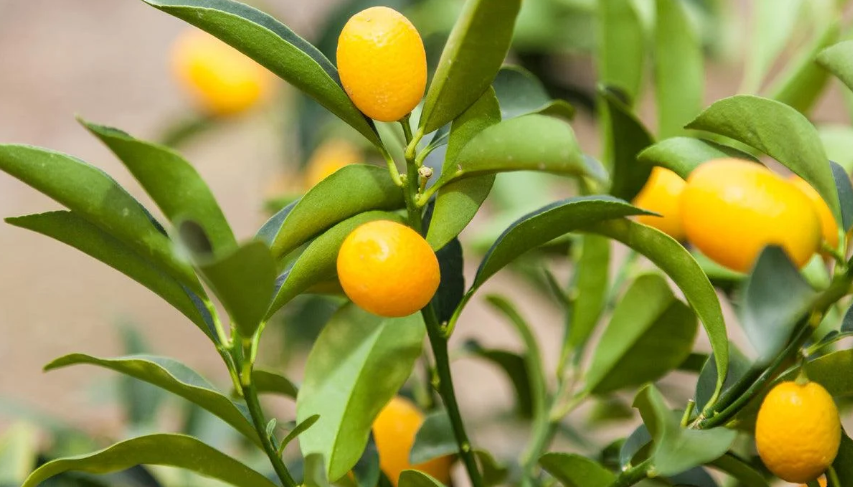
The word “kumquat” comes from the Cantonese “kam kwat,” which translates to “golden orange.” Kumquats are native to Southeast Asia and have been growing wild since ancient times. The fruits were first documented in China in the 12th century, grown for culinary, medicinal, and cultural uses, and were symbolically believed to bring good luck and prosperity when placed in households.
Kumquats were also extensively cultivated in Taiwan, Japan, the Philippines, and India in the early ages. In 1846, Kumquats were introduced into Europe by Robert Fortune, a Scottish botanist who was also a plant explorer for the London Horticultural Society. From Europe, Kumquats were brought to North America with immigrants and were planted in Florida as a potential fruit for commercial cultivation.
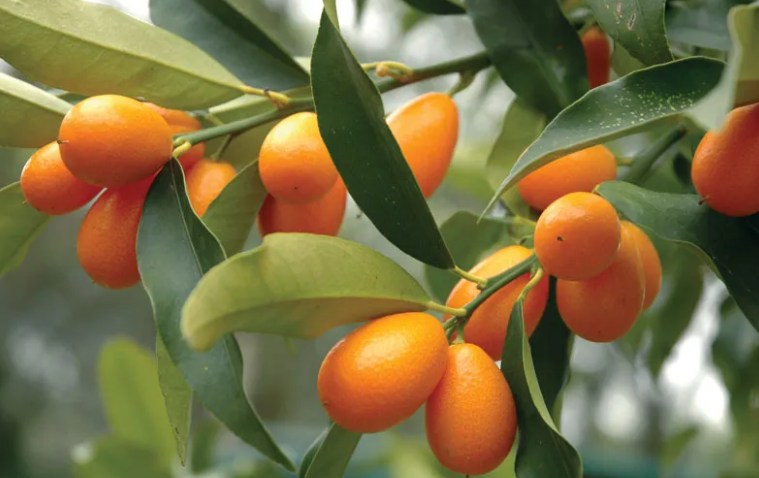
Kumquats resemble miniature oranges, typically oval or round, and about the size of a large olive. Their skin is bright orange when ripe. Unlike other citrus fruits, the skin of the kumquat is sweet and edible, while the flesh can be tart or sour. This creates a delightful contrast in flavors when eaten whole.
Kumquats are quite hardy for citrus plants. They can tolerate colder temperatures than many other citrus fruits but still thrive best in warm to subtropical climates. They’re popular in home gardens because they can be grown in pots, making them suitable for smaller spaces or as ornamental trees due to their decorative appeal when fruiting.
Kumquats have multiple fruiting seasons throughout the year in Asia and Southeast Asia. In the United States, the fruits are primarily available in the winter through early summer.
Kumquats can be eaten fresh, skin and all, which is how they’re often consumed to enjoy the contrast between the sweet rind and tart flesh. They’re used in marmalades, jams, and chutneys. Kumquats can also be candied, pickled, or used in salads and desserts. In mixology, the fruits are used as an edible garnish and can be infused into vodka for a citrus twist. The fruits can also be sliced and stirred into champagne cocktails, fruit punches, or sparkling juices.
In various cultures, kumquats are used in traditional dishes. For instance, in Chinese cuisine, they’re often preserved in sugar or honey and eaten during the Lunar New Year for good luck, symbolizing prosperity.
Kumquats pair well with nuts such as almonds, pecans, and walnuts, fruits, including calamondin, blood oranges, pineapple, kiwis, cranberries, and cherries, mint, honey, ginger, meats such as pork, duck, and poultry, seafood, and greens including watercress, spinach, endive, and frisee.
Kumquats are an excellent source of fiber to regulate the digestive tract and vitamin C to strengthen the immune system and reduce inflammation. The fruits also contain manganese, vitamin A to maintain healthy organ functioning, calcium to protect bones and teeth, and provide lower amounts of iron, zinc, potassium, vitamin E, and copper. Inside the sweet peel, essential oils such as limonene and flavonoids offer antioxidant and anti-inflammatory properties. Herbalists in Asia also use Kumquats as a remedy for symptoms of colds and flu. The fruits are traditionally smashed, mixed with ginger, salt, and honey, and steeped as a soothing tea.
Kumquats have been hybridized with other citrus to create new fruits like the limequat, lemonquat, and orangequat. There are several varieties, including the most common Nagami (oval) and Meiwa (round, sweeter, and often seedless). There’s also the Marumi, Hong Kong Wild, and others, each with slight variations in flavor and shape.
Today Kumquats are primarily grown in California and Florida of the United States, sometimes on a smaller scale in Texas and Louisiana, and are also cultivated in Asia, the Middle East, South Africa, Australia, Europe, and Central and South America. When in season, the fruits can be found fresh at farmer’s markets, specialty grocers, and select supermarkets.
This article explores 21 different types of kumquats, spanning the handful of true wild and cultivated species, popular commercial cultivars, and the extensive family of kumquat hybrids developed over the past century.
Types of Kumquats
Nagami Kumquat
Nagami is by far the most widely grown and commercially available kumquat variety in the United States, easily recognized by its distinctive oval shape that sets it apart from most other kumquat types. This variety produces fruit with tart, juicy pulp balanced against a sweeter, edible orange rind, creating the classic sweet-then-sour eating experience kumquats are known for.
Nagami trees are notably productive and cold hardy for a citrus species, tolerating brief freezes that would seriously damage most standard orange or lemon trees. This kumquat remains the default variety found in most American grocery stores and the standard against which most other kumquat types are typically compared.
Marumi Kumquat
Marumi, whose name translates roughly to round in Japanese, is easily distinguished from Nagami by its more compact, spherical fruit shape rather than the elongated oval typical of its more common relative. This variety produces slightly smaller fruit with a somewhat sweeter rind and less acidic pulp compared to Nagami, making it a popular choice for those who find standard kumquats too tart.
Marumi trees tend to have a more compact, thornier growth habit, and the fruit often contains slightly more seeds than Nagami. This kumquat remains especially popular throughout Japan, where it has a long history of cultivation predating its introduction to Western markets.
Also Read: Different Types of Oranges
Meiwa Kumquat
Meiwa kumquat is a natural hybrid between Nagami and Marumi, combining traits from both parent varieties to produce a rounder fruit than Nagami with a notably milder, sweeter flavor throughout both the rind and the pulp. This variety is often considered the best-tasting kumquat for fresh eating specifically because its pulp lacks the intense tartness typical of Nagami, making the entire fruit pleasantly sweet from rind to center.
Meiwa trees tend to produce fewer, thicker-skinned fruit compared to Nagami, a trade-off many growers accept in exchange for the improved flavor. This kumquat has become increasingly popular among home gardeners and specialty produce markets specifically for its superior fresh-eating qualities.
Fukushu Kumquat
Fukushu, also known by its Chinese name Changshou, produces notably rounder, slightly flattened fruit with thinner, sweeter rind and comparatively mild, less acidic pulp compared to standard Nagami. This variety’s trees tend to be smaller and more compact than other kumquat types, along with having noticeably fewer thorns, making it a popular choice for ornamental container growing.
Fukushu fruit often contains fewer seeds than many other kumquat varieties, adding to its appeal as an easier fresh-eating option. This kumquat remains a favorite among specialty growers specifically for its combination of manageable tree size and notably pleasant, mild flavor.
Hong Kong Wild Kumquat
The Hong Kong wild kumquat is one of the few kumquat types still found growing genuinely wild, native to hillsides in and around Hong Kong and parts of southeastern China, distinguished by its notably small fruit size compared to all commercially cultivated kumquat varieties. This variety produces fruit often smaller than a marble, with thin skin and minimal pulp, making it far less practical for fresh eating than any of the larger cultivated types.
Hong Kong wild kumquat has drawn scientific interest specifically because its wild status offers researchers a genetic window into kumquat evolution before centuries of selective cultivation shaped the larger, sweeter varieties available today. This kumquat remains primarily significant to botanists and collectors rather than to everyday consumers, given its impractically small fruit size.
Malayan Kumquat
Malayan kumquat is a distinct kumquat species native to Malaysia, considerably less well known internationally than the Chinese-origin Nagami, Marumi, and Meiwa varieties that dominate global kumquat cultivation. This variety produces fruit generally similar in overall size and shape to Marumi, adapted specifically to Malaysia’s hot, humid tropical growing conditions rather than the subtropical climates favored by most other kumquat types.
Malayan kumquat remains a regional specialty largely confined to Southeast Asia, rarely appearing in international kumquat variety collections or commercial produce markets. This kumquat adds to the genuine, if underappreciated, geographic diversity found within the broader kumquat category beyond its more famous Chinese and Japanese relatives.
Jiangsu Kumquat
Jiangsu kumquat, sometimes classified as its own distinct species separate from the more common Nagami and Marumi lineage, is associated with China’s Jiangsu province, an important historic center of Chinese kumquat cultivation. This variety produces fruit generally consistent with the broader round kumquat category, reflecting centuries of regional Chinese selection and cultivation predating the kumquat’s introduction to Western horticulture.
Jiangsu kumquat remains primarily significant within China’s own extensive and often less internationally documented kumquat growing tradition. This kumquat represents one of several regional Chinese types that collectively illustrate just how much kumquat diversity exists within the fruit’s original home range, largely unknown to Western gardeners and consumers.
Nordmann Seedless Kumquat
Nordmann is a seedless mutation of the standard Nagami kumquat, valued specifically for eliminating the small but sometimes bothersome seeds found in standard Nagami fruit. This variety produces fruit essentially identical to standard Nagami in size, shape, and flavor, with the seedless trait offering a meaningful convenience improvement for fresh eating.
Nordmann kumquat has become a popular choice among home gardeners and specialty growers specifically seeking the classic Nagami eating experience without having to navigate around seeds. This kumquat demonstrates how even a well-established variety like Nagami has continued to see targeted refinement through selective mutation breeding.
Centennial Variegated Kumquat
Centennial Variegated is an ornamental mutation of the Nagami kumquat developed at the University of California, Riverside, featuring striking green and white variegated foliage along with fruit that displays similar green and yellow striping before ripening to a more solid orange color. This variety produces fruit with flavor generally comparable to standard Nagami kumquat, despite its dramatically different, colorfully striped appearance both on the tree and when unripe.
Centennial Variegated has become popular specifically as an ornamental landscape and container specimen, valued as much for its unusual, eye-catching foliage and fruit coloring as for its culinary use. This kumquat offers gardeners a genuinely dual-purpose plant that functions as both an edible fruit tree and a striking variegated ornamental.
Calamondin
Calamondin is a hybrid between a kumquat and a mandarin orange, producing small, notably sour fruit that looks like a miniature orange but tastes considerably more tart and kumquat-like when eaten fresh. This variety is grown extensively throughout the Philippines, where its juice is a staple souring agent in local cuisine, used similarly to how lime juice functions in many other tropical culinary traditions.
Calamondin trees are remarkably productive and ornamental, often covered simultaneously with flowers, green fruit, and fully ripe orange fruit, making them popular container plants even in climates too cold for outdoor citrus growing. This kumquat hybrid remains one of the most widely recognized and commercially significant members of the broader kumquat hybrid family.
Eustis Limequat
Eustis limequat is one of the original kumquat-lime hybrids, developed in Florida in the early 1900s by crossing a Key lime with a Marumi kumquat to combine lime’s tartness with kumquat’s cold hardiness and edible peel. This variety produces small, oval, greenish-yellow fruit that can be used similarly to a standard lime in cooking and beverages, while also being eaten whole in the same manner as a kumquat.
Eustis limequat trees tolerate cold considerably better than standard lime trees, making the hybrid a practical option for gardeners in marginal citrus climates who still want a lime-flavored fruit. This kumquat hybrid remains the most widely grown limequat variety, valued for successfully combining the best practical traits of both parent species.
Also Read: Different Types of Lemons
Tavares Limequat
Tavares limequat is another early Florida-developed lime-kumquat hybrid, created using the same general breeding approach as Eustis but selected for slightly different fruit characteristics and tree habits. This variety produces small, tart fruit generally comparable to Eustis limequat in flavor and culinary use, offering growers an alternative selection within the broader limequat category.
Tavares limequat shares the improved cold tolerance that makes limequats generally more practical than standard lime trees in cooler growing regions. This kumquat hybrid remains a historically significant, if less commonly planted, member of Florida’s early 20th-century citrus hybrid breeding efforts.
Lakeland Limequat
Lakeland limequat rounds out the trio of historically significant Florida-developed limequat varieties, similarly combining kumquat and lime genetics to produce a cold-hardy, lime-flavored fruit suited to regions where standard lime trees would struggle. This variety produces small, tart fruit generally consistent with the broader limequat category’s culinary uses in cooking and beverages.
Lakeland limequat has remained a specialty variety maintained largely by citrus collectors and heirloom fruit enthusiasts rather than large-scale commercial growers. This kumquat hybrid completes the historically important set of early American limequat breeding achievements alongside Eustis and Tavares.
Orangequat
Orangequat is a hybrid combining kumquat with sweet orange genetics, aiming to produce a sweeter, more orange-flavored fruit than standard kumquat while retaining the kumquat’s edible peel and cold hardiness. This variety produces medium-sized fruit with a notably sweeter overall flavor than standard Nagami or Marumi kumquat, appealing to those who find typical kumquat pulp too tart for their taste.
Orangequat trees maintain much of the compact size and cold tolerance associated with kumquats generally, making the hybrid a practical choice for smaller gardens in marginal citrus climates. This kumquat hybrid demonstrates how breeders have worked to soften kumquat’s characteristic tartness by introducing sweeter orange genetics into the mix.
Procimequat
Procimequat is a complex, multi-generational citrus hybrid developed by the USDA, combining kumquat with a previous hybrid that itself blended citron, lime, and additional kumquat genetics into an intricate breeding lineage. This variety produces fruit with a distinctive flavor reflecting its unusually layered parentage, offering a genuinely unique taste experience compared to simpler two-species citrus hybrids.
Procimequat remains primarily a specialty and collector’s variety, developed more as part of formal citrus breeding research than as a variety intended for widespread commercial production. This kumquat hybrid illustrates just how intricate modern citrus breeding programs can become when researchers stack multiple hybridization steps across several generations.
Indio Mandarinquat
Indio mandarinquat is a kumquat-mandarin hybrid developed at the University of California, Riverside, distinct from the similarly conceived Philippine calamondin despite sharing a comparable parentage concept. This variety produces small, oblong fruit with sweet, edible peel and a notably milder, more mandarin-like flavor in the pulp compared to standard kumquat.
Indio mandarinquat has been promoted specifically for fresh eating, since its improved sweetness compared to standard kumquat makes the whole fruit more immediately palatable without an acquired taste for tartness. This kumquat hybrid reflects ongoing American breeding efforts to develop kumquat hybrids specifically optimized for direct, out-of-hand fresh consumption.
Sunquat
Sunquat is a modern kumquat hybrid marketed specifically for improved sweetness and eating quality compared to standard kumquat varieties, developed to appeal to consumers seeking an easier, more immediately enjoyable whole-fruit citrus snack. This variety produces fruit with a notably sweeter overall flavor profile than traditional Nagami or Marumi kumquat, reducing the initial tartness that can be off-putting to first-time kumquat eaters.
Sunquat has been positioned in specialty produce markets as an accessible entry point for consumers unfamiliar with or hesitant about trying traditional, more tart kumquat varieties. This kumquat hybrid reflects the broader commercial trend toward breeding sweeter, more universally appealing versions of traditionally tart or acquired-taste fruits.
Also Read: Different Types of Apricots
Thomasville Citrangequat
Thomasville citrangequat combines kumquat genetics with citrange, itself already a hybrid between sweet orange and cold-hardy trifoliate orange, resulting in a fruit bred specifically for exceptional cold tolerance beyond what standard kumquats alone can provide. This variety produces small, tart fruit that can be eaten whole, peel included, similar to how standard kumquats are traditionally consumed.
Thomasville citrangequat can survive considerably colder winter temperatures than any true kumquat variety, making it a popular choice for gardeners in genuinely marginal, cold-prone citrus-growing climates. This kumquat hybrid represents one of the more extreme examples of cold-hardiness breeding within the broader kumquat and citrus hybrid family.
Lemonquat
Lemonquat combines standard lemon genetics with kumquat, producing a small, tart fruit that can be eaten whole in the same manner as a traditional kumquat while carrying a more pronounced lemon flavor throughout both peel and pulp. This variety offers a genuinely different eating experience compared to standard kumquat, leaning more toward bright lemon tartness rather than the classic sweet-rind, tart-pulp contrast typical of Nagami or Marumi.
Lemonquat trees remain relatively compact, consistent with the generally manageable size associated with most kumquat and kumquat hybrid varieties. This kumquat hybrid appeals particularly to gardeners and cooks specifically interested in a whole-fruit citrus option with a more distinctly lemon-forward flavor profile.
Big Meiwa Kumquat
Big Meiwa is a named selection of standard Meiwa kumquat, chosen and propagated specifically for producing noticeably larger fruit than typical Meiwa trees while retaining the variety’s prized mild, sweet flavor throughout both rind and pulp. This variety has become a popular commercial and home garden selection specifically because its larger fruit size makes for a more substantial single bite compared to standard-sized kumquats.
Big Meiwa trees generally require the same growing conditions and care as standard Meiwa kumquat, with the size difference stemming from selective propagation rather than any fundamentally different cultivation requirements. This kumquat selection remains one of the more sought-after Meiwa strains specifically among growers and consumers who prioritize fruit size alongside flavor quality.
Dwarf Nagami Kumquat
Dwarf Nagami kumquat is a compact-growing version of the standard Nagami variety, grafted onto dwarfing rootstock specifically to produce full-sized, standard-quality fruit on a considerably smaller tree suited to container growing and small garden spaces. This variety produces fruit essentially identical to standard Nagami kumquat in flavor, size, and appearance, with the primary difference being the tree’s significantly reduced overall size.
Dwarf Nagami kumquat has become a popular choice for gardeners in climates too cold for in-ground citrus, since the compact tree can be grown in a container and brought indoors during winter months. This kumquat variety has helped make fresh, homegrown kumquats accessible to gardeners well outside the traditional citrus-growing regions of the Gulf Coast and California.