Ferns are among the oldest plant groups on Earth, with fossil records dating back more than 360 million years to the Devonian period, predating flowering plants, grasses, and most conifers by hundreds of millions of years. There are approximately 10,500 known species of ferns distributed across nearly every continent on Earth, thriving in environments as varied as tropical rainforests, cloud forests, arctic tundra, desert rock faces, and freshwater wetlands. They belong to the division Pteridophyta and reproduce through microscopic spores rather than seeds or flowers, a strategy so effective it has allowed ferns to persist through multiple mass extinction events and colonize virtually every terrestrial habitat on the planet.
Ferns vary enormously in size and growth form, ranging from tiny aquatic floating species just a few millimeters wide to towering tree ferns exceeding 20 meters in height in humid tropical regions. Around 75% of all known fern species are concentrated in tropical and subtropical zones, where year-round warmth and moisture create ideal conditions for their growth and reproduction. Their characteristic leaf structures, known as fronds, emerge from tightly coiled fiddleheads and range from simple, undivided blades to intricately dissected, feathery forms that vary dramatically between species and habitats.
Ecologically, ferns play vital roles in forest ecosystems worldwide, functioning as dense ground cover that suppresses competing vegetation, retains soil moisture, and stabilizes slopes and stream banks against erosion. Certain species have been used in traditional medicine across Asia, Africa, and the Americas for centuries, while fiddleheads of selected species are harvested as seasonal vegetables in Japan, Canada, and New Zealand. Ferns also serve as sensitive bioindicators of environmental health, with many species declining sharply in polluted or disturbed habitats, making their presence a reliable indicator of relatively intact ecosystem conditions.
In ornamental gardening, ferns rank consistently among the most popular foliage plants worldwide. The global houseplant market, valued at over $20 billion, counts ferns among its top-selling plant categories, with Boston Fern alone remaining one of the best-selling houseplants across North America and Europe for well over a century. Their tolerance of low light conditions, air-purifying qualities, lush textures, and adaptability to containers, hanging baskets, terrariums, and shaded garden beds have made ferns a permanent staple of both indoor and outdoor gardening culture across every inhabited region of the world.
Also Read: Houseplants That Don’t Need Sunlight
Different Types of Fern Plants
Boston Fern
Native to tropical regions of the Americas, including Mexico, Central America, South America, and the West Indies, Boston Fern is one of the most widely cultivated houseplants in the world. It produces long, arching fronds that typically reach 2 to 3 feet in length under good indoor conditions and thrives in bright indirect light with consistently high humidity.
Its gracefully cascading fronds and dense, feathery texture have kept it a top seller in garden centers and nurseries for well over a century, and it remains a defining plant of shaded porches and hanging basket displays globally.
Staghorn Fern
Staghorn Fern originates from the tropical rainforests of Australia, Southeast Asia, Africa, and South America, where it grows as an epiphyte attached to the trunks and branches of large trees. It draws moisture and nutrients from the surrounding air and rainfall rather than from soil, and mature specimens can spread impressively up to 3 feet wide.
Their distinctive antler-shaped fertile fronds have made them highly popular as living wall art in tropical and subtropical homes, and large wild colonies growing on host trees can weigh several hundred pounds in their native rainforest habitats.
Bird’s Nest Fern
Native to tropical Southeast Asia, eastern Australia, Hawaii, Polynesia, and parts of India, Bird’s Nest Fern grows naturally as an epiphyte in humid rainforest canopies. It produces a broad rosette of glossy, undivided fronds radiating from a fibrous nest-like crown that naturally collects fallen debris to nourish the plant, with fronds reaching up to 5 feet long in warm tropical outdoor conditions.
Most indoor specimens produce fronds of 1 to 2 feet in filtered light, and it is considered one of the more forgiving ferns for indoor cultivation due to its tolerance of lower humidity than many tropical relatives.
Maidenhair Fern
Maidenhair Fern has a nearly worldwide native distribution, with species found across tropical and temperate regions of the Americas, Asia, Africa, Europe, and Australasia, making it one of the most geographically widespread fern genera on Earth.
It is celebrated for its exceptionally delicate, fan-shaped leaflets carried on slender, glossy black stems, and plants generally grow 12 to 18 inches tall and equally wide. Despite its delicate appearance, it has been cultivated as an ornamental plant for hundreds of years across Europe and Asia and remains among the most beloved ferns for indoor and shaded garden use worldwide.
Tree Fern
Tree ferns are native to humid tropical and subtropical regions worldwide, with major concentrations in Australia, New Zealand, South Africa, Southeast Asia, and the tropical Americas. They develop thick, fibrous trunk-like stems that can reach 10 to 20 meters tall in their native habitats, with enormous arching fronds measuring up to 15 feet in length.
Some tree fern species grow only a few centimeters per year, meaning large specimens in the wild may represent several decades of growth, and their prehistoric silhouette makes them among the most dramatic plants available for large garden and conservatory planting.
Autumn Fern
Native to Japan, China, Korea, and other parts of eastern Asia, Autumn Fern is a popular garden fern widely admired for its striking seasonal color changes. New fronds emerge in shades of copper, bronze, and warm red before maturing to glossy deep green, and plants typically grow 18 to 24 inches tall with a spread of up to 24 inches.
Its semi-evergreen to evergreen nature in mild climates adds year-round structure to shaded landscape designs, and it has become one of the most widely planted ornamental ferns in temperate gardens across Europe and North America.
Christmas Fern
Christmas Fern is native exclusively to eastern North America, ranging from Nova Scotia in Canada south to Florida and west to the Great Plains, where it grows in moist woodland understories and rocky slopes. It remains green through winter cold and is one of the most reliable ferns for difficult shaded garden spots, growing 1 to 2 feet tall with arching fronds that spread up to 2 feet wide.
Its name comes from the historical practice of gathering its evergreen fronds for holiday decorations through the winter season, and it tolerates drought, dense shade, and poor rocky soils better than many other fern species.
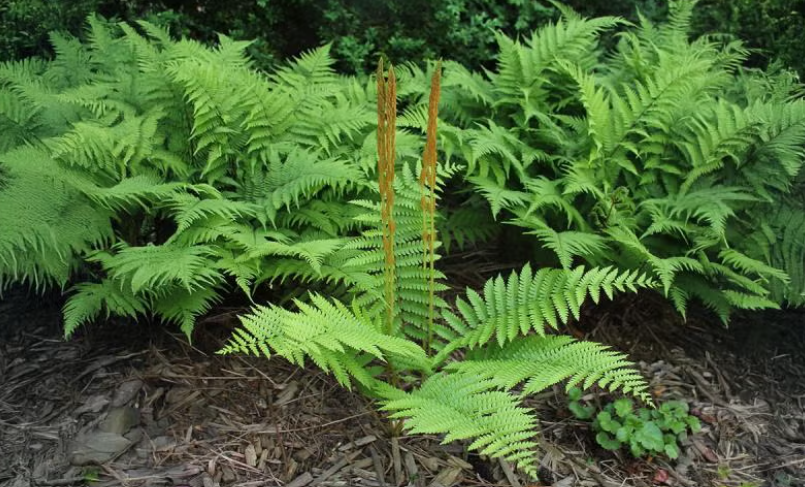
Cinnamon Fern
Cinnamon Fern is native to the Americas, found from eastern Canada and the eastern United States south through Central America and into South America, growing naturally in swamps, bogs, moist woodlands, and along stream banks.
It produces two distinct types of fronds, with tall fertile fronds coated in cinnamon-brown spore masses rising up to 5 feet tall at the center of the plant and broader sterile fronds spreading 3 to 4 feet wide around them. It is one of the most impressive native ferns for rain gardens, pond margins, and consistently moist shaded borders in temperate North American gardens.
Also Read: Types of Aralia Plants
Royal Fern
Royal Fern has an exceptionally wide native range spanning Europe, Asia, Africa, and the Americas, making it one of the most broadly distributed fern species in the world.
Mature clumps reach 3 to 6 feet in height and spread up to 4 feet wide in optimal moist conditions, and it produces distinctive bi-pinnate fronds with widely spaced oval leaflets that give it a more open, flowering plant-like appearance compared to many other ferns. It thrives along stream banks, boggy areas, and wet woodland edges where its roots can access consistent moisture throughout the growing season.
Japanese Painted Fern
Japanese Painted Fern is native to eastern Asia, with its natural range centered in Japan, China, and Korea, where it grows in moist, shaded woodland habitats. It is widely regarded as one of the most ornamental of all garden ferns, producing intricately patterned fronds in combinations of silvery gray, green, and wine-red that are unmatched among temperate garden ferns.
Plants typically grow 12 to 18 inches tall and spread up to 24 inches wide over time, and it was named Perennial Plant of the Year by the Perennial Plant Association in 2004, reflecting its outstanding ornamental value and garden performance worldwide.
Ostrich Fern
Ostrich Fern is native to temperate regions of North America and Europe, found naturally in moist floodplain forests, stream banks, and rich woodland soils from Canada south through the northeastern and midwestern United States.
It is one of the tallest ferns in temperate regions, with mature fronds reaching 4 to 6 feet in height and clumps spreading up to 5 feet wide through vigorous underground runners. Its young fiddleheads are among the most commonly harvested edible ferns in North America, particularly in Canada and the northeastern United States where they are a celebrated springtime delicacy.
Lady Fern
Lady Fern is native to moist woodland habitats across the Northern Hemisphere, with a natural range spanning North America, Europe, and Asia, where it colonizes stream banks, forest edges, and moist mountain slopes.
It produces finely divided, light green fronds that typically reach 2 to 3 feet tall in loose, vase-shaped clumps spreading up to 3 feet wide, and it is one of the most adaptable temperate ferns, tolerating a wide range of soil types and moisture levels. Numerous cultivated varieties offering ruffled, crested, or unusually colored fronds have been developed for ornamental garden use.
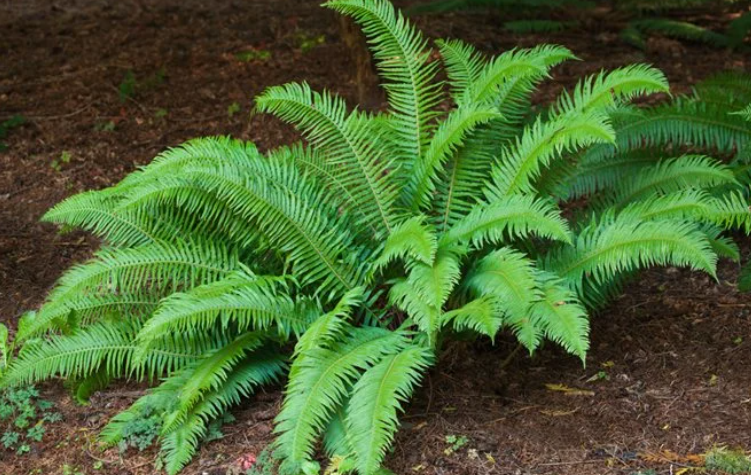
Sword Fern
Sword Fern is native to the Pacific Coast of North America, ranging from southern Alaska south through British Columbia, Washington, Oregon, and California, where it forms one of the most dominant ground cover species in coastal rainforest ecosystems.
Its long, upright fronds typically reach 2 to 5 feet in length, forming dense clumps that spread up to 4 feet wide and persist for many years without significant maintenance. It is widely used in Pacific Northwest native plant landscaping for its reliability, deer resistance, and exceptional tolerance of deep shade beneath large conifers and deciduous trees.
Bracken Fern
Bracken Fern is one of the most widely distributed plants on Earth, native to and naturalized across every continent except Antarctica, found in habitats ranging from open heathlands and woodland clearings to mountain slopes and coastal scrub worldwide.
Its coarse, triangular fronds typically grow 2 to 4 feet tall, though in favorable conditions plants can reach up to 6 feet in height. While considered invasive in many agricultural regions, bracken plays an important ecological role as wildlife habitat and has been used for centuries across cultures as animal bedding, thatching material, and traditional medicine.
Holly Fern
Holly Fern is native to eastern Asia, including China, Japan, Korea, and Taiwan, where it grows naturally in woodland understories and on shaded rocky slopes in subtropical and warm temperate forests. It produces dark, glossy fronds with distinctly toothed leaflets that resemble holly foliage, growing 18 to 24 inches tall in neat, compact clumps that retain their attractive appearance through winter.
It is particularly valued in southern garden designs for its tolerance of heat, dry shade, and drought conditions that challenge many other fern species, and several related species native to the Americas and Europe share a similar common name.
Sensitive Fern
Sensitive Fern is native to eastern North America, naturally found from Newfoundland and Manitoba in Canada south through the eastern United States to the Gulf Coast, growing in moist woodlands, meadow edges, and along stream banks. It earned its name from its unusually quick response to the first autumn frosts, with fronds wilting and browning far earlier than most other ferns.
It grows 18 to 30 inches tall with broadly lobed, distinctive fronds, and its separate bead-like fertile fronds persist through winter long after the green fronds have died back, providing interesting structural detail in the dormant garden.
Hay-Scented Fern
Hay-Scented Fern is native to eastern North America, with its natural range extending from Newfoundland south through the Appalachian Mountains to Georgia, growing in woodland clearings, rocky slopes, and open forest edges where it often forms extensive ground-covering colonies.
It releases a distinctive sweet, grassy fragrance when its fronds are crushed or brushed against and typically reaches 18 to 30 inches in height. Its aggressive spreading habit via underground rhizomes makes it excellent for naturalizing large shaded slopes but requires management in smaller garden spaces where it can quickly overwhelm neighboring plants.
Also Read: Types of Philodendron Plants
Leather Fern
Leather Fern is native to tropical and subtropical wetland environments across the Americas, Africa, and parts of Asia, commonly found growing in swamps, marshes, mangrove edges, and along tropical stream banks.
It produces thick, firm fronds with a distinctly leathery texture that can reach 4 to 8 feet in length under ideal growing conditions, making it one of the largest wetland ferns in its native range. Its robust, architectural fronds add bold tropical character to water garden surrounds and boggy landscape features in warm climates where it can be grown outdoors year-round.
Button Fern
Button Fern is native to New Zealand, where it grows naturally on rocky hillsides, cliff faces, and dry forest floors across both the North and South Islands of the country. It produces small, rounded leaflets arranged neatly along wiry arching fronds, with plants typically growing just 12 to 18 inches tall and wide, making them well suited to small containers, terrariums, and narrow shaded border plantings.
It prefers slightly drier conditions than many ferns, a reflection of its native habitat on well-drained rocky slopes, making it a more manageable option for gardeners who find high-humidity ferns difficult to maintain indoors.
Leatherleaf Fern
Leatherleaf Fern is native to tropical and subtropical regions of the Americas, Africa, and Asia, though it is most extensively cultivated in Florida and other warm regions specifically for the global cut foliage industry. Plants produce long, arching, dark green fronds that typically reach 2 to 3 feet in length and are prized by florists worldwide for their longevity and refined appearance, with millions of fronds exported annually from Florida alone.
It thrives outdoors in frost-free climates and is also grown in commercial greenhouses in cooler regions for year-round foliage production supplying the international floristry trade.
Silver Brake Fern
Silver Brake Fern is native to tropical and subtropical regions of Asia, Africa, and the Mediterranean, where it grows naturally in rocky habitats, forest margins, and disturbed ground in warm climates. It produces slender fronds with a distinctive silvery-white stripe running down the center of each leaflet, creating a striking two-toned effect, and typically grows 12 to 18 inches tall.
It has naturalized widely across tropical regions of the world beyond its native range and thrives in warm indoor environments and tropical gardens, tolerating a wider range of light conditions than many other fern species.
Kangaroo Paw Fern
Kangaroo Paw Fern is native to eastern Australia and New Zealand, where it grows naturally as an epiphyte on tree trunks and branches in humid coastal and rainforest environments. It produces long, strap-like fronds with deeply lobed margins bearing a resemblance to kangaroo paw prints, typically reaching 12 to 24 inches in length, and is commonly grown in hanging baskets or mounted on wood.
It adapts well to indoor cultivation, tolerating moderate light levels and average household humidity better than many tropical epiphytic ferns, making it an appealing and distinctive choice for houseplant collections.
Blue Star Fern
Blue Star Fern is native to tropical regions of South America, particularly found in rainforest environments across Brazil and neighboring countries, where it grows as an epiphyte on trees and mossy rocks. It produces simple, strap-shaped fronds in an unusual blue-green color that immediately distinguishes it from most other commonly grown fern species, and plants grow slowly to about 12 to 18 inches tall and wide.
Its cool coloration, low maintenance requirements, and suitability for wall mounting have made it increasingly popular among contemporary indoor plant enthusiasts, particularly in Europe where it has become a sought-after collector houseplant.
Lemon Button Fern
Lemon Button Fern is native to tropical regions of Asia and parts of Australia, where it grows as a small ground-covering fern in humid forest understories and along moist rocky slopes.
It produces tiny, rounded leaflets along delicate arching fronds and releases a faint lemony scent when foliage is touched, with plants staying compact at just 8 to 12 inches tall. Its tolerance of lower humidity than many tropical ferns, combined with its small size and pleasant fragrance, makes it one of the most appealing compact ferns for terrarium planting and small indoor container gardening.
Rabbit’s Foot Fern
Rabbit’s Foot Fern is native to Fiji and other Pacific island groups, where it grows naturally as an epiphyte in humid tropical forest environments, draping its distinctive fuzzy rhizomes over tree branches and rocky surfaces.
Plants produce finely divided, feathery fronds reaching 12 to 18 inches in length, and the creeping silver-gray rhizomes are considered highly ornamental in their own right, trailing attractively over the edges of pots and hanging baskets. It is regarded as a symbol of good luck in some cultural traditions, adding to its enduring popularity as a gift plant across many regions of the world.
Foxtail Fern
Despite its fern-like appearance, Foxtail Fern is not a true fern but rather a member of the asparagus family native to South Africa, where it grows naturally in subtropical coastal scrub and grassland habitats in the eastern Cape region. Plants grow 2 to 3 feet tall and spread up to 4 feet wide, forming dense, mounding clumps of dense, plume-like stems covered in needle-like foliage that are used extensively in tropical landscaping and floral design worldwide.
It is considerably more drought-tolerant than most true ferns, thriving in full sun to partial shade in warm, frost-free gardens across many parts of the world.
Asparagus Fern
Asparagus Fern is native to southern Africa, particularly South Africa and Mozambique, though it has naturalized widely across tropical and subtropical regions of the world, including parts of the Caribbean, Florida, Hawaii, Australia, and Southeast Asia.
Despite its name, it is not a true fern but a member of the asparagus family, with feathery, needle-like foliage creating an appearance very similar to fine-textured fern fronds. Plants can grow 1 to 2 feet tall as a mounding groundcover or trail up to 6 feet as a climbing vine in warm conditions, and in several warm regions it has become a problematic invasive species spreading aggressively in frost-free environments.
Also Read: Types of Spider Plants
Crocodile Fern
Crocodile Fern is native to tropical rainforests of Southeast Asia and Australia, particularly found in the humid lowland forests of Malaysia, the Philippines, and northeastern Queensland in Australia. It takes its memorable common name from the distinctive scale-like texture of its broad, undivided fronds, which bear a strong resemblance to crocodile skin when examined closely.
Plants grow 3 to 5 feet tall in optimal tropical conditions, though most indoor specimens stay between 18 and 30 inches, and its bold, architectural presence and unusual textural appearance have made it a highly sought-after statement houseplant in recent years.
Ghost Fern
Ghost Fern is a garden hybrid developed in North America, created by crossing Japanese Painted Fern with Lady Fern, combining the ornamental silvery coloring of the former with the vigor and adaptability of the latter parent species. It produces hauntingly beautiful fronds in silver-green and gray tones overlaid with subtle wine-red midribs, growing 18 to 24 inches tall and wide in partially shaded temperate garden borders.
Its unusual luminous coloring creates striking contrast against darker green foliage in shaded planting schemes, and it has quickly become one of the most popular hybrid ornamental ferns available to temperate garden gardeners worldwide.
Tasmanian Tree Fern
Tasmanian Tree Fern is native to southeastern Australia, including Tasmania and parts of Victoria and New South Wales, where it grows naturally in cool, moist gullies and temperate rainforest environments at varying elevations. It produces a single crown of enormous arching fronds up to 12 feet long atop a fibrous trunk that can grow to 6 meters in height over many decades, and it is considered more cold-hardy than many other tree fern species, tolerating temperatures down to around 23°F.
This cold tolerance has made it a popular choice for large temperate gardens in the United Kingdom, New Zealand, and the Pacific Northwest of North America, where it grows as a permanent landscape specimen of extraordinary visual impact.
New Zealand Tree Fern
New Zealand Tree Fern is native to New Zealand and parts of eastern Australia, where it is one of the most iconic and widespread plants of the native bush landscape, growing in forest margins, stream banks, and disturbed areas from sea level to around 1,000 meters elevation.
It is among the fastest-growing tree ferns, capable of adding 8 to 12 inches of trunk height per year under good conditions, and mature specimens develop trunks up to 10 meters tall crowned with massive fronds up to 10 feet long. The silver-white undersides of its fronds flash distinctively in wind and light, and it is widely planted in temperate gardens worldwide for its spectacular, instantly recognizable tropical silhouette.
Male Fern
Male Fern is native to temperate woodland habitats across the Northern Hemisphere, with a broad native range spanning Europe, Asia, and North America, where it grows in moist forest understories, hedgerows, and shaded rocky slopes.
It produces large, shuttlecock-shaped clumps of deeply divided fronds typically reaching 3 to 4 feet in height and spreading up to 3 feet wide, and it is one of the most shade-tolerant of all temperate garden ferns. Extracts from its rhizome were historically used across European folk medicine as a treatment for intestinal parasites, giving it a long history of human use beyond its ornamental gardening applications.
Kimberley Queen Fern
Kimberley Queen Fern is native to Australia, originating from the Kimberley region of Western Australia and other subtropical parts of the continent, where it grows in sheltered, humid forest environments. It produces upright, sword-shaped fronds that grow in an elegant vase-shaped habit reaching 3 to 4 feet tall and equally wide, making it one of the most structurally impressive of the commonly grown garden ferns.
Its tidier, more upright growth habit compared to Boston Fern makes it a preferred choice for formal container plantings and structured garden designs, and it tolerates more direct sun than most ferns, adapting well to both indoor and outdoor subtropical cultivation.
Also Read: Types of Peperomia
Deer Fern
Deer Fern is native to moist woodland habitats across the Pacific Northwest of North America, from British Columbia south to California, as well as parts of Europe and Asia where it grows in cool, humid forest environments. It produces two distinct frond types, with narrow fertile fronds standing upright at the center and broader sterile fronds spreading in a flat rosette around the base, and plants typically grow 12 to 24 inches tall.
Deer and other wildlife browse the fronds regularly in its native range, giving the plant its common name, and it is widely used as a low-maintenance evergreen ground cover beneath trees in Pacific Northwest native plant garden designs.
Ostrich Plume Fern
Closely related to Ostrich Fern, Ostrich Plume Fern is native to eastern Asia, particularly Japan, China, and Korea, where it grows in moist, shaded woodland habitats and along stream banks in cool temperate mountain environments. It produces large, elegantly arching fronds with a distinctive feathery texture that gives the plant its descriptive common name, reaching 3 to 4 feet in height and forming spreading clumps in moist, humus-rich garden soils.
Its refined, plume-like frond appearance and reliable performance in shaded temperate gardens have made it a valued alternative to its North American relative in ornamental woodland garden planting schemes.
Himalayan Maidenhair Fern
Himalayan Maidenhair Fern is native to the Himalayan mountain regions of Nepal, India, Bhutan, and southwestern China, where it grows in moist, shaded forest understories and along rocky stream banks at elevations ranging from 1,000 to 3,000 meters.
It is a larger, more vigorous relative of common maidenhair fern, producing broad, arching fronds up to 2 feet long with the characteristic delicate fan-shaped leaflets on dark wiry stems typical of the maidenhair group. Its bold frond size relative to other maidenhair ferns and its tolerance of somewhat lower humidity make it one of the most striking species in this beloved group for temperate garden use.
Soft Shield Fern
Soft Shield Fern is native to Europe and parts of western Asia, found naturally in moist, shaded woodland habitats, hedgerow banks, and rocky ravines from the British Isles east through Central Europe and into the Caucasus region. It produces elegantly arching, finely divided fronds with a soft, feathery texture that typically reach 2 to 3 feet tall in graceful clumps spreading 2 to 3 feet wide.
Numerous decorative cultivars with intricately crested frond tips have been developed, some of which were highly prized by Victorian fern collectors during the great fern collecting craze known as pteridomania that swept Britain in the mid-nineteenth century.
Hard Shield Fern
Hard Shield Fern is native to Europe and western Asia, growing naturally in woodland understories, rocky slopes, and shaded hedge banks across a range extending from the British Isles through Central Europe to the Mediterranean region and into southwestern Asia.
It produces firmer, darker green fronds with a leathery texture compared to Soft Shield Fern, growing 2 to 3 feet tall and equally wide while tolerating deeper shade and drier soils than many other shield fern species. Its reliable year-round evergreen foliage and exceptional adaptability to difficult dry shade conditions make it one of the most practically useful ferns for challenging temperate garden situations.
Also Read: Houseplants that Like Alkaline Soil
Polypody Fern
Polypody Fern is native to western and central Europe, found growing naturally on rocks, mossy tree trunks, old stone walls, and forest floors across Britain, Ireland, and continental Europe east to the Caucasus mountains. It is a low-growing, evergreen fern reaching just 6 to 12 inches in height, with leathery, simply pinnate fronds that persist through winter and provide valuable year-round ground cover in rocky or woodland garden settings.
It is one of the most drought-tolerant woodland ferns once established, adapting to shallow, well-drained soils and exposed rocky positions that many other fern species would find entirely inhospitable.
Hare’s Foot Fern
Hare’s Foot Fern is native to the Canary Islands, Madeira, and parts of the Mediterranean coast, where it grows naturally in humid, shaded rocky habitats in subtropical laurel forest and coastal cliff environments. It produces finely textured, feathery fronds alongside distinctive creeping rhizomes covered in pale, silvery-brown scales, and plants typically grow 12 to 18 inches tall.
It is frequently cultivated in hanging baskets and wall-mounted containers where its creeping rhizomes can trail decoratively over the edges, and it tolerates slightly drier conditions between waterings than many tropical fern species, reflecting its origins in seasonally variable Mediterranean and Atlantic island climates.
Rock Cap Fern
Rock Cap Fern is native to rocky woodland habitats across eastern North America, ranging from Canada south through the Appalachian Mountains to the southern United States, where it grows in thin soils among boulders, cliff faces, and rocky outcroppings in shaded forest environments.
It typically grows just 4 to 10 inches tall in compact tufts, and its ability to thrive in shallow, nutrient-poor soils with excellent drainage makes it an excellent choice for rock garden plantings and naturalistic stone wall crevice gardens. It remains evergreen through mild winters and recovers rapidly in spring after cold or drought stress.
Resurrection Fern
Resurrection Fern is native to the eastern United States and parts of tropical Africa and Central America, where it grows epiphytically on the bark of large trees, particularly live oaks and bald cypresses in the American Southeast.
It produces small, leathery fronds just 4 to 6 inches long and possesses the remarkable ability to lose up to 97% of its water content during dry periods and appear completely dead and brown, then fully revive within hours of receiving rainfall. NASA has conducted research on this extraordinary species due to its survival abilities, making it one of the most scientifically fascinating fern species on the planet.
Walking Fern
Walking Fern is native to eastern North America, found naturally on shaded limestone outcroppings, mossy boulders, and rocky woodland floors from southern Canada south through the eastern United States and into the mountains of Mexico.
It produces simple, elongated, undivided fronds with long tapering tips that root wherever they contact moist surfaces, allowing the plant to slowly colonize new territory and giving rise to its evocative common name. Individual plants grow just 4 to 12 inches tall, and its preference for alkaline rocky substrates makes it a fascinating choice for specialized rock garden and limestone garden designs.
Water Fern
Water Fern is native to tropical and subtropical regions of Asia, Africa, and the Americas, where it grows naturally as a free-floating aquatic plant on the surfaces of still ponds, slow rivers, rice paddies, and sheltered wetland environments.
It forms dense mats of tiny, overlapping leaves just a few millimeters wide that can cover large areas of water surface with remarkable speed, with colonies capable of doubling in size within days under warm, favorable conditions. It is used in water gardens to provide surface cover that reduces algae growth and offers shelter for fish and aquatic invertebrates, while also serving as a traditional nitrogen-fixing companion plant in Asian rice cultivation.
Mosquito Fern
Mosquito Fern is native to warm temperate and tropical regions of the Americas, Africa, and Asia, found naturally on still or slow-moving freshwater bodies including ponds, ditches, and rice paddies across a very wide geographic range. It is a tiny, free-floating aquatic fern just 1 to 2 centimeters wide that forms dense reddish-green mats on water surfaces, and its nitrogen-fixing abilities have made it agriculturally important in rice-growing regions across tropical Asia for centuries.
Despite its minute individual size, its role as a biological nitrogen fertilizer has made it one of the most ecologically and agriculturally significant fern species cultivated across tropical farming regions worldwide.
Also Read: Houseplants That Like Coffee Grounds
Ebony Spleenwort
Ebony Spleenwort is native to eastern North America, ranging from southern Canada through the eastern and central United States south to the Gulf Coast and into the mountains of Mexico and Central America, where it grows on rocky woodland slopes, cliff faces, and old stone walls.
It produces narrow, simply pinnate fronds just 6 to 12 inches long on distinctive glossy, dark brown to black stems that give the plant its evocative common name. Despite its modest size, it is a long-lived, resilient plant that thrives in alkaline soils and excellent drainage conditions, naturalizing well in rock garden and dry stone wall environments without requiring significant maintenance.
Korean Rock Fern
Korean Rock Fern is native to eastern Asia, particularly Korea, China, Japan, and Taiwan, where it grows naturally on rocky slopes, forest floors, and shaded cliff faces in cool to warm temperate woodland environments. It is a compact, cold-hardy evergreen fern producing glossy, deeply divided fronds in a neat, spreading clump that typically reaches just 8 to 14 inches in height.
Its exceptional tolerance of cold temperatures, dry soils, and exposed rocky conditions has earned it a strong following among gardeners seeking low-maintenance shade plants with reliable year-round visual interest, and it performs particularly well in challenging shaded garden situations where larger, more demanding fern species would struggle.
Cretan Brake Fern
Cretan Brake Fern is native to Mediterranean regions including Crete, southern Europe, North Africa, and parts of western Asia, where it grows on rocky slopes, old walls, and disturbed ground in warm, seasonally dry climates. It produces narrow, upright fronds with distinctive elongated leaflets, growing 12 to 18 inches tall, and adapts well to a wide range of indoor light conditions from moderate indirect light to bright filtered sun.
Several variegated cultivars with white-striped leaflets have been developed and are particularly popular in tropical houseplant collections, where their bold variegation pattern and Mediterranean origin make them an interesting and relatively easy-care choice.
Giant Chain Fern
Giant Chain Fern is native to the Pacific Coast of North America, found from southern British Columbia south through Washington, Oregon, and California to Baja California in Mexico, growing naturally in moist coastal forests, stream-side habitats, and redwood forest understories.
It is one of the largest native ferns of western North America, producing imposing, upright fronds that can reach 4 to 9 feet in height in moist conditions and forming dense clumps spreading 3 to 5 feet wide over time. The distinctive chain-like arrangement of spore clusters along the underside of each frond gives the plant its evocative common name, and it creates a commanding presence in large shaded gardens and rain garden plantings.
Also Read: Flowering Succulent Plants
Fishtail Fern
Fishtail Fern is native to tropical regions of Asia and Australia, particularly found in the humid lowland rainforests of Southeast Asia including Malaysia, Indonesia, and the Philippines, as well as in northeastern Queensland in Australia. It produces uniquely shaped fronds with forked, fishtail-like leaflet tips that immediately distinguish it from virtually all other commonly grown fern species, and plants grow 2 to 3 feet tall in warm, humid conditions.
The unusual leaflet shape adds strong visual interest to mixed tropical plantings and contrasts effectively with the more finely divided fronds of companion fern and foliage plants in tropical garden and indoor plant collection displays.
Delta Maidenhair Fern
Delta Maidenhair Fern is native to warm temperate and subtropical regions of the Americas, with its natural range extending from the southern United States through Central America and into South America, where it grows on moist, shaded rocky slopes and forest margins.
It produces triangular frond clusters with small, wedge-shaped leaflets on characteristic dark, wiry stems that arch gracefully outward, and plants typically reach 12 to 15 inches tall and wide. It is one of the most popular maidenhair varieties for indoor cultivation due to its compact size and exceptionally elegant appearance, thriving in bright indirect light with consistently high humidity.
Scaly Male Fern
Scaly Male Fern is native to Europe and parts of western Asia, found naturally in moist woodland habitats, rocky ravines, and shaded hedgerow banks across a range extending from the British Isles through Central Europe and the Mediterranean region into the Caucasus mountains.
It is a close relative of Male Fern but produces more prominently scaly rhizomes and frond bases covered in attractive golden-brown scales, forming bold vase-shaped clumps 2 to 3 feet tall and wide. Several garden cultivars with crested frond tips have been developed and were particularly prized by Victorian fern enthusiasts during the pteridomania craze that made ornamental fern collecting one of the most fashionable botanical hobbies of nineteenth century Britain.
Sword Brake Fern
Sword Brake Fern is native to tropical and subtropical regions of Asia and Africa, found growing naturally on rocky slopes, old walls, and disturbed woodland margins across a broad range from tropical Africa through southern Asia to southeastern China and Japan.
It produces slender, finger-like fronds in a compact vase-shaped clump typically reaching 12 to 20 inches in height, and it adapts well to the lower humidity of typical indoor settings while tolerating a range of light conditions from moderate shade to bright indirect light. Several attractive cultivated forms with twisted, ruffled, or variegated fronds are available from specialist tropical plant nurseries for collectors seeking unusual compact ferns.
Victoria Brake Fern
Victoria Brake Fern is a cultivated form developed from brake fern species native to tropical and subtropical Asia, selected and bred for its visually striking variegated fronds bearing creamy white central stripes that contrast vividly against the surrounding dark green leaf tissue.
Plants grow 18 to 24 inches tall in warm, humid indoor environments and tropical garden beds, adapting to moderate indirect light conditions that suit most typical indoor growing situations. Its dramatic variegation pattern and architectural frond shape make it one of the most visually distinctive ferns available for ornamental houseplant collections and tropical garden displays, with specimens becoming increasingly sought after through specialist plant retailers globally.
Crisped Blue Fern
Crisped Blue Fern is a cultivated variety developed primarily from fern species native to tropical Asia and the Pacific Islands, selected for its distinctive blue-gray-green frond coloration and attractively ruffled and crinkled leaflet margins that add unusual textural interest. Plants typically grow just 12 to 18 inches tall, making them suitable for small containers, terrarium planting, and the front edge of shaded garden borders where their unusual coloration and texture can be closely appreciated.
Their tolerance of lower humidity and moderate indoor light conditions compared to many tropical fern species has contributed to their rising popularity as collector houseplants among indoor plant enthusiasts in Europe and North America.
Plume Fern
Plume Fern is native to tropical and subtropical regions of Asia and the Pacific Islands, found growing naturally in humid forest understories and along moist, shaded stream banks in environments ranging from tropical lowland rainforest to cooler mountain forest habitats.
It produces intricately divided, feathery fronds with a soft, plume-like appearance that creates an almost cloud-like texture in shaded garden borders and indoor plant displays, and plants typically reach 18 to 30 inches tall. Its exceptionally fine frond texture makes it one of the most graceful ferns available for contrast planting alongside bold-leafed tropical foliage plants in warm garden designs and tropical indoor plant collections.
Japanese Holly Fern
Japanese Holly Fern is native to eastern Asia, particularly Japan, China, Korea, India, and Taiwan, where it grows naturally in woodland understories, shaded rocky slopes, and forest margins across warm temperate and subtropical zones. It produces glossy, dark green fronds with pointed, toothed leaflets that give the plant an attractive resemblance to holly foliage throughout the year, and plants typically grow 18 to 24 inches tall and wide.
Its neat, architectural form, year-round glossy foliage, and exceptional adaptability to deep shade, dry soils, and urban pollution levels have made it one of the most reliable evergreen ferns for challenging shaded garden and urban landscape situations in temperate regions worldwide.
Rusty Back Fern
Rusty Back Fern is native to rocky habitats across Europe and the Mediterranean region, found on limestone cliffs, dry stone walls, and exposed rocky slopes from the British Isles and western Europe through southern Europe, North Africa, and into western Asia. It takes its descriptive name from the distinctive rust-brown scales coating the underside of its firm, narrow fronds, growing just 4 to 8 inches tall while thriving in rock crevices and shallow alkaline soils where drought tolerance gives it a significant competitive advantage.
It is one of the few ferns capable of surviving extended periods of near-complete desiccation, reviving fully when moisture returns to its rocky habitat, a survival strategy shared with very few other plant species.
Also Read: How To Grow Hostas In Pots & Containers
Hay-Scented Buckler Fern
Hay-Scented Buckler Fern is native to western Europe, particularly the British Isles, France, and the Iberian Peninsula, where it grows in woodland clearings, heathland edges, and open grassy habitats, often forming extensive colonies in thin, acidic soils. It produces delicate, finely divided fronds that release a pleasantly sweet, hay-like scent when crushed or walked through, typically reaching 18 to 24 inches in height with a gently arching, spreading habit.
Like its North American counterpart Hay-Scented Fern, it can spread vigorously in suitable conditions and is best suited to naturalistic planting schemes or larger woodland garden areas where its spreading habit can be accommodated without competition concerns.
Leather Leaf Fern of Asia
This robust fern is native to tropical and subtropical regions of eastern Asia, including southern China, Japan, Vietnam, and the Philippines, where it grows in humid forest understories and along shaded stream banks in warm lowland to montane environments.
It produces thick, firm, dark green fronds with a distinctly leathery texture that makes them exceptionally long-lasting both on the plant and when cut for floral use, typically reaching 2 to 3 feet in length. Its combination of ornamental appeal, durability, and adaptability to cultivation in warm greenhouse and tropical garden conditions has contributed to its commercial importance in the Asian cut foliage industry alongside its wider cultivation as an ornamental garden plant.