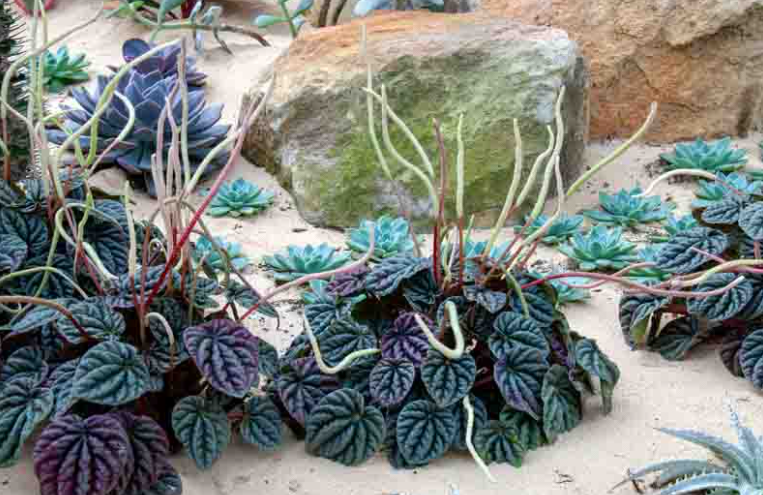
Peperomia plants are a vast and extraordinarily diverse group of tropical houseplants belonging to one of the largest plant genera on earth, with more than 1,000 documented species identified to date and new ones still being described by botanists each year. Native primarily to the tropical and subtropical regions of Central and South America, with smaller numbers of species found in Africa and Asia, peperomias occupy an enormous range of natural habitats — from humid rainforest floors and tree canopies to dry rocky outcrops and cloud forest margins. This ecological diversity is reflected in their incredible variety of leaf shapes, textures, colors, and growth habits, making them one of the most visually varied plant groups available to houseplant growers anywhere in the world.
Despite their diversity, peperomias share several practical qualities that make them outstanding houseplants. Most varieties are compact, with the majority of cultivated types reaching between 6 and 12 inches in height, making them ideal for desks, shelves, and windowsills where space is limited. They are semi-succulent in nature, storing water in their thick leaves and stems, which means they tolerate irregular watering far better than most tropical plants and are highly resistant to the kind of casual neglect that kills less forgiving species. Surveys of houseplant retailers in the United States and Europe consistently rank peperomias among the top ten best-selling houseplant genera, with global sales estimated in the hundreds of millions of plants annually.
One of the greatest appeals of peperomia plants is the sheer range of leaf forms they present. Leaves may be round, heart-shaped, lance-shaped, deeply ridged, smooth and glossy, velvety and textured, striped, marbled, solid-colored, or variegated in combinations of green, silver, red, cream, gold, and near-black. Some varieties grow as compact upright rosettes, others as trailing or cascading ground covers, and still others as semi-epiphytic climbers. Most peperomias produce small, inconspicuous flower spikes called rat-tail inflorescences that are not particularly ornamental, meaning the foliage is unquestionably the main event for growers and collectors.
Peperomias thrive in bright to moderate indirect light and prefer temperatures between 65°F and 80°F (18°C to 27°C), making them well-suited to typical indoor environments. They do best in well-draining, airy potting mix — a blend of standard potting soil with perlite or orchid bark is widely recommended — and should be allowed to dry out partially between waterings to prevent the root rot they are susceptible to in consistently wet soil. They are listed as non-toxic to dogs and cats by the ASPCA, adding to their appeal for pet-owning households, and their compact size, low water requirements, and extraordinary visual variety have made them a cornerstone of the modern houseplant hobby worldwide.
Also Read: Houseplants That Like Coffee Grounds
Types of Peperomia Plants
1. Watermelon Peperomia
The Watermelon Peperomia is one of the most popular and instantly recognizable peperomia varieties in the world, featuring round, fleshy leaves with bold silver and dark green stripes that mimic the skin of a watermelon with remarkable accuracy. It grows to a compact 6 to 12 inches in height and spread, making it a perfect desktop or shelf plant. The leaves are attached to long, slender red petioles that add an additional decorative element, giving the whole plant a cheerful, layered appearance.
2. Ripple Peperomia
The Ripple Peperomia produces deeply corrugated, heart-shaped leaves with a rich dark green color and a heavily textured surface that catches light in dramatic ways depending on the viewing angle. It stays very compact, typically reaching only 6 to 8 inches in height and spread, making it one of the more petite varieties suitable for tiny pots and small spaces. The deeply ridged leaf surface gives it a sculptural, almost architectural quality rarely seen in plants this small.
3. Baby Rubber Plant
The Baby Rubber Plant is a popular upright peperomia with large, glossy, oval to oblong leaves in deep, rich green that bear a strong resemblance to a miniature rubber plant. It typically grows to 8 to 12 inches tall and is one of the more tolerant peperomia varieties, handling lower light levels and occasional overwatering better than many of its relatives. Its clean, polished foliage and upright habit make it a reliable choice for indoor shelves and office environments.
4. String of Turtles
The String of Turtles is a trailing or cascading peperomia with tiny, round, succulent leaves patterned with an intricate network of silver and dark green markings that closely resemble the shell patterns of a turtle. Individual leaves are only about half an inch across, and trailing stems can reach 12 to 24 inches in length when given the space to cascade freely from a hanging basket or shelf edge. It is a slow grower but enormously popular among collectors for its miniature, detailed leaf patterning.
5. Coin-Leaf Peperomia
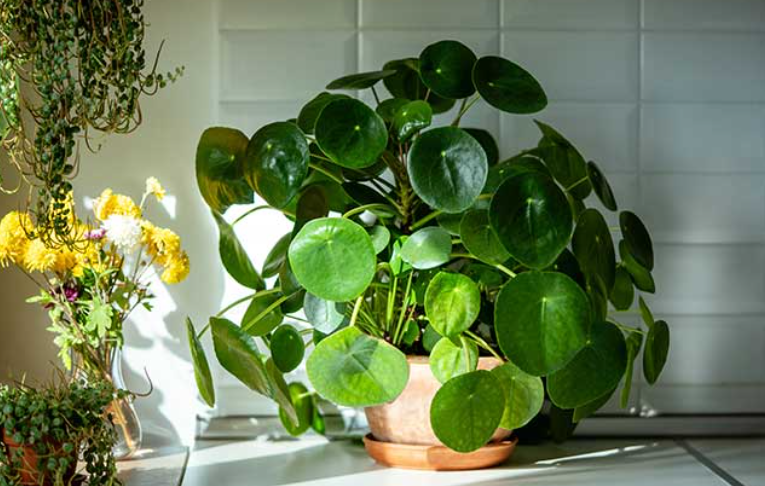
The Coin-Leaf Peperomia is named for its perfectly round, flat, bright green leaves that sit on upright stems and have a clean, minimalist appearance reminiscent of stacked coins. It grows to around 10 to 14 inches tall and is sometimes confused with the Pilea Peperomioides due to its similar leaf shape, though it is a true peperomia with distinctly thicker, more succulent foliage. Its neat, geometric appearance suits contemporary and Scandinavian-inspired interior styles particularly well.
6. Columbian Peperomia
The Columbian Peperomia, sometimes called the Rainbow Peperomia, is a striking trailing variety with oval leaves that are metallic green on the upper surface and vivid red-purple on the undersides, creating a dramatic two-tone effect when the leaves catch light and move. Trailing stems can extend 12 to 20 inches, making it well-suited to hanging baskets and elevated shelves. The contrast between the iridescent upper surface and the rich underside color makes it one of the most visually arresting peperomias available.
7. Parallel Peperomia
The Parallel Peperomia features lance-shaped, slightly succulent leaves with distinctive parallel silver stripes running the length of each blade on a dark green background, giving the foliage a clean, linear pattern quite different from the rounded shapes of many other peperomia types. It grows to 8 to 12 inches tall and has a slightly more upright, spreading habit than the compact rosette-forming types. The crisp striping pattern makes it a popular choice for modern, minimalist plant arrangements.
Also Read: Types of Pothos Plants
8. Napoli Nights
Napoli Nights is a hybrid peperomia that has become enormously popular in recent years, producing round to oval leaves in an exceptionally deep, near-black green that appears almost charcoal or slate-colored in certain lighting conditions. It grows to a compact 6 to 10 inches in height and the dark foliage creates a dramatic contrast when paired with lighter, more brightly colored plants in arrangements. Its moody, sophisticated coloring has made it one of the most sought-after peperomia releases of the past decade.
9. Pixie Peperomia
The Pixie Peperomia is a tiny, delicate variety with small, oval, bright green leaves on slender stems, forming a neat miniature plant that rarely exceeds 5 to 8 inches in height. It is one of the smallest cultivated peperomia varieties and is particularly popular for terrariums, miniature gardens, and small decorative pots where its diminutive scale is an asset rather than a limitation. Despite its small size it is a robust and adaptable grower.
10. Red-Edge Peperomia
The Red-Edge Peperomia produces smooth, glossy, oval green leaves that are beautifully outlined with a thin but vivid red or pink margin running around the outer edge of each blade. It grows to around 8 to 12 inches tall and the red edging is most vivid when the plant receives bright indirect light, sometimes fading to a paler pink in shadier conditions. The fine colored margin gives the leaves a hand-painted quality that makes this variety a popular choice for gift plants.
11. Beetle Peperomia
The Beetle Peperomia is a trailing variety with small, oval, dark green leaves that have a subtle bronze or metallic sheen and a slightly waxy surface texture. Trailing stems reach 12 to 18 inches in length and the dense, small-leafed growth habit creates a lush curtain of foliage when displayed in a hanging basket. It is an easy-going, adaptable variety that tolerates a range of indoor light conditions without significant decline.
12. Cupid Peperomia
The Cupid Peperomia is a variegated trailing variety with heart-shaped leaves edged in creamy white or pale yellow against a mid-green center, creating a soft, romantic color combination that suits the plant’s evocative name. Stems trail to 12 to 20 inches and the plant grows quickly under good conditions, making it one of the more productive trailing peperomias for filling out a hanging basket. The heart-shaped leaves and pale edging give it a gentle, cottage-garden feel.
13. Jelly Peperomia
The Jelly Peperomia is a variegated form with fleshy, oval leaves that blend creamy white, pale pink, and soft green in an irregular, marbled pattern that differs from leaf to leaf. It grows to around 6 to 10 inches tall and the soft pastel tones of its foliage make it one of the more delicate and feminine-looking peperomia varieties. It requires bright indirect light to maintain the most vivid coloring and can revert toward plainer green in insufficient light.
14. Tricolor Peperomia
The Tricolor Peperomia produces oval leaves patterned with a combination of green, cream, and pink tones in an irregular, brushstroke-like variegation pattern that makes each leaf unique. It grows to 8 to 12 inches tall and the pink tones are most pronounced and vivid under bright indirect light. It is a popular choice for colorful indoor plant arrangements where its multi-toned foliage provides visual complexity without requiring flowering to achieve color impact.
15. Fuzzy Mystery Peperomia
The Fuzzy Mystery Peperomia features small, velvety, oval leaves covered in fine soft hairs that give the surface a tactile, almost suede-like quality unlike most other peperomias. It grows to a compact 6 to 10 inches tall and is one of a handful of peperomia varieties where texture rather than color pattern is the primary ornamental feature. The velvety surface tends to trap dust and the plant benefits from gentle cleaning with a soft brush to keep it looking its best.
Also Read: Houseplants That Don’t Need Sunlight
16. Emerald Ripple
The Emerald Ripple is a classic peperomia variety with deeply corrugated, heart-shaped leaves in a rich, saturated emerald green with a slightly waxy surface between the ridges. It typically reaches 6 to 8 inches in both height and spread and is one of the most widely sold ripple-type peperomias in the world. Its compact size, bold texture, and classic green coloring make it an enduring bestseller that suits virtually any indoor setting.
17. Red Ripple Peperomia
The Red Ripple Peperomia shares the deeply ridged, corrugated leaf form of the Emerald Ripple but adds rich burgundy, red-brown, or deep maroon tones to the leaf color, giving it a dramatically darker and moodier appearance. It grows to around 6 to 10 inches tall and is particularly effective when displayed alongside lighter green or silver-toned peperomias to maximize the color contrast. The combination of dark color and heavily textured surface makes it one of the most tactilely interesting peperomia varieties.
18. Silver Ripple Peperomia
The Silver Ripple Peperomia is a corrugated variety similar to the Emerald Ripple in leaf shape but with a distinctive silvery sheen across the raised ridges of the leaf surface, creating a two-tone silver and dark green effect that shifts and shimmers as the viewing angle changes. It reaches 6 to 8 inches in height and spread and is widely regarded as one of the most elegant of the ripple-type peperomias. The silvery highlights give it a sophisticated, almost metallic quality that suits modern interiors well.
19. Peperomia Ginny
Peperomia Ginny, also sold under the name Tricolor or Rainbow Peperomia, is a cheerful variegated variety with fleshy, spoon-shaped leaves edged in pink and cream against a central green zone. It grows to 6 to 10 inches tall and the pink edging intensifies noticeably under brighter light conditions, making placement near a window highly desirable for the best coloring. It is a popular gift plant and a frequent feature of indoor plant subscription boxes.
20. Hope Peperomia
The Hope Peperomia is a trailing hybrid with small, round, succulent-textured leaves in a clean, solid mid-green that cascade elegantly from hanging baskets and shelf edges. Trailing stems can reach 12 to 18 inches in length and the plant grows at a moderate, manageable pace. Its round, paddle-shaped leaves and easy trailing habit make it one of the most versatile and widely recommended beginner peperomias.
21. Peperomia Frost
Peperomia Frost is an exceptionally attractive variety with heart-shaped leaves covered in a soft, frosted silver coating over a pale green base, giving the foliage an icy, luminous quality that inspired its evocative name. It grows to a compact 8 to 12 inches in height and spread and performs beautifully in low to moderate light, where the silver frosting appears almost to glow against darker backgrounds. It is one of the most popular peperomia introductions of the past decade and sells out quickly at many retailers.
22. Peperomia Obtusifolia Variegata
This variegated form of the Baby Rubber Plant produces the same large, glossy, oval leaves but with irregular patches and margins of creamy yellow or white against a mid to dark green center. It grows to 8 to 14 inches tall and is one of the more vigorous variegated peperomias, maintaining good growth rates even in the lower light levels typical of indoor environments. The bold, irregular variegation pattern gives each plant a slightly unique appearance.
23. Peperomia Quadrangularis
This trailing peperomia features small, oval, green leaves with distinctive pale yellow or cream veining that creates a delicate network pattern across the leaf surface. Trailing stems can reach 12 to 20 inches in length and the plant grows in a loose, open trailing habit that looks particularly effective in hanging baskets. The fine vein pattern gives the leaves a hand-drawn, illustrative quality that makes this variety a favorite among botanical enthusiasts.
24. Peperomia Dolabriformis
The Prayer Pepper, as this unusual species is sometimes called, produces highly distinctive folded, succulent leaves shaped like small purses or pockets, with a transparent window along the upper edge that allows light to filter into the leaf interior. It grows to 8 to 12 inches tall with a somewhat shrubby, branching habit unusual among peperomias. The bizarre, sculptural leaf shape makes it one of the most unusual members of the genus and a prized possession among succulent and peperomia collectors.
25. Peperomia Rotundifolia
This delicate trailing species produces tiny, perfectly round, bright green leaves on very slender, wiry stems that cascade 12 to 24 inches in length. The small leaf size — rarely more than half an inch across — and slender stems give the plant an almost moss-like or fern-like delicacy when viewed from a distance. It is particularly effective in terrariums and hanging baskets where its fine texture provides a soft, lacy backdrop to bolder plants.
26. Peperomia Polybotrya
Known as the Raindrop Peperomia, this striking variety produces large, glossy, teardrop-shaped leaves in deep green with a pointed tip that does indeed resemble a raindrop in outline. Individual leaves can reach 3 to 4 inches in length and the whole plant grows to 10 to 14 inches tall with an upright, clumping habit. Its bold, clean leaf shape and glossy surface make it one of the most architecturally appealing peperomia types and it has become extremely popular in recent years.
27. Peperomia Clusiifolia
The Red Edge Peperomia, sometimes also called the Jellie Peperomia, produces thick, fleshy, oval leaves with a red to pink margin running around the leaf edge against a green center that may show hints of cream or yellow variegation in some forms. It grows to 8 to 12 inches tall and is one of the tougher, more drought-tolerant peperomia varieties, making it a reliable choice for forgetful waterers. The combination of fleshy texture and colored margins gives it both succulent appeal and ornamental color.
28. Peperomia Caperata Rosso
Rosso is a cultivar of the corrugated peperomia group distinguished by its deep, corrugated dark green upper leaf surface contrasted with vivid red-purple undersides that show dramatically whenever the leaves curl or tilt. It grows to 6 to 8 inches tall and the two-toned color effect — nearly black-green above and bright red below — makes it one of the most dramatic small peperomias available. It is a slow but steady grower that suits small pots and shelf displays.
29. Peperomia Scandens
The Cupid Peperomia or Piper Peperomia is a vigorous climbing and trailing species with heart-shaped, pale green to yellow-green leaves on long, flexible stems that can reach 24 to 36 inches or more in trailing length. It is one of the faster-growing and more exuberant peperomia types, filling a hanging basket or climbing a small trellis with enthusiasm. A variegated form with cream-edged leaves is also widely available and equally vigorous.
30. Peperomia Albovittata
The Piccolo Banda Peperomia has become one of the most talked-about new peperomia introductions in recent years, producing round to oval leaves with dramatic, wide silver bands alternating with dark green zones across the leaf surface in a bold, graphic pattern. It grows to 8 to 12 inches tall and the high-contrast striping pattern is one of the most visually striking in the entire genus. It has won multiple houseplant awards since its introduction and is in consistently high demand.
31. Peperomia Metallica
The Metallic Peperomia produces narrow, lance-shaped leaves with a stunning iridescent, copper-bronze to red-metallic sheen across the upper surface and deep red-purple on the undersides. It grows to around 8 to 12 inches tall and in good bright indirect light the metallic sheen of the foliage becomes particularly vivid and luminous. It is a collector’s favorite and one of the most visually unusual peperomias in terms of leaf coloration.
32. Peperomia Magnoliifolia
A robust, upright growing variety with large, thick, oval leaves in rich glossy green, sometimes with slight yellow-green variegation in cultivated forms. It grows to 10 to 16 inches tall and is one of the more substantial and structurally bold peperomia types, with an upright branching habit that gives it more of the presence of a small shrub than a compact rosette plant. It is a tough and adaptable variety that tolerates a wide range of indoor conditions.
33. Peperomia Incana
The Felted Peperomia or Amazon Peperomia is a distinctive species with round to oval leaves densely covered in white felt-like hairs on both surfaces, giving the entire plant a soft, woolly, grey-green appearance unlike almost any other peperomia. It grows to 10 to 14 inches tall with an upright, branching habit and the felted leaf surface is so dense that the plant looks almost artificial at first glance. It is a novelty variety of considerable interest to collectors of unusual foliage plants.
34. Peperomia Verticillata
The Red Log or Belly Button Peperomia is a curious upright variety with small, oval, mid-green leaves that are densely arranged in tight whorls of four around each stem, giving the plant a stacked, layered look quite unlike the rosette or trailing forms most peperomias take. It grows to 10 to 16 inches tall and the red-tinged stems add a warm color note that complements the green foliage. The unusual whorled leaf arrangement makes it a popular novelty item among peperomia enthusiasts.
35. Peperomia Nitida
The Cupid Peperomia Nitida is a delicate trailing species with small, heart-shaped, bright green leaves with a glossy, reflective surface that catches light effectively even in lower-light indoor conditions. Trailing stems reach 12 to 20 inches in length and the plant has a fine, airy texture that suits terrariums and hanging displays where delicacy of form is valued. It is a reliable and undemanding species that grows steadily under a wide range of typical indoor conditions.
36. Peperomia Argyreia ‘Watermelon’ Mini
This is a miniature form of the standard Watermelon Peperomia, carrying the same iconic silver and green striped leaf pattern but in a much smaller package, with the whole plant rarely exceeding 4 to 6 inches in height and spread. The tiny scale of the leaves — barely an inch across — makes it particularly endearing and it is widely used in terrarium planting schemes. It is among the most charming of all miniature peperomia varieties.
37. Peperomia Graveolens
The Ruby Glow Peperomia is a highly succulent species with thick, windowed leaves that are deep red on the undersides and edges and translucent yellow-green on the upper surface, allowing light to pass through the leaf tissue in a manner similar to some haworthias. It grows to 8 to 12 inches tall with an upright, branching succulent-like habit and is one of the most drought-tolerant peperomia species in cultivation. The vivid red and green color combination makes it one of the most visually distinctive members of the genus.
38. Peperomia Emarginella
This tiny, trailing peperomia produces minuscule round leaves barely a quarter of an inch across on hair-thin, wiry stems that cascade 8 to 16 inches in length. The extraordinarily fine texture of the plant makes it look more like a delicate aquatic moss than a terrestrial flowering plant and it is one of the most sought-after species for planted terrariums and vivaria. It is a slow-growing specialist plant found primarily in the collections of dedicated peperomia enthusiasts.
39. Peperomia Puteolata
The Parallel Peperomia produces lance-shaped, slightly waxy leaves with bold, parallel silver or cream stripes running the full length of each leaf on a rich green background, creating one of the most graphic and linear leaf patterns in the genus. It grows to 10 to 14 inches tall with a semi-trailing habit and the crisp striping pattern is maintained consistently across all leaves, giving the plant a remarkably uniform, well-designed appearance. It is one of the most popular striped peperomia varieties currently available.
40. Peperomia Tetraphylla
The Acorn Peperomia or Four-Leaf Peperomia is a trailing to cascading species with small, oval, fleshy leaves arranged in groups of four along wiry, trailing stems that can reach 12 to 20 inches. The leaves have a slightly ridged surface and soft green coloring that gives the plant a quiet, understated charm. It is a tough and adaptable species that tolerates neglect well and has a long history of cultivation as a terrarium and hanging basket plant.
41. Peperomia Wheeleri
A rare collector’s peperomia with unusually succulent, club-shaped leaves arranged in upright rosettes on branching stems. It grows to 6 to 10 inches tall and produces leaves that are so thick and fleshy they more closely resemble a stonecrop or sedum than a typical peperomia. It is found primarily in the collections of succulent enthusiasts who prize it for its extreme leaf succulence and unusual three-dimensional rosette form.
42. Peperomia Maculosa
The Radiator Plant Maculosa is a bold upright species with large, oval, leathery leaves up to 4 to 5 inches long in deep, glossy green with white or cream veining that stands out sharply against the dark leaf surface. It grows to 12 to 18 inches tall and the strongly veined leaf pattern gives it a robust, tropical presence more reminiscent of a calathea than a typical compact peperomia. It is one of the larger-leaved cultivated peperomia species.
43. Peperomia Fraseri
The Flowering Peperomia is notable for producing more ornamental flower spikes than most of its relatives, with fragrant, branching white inflorescences that rise well above the foliage and add genuine floral interest to the standard peperomia’s mainly foliage-driven display. The plant grows to 10 to 14 inches tall and produces round to heart-shaped, quilted green leaves with a pleasantly textured surface. It is unusual among peperomias in being grown partly for its flowers rather than exclusively for its foliage.
44. Peperomia Pereskiifolia
This upright peperomia produces whorled leaves — arranged in rings of three to five around each stem — that are oval, slightly leathery, and a deep matte green with subtle bronze undertones. It grows to 10 to 16 inches tall and has a more open, airy structure than the tightly packed rosette-forming types. The whorled leaf arrangement gives it an architectural quality quite different from the mounding habits of most commonly grown peperomias.
45. Peperomia Obtusifolia ‘Golden Gate’
Golden Gate is a striking cultivar with large, glossy, oval leaves boldly variegated in bright golden-yellow and rich green, with the yellow and green zones blending and shifting irregularly from leaf to leaf. It grows to 10 to 14 inches tall and the vivid yellow variegation is among the brightest and most saturated of any peperomia cultivar, making it one of the most eye-catching plants on any shelf or windowsill. It requires good indirect light to maintain the intensity of its yellow coloring.
46. Peperomia Angulata
A neat, trailing peperomia with small, oval, dark green leaves bearing fine parallel light green veining that gives each leaf a subtly striped appearance. Trailing stems reach 12 to 18 inches in length and the plant grows at a moderate, manageable pace that makes it easy to maintain in a hanging basket or on a shelf edge. The fine veining pattern gives the foliage a detailed, intricate quality when viewed up close.
47. Peperomia Orba
Peperomia Orba, sometimes sold as Pixie Lime, produces small, oval, bright lime-green leaves with a slightly waxy surface on a compact, mounding plant that typically reaches 6 to 10 inches in height and spread. The vivid lime-green color of the foliage is unusually bright for a shade-tolerant houseplant and makes it a popular choice for adding a fresh pop of color to indoor plant groupings. A variegated form with cream leaf margins is also widely available.
48. Peperomia Deppeana
A trailing to creeping peperomia species with small, oval, dark green leaves and a spreading habit well-suited to ground cover use in terrariums or as a creeping filler around the base of taller houseplants. Stems trail or spread to 10 to 18 inches in length and the plant forms a low, dense mat of foliage in ideal conditions. It is primarily a terrarium and vivarium specialist plant, valued for its ground-covering ability in humid enclosed environments.
49. Peperomia Rubella
The Itsy Bitsy Peperomia is a tiny, trailing species with minuscule, round, bright green leaves with red undersides arranged on slender red stems, creating a vivid two-tone color effect in miniature. The plant trails to 8 to 14 inches in length and the combination of tiny scale, red stems, and contrasting leaf coloring makes it a particularly charming terrarium plant. It is slow-growing but well worth the patience required to develop a mature, trailing specimen.
50. Peperomia Marmorata
The Silver Heart Peperomia produces heart-shaped leaves with a distinctive marbled pattern of silver-grey and dark green, somewhat similar in concept to the Watermelon Peperomia but with a softer, more blended color transition. It grows to 6 to 10 inches in height and spread and is a compact, well-behaved plant that suits small pots and terrariums. The marbled silver and green foliage gives it a subtle elegance that appeals to those who prefer understated plant colors.
51. Peperomia Caperata ‘Luna Red’
Luna Red is a cultivar of the corrugated peperomia group with deeply ridged, heart-shaped leaves in an unusually deep burgundy-red tone across the entire leaf surface rather than just the undersides. It grows to 6 to 8 inches tall and is one of the darkest-colored peperomia cultivars currently available, with a brooding, intense coloration that makes it a dramatic accent plant in mixed arrangements. The corrugated surface adds textural depth to the already striking dark coloring.
52. Peperomia Hoffmannii
A small, trailing peperomia species with round, slightly succulent, pale to mid-green leaves on delicate, spreading stems that trail to 10 to 16 inches. It is a straightforward, unassuming plant without dramatic variegation or unusual texture, but its reliable trailing habit and easy care make it a useful and adaptable addition to hanging basket arrangements. It is more commonly found in specialist nurseries than mainstream retail outlets.
53. Peperomia Nivalis
The Snow Peperomia is a highly succulent species with very thick, folded, boat-shaped leaves in pale grey-green that are nearly succulent enough to be mistaken for a small crassula or haworthia at first glance. It grows to 4 to 8 inches tall with a compact, branching succulent-like habit and is one of the most drought-tolerant peperomia species in cultivation. It requires very well-drained, gritty soil and minimal watering, making it better suited to a succulent collection than a standard tropical houseplant display.
54. Peperomia Griseoargentea
The Ivy Peperomia or Platinum Peperomia produces deeply quilted, heart-shaped leaves in a soft, uniform silver-grey tone without strong variegation, giving the whole plant a calm, monochromatic appearance. It grows to 6 to 10 inches tall and the subtle quilting of the silver-grey leaf surface creates a gentle play of light and shadow across the foliage. It is an understated, sophisticated variety that pairs beautifully with plants of stronger color or bolder texture.
55. Peperomia Ferreyrae
The Happy Bean Peperomia is a highly unusual succulent species with very narrow, tube-like, bright green leaves that curve slightly inward, resembling tiny green beans or jelly beans clustered on branching upright stems. It grows to 8 to 12 inches tall with an upright, shrubby succulent habit and is one of the most structurally distinctive members of the genus. Its remarkable leaf form makes it an instant conversation piece in any plant collection.
56. Peperomia Urocarpa
This upright, somewhat shrubby peperomia produces oval, smooth, dark green leaves with a slightly glossy surface on branching stems, growing to 12 to 18 inches tall. It is a more substantial and architectural plant than many compact rosette types and has an open, branching habit that gives it the presence of a small indoor shrub. It is primarily found in botanical collections and specialist nurseries.
57. Peperomia Fosteriana
A trailing to semi-upright species with oval, slightly fleshy, pale green to yellowish-green leaves on arching stems that reach 12 to 20 inches in length. The pale, soft coloring of the foliage gives it a gentle, restful quality and it pairs well with more dramatically colored peperomias in mixed displays. It is an adaptable and undemanding species that grows steadily in typical indoor conditions.
58. Peperomia Rana Verde
Rana Verde, meaning Green Frog, is a compact, upright peperomia with oval, fleshy, bright green leaves with a slightly rippled surface texture and a distinctly waxy, reflective upper surface. It grows to 8 to 12 inches tall and is valued for its vivid, consistent green coloring and the subtle textural interest of its slightly puckered leaf surface. It is a reliable, easy-care variety suited to a wide range of indoor environments.
59. Peperomia Perciliata
A rare and delicate trailing species with tiny, round, bright green leaves fringed with minute hairs along their margins, giving the leaf edges a finely ciliated appearance visible under magnification. Trailing stems reach 8 to 14 inches in length and the plant is primarily grown as a specialist terrarium plant where its miniature scale and fine detail can be appreciated at close range. It is a slow-growing species found mainly in the collections of dedicated enthusiasts.
60. Peperomia Elongata
An upright to semi-trailing peperomia with narrow, lance-shaped, mid-green leaves on branching stems that can reach 12 to 18 inches in length. The elongated leaf shape gives it a more linear, grass-like profile than most other cultivated peperomias and makes it useful as a textural contrast plant in mixed houseplant arrangements. It is an adaptable species that tolerates moderate neglect without significant decline.
61. Peperomia Caperata ‘Schumi Red’
Schumi Red is a popular corrugated peperomia cultivar with deeply ridged, heart-shaped leaves in a dark, wine-red to burgundy tone across the upper surface, combined with the characteristic red-purple undersides of the corrugated group. It grows to 6 to 8 inches tall and is one of several red-toned corrugated cultivars that have become widely popular in the houseplant market. Its compact size and rich coloring make it a natural choice for small decorative pots and terrariums.
62. Peperomia Verticillata ‘Belly Button’
The Belly Button Peperomia is a compact, densely branching variety with very small, round, bright green leaves tightly arranged along upright stems in whorls of four, giving the plant an almost coral-like, three-dimensional structure quite unlike most peperomias. It typically stays under 8 inches in height and is enormously popular as a novelty houseplant. The tiny scale of the leaves and the dense, branching structure make it a favorite subject for macro plant photography.
63. Peperomia Rotundifolia ‘Trailing Jade’
Trailing Jade is a cultivar selected from the round-leafed trailing peperomia species for particularly long, vigorous trailing stems and slightly larger, more rounded leaves than the standard species. Stems can reach 20 to 30 inches in trailing length under good conditions, making it one of the better trailing peperomias for creating long, cascading displays from high shelves or large hanging baskets. The plump, round, jade-green leaves are simple and clean in appearance, allowing the trailing form to take center stage.
64. Peperomia Caperata ‘Lilian’
Lilian is a corrugated peperomia cultivar with deeply ridged, heart-shaped leaves in a warm, mid-green tone with more silvery highlights between the ridges than standard Emerald Ripple. It grows to 6 to 8 inches and has a particularly dense, compact rosette habit that makes it one of the tidiest and most symmetrical of the corrugated cultivars. It is a popular choice for gifting and decorative pot displays.
65. Peperomia Clusiifolia ‘Rainbow’
This Rainbow cultivar of the Red Edge Peperomia takes the colored margin concept further, producing thick, oval leaves edged in pink to coral margins against a creamy-white to yellow zone surrounding a green center, creating a three-toned leaf effect that is one of the most colorful in the entire genus. It grows to 8 to 12 inches tall and requires bright indirect light to maintain the full intensity of its pink and cream tones. It is a popular and widely sold variety that delivers genuine multi-color foliage impact.
66. Peperomia Maculosa ‘Variegata’
This variegated form of the bold, large-leaved Maculosa peperomia adds irregular cream and pale yellow patches and margins to the already attractive veined foliage, creating a complex, multi-toned leaf pattern on leaves that can reach 4 to 5 inches in length. The whole plant grows to 12 to 16 inches tall and makes a substantial, eye-catching specimen. It is a less commonly seen variety that is highly prized by collectors of variegated foliage plants.
67. Peperomia Glabella
A trailing to creeping species with small, oval, bright green to yellow-green, glossy leaves on slender stems that trail to 12 to 20 inches in length. It is one of the faster-growing trailing peperomias and fills a hanging basket or cascades from a shelf quickly and reliably. A variegated form with irregular cream and green leaf coloring is also widely available and equally vigorous in growth.
68. Peperomia Axillaris
An unusual succulent peperomia species with very thick, folded, light green leaves that have a transparent windowed upper margin similar to the Dolabriformis variety, allowing light to penetrate into the leaf tissue. It grows to 8 to 12 inches tall with a succulent, branching shrubby habit and is one of several window-leafed peperomia species that bridge the gap between true succulents and typical tropical houseplants. It requires very well-drained soil and careful watering.
69. Peperomia Caperata ‘Teresa’
Teresa is a cultivar of the corrugated peperomia group producing compact, heart-shaped, deeply ridged leaves in a rich, warm burgundy-bronze tone with silvery grey highlights between the ridges, creating a more complex two-tone color effect than many other corrugated types. The plant stays very compact at 5 to 7 inches tall and is one of the most ornamental of the corrugated cultivars. It is widely used in small decorative pot arrangements and terrarium planting schemes.
70. Peperomia Rubella ‘Red’
This cultivar emphasizes the red coloring of the standard Rubella species, producing tiny round leaves with more intensely red-toned undersides and noticeably redder stems than the standard form. The whole plant trails to 8 to 14 inches and is used primarily as a terrarium specialist where the vivid red of the stems and leaf undersides can be appreciated at close range. It requires bright indirect light to maintain the most vivid red coloring.
71. Peperomia Turboensis
A rarely cultivated wild species from the cloud forests of Ecuador, producing small, oval, dark green leaves with a subtly quilted surface texture on trailing stems that reach 10 to 16 inches in length. It is found almost exclusively in specialist collections and botanical gardens. The quilted leaf texture and cloud forest origin make it of particular interest to peperomia specialists and collectors of unusual aroids and related tropical plants.
72. Peperomia Hilariana
A Brazilian species with round to oval, fleshy, mid-green leaves on compact, upright stems reaching 8 to 12 inches in height. It is an unassuming species without dramatic variegation or unusual texture but is valued in specialist collections for its contribution to understanding peperomia species diversity. Under good conditions it grows steadily and produces occasional rat-tail flower spikes typical of the genus.
73. Peperomia Serpens
A vigorous trailing species with small, heart-shaped, mid to light green leaves on long, flexible stems that can trail or climb to 24 to 36 inches or more under ideal conditions. It is one of the faster and more exuberant-growing trailing peperomias and is well-suited to large hanging baskets or training up a small moss pole. The heart-shaped leaves and rapid growth make it a popular choice for gardeners who want a trailing peperomia that fills a space quickly.
74. Peperomia Obtusifolia ‘Minima’
A miniature form of the Baby Rubber Plant with the same glossy, oval, deep green leaves but dramatically reduced in size, with the whole plant reaching only 4 to 7 inches in height. It is an ideal plant for small terrariums, tiny decorative pots, and miniature garden displays. Despite its small size it is a robust and adaptable grower that tolerates the same range of conditions as the full-sized parent species.
75. Peperomia Alata
An upright species with distinctive wing-like, broadly oval, dark green leaves with a slightly wavy margin and a slightly ridged surface, growing to 10 to 16 inches in height. The broadly oval leaf shape and subtle surface texture give it a different architectural quality from the more typical rounded or heart-shaped peperomia leaf forms. It is found in specialist nurseries and botanical collections rather than mainstream retail.
76. Peperomia Caperata ‘Burgundy Ripple’
Burgundy Ripple is one of the most popular corrugated peperomia cultivars, producing deeply ridged, heart-shaped leaves in rich, saturated burgundy-purple tones across the upper surface with matching dark red-purple undersides. It grows to 6 to 8 inches tall and the intense, uniform burgundy coloring is maintained consistently without reverting to green under typical indoor light levels. It is a bestselling variety that has introduced many new gardeners to the corrugated peperomia group.
77. Peperomia Caperata ‘Frost Green’
Frost Green is an unusual corrugated cultivar that pairs the characteristic deeply ridged, heart-shaped leaf form of the caperata group with a soft, frosted, pale silver-green coloring across the upper surface. It grows to 6 to 8 inches tall and the pale frosted tones make it one of the lighter and more ethereal-looking members of a group that tends toward dark, saturated colors. It is an attractive contrast plant when displayed alongside darker corrugated forms.
78. Peperomia Trifolia
A trailing species with small, oval leaves arranged in whorls of three around each stem, giving the plant a structured, layered appearance quite different from the simple alternate-leafed trailing types. Trailing stems reach 12 to 18 inches in length and the whorled leaf arrangement creates an unusual, architecturally interesting texture in hanging basket displays. It is found primarily in specialist collections and botanical reference gardens.
79. Peperomia Albovittata ‘Piccolo Banda’
Piccolo Banda is the named cultivar form of the broad-banded silver peperomia, selected for particularly wide, clearly defined silver bands alternating with rich, dark green zones across round to oval leaves. It grows to 8 to 12 inches tall and has become one of the most award-winning and talked-about peperomia introductions of the past five years, receiving recognition from houseplant trade shows in Europe and the United States. Demand consistently outpaces supply at many specialist retailers.
80. Peperomia Crassifolia
An upright, shrubby peperomia with thick, leathery, oval, deep green leaves on branching stems reaching 12 to 18 inches in height. The substantial thickness of the leaves — noticeably more robust than most peperomia species — gives the plant a tough, drought-resistant quality and a bold, tropical presence. It is a reliable, long-lived houseplant found in the collections of enthusiasts who appreciate structural foliage plants.
81. Peperomia Obtusifolia ‘Marble’
The Marble Peperomia is a cultivar of the Baby Rubber Plant with the same large, glossy, oval leaves but patterned with irregular marbling of cream, pale yellow, and green in a swirled, blended arrangement rather than the clean margins of the standard variegated form. It grows to 8 to 14 inches tall and the marbled pattern gives each leaf a unique, painterly quality. It is a popular gift and decorative plant, widely sold in houseplant boutiques and gift shops.
82. Peperomia Klotzschiana
A Brazilian species with narrow, lance-shaped, slightly fleshy, dark green leaves on upright to semi-trailing stems reaching 10 to 16 inches. It is an understated species without bold variegation but with clean, reliable growth and a more linear leaf form than most commonly grown peperomias. It is primarily found in specialist botanical collections and among dedicated peperomia enthusiasts.
83. Peperomia Campylotropa
A trailing species from tropical Asia with small, round, mid-green leaves on wiry, delicate stems that trail to 10 to 18 inches. It is grown primarily as a terrarium plant where its delicate, fine-textured trailing habit provides a soft, naturalistic backdrop. It is not widely available in mainstream retail and is found mainly in specialist tropical plant nurseries and terrarium specialist outlets.
84. Peperomia Verschaffeltii
The Sweetheart Peperomia produces oval to heart-shaped leaves with attractive silver marbling on a dark green background, creating a pattern somewhat similar to the Watermelon Peperomia but with softer, more blended transitions between the silver and green zones. It grows to 6 to 10 inches tall and the soft marbling pattern gives it an elegant, understated appearance that suits formal and traditional interior styles. It is a collector’s variety found primarily in specialist nurseries.
85. Peperomia Nitida ‘Variegata’
This variegated form of the Cupid Peperomia adds irregular cream to pale yellow margins around the characteristic heart-shaped, glossy green leaves, creating a soft, two-toned trailing plant with genuine ornamental appeal. Trailing stems reach 12 to 20 inches and the light-colored margins brighten the trailing foliage considerably compared to the plain-green species form. It is a popular and widely available trailing variety that suits hanging baskets and shelf-edge displays well.
86. Peperomia Pelucida
The Shiny Bush or Man to Man Peperomia is a small, upright annual or short-lived perennial species with translucent, heart-shaped, bright green leaves that have a distinctive glassy sheen due to their remarkably thin, light-permeable leaf tissue. It grows to 6 to 12 inches tall and is one of a handful of peperomia species with a history of use in traditional herbal medicine across parts of tropical Asia, Africa, and South America. It is primarily a botanical curiosity and specialist collector’s plant rather than a mainstream ornamental.
87. Peperomia Trinervula
A creeping or trailing species with small, oval, dark green leaves marked with three clearly visible parallel veins running the length of each blade, giving the foliage a subtle striped effect when viewed up close. Trailing stems reach 10 to 18 inches in length and the plant grows in a low, spreading habit well-suited to ground covering in terrariums. It is found mainly in specialist tropical plant collections and is rarely available from mainstream retailers.
88. Peperomia Meridana
An upright species from the Andean cloud forests of South America with oval, leathery, matte, mid-green leaves on sturdy branching stems reaching 12 to 18 inches. The matte, non-reflective leaf surface gives it a different quality of light absorption than the many glossy-leafed peperomia types and it adapts well to the cooler temperatures of highland-inspired indoor environments. It is a specialist collector’s plant found primarily in botanical garden collections.
89. Peperomia Vulcanica
Named for its origin on volcanic substrates in highland tropical regions, this upright species produces oval, slightly fleshy, dark, matte green leaves on sturdy stems reaching 10 to 16 inches in height. It is a robust and adaptable species that tolerates poorer soils and lower humidity than many of its relatives, reflecting its origin in challenging volcanic terrain. It is found in specialist botanical collections and among peperomia species enthusiasts.
90. Peperomia Adspersa
A small, trailing to creeping species with round to oval, mid-green leaves lightly speckled with pale markings that give the foliage a subtle spotted or dusted appearance. Trailing stems reach 10 to 16 inches and the plant grows in a low, spreading mat in ideal conditions. It is a terrarium specialist found mainly in the collections of vivarium builders and dedicated peperomia enthusiasts.
91. Peperomia Obtusifolia ‘Sunset’
Sunset is a vibrantly colored cultivar with large, glossy, oval leaves boldly variegated in combinations of red, orange, yellow, and green that shift and blend across the leaf surface in a warm, sunset-inspired palette. It grows to 8 to 14 inches tall and is one of the most dramatically colored peperomia cultivars available, delivering genuine multi-color foliage impact without requiring flowers or fruit. It requires bright indirect light to maintain the full richness of its warm-toned variegation.
92. Peperomia Caperata ‘Suzanne’
Suzanne is a corrugated peperomia cultivar with deeply ridged, heart-shaped leaves in a warm, mid-green tone with distinctive silver highlights between the ridges that are more pronounced than in the standard Emerald Ripple. It grows to 6 to 8 inches tall and has a particularly symmetrical, well-formed rosette habit that makes it one of the more ornamentally perfect of the corrugated types. It is a popular variety in European houseplant markets.
93. Peperomia Camptotricha
The Fuzzy Leaf Peperomia is an upright to semi-trailing species with oval, medium-green leaves densely covered in fine, soft white hairs that give the foliage a velvety, frosted appearance. It grows to 10 to 16 inches tall and the fuzzy leaf surface distinguishes it clearly from the many smooth-leafed peperomia species. It is an adaptable, easy-care species suitable for a wide range of indoor environments.
94. Peperomia Rotundifolia ‘Yerba Linda’
Yerba Linda is a cultivar of the round-leafed trailing species selected for particularly lush, dense growth and slightly larger, more rounded leaves than the standard form. Trailing stems reach 16 to 24 inches in length under good conditions and the plant fills a hanging basket or cascades from a shelf with pleasing density. It is a popular and widely available trailing variety that suits both traditional and contemporary indoor settings.
95. Peperomia Albovittata ‘Rana Verde’
Rana Verde is a variant of the bold-striped albovittata group with slightly rounder leaves and silver banding that is marginally softer and less high-contrast than the Piccolo Banda cultivar, giving it a slightly more understated character. It grows to 8 to 12 inches tall and is a reliable, steady-growing plant that adapts well to a range of typical indoor light conditions. It is a popular and widely available variety in European houseplant markets.
96. Peperomia Pseudovariegata
An unusual trailing species with small, oval, mid-green leaves marked with irregular pale green to white patches and spots that give the foliage a naturally variegated appearance not produced by human selection but inherent to the wild species. Trailing stems reach 12 to 18 inches in length and the naturally occurring pseudo-variegation pattern gives each plant a slightly different and unique appearance. It is found primarily in specialist tropical plant collections and botanical reference gardens.
97. Peperomia Obtusifolia ‘Greengold’
Greengold is a compact cultivar of the Baby Rubber Plant with large, glossy, oval leaves variegated in a two-tone pattern of rich green and bright golden-yellow that blends in soft, irregular zones across each leaf. It grows to 8 to 12 inches tall and the warm gold and green combination gives it a vibrant, cheerful appearance that suits informal and cottage-inspired interior styles. It is a widely available and reliably popular cultivar that performs consistently well under typical indoor conditions.