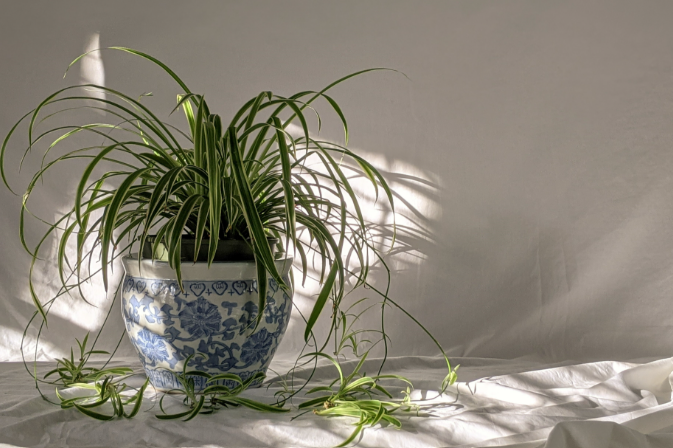
Spider plants (Chlorophytum comosum) are among the most widely grown houseplants in the world, recognized for their long, arching leaves and the cascading baby plantlets they produce on long, slender stems called stolons. Native to tropical and southern Africa, they have been cultivated as ornamental plants for over 200 years and are now found in homes, offices, and public spaces across every continent. Studies have consistently ranked spider plants among the top five most popular houseplants globally, and they remain a fixture in the houseplant trade to this day.
One of the most compelling qualities of spider plants is their resilience and adaptability. They tolerate a wide range of light conditions, from low indoor light to bright indirect sun, and can survive periods of neglect that would kill more sensitive plants. NASA’s Clean Air Study, conducted in 1989, found that spider plants were effective at removing formaldehyde, xylene, and carbon monoxide from indoor air, removing up to 95% of toxic agents from a sealed chamber over 24 hours. This finding significantly boosted their popularity as a functional as well as decorative plant.
Spider plants are prolific growers, capable of producing dozens of plantlets per year under the right conditions. A single mature plant can generate between 20 and 50 offsets annually, making them one of the easiest houseplants to propagate and share. They are non-toxic to humans and are listed by the American Society for the Prevention of Cruelty to Animals (ASPCA) as non-toxic to dogs and cats, though ingestion in large quantities may cause mild gastrointestinal upset. This safety profile makes them a top choice for households with children and pets.
Spider plants are incredibly versatile in their growth habit, thriving equally well in hanging baskets, on shelves, in pots on windowsills, and even as ground cover in frost-free outdoor gardens. They prefer temperatures between 55°F and 80°F (13°C–27°C) and do best in well-draining potting mix with moderate watering. There are over 200 documented species within the Chlorophytum genus, though only a handful are commonly cultivated, with Chlorophytum comosum and its many cultivars dominating the houseplant market by a wide margin.
Also Read: Most Popular Types of Aloe Plants
Types of Spider Plants
1. Vittatum
Vittatum is the quintessential spider plant — the variety most people picture when the name is mentioned — with medium green leaves bearing a broad white or cream stripe running cleanly down the center of each blade. Plants typically reach 12 to 18 inches tall and spread up to 24 inches wide including their trailing runners, making them a medium-sized variety well-suited to hanging baskets and tabletop pots. It is one of the oldest cultivated varieties in existence and remains one of the most widely sold houseplants anywhere in the world.
2. Variegatum
Variegatum reverses the color arrangement of Vittatum, displaying dark green leaves edged with wide white or cream margins while the center of each leaf remains a rich, solid green. It grows to roughly the same dimensions as Vittatum — around 12 to 18 inches tall with a spread of up to 24 inches — but tends to develop at a slightly slower pace. The bold contrast between the dark green center and pale outer edges gives it a crisp, polished appearance that suits contemporary interiors particularly well.
3. Bonnie
Bonnie is a compact, curly-leafed cultivar whose leaves spiral and twist as they grow, forming a tighter and more textural rosette than the flat-leafed standard varieties. It stays noticeably smaller than most spider plants, typically reaching only 8 to 12 inches in height and spread, making it one of the better choices for small shelves and windowsill pots. Despite its smaller size it still produces the cascading pups that make spider plants so rewarding to grow, and its curly foliage gives hanging displays an especially playful, whimsical look.
4. Ocean
Ocean is a neat, restrained cultivar with narrow dark green leaves cleanly edged in bright white, growing to a compact 8 to 12 inches in height with a similar spread. Its tidy, controlled habit makes it a popular choice for terrariums, small hanging baskets, and indoor arrangements where a more contained plant is preferred over the generous spread of larger cultivars. It is widely sold in retail and commercial settings precisely because it stays manageable and attractive without requiring much intervention.
5. Reverse Variegatum
Reverse Variegatum places a solid green stripe down the center of each leaf with cream or white margins flanking it on both sides, the exact opposite of the standard Variegatum pattern. It grows to around 12 to 18 inches tall and produces a moderate number of trailing runners, performing well in both hanging baskets and standard pots. The bold geometric contrast of its leaf patterning makes it one of the more visually striking cultivars among the standard variegated types.
6. Hawaiian
The Hawaiian spider plant is notable for its deep, uniformly rich green foliage with minimal to no white striping, giving it a lush, tropical presence quite different from the variegated forms that dominate the market. It grows to around 12 to 20 inches in height and tends to produce a full, dense clump of foliage. It is less commonly available than striped varieties but appeals strongly to those who prefer a bold, solid-colored tropical aesthetic.
7. Mandaianum
Mandaianum is a dwarf cultivar with short, narrow leaves marked by a warm yellow central stripe instead of the white or cream seen in most other varieties. It typically stays under 8 inches in height, making it one of the smallest spider plant cultivars available and an excellent candidate for miniature container gardens and small decorative pots. The golden-yellow tone of the central stripe gives it a distinctly warmer character than most of its relatives.
8. Zebra
The Zebra spider plant stands out for its bright yellow margins running along the outer edges of its dark green leaves, producing a bolder and more vivid color contrast than the softer cream-edged cultivars. It grows to around 10 to 14 inches tall and is an active producer of trailing runners and pups throughout the growing season. The yellow edging matures to white or cream on older leaves, creating an interesting two-toned effect across the same plant as new and old foliage coexist.
9. Atlantic
Atlantic is a vigorous, upright-leaning cultivar with medium green leaves carrying a central white stripe and broader, slightly more robust foliage than Vittatum. It reaches 12 to 18 inches tall and shows notably good tolerance for low humidity levels, making it particularly well-suited to dry offices and air-conditioned indoor spaces where many houseplants struggle. It is a reliable, free-propagating variety prized by growers for its ease of care and consistent performance.
10. Green
The all-green spider plant produces uniformly dark, lush green strap-shaped leaves with no variegation of any kind, offering a tropical fullness quite different from the striped forms most people associate with the species. It grows vigorously, reaching 12 to 20 inches tall, and produces dense, full clumps with freely cascading stolons that carry attractively all-green pups. While less commonly sold than variegated forms, it makes an elegant statement when displayed on its own.
Also Read: Different Types of Succulents
11. Picturatum
Picturatum features a warm yellow central stripe through medium green leaves, offering a softer and more golden-toned look than the cooler white-striped standard cultivars. It typically grows to 12 to 16 inches in height and the yellow coloring becomes more vivid and saturated when the plant is placed in bright indirect light. It is an older variety that has become something of a collector’s item, less widely available commercially than it once was.
12. Fire Flash
Fire Flash is one of the most visually dramatic members of the broader spider plant family, producing broad, glossy dark green leaves up to 12 to 15 inches long with brilliant orange to coral-red stems and midribs that create a vivid tropical color display. The whole plant typically reaches 12 to 18 inches in height and spread and grows as a bold rosette without producing the trailing runners and baby pups of common spider plant types. Its striking coloration has made it a highly sought-after collector’s houseplant.
13. Curly
The Curly spider plant takes twisting, spiraling foliage to an extreme, with leaves that coil and loop in exaggerated curves as they grow and tumble over the edges of containers. It grows to about 10 to 14 inches tall but the cascading curled leaves can extend considerably further downward, making it especially eye-catching in hanging baskets. The foliage typically carries the classic green and cream central stripe alongside its distinctive curled form.
14. Long Leaf
The Long Leaf spider plant produces foliage that grows considerably longer than standard varieties, with individual leaves sometimes reaching 18 to 24 inches in length and creating a dramatic, fountain-like silhouette. It is best displayed on tall pedestals, high shelves, or in large hanging baskets where the long leaves can sweep freely downward without touching surfaces. In the right setting it is one of the most architecturally impressive spider plant varieties.
15. Silver
The Silver cultivar has a soft, luminous quality to its foliage, with a very pale, almost white central stripe on leaves that tend toward a lighter, silvery green tone overall. The whole plant typically reaches 12 to 18 inches tall and in good indirect light takes on a subtle metallic sheen across its foliage that distinguishes it from other striped types. It is an understated, elegantly cool-toned variety that suits minimalist and modern interior styles particularly well.
16. Golden Glow
Golden Glow produces leaves edged in warm golden-yellow rather than the white or cream of most other variegated types, giving the whole plant a cheerful, sun-warmed appearance. It grows to around 10 to 16 inches tall and the golden margins are most vivid in bright indirect light, sometimes softening toward cream in shadier conditions. It is a compact and attractive cultivar that performs reliably both indoors and in sheltered outdoor spots in warm climates.
17. Milky Way
Milky Way features fine, scattered white speckling and irregular streaking across its green leaves rather than the clean stripes or solid margins of more standard varieties. It grows to around 12 to 18 inches tall and each leaf carries a slightly different pattern of speckling, meaning no two leaves on the same plant look identical. It is a specialist cultivar more commonly found in collector circles than mainstream nurseries.
18. Starlight
Starlight is a high-contrast cultivar with exceptionally vivid white margins on very dark green leaves, producing one of the most visually striking foliage displays in the entire spider plant family. It reaches 12 to 18 inches in height and the strong contrast between the dark center and brilliant white edges is particularly effective in lower-light rooms, where the white margins appear almost luminous. It is a vigorous grower that produces pups freely and is widely admired by enthusiasts.
19. Vittatum Compactum
This is a miniature dwarf form of the classic Vittatum, carrying the same clean cream central stripe on green leaves but in a much more restrained, compact habit that rarely exceeds 6 to 10 inches in height and spread. It is one of the smallest spider plant cultivars available and is ideally suited to miniature gardens, small terrariums, and tiny decorative pots where a full-sized spider plant would quickly outgrow the space. Despite its size it produces proportionally sized pups and runners just like its larger parent.
20. Bichetii
Often sold as the Narrow-Leaf Spider Plant, Bichetii produces very narrow, grass-like leaves with clean white margins growing in a tight, upright clump that typically reaches 10 to 14 inches in height. Unlike most spider plant types it does not produce trailing runners or pups, making it a far more contained and formally structured plant than its prolifically self-propagating relatives. It is a popular edging plant in tropical gardens and a neat, well-behaved indoor foliage plant.
21. Dark Green
The Dark Green cultivar delivers uniformly deep, glossy green foliage without any variegation, similar to the plain green variety but with leaves that are noticeably darker and carry a richer, more lustrous surface sheen. It grows to 12 to 20 inches tall and creates a bold tropical impression that provides strong visual contrast when displayed alongside heavily variegated neighbors. Under good light and regular feeding it forms a dense, full clump with freely cascading stolons.
22. Mediopictum
Mediopictum features a soft, muted yellow stripe running through the center of otherwise mid-green leaves, offering subtler and more gentle variegation than most other cultivars. It grows to around 12 to 16 inches and in lower light conditions the yellow stripe can deepen or fade over time, meaning plants from the same original clump may develop slightly different appearances depending on their individual light histories. Its warm, quiet coloring appeals to those who prefer softer, less contrasty foliage tones.
23. Spider Ivy
Spider Ivy is a trade name applied to trailing forms of spider plant that are specially selected and grown to emphasize their long, sweeping runners rather than the central foliage rosette. The trailing stolons on well-grown specimens can extend 24 to 36 inches or more from the mother plant, creating dramatic curtains of cascading greenery from hanging baskets. The foliage is typically striped in the classic Vittatum pattern but the plant’s exceptional trailing form is its defining selling point.
24. White Stripe
White Stripe is similar to Vittatum in its overall color arrangement but distinguished by a slightly narrower central stripe and somewhat finer, more delicate foliage that gives the entire plant a lighter, more airy quality. It grows to 12 to 18 inches tall and adapts easily to hanging baskets, shelf pots, and windowsill containers. For gardeners who love the classic striped look but prefer a subtler, less bold expression of it, White Stripe is an excellent choice.
Also Read: Different Types of Cactus Plants
25. Purple
Select spider plant cultivars develop purplish or reddish tints on the undersides of their leaves, most visibly in response to high light levels or cooler growing temperatures, with the coloration intensifying noticeably during autumn and winter months. These varieties, sometimes sold informally as Purple spider plants, typically reach 10 to 16 inches in height and owe their unusual coloring to anthocyanin pigments triggered by environmental conditions. They are sought after by collectors who appreciate the way their appearance shifts subtly with the changing seasons.
26. Stepping Stones
Stepping Stones is a cultivar selected specifically for its unusual runner pattern, in which baby pups appear at widely and evenly spaced intervals along the trailing stolons rather than clustering more densely as in standard types. The runners can reach 24 to 36 inches in length with pups spaced several inches apart, creating the visual impression of stepping stones or a dotted line hanging from the mother plant. It is a genuine conversation piece and is shown at its best in large hanging baskets where the full length of the runners can be appreciated.
27. Hairy Leaf
Hairy Leaf is a novelty cultivar whose leaves have a slightly rough, softly pubescent texture, quite unlike the typically smooth, clean-surfaced foliage of standard spider plant varieties. It grows to around 10 to 16 inches tall and has the same general care requirements as common types, with the textured foliage being its sole and primary distinguishing characteristic. It is found mainly in specialist nurseries and collector plant sales rather than mainstream garden centers.
28. Safed Musli
Safed Musli is a species closely related to the common spider plant, cultivated not for ornamental purposes but for its thick, fleshy tuberous roots which have been used for centuries in traditional Ayurvedic and Unani medicine. The plant grows to 12 to 18 inches tall, produces attractive white flowers, and generates roots that can weigh up to 200 grams per plant under good cultivation conditions. The Indian commercial market for its roots is estimated to be worth tens of millions of dollars annually, reflecting extraordinary demand from the herbal health industry.
29. Amani Spider Plant
The Amani spider plant is a larger, more architectural wild relative of the common spider plant, native to the montane forests of northeastern Tanzania, and grows as a bold foliage specimen reaching 18 to 30 inches in height. Its leaves are broader and darker green than the typical cascading varieties, and it does not produce the freely spreading pups and runners that make the common species so prolific. It is grown primarily by botanical collectors and enthusiasts who appreciate its sculptural, upright form.
30. Cape Spider Plant
The Cape spider plant is a wild South African species that produces longer and broader leaves than the common spider plant, forming a spreading clump that can reach 18 to 24 inches tall and 24 to 36 inches wide at maturity. It has proven so tough and adaptable that it has naturalized in parts of Australia, New Zealand, and several Mediterranean countries after escaping cultivation, establishing itself as a garden escapee in favorable climates. In its native habitat it colonizes shaded rocky slopes, forest margins, and stream banks.
31. Indian Grassland Spider Plant
This lesser-known wild species from the open woodlands and grasslands of the Indian subcontinent produces narrow, grass-like foliage in dense rosettes typically reaching 10 to 15 inches in height. It is notably drought-tolerant once established and bears small, attractive white flowers on slender stems during the blooming season. Its tolerance for dry, hot conditions makes it of particular interest to researchers and breeders working on drought-tolerant ornamental plant varieties.
32. Himalayan Spider Plant
The Himalayan spider plant naturally occurs at elevations above 5,000 feet across Nepal and the surrounding Himalayan region, making it one of the most cold-tolerant members of the extended spider plant family. It grows as a modest clump of narrow, linear leaves reaching 8 to 14 inches tall and bears small white flowers on slender scapes during its blooming period. It is found primarily in specialist botanical collections and is of significant interest to breeders exploring cold-hardy ornamental varieties for temperate climates.
33. West African Forest Spider Plant
This large wild species from the humid forest understories of West and Central Africa produces impressively broad leaves that can reach 3 to 4 inches across and grow to 18 to 30 inches in length, giving the whole plant a bold, tropical architectural presence. It grows in deep shade beneath the forest canopy, making it extremely shade-tolerant compared to most spider plant relatives. It is occasionally cultivated as a specimen foliage plant in tropical gardens and heated conservatories where its sheer leaf size commands attention.
34. South African Star-Flower Spider Plant
Native to southern Africa and parts of Eswatini, this attractive species grows to 12 to 20 inches tall and produces notably showy white star-shaped flowers on branching stalks that rise well above the foliage. The flowers are more ornamental and freely produced than those of most spider plant relatives, making this species useful as both a foliage and flowering plant in shaded garden beds. It is occasionally available from specialist nurseries serving subtropical and warm-temperate climates.
35. Aerial Rhizome Spider Plant
This distinctive Central African wild species is botanically unusual within the spider plant family for producing aerial rhizomes — structures that extend outward from the plant above soil level rather than underground. The plant grows to around 12 to 18 inches tall and is cultivated almost exclusively in specialist botanical collections and research gardens. Its primary value is to plant scientists and taxonomists studying the remarkable evolutionary diversity of the spider plant group.
36. Lax Spider Plant
The Lax spider plant is a wild relative of the common species native to India and parts of Southeast Asia, growing to around 10 to 16 inches tall with a more open, spreading habit than its compact relatives. It is the parent species from which the popular Zebra cultivar was developed and in its natural form displays attractive white-margined foliage similar to what Zebra is known for. It is less cold-tolerant than the common spider plant and performs best in consistently warm indoor or tropical outdoor environments.
Also Read: Houseplants That Like Coffee Grounds
37. Broad-Leaf African Spider Plant
This robust wild species grows naturally across a wide belt of sub-Saharan Africa, producing broader and more substantial foliage than most of its relatives and reaching 15 to 24 inches in height at maturity. It bears attractive white flower spikes during the blooming season and is more tolerant of open, lightly shaded conditions than many spider plant relatives that prefer deeper shade. It is occasionally grown as a ground cover in tropical and subtropical gardens where its bold leaf texture and seasonal flowers provide useful visual interest.
38. Grassland Rosette Spider Plant
This compact wild species native to the open savannas of sub-Saharan Africa grows as a low, self-contained rosette of narrow leaves rarely exceeding 8 to 12 inches in height, hugging close to the ground in its natural grassland habitat. It is exceptionally drought-tolerant, surviving extended dry seasons that would devastate most ornamental plants, and it recovers quickly once rainfall returns. It is primarily of interest to botanical researchers and plant breeders working on stress-tolerant ornamental varieties rather than mainstream gardeners.
39. Woodland White Spider Plant
Found naturally in shaded woodland and forest-margin habitats across southern Africa, this species grows to 12 to 18 inches tall and produces clean green foliage alongside attractive sprays of small white flowers that are more freely and abundantly produced than in many of its relatives. The white flowers are effective at brightening shaded garden corners during the blooming season and the plant works well as a low-maintenance ground cover under trees. It is occasionally available from specialist nurseries in subtropical and warm-temperate regions.
40. Borivili Spider Plant
The Borivili spider plant is a commercially important species grown extensively across parts of western and central India, cultivated primarily for its thick, fleshy white tuberous roots used in traditional herbal medicine rather than as an ornamental plant. Individual plants grow to around 12 to 18 inches tall and can produce tuberous roots weighing up to 150 grams each under good agricultural conditions. Global interest in its cultivation has expanded significantly in recent decades as demand for natural health products has grown, and dedicated cultivation plots are now found outside of India in parts of Southeast Asia and Africa.