Succulents are often celebrated primarily for their architectural foliage — their geometric rosettes, sculptural stems, and extraordinary range of colors and textures. Yet some of the most breathtaking floral displays in the entire plant kingdom are produced by succulents, plants that combine the structural elegance of water-storing tissues with flowers of remarkable beauty, size, and diversity. From the towering candelabra flower spikes of agaves to the jewel-bright daisy carpets of South African ice plants, flowering succulents offer a visual richness that rivals any other plant group.
The relationship between succulents and their flowers is one of evolutionary precision. In the arid and semi-arid habitats where most succulents originate, flowering is a carefully timed, energy-intensive event, often triggered by specific environmental cues such as temperature change, rainfall, or day length. The flowers themselves are frequently adapted to highly specific pollinators — hummingbirds, sunbirds, hawk moths, bats, and specialized bee species — and the co-evolutionary relationships between succulents and their pollinators have produced some of the most intricate and beautiful floral forms in the natural world.
Commercially, the flowering succulent market has never been stronger. The global succulent industry is estimated to be worth over $2 billion annually, with flowering varieties consistently commanding premium prices over purely foliage-based plants. Consumer research consistently shows that the addition of flowers significantly increases the purchase likelihood of succulent plants, with surveys indicating that over 65 percent of ornamental plant buyers prefer succulents that offer both attractive foliage and seasonal blooms. Hybridizers in the Netherlands, Japan, South Africa, and the United States continue to push the boundaries of what is possible, introducing new flowering cultivars each year with larger, more vivid, and longer-lasting blooms.
Whether grown in outdoor rock gardens, terracotta containers on sun-drenched patios, hanging baskets in conservatories, or on bright indoor windowsills, flowering succulents reward their growers with seasonal displays of extraordinary beauty. The combination of low maintenance requirements and spectacular flowering performance makes them among the most satisfying plants a gardener or plant enthusiast can grow. The following 70 plants represent the full breadth and brilliance of flowering succulents, spanning multiple continents, dozens of genera, and every color of the floral spectrum.
1. Flaming Katy (Kalanchoe blossfeldiana)
Flaming Katy is the undisputed bestselling flowering succulent houseplant in the world, a compact Madagascan species bearing dense clusters of small, vivid flowers in red, orange, pink, yellow, and white above thick, glossy, scallop-edged leaves. It is a short-day plant, naturally blooming in winter and spring when day length decreases, and commercial growers manipulate light conditions to produce flowering plants year-round for the retail market. Annual global production of Kalanchoe blossfeldiana is estimated at over 100 million plants, with the Netherlands alone producing tens of millions for the European market each year.
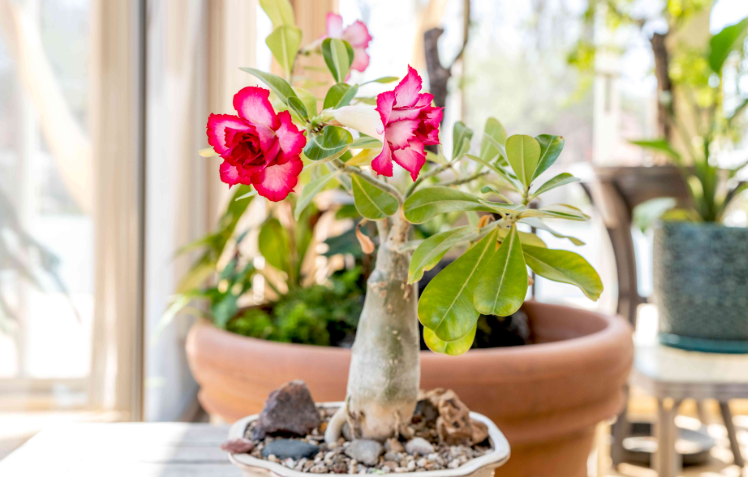
2. Desert Rose (Adenium obesum)
Desert rose is one of the most dramatic and coveted of all flowering succulents, producing a swollen, sculptural caudex base from which slender branches bear clusters of large, trumpet-shaped flowers in vivid reds, pinks, and whites. Native to the arid regions of sub-Saharan Africa and the Arabian Peninsula, it has been extensively hybridized, particularly in Thailand and Taiwan, where elaborate double-flowered and multicolored cultivars fetch remarkable prices. Collector-grade adenium specimens in Southeast Asia can command prices of several hundred to several thousand dollars per plant.
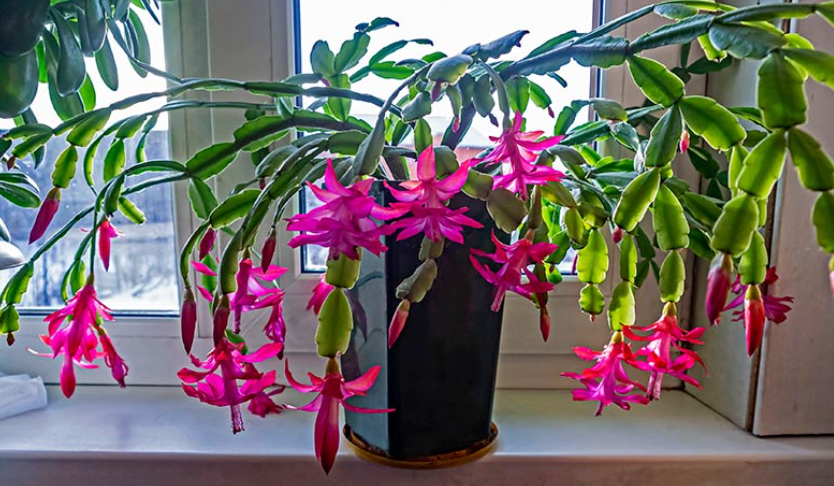
3. Christmas Cactus (Schlumbergera bridgesii)
Christmas cactus is a Brazilian forest epiphyte producing flattened, segmented stems and spectacular pendulous, tubular flowers in red, pink, white, and orange during the winter holiday season. It is one of the most widely owned flowering houseplants in the world, beloved for its reliable annual blooming and its remarkable longevity — well-maintained specimens are known to live for 20 to 30 years or more, often passed down through generations as treasured family plants. Day length and temperature changes trigger bud formation, and a cool, slightly dry autumn rest is the key to reliable flowering.
Also Read: Succulent Plants With Red Flowers
4. Thanksgiving Cactus (Schlumbergera truncata)
Thanksgiving cactus is closely related to Christmas cactus but blooms several weeks earlier, typically in late October and November in the Northern Hemisphere, with tubular flowers in red, orange, pink, and white. It is distinguished from Christmas cactus by its stem segments, which have pointed, claw-like projections rather than the smooth, rounded margins of the true Christmas cactus. The two species are frequently mislabeled in retail settings, causing confusion among buyers who expect their plant to bloom at Christmas but find it flowering weeks earlier.
5. Easter Cactus (Hatiora gaertneri)
Easter cactus completes the trio of popular holiday epiphytic cacti, producing its large, star-shaped flowers in vivid scarlet to pink during the Easter period in spring. Native to the Atlantic coastal mountains of southeastern Brazil, it requires a distinct cool, dry winter rest to set buds reliably, making it slightly more demanding than its holiday cactus relatives. It is a genuinely beautiful plant that deserves far wider cultivation than it currently receives, as its spring flowers are among the most showy produced by any epiphytic cactus.
6. Aloe Vera (Aloe vera)
Aloe vera is the most commercially important succulent species on earth, cultivated across tropical and subtropical regions worldwide for the soothing gel in its thick, fleshy leaves. Mature plants produce tall, unbranched flower spikes bearing tubular, yellow to orange flowers in summer that attract bees and hummingbirds in warm climates. The global aloe vera industry is valued at over $600 million annually, spanning cosmetics, pharmaceuticals, food, and traditional medicine. Despite its enormous commercial importance, the flowering aloe vera plant is also a genuinely attractive ornamental for warm gardens and bright indoor spaces.
7. Torch Aloe (Aloe arborescens)
Torch aloe is one of the most spectacular of all flowering succulents, producing tall, torch-like spikes of brilliant scarlet to orange-red tubular flowers from late autumn through winter — a season when relatively few garden plants are in bloom. It forms large, multi-stemmed clumps of toothed, gray-green leaves that can reach 6 to 10 feet over time, and a mature clump in full flower is a sight of extraordinary impact. It is an exceptionally important plant for wildlife, providing critical nectar for sunbirds, bees, and other pollinators during the lean winter months.
8. Coral Aloe (Aloe striata)
Coral aloe is one of the most refined and elegant aloe species for ornamental use, producing broad, smooth-edged, pale gray-green leaves with distinctive pink to coral margins and striking striped patterning. In late winter and spring, branched flower stems carry dense clusters of tubular, coral-orange flowers that are highly attractive to sunbirds and hummingbirds. Unlike most aloes, the leaf margins are smooth rather than toothed, giving the plant a cleaner, more elegant appearance that suits both formal and informal garden styles.
Also Read: Best Trailing Plants for Pots and Containers
9. Century Plant (Agave americana)
Century plant is the most widely recognized of all agave species, producing enormous rosettes of thick, gray-green, sharply spined leaves before sending up a towering flower spike of 20 to 30 feet after 10 to 30 years of growth. The flower spike bears thousands of yellow-green, tubular flowers arranged in large, branching clusters that attract hummingbirds, bats, and numerous insect pollinators. After flowering, the main rosette dies in the natural monocarpic cycle, but produces numerous offsets that carry on the colony. The scale and drama of the flowering event are unmatched in the succulent world.
10. Red Hot Poker (Kniphofia uvaria)
Red hot poker is a bold, clump-forming plant with strap-like leaves and tall, upright flower spikes bearing dense, poker-like heads of tubular flowers that open orange-red at the top and fade to yellow at the base. Though not a true succulent in the strictest sense, its thick, fleshy roots and exceptional drought tolerance firmly place it within the water-wise succulent garden tradition. It is one of the most widely grown drought-tolerant ornamentals in temperate gardens worldwide, with hundreds of named cultivars offering a full range of colors from cream and pale yellow through orange to deep red.
11. Ghost Plant (Graptopetalum paraguayense)
Ghost plant is a popular Mexican succulent with loose rosettes of thick, waxy, pale lavender-pink to silvery-gray leaves that take on warmer tones in strong sunlight. In spring, arching stems carry small, star-shaped flowers in white to pale yellow with fine red spotting. It is one of the most forgiving succulents available, tolerating irregular watering, lower light levels, and a range of temperatures, making it an ideal choice for beginners. Its ease of propagation from leaf cuttings has made it one of the most widely shared and traded succulents in the collector community.
12. Pincushion Cactus (Mammillaria hahniana)
Old lady cactus, as this species is also known, is a globe-shaped Mexican cactus densely covered in soft, white, hair-like spines that give the entire plant a woolly appearance. In spring, a crown of small, vivid pink to magenta flowers encircles the top of the plant in a charming ring. Mammillaria is the largest genus in the cactus family, with over 200 recognized species, all native to Mexico and the American Southwest. This genus accounts for a significant share of all cactus sold in the global ornamental plant market.
13. Lace Cactus (Echinocereus reichenbachii)
Lace cactus is a columnar to clustering cactus from the grasslands of Texas and Oklahoma, covered in dense, interlocking, comb-like spines of white and pink. In late spring, large, brilliant pink to magenta flowers with pale centers appear — among the most beautiful blooms produced by any cold-hardy cactus. It tolerates temperatures well below freezing when kept dry in winter, making it one of the most cold-hardy flowering cacti for temperate gardens. The combination of attractive spine patterning and spectacular spring flowers makes it a dual-season ornamental of considerable value.
14. Golden Barrel Cactus (Echinocactus grusonii)
Golden barrel cactus is one of the world’s most iconic ornamental cacti, forming a perfectly round to barrel-shaped body densely armed with ribs bearing clusters of golden-yellow spines. In summer, a ring of small, yellow flowers appears at the crown, partially hidden among the dense wool and spines. Native to a restricted area of central Mexico, it is now endangered in the wild but is one of the most widely produced cacti in global horticulture, with millions of plants cultivated annually. It grows slowly, taking a decade or more to reach a foot in diameter.
15. Cape Aloe (Aloe ferox)
Cape aloe is a majestic, single-stemmed species from South Africa producing dramatic candelabra-like flower heads bearing dense spikes of brilliant orange-red blooms in late winter. The tall stem can reach 6 to 10 feet and the flowers provide a vital nectar source for birds and insects during the coldest months of the year. Beyond its ornamental value, Aloe ferox is one of the most commercially important aloe species in the world, with its bitter sap and gel widely used in the pharmaceutical and cosmetic industries across dozens of countries.
Also Read: Succulents With Spikes
16. Pork and Beans (Sedum rubrotinctum)
Pork and beans is a cheerful, easy-growing Mexican succulent with trailing stems bearing plump, jelly-bean-shaped leaves in bright green that develop vivid red tips in full sun. In late winter and spring, clusters of small, star-shaped, yellow flowers appear at the stem tips. It is one of the most widely grown and immediately recognizable small sedums, popular in mixed succulent arrangements, rock gardens, and container displays. Individual leaves root readily when they fall to the soil, making self-propagation an almost effortless process.
17. Hens and Chicks (Sempervivum tectorum)
Hens and chicks is one of the oldest cultivated succulents in European history, forming tight, geometric rosettes of green to reddish-purple leaves that spread steadily by producing numerous offsets. In summer, mature rosettes send up tall flower stems bearing star-shaped flowers in pink to rose-red. Sempervivums are extraordinarily cold-hardy, surviving temperatures as low as -30°F (-34°C), making them the most cold-tolerant of all flowering succulents. Hundreds of named cultivars have been developed, offering an extraordinary range of leaf colors and flower shades.
18. Cobweb Houseleek (Sempervivum arachnoideum)
Cobweb houseleek is one of the most distinctive of all sempervivum species, with small rosettes covered in a delicate web of white, hair-like fibers stretched between the leaf tips. In summer, mature rosettes produce stems bearing vivid pink to cerise, star-shaped flowers. Native to the European Alps, it thrives in rocky, well-drained soils at high altitudes and is exceptionally cold-hardy. It is widely used in rock gardens, alpine troughs, living walls, and green roof plantings where its compact size and unusual appearance make it a standout feature.
19. Dragon’s Blood Sedum (Sedum spurium ‘Dragon’s Blood’)
Dragon’s Blood is one of the most popular sedum cultivars in temperate gardens, a low-growing ground cover with small, rounded, bronzy-red leaves that deepen in color in full sun. In midsummer, clusters of star-shaped, deep crimson-red flowers smother the plant, complementing the dark foliage beautifully. It is extraordinarily cold-hardy, tolerating temperatures well below freezing, and spreads steadily to form a dense, weed-suppressing mat in rock gardens, slopes, and border edges. Its dual-season appeal — colorful foliage and vivid summer flowers — makes it a particularly good value garden plant.
20. Mexican Firecracker (Echeveria setosa)
Mexican firecracker is a beloved echeveria species from Puebla, Mexico, forming flat, dense rosettes of soft, hairy, green leaves tipped with fine white bristles. In spring and summer, arching stems carry tubular flowers in brilliant orange with yellow tips that resemble strings of tiny firecrackers — a floral display as charming as it is vivid. It is one of the most popular echeveria species for container cultivation and has contributed its attractive foliage texture and reliable flowering habit to numerous hybrid cultivars in the modern echeveria catalog.
Also Read: Succulents With Pink Flowers
21. Coppertone Sedum (Sedum nussbaumerianum)
Coppertone sedum is a trailing to mounding Mexican succulent with plump, pointed leaves in striking shades of copper, orange, and gold that deepen significantly in full sun. In late winter and spring, clusters of small, star-shaped, white to pale yellow flowers appear at the stem tips. It is an excellent choice for rock gardens, containers, and sunny borders in frost-free or lightly frost-prone climates. The combination of vivid foliage coloring and seasonal flowers makes it a rewarding year-round ornamental for warm garden settings.
22. Pink Moonstones (Pachyphytum oviferum)
Pink moonstones is one of the most beloved small succulents in the world, producing compact rosettes of thick, egg-shaped leaves in soft, powdery lavender-pink. In late winter and spring, arching stems carry small, bell-shaped flowers in coral-pink to orange-red. The powdery coating on the leaves is easily marked by water or handling and is best preserved by careful, minimal contact. It is a popular subject for close-up photography in the succulent community and is widely used in arrangements and container displays where its unusual leaf shape and color draw immediate attention.
23. Tiger’s Jaw (Faucaria tigrina)
Tiger’s jaw is one of the most distinctive small succulents available, forming pairs of thick, triangular leaves with long, interlocking, tooth-like projections that create the impression of an open jaw. In autumn and early winter, large, golden-orange to yellow daisy-like flowers emerge directly from between the leaf pairs, opening on sunny afternoons. Despite its fearsome appearance, it is a gentle, easy-to-grow windowsill succulent widely beloved by children and beginners. It is native to the dry Eastern Cape of South Africa and is extremely drought-tolerant.
24. Wax Plant (Hoya carnosa)
Wax plant is a twining, semi-succulent vine from East Asia producing thick, glossy leaves and extraordinary clusters of perfectly star-shaped flowers in waxy, pale pink with a deep pink center. The flowers are intensely fragrant, particularly in the evening, and each rounded cluster can contain up to 40 individual blooms. It is one of the most beloved and long-lived of all indoor climbing plants, with specimens over 20 to 30 years old not uncommon. The same flower cluster, called a spur, produces flowers repeatedly year after year and should never be removed after blooming.
25. Velvet Leaf Kalanchoe (Kalanchoe beharensis)
Velvet leaf kalanchoe is one of the most architecturally dramatic kalanchoe species, developing a tall, palm-like stem over time crowned with enormous, deeply lobed, triangular leaves covered in dense, brown to silvery felt-like hairs. In warm, frost-free conditions it produces clusters of small, pale yellow to orange-brown, bell-shaped flowers on tall stems. While the flowers are modest compared to the spectacular foliage, the combination of bold leaf architecture and warm-toned seasonal blooms makes it a compelling year-round ornamental for large containers and frost-free gardens.
26. Chandelier Plant (Kalanchoe manginii)
Chandelier plant is a graceful, trailing kalanchoe from Madagascar with small, rounded, fleshy leaves and pendulous, urn-shaped flowers in vivid coral-orange that dangle from arching stems like tiny lanterns. It is one of the most charming kalanchoe species for hanging basket cultivation, where the trailing stems and nodding flowers can be fully appreciated from below. The blooms are produced in late winter and spring, brightening conservatories and indoor spaces during the final weeks of the cold season with a warm, tropical exuberance.
Also Read: Succulents With Long Stems
27. Burro’s Tail (Sedum morganianum)
Burro’s tail is one of the most popular trailing succulents in the world, producing long, pendulous stems densely packed with overlapping, plump, blue-green leaves. In summer, mature stems occasionally produce clusters of small, star-shaped flowers in deep pink to red at the tips — a relatively infrequent occurrence that makes the blooms particularly rewarding when they appear. Native to Mexico and Honduras, the stems can reach 2 to 4 feet in length over several years, creating magnificent cascading displays from hanging baskets and high shelves.
28. Bitterroot (Lewisia cotyledon)
Bitterroot is a succulent perennial from the rocky mountain slopes of western North America, forming rosettes of thick, strap-shaped leaves and tall, branching flower stems bearing masses of large, cup-shaped flowers in vivid pink, rose, orange, and white with darker veining. It is one of the most beautiful of all North American native succulents and the state flower of Montana. Lewisia cotyledon requires excellent drainage and resents moisture around the crown, performing best planted on its side in rock crevices where water runs away freely from the sensitive neck.
29. Rock Purslane (Calandrinia spectabilis)
Rock purslane is a Chilean succulent perennial with rosettes of thick, blue-gray leaves and tall, wiry flower stems bearing large, poppy-like flowers in vivid magenta-pink with a silky, almost luminous petal texture. The flowers are produced in long succession throughout spring and summer, attracting bees and butterflies in large numbers. It is an exceptionally drought-tolerant ornamental for warm, sunny gardens and is widely used in Mediterranean-climate landscaping and xeriscape planting schemes where its brilliant, long-season flower color delivers outstanding visual impact.
30. String of Hearts (Ceropegia woodii)
String of hearts is one of the best-loved trailing succulents in cultivation, with wiry, purple-tinged stems bearing pairs of small, heart-shaped leaves marbled in dark green and silver. The small, tubular flowers produced along the stems in summer are pale pink to mauve with a darker tube and fused, cage-like petal tips. Since approximately 2018, string of hearts has been one of the fastest-growing succulent sellers globally, driven by its romantic leaf shape, ease of care, and extraordinary photogenic quality on social media platforms worldwide.
31. Crown of Thorns (Euphorbia milii)
Crown of thorns is a spiny, shrubby euphorbia from Madagascar bearing stout, thorned stems and small but vivid flower bracts in red, pink, orange, or yellow that provide color for months at a time. Modern cultivars have been developed with considerably larger bracts than the original species, and a well-grown plant in full color is a genuinely impressive sight. It is noted for its extraordinary longevity as a houseplant, with specimens known to bloom continuously for decades with minimal care beyond bright light, occasional watering, and a modest amount of fertilizer during the growing season.
Also Read: Succulents With Orange Flowers
32. Prickly Pear (Opuntia ficus-indica)
Prickly pear is one of the most widely grown and economically important cactus species in the world, producing large, cup-shaped flowers in yellow, orange, or pink in spring and early summer that are followed by edible, sweet fruits. The flowers are large and silky, with numerous delicate petals that open fully in bright sunshine and attract bees and other pollinators. Global prickly pear production for fruit alone is estimated at over 1.5 million tonnes annually, with Italy, Mexico, and South Africa among the leading commercial producers.
33. Beavertail Cactus (Opuntia basilaris)
Beavertail cactus is a low-growing prickly pear from the Mojave and Sonoran Deserts of the American Southwest, producing broad, flat, blue-gray to purple pads and spectacular, cup-shaped flowers in vivid rose-pink to magenta in spring. The flowers are among the most beautiful produced by any North American cactus — large, silky, and brilliantly colored — and they attract numerous native bee species that are important pollinators of desert ecosystems. It is increasingly used in xeriscape landscaping across the American Southwest.
34. Saguaro Cactus (Carnegiea gigantea)
Saguaro is the most iconic cactus in North America, an enormous columnar species of the Sonoran Desert that can reach 40 to 60 feet in height over a lifespan of 150 to 200 years. In late spring, large, creamy-white, waxy flowers open at night at the tips of the arms, each blooming for only about 24 hours before wilting. The flowers are pollinated by lesser long-nosed bats, white-winged doves, and numerous bee species, and the sweet, red fruits that follow are an important food source for desert wildlife and have been traditionally harvested by the Tohono O’odham people for centuries.
35. Jade Plant (Crassula ovata)
Jade plant is one of the most beloved and long-lived houseplants in the world, developing thick, woody stems and oval, glossy, dark green leaves flushed with red at the margins. In winter, mature plants produce clusters of small, star-shaped flowers in pale pink to white, a modest but charming seasonal display. Jade plants are remarkably long-lived — well-maintained specimens 50 to 100 years old are known to exist, and the plant is widely regarded in many Asian cultures as a symbol of good fortune and prosperity, commonly gifted at business openings and housewarmings.
36. Orange Ice Plant (Lampranthus aurantiacus)
Orange ice plant is a compact, spreading South African succulent with slender, cylindrical leaves and large, vivid orange to golden-yellow daisy flowers that shimmer with crystalline iridescence in sunlight. It blooms prolifically in late winter and spring, often covering itself so completely in flowers that the foliage is almost entirely hidden. It is one of the most widely planted succulents for slope stabilization and ground cover in Mediterranean-climate gardens, performing reliably in poor, dry soils with virtually no irrigation or maintenance once established.
37. Hardy Ice Plant (Delosperma cooperi)
Hardy ice plant is a prostrate, spreading succulent from the Drakensberg mountains of South Africa, bearing brilliant magenta-pink daisy flowers with iridescent, crystalline petals throughout summer and into autumn. It is one of the most cold-tolerant ice plants available, surviving temperatures down to around -10°F (-23°C) when established in well-drained soil. The flowers open fully in sunshine and close at night, creating a dynamic daily display. It is widely used in rock gardens, green roofs, and drought-tolerant ground cover plantings across temperate North America and Europe.
38. Torch Cactus (Echinopsis spachiana)
Torch cactus is a fast-growing, columnar Argentine cactus producing slender, ribbed, green stems that branch from the base and bear large, spectacular, white to cream nocturnal flowers up to 8 inches across in summer. The flowers open after dark and are powerfully fragrant, attracting hawk moths that hover to feed from the long, tubular blooms. It is one of the most widely used columnar cactus rootstocks for grafting other cactus species and cultivars, valued for its vigorous growth and adaptability to a range of growing conditions.
Also Read: Succulents With White Flowers
39. Queen of the Night (Selenicereus grandiflorus)
Queen of the night is a sprawling, climbing epiphytic cactus from the Caribbean producing enormous, intensely fragrant white flowers up to 12 inches across that open for a single night only, closing and wilting by dawn. The fleeting nature of the bloom has made it one of the most celebrated and romantically mythologized plants in horticulture. Enthusiasts hold flowering parties when a bloom is imminent, gathering to watch the slow, mesmerizing process of the enormous flower opening over the course of an evening. Few floral events in the plant world match the spectacle of a queen of the night in full bloom.
40. Velvet Rose (Aeonium canariense)
Velvet rose is a large, low-growing aeonium from the Canary Islands forming a single, flat, plate-like rosette of soft, velvety, light green leaves that can reach 18 inches across. In late winter and spring, mature rosettes produce a broad, dome-shaped flower spike of tiny, pale yellow flowers in a pyramidal cluster. Like all aeoniums, this species is monocarpic — the rosette dies after flowering — but typically produces offsets from the base that continue the colony. The enormous, velvet-textured rosette is one of the most imposing of all succulent foliage forms.
41. Black Rose (Aeonium arboreum ‘Zwartkop’)
Black rose is arguably the most dramatic of all ornamental aeoniums, producing tall, branching stems topped with flat, circular rosettes of near-black, glossy leaves — a color achieved through exceptionally high concentrations of anthocyanin pigments. In late winter, the stem tips produce tall, conical flower spikes of small, bright yellow flowers that contrast electrifyingly against the dark foliage. It is one of the most widely photographed and recognizable succulents in the world and a cornerstone of contemporary Mediterranean and coastal garden design.
42. Mexican Snowball (Echeveria elegans)
Mexican snowball forms tight, symmetrical rosettes of powdery, pale blue-green to almost white leaves with a cool, luminous quality. In late winter and spring, arching, pink stems carry rows of small, bell-shaped flowers in vivid coral-pink to yellow-orange. It is one of the most widely cultivated and commercially important echeveria species, used extensively in succulent garden design, container arrangements, and as a parent species in numerous hybrid cultivars. The combination of beautiful year-round foliage and reliable winter-spring flowering makes it a particularly valuable succulent for all growing situations.
43. Plush Plant (Echeveria harmsii)
Plush plant is a small, shrubby echeveria from Oaxaca, Mexico, with soft, velvety, red-tipped leaves covered in fine silver hairs. In spring and early summer, it produces relatively large, urn-shaped flowers in vivid orange-red with yellow petal tips — some of the most showy blooms in the echeveria genus relative to the plant’s compact size. It is a popular collector’s item and greenhouse subject, performing best in bright, indirect light with careful protection from excessive moisture, which can cause the velvety leaves to rot if it collects in the rosette.
44. Propeller Plant (Crassula falcata)
Propeller plant is one of the most distinctive-looking succulents available, with thick, gray-green, sickle-shaped leaves arranged in a stacked, overlapping pattern resembling propeller blades. In summer, it produces large, dense, flat-topped clusters of small but intensely vivid scarlet flowers — among the brightest in the crassula genus. Native to South Africa, it thrives in bright sunlight and excellent drainage and is a popular subject for container cultivation, where its unusual leaf arrangement and vivid summer flowers make it a standout specimen on sunny patios and windowsills.
Also Read: Succulents That Winter Over Outdoors
45. Chocolate Soldier (Kalanchoe tomentosa)
Chocolate soldier is a popular, velvety-textured kalanchoe from Madagascar with thick, oval leaves densely covered in soft, silver-brown hairs and tipped with chocolate-brown markings along the serrated margins. In spring and summer, mature plants produce clusters of small, tubular flowers in pale yellow to greenish-orange above the attractive foliage. It is primarily cultivated for its tactile, felted leaves rather than its modest flowers, but the seasonal blooms add a delicate ornamental dimension. It is a consistently popular houseplant across North America, Europe, and East Asia.
46. Red Yucca (Hesperaloe parviflora)
Red yucca is a clump-forming, grass-like succulent perennial from the Chihuahuan Desert of Texas and Mexico, producing long, arching, dark green leaves with curling white fibers along the margins. From late spring through summer, tall, graceful flower spikes carry dozens of tubular, coral-red to deep rose flowers that are among the most important hummingbird nectar sources in arid southwestern gardens. It is one of the most recommended drought-tolerant ornamentals for hot, dry climates, tolerating summer temperatures above 100°F (38°C) with no supplemental irrigation once established.
47. Chalk Dudleya (Dudleya pulverulenta)
Chalk dudleya is a dramatic Californian native with large, powdery-white rosettes of strap-shaped leaves that form on coastal cliffs and rocky outcrops. In spring and early summer, tall, arching flower stems bearing tubular, bright red to coral flowers provide a critical nectar resource for Allen’s and Anna’s hummingbirds. It is a protected species in California, where illegal collection from the wild has become a growing conservation concern in recent years as demand for unusual succulents has intensified. Legally sourced cultivated plants are available through specialist nurseries.
48. Coppertone Stonecrop (Sedum adolphii)
Coppertone stonecrop is a Mexican succulent producing loose rosettes of plump, spoon-shaped leaves in golden-green that develop rich orange and copper tones in full sun. In late winter and spring, clusters of small, star-shaped, white flowers are produced at the stem tips, the pure white blooms contrasting beautifully with the warm, metallic foliage. It is an easy-to-grow, low-maintenance species well-suited to outdoor container cultivation in frost-free to lightly frost-prone climates and to bright windowsill growing in cooler regions.
49. Dragon Fruit Cactus (Hylocereus undatus)
Dragon fruit cactus is a vigorous, climbing, three-winged cactus from Central America cultivated worldwide for its spectacular, large, fragrant white flowers that open at night and its vivid pink-skinned, white-fleshed dragon fruit. The flowers are among the largest produced by any cactus, reaching up to 14 inches across and emitting a powerful, sweet fragrance. Global dragon fruit production has expanded dramatically in recent years, with Vietnam, China, Thailand, and the Philippines among the leading commercial producers, and the fruit has become one of the most recognizable exotic produce items in supermarkets worldwide.
50. Mexican Lily (Beschorneria yuccoides)
Mexican lily is a bold, architectural succulent from Mexico forming large rosettes of soft, gray-green, strap-shaped leaves. In late spring, it produces a dramatically arching, coral-red flower stem reaching 4 to 6 feet, hung with pendulous, tubular, green-tipped red flowers and vivid rose-red bracts that persist long after the flowers fade, extending the ornamental interest well into early summer. The combination of bold foliage architecture and spectacular, long-lasting flowering display makes it one of the most impressive succulents for large-scale garden planting.
51. Rat Tail Cactus (Aporocactus flagelliformis)
Rat tail cactus is a Mexican epiphytic cactus producing numerous long, pendant, cylindrical stems densely covered in fine, bristly spines. The stems can reach 3 to 6 feet in length, cascading dramatically from hanging baskets. In spring, vivid cerise to magenta tubular flowers appear along the full length of the stems, creating a spectacular display against the trailing, spiny growth. It is one of the most popular hanging cactus specimens in cultivation and has been grown in European conservatories and greenhouses since the 17th century.
52. Blue Chalk Sticks (Senecio serpens)
Blue chalk sticks is a South African succulent producing dense mats of upright, cylindrical, finger-like leaves in an intense, powdery blue-gray color that is among the most vivid foliage tones in the succulent world. In summer, small clusters of fluffy, white daisy-like flowers appear on slender stems above the blue foliage. The combination of electric blue leaves and delicate white flowers makes it exceptionally versatile for color-scheme planting, particularly when combined with orange or yellow-flowering plants that contrast dramatically with the cool, blue foliage.
Also Read: Types of Hanging & Trailing Succulents
53. Crassula Pagoda (Crassula capitella ‘Campfire’)
Campfire crassula is a striking South African succulent with leaves arranged in tightly stacked, cross-shaped pairs along the stems, creating a pagoda-like structure. The leaves are typically green at the base but transition through yellow, orange, and vivid red toward the tips in full sun — a coloring so vivid that the plant appears to be on fire, perfectly capturing the ‘Campfire’ cultivar name. In summer, clusters of small, white, star-shaped flowers are produced at the stem tips, adding a delicate contrast to the intensely colored foliage.
54. Orchid Cactus (Epiphyllum oxypetalum)
Orchid cactus is an epiphytic forest cactus from Central and South America with long, flattened, leaf-like stems and spectacular, enormous, fragrant white flowers up to 12 inches across that open for a single night in summer. The blooms are among the most dramatic produced by any cultivated plant, combining extraordinary size with an intense, sweet fragrance. While the flowers are fleeting, they are sufficiently spectacular to have earned the plant a devoted global following, and collectors often grow multiple specimens to increase the frequency of the brief but breathtaking floral events.
55. Baby Necklace Plant (Crassula rupestris)
Baby necklace plant is a charming South African crassula with upright to sprawling stems threaded with pairs of thick, triangular, green to reddish leaves stacked tightly along the stem in a pattern that closely resembles a beaded necklace. In late spring and summer, dense clusters of tiny, star-shaped flowers in pale pink to white are produced at the stem tips, attractive to small bees and flies. It is a compact, easy-to-grow species well-suited to small containers, rock gardens, and mixed succulent arrangements across a wide range of climates and growing conditions.
56. Bear’s Paw (Cotyledon tomentosa)
Bear’s paw is one of the most distinctive and beloved succulents in cultivation, immediately recognizable by its thick, fuzzy, pale green leaves tipped with dark red “claws.” In spring, pendulous, tubular flowers in orange to red-orange are produced on slender stems, the nodding blooms contrasting beautifully with the chunky, tactile foliage. Its unusual appearance has made it a star of social media succulent communities, and demand has grown substantially in recent years. It is an excellent container plant for bright, indirect light with protection from excessive moisture and intense midday sun.
57. Ponytail Palm (Beaucarnea recurvata)
Ponytail palm is a slow-growing, architectural succulent tree from the semi-arid regions of eastern Mexico, developing a dramatically swollen, bottle-like base — a massive water-storage organ — from which long, narrow, cascading leaves emerge in a ponytail-like tuft. Despite its common name, it is not a palm but a member of the Asparagaceae family. On mature plants grown outdoors in frost-free climates, tall, branching flower spikes bearing masses of tiny, cream to pale pink flowers are produced in summer. It is one of the most popular large indoor architectural plants globally, prized for its unusual sculptural form.
58. Moss Rose (Portulaca grandiflora)
Moss rose is a low-growing, spreading annual succulent from South America bearing small, cylindrical leaves and large, papery, poppy-like flowers in vivid orange, red, pink, yellow, and white. The flowers open fully only in bright sunshine and close on cloudy days, creating a dynamic daily display throughout the warm season. It thrives in hot, dry conditions that defeat most other flowering annuals and is invaluable for poor, sandy soils and summer drought landscapes. Modern double-flowered cultivars with ruffled, peony-like blooms have significantly expanded the ornamental appeal of this already popular plant.
59. Living Stones (Lithops species)
Living stones are the masters of botanical camouflage, small South African succulents formed from just two thick, fused leaves that split apart at the top, closely mimicking the pebbles and rocks of their native Namib and Karoo desert habitats. In autumn, a single, large, daisy-like flower in white or yellow emerges from the central fissure, startlingly beautiful against the stone-like body. There are over 35 recognized Lithops species, each adapted to a specific rock type and coloring in its native habitat. They are among the most collected and specialized succulents in the world.
Also Read: Succulents With Yellow Flowers
60. Aloe Brevifolia (Short-Leaved Aloe)
Short-leaved aloe is a compact, clustering species from the Western Cape of South Africa, forming low rosettes of short, triangular, blue-green leaves edged with small pale teeth. Coral to bright red tubular flowers are produced on slender stems in spring and summer, attracting sunbirds and bees with abundant nectar. Its small size and tidy habit make it one of the most versatile ornamental aloes available, equally effective in rock gardens, containers, and as an edging plant in frost-free succulent borders. It is one of the earliest-blooming aloe species, often flowering before the end of winter.
61. String of Pearls (Senecio rowleyanus)
String of pearls is one of the most iconic trailing succulents in cultivation, producing long, thread-like stems bearing perfectly spherical, bright green leaves with translucent “windows” that allow light into the water-storing interior. In spring and summer, small, white, brush-like flowers with a faint cinnamon fragrance occasionally appear along the stems. Native to the dry rocky slopes of southwestern Africa, the spherical leaf shape is an elegant evolutionary solution to drought — maximizing water storage volume while minimizing surface area for water loss. It has become one of the most photographed houseplants in the world.
62. Painted Lady (Echeveria derenbergii)
Painted lady is a compact, clustering echeveria from Mexico forming small, neat rosettes of thick, pale green to gray-blue leaves tipped with vivid pink-red. In late winter and spring, short stems carry bell-shaped flowers in orange-red with yellow tips, the warm blooms creating a vivid contrast against the pale, powdery foliage. It is one of the most free-flowering echeveria species, blooming reliably each year from a young age. The small rosette size makes it ideal for mixed container plantings, terrariums, and windowsill displays where multiple specimens can be combined for maximum effect.
63. Elephant Bush (Portulacaria afra)
Elephant bush is a fast-growing, shrubby succulent from South Africa producing small, rounded, jade-green leaves on reddish-brown, woody stems. In warm climates, mature plants produce small clusters of tiny, star-shaped flowers in pale pink to lavender in spring and summer. Beyond its ornamental value, elephant bush is ecologically significant — it is a major food source for wild elephants in its native southern African habitat, and studies suggest it is among the most efficient carbon-sequestering plants known to science, storing carbon at a rate up to ten times greater than many other plants per unit area.
64. Fishbone Cactus (Epiphyllum anguliger)
Fishbone cactus is a striking epiphytic cactus from the cloud forests of Mexico with flat, deeply lobed stems that zigzag in alternating directions along a central midrib, creating the distinctive fishbone pattern that inspired the common name. In autumn, large, fragrant, white to pale yellow nocturnal flowers appear along the stem margins, opening at night and fading by morning. It is increasingly popular as a hanging houseplant for bright, indirect light, and its unusual geometric stem form has made it one of the most distinctive and recognizable cacti in the ornamental plant market.
65. Fairy Crassula (Crassula multicava)
Fairy crassula is a shade-tolerant South African succulent with rounded, glossy, dark green leaves forming spreading, ground-covering clumps. In late winter and spring, masses of tiny, four-petaled, pale pink to white flowers are produced on delicate, branching stems held above the foliage — a display of remarkable delicacy given the plant’s robust, low-maintenance character. It is one of the most useful succulents for shaded garden positions and naturalizes readily in mild climates, spreading by seed and stem to form extensive, flowering ground cover colonies beneath trees and shrubs.
66. Spider Aloe (Aloe humilis)
Spider aloe is a compact, freely clustering species from the Western Cape of South Africa, forming small rosettes of narrow, incurved, blue-green leaves covered in white teeth that give the plant its spider-like, textured appearance. Slender stems carry simple spikes of tubular flowers in coral-pink to orange-red in spring, and the plant spreads steadily by offsetting to form wide, attractive colonies over time. It is one of the most cold-tolerant of the small aloe species, surviving light frosts that would damage most of its relatives, and is well-suited to container cultivation in cooler climates.
Also Read: Succulents With Rose Like Flowers
67. Panda Plant (Kalanchoe tomentosa ‘Panda’)
Panda plant is a popular kalanchoe cultivar producing thick, oval leaves densely covered in soft, white, felt-like hairs with distinctive brown to rust-red markings along the serrated leaf margins. In spring and summer, mature plants occasionally produce clusters of small, tubular, pale yellow flowers on upright stems. While the flowers are secondary to the ornamental foliage, they add a seasonal interest to an already charming plant. The soft, tactile leaves make this a favorite among children and a popular introductory succulent for new plant collectors of all ages.
68. Candelilla (Euphorbia antisyphilitica)
Candelilla is a densely branching, shrubby euphorbia from the Chihuahuan Desert of Texas and Mexico, producing masses of slender, upright, pale gray-green stems. Small, pink to white flowers with red centers are produced along the upper portions of the stems in spring and summer, adding a delicate floral note to the plant’s architectural, pencil-stem structure. It is one of the most important wax-producing plants in the world, with its stem wax used commercially in cosmetics, food coatings, and pharmaceuticals, and Mexico produces thousands of tonnes of candelilla wax annually from wild-harvested plants.
69. Van Balen’s Aloe (Aloe vanbalenii)
Van Balen’s aloe is a dramatic, clumping species from KwaZulu-Natal, South Africa, with long, narrow, strongly recurved leaves that spiral outward from the rosette in a distinctive, octopus-like arrangement of extraordinary visual impact. The flower spikes carry dense heads of tubular, orange to coral-red blooms in winter and spring, attracting sunbirds in large numbers. It is widely regarded as one of the most architecturally beautiful of all aloe species and is prized as a specimen plant in large containers and warm-climate gardens, where its tentacle-like foliage and vivid winter flowers create a combination of year-round interest matched by few other succulents.
70. Mammillaria Prolifera (Strawberry Cactus)
Strawberry cactus is a small, freely clustering Mexican cactus forming dense mounds of cylindrical, tuberculate stems densely covered in soft, white, hair-like radial spines. In spring and summer, the stems are wreathed in small, cream to pale yellow flowers with pink mid-stripes, followed by red fruits that give the plant its appealing common name. It is one of the most prolific and easy-to-grow of all mammillaria species, producing offsets in abundance and blooming reliably from a young age. Its small size, gentle spination, and reliable flowering make it an ideal cactus for beginners and a charming addition to any mixed succulent collection.