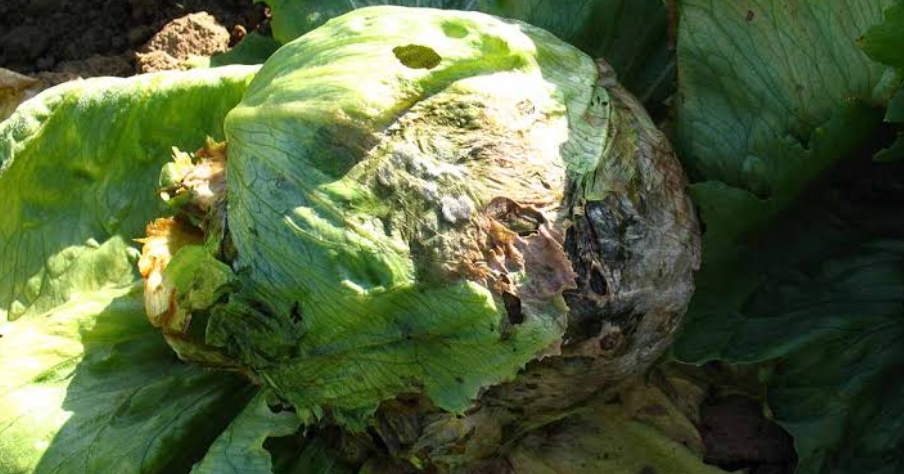
Lettuce looks like a simple crop to grow, but its soft leaves make it attractive to a surprisingly wide range of insects and disease-causing organisms. A healthy lettuce plant can develop holes overnight, become covered with tiny insects, wilt despite having moist soil, or develop spots that spread across the leaves.
What makes lettuce problems particularly challenging is that many of them appear similar at first. A wilted plant could be suffering from root disease, drought, cutworm damage, or a soil problem. Holes in leaves could come from caterpillars, slugs, snails, flea beetles, or other chewing pests. Yellowing may result from disease, nutrient stress, or damaged roots.
The most useful approach is therefore to identify the pattern of damage before deciding how to control it.
Lettuce is also a short-season crop, which means protecting young plants is particularly important. A small pest population that would be insignificant on a mature tree can cause serious damage when it attacks a small lettuce plant.
Below are common lettuce pests and diseases, their symptoms, and practical ways to manage them.
1. Aphids
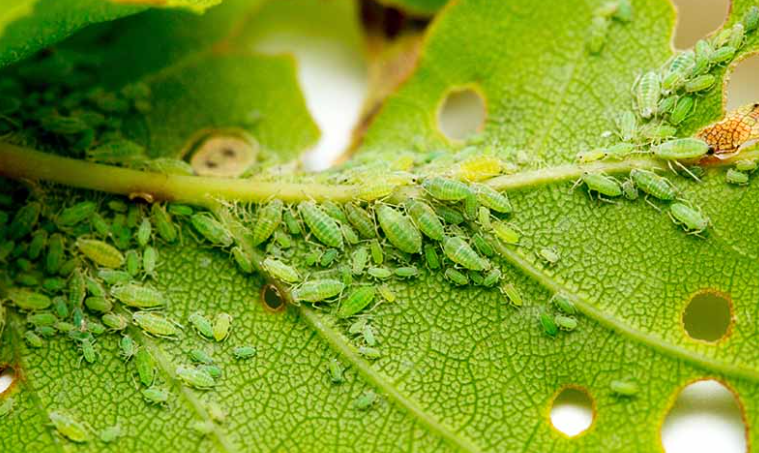
Aphids are among the most common insect pests of lettuce. They are small, soft-bodied insects that tend to gather around young leaves and growing points.
Some species can hide deep inside the lettuce head, making them difficult to notice until harvest.
Symptoms
Look for:
- Clusters of small insects
- Curled or distorted leaves
- Stunted growth
- Sticky honeydew
- Yellowing leaves
- Sooty mold
- Ant activity around plants
Aphids can also transmit plant viruses.
How to Control Aphids
Inspect the undersides of leaves regularly.
For small infestations, a strong stream of water can dislodge aphids.
Encourage beneficial insects such as ladybirds, lacewings, and parasitoid wasps.
Avoid excessive nitrogen fertilizer because lush, tender growth can be particularly attractive to aphids.
For severe infestations, use only a pesticide registered for lettuce and the particular pest in your area, paying close attention to harvest restrictions.
2. Cutworms
Cutworms are caterpillars that commonly remain hidden in soil or plant debris during the day and become active at night.
They can be particularly destructive to newly transplanted lettuce.
Symptoms
The classic sign is:
A young lettuce plant suddenly lying on the ground with its stem cut near soil level.
You may also notice missing seedlings or partially damaged stems.
How to Control Cutworms
Remove weeds and plant debris before planting.
Inspect the soil around damaged seedlings.
Physical barriers around individual young plants can provide protection.
Encourage natural predators.
If cutworm damage is severe, use an appropriately registered treatment according to the product label.
3. Slugs and Snails
Slugs and snails are especially troublesome in gardens with moist soil, mulch, shade, and frequent irrigation.
They are attracted to the tender leaves of lettuce.
Symptoms
Look for:
- Large irregular holes
- Ragged leaf edges
- Missing sections of leaves
- Shiny slime trails
- Damage appearing overnight
Young plants can be severely damaged.
How to Control Slugs and Snails
Remove hiding places such as boards, dense debris, and excessive ground cover.
Water early in the day rather than late in the evening when practical.
Hand-pick slugs and snails during active periods.
Barriers and traps can also help.
Where a bait is necessary, use one specifically labeled for the crop and pest and follow its directions.
4. Caterpillars
Several caterpillar species can feed on lettuce leaves.
They may come from moths or butterflies whose adults are easy to overlook.
Symptoms
Caterpillar feeding produces:
- Irregular holes
- Ragged leaf edges
- Missing portions of leaves
- Droppings on foliage
- Caterpillars hiding beneath leaves
How to Control Caterpillars
Inspect the undersides of leaves.
Remove caterpillars by hand when populations are small.
Encourage birds and beneficial insects.
For serious infestations, Bacillus thuringiensis var. kurstaki can be effective against susceptible caterpillars when used according to the product label.
5. Flea Beetles
Flea beetles are tiny jumping beetles that can cause characteristic holes in lettuce leaves.
They are particularly damaging to young plants.
Symptoms
Affected leaves may develop:
- Numerous tiny holes
- Shot-hole appearance
- Scarring
- Stunted growth
Severely damaged seedlings may struggle to establish.
How to Control Flea Beetles
Protect young plants with suitable insect netting or row covers.
Remove weeds that can serve as alternative hosts.
Maintain good plant vigor.
Monitor young lettuce carefully because preventing early damage is easier than repairing badly damaged plants.
6. Leafminers
Leafminers are insects whose larvae feed inside leaves.
Rather than seeing the insect itself, you often see the damage it leaves behind.
Symptoms
Look for:
- Winding tunnels
- White or pale trails
- Blotchy mines
- Dead areas within leaves
The tunnels may gradually enlarge as larvae feed.
How to Control Leafminers
Remove badly affected leaves where practical.
Encourage parasitoid wasps and other natural enemies.
Avoid unnecessary broad-spectrum insecticides because they can kill natural enemies and sometimes worsen leafminer problems.
7. Thrips
Thrips are tiny insects that feed on plant tissue.
They are particularly troublesome on young lettuce leaves and can also transmit plant viruses.
Symptoms
Affected foliage may show:
- Silvery patches
- Fine scars
- Distorted leaves
- Brown flecks
- Stunted growth
Thrips can hide inside tightly packed leaves.
How to Control Thrips
Inspect young foliage frequently.
Use insect exclusion netting where practical.
Remove heavily damaged leaves.
Encourage beneficial insects.
If chemical control becomes necessary, select a product registered for lettuce and thrips in your location.
8. Whiteflies
Whiteflies are tiny insects that commonly gather on the undersides of leaves.
When the foliage is disturbed, adults may fly away.
Symptoms
Heavy infestations can cause:
- Yellowing
- Weak growth
- Sticky honeydew
- Sooty mold
- Reduced plant vigor
How to Control Whiteflies
Check leaf undersides regularly.
Remove heavily infested leaves where appropriate.
Use insect exclusion methods for young plants.
Encourage natural enemies.
Avoid excessive insecticide use that can disrupt beneficial insects.
9. Wireworms
Wireworms are the larvae of click beetles.
They live in soil and can attack roots and underground portions of plants.
Symptoms
Lettuce plants may show:
- Poor establishment
- Wilting
- Stunted growth
- Damaged roots
- Sudden plant decline
How to Control Wireworms
Wireworm problems are easier to prevent than eliminate after planting.
Avoid planting lettuce in heavily infested soil.
Remove crop residues and weeds that can provide habitat.
Crop rotation can help reduce certain soil pest populations.
If wireworms are a recurring problem, soil testing and local agricultural advice can be valuable.
10. Slugs and Soil-Dwelling Pests: Why Young Lettuce Is Vulnerable
Young lettuce plants are especially vulnerable because they have little foliage to compensate for damage.
A single night of heavy feeding can remove much of a small plant.
For this reason, early monitoring is often more important than waiting until the crop looks seriously damaged.
Protect seedlings during the first few weeks after emergence, particularly when the weather is cool and wet.
11. Downy Mildew
Downy mildew is one of the important diseases of lettuce.
It is caused by the oomycete Bremia lactucae and is favored by cool, humid conditions.
Symptoms
Look for:
- Pale yellow patches on upper leaf surfaces
- White or grayish growth on leaf undersides
- Leaf browning
- Premature leaf decline
The disease can spread quickly under favorable conditions.
How to Control Downy Mildew
Provide good spacing between plants.
Avoid prolonged leaf wetness.
Water at the soil surface rather than repeatedly wetting foliage.
Remove severely affected leaves and plant debris.
Choose resistant lettuce varieties where available.
Crop rotation can also help reduce disease pressure.
12. Lettuce Drop
Lettuce drop is caused by soilborne fungi, particularly species of Sclerotinia.
It can cause lettuce plants to collapse suddenly.
Symptoms
Affected plants may develop:
- Wilting
- Yellowing
- Collapse
- Soft decay around the base
- White fungal growth
- Hard black structures called sclerotia
The disease can survive in soil, making repeated lettuce production in the same area problematic.
How to Control Lettuce Drop
Remove infected plants promptly.
Do not leave diseased plants decomposing in the bed.
Improve drainage.
Avoid excessive irrigation.
Rotate crops and use resistant varieties where available.
Good sanitation is particularly important because the pathogen can persist in soil.
13. Bottom Rot
Bottom rot is a disease that affects the lower portions of lettuce leaves, particularly those close to the soil.
It is commonly associated with Rhizoctonia species.
Symptoms
Look for:
- Brown lesions on lower leaves
- Rotting leaf tissue
- Brown areas near the crown
- Gradual collapse of the plant
How to Control Bottom Rot
Avoid planting lettuce too deeply.
Improve airflow around plants.
Keep soil from remaining excessively wet.
Remove badly infected plants.
Crop rotation can reduce the buildup of soilborne pathogens.
14. Rhizoctonia Root and Crown Rot
Rhizoctonia can attack lettuce roots and crowns.
It tends to become more problematic when soil remains warm and wet.
Symptoms
Plants may show:
- Poor growth
- Yellow leaves
- Wilt
- Brown roots
- Crown discoloration
- Plant collapse
How to Control It
Use well-drained soil.
Avoid excessive irrigation.
Give plants sufficient space.
Remove infected plants and plant debris.
Avoid repeatedly planting lettuce in the same location when soilborne disease has become a recurring problem.
15. Pythium Root Rot
Pythium is another soil- and water-associated organism capable of causing root problems in lettuce.
It is particularly favored by wet conditions.
Symptoms
Affected lettuce may:
- Wilt
- Turn yellow
- Develop stunted growth
- Have dark or damaged roots
- Collapse in severe cases
How to Control Pythium
Improve drainage.
Avoid overwatering.
Do not allow irrigation water to remain stagnant around plants.
Use clean planting material and avoid introducing contaminated soil into clean beds.
16. Fusarium Wilt
Fusarium wilt can cause serious problems in lettuce.
It affects the plant’s vascular system, interfering with water movement.
Symptoms
Possible signs include:
- Yellowing
- Wilting
- Stunted growth
- Brown discoloration inside the crown or vascular tissue
- Plant death
The symptoms may resemble drought stress.
How to Control It
Use resistant varieties when available.
Avoid moving contaminated soil between beds.
Remove severely affected plants.
Practice crop rotation.
Because soilborne pathogens can persist for years, prevention is more effective than trying to cure established infections.
17. Lettuce Mosaic Virus
Lettuce mosaic is a viral disease that can be transmitted by aphids and infected seed.
Symptoms
Affected plants may develop:
- Mosaic patterns
- Light and dark green patches
- Leaf distortion
- Stunting
- Poor head formation
How to Control It
There is no simple cure for a virus-infected plant.
Remove affected plants to reduce sources of infection.
Control aphids and other vectors.
Use certified disease-free seed.
Keep weeds under control because some can serve as alternative hosts for plant viruses.
18. Tomato Spotted Wilt Virus
Despite its name, tomato spotted wilt virus can affect many plant species, including lettuce.
Thrips are important vectors.
Symptoms
Symptoms can vary, but may include:
- Brown or bronze spots
- Ring-like patterns
- Stunted growth
- Leaf distortion
- Plant decline
Control
Manage thrips.
Remove infected plants.
Control weeds that can harbor the virus or its vectors.
Use healthy planting material.
Because there is no simple treatment that cures infected plants, prevention is critical.
19. Lettuce Big Vein
Lettuce big vein is associated with a soilborne virus-like pathogen and is particularly noticeable because leaf veins become unusually prominent.
Symptoms
The veins may appear:
- Enlarged
- Pale
- Swollen
Plants may also show reduced head development.
How to Manage It
Avoid planting susceptible lettuce repeatedly in infested soil.
Use resistant or tolerant varieties where available.
Improve soil drainage.
Rotate crops where practical.
20. Aster Yellows
Aster yellows is a disease caused by phytoplasmas and can affect lettuce and many other plants.
Leafhoppers can spread the pathogen.
Symptoms
Lettuce plants may develop:
- Yellowing
- Abnormal growth
- Small leaves
- Distorted heads
- General stunting
Control
Control weeds that can act as hosts.
Manage leafhopper populations where appropriate.
Remove severely infected plants.
Because the disease depends on an insect vector, controlling the vector and nearby host plants can be important.
21. Gray Mold
Gray mold, caused by Botrytis species, can affect lettuce when conditions remain cool and humid.
Symptoms
Affected tissue develops:
- Brown lesions
- Soft decay
- Gray fuzzy growth
- Rapid deterioration
Dead leaves can provide an ideal starting point for infection.
How to Control Gray Mold
Remove dying leaves.
Improve airflow.
Avoid unnecessary overhead irrigation.
Harvest mature lettuce promptly rather than leaving overripe plants exposed to prolonged wet conditions.
22. Bacterial Leaf Spot
Bacterial leaf diseases can produce spots that look similar to fungal leaf diseases.
Symptoms
Look for:
- Small water-soaked lesions
- Brown spots
- Yellow halos
- Enlarging lesions
- Leaf deterioration
How to Control It
Avoid working among wet plants.
Use clean seed.
Remove infected plant material.
Avoid overhead irrigation where possible.
Clean tools after handling diseased plants.
23. Tipburn
Tipburn is an important lettuce disorder, but it is not an infectious disease.
It is generally associated with calcium transport problems within rapidly growing tissue.
Symptoms
The edges and tips of young inner leaves become:
- Brown
- Dry
- Necrotic
Why It Happens
Tipburn can become more likely when plants grow rapidly while calcium movement to developing leaves cannot keep up.
Environmental stress, inconsistent moisture, high temperatures, and rapid growth can contribute.
How to Reduce Tipburn
Maintain consistent soil moisture.
Avoid extreme fluctuations between very dry and very wet conditions.
Provide adequate spacing.
Choose varieties with better tolerance where available.
Do not assume that simply adding calcium to the soil will solve the problem.
24. Bolting: A Problem That Looks Like Disease
Bolting is not caused by an insect or pathogen.
It occurs when lettuce switches from leafy growth to flowering and seed production, often in response to increasing temperature, day length, or plant maturity.
Symptoms
The plant may suddenly:
- Produce a tall central stalk
- Develop smaller leaves
- Become bitter
- Produce flower buds
How to Prevent It
Choose bolt-resistant varieties.
Plant during the appropriate season.
Provide sufficient moisture.
Use shade during unusually hot weather where appropriate.
Harvest promptly when plants reach maturity.
25. Sunscald and Heat Stress
Lettuce is a cool-season crop, so excessive heat can cause physiological stress.
Symptoms
Leaves may develop:
- Pale patches
- Brown areas
- Wilting
- Crispy margins
- General decline
These symptoms can be mistaken for disease.
How to Manage Heat Stress
Grow lettuce during its preferred season.
Provide temporary shade during unusually hot periods.
Maintain consistent soil moisture.
Avoid allowing plants to alternate between severe drought and heavy irrigation.
How to Tell a Pest Problem From a Disease
One of the easiest ways to narrow down a lettuce problem is to examine the type of damage.
Holes in Leaves
Think about:
- Slugs
- Snails
- Caterpillars
- Flea beetles
Tunnels Inside Leaves
Think about:
- Leafminers
Curled New Leaves
Look for:
- Aphids
- Thrips
- Other sap-feeding insects
Yellowing With Wilting
Investigate:
- Root diseases
- Water stress
- Nutrient problems
- Vascular diseases
White Growth
Check whether it is:
- Powdery mildew
- Insect wax
- Residue from irrigation water
Gray Fuzzy Growth
Consider:
- Botrytis
Plant Collapses at Soil Level
Investigate:
- Cutworms
- Damping-off
- Crown rot
- Bottom rot
A Simple Lettuce Pest and Disease Identification Chart
| What you notice | Possible cause |
|---|---|
| Large irregular holes | Slugs, snails, caterpillars |
| Tiny holes all over young leaves | Flea beetles |
| Winding tunnels | Leafminers |
| Curled leaves with insects | Aphids |
| Silvery scars | Thrips |
| White flies under leaves | Whiteflies |
| Plant cut at soil level | Cutworms |
| Pale patches with downy growth underneath | Downy mildew |
| White powder on leaves | Powdery mildew |
| Brown decay at the base | Bottom rot |
| White fungal growth and black structures near roots | Lettuce drop |
| Wilt with damaged roots | Pythium or Rhizoctonia |
| Yellowing and vascular discoloration | Fusarium wilt |
| Mosaic patterns | Viral disease |
| Gray fuzzy growth | Botrytis |
| Brown leaf tips | Tipburn or environmental stress |
| Tall flowering stalk | Bolting |
| Pale/brown patches during heat | Heat or sun stress |
How to Prevent Lettuce Pests and Diseases
The best lettuce pest-management program begins before the first pest appears.
Start With Healthy Seed and Transplants
Disease-free seed and healthy transplants reduce the chance of introducing pathogens into the garden.
Inspect transplants carefully before planting.
Rotate Crops
Avoid growing lettuce and closely related crops in exactly the same soil year after year when soilborne diseases are a recurring problem.
Rotation can help interrupt some disease and pest cycles.
Give Plants Enough Space
Crowded lettuce plants dry slowly after rain or irrigation.
Adequate spacing improves airflow and reduces the duration of leaf wetness.
Water Carefully
Keep soil consistently moist without creating waterlogged conditions.
For most garden situations, watering the soil rather than repeatedly wetting the leaves is preferable.
Keep the Garden Clean
Remove:
- Diseased leaves
- Dead plants
- Fallen crop material
- Heavily infested weeds
Do not leave obviously diseased lettuce plants in the garden simply because they have already stopped producing.
Control Weeds
Weeds can compete with lettuce while also providing shelter or alternative hosts for pests and pathogens.
Inspect Plants Frequently
A few minutes of inspection can reveal a problem before it becomes an infestation.
Look underneath leaves, around the crown, and near the soil surface.
What to Do When Lettuce Has Pests
When you find insects, do not immediately spray the entire crop.
Instead:
1. Identify the pest.
2. Determine how much damage has occurred.
3. Check whether natural enemies are already present.
4. Remove heavily infested leaves when practical.
5. Improve the growing conditions.
6. Monitor again after a few days.
7. Use a registered treatment only when necessary.
This approach is particularly useful with lettuce because unnecessary pesticide applications can create problems with beneficial insects and harvest intervals.
Always follow the label of any pesticide used on edible crops.
When Should You Remove an Infected Lettuce Plant?
Sometimes removal is better than treatment.
Consider removing a plant when:
- It has a confirmed viral disease.
- Root or crown rot is advanced.
- Disease is spreading rapidly.
- The plant is severely stunted.
- The crop is no longer productive.
- Keeping it would provide a source of infection for nearby plants.
Removing one badly infected plant can sometimes protect an entire bed.
What You’ll Eventually Learn From Growing Lettuce
Growing lettuce eventually teaches you that speed matters.
Because lettuce is harvested for its leaves, there is little tolerance for severe foliage damage. A pest that causes only a few holes in a large ornamental plant can make a small lettuce crop unattractive or unmarketable.
You also learn that the first symptom is not always the real problem.
A wilted lettuce plant does not automatically need more water. A yellow leaf does not automatically need fertilizer. A black mark does not automatically mean fungus. And a hole in a leaf does not tell you whether a caterpillar, slug, snail, or beetle caused it.
The habit that makes the biggest difference is simple: look closely before acting.
Turn the leaves over. Examine the soil surface. Check the crown. Look at the roots if the plant is declining unexpectedly. Notice whether the problem appeared after heavy rain, hot weather, excessive watering, or a sudden flush of new growth.
Over time, you begin recognizing patterns almost immediately.
You learn that tiny holes suggest a very different problem from winding tunnels. You learn that white growth underneath a leaf is different from white insects clustered around a stem. You learn that healthy soil and appropriate watering can prevent some root diseases before they begin.
Most importantly, you discover that growing lettuce successfully is not about keeping every insect away. It is about keeping the crop growing faster and healthier than the problems can damage it.
With good sanitation, appropriate watering, crop rotation, regular inspection, healthy planting material, and timely intervention, many lettuce pest and disease problems can be prevented or kept at manageable levels.