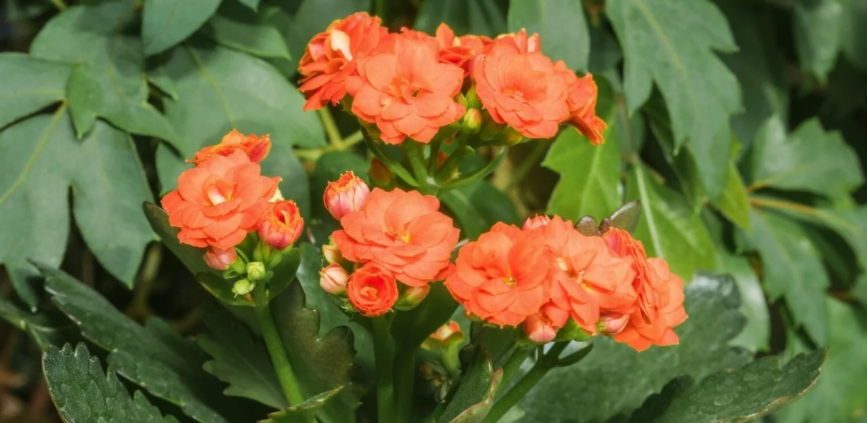
Succulents bearing orange flowers represent some of the most visually electrifying plants in the horticultural world. Orange is a color that commands attention in any garden setting — warm, energetic, and luminous, it bridges the gap between the fiery intensity of red and the sunny cheerfulness of yellow. In succulents, orange flowers are particularly striking because they emerge from foliage that is often itself sculptural and beautiful, creating a layered visual impact that few other plant groups can match.
Orange-flowering succulents are found across a remarkable range of genera and geographic origins. From the sun-scorched deserts of South Africa and Namibia to the high-altitude plateaus of Mexico and the cloud forests of Brazil, plants have independently evolved orange blooms as a powerful signal to pollinators. Hummingbirds, sunbirds, orioles, and a range of specialized bees and butterflies are all drawn to orange flowers, making these succulents not only ornamentally valuable but ecologically significant in their native habitats.
The global succulent market continues to expand at an impressive pace. Industry reports estimate that the succulent and cactus segment of the ornamental plant market is worth over $2 billion annually worldwide, with North America, Europe, and East Asia representing the largest consumer markets. Demand for unusual flower colors — particularly orange, which is rarer than red or yellow in the succulent world — has driven significant breeding activity, with hybridizers in the Netherlands, Japan, South Africa, and the United States producing exciting new orange-flowering cultivars each year.
Growing orange-flowering succulents is a rewarding pursuit for gardeners at all experience levels. Many of the plants in this group are exceptionally undemanding, requiring little more than bright light, excellent drainage, and occasional watering to produce their brilliant seasonal blooms. Whether planted in outdoor rock gardens, terracotta containers, coastal landscapes, or bright indoor windowsills, orange-flowering succulents bring warmth and vitality to any growing space. The following 60 plants represent the full breadth and beauty of this remarkable group.
1. Aloe Striata (Coral Aloe)
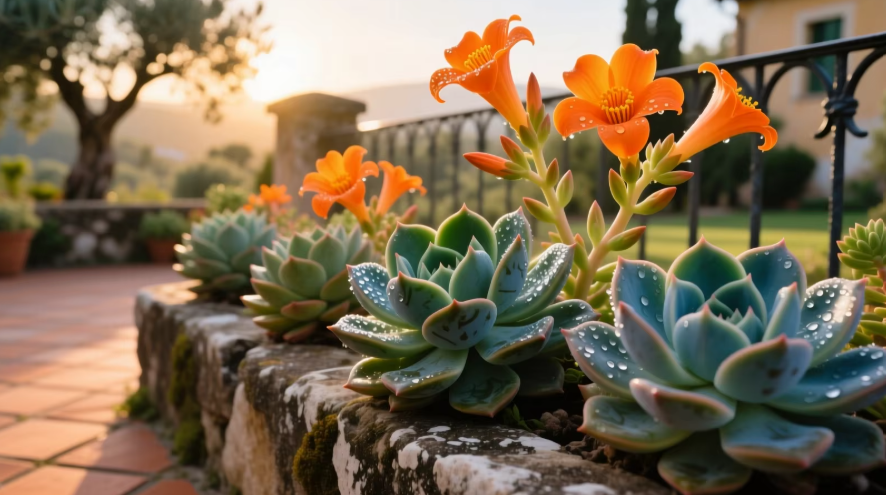
Coral aloe is one of the most elegant and refined of all aloe species, producing broad, flat, smooth-edged leaves in soft gray-green to pinkish tones with distinctive pale striping. In late winter and spring, it sends up branched flower stems bearing dense clusters of tubular, coral-orange to soft red flowers that are irresistible to sunbirds and hummingbirds. Native to the Eastern and Western Cape of South Africa, it is one of the most garden-worthy aloes available, combining outstanding floral display with attractive foliage year-round.
2. Aloe Speciosa (Tilt-Head Aloe)
Tilt-head aloe is a tall, single-stemmed species from the Eastern Cape of South Africa, recognized by the characteristic way its large rosette tilts toward the brightest light source — a behavior that gives the plant its evocative common name. The dense, cylindrical flower spikes carry bicolored tubular flowers opening from red buds to orange and then yellow as they mature, creating a tri-colored spike of extraordinary beauty. It is a bold landscape specimen suited to frost-free gardens and large container cultivation.
3. Aloe Rupestris (Bottlebrush Aloe)
Bottlebrush aloe is a tall, multi-stemmed species from KwaZulu-Natal, South Africa, bearing slender, cylindrical flower spikes densely packed with small, tubular, orange to salmon flowers that strongly resemble the bottlebrush flowers of Callistemon species. It grows to 6 to 10 feet over time and develops into a multi-branched shrub with attractive, recurved, gray-green leaves. In warm, frost-free gardens it blooms reliably in winter and spring, providing a critical nectar source for birds during the colder months.
4. Aloe Marlothii (Mountain Aloe)
Mountain aloe is one of the most imposing of all aloe species, a single-stemmed giant that can reach 10 to 13 feet in height with a massive rosette of broad, gray-green, heavily spined leaves at its crown. The multi-branched flower heads carry horizontal spikes of orange to yellow tubular flowers in winter, creating a candelabra-like display of extraordinary scale. It is widely used as a focal point specimen in large gardens and public landscapes throughout southern Africa and in Mediterranean-climate gardens worldwide.
Also Read: Succulent Plants With Red Flowers
5. Aloe Microstigma
Aloe microstigma is a compact, clustering species from the arid Karoo and Namaqualand regions of South Africa, producing rosettes of green leaves heavily spotted with white tubercles and flushed with orange-red tones in dry or cold conditions. The flower spikes carry bicolored tubular blooms in orange to red-orange that open progressively from the base upward, extending the bloom period over several weeks. It is well-suited to small gardens, rock gardens, and containers and is one of the most drought-tolerant aloes available.
6. Aloe Aculeata (Red Hot Poker Aloe)
Red hot poker aloe is a striking medium-sized species from Zimbabwe and South Africa with heavily armed, yellowish-green leaves and exceptionally showy flower spikes bearing densely packed, tubular orange to yellow flowers. The common name perfectly captures the appearance of the flower spike — a glowing torch of warm color held high above the spiny rosette. It is a tough, drought-resistant plant that performs well in hot, dry inland gardens and is increasingly popular in water-wise landscaping schemes.
7. Aloe Grandidentata
Aloe grandidentata is a low-growing, clustering species from South Africa and Lesotho, forming mats of small rosettes with attractively spotted, gray-green leaves edged with coarse white teeth. In spring, slender stems carry simple or occasionally branched spikes of tubular, orange to coral-red flowers that attract a range of bird and insect pollinators. Its compact size and spreading habit make it an excellent ground cover succulent for sunny, dry banks and rock gardens.
8. Kniphofia Uvaria (Red Hot Poker)
Red hot poker, or torch lily, is a bold, clump-forming perennial with strap-like, gray-green leaves and tall, upright flower spikes bearing dense, poker-like heads of tubular flowers that open orange-red at the top and fade to yellow toward the base. Though not a true succulent, Kniphofia has thick, fleshy roots and remarkable drought tolerance that place it firmly in the water-wise succulent garden tradition. It is one of the most widely grown drought-tolerant ornamentals in temperate gardens worldwide, with hundreds of named cultivars available.
9. Kalanchoe Blossfeldiana Orange Cultivars
While Flaming Katy is best known for its red forms, the species has been extensively hybridized to produce a superb range of orange cultivars in shades from pale apricot to deep burnt orange. These orange forms have become increasingly popular as houseplants and gift plants, particularly around autumn and Thanksgiving. Kalanchoe blossfeldiana in all its color forms is among the top three best-selling flowering houseplants globally, with annual production figures estimated at over 100 million plants worldwide.
Also Read: Succulents With White Flowers
10. Kalanchoe Manginii (Chandelier Plant)
Chandelier plant is a graceful, trailing kalanchoe from Madagascar with small, rounded, fleshy leaves and pendulous, urn-shaped flowers in vivid coral-orange that dangle from arching stems like tiny lanterns. It is one of the most charming kalanchoe species for hanging basket and elevated container cultivation, where the trailing stems and nodding flowers can be fully appreciated. The blooms are produced in late winter and spring, brightening conservatories and indoor spaces during the final weeks of the cold season.
11. Kalanchoe Delagoensis (Chandelier Plant / Mother of Millions)
Kalanchoe delagoensis is an upright, architectural succulent bearing slender, cylindrical, mottled leaves tipped with tiny plantlets that drop and establish readily. In winter and spring, the stem tips carry clusters of pendulous, tubular flowers in warm orange to coral-red. While the plant is a valuable and fascinating ornamental, it is important to note that it has become invasive in parts of Australia and South Africa, where its prolific self-propagation allows it to colonize disturbed habitats rapidly.
12. Kalanchoe Prolifera (Blooming Boxes)
Kalanchoe prolifera is a tall, dramatic species from Madagascar with large, pinnate leaves on upright stems that can reach 3 to 5 feet in height. In winter, the stem tips produce large, branching flower heads bearing masses of small, pendulous, orange to coral tubular flowers. The combination of bold, architectural foliage and the cascading flower display makes it one of the most spectacular kalanchoe species for large container cultivation in conservatories and frost-free outdoor gardens.
13. Echeveria Setosa (Mexican Firecracker)
Mexican firecracker is a beloved echeveria species from Puebla, Mexico, forming flat, dense rosettes of soft, hairy, green leaves tipped with fine white bristles. The common name refers to the vivid, tubular flowers — brilliant orange with yellow tips — that are produced on arching stems in spring and summer, resembling strings of tiny firecrackers. It is one of the most popular echeveria species for container cultivation and has given rise to numerous cultivated hybrids.
14. Echeveria Harmsii (Plush Plant)
Plush plant is a small, shrubby echeveria from Oaxaca, Mexico, with soft, velvety, red-tipped leaves covered in fine silver hairs that catch the light beautifully. In spring and early summer, it produces relatively large, urn-shaped flowers in vivid orange-red with yellow petal tips — some of the most showy blooms in the echeveria genus relative to the plant’s small size. It is a popular collector’s item and greenhouse subject, performing best in bright, indirect light with protection from excessive moisture.
15. Echeveria Fulgens
Echeveria fulgens is a vigorous, upright species from Mexico with loose rosettes of spoon-shaped, waxy, blue-green leaves often flushed with pink at the margins. The long, arching flower stems carry bell-shaped, orange to coral-red flowers in winter and spring, making it one of the most valuable echeveria species for winter color in frost-free gardens and cool conservatories. It is one of the parent species used in numerous echeveria hybrids and has played an important role in shaping the modern echeveria cultivar palette.
16. Echeveria ‘Doris Taylor’ (Woolly Rose)
‘Doris Taylor’ is a popular hybrid echeveria covered in soft, silvery-white hairs that give the entire plant a woolly, frost-covered appearance. In spring, arching stems carry tubular flowers in warm orange-yellow, providing a vivid color contrast against the pale, hairy foliage. It is compact, easy to grow, and highly regarded as a container plant and windowsill specimen. The combination of attractive year-round foliage and cheerful spring blooms has made it a consistent seller in the ornamental succulent market.
17. Crassula Perfoliata Var. Minor (Airplane Plant)
Airplane plant is a distinctive South African succulent with pairs of thick, triangular, sickle-shaped gray-green leaves stacked along the stem in a propeller-like arrangement. In late summer and autumn, the stem tips carry flat-topped clusters of small, tubular flowers in orange to coral-red that attract butterflies and other pollinators in large numbers. It is a reliable, easy-to-grow container succulent that rewards bright sunlight with especially vivid leaf coloring and abundant flowering.
Also Read: Succulents That Winter Over Outdoors
18. Cotyledon Orbiculata ‘Orange’ Forms
Among the many cultivated forms of pig’s ear, those selected for vivid orange to orange-red tubular flowers are especially prized for their warm, glowing color. These selections bear the characteristic rounded, red-edged leaves of the species but produce flower spikes in a cleaner, brighter orange than the typical species form. They are excellent plants for frost-free rock gardens, coastal plantings, and large terracotta containers, tolerating poor, dry soils and seaside conditions with ease.
19. Sedum Rupestre ‘Angelina’ (Stonecrop)
‘Angelina’ is one of the most widely planted sedum cultivars in the world, a low-growing ground cover with needle-like, golden-yellow to orange foliage that intensifies in color during cool weather and full sun exposure. In summer, it produces small clusters of star-shaped, bright yellow to orange-yellow flowers above the colorful carpet of foliage. It is extraordinarily cold-hardy, tolerating temperatures well below freezing, and is widely used in green roof plantings, rock gardens, and container arrangements across temperate gardens worldwide.
20. Sedum Nussbaumerianum (Coppertone Sedum)
Coppertone sedum is a trailing to mounding Mexican succulent with plump, pointed leaves in striking shades of copper, orange, and gold — colors that deepen significantly under full sun and cool night temperatures. In late winter and spring, clusters of small, star-shaped, white to pale yellow-orange flowers appear at the stem tips, adding a delicate floral note to the plant’s already vivid foliage display. It is an excellent choice for rock gardens, containers, and sunny borders in frost-free or lightly frost-prone climates.
21. Aloe Globuligemma
Aloe globuligemma is a small to medium-sized clustering species from Zimbabwe and South Africa with narrow, dark green, white-spotted leaves. The flower spikes carry distinctively globe-shaped, swollen buds that open to reveal tubular, orange to coral flowers — a floral form so unusual that it inspired the species name, meaning “globe-budded.” It is a sought-after collector’s species that performs well in containers and in frost-free rock gardens with excellent drainage.
22. Aloe Castanea (Cat’s Tail Aloe)
Cat’s tail aloe is a medium to large species from the Limpopo province of South Africa, bearing gracefully recurved, dark green leaves and the most distinctive flower spike in the genus — an exceptionally long, slender, unbranched spike densely packed with small orange to brick-red tubular flowers. A single mature plant can produce multiple such spikes simultaneously, creating a dramatic display of arching, tail-like flower stems. It is widely grown as a landscape specimen in warm, dry gardens throughout southern Africa and California.
23. Aloe Variegata (Tiger Aloe / Partridge Breast Aloe)
Tiger aloe is a compact, popular species from the Karoo desert of South Africa, recognized by its neat, triangular leaves arranged in three rows and boldly marked with irregular white crossbanding. Orange to coral-pink tubular flowers are produced on slender, unbranched stems in late winter and spring, making it one of the most rewarding small aloes for container cultivation. It was one of the earliest aloe species introduced to European cultivation, recorded in botanical gardens as early as the 17th century.
24. Gasteria Carinata
Gasteria carinata is a compact, clump-forming South African succulent with tongue-shaped, dark green leaves covered in raised white tubercles. The arching flower stems carry rows of small, pendulous, bicolored flowers in vivid orange with green tips — the characteristic “stomach-shaped” form that gives the genus its name (gaster meaning stomach in Greek). Like most gasterias, it thrives in partial shade, making it one of the most valuable orange-flowering succulents for lower-light indoor environments.
25. Gasteria Batesiana
Gasteria batesiana is a striking species from KwaZulu-Natal, South Africa, with dark green, deeply keeled leaves covered in densely clustered white tubercles that give the foliage a rough, textured appearance. The arching flower spikes carry pendulous, tubular, bright orange-pink flowers with green tips in spring and summer. It is a moderately compact species that grows well in containers and makes an excellent indoor succulent where its shade tolerance is a valuable practical asset.
26. Haworthia Reinwardtii
Haworthia reinwardtii is a clump-forming, cylindrical-rosette species from the Eastern Cape of South Africa, with dark green leaves densely covered in white tubercles arranged in neat spiral rows up the stem. The slender flower stems carry small, tubular flowers in pale pink to orange-white that attract small bees and flies. While haworthia flowers are generally modest, the reliable blooming and exceptional shade tolerance of this species make it one of the most popular haworthias for indoor cultivation worldwide.
27. Crassula Perforata (String of Buttons)
String of buttons is a South African succulent with pairs of gray-green, pink-tinged triangular leaves stacked at right angles along square stems, creating a spiraling, architectural form. In late winter and spring, the stem tips carry small clusters of tiny, star-shaped flowers in pale yellow-orange to cream that attract small pollinators. It is a popular and easy-to-grow container succulent and is widely used in mixed succulent arrangements for its geometric leaf patterning and upright habit.
28. Adenium Obesum Orange Hybrids
While the classic desert rose produces red to pink blooms, hybridizers in Thailand, Taiwan, and the Netherlands have developed a remarkable range of cultivars bearing flowers in vivid orange, peach, and apricot. These orange-flowered adenium hybrids carry the same swollen, sculptural caudex and glossy foliage as the species but offer a warmer, more unusual color palette. They have become enormously popular in Southeast Asian markets, where collector-grade specimens can command prices of several hundred dollars per plant.
29. Portulaca Grandiflora (Moss Rose)
Moss rose is a low-growing, spreading annual succulent from South America bearing small, cylindrical, bright green leaves and large, papery, poppy-like flowers in vivid orange, red, pink, yellow, and white. Orange-flowered forms are among the most popular for summer bedding, container planting, and rock gardens, providing a carpet of jewel-bright color throughout the warm season. It thrives in hot, dry conditions that defeat most other flowering annuals, making it invaluable for gardeners dealing with poor, sandy soils and summer drought.
30. Portulaca Oleracea (Purslane)
Common purslane is a succulent annual with thick, paddle-shaped leaves and small but cheerful flowers in orange, yellow, and pink. While it is widely considered a weed in agricultural contexts, ornamental cultivars have been developed for garden and container use, valued for their heat and drought tolerance and their prolific, long-season flowering. Purslane has also gained attention as an edible plant — it contains exceptionally high levels of omega-3 fatty acids for a land plant, with some studies finding it among the richest plant sources of these beneficial compounds.
31. Lampranthus Aurantiacus (Orange Ice Plant)
Orange ice plant is a compact, spreading South African succulent with slender, cylindrical leaves and large, vivid orange to golden-yellow daisy-like flowers that shimmer with a crystalline iridescence in sunlight. It blooms prolifically in late winter and spring, often covering itself so completely in flowers that the foliage is almost entirely hidden. It is one of the most widely planted succulents for slope stabilization and ground cover in Mediterranean-climate gardens, particularly along the California coast and in parts of southern Europe.
32. Lampranthus Glaucus
Lampranthus glaucus is a low-growing South African ice plant with blue-gray, three-angled leaves and brilliant golden-orange daisy flowers produced in spring. Like other lampranthus species, the flowers open fully only in bright sunshine and close on cloudy days and at night. It is an excellent plant for dry, sunny slopes, coastal gardens, and rocky ground where its spreading habit and prolific blooming create a vivid seasonal display with virtually no irrigation or maintenance required.
33. Delosperma Sunstone Orange
Delosperma ‘Sunstone Orange’ is a modern hybrid ice plant developed for exceptional cold hardiness combined with vivid orange flower color. The daisy-like flowers glow with a warm orange intensity throughout summer and into autumn, held above a dense, low mat of bright green, succulent foliage. It is one of several named delosperma cultivars developed specifically for temperate garden use, offering the brilliant flower color of South African ice plants in a package hardy enough for gardens across much of North America and northern Europe.
34. Delosperma Dyeri ‘Red Mountain’
While primarily known for red to orange-red flowers, Delosperma dyeri ‘Red Mountain’ produces blooms that span the boundary between red and orange, offering warm, glowing color from early summer through autumn. It forms a low, dense mat of fleshy foliage and is one of the most cold-tolerant delosperma cultivars, surviving temperatures down to around 0°F (-18°C) in well-drained soils. It has received the Royal Horticultural Society’s Award of Garden Merit for its reliable performance in garden conditions.
35. Cephalophyllum ‘Red Spike’
Red spike is a South African ice plant with long, cylindrical, reddish-green leaves arranged in upright tufts, producing large, vivid orange to orange-red daisy flowers on short stems in late winter and spring. It is one of the most ornamentally striking of the mesembryanthemum relatives and performs excellently in coastal gardens, gravel plantings, and rock gardens in frost-free to lightly frost-prone climates. The combination of colorful foliage and brilliant flowers makes it a two-season ornamental of real garden value.
36. Aloe Maculata (Soap Aloe)
Soap aloe is a popular, medium-sized, freely clumping species from South Africa and Swaziland with flat, spreading rosettes of broadly lance-shaped, spotted, green to brownish-green leaves. The flower spikes carry dense, cylindrical heads of tubular flowers in orange to coral-red in spring and summer, and the plant has been used for centuries as a source of saponins — natural soapy compounds that give it its common name. It is one of the most garden-adaptable aloes, tolerating light frost, partial shade, and a range of soil types.
Also Read: Types of Hanging & Trailing Succulents
37. Aloe Vanbalenii (Van Balen’s Aloe)
Van Balen’s aloe is a dramatic, clumping species from KwaZulu-Natal, South Africa, with long, narrow, strongly recurved leaves that spiral outward from the rosette in a distinctive octopus-like arrangement. The flower spikes carry dense heads of tubular, orange to coral-red blooms in winter and spring, attracting sunbirds in large numbers. It is considered one of the most architecturally beautiful of all aloe species and is prized as a specimen plant in large containers and warm-climate gardens worldwide.
38. Aloe Secundiflora
Aloe secundiflora is a robust, medium-large species from East Africa — Kenya, Tanzania, and Uganda — forming large rosettes of blue-green, irregularly toothed leaves. The branched flower spikes carry dense, cylindrical heads of orange to orange-red tubular flowers that are a vital nectar source for sunbirds and other wildlife. It is one of the most widely grown East African aloes in cultivation and adapts well to a range of growing conditions, including gardens with moderate frost and partial shade.
39. Kniphofia Triangularis (Dwarf Red Hot Poker)
Dwarf red hot poker is a compact species from the mountains of South Africa and Lesotho, bearing slender, grass-like leaves and elegant, small flower spikes in warm orange-red to coral, produced in late summer and autumn. Growing to only 18 to 24 inches, it is considerably more manageable than the larger Kniphofia uvaria and suits smaller garden spaces, containers, and mixed perennial borders. It is increasingly valued by ecologically minded gardeners for its late-season nectar provision to butterflies and bumblebees.
40. Kniphofia Rooperi
Kniphofia rooperi is a bold, late-flowering species from the Eastern Cape of South Africa, producing broad, strap-like leaves and large, rounded — rather than the typical poker-shaped — flower heads in vivid orange and yellow in autumn. The rounded flower head is distinctive and unusual in the genus, giving the plant a more lollipop-like appearance that is immediately recognizable. It is one of the latest-blooming kniphofias, providing vivid warm-season color well into October in temperate gardens.
41. Senecio Anteuphorbium
Senecio anteuphorbium is an unusual, shrubby succulent from North Africa and the Canary Islands with cylindrical, jointed, green stems and small, fleeting leaves. In spring, the stem tips carry clusters of small, daisy-like flowers in pale orange-yellow to warm gold. While the flowers are modest in size, the plant’s striking, cactus-like stem structure makes it an architectural curiosity for collectors and succulent enthusiasts seeking unusual forms.
42. Tylecodon Paniculatus (Botterboom)
Botterboom, meaning “butter tree” in Afrikaans, is a caudex-forming succulent from the Namaqualand and Karoo regions of South Africa, developing a swollen, papery-barked trunk topped with succulent branches. In summer — its dormant season — it sheds its leaves and produces clusters of tubular, orange to coral-red flowers on bare, branched stems. It is a fascinating, slow-growing species prized by succulent collectors for its sculptural caudex and unusual flowering habit, blooming when most succulents are in active leaf growth.
43. Tylecodon Reticulatus
Tylecodon reticulatus is a small, shrubby succulent from southern Africa with thick, knobby stems covered in persistent leaf bases that create a distinctive reticulated or netted texture. Small, tubular, orange to yellow-orange flowers are produced in summer on the leafless stems. Like other tylecodons, it is summer-deciduous, dropping its leaves during the dry season and investing its energy in flowering. It is an unusual and sought-after collector’s plant grown primarily in specialist succulent collections.
44. Echeveria ‘Painted Lady’
‘Painted Lady’ is a popular echeveria hybrid with soft, powdery, pale green to gray-blue rosettes edged in delicate pink. In spring and summer, arching stems carry nodding, urn-shaped flowers in warm orange-pink to coral, the contrasting color combination of bract and bloom making this a particularly photogenic container succulent. It is one of many echeveria cultivars that owe their popularity in part to the explosion of succulent content on social media platforms such as Instagram and Pinterest.
45. Echeveria Pulvinata (Chenille Plant)
Chenille plant is a small, shrubby echeveria from Oaxaca, Mexico, with thick, rounded leaves covered in a dense coat of silver-white hairs. In winter and spring, arching stems carry bell-shaped flowers in vivid orange-red with yellow tips, the warm blooms contrasting beautifully with the silvery foliage. The cultivar ‘Ruby’ features red-tipped leaves that intensify the visual drama of the flower color. It is a rewarding windowsill and greenhouse succulent that blooms reliably in its winter-spring season.
46. Aloe Dawei (Dawe’s Aloe)
Dawe’s aloe is a medium to large East African species from Uganda and western Kenya, forming multi-headed rosettes of broad, dark green, white-spotted leaves. The flower spikes carry cylindrical heads of tubular, orange to salmon flowers in late winter and spring, attracting sunbirds and other pollinators. It is a valuable landscape aloe for warm gardens and is one of several East African species gaining recognition outside their native range as interest in aloe diversity among collectors continues to grow.
47. Aloe Mudenensis
Aloe mudenensis is a hybrid or closely allied species found in KwaZulu-Natal, South Africa, forming medium-sized rosettes of gray-green leaves that flush attractively with red under full sun and dry conditions. The tall, branched flower spikes carry dense heads of tubular, vivid orange to orange-red flowers in winter, making it one of the most reliable and showy winter-blooming aloes for warm gardens. It has become widely grown in South African gardens and is gaining recognition in Mediterranean-climate horticulture worldwide.
48. Ruschia Maxima
Ruschia maxima is a shrubby South African succulent from the mesembryanthemum family with small, fleshy, triangular leaves on woody, branching stems. In spring and early summer, it produces masses of small, bright orange to magenta daisy-like flowers that cover the plant in a vivid seasonal display. It is used extensively in low-water landscaping in the Western Cape of South Africa and is gaining popularity in Mediterranean-climate gardens worldwide for its heat tolerance and prolific flowering.
49. Faucaria Tigrina (Tiger’s Jaw)
Tiger’s jaw is one of the most distinctive small succulents available, forming pairs of thick, triangular leaves with long, interlocking, tooth-like projections along the margins that create the impression of an open jaw. In autumn and early winter, it produces single, large, daisy-like flowers in bright golden-orange to yellow that emerge directly from between the leaf pairs. Despite its fearsome appearance, it is a gentle, easy-to-grow windowsill succulent widely beloved by children and beginner plant collectors.
Also Read: Types of Sedum Succulent Plants
50. Faucaria Felina (Cat’s Jaws)
Cat’s jaws is closely related to tiger’s jaw but with softer, more finely toothed leaves that give it a slightly less intimidating appearance. The large, daisy-like flowers in vivid orange-yellow appear in autumn, typically on short sunny afternoons, opening and closing with the light. Both Faucaria species are native to the dry Eastern Cape of South Africa and are highly drought-tolerant, requiring very infrequent watering to maintain good health.
51. Glottiphyllum Pygmaeum
Glottiphyllum pygmaeum is a tiny, mat-forming mesemb from the Karoo desert of South Africa with very thick, tongue-shaped, pale green leaves arranged in pairs. The flowers are large relative to the plant’s diminutive size — vivid golden-orange to yellow daisies that appear in autumn and winter, opening on sunny afternoons. The entire genus is notable for producing flowers that are disproportionately large and showy compared to the small, ground-hugging plants that bear them.
52. Carpobrotus Acinaciformis (Sally-My-Handsome)
Sally-my-handsome is a vigorous, mat-forming mesemb from South Africa with long, trailing stems bearing thick, curved, three-angled leaves. In spring and early summer, it produces large, vivid orange to magenta daisy flowers among the largest in the mesemb family, sometimes reaching 4 inches across. Like its close relative Carpobrotus edulis, it has become naturalized in coastal Mediterranean and Californian habitats, where its aggressive spreading habit requires careful management to prevent displacement of native vegetation.
53. Drosanthemum Speciosum (Dewflower)
Dewflower is a sprawling, shrubby South African succulent covered in tiny, glistening water-storing bladder cells that give the entire plant a dewy, crystalline appearance in sunlight. In spring, it produces a spectacular flush of large, vivid orange to orange-red daisy flowers that can completely obscure the foliage, creating a blazing carpet of color. It is one of the most floriferous succulents available for Mediterranean and warm temperate gardens and is widely used in erosion control and ornamental slope plantings.
54. Aloe Volkensii (Tree Aloe)
Aloe volkensii is a tall, tree-like species from East Africa — particularly Kenya and Tanzania — developing a single trunk up to 10 feet tall topped with a rosette of long, arching, grayish-green leaves. The branched flower heads carry dense spikes of tubular, orange to salmon flowers in late winter and spring, and mature specimens in full bloom are among the most impressive sights in African savanna gardens. It is an increasingly valued landscape tree for warm, frost-free gardens in East Africa and beyond.
55. Aloe Barberae (Tree Aloe)
Aloe barberae — the largest of all aloe species — is a true arboreal giant capable of reaching 60 feet in height in ideal conditions in its native KwaZulu-Natal habitat. In cultivation it grows more slowly, eventually developing a striking, branched tree form with gray-green rosettes. The cylindrical flower spikes carry dense heads of tubular, orange to pink flowers in winter and attract an extraordinary diversity of bird and insect visitors. It is one of the most dramatic landscape trees available for large, frost-free gardens in warm climates worldwide.
56. Beschorneria Septentrionalis
Beschorneria septentrionalis is a close relative of the more widely known B. yuccoides, forming similarly bold rosettes of soft, gray-green, strap-shaped leaves. The arching flower stem reaches 3 to 5 feet and carries pendulous, tubular flowers in warm orange to coral-pink, surrounded by vivid coral-red bracts that persist long after the flowers have dropped. Native to the highlands of northeastern Mexico, it is slightly more cold-hardy than its better-known relative and is an excellent bold-textured specimen for sheltered gardens in temperate climates.
57. Sedum Clavatum
Sedum clavatum is a charming, compact Mexican stonecrop forming tightly packed rosettes of small, club-shaped, glaucous blue-green leaves that flush with pink or orange tips in full sun. In spring, it produces clusters of small, star-shaped flowers in creamy white to pale orange-yellow. While the flowers are modest, the constantly evolving foliage coloring — shifting between blue, green, pink, and orange depending on season and light levels — makes it a highly rewarding year-round container succulent.
58. Sedum Palmeri
Sedum palmeri is a graceful, trailing Mexican succulent with loose rosettes of spoon-shaped, blue-green to orange-tinted leaves on slender, arching stems. In late winter and spring, it produces small, star-shaped flowers in warm golden-orange to yellow that cover the stem tips in a delicate seasonal display. It is one of the most attractive sedums for hanging baskets and elevated container cultivation, where the trailing stems can cascade freely and the winter-spring flowers brighten the tail end of the cold season.
59. Aloe Branddraaiensis
Aloe branddraaiensis is a medium-sized, clumping species from the Mpumalanga region of South Africa, bearing attractively spotted, gray-green leaves in neat rosettes. The flower spikes carry dense, conical heads of vivid orange to orange-red tubular flowers in winter, making it an outstanding ornamental species for the cold-season garden. It is one of several underappreciated South African aloe species that have gained a growing following among specialist collectors and habitat gardeners.
Also Read: Beautiful Purple Succulent Plants for Your Home Garden
60. Schlumbergera Truncata Orange Cultivars
While Thanksgiving cactus is most commonly associated with red and pink flowers, hybridizers have developed a range of cultivars bearing flowers in vivid orange to apricot. These orange-flowered forms produce the same flattened, segmented stems and pendulous, tubular flowers as the more common color variants but with a warmer, less traditional palette that appeals to contemporary taste. They are outstanding houseplants for bright, indirect light in cooler rooms and bloom reliably each autumn when given a period of cool temperatures and shorter days to trigger bud formation.