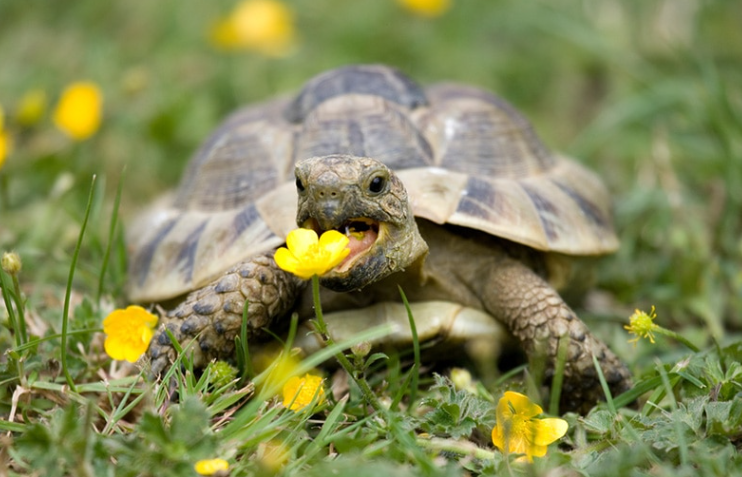
Safe weeds and plants for tortoises need to satisfy a genuinely different nutritional standard than what’s safe for most other backyard animals, since tortoises are considerably more vulnerable to a specific dietary problem: oxalates, naturally occurring compounds that bind calcium and can lead to metabolic bone disease and shell deformities over time. According to UC Davis School of Veterinary Medicine, foods like cabbage, chard, and kale are high in calcium oxalates and should be fed only sparingly as occasional treats, while spinach, broccoli, and parsley are high in goitrogens that can decrease thyroid function.
That single distinction rules out a number of plants that are perfectly safe for chickens, rabbits, and other backyard animals, while favoring high-fiber, high-calcium, low-oxalate weeds that closely mimic what wild tortoises graze on across their native arid and grassland habitats. Maintaining a calcium-to-phosphorus ratio of at least 2 to 1 is a widely cited target among tortoise keepers, and dark, calcium-rich weeds like dandelion and plantain go a long way toward hitting that mark without added supplementation.
These plants span common lawn weeds, garden flowers, and desert-adapted succulents suited to the arid-species tortoises most commonly kept as pets. What follows covers 40 safe weeds and plants for tortoises, along with where each one grows and the data behind its nutritional value.
Dandelion
Dandelion is native to Europe and Asia and grows across nearly every temperate region on Earth, typically found in lawns, meadows, and disturbed ground. Every part of the plant, including the flowers, is safe and highly nutritious for tortoises, notably rich in calcium and vitamin A. A single flower head can produce between 150 and 200 seeds.
It grows throughout nearly all of North America, and it’s widely considered one of the single best staple weeds for a captive tortoise diet.
Broadleaf Plantain
Broadleaf plantain is native to Europe and Asia, and according to the North Carolina Extension Gardener Plant Toolbox, it’s a highly nutritious wild edible high in calcium and vitamins A, C, and K, with a favorable low-oxalate profile that makes it well suited to a tortoise diet. A mature plant produces a flowering spike releasing up to 20,000 seeds per season.
It grows throughout nearly all of North America, thriving in the same compacted, disturbed soil often found in tortoise enclosures.
Narrowleaf Plantain
Narrowleaf plantain, also called ribwort, closely resembles broadleaf plantain in its safety and nutritional value for tortoises, native to Europe and Asia. A mature plant typically reaches 6 to 18 inches tall when flowering.
It grows throughout most of the United States and Canada, often found growing alongside its broader-leaved relative.
White Clover
White clover is native to Europe and western Asia, and according to the North Carolina Extension Gardener Plant Toolbox, it’s a mat-forming perennial that spreads by stems rooting freely at the nodes. It’s safe for tortoises in moderate amounts, though its relatively high protein content means it shouldn’t dominate a diet meant to mimic a naturally fibrous, lower-protein grazing pattern.
It grows throughout North America, commonly found in lawns and pastures.
Red Clover
Red clover closely resembles white clover in safety for tortoises, native to Europe and western Asia, best offered in moderation given its similarly elevated protein content compared to lower-protein grazing weeds. A mature plant typically reaches 1 to 2 feet tall.
It grows throughout most of the United States and Canada, commonly found in pastures and roadsides.
Common Mallow
Common mallow is native to Europe, North Africa, and parts of Asia, typically found in lawns and compacted disturbed ground. Its round, slightly fuzzy leaves are safe and favorably low in oxalates for tortoises. A mature plant typically sprawls 1 to 2 feet across.
It grows throughout most of North America, often found in the same compacted ground favored by plantain.
Common Sowthistle
Common sowthistle is native to Europe and now naturalized worldwide, typically found in agricultural fields and gardens. Its tender leaves are safe for tortoises, and its milky sap poses no toxicity concern. A mature plant can reach 4 feet tall.
It grows across most of the United States, thriving in disturbed, nutrient-rich soil.
Prickly Lettuce
Prickly lettuce, also called wild lettuce, is native to Europe and western Asia, typically found in disturbed fields and roadsides. Its young leaves are safe for tortoises, similar in nutritional profile to cultivated lettuce though considerably more fibrous. A mature plant can reach 3 to 5 feet tall.
It grows throughout most of North America, commonly found alongside other safe forage weeds.
Chickweed
Chickweed is native to Europe, typically found in lawns and shaded, moist disturbed ground during cooler months. It’s safe for tortoises in moderate amounts, offering a tender, easily digestible green during cooler seasons. A mature plant typically stays under a foot tall.
It grows throughout most of the United States and Canada.
Smooth Hawksbeard
Smooth hawksbeard is native to Europe and western Asia, producing small, dandelion-like yellow flower heads. Like true dandelion, it’s safe and nutritious for tortoises, offering a similar calcium and fiber profile. A mature plant typically reaches 1 to 3 feet tall.
It grows throughout much of the United States, particularly common in irrigated lawns and turf.
Autumn Hawkbit
Autumn hawkbit, also called fall dandelion, is native to Europe, safe for tortoises and nutritionally similar to true dandelion, blooming later into the season than most other dandelion relatives. A mature plant typically reaches 6 to 24 inches tall.
It grows throughout the northeastern and north-central United States.
Common Catsear
Common catsear, also called false dandelion, is native to Europe, safe for tortoises and closely resembling true dandelion in both appearance and nutritional value. A mature plant produces branched flower stems distinguishing it from single-stalked true dandelion.
It grows throughout most of the United States, particularly in compacted lawns and pastures.
Nasturtium
Nasturtium is native to South America, and according to UC Davis School of Veterinary Medicine’s tortoise care guidelines, flowering plants of this general type are commonly listed among safe treat options for desert tortoises. Its peppery leaves and flowers are safe in moderation. A mature plant can trail several feet.
It grows as a garden annual throughout temperate regions of the United States.
Rose
Rose petals and leaves are specifically listed as safe treats by UC Davis School of Veterinary Medicine, native across the Northern Hemisphere depending on species. A mature shrub varies considerably in size depending on the cultivar.
It grows as a garden shrub throughout nearly all of the United States.
Mulberry
Mulberry leaves are a commonly recommended safe forage for tortoises, native to Asia and naturalized across much of North America. A mature tree can reach 30 to 50 feet tall, with leaves remaining a favored, low-oxalate browse throughout the growing season.
It grows throughout most of the continental United States.
Grape
Grape leaves are considered safe and favorably low in oxalates for tortoises, native to a wide range across North America, Europe, and Asia depending on species. A mature vine can climb 50 feet or more.
It grows throughout most of North America, both as a cultivated crop and a wild vine.
Chicory
Chicory is native to Europe, western Asia, and North Africa, typically found along roadsides and disturbed ground. Its leaves are safe for tortoises, offering a fibrous, slightly bitter green similar in profile to dandelion. A mature plant can reach 3 to 5 feet tall.
It grows throughout most of the United States and southern Canada.
Yarrow
Yarrow is native to Europe, Asia, and North America, typically found in meadows and disturbed grassland. Its feathery leaves are safe for tortoises in modest amounts. A mature plant typically reaches 1 to 3 feet tall.
It grows throughout nearly all of North America.
Bramble
Bramble, referring to blackberry and its close relatives, is native to temperate regions worldwide, and its leaves are commonly offered as a safe, fibrous browse for tortoises. A mature thicket can spread several feet per year.
It grows throughout most of North America, thriving especially in full sun.
Prickly Pear Cactus
Prickly pear cactus, botanically Opuntia, is native throughout much of the Americas, and according to University of Arizona Cooperative Extension, it grows at elevations from sea level up to 8,000 feet across desert regions of the Southwest. Its de-spined pads are widely considered a staple food for desert tortoise species, providing calcium and fiber, though its moderate oxalate content means it works best as a regular but not exclusive component of the diet.
It grows throughout much of the southwestern United States, and spines and glochids must be fully removed before offering pads to a tortoise.
Bermudagrass
Bermudagrass is native to Africa and serves as a foundational grazing grass for many tortoise diets, providing essential fiber and roughage that supports healthy gut function. A mature stand spreads readily in warm, sunny conditions.
It grows throughout the southern United States, commonly included in outdoor tortoise enclosures specifically as a grazing grass.
Field Bindweed
Field bindweed is native to Europe and Asia, considered a safe occasional forage for tortoises by many keepers despite its reputation as a highly persistent agricultural weed. A mature plant’s root system can extend many feet underground.
It grows throughout the Great Plains and much of the temperate United States.
Honeysuckle
Honeysuckle flowers are commonly offered as a safe occasional treat for tortoises, with several species native to Asia now naturalized across much of North America. A mature shrub or vine varies considerably in size by species.
It grows throughout much of the eastern and midwestern United States.
Geranium
Geranium, botanically Pelargonium, is specifically listed as a safe treat option by UC Davis School of Veterinary Medicine, native to South Africa. A mature plant typically reaches 1 to 2 feet tall.
It’s grown as a garden and container annual throughout temperate regions of the United States.
Viola
Viola, including pansies, is specifically listed among safe treats for desert tortoises by UC Davis School of Veterinary Medicine, native to a wide range across the Northern Hemisphere depending on species. A mature plant typically stays low, generally under a foot tall.
It’s grown as a garden annual or perennial throughout temperate regions of the United States.
Calendula
Calendula, also called pot marigold, is native to the Mediterranean region, offering safe, edible flowers and leaves commonly recommended for tortoise diets. A mature plant typically reaches 1 to 2 feet tall.
It grows as a garden annual throughout temperate regions of the United States.
Stinging Nettle
Stinging nettle is native to Europe, Asia, and North Africa, typically found in nutrient-rich, moist soil along stream banks. Once thoroughly wilted or dried to deactivate its stinging hairs, it becomes a safe, calcium-rich green favored by many tortoise keepers. A mature plant typically reaches 3 to 7 feet tall.
It grows throughout most of North America, and fresh, unwilted nettle should never be offered directly.
Common Vetch
Common vetch is native to Europe and western Asia, safe for tortoises in moderate amounts given its relatively high protein content compared to lower-protein grazing weeds. A mature vine typically reaches 2 to 3 feet when given something to climb.
It grows throughout much of the United States, particularly common in agricultural areas.
Wild Strawberry
Wild strawberry leaves are safe for tortoises, native to North America, typically found in open fields and forest edges. A mature plant stays low, generally under 6 inches tall.
It grows throughout most of the United States and Canada.
Sage
Sage is native to the Mediterranean region, safe for tortoises in small amounts as an aromatic addition to a varied diet. A mature plant typically reaches 1 to 2 feet tall.
It grows as a garden perennial throughout temperate regions of the United States.
Thyme
Thyme is native to the Mediterranean region, safe for tortoises in small amounts, commonly grown alongside other culinary herbs offered as dietary variety. A mature plant typically stays low, under a foot tall.
It grows as a garden perennial throughout temperate regions of the United States.
Basil
Basil is native to tropical Asia, safe for tortoises in small amounts as an occasional aromatic addition to the diet. A mature plant typically reaches 1 to 2 feet tall.
It grows as a garden annual throughout temperate regions of the United States.
Endive
Endive is native to the Mediterranean region, considered a better lettuce alternative for tortoises than standard iceberg or romaine due to its higher fiber and nutrient content. A mature plant forms a loose rosette of leaves.
It grows as a garden vegetable throughout temperate regions of the United States.
Burdock
Burdock leaves are safe for tortoises, native to Europe and northern Asia, typically found along fences and disturbed pasture edges. A mature first-year plant produces leaves that can exceed a foot in length.
It grows throughout most of North America.
Hen and Chicks
Hen and chicks, botanically Sempervivum, is native to mountainous regions of Europe, offering a safe, low-moisture succulent option for tortoises, particularly desert species adapted to arid forage. A mature rosette typically stays under a few inches across.
It grows as a garden succulent throughout temperate regions of the United States.
Chamomile
Chamomile is native to Europe and western Asia, safe for tortoises in moderate amounts, commonly offered as both fresh forage and an occasional dried addition. A mature plant typically reaches 1 to 2 feet tall.
It grows as a garden annual or perennial throughout temperate regions of the United States.
Wild Radish
Wild radish flowers and leaves are safe for tortoises in moderation, native to the Mediterranean region. A mature plant typically reaches 2 to 4 feet tall.
It grows across every mainland U.S. state.
Shepherd’s Purse
Shepherd’s purse is native to Europe and Asia, safe for tortoises, typically found in gardens and disturbed ground. A mature plant typically reaches 6 to 18 inches tall.
It grows throughout nearly all of North America.
Cleavers
Cleavers is native to North America, Europe, and Asia, safe for tortoises in moderate amounts when young and tender, typically found scrambling through hedgerows. A mature plant can sprawl several feet.
It grows throughout much of North America.
Timothy Grass
Timothy grass hay is widely recommended as a safe, high-fiber dietary staple for tortoises, native to Europe and naturalized throughout North America. A mature plant typically reaches 2 to 3 feet tall.
It grows throughout the northern United States and Canada, commonly available commercially as hay specifically for reptile and small animal diets.
Further References
- Plants List — Tortoise Trust — Provides a detailed list of wild plants commonly offered to tortoises, including dandelion, clover, plantain, sow thistle, chickweed, dead nettles, and bramble.
- Tortoise Adoption Program: Tortoise Diet — Arizona-Sonora Desert Museum — Lists suitable plants, grasses, flowers, leaves, and other foods for desert tortoises, including mallows, prickly pear, plantain, clover, hibiscus, and rose petals.
- Feeding Tortoises: Avoiding Dietary Disasters — Tortoise Trust — Explains why variety is important and discusses diets for Mediterranean, leopard, sulcata, Indian star, red-footed, and other tortoise species.
- Taking Care of Pet Tortoises — Tortoise Trust — Covers the nutritional principles of tortoise diets, emphasizing a varied selection of non-toxic weeds, flowers, and green leaves.
- Links: Recommended Foods for Herbivorous Tortoises — The Tortoise Table — Provides links to plant and feeding resources, including recommended foods and information on potentially safe or unsuitable plants.