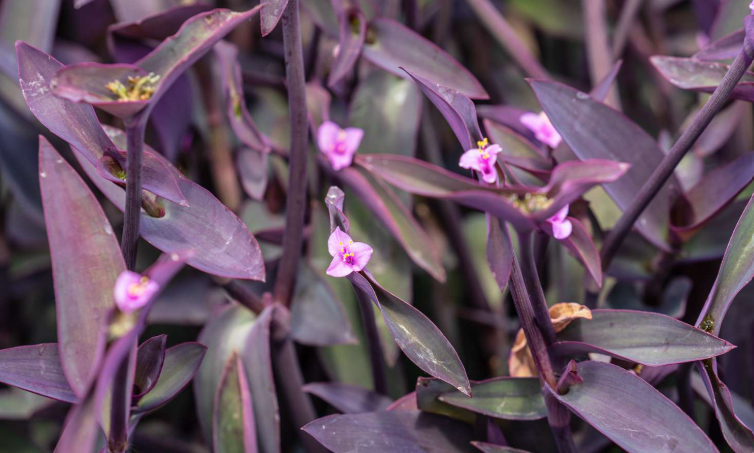
Plants with purple stems span a genuinely wide range of purposes for that coloring, from a simple cosmetic trait bred into ornamental vegetables to one of the single most important safety features separating a deadly wild plant from its harmless relatives. Stem color in particular carries outsized identification value in the carrot family, where a purple-blotched or purple-streaked stem is one of the clearest warning signs of a genuinely toxic species growing among several safer look-alikes.
Beyond that safety angle, purple stems show up just as often in entirely benign contexts, whether as a natural varietal trait in garden vegetables like rhubarb and basil, a distinguishing feature of native wildflowers named specifically for the trait, or simply the reddish-purple coloring common on new woody growth across many unrelated shrubs and brambles. Positive identification, especially within the carrot family, remains essential before assuming a purple-stemmed plant is automatically dangerous or automatically safe.
These plants span native North American wetlands, European hedgerows, and garden vegetable beds, with growth habits ranging from towering wildflowers to low garden annuals. What follows covers 24 plants with purple stems, along with where each one grows and the data behind the coloring.
Poison Hemlock
Poison hemlock is native to Europe, North Africa, and western Asia and grows as a naturalized weed across most of North America, and according to University of Illinois Extension, it can grow up to 10 feet tall and is known for its smooth, purple-spotted, hollow stems that darken as the plant matures. Every part of the plant is highly toxic if ingested, and the purple-spotted stem is one of the most reliable features distinguishing it from safer carrot-family relatives.
It grows throughout most of the United States and Canada, commonly found along roadsides, ditches, and disturbed fields.
Water Hemlock
Water hemlock is native to North America, typically found in wet, marshy ground along streams and ditches. Its stem is hollow, ridged, and often marked with pink to purple streaking near the base, a feature shared with several of its equally toxic and non-toxic carrot-family relatives. A mature plant typically reaches 2 to 6 feet tall.
It’s considered one of the most acutely poisonous plants in North America, and it grows throughout the continent, restricted almost entirely to consistently wet, boggy soil.
Purple-Stemmed Angelica
Purple-stemmed angelica is native to eastern North America, typically found in wet meadows and swamps. Its thick, hollow stems are a uniform deep purple-red, a distinguishing feature from the purple-spotted or streaked pattern found on poison hemlock and water hemlock. A mature plant can reach 4 to 6 feet tall.
It grows throughout the northeastern and north-central United States and Canada, typically restricted to consistently wet soil.
Garden Rhubarb
Garden rhubarb is native to Siberia and other cold regions of Asia, and according to University of Minnesota Extension, stalk color can vary from crimson red to light green depending on the variety, with the reddish stalks being the edible portion of the plant. A mature plant can grow up to 3 to 4 feet wide, remaining productive in the same spot for 8 or more years. Its leaf blades are toxic due to concentrated oxalic acid, though the stalks themselves are widely used in pies and preserves.
It grows as a garden perennial throughout the northern United States and Canada.
Pokeweed
Pokeweed is native to eastern North America, typically found in disturbed fields and woodland edges. Its thick stems are a vivid reddish-purple, a striking contrast against the plant’s green leaves and dark berry clusters. A mature plant typically reaches 4 to 10 feet tall.
Its root carries the highest concentration of the plant’s toxic compounds. It grows throughout most of the eastern and central United States.
Japanese Knotweed
Japanese knotweed is native to Japan, Taiwan, and China, growing in dense, bamboo-like stands along riverbanks and roadsides. Its hollow, jointed stems are marked with distinctive reddish-purple speckling, particularly noticeable at each swollen node. A mature stand can reach 10 feet tall in a single growing season.
It grows throughout the northeastern and Pacific Northwest United States, spreading aggressively through an underground rhizome system.
Purple-Stemmed Beggarticks
Purple-stemmed beggarticks is native to North America, typically found in wet meadows, marshes, and pond margins, its common name describing its most distinctive feature directly. A mature plant typically reaches 1 to 4 feet tall, with small yellow flowers appearing in late summer.
It grows throughout much of the eastern and central United States and Canada, favoring consistently moist to wet soil.
Butterweed
Butterweed is native to the central and eastern United States, typically found in low, poorly drained agricultural fields. Its hollow stems are streaked with purple, topped with clusters of small, daisy-like yellow flowers each spring. A mature plant typically reaches 1 to 3 feet tall.
It grows extensively across the Mississippi and Ohio River valleys, often carpeting entire agricultural fields in a single yellow bloom before crops are planted.
Thai Basil
Thai basil is a cultivar of a culinary herb native to Southeast Asia, distinguished from most other basil varieties by its notably purple stems and flower spikes contrasting against otherwise green, glossy leaves. A mature plant typically reaches 1 to 2 feet tall, with a stronger anise-like flavor than sweet basil.
It grows as a garden annual throughout temperate regions of the United States, favoring full sun and warm temperatures.
Purple-Stemmed Aster
Purple-stemmed aster is native to North America, typically found in wet meadows, marshes, and stream banks, its common name describing the coarse, hairy, deep purple stem that supports its pale purple, daisy-like fall flowers. A mature plant can reach 3 to 6 feet tall.
It grows throughout most of the eastern and central United States and Canada, favoring consistently moist soil.
Cow Parsnip
Cow parsnip is native to North America, typically found in moist meadows and along stream banks. Its thick, hollow stems can show purple blotching in some populations, a trait that occasionally causes confusion with the more dangerous giant hogweed, though cow parsnip’s phototoxic reaction is generally milder. A mature plant typically reaches 4 to 8 feet tall.
It grows throughout most of the United States and Canada.
Joe-Pye Weed
Joe-Pye weed, particularly the species Eutrochium fistulosum, is native to eastern North America, and according to the North Carolina Extension Gardener Plant Toolbox, it was selected as North Carolina’s Wildflower of the Year and is commonly identified by its dark purple, hollow stems supporting whorled leaves and domed clusters of pink-purple flowers. A mature plant can reach 5 to 7 feet tall.
It grows throughout the eastern United States and Canada, favoring damp, moist to wet, rich soils along roadsides and stream banks.
Ironweed
Ironweed is native to eastern and central North America, typically found in moist meadows and along roadsides. Its stems carry a reddish-purple tinge, particularly near the base, supporting clusters of vivid magenta-purple flowers in late summer. A mature plant can reach 4 to 6 feet tall.
It grows throughout the eastern and central United States, often blooming alongside goldenrod and Joe-Pye weed in the same autumn meadows.
Sacred Datura
Sacred datura is native to the southwestern United States and Mexico, typically found in dry washes and disturbed desert ground. Certain forms of the plant, sometimes classified as a separate variety, show a distinctly purple-tinged stem, contrasting against its large, coarse, grayish-green leaves. A mature plant typically reaches 2 to 4 feet tall.
Every part of the plant is highly toxic if ingested. It grows throughout the desert Southwest.
Eggplant
Eggplant is native to South Asia, and its stems carry a distinct purple tinge, especially near the growing tips and along the veins of the leaves, most pronounced in cultivars bred for deep purple fruit. A mature plant typically reaches 2 to 3 feet tall. Like other members of the nightshade family, its leaves and flowers are toxic even though the fruit itself is edible.
It grows as a warm-season garden vegetable throughout temperate regions of the United States.
Beet
Beet is native to the Mediterranean coast, and its stems and leaf veins typically show a deep magenta-purple color that intensifies as the plant matures, a trait shared with its edible root. A mature plant typically produces leaves 8 to 12 inches long.
It grows as a garden vegetable throughout temperate regions of the United States, tolerating light frost better than many other vegetables.
Purple Swiss Chard
Purple Swiss chard, including cultivars bred specifically for deep magenta stem color, is a variegated form of a leafy vegetable native to the Mediterranean region. A mature plant typically reaches 1 to 2 feet tall, fully edible with stems often cooked separately from the more tender leaf blades due to their firmer texture.
It grows as a garden vegetable throughout temperate regions of the United States.
Black Raspberry
Black raspberry is native to eastern North America, typically found along woodland edges and disturbed open ground. Its canes carry a distinctive purple-red tinge beneath a whitish, powdery bloom that rubs off easily to the touch, a combination not seen on red raspberry or blackberry canes. A mature cane can arch and root at the tip when it touches soil.
It grows throughout the eastern and central United States, often found growing alongside its red-fruited relatives.
Wineberry
Wineberry is native to eastern Asia and has become an invasive species across the eastern United States, its canes covered in distinctive sticky, glandular red hairs that give the stems an overall reddish-purple cast. A mature cane can reach 6 to 9 feet tall, producing bright red, raspberry-like fruit.
It grows throughout the mid-Atlantic and northeastern United States, particularly along forest edges.
Redroot Pigweed
Redroot pigweed, a common type of wild amaranth, is native to the Americas, typically found colonizing disturbed fields and gardens. Its lower stem and taproot carry a distinctive reddish-purple color, a helpful identification feature once the plant is pulled from the ground. A mature plant can produce well over 100,000 seeds.
It grows throughout North America as one of the most common agricultural weeds.
Smartweed
Smartweed is native to North America and Eurasia, typically found in wet ditches and disturbed farmland. Its stems are often marked with reddish-purple coloring, especially at the swollen nodes typical of the broader knotweed family it belongs to. A mature plant typically reaches 1 to 3 feet tall.
It grows throughout most of North America, particularly common in wet ditches and pond margins.
Purple Loosestrife
Purple loosestrife is native to Europe and Asia, typically found in wetlands and marsh edges. Its stiff, upright stems are angular and often show a reddish-purple tinge, supporting tall spikes of vivid magenta-purple flowers each summer. A mature plant can reach 4 to 7 feet tall.
It grows throughout most of the United States and Canada, absent only from Florida, and has become a significant invasive species in wetland habitats.
Purple Basil
Purple basil, including cultivars like ‘Dark Opal,’ is a color form of a culinary herb native to tropical Asia, and according to Clemson Cooperative Extension’s Home and Garden Information Center, ‘Dark Opal Purple’ basil was a 1962 All-America Selections winner reaching 24 inches in height. Its stems, along with its leaves, take on a deep purple color throughout the growing season.
It grows as a garden annual throughout temperate regions of the United States, fully edible with a flavor similar to green basil.
Hopi Red Dye Amaranth
Hopi Red Dye amaranth is a heritage cultivar derived from species native to the Americas, developing a deep red-purple stem alongside matching foliage and flower heads as the plant matures. A mature plant can reach 4 to 6 feet tall, historically used by the Hopi people to color foods and textiles.
It grows as a garden annual throughout temperate regions of the United States.
Further References
- Purple Spiderwort — North Carolina Extension Gardener Plant Toolbox — Useful for identifying Tradescantia pallida, which has distinctly purple stems along with purple foliage.
- Ornamental Millet — Wisconsin Horticulture — Describes ‘Purple Majesty’, an ornamental millet cultivar with deep purple foliage, stems, and flower plumes.
- Joe-Pye Weed — Clemson University Extension — Covers Joe-Pye weed cultivars with purple or purplish stems, along with their flower colors and identifying characteristics.
- Hibiscus acetosella — Wisconsin Horticulture — Provides details on burgundy and purple-stemmed/foliaged cultivars such as ‘Panama Bronze’ and ‘Red Shield’.
- Purple Deadnettle — Purdue Extension — A useful identification reference because purple deadnettle has greenish-purple stems, with the upper stems becoming more distinctly purple.