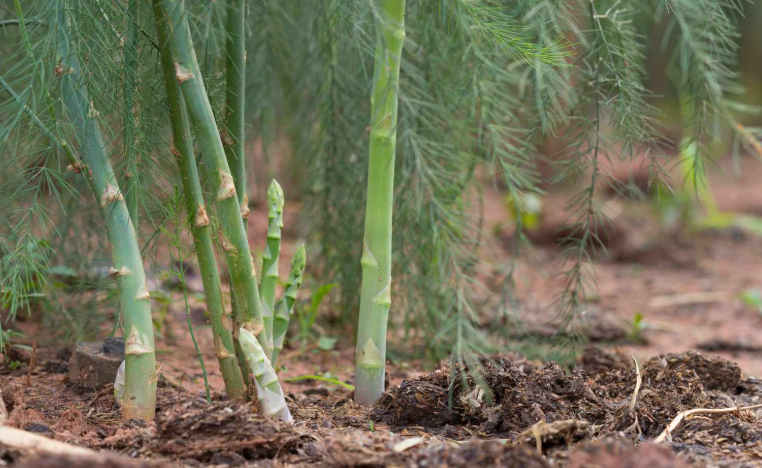
Asparagus is one of the most distinctive-looking plants in the vegetable garden, producing its characteristic spears in spring before developing into tall, feathery, fern-like foliage that gives the mature plant an airy, delicate appearance quite unlike most other commonly grown vegetables. This distinctive growth form — emerging pointed spears followed by finely divided, needle-like foliage arranged on spreading, arching stems — is shared, to varying degrees, by a surprising number of other plant species found in gardens, wild habitats, and as ornamental houseplants around the world. Some of these lookalikes are close botanical relatives of edible asparagus within the same genus or family, while others have arrived at a similar appearance through entirely different evolutionary paths.
The resemblance between asparagus and other plants typically centers on one or more shared characteristics — the pointed, upright spear form of emerging shoots, the fine, needle-like cladodes that serve as photosynthetic structures in place of true leaves in many asparagus relatives, or the overall feathery, airy texture of the mature foliage. These shared characteristics can sometimes lead to confusion, particularly in the case of ornamental asparagus species that are commonly grown as houseplants and garden ornamentals without any association in most people’s minds with the edible vegetable they closely resemble. Understanding which plants share asparagus’s distinctive appearance — and why — provides insight into both plant evolution and the practical identification challenges these resemblances create.
The asparagus genus itself, Asparagus, contains approximately 300 species beyond the familiar edible species Asparagus officinalis, and many of these ornamental relatives share the same basic structural blueprint of fine, needle-like photosynthetic structures and arching, spreading stems. Beyond the genus Asparagus, other plant families have independently evolved similar growth forms suited to similar ecological conditions, demonstrating how convergent evolution repeatedly arrives at similar solutions to the challenges of photosynthesis, water conservation, and physical structure in plants adapted to comparable environments.
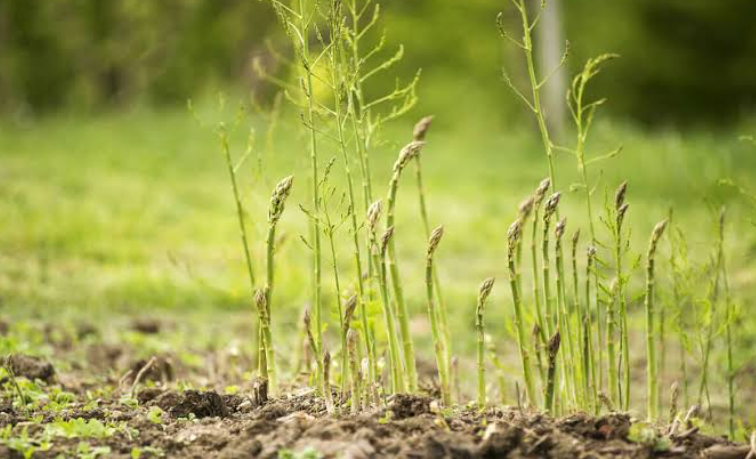
Plants That Look Like Asparagus
Asparagus Fern
Asparagus fern, Asparagus setaceus, is the asparagus relative most commonly grown as a houseplant, producing extraordinarily fine, feathery foliage on arching stems that creates a delicate, cloud-like texture quite unlike true ferns despite the common name. It is a direct botanical relative of edible asparagus within the same genus.
The needle-like structures that give asparagus fern its feathery appearance are not true leaves but cladodes, modified stems that perform the function of leaves, a structural characteristic shared with edible asparagus and most other members of the genus. Asparagus fern is widely used by florists as a filler in arrangements, where its fine texture and long vase life make it one of the most versatile and widely used foliage plants in the cut flower trade.
Foxtail Fern
Foxtail fern, Asparagus densiflorus Meyersii, is another ornamental asparagus species producing dense, cylindrical plumes of bright green cladodes on upright stems that resemble fox tails, giving the plant its evocative common name. Like asparagus fern, it is a true botanical relative of edible asparagus.
The upright, plume-like growth habit of foxtail fern creates a distinctive architectural appearance that differs from both edible asparagus and asparagus fern, though all three share the same fundamental structural blueprint of cladodes rather than true leaves. Foxtail fern is popular as a container plant for patios and terraces in warm climates, where its drought tolerance and striking appearance make it a low-maintenance ornamental choice.
Sprenger Asparagus
Sprenger asparagus, Asparagus aethiopicus, is a vigorous trailing or climbing ornamental asparagus species that produces bright green, needle-like cladodes on arching stems studded with small white flowers followed by bright red berries. Its resemblance to edible asparagus in foliage texture is immediately apparent.
This species has become invasive in several warm-climate regions including parts of Australia, New Zealand, and South Africa, where it spreads through bird-dispersed seeds and forms dense thickets that smother native vegetation. Despite its invasive tendencies in suitable climates, Sprenger asparagus remains widely grown as an ornamental in regions where it cannot naturalize, valued for its vigorous growth and attractive appearance.
Shatavari
Shatavari, Asparagus racemosus, is an Indian medicinal species within the asparagus genus that produces fine, needle-like cladodes on climbing stems closely resembling those of edible asparagus, along with small white flowers and red berries. It is one of the most important plants in Ayurvedic medicine.
The fleshy roots of shatavari are the primary medicinal part of the plant, used in traditional Indian medicine for a wide range of conditions, while the above-ground foliage bears the same characteristic asparagus-like appearance that identifies this plant as a close botanical relative of the familiar vegetable. Shatavari is cultivated commercially in India for the herbal medicine market, where demand for its roots as a supplement ingredient has grown substantially.
Wild Asparagus
Wild asparagus, Asparagus acutifolius, is a Mediterranean species closely related to edible asparagus that grows naturally in rocky, scrubby habitats across southern Europe and North Africa, producing slender spears in spring that are gathered and eaten by local communities as a foraged wild vegetable. Its resemblance to cultivated asparagus is understandably close given their direct relationship.
The spears of wild asparagus are thinner and more intensely flavored than those of the cultivated vegetable, prized by foragers and chefs for their concentrated, slightly bitter flavor that differs distinctly from the milder cultivated variety. Wild asparagus foraging remains an important cultural tradition in rural Mediterranean communities, where knowledge of collection sites is often passed down through generations.
Garden Smilax
Garden smilax, Asparagus asparagoides, is a climbing plant in the asparagus family with bright green, oval leaves that give it a somewhat different appearance from the fine-needled asparagus relatives, but whose climbing habit and production of asparagus-like shoots make it a recognizable relative. It has become invasive in parts of Australia.
This plant is widely used in the cut flower industry as a foliage filler, and was particularly popular in Victorian-era floral decoration where its glossy, bright green stems were used extensively in wedding and ceremonial arrangements. The shoots that emerge in spring bear enough resemblance to asparagus spears that the plant has occasionally been confused with edible asparagus by inexperienced foragers.
Ornamental Onion
Ornamental onion, various Allium species, produces hollow, cylindrical leaves in spring that emerge as rounded, pointed spears closely resembling asparagus spears in their early stages of growth, a resemblance that has occasionally led to the two being confused in gardens where both are grown. The similarity is most pronounced in the early spring emergence stage.
As ornamental onion leaves develop further, the resemblance to asparagus diminishes as the distinctly hollow, cylindrical form and onion-like smell become apparent. However, in the brief window between emergence and full leaf development, the pointed, upright, green spears of ornamental alliums can be sufficiently similar to asparagus that identification requires close inspection of stem structure and a careful sniff test.
Crow Garlic
Crow garlic, Allium vineale, is a wild allium species that produces narrow, hollow, cylindrical leaves in early spring that can bear a superficial resemblance to young asparagus spears, particularly in garden settings where both plants might be expected to emerge from similar soil conditions. The resemblance is most convincing before the distinctly garlic-like scent becomes apparent.
This plant is a common garden weed in many temperate regions, emerging from small bulbils that spread through soil disturbance. While the resemblance to asparagus is limited on close inspection, inexperienced gardeners occasionally mistake crow garlic emerging in an asparagus bed for genuine asparagus spears, with the garlic-like scent when the stem is broken providing the most reliable means of distinction.
Horsetail
Horsetail, Equisetum arvense, produces upright, segmented stems with whorled branches that create a somewhat asparagus-like silhouette in their early emergence stages, with the unbranched fertile stems appearing in early spring as pointed, brownish-pink shoots that can superficially resemble asparagus spears before their distinctive character becomes apparent. The resemblance is most pronounced at the earliest growth stage.
As horsetail develops its characteristic whorled, jointed structure, any resemblance to asparagus quickly diminishes, but the spring emergence of horsetail shoots in gardens where asparagus is also grown can create momentary confusion before the distinctive segmented stem structure becomes visible. Horsetail is one of the most persistent garden weeds in temperate regions, its deep rhizome system making eradication extremely difficult once established.
Sea Kale
Sea kale, Crambe maritima, produces large, pointed, tightly folded leaves in spring that emerge as broad, glaucous blue-green spears with a distinctive appearance that bears some resemblance to very large, thick asparagus spears before the leaves unfurl. The blanched shoots produced when sea kale crowns are covered in early spring are considered a delicacy.
The forced shoots of sea kale, produced by covering the crowns with forcing pots to exclude light, develop a pale, tender appearance that amplifies the visual similarity with asparagus spears before the shoots are exposed to light and develop their characteristic blue-green coloration. Sea kale’s coastal native habitat and its status as a traditional British vegetable give it an interesting horticultural heritage that parallels asparagus’s own long cultivation history.
Broom
Common broom, Cytisus scoparius, produces green, photosynthetically active stems that give the plant its characteristic bright green appearance throughout the year, with the fine-stemmed texture of young broom growth creating a superficially asparagus-like appearance in certain growth stages, particularly when young plants are developing their initial stem structure. The resemblance is primarily textural rather than structural.
The green stems of broom perform much of the plant’s photosynthesis directly, with the small leaves that develop being relatively insignificant and quickly falling, a growth strategy that creates the distinctive green-stemmed appearance and fine-textured silhouette that can suggest asparagus foliage from a distance. Broom is a common shrub of heathland and coastal environments in temperate regions.
Japanese Pachysandra
Japanese pachysandra, Pachysandra terminalis, produces whorls of toothed, evergreen leaves on short upright stems that in their early spring emergence phase can bear a general resemblance to emerging asparagus growth, with the upright, clustered stems and fresh green emerging shoots creating a superficially similar appearance before the broader leaf shape becomes fully apparent. The resemblance is most noticeable in early spring.
This plant is widely grown as a ground cover in shaded gardens, where its tolerance for deep shade and its evergreen character make it one of the most reliable and widely planted ground-covering plants for difficult positions. The early spring emergence of new growth amid the existing evergreen foliage creates the asparagus-like impression that quickly resolves into the plant’s characteristic rosette-like leaf arrangement.
Fennel
Fennel, Foeniculum vulgare, produces extraordinarily fine, feathery foliage composed of thread-like segments that give the plant an airy, billowing texture closely comparable to the fine cladodes of asparagus fern and the mature foliage of edible asparagus. The resemblance between mature fennel foliage and mature asparagus foliage is one of the closest found in any unrelated plant.
Despite their visual similarity in mature foliage, fennel and asparagus are entirely unrelated botanically, with fennel belonging to the carrot family and asparagus to its own distinct family. The fine, thread-like foliage of fennel serves a different structural function from the cladodes of asparagus, with fennel’s segments being true leaf divisions rather than the modified stems that create the similar appearance in asparagus relatives.
Dill
Dill, Anethum graveolens, shares with fennel the characteristic of producing extremely fine, feathery, thread-like foliage that creates a delicate, airy texture broadly comparable to mature asparagus foliage in its overall visual character. The resemblance between dill and fennel foliage is particularly close, and both share a general similarity with mature asparagus.
As with fennel, the similarity between dill and asparagus is purely visual convergence rather than any botanical relationship, with dill also belonging to the carrot family and producing its fine foliage through true leaf division rather than the modified stem structures responsible for the similar appearance in asparagus. Dill’s anise-like fragrance provides immediate distinction from asparagus when the foliage is touched or crushed.
Myriophyllum
Myriophyllum, commonly known as water milfoil, is an aquatic plant that produces whorls of finely divided, feathery leaves arranged along submerged and emergent stems, creating an underwater foliage texture that bears a striking resemblance to the fine, needle-like cladodes of asparagus fern when viewed through clear water or when emergent stems are examined above the water surface. The resemblance is particularly apparent in the emergent portions of the plant.
This aquatic plant is widely used in garden ponds and aquariums for its attractive, fine-textured foliage that oxygenates the water and provides cover for aquatic wildlife, with its asparagus-like appearance adding an ornamental quality to pond planting designs. Several myriophyllum species have become invasive in waterways outside their native range, where their vigorous growth and ability to spread from plant fragments allows them to form dense mats that displace native aquatic vegetation.