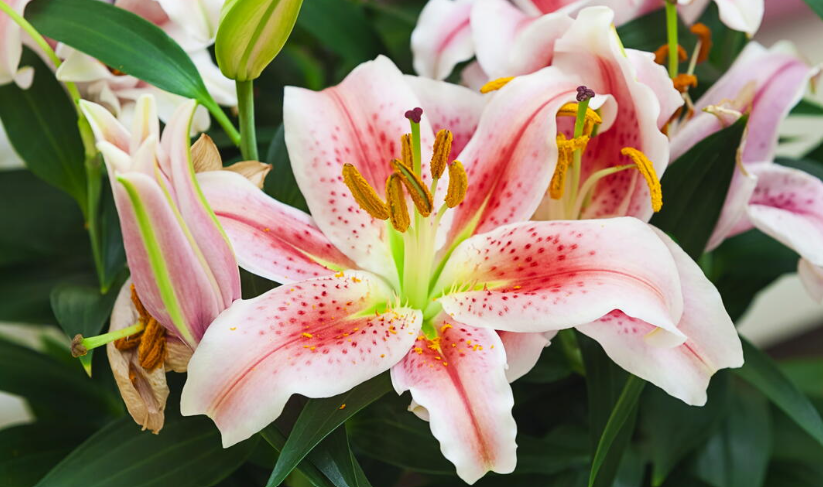
Lilies are among the most celebrated flowering bulbs in the world, with a cultivation history stretching back more than 4,000 years to the earliest known depictions of the Madonna Lily in ancient Mediterranean art. True lilies belong to the genus Lilium, distinguished by six petals and six anthers, and there are roughly 90 to 100 recognized wild species native to temperate regions of North America, Europe, and especially Asia. From these species, breeders have developed thousands of hybrids, with individual plants ranging from just 12 inches to over 8 feet tall and blooms measuring anywhere from 2 to 12 inches across depending on the type. Bulbs are typically planted 6 to 10 inches deep, roughly three times the bulb’s own diameter, and most types are hardy across a wide swath of USDA zones 3 through 9.
The Royal Horticultural Society, which serves as the International Cultivar Registration Authority for lilies, organizes the genus into 9 official divisions based on parentage, flower form, and growth habit, including Asiatic, Martagon, Candidum, American, Longiflorum, Trumpet and Aurelian, Oriental, Interdivisional hybrids, and true Species. Asiatic types bloom earliest, generally in late spring to early summer on plants 18 inches to 4 feet tall, while Oriental and Trumpet types follow from midsummer into early fall on stems that can reach 5 to 8 feet, producing the largest and most fragrant blooms in the entire genus. Interdivisional crosses such as LA hybrids, OT or Orienpet hybrids, and Asiapets combine traits from two or more divisions, often resulting in improved disease resistance, larger flowers, and better heat or cold tolerance than either parent alone.
A mature lily stem can produce anywhere from 4 to over 40 blooms depending on the division and cultivar, with the tallest Orienpet and Trumpet hybrids, sometimes called tree lilies, capable of producing the most prolific flower counts and reaching heights of 7 feet or more in a single season. Fragrance varies enormously across the genus, with most Asiatic hybrids bred to be entirely unscented while Oriental and Trumpet types are prized for an intense, sweet perfume capable of scenting an entire garden from a single planting. Lily bulbs are notably long-lived, typically persisting and multiplying in the ground for 5 to 12 years under good conditions, with offset bulbs forming around the base of the mother bulb within the first several growing seasons, eventually producing an increasing number of flowering stems from the original planting.
Lilies carry deep symbolic meaning across nearly every culture that has cultivated them, generally representing purity, passion, wealth, or renewal depending on their color, and they remain one of the most popular cut flowers in the world thanks to a vase life that typically runs 7 to 14 days. All parts of a true lily are highly toxic to cats and, to a lesser degree, dogs, so pet owners are generally advised to plant them out of reach of curious animals. Whether grown as a naturalized wildflower, a dramatic border specimen, or a cut flower for bouquets, the sheer diversity of the Lilium genus, spanning fiery orange species to towering white trumpets and near-black purple hybrids, means there is a type suited to nearly every garden style and climate.
Different Types of Lilies
Madonna Lily
Madonna Lily is one of the oldest cultivated lilies in the world, with documented use stretching back roughly 4,000 years in Mediterranean religious art and deep roots in Christian symbolism tied to purity and the Virgin Mary. It produces outward-facing, trumpet-shaped white blooms in clusters of up to 20 per stem on plants reaching 3 to 4 feet tall, flowering in late spring with an intensely sweet fragrance that has made it a traditional favorite for weddings. Unlike most lilies, its bulbs are shallow-rooted and are typically planted only 1 inch deep rather than the usual 6 to 8 inches, and the plant tends to be short-lived compared to hardier modern hybrids.
Easter Lily
Easter Lily is the classic white, trumpet-shaped species most associated with spring holidays, though its natural bloom time is actually midsummer and commercial growers force the bulbs to flower early to coincide with the holiday season. Plants reach 2 to 3 feet tall with several large, fragrant, outward-facing flowers per stem, each trumpet measuring roughly 6 to 7 inches long, and it is native to islands in southern Japan. A small stretch of the California-Oregon border produces the vast majority of the bulbs sold commercially in North America each year, and this type performs well in USDA zones 5 through 9.
Regale Lily
Regale Lily is a fragrant trumpet species native to China, producing bold white blooms with a vivid yellow throat and petals that are often flushed with purple-pink on the reverse side. Plants can reach 4 to 6 feet tall and typically produce 10 to 12 trumpet-shaped flowers per stem, each 5 to 6 inches long, opening in midsummer with a heavy, sweet perfume. Discovered in 1903 by plant collector Ernest Wilson, Regale Lily became one of the most important parent species of the 20th century, contributing its genetics to countless modern Asiatic and Trumpet hybrids.
Tiger Lily
Tiger Lily is the species most associated with orange in the entire lily family, producing bowl-shaped, strongly recurved blooms covered in dark mahogany speckling across the entire petal surface rather than just the throat. Mature plants typically reach 3 to 5 feet tall and produce shiny black, pea-sized bulblets along the stem that can be collected and used to propagate new plants without dividing the bulb itself. This species is among the hardiest lily types available, tolerating USDA zones as cold as zone 3, and it has an old-fashioned, naturalized charm well suited to informal cottage garden plantings.
Formosa Lily
Formosa Lily is a tall, exotic species closely related to the Easter Lily, native to Taiwan and named for the Portuguese word for “beautiful.” It produces large, trumpet-shaped white blooms with a light, alluring fragrance on stems that can reach 4 to 6 feet, flowering from mid to late summer and known for its ability to brighten a garden with its pristine, elongated flowers. Formosa Lily tends to self-seed readily in favorable conditions, often naturalizing into small colonies within just a few growing seasons.
Goldband Lily
Goldband Lily, sometimes called the Golden Rayed Lily, is a striking species native to Japan that combines a predominantly white flower with a bold golden-yellow stripe running down the center of each petal, lightly freckled with red spots. Blooms can reach 8 to 10 inches across, among the largest of any lily species, held on stems that grow 3 to 5 feet tall and flower in mid to late summer with a heavy fragrance. This species prefers acidic, well-draining soil and is often grown in containers where soil conditions can be more carefully controlled than in open garden beds.
Michigan Lily
Michigan Lily is a native North American species with nodding, strongly recurved orange-yellow blooms speckled with maroon spots, closely related to other native Turk’s Cap-type lilies found across the eastern and central United States. It typically reaches 3 to 5 feet tall, flowering in mid to late summer in moist meadows, prairies, and woodland edges, and its slender stems clad in whorled, lance-shaped leaves give it a graceful, delicate appearance quite different from the bolder look of most hybrid lilies. This species is prized by native plant gardeners for its ability to naturalize readily in appropriate habitat conditions.
Wood Lily
Wood Lily, also known as the Philadelphia Lily, produces upward-facing, star-shaped blooms with red-orange petals fanning outward from a yellow, brown-speckled center, quite unlike the downward-nodding habit of many related native species. It stays relatively short, generally 1 to 3 feet tall with a 9 to 12 inch spread, flowering from midsummer into August and performing best in cooler climates with full sun and moist, well-draining soil. Because it is less commonly available commercially than hybridized types, Wood Lily is often sourced through specialty native plant nurseries.
Columbia Lily
Columbia Lily is an attractive North American perennial wildflower, sometimes called the wild tiger lily or Oregon lily, found predominantly along the West Coast and prized for its reflexed, downward-nodding orange blooms freckled with brick-red spots. A single healthy bulb can produce up to 20 blooms over an unusually long flowering period, and this species typically reaches 2 to 6 feet tall depending on growing conditions, thriving in moist, acidic to neutral soil. Its six stamens hang downward from each bloom, giving the flower a delicate, chandelier-like quality when viewed from below.
American Turk’s Cap Lily
American Turk’s Cap Lily, also called the Swamp Lily, is a native species that thrives in damp growing conditions unusual for most lilies, producing large, deep orange blooms with dark brown spotting and a distinctive green star at the flower’s center. It typically reaches 3 to 6 feet tall in favorable wetland habitat and can produce up to 50 nodding blooms on a single mature stem, making it one of the most floriferous native species in North America. It is sometimes confused with the Asiatic Tiger Lily, but the two are easily distinguished by this species’ signature green-starred throat.
Canada Lily
Canada Lily is a native species producing bell-shaped, nodding blooms in shades from pale yellow to orange-red with light speckling, held on graceful, willowy stems reaching 3 to 5 feet tall. It flowers in early to midsummer, favoring moist meadows and open woodland edges across the eastern United States and into Canada, and this species has a long history of cultivation in North American gardens thanks to its delicate, naturalistic appearance. A pale yellow form of this species, sometimes marketed separately, is especially prized by gardeners seeking a softer color palette.
Carolina Lily
Carolina Lily is a native North American species producing nodding, strongly recurved blooms in soft purple-lavender tones blending into orange near the throat, closely resembling other native Turk’s Cap-type lilies found across the southeastern United States. It typically grows 2 to 3 feet tall and flowers in mid to late summer, favoring dry, acidic woodland soil where it can naturalize alongside ferns and other shade-tolerant native perennials. Its unusual color blending makes it a favorite among collectors of native American lily species.
Kellogg’s Lily
Kellogg’s Lily is a large North American species native to the Pacific coast, producing showy, down-facing, hanging blooms in warm orange tones with strongly recurved petals characteristic of the Turk’s Cap form. It is valued by native plant gardeners for its architectural form and its ability to naturalize in appropriate woodland habitat, typically reaching several feet in height under favorable coastal growing conditions. This species remains relatively uncommon in general cultivation and is most often sourced through native plant specialists.
Sulphur Lily
Sulphur Lily is a fragrant trumpet species with pale, soft yellow blooms that flare outward from a narrow throat, producing a subtle, sulfur-like tone rather than the deep gold of many hybrid Trumpet types. It can reach 4 to 6 feet tall under favorable conditions and flowers in mid to late summer with a strong, sweet fragrance that carries well through a garden in the evening. This species is native to parts of Southeast Asia and has been used as a parent plant in the development of several fragrant hybrid Trumpet lines available today.
Nepal Lily
Nepal Lily is a species with unusual greenish-yellow, funnel-shaped blooms accented by a deep maroon throat, giving it one of the more distinctive color combinations in the entire lily family. It typically reaches 3 to 4 feet tall and flowers in mid to late summer, preferring partial shade and consistently moist, well-draining soil rather than the full sun favored by most hybrid lily types. Nepal Lily is considered more challenging to grow than typical Asiatic or Trumpet types, making it a specialty choice for experienced lily growers.
Pyrenean Lily
Pyrenean Lily is a species native to the mountains of southern Europe, producing small, sulfur-yellow, strongly recurved blooms with dark speckling, giving each flower a distinctive Turk’s Cap shape. It typically grows 2 to 3 feet tall and flowers in early summer, thriving in full sun to light shade, and this species has been cultivated in European gardens for centuries, valued for its delicate, wildflower-like charm compared to bolder modern hybrids.
Chinese Trumpet Lily
Chinese Trumpet Lily is a fragrant species with pale yellow to creamy white trumpet-shaped blooms, closely related to some of the most influential Trumpet lily species discovered in China in the early 20th century by plant collectors working for Western botanical institutions. It typically reaches 3 to 5 feet tall and flowers in midsummer with a strong, sweet scent characteristic of the Trumpet division, and this species played a foundational role in the breeding of many modern yellow and white Trumpet hybrids available today.
Rubellum Lily
Rubellum Lily is a fragrant species native to Japan, producing pale to medium pink, bell-shaped blooms on stems reaching just 1 to 2 feet tall, considerably shorter than most hybrid Oriental and Trumpet types. It flowers in early summer, ahead of most other pink-toned lily types, and its delicate, understated coloring makes it a favorite for naturalistic and woodland-edge plantings where a bolder Oriental hybrid might feel out of place.
Japanese Turk’s Cap Lily
Japanese Turk’s Cap Lily is a vigorous, erect species producing racemes of up to 12 small, fragrant, bright yellow-orange blooms in early summer, held above narrow, glossy foliage. Its compact clusters of strongly recurved flowers give it a delicate, wildflower appearance distinct from the larger, showier hybrid Turk’s Cap types bred for garden display, and it performs well when naturalized in lightly shaded settings alongside ferns and hostas.
Common Martagon Lily
Common Martagon Lily is the classic wild species behind the entire Martagon, or Turk’s Cap, division, producing small, strongly recurved blooms in shades of dusky purple-pink speckled with darker spotting, arranged in whorls along the stem. It tolerates more shade than most true lilies, spreading gradually into an increasingly full clump over several growing seasons, and typically reaches 3 to 4 feet tall. This species can take 2 to 3 years to fully establish before reaching its best flowering performance, but it rewards patience with reliable, long-lived blooms.
Connecticut King
Connecticut King is a classic Asiatic cultivar with bright, golden-yellow, upward-facing blooms that showcase their color clearly against the sky, produced on stems reaching about 3 feet tall. This reliable performer has remained popular for decades thanks to its consistent bloom and vigorous growth, producing multiple flowers per stem in early summer, making it an excellent choice for mass plantings or mixed borders alongside other early-season perennials.
King Pete
King Pete is a fascinating Asiatic cultivar with soft yellow petals splashed in tangerine orange and speckled with light brown freckles, creating a lively, sunset-toned bloom. Before opening, its buds show streaks of orange that add visual interest even before the flower fully unfurls, and the open blooms face outward with stiff stamens tipped in small, light brown anthers. King Pete typically reaches 24 to 30 inches tall and flowers in early to midsummer, making an excellent border plant with striking color contrast.
Enchantment
Enchantment is a classic Asiatic cultivar with deep orange, upward-facing blooms measuring 4 to 6 inches wide, marked with brown to red freckling and set against dark, waxy green foliage. Its thick stems hold up remarkably well even in high winds, eliminating the need for staking that many taller lily types require, and it spreads generously through clumps that can be divided every 2 to 3 years to produce new plants for other parts of the garden. Enchantment flowers in early summer and has remained one of the most widely grown orange Asiatic cultivars for decades.
Netty’s Pride
Netty’s Pride is one of the most famous bicolor Asiatic cultivars in cultivation, featuring dark plum petals with contrasting white tips and centers, an unusual pattern since most bicolor lilies show the opposite arrangement of light centers and dark edges. Chartreuse green anthers reach upward to create striking contrast, and its stems are lined with soft, fringy leaves that radiate outward from every point. Netty’s Pride blooms in late spring to early summer on stems reaching 3 to 4 feet tall, and its bold personality works well planted alone or paired with more subdued cream and white companions.
Purple Dream
Purple Dream is an Asiatic cultivar with a deep blackish-purple center that fades gently into a striking reddish-purple toward the petal edges, an unusual color arrangement that sets it apart from most other bicolor lilies. Its star-shaped, single-form blooms face upward with orange-tipped anthers, and a single plant typically produces 5 to 9 flowers on stems reaching 32 to 40 inches tall. Purple Dream is hardy across USDA zones 3 through 9 and blooms in mid to late summer along long stems whorled with classic, lance-shaped leaves.
Purple Marble
Purple Marble produces solid burgundy-purple petals with a silky, velvety finish, facing outward to slightly downward on stems that resist browning as they age, unlike many other Asiatic cultivars that fade or discolor over their bloom period. It attracts pollinators including bees and, occasionally, hummingbirds, and pairs particularly well in a mixed bed with strong yellow companions for a complementary color scheme. Once established, Purple Marble spreads readily by clump and returns reliably for many years, offering a mild, pleasant fragrance uncommon among Asiatic types.
Landini
Landini is one of the darkest Asiatic cultivars available, producing deep burgundy-red blooms so richly colored they can appear almost black in low light, on compact plants generally reaching 24 to 30 inches tall. Its upward-facing flowers open in early summer and hold their intense color well throughout the bloom period without fading in full sun, a trait not shared by all dark-colored lily cultivars. Landini’s dramatic, moody coloring has made it a popular choice for gardeners building high-contrast plantings alongside white or silver-foliaged companions.
Tango
Tango is a vividly colored Asiatic cultivar with bright red-orange, upward-facing blooms often marked with darker freckling near the center, produced on sturdy, compact stems reaching 24 to 28 inches tall. It flowers reliably in early summer and, like most Asiatic types, carries little to no fragrance, making it a practical choice for gardeners who prioritize color impact over scent. Tango’s high bud count per stem makes it a strong performer both in garden beds and in cutting arrangements.
Grand Cru
Grand Cru is a widely grown Asiatic cultivar featuring deep red petals that fade to a bright yellow base, creating a bold sunburst effect at the center of each bloom. It reaches 24 to 32 inches tall and produces multiple upward-facing flowers per stem in early summer, with a high bud count typical of the Asiatic division. Grand Cru’s striking bicolor pattern has made it one of the most recognizable and commercially popular Asiatic cultivars in cultivation today.
Red Carpet
Red Carpet is a classic Asiatic cultivar valued for its bright, saturated red, upward-facing blooms and its early summer flowering, which arrives well ahead of the Oriental and Trumpet divisions. Like most Asiatic types it is unscented and stays relatively short, generally 24 to 30 inches tall, which makes it useful for the front or middle of a mixed perennial border. Because of its shorter floral tube and lower nectar yield compared to Trumpet and Orienpet types, Red Carpet tends to attract fewer hummingbirds but remains popular with native bumblebees.
Red Twin
Red Twin is an award-winning Asiatic cultivar producing large, 7-inch salsa-red double blooms with an elegantly formed inner layer of narrow, reflexed petals, adding fire and drama to the early summer border. As a double-flowered type, each bloom contains significantly more petals than a standard single-form lily, giving it a fuller, rose-like appearance that stands apart from the typical star-shaped Asiatic bloom. Red Twin typically stays under 30 inches tall, in keeping with the generally compact growth habit of its division.
Cancun
Cancun is a vividly colored Asiatic cultivar with bright red-orange blooms and a compact, uniform growth habit, typically reaching 24 to 28 inches tall with several flowers per stem. It flowers in early summer and, like most Asiatic hybrids, carries little fragrance, making it a practical addition to gardens where a bold pop of warm color is the primary goal. Cancun’s dependable performance and vivid tone have made it a popular choice among commercial lily growers.
Brunello
Brunello is an Asiatic cultivar with bowl-shaped, pale orange blooms that give off a creamsicle-like glow, produced on stems reaching 2 to 3 feet tall. Each plant can offer up to 12 flowers reaching widths of 8 inches, held above waxy, narrow, arching foliage that creates a striking contrast with the blooms above. This cultivar is unscented, making it a good companion for stronger-smelling plants elsewhere in the garden.
Orange Ton
Orange Ton produces velvety orange, trumpet-shaped blooms with a subtle shift from light orange at the petal midrib to a darker, pumpkin shade at the margins, with every flower part, including the stamens and anthers, sharing the same orange tone. Flowers reach an extra-large 8 inches wide and appear plentifully on each stem in midsummer. Its light, delicate fragrance and unusually long vase life make Orange Ton a favorite for cutting gardens.
Easy Love
Easy Love is a pollen-free Asiatic cultivar with brilliant orange-red, upward-facing blooms measuring nearly 7 inches wide, produced on broad-petaled stems exceeding 3 feet tall. Each plant produces 5 to 9 blooms from multiple points along the stem, and its lack of pollen makes it especially popular with allergy sufferers who still want bold color in the garden or in a vase. It is hardy across USDA zones 3 through 8.
Fireball
Fireball lives up to its name with intensely bright, orange-red blooms that seem to glow against its dark green foliage, produced on sturdy Asiatic-type stems reaching 24 to 30 inches tall. It flowers in early summer with multiple upward-facing blooms per stem and is especially popular for adding a hot, energetic splash of color to early-season borders. Fireball is unscented but compensates with an exceptionally vivid, saturated hue.
Monte Negro
Monte Negro produces some of the deepest, most saturated red blooms in the Asiatic division, with a velvety texture that intensifies its dark coloring under bright sunlight. Plants typically reach 24 to 30 inches tall and flower in early summer with multiple blooms held on sturdy, upright stems. Monte Negro’s name, referencing its near-black red tone, reflects its popularity among gardeners seeking the darkest possible red in a lily bloom.
Matrix
Matrix is a compact Asiatic cultivar with rich, velvety red blooms and a tidy, uniform growth habit, typically staying between 20 and 26 inches tall. It flowers early in the season, generally ahead of most Oriental and Trumpet types, and its unscented, upward-facing blooms make it a dependable choice for mixed containers and border plantings. Matrix is valued by commercial growers for its consistency and reliable bud count from one growing season to the next.
Fangio
Fangio produces bold, fiery red blooms on sturdy, compact Asiatic-type stems, generally reaching 24 to 28 inches tall with multiple flowers per stem in early summer. Its intense coloring and reliable bud count make it a strong performer in both garden beds and cutting gardens. Like most Asiatic hybrids, Fangio is unscented and requires minimal maintenance once established.
Corina
Corina is a dark red Asiatic cultivar known for its exceptionally uniform bloom color and reliable early summer flowering, typically reaching 24 to 30 inches in height. Its upward-facing blooms hold their deep coloring from bud to full bloom without significant fading, a trait that distinguishes it from some other red types that lighten as the flower ages. Corina is a popular choice for commercial cut flower production because of this color consistency.
Zambesi
Zambesi is a bold Asiatic bicolor cultivar combining a bright yellow petal base with a deep red center, creating a striking sunburst pattern on each upward-facing bloom. It typically reaches 24 to 30 inches tall and flowers in early summer with a high bud count per stem. Zambesi’s vivid contrast has made it a popular choice for gardeners who want more visual complexity than a solid-colored lily provides.
Cocotte
Cocotte produces flat, ovate, pineapple-yellow petals with cherry-red margins and anthers, giving each bloom a lively, tropical two-tone effect. Plants have a more rounded, bushy growth habit than many other Asiatic cultivars, typically staying under 28 inches tall, which makes Cocotte a good choice for border fronts and container gardens. It is a pollen-free lily, meaning it can be safely brought indoors without affecting allergy sufferers.
Citronella
Citronella is a tall Asiatic cultivar reaching up to 5 feet, with pendant, reflexed blooms in shades of golden amber to lemon yellow marked with black or brown speckling. It flowers in early to midsummer and produces more blooms each year as the clump becomes established, with mature stems eventually capable of carrying up to 20 blossoms. Despite its name, Citronella does not repel mosquitoes, but it does show useful resistance to the lily leaf beetle, a common garden pest.
Sunny Bonaire
Sunny Bonaire is an Asiatic cultivar producing cheerful, bright yellow, upward-facing blooms on compact stems generally reaching 24 to 30 inches tall. It flowers in early summer with the typical Asiatic lack of fragrance, making it a practical choice for gardeners who want vivid color without a strong scent. Its dependable performance has made it a popular selection among growers of Asiatic hybrid lines.
Tiny Moon
Tiny Moon is a dwarf Asiatic cultivar bred specifically for container growing, staying under 16 to 18 inches tall while producing the same bright yellow, upward-facing blooms typical of the division. Its compact size and early summer bloom time make it especially useful for patios, window boxes, and small garden spaces where taller yellow lily types would be impractical. It is unscented and extremely low maintenance, consistent with most other dwarf Asiatic types.
Tiny Todd
Tiny Todd is a compact Asiatic cultivar reaching only 12 to 16 inches in height, with semi-flat, upward-facing blooms that have pale pink centers deepening to darker margins with light freckling. Despite its small size, a single bulb can produce up to 9 delicate flowers, and its dense, glossy, lance-shaped foliage fills in nicely around rocks or other garden features. This diminutive size makes Tiny Todd an excellent choice for containers and the front edge of a border.
Tiny Ghost
Tiny Ghost is a dwarf Asiatic cultivar staying just 18 to 22 inches tall, producing cherry-red, strongly reflexed petals on a compact plant well suited to containers at least 12 inches wide and 14 inches deep. Its reduced chilling requirement makes it easier to overwinter in marginal climates, and it has been successfully grown in an unheated garage in zone 5 with 4 inches of mulch protection. Tiny Ghost is a favorite for patio gardeners who want bold lily color without the height of full-sized Asiatic or Oriental types.
Rosella’s Dream
Rosella’s Dream is an Asiatic cultivar with traditional, flat, single-form blooms in cherry pink with buttery yellow centers and red-tipped anthers. It is one of the earliest lilies to flower each season and also one of the longest blooming, holding its color for approximately 4 weeks. Because it is scent-free, Rosella’s Dream can be planted near strongly fragrant Oriental and Trumpet types without overwhelming the senses.
Salmon Twinkle
Salmon Twinkle produces delicate, outward-facing blooms with a soft yellow base feathered in pink blush that deepens to solid color toward the petal tips, with deep throats marked by black freckling. This robust Asiatic cultivar is nearly scentless and produces an unusually high bud count, with 12 to 20 blooms per stem, spreading readily once established. Its soft, blended coloring gives it a gentler look than more solidly colored cultivars.
Starlight
Starlight is a striking Oriental cultivar with vivid fuchsia petals freckled in scarlet and bordered in white, opening from buds that begin a bright chartreuse green before maturing. Its anthers echo the same vivid green tone as the buds, creating a distinctive color scheme against its waxy, dark green foliage. Starlight’s shrubby, full growth habit and standout coloring have made it a favorite among lily enthusiasts who keep dedicated cutting gardens.
Forever Susan
Forever Susan is a striking Asiatic cultivar with vivid, deep burgundy petals highlighted by bright orange-gold tips, creating a dramatic two-tone effect that sets it apart from solid-colored types. It flowers in early summer on compact, unscented stems typical of the Asiatic division, and its bold contrast makes it a popular choice for gardeners looking to add visual complexity to a mixed planting. It is closely related to several other famous bicolor Asiatic cultivars sharing similar dark-centered patterning.
Purple Eye
Purple Eye is a rare bicolor Asiatic cultivar with a deep, blackish-purple center that fades gently into a reddish-purple toward the petal tips, closely related to the famous Netty’s Pride line. Plants typically reach 32 to 40 inches tall and are hardy across USDA zones 3 through 9, producing the same unusual dark-center, light-edge pattern that distinguishes this small family of related cultivars. It pairs beautifully with cream and white companions that won’t compete for attention.
Dark Secret
Dark Secret is considered the darkest cultivar among the Asiatic Longiflorum group, with deep plum to dark red petals contrasted by bright orange pistils and vivid green foliage. It is one of the earliest lilies to bloom each summer and, being unscented, makes an excellent addition to cut arrangements without competing against other fragrant flowers. Its dark blooms add a majestic, moody presence to early-season borders.
Cappuccino
Cappuccino is a popular purple-toned Asiatic cultivar known for its rich, warm-toned blooms that blend deep plum shades with hints of brown, evoking the coffee drink that gives it its name. It performs well in mixed borders and containers, flowering in early to midsummer alongside other Asiatic types, and requires the same minimal care typical of the division. Its earthy, sophisticated coloring pairs beautifully with rust and copper garden accents.
Tiny Poems
Tiny Poems is a dwarf Asiatic cultivar with rich, aubergine-toned petals that can appear nearly black or dark brown in dim light, brightened by delicate pink tips, on blooms measuring about 4 inches across. Specially bred for container growing, its petite stature and spiky foliage make it well suited to border fronts, and it produces a gentle, pleasant fragrance uncommon for its division. Its compact size makes it an easy addition to even the smallest patio garden.
Côte d’Azur
Côte d’Azur is an Asiatic cultivar with cool, violet-blue toned blooms that bring an unusually crisp, almost icy quality to the lily color palette, distinct from the warmer plum and burgundy shades found in many other Asiatic types. It shares the general early-summer bloom time and unscented flowers typical of its division, reaching a moderate 24 to 30 inches tall. Its cool coloring makes it a striking companion to silver-foliaged perennials.
Purple Star Lily
Purple Star Lily describes a group of upward-facing Asiatic hybrids bred for deep, saturated violet coloring in a classic star-shaped bloom form, generally reaching 24 to 30 inches tall and flowering in early summer. Like most Asiatic types, these hybrids are unscented and low maintenance, offering reliable, vivid purple color early in the lily season before the Oriental and Trumpet divisions take over. They are frequently used to anchor purple-themed plantings.
Royal Sunset
Royal Sunset is an Asiatic-Longiflorum hybrid with large, upward-facing blooms measuring 4 to 6 inches across, blending hues of burnt orange, apricot, gold, and rose with slightly reflexed petals and light freckling near the center. Notably, its coloring shifts depending on sunlight intensity, appearing different on overcast days compared to full sun, and it flowers for about a month at the start of summer. Its complex, sunset-toned coloring makes it one of the more visually distinctive Asiatic hybrids available.
Orange Pixie
Orange Pixie is a hardy, dwarf Asiatic hybrid and one of the shortest lily types available, generally staying between 2 and 3 feet tall while producing large, upward-facing orange blooms without fragrance. This compact species has been used extensively in breeding programs and is a parent to many modern Asiatic cultivars, valued for its excellent performance as both a garden plant and a cut flower.
Orange Marmalade
Orange Marmalade produces dainty, star-shaped, bright tangerine-orange blooms with strongly recurved petals resembling a Turk’s Cap, forming a floral candelabra effect with up to 30 blooms possible on a single stem. This type is an ideal naturalizing subject, growing well between shrubs or in light woodland conditions where its downward-facing flowers can cascade freely. Its abundant bloom count makes it one of the more prolific Asiatic-type flowerers available.
Stargazer
Stargazer is arguably the most famous pink lily in cultivation, introduced in the 1970s by hybridizer Leslie Woodriff as a cross between two Oriental species. Its bowl-shaped, upward-facing blooms are predominantly crimson-pink with white to blush margins and red freckling, with a yellow to pale green throat that matches its anthers and stamens. Each stem, averaging 3 to 4 feet tall, produces 4 to 12 fragrant flowers, and the cultivar’s strong, sweet-spicy scent makes it a favorite for cutting gardens and container plantings alike.
Casablanca
Casablanca is widely regarded as the finest white Oriental lily ever bred, producing large, outward-facing, bowl-shaped blooms that can reach 8 to 9 inches across with gracefully recurved petals and contrasting red-orange anthers. A single stem typically carries 6 to 8 blossoms and reaches 3 to 4 feet in height, filling an entire garden or room with a heavy, sweet fragrance when in bloom. It won the Royal Horticultural Society’s Award of Garden Merit in 1993 and is considered one of the top choices for both perennial borders and cut flower arrangements.
Mona Lisa
Mona Lisa is a disease-resistant Oriental cultivar with soft pink petals and a contrasting yellow throat, reaching 3 to 4 feet tall with strongly fragrant blooms in mid to late summer. Its improved resistance to common lily diseases has made it a dependable choice for gardeners in humid climates where Oriental types can otherwise struggle with fungal issues. It remains one of the more forgiving Oriental cultivars for beginning growers.
Muscadet
Muscadet features pristine, pale pink petals brushed with deeper pink freckling, producing large, showy Oriental blooms atop sturdy stems reaching 3 to 4 feet tall. Its soft, understated coloring and reliable performance have made it a favorite for both garden beds and cutting gardens, where its subtle freckled texture adds visual interest without overwhelming a mixed arrangement. It shares the strong, sweet fragrance typical of its division.
Journey’s End
Journey’s End is a well-known Oriental cultivar with rich pink, outward-facing blooms and a strong, classic lily fragrance, typically reaching 3 to 4 feet tall. It flowers in mid to late summer alongside other Oriental types and has remained a popular choice among commercial cut flower growers for its dependable bloom quality and consistent stem length, both valued traits in the floral trade.
Sorbonne
Sorbonne is one of the most widely grown Oriental cultivars in the global cut flower trade, producing large, rich pink, outward-facing blooms with a strong, classic fragrance on stems reaching 2 to 3 feet tall. Its relatively compact height compared to other Oriental types makes it a popular choice for both garden borders and commercial greenhouse production, where its reliable, uniform blooming is especially valued.
Black Beauty
Black Beauty is a dramatic Oriental hybrid with deep, dark purple to near-black recurved petals, unique green centers, and prominent stamens that add further contrast to its moody coloring. It can reach 5 to 7 feet tall once established and carries a strong fragrance, with its compact-for-its-height growth habit making it a fitting choice even for gardens with somewhat limited space. It is a cross between two species lilies and remains a favorite for its unusual, almost gothic coloring.
Marco Polo
Marco Polo is an elegant Oriental cultivar producing 5 to 10 upward-facing blooms per stem, each averaging 8 inches wide with lavender-purple petals accented by pale yellow midribs. Freckling can appear in yellow or rust tones to match the unique coloring of its anther tips, and its sweet, light fragrance combined with a long vase life makes Marco Polo a popular choice for the cutting garden.
Tom Pouce
Tom Pouce, named after a Dutch pastry, is an Oriental cultivar producing fragrant, star-shaped blooms over 8 inches wide in shades of soft purple and pink with yellow ribbing and dark brown stamens. It blooms in mid to late summer, later than most other divisions, and its long-lasting flowers make it a popular choice for both garden borders and cut arrangements, where its sweet fragrance and vase performance are especially valued.
Souvenir
Souvenir is an Oriental cultivar with enormous, bowl-shaped blooms reaching up to 6 inches wide, featuring snow-white petal bases that blend gradually into soft lavender at the tips. Its yellow throat produces reddish-orange stamens that add a warm contrast to the cool purple tones above. Thanks to its relatively diminutive size, Souvenir works especially well as a border plant or in a container garden setting.
Gaucho
Gaucho is an Oriental cultivar with rich pink, fragrant blooms produced on sturdy stems reaching 3 to 4 feet tall, flowering in mid to late summer alongside other members of its division. It is valued among commercial cut flower growers for its dependable bloom size and consistent color across a planting, making it a reliable choice for growers seeking uniformity.
Lavon
Lavon is another well-regarded Oriental cultivar with soft to medium pink blooms and the strong, sweet fragrance typical of the division, reaching 3 to 4 feet tall. It flowers in mid to late summer and is frequently grown alongside other Oriental types to extend the pink color display across the peak of the bloom season, filling gaps between earlier and later-blooming cultivars.
Salmon Star
Salmon Star is an Oriental cultivar with warm, salmon-pink blooms and a strong, classic lily fragrance, typically reaching 3 to 4 feet tall and flowering in mid to late summer. Its warm-toned petals bridge the gap between true pink and soft orange, giving it a distinctive glow that pairs particularly well with warm-toned garden companions like rudbeckia and coreopsis.
African Queen
African Queen is a celebrated Trumpet division cultivar with huge, tubular apricot-orange blooms marked with garnet-brown shading on the exterior, hanging downward from sturdy, extra-long stems that can reach 6 feet tall. A single stem can produce up to 20 fragrant blossoms, each measuring 6 to 8 inches long, and this cultivar has won the Royal Horticultural Society’s Award of Garden Merit. Staking is often recommended given its impressive height and heavy, drooping blooms.
Golden Splendor
Golden Splendor is a celebrated Trumpet division cultivar with bronze-tinted stems and sepals that provide a striking contrast to its deep golden, outward-facing blooms measuring 6 to 8 inches long. Its petals curl gracefully back from the center to reveal amber-colored anthers, and the foliage carries hints of bronze that add depth to the planting even when the flowers are not in bloom. Once established, a single stem can produce 12 to 20 blooms in a season, and this cultivar reaches 4 to 6 feet tall.
Regale Album
Regale Album is a pure white selection of the Regale species, lacking the purplish flush found on the petal reverse of the standard form and offering an entirely clean, white presentation instead. It reaches a similar height of 5 to 6 feet, with sturdy stems capable of producing multiple 5 to 6 inch trumpets that curve gracefully backward to reveal a yellow throat and prominent orange anthers. This type is especially valued in white-themed or moon gardens designed to glow in evening light.
Purissima
Purissima is a Trumpet and Aurelian division cultivar valued for its exceptionally pure, unblemished white blooms and strong, upright growth habit. It typically reaches 4 to 5 feet tall, with each stem producing 6 to 10 large, fragrant trumpets that open in midsummer. The name, derived from the word for “purest,” reflects the cultivar’s reputation as one of the whitest-flowered trumpet lilies available.
Copper King
Copper King is an Aurelian hybrid with warm, coppery-gold blooms that flare into a wide, sunburst shape typical of the Aurelian group’s parentage from Henry’s Lily. It reaches 4 to 6 feet tall and flowers in mid to late summer, slightly later than most Trumpet types, with a rich fragrance that carries well through a garden. Copper King’s warm, layered coloring gives it a slightly more complex look than solid-colored Trumpet cultivars.
Purple Trumpet Lily
Purple Trumpet Lily describes a category of Trumpet and Aurelian hybrids bred to introduce violet and plum tones into the otherwise typically white, yellow, and pink Trumpet color range. These hybrids typically reach 4 to 6 feet tall with large, fragrant, outward-facing blooms in mid to late summer, bringing the height and heavy scent characteristic of the Trumpet division to an unusual purple palette rarely seen elsewhere in the division.
Mount Everest
Mount Everest is a tall Trumpet division cultivar named for its towering height and snow-white color, typically reaching 4 to 5 feet with strong, sturdy stems capable of supporting 8 or more fragrant blooms. It flowers in midsummer and is a favorite for the back of a mixed perennial border, where its height and pure white color create a dramatic vertical accent. Like most Trumpet types, it benefits from staking in exposed or windy locations.
Scheherazade
Scheherazade is a towering Orienpet hybrid, often nicknamed a “Tree Lily” for its imposing 7-foot height, producing huge raspberry-red blooms that average 7 to 10 inches wide with a cream-to-gold throat and matching petal edging. A single mature plant can produce up to 40 down-facing flowers, each with long white stamens and brown anthers, creating an overwhelming floral display by its second or third season. This cultivar performs best in USDA zone 5 or warmer.
Silk Road
Silk Road is a giant Orienpet hybrid with creamy white exteriors and a bold crimson throat that bleeds outward into each petal, producing blooms averaging 8 to 10 inches wide on stiff, upright stems with a distinctive spiral leaf pattern. It is especially prized for its unusually long bloom time, since a second wave of bulbs typically opens just as the first round of flowers begins to fade. Silk Road has won the North American Lily Society’s popularity poll for 4 consecutive years.
Zeba
Zeba is an Oriental Trumpet hybrid that produces creamy green petals with bold red centers and speckled freckling, creating a striking two-tone effect that draws hummingbirds and butterflies into the garden. Its flowers can measure up to a foot wide on mature specimens, making it one of the largest-flowered types in the entire lily category. Zeba prefers areas with filtered daylight rather than harsh, direct afternoon sun.
Sensi
Sensi produces fragrant, ruffled pink-red blooms with rosy petals that face both upward and outward on tall, shrub-like stems, giving the plant a fuller, more architectural presence than many other lily types. Its light, fruity fragrance is noticeable but not overpowering, making it a good choice for gardeners who want a scented lily without an overwhelming perfume. Sensi benefits from division every few years to prevent overcrowding.
Montreux
Montreux is a red-toned Orienpet hybrid combining the heat tolerance and vigor of Trumpet lilies with the fragrance and flower size of Oriental types. It typically reaches 4 to 5 feet tall with large, richly colored blooms that hold up well in humid or high-temperature conditions that can challenge pure Oriental cultivars. Montreux is often recommended for Mid-Atlantic, Midwest, and Upper South gardens where summer heat and humidity are significant growing factors.
Beverly Dream
Beverly Dream is an Orienpet hybrid with crimson-red petals accented by a band of white at the base, produced on sturdy stems that reach 4 to 5 feet tall with 8 to 12 spicy-sweet scented blooms per stem. In cold-climate field trials, this cultivar demonstrated a 92 percent survival rate over 5 consecutive winters in zone 5b conditions, making it one of the more cold-reliable Orienpet hybrids available.
Blackout
Blackout is among the darkest lilies available, with near-black maroon petals carrying a subtle crimson sheen that becomes more visible in direct sunlight. It reaches 4 to 5 feet tall with 10 to 15 blooms per stem and produces the strongest fragrance of any red-toned lily cultivar commonly grown. Blackout requires acidic soil, generally in the pH range of 5.5 to 6.2, to perform at its best.
Purple Prince
Purple Prince is a massive Oriental-Trumpet hybrid, one of the largest lily cultivars available, with upward-facing blooms measuring 8 inches wide in a rich grape color accented by yellow anthers and prominent black stamens. It can grow 3 to 4 feet tall in its first year but reaches an impressive 6 to 8 feet at full maturity, with each mature plant capable of producing 20 to 30 blossoms. Given its imposing height and heavy bloom load, staking is recommended in windy locations.
Purple Lady
Purple Lady is a towering Oriental-Trumpet hybrid capable of reaching up to 8 feet tall by its third year, with massive 8-inch blooms in a stunning purple-pink shade accented by a cream midrib and a chartreuse green center. Its powerful fragrance and bushy garden presence make it a striking choice for mass plantings or the rear of a mixed border, though its sturdy stems still benefit from staking in heavy wind.
Miss Peculiar
Miss Peculiar is a jumbo Oriental Trumpet hybrid with creamy white petals brightened by bold golden-yellow stars at the throat, producing blooms that can measure up to a foot wide. The pendant, outward-facing flowers have petals that curl back whimsically, adding to their dramatic presence. Miss Peculiar reaches 4 to 5 feet tall and flowers in mid to late summer, standing out as one of the largest-flowered types in the entire lily category.
White Heaven
White Heaven is a Trumpet-type cultivar known for its huge, pure white flowers centered with a soft yellow heart, typically producing 3 to 6 blooms per stem on plants reaching 2 to 3 feet tall. It flowers from April through June, thrives in full sun to partial shade, and offers a heady, sweet fragrance that carries well beyond the immediate planting. White Heaven is not reliably winter hardy in colder regions, so it is often grown in containers that can be moved indoors before frost.
Nellie White
Nellie White is one of the most widely grown commercial cultivars of the Easter Lily group, prized for its uniform, pure white trumpets and its reliability when forced for early bloom. Plants reach 2 to 3 feet tall and typically produce 4 to 6 fragrant flowers per stem, each with the classic outward-facing trumpet shape. Because of its dependable performance under greenhouse conditions, Nellie White accounts for a large share of the potted Easter lilies sold in North America each spring.
Snow Queen
Snow Queen is a tall, elegant white cultivar known for its clean, unmarked petals and vigorous growth, typically reaching 3 to 5 feet depending on growing conditions. It produces a moderate to strong fragrance and flowers in the height of summer, with each stem capable of carrying 6 or more blooms. Snow Queen is often planted toward the back of a perennial border, where its height allows it to stand above shorter summer-flowering companions.
Litouwen
Litouwen is an Asiatic hybrid prized for its pure white, star-shaped flowers and compact, reliable growth habit, typically reaching 20 to 28 inches tall. Like other Asiatic types, it blooms early in the season, generally in late spring to early summer, and produces little fragrance, making it a popular choice for gardeners who want lily color without a heavy scent. Its sturdy stems make it a dependable performer in both borders and cutting gardens.
Pink Diamond
Pink Diamond is a Trumpet or Orienpet-type cultivar with large, clear pink blooms and a strong, sweet fragrance, typically reaching 4 to 5 feet tall. It flowers from late June through early September depending on climate and does not require greenhouse forcing, making it a straightforward choice for home gardeners seeking dependable summer color. Its heat-stable pigment holds up well even under strong afternoon sun.
Triumphator
Triumphator is a Longiflorum-Oriental hybrid producing large, 8-inch, outward-facing blooms surrounded by a profusion of bell-shaped flowers with rose-pink throats bordered in white. Its foliage is spirally arranged, dark green, and highly textured, adding structural interest even before the plant flowers. Triumphator mixes well with nearly any other lily color and is especially striking toward the back of a mixed border.
Claude Shride
Claude Shride is a striking Martagon, or Turk’s Cap, hybrid with deep, dark red, strongly recurved petals held on tall, willowy stems that can reach 4 to 5 feet in the right conditions. Unlike Asiatic and Oriental types, Martagon lilies prefer light, dappled shade and can take 2 to 3 years to fully establish before reaching their best flowering performance. Once settled, Claude Shride produces multiple down-facing, richly colored blooms per stem and is considered one of the more reliably vigorous cultivars within its division.
Fire Lily
Fire Lily, also known as the Orange Lily, is a species native to Europe that has become widespread throughout parts of southern North America after being introduced by early gardeners. Its bright orange, downturned blooms are a favorite of butterflies and other pollinators, and some greenhouses have developed specialty cultivars from regional wild genetic lines. This species typically reaches 2 to 4 feet tall and makes a great addition for gardeners trying to add more wildflower character to a home planting.