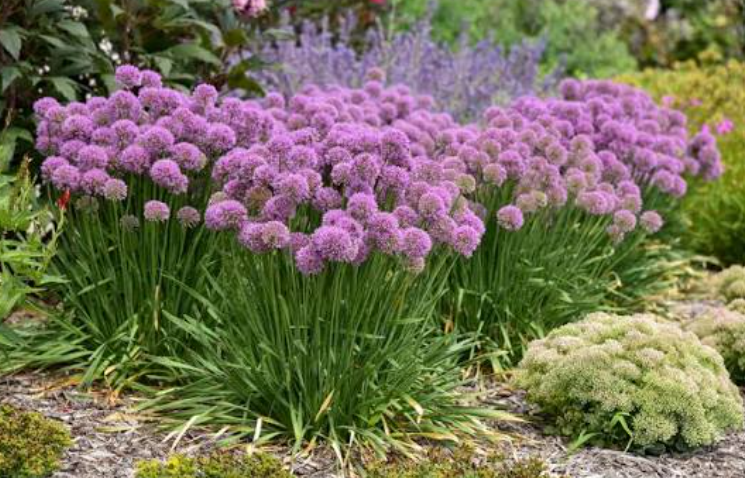
Allium is a large and diverse genus of flowering plants encompassing over 900 species, including both ornamental varieties and edible crops such as onions, garlic, leeks, and chives. Native to a wide range of habitats across the Northern Hemisphere, alliums are found growing wild from Mediterranean scrublands to Central Asian steppes. This remarkable diversity makes allium one of the most economically and horticulturally significant plant genera in the world.
As a plant, allium produces bulbs or rhizomes from which long, hollow or flat, strap-like leaves emerge, depending on the species. The foliage is often bluish-green and carries the characteristic onion scent when bruised or crushed. Stems are typically upright and leafless, rising above the foliage to support the distinctive flower heads that make ornamental alliums so recognizable.
The flowers are one of allium’s most distinctive features, forming perfectly rounded or occasionally loose clusters called umbels atop tall, sturdy stems. These globe-shaped flower heads can range from less than an inch to nearly a foot in diameter depending on the species, appearing in shades of purple, violet, pink, white, and yellow. Some of the most dramatic ornamental species, such as Allium giganteum, produce flower heads up to 6 inches across on stems reaching 4 feet tall.
Ornamental alliums have become increasingly popular in garden design for their architectural quality and long season of interest. Even after the flowers fade, the dried seed heads remain attractive for weeks or months, adding structural interest to borders well into autumn. This extended ornamental value makes alliums a practical and beautiful addition to mixed planting schemes.
Beyond ornamental use, alliums have played a central role in human cuisine and medicine for thousands of years. Garlic and onions in particular have been cultivated for over 5,000 years and remain among the most widely consumed vegetables globally. Many allium species also contain sulfur compounds with documented antibacterial and cardiovascular health benefits.
Ornamental alliums are excellent pollinator plants, with their open, accessible flower clusters attracting bees, butterflies, and other beneficial insects in large numbers. Their bloom period in late spring to early summer helps bridge the gap between spring bulbs and summer perennials. This timing makes them especially valuable in pollinator garden designs.
Alliums are generally easy to grow and remarkably resistant to deer, rabbits, and most garden pests, largely due to their pungent scent. Their low maintenance requirements and stunning visual impact have made them increasingly popular in contemporary garden design. Whether grown for the kitchen or the border, alliums consistently deliver outstanding results with minimal effort.
Also Read: Plants That Grow Easily From Cuttings
How to Grow and Care for Allium
- Choose a Sunny Planting Location: Alliums perform best in full sun, requiring at least six hours of direct sunlight daily for strong stem development and abundant flowering. Insufficient light leads to weak, floppy stems and reduced flower size. A south or west-facing border is generally ideal for most ornamental species.
- Select Well-Draining Soil: Good drainage is essential for allium bulbs, as prolonged moisture around the bulb causes rot. Sandy or loamy soils are ideal, while heavy clay should be amended with grit or organic matter. Raised beds are an excellent option in gardens with naturally poor drainage.
- Plant Bulbs in Autumn: Most ornamental allium bulbs are planted in fall for spring and early summer flowering. Planting depth should be roughly three times the diameter of the bulb. This timing allows bulbs to establish roots before winter dormancy sets in.
- Space Bulbs Appropriately: Larger species like Allium giganteum should be spaced 8 to 12 inches apart, while smaller varieties can be planted more closely. Adequate spacing allows air to circulate freely around foliage and reduces disease risk. Planting in groups of five or more creates the most visually impactful display.
- Water After Planting: Give bulbs a thorough watering immediately after planting to initiate root development. During the growing season, water moderately, allowing the soil to dry slightly between waterings. Reduce watering significantly once foliage begins to yellow and die back after flowering.
- Fertilize in Early Spring: As foliage emerges in spring, a light application of balanced fertilizer or bone meal supports strong growth. Avoid high-nitrogen fertilizers, which encourage excessive leafy growth at the expense of flowers. A single feeding in spring is generally sufficient for most allium species.
- Accept the Foliage Decline: One of allium’s less appealing traits is that its foliage often begins yellowing before or during flowering. This is a normal part of the growth cycle and should not be a cause for concern. Planting alliums among perennials or ornamental grasses helps disguise the dying foliage naturally.
- Deadhead or Leave Seed Heads: Spent flower heads can be removed to prevent self-seeding in borders where spreading isn’t desired. However, leaving dried seed heads in place provides structural interest and wildlife value well into autumn. Many gardeners deliberately leave them standing as architectural features.
- Divide Overcrowded Clumps: After several years, allium bulbs multiply and can become crowded, leading to reduced flowering. Lifting and dividing clumps every three to five years maintains vigor and improves bloom quality. The best time to divide is after foliage has died back completely in summer.
- Protect from Excessive Winter Moisture: While alliums are cold-hardy in appropriate zones, excessive winter wet is more damaging than cold temperatures alone. In wet climates, covering the planting area with a cloche or growing in raised beds reduces moisture accumulation. Good drainage preparation at planting time is the best long-term solution.
- Watch for Allium Leaf Miner: This pest tunnels through leaves and stems, causing white streaking and eventual wilting. Covering plants with fine mesh netting during the pest’s active periods in spring and autumn provides effective protection. Affected plant material should be removed and destroyed promptly.
- Monitor for Downy Mildew: Downy mildew can affect alliums during cool, damp conditions, causing grayish fuzzy growth on foliage. Improving air circulation through proper spacing and avoiding overhead watering reduces risk. Affected leaves should be removed to prevent further spread.
- Naturalize in Lawns and Meadows: Smaller allium species naturalize beautifully in informal lawn areas and wildflower meadows. Allow foliage to die back before mowing to ensure bulbs have stored enough energy. This approach creates a low-maintenance and naturalistic display year after year.
- Combine with Complementary Plants: Alliums pair beautifully with late-spring perennials such as salvias, catmint, and roses, which help disguise declining foliage. Their vertical, globe-topped stems contrast well with mounded or sprawling plant forms. Thoughtful companion planting maximizes their visual impact in mixed borders.
- Grow Edible Species in Kitchen Gardens: Culinary alliums like garlic, chives, and leeks can be grown alongside ornamental varieties for both beauty and practicality. Garlic planted in autumn is harvested the following summer, while chives provide ongoing harvests throughout the growing season. Their pest-repelling properties also make them excellent companion plants for vegetables.
- Store Lifted Bulbs Correctly: If lifting bulbs for storage or division, allow them to dry thoroughly in a warm, airy location before storing. Store bulbs in mesh bags or open trays in a cool, dry, well-ventilated space. Properly stored bulbs remain viable for replanting the following autumn.
Also Read: How to Propagate Christmas Cactus Cuttings