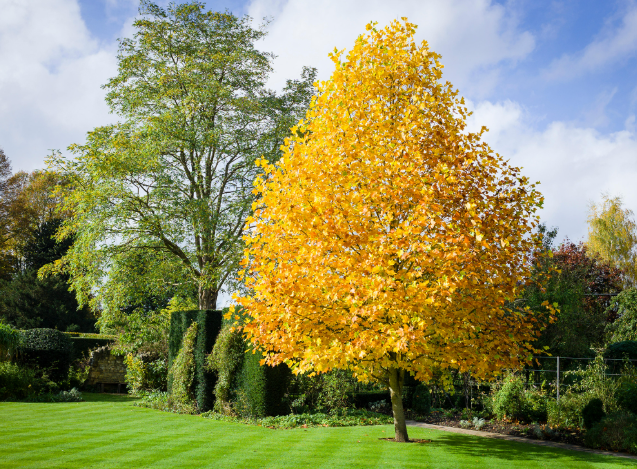
Canada is home to an enormous range of climates, from the relatively mild conditions of southern British Columbia and southwestern Ontario to the cold boreal regions of Alberta, Saskatchewan, Manitoba, northern Ontario and Quebec. That makes choosing a fast-growing tree a little more complicated than simply picking the species with the highest advertised growth rate.
Some Canadian trees can add 3–6 ft of height per year when young and growing in ideal conditions, while others may average closer to 1–2 ft per year but offer better cold hardiness, stronger wood or much greater longevity. Fast growth is also strongly influenced by moisture, soil fertility, sunlight, competition and the length of the local growing season.
The trees below represent some of the better-known fast-growing choices for Canadian landscapes, farms, shelterbelts, acreage properties and naturalized areas. Where a species is mainly appropriate for a particular part of the country, that is noted in the description.
Growth-rate note: The figures below are approximate annual height growth under favorable conditions. They are not guarantees, and a tree growing in northern Canada, dry prairie soil or a compacted urban site may grow considerably more slowly.
30 Fast Growing Trees in Canada at a Glance
| Tree | Approx. growth rate | Typical mature height | Particularly useful for |
|---|---|---|---|
| Hybrid Poplar | 4–8 ft/year | 50–100+ ft | Rapid screening and shelterbelts |
| Eastern Cottonwood | 3–6 ft/year | 70–100+ ft | Large properties and wet soils |
| Balsam Poplar | 2–4 ft/year | 50–80 ft | Cold regions and moist sites |
| Trembling Aspen | 2–4 ft/year | 40–70 ft | Boreal and northern landscapes |
| Black Cottonwood | 3–6 ft/year | 100–150+ ft | Coastal British Columbia |
| White Willow | 3–6 ft/year | 50–100 ft | Moist sites and shelterbelts |
| Weeping Willow | 3–5 ft/year | 30–60 ft | Moist landscapes |
| Laurel Leaf Willow | 2–4 ft/year | 20–60 ft | Prairie shelterbelts |
| Sandbar Willow | 3–6 ft/year | 10–20 ft | Wet areas and erosion control |
| Silver Maple | 3–5 ft/year | 60–80 ft | Rapid shade |
| Freeman Maple | 2–4 ft/year | 40–70 ft | Shade and fall color |
| Manitoba Maple | 2–4 ft/year | 40–70 ft | Prairie and urban conditions |
| Red Maple | 2–3 ft/year | 40–70 ft | Southern Canada |
| Paper Birch | 1.5–3 ft/year | 40–70 ft | Cool northern landscapes |
| River Birch | 1.5–3 ft/year | 40–70 ft | Moist soils |
| Black Locust | 2–4 ft/year | 40–70 ft | Large properties |
| Northern Catalpa | 2–3 ft/year | 50–70 ft | Southern Ontario |
| Tulip Tree | 2–3 ft/year | 70–100 ft | Southern Ontario |
| American Elm | 2–4 ft/year | 60–90 ft | Large shade trees |
| Hackberry | 2–3 ft/year | 40–70 ft | Tough urban sites |
| Green Ash | 2–3 ft/year | 50–70 ft | Large landscapes |
| Eastern White Pine | 2–3 ft/year | 70–100+ ft | Evergreen screening |
| Red Pine | 1.5–2.5 ft/year | 50–80 ft | Sandy, well-drained soils |
| Jack Pine | 1–2.5 ft/year | 30–70 ft | Boreal and sandy sites |
| White Spruce | 1–2 ft/year | 40–80 ft | Cold-climate screening |
| Black Spruce | 1–2 ft/year | 30–60 ft | Boreal regions |
| Tamarack | 1.5–2.5 ft/year | 40–70 ft | Cold, wet sites |
| Douglas Fir | 2–3 ft/year | 100–200+ ft | British Columbia |
| Sitka Spruce | 2–3 ft/year | 100–200+ ft | Coastal British Columbia |
| Northern Red Oak | 1.5–2.5 ft/year | 60–80 ft | Southern Canada |
1. Hybrid Poplar
Approximate growth rate: 4–8 ft per year
Hybrid poplar is one of the fastest-growing tree groups used in Canada. Different hybrids and clones can perform very differently, but selected varieties have been widely used for shelterbelts, biomass production, farm plantings and rapid screening. University of Alberta research notes that hybrid poplar is specifically favored for carbon uptake because of its rapid growth, while also pointing out that quoted growth rates vary substantially across Canada and depend heavily on management and site conditions.
That regional variation is important. A hybrid that grows aggressively in irrigated western Canada may perform differently in a cold, dry prairie site or a short-season northern location. Choose a clone recommended for your region rather than assuming that every hybrid poplar has the same growth potential.
2. Eastern Cottonwood
Approximate growth rate: 3–6 ft per year
Eastern cottonwood (Populus deltoides) is one of Canada’s fastest-growing native hardwoods. It is particularly important in southern Ontario, where the University of Guelph Arboretum describes it as very fast-growing and notes that it can reach almost 50 m in less than 30 years under suitable conditions.
Cottonwood is an excellent choice when rapid height and shade are more important than compact size. It needs plenty of room, however, and mature trees can become enormous. Moist soil is ideal, making it especially appropriate for riverbanks, floodplains and large rural properties.
3. Balsam Poplar
Approximate growth rate: 2–4 ft per year
Balsam poplar (Populus balsamifera) is one of the most useful fast-growing native trees for Canada’s colder regions. Its range extends across much of the country, and it is particularly associated with moist soils, river valleys, wetlands and boreal landscapes.
It can develop into a large tree relatively quickly, making it useful for naturalized plantings, shelterbelts and restoration. Like other poplars, it has relatively soft wood and is best given plenty of space.
4. Trembling Aspen
Approximate growth rate: 2–4 ft per year
Trembling aspen (Populus tremuloides) is one of Canada’s most widespread trees and an important component of boreal and mixedwood forests. It is capable of rapid establishment after disturbance and can spread through underground root systems to form extensive clonal stands.
University of Alberta research identifies trembling aspen as one of the major deciduous species used in Canada’s mixedwood forests and models its growth across regions including Saskatchewan, Manitoba and British Columbia.
Aspen is particularly valuable for larger naturalized properties. Its tendency to sucker means it is less appropriate when you want a single, perfectly controlled specimen tree.
5. Black Cottonwood
Approximate growth rate: 3–6 ft per year
Black cottonwood (Populus trichocarpa) is one of the giants of western Canada. It grows especially well in the moist valleys and floodplains of British Columbia and can become an enormous tree.
Under favorable conditions it is exceptionally vigorous, but its ultimate size makes it unsuitable for most small residential properties. Give it abundant moisture, fertile soil and considerable space.
6. White Willow
Approximate growth rate: 3–6 ft per year
White willow (Salix alba) is a rapid-growing tree that has been planted extensively in parts of Canada for shade, wind protection and shelterbelts. The University of Saskatchewan notes that white willow is a rapid grower capable of reaching 75–100 ft, although approximately 50 ft is more typical in many situations.
It performs best where moisture is readily available. Its fast growth and large size can be impressive, but the wood and branches can be vulnerable to storm damage, so it should not be planted immediately beside buildings or other structures.
7. Weeping Willow
Approximate growth rate: 3–5 ft per year
Weeping willow is one of the most recognizable fast-growing landscape trees in Canada. It creates a dramatic canopy and can establish substantial size in only a few growing seasons when provided with abundant moisture.
Cold hardiness is an important consideration. The University of Saskatchewan notes that the traditional weeping willow is generally limited to approximately Zone 5 on the Prairies, although hardier selections and hybrids such as ‘Prairie Cascade’ and ‘Northern Fountains’ can extend its usefulness in colder areas.
8. Laurel Leaf Willow
Approximate growth rate: 2–4 ft per year
Laurel leaf willow (Salix pentandra) is a particularly useful willow for prairie conditions. It is described by the University of Saskatchewan as a rapid-growing shade and shelterbelt tree that can reach approximately 20–60 ft in height.
It is exceptionally hardy, but it also has a major appetite for water. The species can produce significant quantities of twigs and branches, especially after storms, so it is best used where maintenance and cleanup are not major concerns.
9. Sandbar Willow
Approximate growth rate: 3–6 ft per year
Sandbar willow (Salix interior) is a smaller native willow that is especially valuable for wet ground, stream restoration and erosion control. It does not reach the enormous dimensions of cottonwood or white willow, making it useful where a rapidly establishing woody plant is needed without creating a 100-ft tree.
Its natural tendency to spread and sucker can be an advantage for stabilizing soil but a disadvantage in a formal garden.
10. Silver Maple
Approximate growth rate: 3–5 ft per year
Silver maple (Acer saccharinum) is one of Canada’s classic fast-growing shade trees. It can grow several feet annually when young and has been widely planted because it establishes quickly and produces a broad canopy.
Its weakness is structural. Silver maple tends to develop relatively soft wood and large branches, which can be vulnerable to storm damage. It also needs considerable space for its roots and mature crown. It is therefore better suited to large properties than cramped urban yards.
11. Freeman Maple
Approximate growth rate: 2–4 ft per year
Freeman maple (Acer × freemanii) combines characteristics of red and silver maple. Many cultivars were selected specifically to provide faster growth while offering attractive fall color and a more useful landscape form.
‘Autumn Blaze’ is one of the best-known examples. University tree-selection data classify Autumn Blaze as a fast-growing maple capable of reaching roughly 40–50 ft in height.
For Canadian homeowners who want a relatively fast-growing shade tree with strong autumn color, Freeman maple is often a more balanced choice than silver maple.
12. Manitoba Maple
Approximate growth rate: 2–4 ft per year
Manitoba maple (Acer negundo) is one of the most adaptable maples in Canada. It tolerates a wide range of conditions and can establish rapidly on disturbed land, along waterways and in urban environments.
It is particularly familiar across the Prairies and central Canada. The species can become a large tree, but its wood and branching structure are not as robust as those of many slower-growing hardwoods.
13. Red Maple
Approximate growth rate: 2–3 ft per year
Red maple (Acer rubrum) is an attractive fast-growing native tree for much of eastern Canada. Its strongest appeal is the combination of respectable growth, attractive form and brilliant autumn foliage.
It is most useful in southern and central parts of the country, where winters and growing-season conditions are suitable. Give it adequate moisture during establishment, especially on exposed urban sites.
14. Paper Birch
Approximate growth rate: 1.5–3 ft per year
Paper birch (Betula papyrifera) is one of Canada’s most recognizable trees. Its white peeling bark gives it year-round ornamental value, while its relatively rapid growth makes it useful for naturalized landscapes and woodland gardens.
Paper birch is better suited to cool, moist environments than hot, dry urban locations. In southern cities, drought stress and heat can significantly reduce its growth and shorten its useful lifespan.
15. River Birch
Approximate growth rate: 1.5–3 ft per year
River birch (Betula nigra) is another good choice where moisture is available. Its attractive peeling bark and relatively rapid growth make it a popular landscape tree.
It is especially useful in southern Canada where soils remain moist. Unlike some birches, it is better adapted to wetter conditions, making it a good candidate for properties near ponds, streams or low-lying areas.
16. Black Locust
Approximate growth rate: 2–4 ft per year
Black locust (Robinia pseudoacacia) can grow rapidly, particularly when young. It produces fragrant white flowers and has unusually durable wood, giving it value beyond its ornamental qualities.
Its tendency to sucker and spread should be considered carefully. Black locust can be a useful tree on large rural properties, but it is not always the best choice for a carefully controlled urban garden.
17. Northern Catalpa
Approximate growth rate: 2–3 ft per year
Northern catalpa (Catalpa speciosa) is a distinctive large tree with enormous heart-shaped leaves, showy flowers and long seed pods. It is most suitable for warmer parts of Canada, particularly southern Ontario and other regions where winter temperatures are moderate enough for reliable growth.
It eventually becomes a large shade tree, so give it plenty of space. Its unusual appearance makes it particularly interesting as a specimen tree on a large lawn.
18. Tulip Tree
Approximate growth rate: 2–3 ft per year
Tulip tree (Liriodendron tulipifera) is one of the tallest hardwoods that can be grown successfully in suitable parts of Canada. It is mainly a southern Ontario tree in Canadian landscapes and is best suited to relatively warm sites.
The leaves are unusual and tulip-shaped, while the greenish-yellow flowers appear in late spring or early summer. Because mature trees can exceed 100 ft, this is a long-term choice for large properties.
19. American Elm
Approximate growth rate: 2–4 ft per year
American elm (Ulmus americana) was historically one of Canada’s most important shade trees. It can grow rapidly when young and eventually develops the tall, arching crown that made elm-lined streets so characteristic of older communities.
If planting American elm today, choose a cultivar selected for resistance to Dutch elm disease. Modern resistant selections provide a much better opportunity to recreate the traditional elm landscape without relying on highly susceptible trees.
20. Hackberry
Approximate growth rate: 2–3 ft per year
Hackberry (Celtis occidentalis) is a tough and adaptable tree that deserves more attention in Canadian landscapes. It tolerates urban conditions, variable soils and periods of drought better than many fast-growing species.
It is especially useful when you want a reasonably quick-growing shade tree without the structural problems associated with some poplars and willows.
21. Green Ash
Approximate growth rate: 2–3 ft per year
Green ash (Fraxinus pennsylvanica) was historically one of the most widely planted fast-growing trees in Canada. It is adaptable and can develop into a substantial shade tree relatively quickly.
However, emerald ash borer has dramatically changed its suitability. Planting new green ash should be approached cautiously, particularly in areas where the pest is established. For many properties, diversifying with maple, hackberry, oak or other species is a better long-term strategy.
22. Eastern White Pine
Approximate growth rate: 2–3 ft per year
Eastern white pine (Pinus strobus) is one of Canada’s most important native evergreen trees. Given sufficient sunlight and moisture, young trees can grow relatively rapidly and eventually become enormous.
Its evergreen foliage makes it especially useful for year-round screening and wind protection. Mature specimens can exceed 100 ft, so avoid planting them where overhead wires or buildings will eventually restrict the canopy.
23. Red Pine
Approximate growth rate: 1.5–2.5 ft per year
Red pine (Pinus resinosa) is a native Canadian conifer particularly associated with sandy, well-drained soils. It is more moderate in growth than cottonwood or willow but can establish steadily under suitable conditions.
It is an excellent choice for larger properties, plantations, windbreaks and naturalized landscapes where an evergreen tree is preferred.
24. Jack Pine
Approximate growth rate: 1–2.5 ft per year
Jack pine (Pinus banksiana) is one of Canada’s characteristic boreal trees. It is extremely hardy and well adapted to poor, sandy and dry soils where many larger trees struggle.
Its growth rate is moderate rather than spectacular, but its ability to survive harsh Canadian conditions makes it valuable. It is particularly appropriate for northern landscapes and exposed sandy sites.
25. White Spruce
Approximate growth rate: 1–2 ft per year
White spruce (Picea glauca) is one of Canada’s most useful cold-hardy evergreen trees. It is widely used for shelterbelts, windbreaks, screening and naturalized plantings.
Although it is slower than the poplars and willows on this list, it has an important advantage: it combines respectable growth with excellent cold tolerance and year-round foliage.
26. Black Spruce
Approximate growth rate: 1–2 ft per year
Black spruce (Picea mariana) is a quintessential boreal tree. It can tolerate cold climates, acidic soils and wet conditions that would challenge many landscape trees.
It is not the fastest tree on this list, but for northern Canada its combination of hardiness and reliable establishment makes it an important choice.
27. Tamarack
Approximate growth rate: 1.5–2.5 ft per year
Tamarack (Larix laricina) is unusual because it is a deciduous conifer. Its soft green needles turn brilliant yellow in autumn before falling, giving it an appearance that changes dramatically through the seasons.
It is particularly well suited to cold regions and moist soils. Tamarack can be a good choice for northern properties where a conventional evergreen may not be appropriate.
28. Douglas Fir
Approximate growth rate: 2–3 ft per year
Douglas fir (Pseudotsuga menziesii) is one of western Canada’s most important trees and can grow very quickly on productive sites, particularly in coastal British Columbia.
The species can eventually reach extraordinary dimensions, with some British Columbia trees exceeding 200 ft. It needs considerably more moisture and a longer growing season than many prairie trees, so its suitability drops sharply outside western regions.
29. Sitka Spruce
Approximate growth rate: 2–3 ft per year
Sitka spruce (Picea sitchensis) is another western Canadian giant. It is particularly well adapted to the moist coastal climate of British Columbia and can grow extremely rapidly on productive sites.
It is not a tree for most prairie or eastern Canadian gardens. In coastal British Columbia, however, its combination of rapid growth, evergreen foliage and impressive mature size makes it an important landscape and forestry species.
30. Northern Red Oak
Approximate growth rate: 1.5–2.5 ft per year
Northern red oak (Quercus rubra) is not one of Canada’s absolute fastest-growing trees, but it deserves inclusion because it offers a useful balance between growth and longevity. Young trees can establish relatively quickly, eventually forming a large canopy with excellent autumn color.
It is mainly suited to southern and central parts of Canada rather than the coldest northern regions. If you want a tree that will provide shade relatively soon but also has the potential to become a long-term landscape specimen, northern red oak is a much different proposition from a short-lived poplar.
The Fastest Growing Trees in Canada
If your only goal is maximum height growth, the strongest choices from this list are generally:
- Hybrid poplar — 4–8 ft/year
- Eastern cottonwood — 3–6 ft/year
- Black cottonwood — 3–6 ft/year
- White willow — 3–6 ft/year
- Sandbar willow — 3–6 ft/year
- Silver maple — 3–5 ft/year
- Weeping willow — 3–5 ft/year
- Balsam poplar — 2–4 ft/year
- Trembling aspen — 2–4 ft/year
- Freeman maple — 2–4 ft/year
These figures should not be interpreted as guarantees. A tree’s actual performance can vary dramatically between regions.
For example, University of Saskatchewan guidance describes several willows as extremely rapid growers, but also emphasizes their need for moisture and the importance of selecting cultivars appropriate for the Prairie climate.
Fast Growing Trees for Southern Canada
The warmest parts of Canada provide the widest selection.
For southern Ontario and similar climates, consider:
- Eastern cottonwood
- Silver maple
- Freeman maple
- Northern catalpa
- Tulip tree
- Northern red oak
- American elm
- Black locust
- River birch
- Hybrid poplar
These areas generally have longer growing seasons than northern Canada, allowing many broadleaf species to make substantially more annual growth.
Fast Growing Trees for the Prairies
The Prairie provinces present a different challenge. Trees need to cope with cold winters, dry winds, drought and sometimes alkaline soils.
Good candidates include:
- Hybrid poplar
- Balsam poplar
- Trembling aspen
- Manitoba maple
- Laurel leaf willow
- Sharp-leaf willow
- White spruce
- Tamarack
- Jack pine
- Hackberry
Willows can be particularly useful where irrigation or natural moisture is available. The University of Saskatchewan notes that several willow species have been widely used on the Prairies as shelterbelts and windbreaks because of their rapid growth and hardiness.
Fast Growing Trees for British Columbia
British Columbia contains several very different climates, so species selection depends heavily on location.
For coastal British Columbia, some of the strongest choices include:
- Black cottonwood
- Sitka spruce
- Douglas fir
- White willow
- Hybrid poplar
- Bigleaf maple
The wet coastal climate allows trees such as black cottonwood and Sitka spruce to achieve growth rates that would be difficult to reproduce in the dry interior.
For interior British Columbia, drought tolerance and winter temperatures become much more important, so tree selection should be based on the specific local climate rather than province-wide recommendations.
Fast Growing Trees for Northern Canada
In northern Ontario, northern Quebec and the boreal regions of the western provinces, cold hardiness is often more important than maximum growth rate.
Good choices include:
- Trembling aspen
- Balsam poplar
- Jack pine
- Black spruce
- White spruce
- Tamarack
- Paper birch
Research from the University of Alberta’s Mixedwood Growth Model includes trembling aspen, balsam poplar, white spruce and jack pine among important Canadian forest species and demonstrates how growth varies with regional conditions and competition.
Best Fast Growing Trees for Shade
If your main goal is to create shade quickly, consider:
Best for very rapid shade:
Hybrid poplar, eastern cottonwood, silver maple and white willow.
Best balance of growth and landscape value:
Freeman maple, red maple, hackberry and northern red oak.
Best evergreen choices:
Eastern white pine, Douglas fir and white spruce, depending on region.
Remember that a fast-growing tree is not necessarily the best shade tree for a small property. Some of the fastest species eventually develop enormous crowns.
Best Fast Growing Trees for Wet Soil
Wet ground eliminates many popular landscape trees, but several species on this list naturally tolerate abundant moisture.
Some of the strongest options are:
- Eastern cottonwood
- Black cottonwood
- Balsam poplar
- White willow
- Weeping willow
- Sandbar willow
- River birch
- Tamarack
- Black spruce
Willows are particularly impressive in wet conditions. Penn State Extension’s work on shrub willow describes willow as fast-growing and well adapted to a range of drainage conditions, including poorly drained soils.
Fast Growing Trees for Windbreaks
For Canadian farms and acreage properties, growth rate can be especially important when establishing a windbreak.
Good candidates include:
- Hybrid poplar
- Balsam poplar
- White spruce
- Willow
- Trembling aspen
- Eastern white pine
- Red pine
- Black spruce
A mixed windbreak is generally more resilient than a single-species planting. Combining faster-growing deciduous trees with longer-lived evergreens can provide earlier protection while allowing the permanent trees to become established.
Why Fast Growth Is Not Always Better
It is tempting to choose the tree with the highest number of feet per year, but growth rate should never be the only consideration.
Very fast-growing trees can have:
- Weaker wood
- Brittle branches
- Aggressive roots
- Shorter useful lifespans
- Greater storm damage
- Large mature dimensions
- More maintenance requirements
A useful rule is to think of fast-growing trees as a way to establish a landscape quickly, not necessarily as the only trees you will ever need. University tree-selection guidance similarly cautions that cottonwoods and silver maples can grow several feet per year but may be weak-wooded, short-lived or capable of outgrowing their planting sites.
How to Make Trees Grow Faster
You cannot force a tree to exceed its natural potential, but you can avoid conditions that suppress growth.
1. Choose the right species
A tree suited to your climate will usually outperform a theoretically faster species planted outside its preferred conditions.
2. Give the roots adequate moisture
Water stress is one of the biggest reasons young trees fail to achieve their expected growth.
3. Improve compacted soil
Compacted urban or construction soil can restrict root development and dramatically slow growth.
4. Mulch the root zone
A layer of organic mulch can help conserve moisture and reduce competition from grass. Keep mulch away from direct contact with the trunk.
5. Avoid excessive fertilizer
More fertilizer does not automatically mean more healthy growth. Excessive nitrogen can produce weak, overly vigorous shoots and does not compensate for poor soil structure or inadequate moisture.
6. Give large trees enough space
A tree competing with buildings, pavement, utilities or other mature trees will not perform like a tree planted in an open field.
How Fast Will a Newly Planted Tree Grow?
Do not expect a newly planted tree to immediately reach its maximum advertised growth rate.
The first year or two are often focused on root establishment. Transplant stress, drought and poor soil can reduce shoot growth substantially. Once a healthy root system is established, growth may accelerate.
This is particularly important when interpreting nursery descriptions. A tree advertised as growing 4 ft per year does not necessarily grow 4 ft every year from the day it is planted.
Choosing the Right Fast Growing Tree for Canada
The best tree depends on where in Canada you live and what you want the tree to accomplish.
For rapid screening, hybrid poplar is difficult to beat.
For wet ground, willows and cottonwoods are strong candidates.
For rapid shade in southern Canada, silver maple and Freeman maple are useful choices.
For year-round screening, eastern white pine and white spruce offer evergreen foliage.
For northern climates, trembling aspen, balsam poplar, tamarack and spruce provide better cold-climate options.
For long-term value, consider mixing fast-growing trees with slower-growing species such as oak, maple, pine or spruce. This approach can give you early shade and screening while also establishing trees that will remain valuable for many decades.
Key Takeaways
Canada’s enormous geographic range means there is no single best fast-growing tree for the entire country. The fastest options include hybrid poplar, eastern cottonwood, black cottonwood, white willow, sandbar willow and silver maple, but each has particular requirements and limitations.
In colder parts of the country, species such as trembling aspen, balsam poplar, white spruce, black spruce, jack pine and tamarack offer a better combination of growth and winter hardiness. In southern Ontario, the selection expands to include Freeman maple, northern catalpa, tulip tree, northern red oak and other large deciduous trees.
The most important consideration is not simply how quickly a tree grows, but where that growth is going to happen. A tree that gains 5 ft per year can provide spectacular shade in a large rural landscape, but the same growth rate can become a serious problem when the tree is planted too close to a house, driveway, septic system or power line.
Choose for your Canadian climate first, your available space second and growth rate third. That approach will give you a tree that is not only fast-growing, but also healthy, useful and sustainable for the long term.
Further References
- University of British Columbia — BC BigTree: Tree Statistics.
UBC BC BigTree — Tree Statistics
Provides measured height, trunk diameter, and crown-spread data for numerous tree species across British Columbia. This is useful for comparing the mature size and performance of trees in Canadian conditions. - University of British Columbia — Assessing Height Gain of White Spruce and Hybrid Spruce.
University of British Columbia — White and Hybrid Spruce Growth Study
A recent research study examining height growth and productivity of white spruce and hybrid spruce across Canadian boreal and hemiboreal forests. It provides strong scientific support for discussing growth differences among Canadian tree populations. - University of British Columbia — Hybrid Poplar Growth Research.
UBC — 3-PG Forest Growth Studies
UBC’s forestry research resources include studies examining growth and productivity of hybrid poplar and other Canadian tree species. Hybrid poplar is particularly relevant because it is one of the fastest-growing trees used in Canadian forestry. - Université du Québec à Montréal — Hybrid Poplar Growth in Canada.
UQAM — Hybrid Poplar Growth Rates in Canada
Particularly valuable for actual Canadian growth-rate comparisons. The research reports hybrid-poplar productivity across regions including southern Quebec, southeastern Ontario, the Prairie region, British Columbia, and northern interior British Columbia. - University of British Columbia — Paulownia (Paulownia tomentosa).
UBC Botanical Garden — Paulownia tomentosa
Useful for the section on exceptionally fast-growing ornamental trees. UBC Botanical Garden describes Paulownia tomentosa as one of the fastest-growing cold-hardy deciduous trees in cultivation and provides useful information about its characteristics and origins.