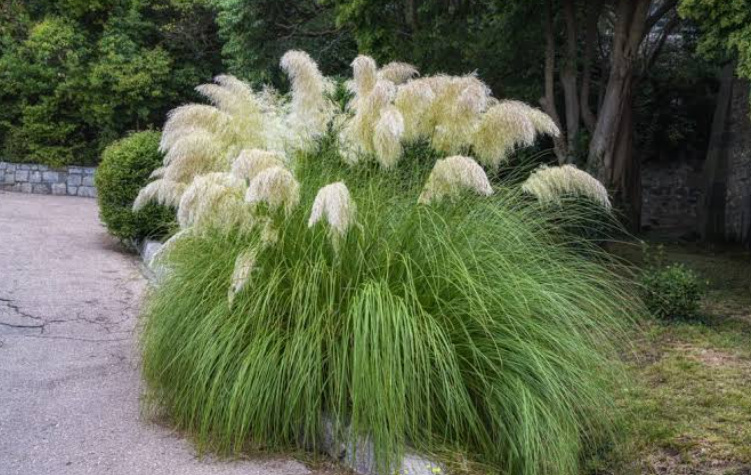
Grasses with white flowers bring a soft, airy texture to the landscape that few other plants can match, especially once their feathery plumes catch late afternoon light or sway in a breeze. Most true grasses actually have small, inconspicuous, wind-pollinated flowers in shades of green, tan, or purple, which makes the genuinely white-blooming species on this list something of a standout minority within a plant family better known for subtlety than showiness. A handful of the plants gardeners commonly call “white grasses” aren’t technically true grasses at all, but rather grass-like sedges, rushes, or lily relatives that share a similar narrow-leaved silhouette.
That distinction matters for more than botanical accuracy, since true grasses, sedges, and rushes often have different soil, moisture, and light requirements even when they look nearly identical at a glance. A plant marketed simply as an ornamental “grass” at a nursery might actually belong to any of these three unrelated plant families, and knowing which one you’re working with can make the difference between a thriving planting and a struggling one.
These plants grow across a genuinely global range of habitats, from South American pampas and Mediterranean coastlines to North American prairies, wetlands, and even subalpine mountain meadows. Mature size varies enormously across the group, from delicate annuals under a foot tall to towering perennial clumps that can exceed 12 feet, and hardiness spans from USDA zone 3 in the far north to zone 11 in frost-free subtropical climates.
What follows covers 18 grasses and grass-like plants known for producing white or whitish flowers and plumes, along with where each one grows, its typical size, and the data that sets it apart.
Pampas Grass
Pampas grass is native to South America, particularly southern Brazil, Uruguay, and Argentina, where it grows across open grasslands and river plains. According to University of Florida IFAS Gardening Solutions, it’s now considered invasive in Florida and is no longer recommended for planting there, despite decades of popularity as an ornamental across warmer parts of the United States. It produces thick, fluffy, silvery-white plumes atop stems that can reach 10 feet tall, with individual clumps sometimes growing up to 19 feet under ideal conditions.
It tolerates USDA zones 7 through 10 and reproduces almost entirely by wind-dispersed seed, which has allowed it to spread well beyond cultivated gardens in several regions.
Dwarf Pampas Grass
Dwarf pampas grass is a smaller-growing form of the same South American species as standard pampas grass, selected specifically for its more manageable size in home landscapes. It produces the same fluffy, silvery-white plumes as its larger relative, but stays considerably more compact, typically reaching just 4 to 6 feet tall and wide rather than towering well into double digits. Its plumes emerge in late summer and persist through much of the fall and early winter.
It tolerates USDA zones 7 through 10 and has become a popular substitute for standard pampas grass in smaller residential landscapes where the full-sized species would quickly overwhelm the space.
White Fountain Grass
White fountain grass, also called feathertop, is native to northeastern Africa, typically found in open, sunny habitats across a fairly narrow native range. It produces soft, bristly, cream to white plumes that arch gracefully above narrow green foliage, giving the plant a fluffy, almost cotton-like appearance in late summer and fall. A mature clump typically reaches 2 to 3 feet tall and equally wide.
It tolerates USDA zones 9 through 11 as a perennial and is commonly grown as a self-seeding annual in colder climates, often reseeding readily enough to return reliably year after year.
Ravenna Grass
Ravenna grass is native to the Mediterranean region and parts of central Asia, typically found in open, disturbed habitats and along riverbanks in warm-temperate climates. Its tall, silvery-white to pinkish plumes closely resemble those of pampas grass, leading to frequent confusion between the two species, though ravenna grass tolerates colder winters considerably better. A mature clump can reach 12 feet tall or more, with a dense, upright growth habit.
It tolerates USDA zones 5 through 9 and has become naturalized and, in some cases, invasive in warmer parts of the southern and western United States, where it spreads readily along waterways.
Giant Reed
Giant reed is native to a broad range spanning the Mediterranean basin, the Middle East, and parts of Asia, typically found along riverbanks, canals, and other consistently moist sites. It produces large, feathery, silvery-white to purplish plumes atop bamboo-like canes that can reach 20 feet or more in height under favorable growing conditions. Its extremely rapid growth rate, sometimes exceeding 4 inches per day during peak season, has made it both a popular ornamental screening plant and a serious invasive concern.
It tolerates USDA zones 6 through 10 and is now classified as invasive across much of the southern and western United States, where dense stands can significantly alter natural waterway ecosystems.
Common Reed
Common reed is native across a huge range spanning Europe, Asia, Africa, and North America, typically found colonizing marshes, wetland margins, and the shorelines of lakes and slow-moving rivers. Its dense, fluffy, grayish-white to purplish-brown plumes top tall, hollow stems that can reach 15 feet, forming extensive colonies through an aggressive underground rhizome system. A single stand can spread several feet outward per year once established.
It tolerates USDA zones 4 through 9, and while native genetic strains exist throughout North America, an introduced European lineage has become highly invasive across much of the continent’s wetlands.
Silver Grass
Silver grass, also called Japanese silver grass or maiden grass, is native to Japan, Korea, and parts of China, typically found in open grassland and forest-edge habitats across a range of elevations. According to Clemson Cooperative Extension’s Home and Garden Information Center, it remains one of the most widely planted ornamental grasses in home landscapes, prized for its graceful, arching form and silvery-white to pinkish plumes that emerge in late summer. A mature clump typically reaches 4 to 8 feet tall depending on the specific cultivar.
It tolerates USDA zones 5 through 9 and has been reported escaping cultivation in several northern states, prompting some regions to recommend native alternatives instead.
Silver Banner Grass
Silver banner grass is native to eastern Asia, including China, Japan, and Korea, typically found along riverbanks and in wet meadows across a range spanning temperate to subtropical climates. It’s closely related to silver grass but produces its silvery-white plumes considerably earlier in the season, often by mid-summer, and tends to spread more aggressively via underground rhizomes rather than staying in a tight clump. A mature stand can reach 6 to 10 feet tall.
It tolerates USDA zones 4 through 9 and has shown a stronger tendency toward invasive spread in wetland habitats compared to its more clump-forming relative.
Switchgrass
Switchgrass is native to the tallgrass prairies of central and eastern North America, historically one of the dominant grass species across millions of acres of prairie before large-scale agricultural conversion. Certain ornamental cultivars produce airy, diffuse flower panicles in shades ranging from pale pink to nearly white, creating a soft, cloud-like haze above the foliage in late summer. A mature clump typically reaches 3 to 6 feet tall.
It tolerates USDA zones 4 through 9 and has gained renewed agricultural interest in recent decades as a potential biofuel crop, thanks to its deep root system and tolerance for poor, marginal soils.
Cloud Grass
Cloud grass is native to the Mediterranean region and parts of southern Europe, typically found in open, sandy, disturbed habitats within a fairly limited native range. It produces extremely fine, airy, silvery-white flower panicles that create a soft, diffuse cloud-like effect above delicate, thread-like foliage. A mature plant typically reaches 12 to 18 inches tall, considerably smaller and more delicate than most other grasses on this list.
It tolerates USDA zones 8 through 10 as a perennial and is commonly grown as a fast-germinating annual in cooler climates, often used in cut flower arrangements for its airy texture.
Bunny Tail Grass
Bunny tail grass, also called hare’s-tail grass, is native to the shores of the Mediterranean region, typically found in sandy coastal habitats across southern Europe and North Africa. According to the North Carolina Extension Gardener Plant Toolbox, its soft, oval flower clusters start out pale green before maturing to a whitish, hairy, spike-like texture that closely resembles a small rabbit’s tail. A mature clump typically reaches 1 to 2 feet tall.
It tolerates USDA zones 8 through 11 as a perennial and is widely grown as a cool-season annual elsewhere, valued especially for dried flower arrangements thanks to its long-lasting texture.
Mexican Feather Grass
Mexican feather grass is native to the grasslands and dry plains of Mexico and the southwestern United States, typically found on rocky, well-drained slopes and open prairie habitats. It produces fine, thread-like foliage topped with delicate, creamy white to pale green flower panicles that create a soft, flowing, wind-responsive texture throughout summer. A mature clump typically reaches 1 to 2 feet tall and wide.
It tolerates USDA zones 6 through 10 and has become invasive in parts of California and Australia, where its prolific self-seeding has allowed it to spread well beyond intended plantings.
Squirreltail Grass
Squirreltail grass, also called foxtail barley, is native to much of western and central North America, typically found in disturbed, saline, or alkaline meadows, roadsides, and drawdown areas around ponds and reservoirs. According to Utah State University Extension’s range plants program, its distinctive nodding, silvery-white to pale purple bristled seed heads fade to a tawny beige color as they mature through the growing season. A mature plant typically reaches 1 to 2 feet tall as a short-lived perennial bunchgrass.
It tolerates USDA zones 4 through 9 and, despite its ornamental appearance, can become a rangeland concern since its barbed awns can injure grazing livestock after seed development.
Witchgrass
Witchgrass, also called white panic grass, is native throughout most of North America, typically found colonizing disturbed fields, roadsides, and sandy open ground across a wide climatic range. Its extremely fine, diffuse flower panicles create an airy, cloud-like white haze above the foliage in late summer, a texture that has made it occasionally valued in naturalistic garden plantings despite its common classification as a weed. A mature plant typically reaches 1 to 2 feet tall, often breaking off at the base once mature and tumbling like a small tumbleweed to disperse its seed.
It tolerates USDA zones 3 through 10 and thrives in poor, dry, sandy soils where many other grasses struggle to establish.
Whitetop Sedge
Whitetop sedge, sometimes marketed under names like star grass, is technically a sedge rather than a true grass, native to wetlands and wet pine savannas across the southeastern and south-central United States. Its showy white bracts surround a small central flower cluster, creating a star-shaped display that’s considerably showier than the actual flowers of most true grasses. A mature clump typically reaches 1 to 2 feet tall, spreading gradually by rhizome in consistently moist to wet soil.
It tolerates USDA zones 7 through 10 and requires consistently damp conditions, making it a popular choice for rain gardens and pond margins rather than typical dry border plantings.
Snowy Woodrush
Snowy woodrush is technically a rush rather than a true grass, native to the mountains of central and southern Europe, typically found in cool, moist woodland habitats at moderate to high elevations. Its dense clusters of small, star-shaped white flowers appear atop wiry stems in late spring, standing out against the plant’s grass-like, hair-fringed evergreen foliage. A mature clump typically reaches 12 to 18 inches tall and spreads slowly to form a dense, weed-suppressing groundcover.
It tolerates USDA zones 4 through 9 and performs best in partial to full shade, making it a useful option for woodland gardens where true ornamental grasses often struggle without adequate sun.
White-Eyed Grass
White-eyed grass is technically a member of the iris family rather than a true grass, native to the central and eastern United States, typically found in moist meadows, prairies, and open woodland edges. Despite its name and narrow, grass-like foliage, it produces small but distinctive white, star-shaped flowers with a bright yellow center each spring, a bloom structure entirely unlike the wind-pollinated flowers of true grasses. A mature clump typically reaches 6 to 12 inches tall.
It tolerates USDA zones 4 through 9 and prefers consistently moist soil in full sun to light shade, often naturalizing readily in native plant and pollinator gardens.
Bear Grass
Bear grass is technically a member of the corn lily family rather than a true grass, native to western North America, typically found in subalpine meadows, coastal mountain habitats, and dry, open coniferous forests from British Columbia south into California and east to Wyoming. Its tall flowering stalks, which can reach up to 5 feet, are topped with dense, club-shaped clusters packed with hundreds of small, fragrant, creamy-white flowers that bloom from late spring into summer depending on elevation. Its narrow, tough, grass-like evergreen leaves have long been used by Indigenous communities across its range for basket-weaving.
It tolerates USDA zones 4 through 8 and can take several years to reach flowering size from seed, though established clumps persist for decades through continual production of new offshoots.
Key Takeaways
Grasses with white flowers can bring a soft, airy quality to gardens while adding movement, texture, and seasonal interest. From delicate, fine-textured grasses to taller species with prominent feathery plumes, they can be used as borders, groundcovers, specimen plants, screens, or naturalistic plantings. Their flower heads and seed structures can also remain attractive after blooming, extending their ornamental value into later seasons.
When choosing one of these grasses, consider more than flower color. Mature height, growth habit, sunlight, soil moisture, and spreading behavior can make a major difference in how well a grass performs in a particular garden. Clump-forming varieties are often easier to manage in smaller spaces, while vigorous spreading grasses may require more room or containment. Checking the recommendations for your local climate before planting can help you select a grass that remains attractive and manageable for years.
Further References
- University of Maryland Extension — Ornamental and Native Grasses for the Landscape. Provides useful information on ornamental and native grasses, including their growth habits, characteristics, and landscape applications. University of Maryland Extension — Ornamental and Native Grasses for the Landscape
- University of Tennessee Extension — Ornamental Grasses in the Landscape. Explains how ornamental grasses contribute texture, contrast, color, movement, and year-round interest to gardens and landscapes. University of Tennessee Extension — Ornamental Grasses in the Landscape
- Iowa State University Extension — Ornamental Grasses for the Home Landscape. Covers the care, planting, propagation, mature size, and landscape uses of ornamental grasses. Iowa State University Extension — Ornamental Grasses for the Home Landscape
- Colorado State University Extension — Ornamental Grasses. Includes detailed information on numerous ornamental grasses, their flower characteristics, heights, hardiness, and preferred growing conditions. Colorado State University Extension — Ornamental Grasses
- University of Florida IFAS Extension — Considerations for Selection and Use of Ornamental Grasses. Useful for understanding grass growth forms, mature size, flowering characteristics, and how to select appropriate grasses for different garden settings. University of Florida IFAS Extension — Considerations for Selection and Use of Ornamental Grasses