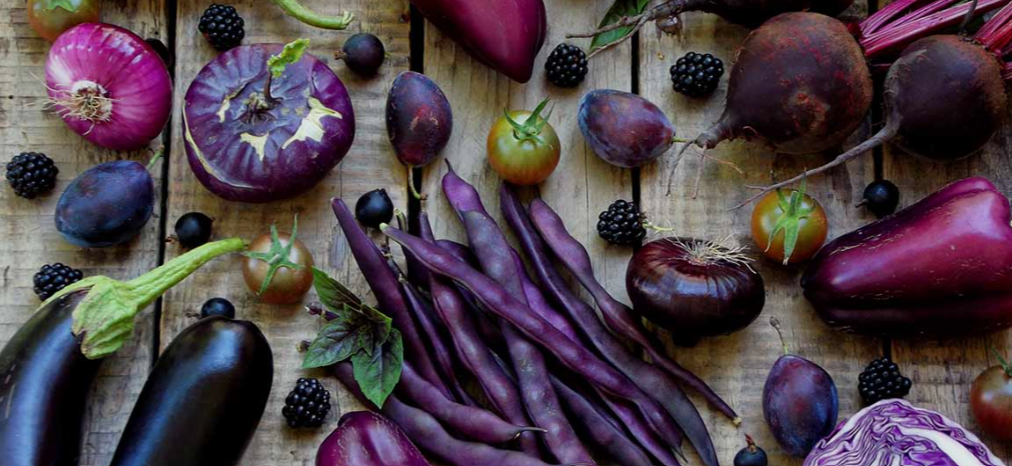
Purple colored fruits owe their color to anthocyanins, the same pigments that make other fruits red, only packed in more densely. The exact shade depends on how acidic the fruit’s cells are, with more acid pushing the color toward red and less acid toward blue. A waxy surface film, called bloom, adds the dusty blue cast seen on plums and grapes.
In most purple fruits the pigment sits only in the skin. A Concord grape, a plum, and an eggplant are all pale inside. Only a few, such as bilberries, honeyberries, and black raspberries, are purple all the way through.
Purple is usually the last stop in ripening, after green and red. Growers have an old saying that a blackberry is red when it is green. For that reason, purple is one of the more trustworthy ripeness signals in the fruit world.
This list of 55 fruits runs from berries and grapes to orchard fruits, tropical fruits, and garden crops that are fruits in the botanical sense. Each description notes where the purple is found and flags the cases where the usual rule fails. Growing regions and seasons refer to the United States unless noted.
1. Blackberry
Blackberry is a cluster of small, juicy segments that ripens to a purple so deep it looks black. The white core stays inside the berry when it is picked, unlike a raspberry. Oregon leads the country in production.
The berry turns from green to red to glossy black, but gloss is a trap. A shiny black berry is still tart, and peak sweetness comes a few days later when the surface turns dull. A ripe berry pulls free with almost no effort.
2. Dewberry
Dewberry is a wild, trailing blackberry that creeps along the ground across the South and East. Its purple-black berries have fewer and larger segments than those of upright blackberries. The flavor is sweet-tart and often more intense.
It ripens earlier than other blackberries, as early as April and May in the Gulf states. Fully dark, soft berries are the ripe ones. The low, thorny vines make picking slow, and most of the fruit goes into cobbler and jam.
3. Black Raspberry
Black raspberry, or blackcap, is a native berry of the eastern states with a hollow center and a purple-black color dusted with white bloom. It is smaller, seedier, and more intensely flavored than a red raspberry. Oregon grows most of the commercial crop.
This is one of the few fruits that is purple all the way through. Its juice is so strongly pigmented that it was long used as the dye for stamping grades on meat. The season lasts only 2 to 3 weeks in early summer.
4. Purple Raspberry
Purple raspberry is a hybrid of red and black raspberries. ‘Royalty’, released by breeders in New York in 1982, is the best-known variety. The berries are large, soft, and dusky purple.
The fruit can be picked at 2 stages with different results. At the red stage it tastes like a tart red raspberry, and at full purple it is sweeter and richer. It makes an especially good jam.
5. Boysenberry
Boysenberry is a large, soft, maroon-purple berry that combines blackberry, raspberry, and loganberry in its ancestry. It was bred in California in the 1920s and made famous by a roadside farm stand that grew into a theme park. The flavor is sweet, tangy, and winey.
Ripe fruit is deep purple-maroon and has lost its shine. It is too soft and juicy to ship well, so most is frozen or made into jam and syrup. Oregon and New Zealand are the main sources today.
6. Marionberry
Marionberry is a blackberry variety released in Oregon in 1956 and named for Marion County, where it was tested. It is medium-sized, cone-shaped, and dark purple to black. The taste is rich and earthy, with both sweetness and tartness.
It accounts for more than half of the blackberries grown in Oregon. The harvest runs through July, and over 95 percent of the crop is frozen or processed. Marionberry pie is the official state pie of Oregon.
7. Wild Blueberry
Wild blueberry is the small, low-growing native blueberry of Maine, which produces nearly all of the American crop. The berries are about half the size of cultivated ones and more intense in flavor. They are harvested in August with hand rakes or machines.
The blue-purple pigment sits in the skin, under a pale, waxy bloom. The flesh inside is light green, though the juice quickly stains purple. Smaller berries mean more skin per cup, which is why wild blueberries color baked goods so deeply.
8. Bilberry
Bilberry is the wild European cousin of the blueberry, and close relatives grow in the mountains of the western United States. It looks like a small, dark blueberry without the waxy bloom. The flavor is sharper and more aromatic.
Unlike a blueberry, a bilberry is deep purple through its flesh. It stains fingers, teeth, and clothing at once. Most are picked wild and sold as jam, juice, or dried fruit.
9. Huckleberry
Huckleberry is the prized wild berry of the northern Rocky Mountains and is the state fruit of Idaho. The berries are purple-black to red-purple and resemble small blueberries. The flavor is sweeter and more intense, with a tart edge.
Huckleberries have never been farmed successfully, so every berry sold is picked wild. They ripen from mid-July through August at higher elevations. Both the skin and the flesh are purple, and the juice stains heavily.
10. Honeyberry
Honeyberry, also called haskap, is the fruit of an edible honeysuckle shrub. The berries are elongated, blue-purple with a waxy bloom, and deep purple-red inside. The flavor falls between blueberry, raspberry, and black currant.
This fruit breaks the color rule, because the skin turns blue 2 to 3 weeks before the berry is ripe. The only reliable test is to cut one open and check that the flesh is purple, not green. It ripens in June, ahead of strawberries, and survives winters to 40 below zero.
11. Saskatoon
Saskatoon, also called serviceberry or juneberry, is a native shrub or small tree found across the northern states. The berries look like blueberries but are actually tiny pomes, related to apples. They taste like a mild blueberry with a hint of almond.
The fruit ripens from red to deep purple-blue in June. Red berries are still sour, so pickers wait for full color. Serviceberry trees planted along city streets bear the same edible fruit.
12. Elderberry
Elderberry is a native shrub that bears wide, flat clusters of tiny purple-black berries in late summer. The fruit is tart and earthy and is made into syrup, jelly, pie, and wine. Missouri is the leading state for commercial elderberry growing.
The berries must not be eaten raw. They contain compounds that can release cyanide, and food safety specialists advise that you should always cook elderberries before eating them. Clusters are ready when every berry is dark purple and the cluster droops.
13. Black Currant
Black currant is a dark purple-black berry with a strong, musky, tart flavor. By weight it holds about 3 times the vitamin C of an orange. It is the standard purple candy flavor in Britain, where Americans would expect grape.
The fruit is little known in the United States because growing it was banned federally in 1911. The plant can host a disease of white pines, and some states still restrict it. Berries ripen in July and are best when fully dark and slightly soft.
14. Jostaberry
Jostaberry is a cross of black currant and gooseberry developed in Germany and released in 1977. The berries are purple-black and larger than currants, on a vigorous, thornless bush. The flavor lies between its parents, tart with a mild currant note.
The fruit ripens from green to red to purple-black in July, and only the last stage is sweet. The bush resists the mildew and rust that trouble its relatives. A mature plant can yield 10 pounds or more.
15. Mulberry
Mulberry is the long, soft, blackberry-like fruit of a tree found in yards and fencerows across the eastern states. The native red mulberry and the black mulberry both ripen to dark purple-black. The taste is sweet with a light tang.
Berries pass through white and red before turning purple, and they ripen over several weeks. The usual harvest method is to shake the branches over a sheet. The juice stains hands, clothes, and sidewalks a deep purple.
16. Aronia
Aronia, or black chokeberry, is a native shrub of the eastern states with clusters of purple-black berries. The fruit is very astringent, which is how it earned the name chokeberry. It has one of the highest anthocyanin levels measured in any fruit.
The berries turn black on the outside before the inside is ripe. They are ready in late August, when the flesh and juice are dark purple all through. Most of the crop becomes juice, usually blended with sweeter fruit.
17. Chokecherry
Chokecherry is a wild cherry found across most of the country, with pea-sized fruits in hanging clusters. They ripen from red to dark purple-black and are sharply astringent raw. It is the state fruit of North Dakota.
Cooked with sugar, chokecherries make a well-loved jelly, syrup, and wine. The pits and leaves contain cyanide-producing compounds, so the fruit is strained after cooking. Fully dark fruit picked in August is the least astringent.
18. Salal Berry
Salal is an evergreen shrub of the Pacific Northwest coast, best known for the leathery leaves florists use. Its berries are dark blue-purple, slightly hairy, and mild in flavor. They were a staple food of coastal tribes, who dried them into cakes.
The fruit ripens in August and September and is ready when soft and fully dark. The texture is somewhat mealy, so the berries are often mixed with tarter fruit in jam. They grow in great numbers along forest edges.
19. Oregon Grape
Oregon grape is an evergreen shrub with holly-like leaves and is the state flower of Oregon. It bears clusters of dusty blue-purple berries that look like tiny grapes. It is not a grape at all but a relative of barberry.
The berries are very tart and full of seeds, so they are rarely eaten fresh. They make a sharp, dark jelly. Fruit ripens from July to September, and the waxy bloom rubs off to show the purple skin.
20. Beautyberry
Beautyberry is a native shrub of the Southeast that carries tight clusters of berries wrapped around its stems. The color is a bright violet-magenta, the most vivid purple of any American fruit. The berries hold from September into late fall.
The fruit is edible but bland and slightly astringent raw. Cooked, it makes a rosy jelly with a mild, floral flavor. The purple is at its strongest just as the leaves begin to yellow.
21. Maqui Berry
Maqui berry is a small, purple-black fruit from the rainforests of southern Chile. It is tart and has an exceptionally high anthocyanin content. Nearly all of it is harvested from wild trees.
Fresh maqui is almost never seen in the United States. It is sold as freeze-dried powder and juice. The berries ripen from December to March, which is summer in the Southern Hemisphere.
22. Pokeweed Berries
Pokeweed is a tall native weed with magenta stems and drooping clusters of shiny, purple-black berries. It grows in gardens, fence lines, and vacant lots across the eastern states. The berries look juicy and inviting.
They are not for eating. All parts of the plant are toxic to people, and the berries cause vomiting and worse in children. The dark juice was once used as ink and dye, and birds eat the fruit without harm.
23. Juniper Berry
Juniper berry is not a true berry but a small, fleshy cone from an evergreen shrub. It is blue-purple with a pale, waxy bloom and has a sharp, piney, resinous flavor. It is the ingredient that gives gin its taste.
The berries take 2 to 3 years to ripen, so green and purple ones hang on the same branch. Only the dark, slightly soft ones are picked. Cooks use them sparingly with game and cabbage, and berries from some ornamental junipers are toxic.
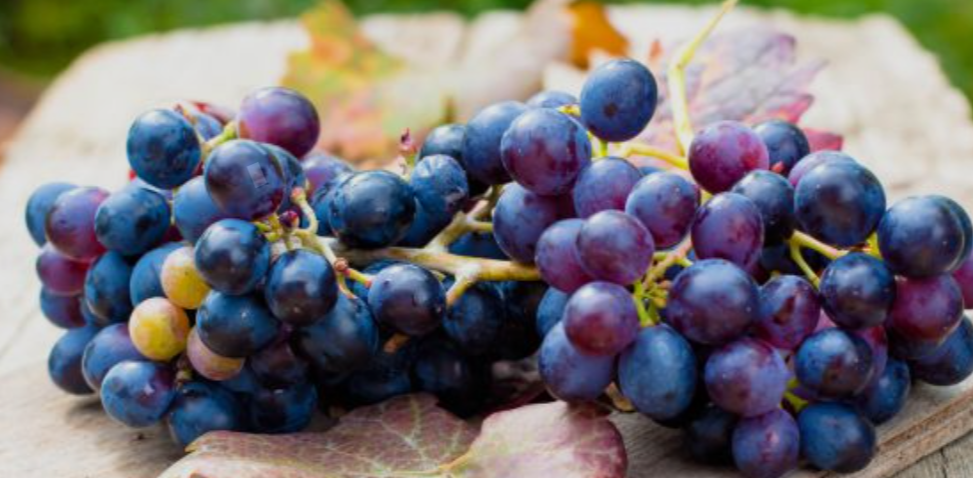
24. Concord Grape
Concord grape was developed in Concord, Massachusetts, in 1849 from native wild grapes. It has thick, dark purple skin that slips off a pale green pulp. It is the grape behind American grape juice and grape jelly.
All of the purple is in the skin, which is why the juice is pressed with the skins to gain its color. Ripe clusters are evenly dark with a dusty bloom and a strong, sweet aroma. Washington State grows the largest share of the crop.
25. Muscadine
Muscadine is the native grape of the Southeast, with large, round berries up to 1.5 inches wide. Varieties are either dark purple or bronze. The skin is thick and tough, and the pulp is sweet and musky.
The berries grow in loose clusters and fall one by one as they ripen. A ripe muscadine is fully colored and comes off the vine at a touch. Georgia leads in production, and the harvest runs from August into October.
26. Moon Drop Grape
Moon Drop is a seedless table grape bred in California, known for its long, tubular shape. The berries are dark purple-black with a crisp snap. The taste is sweet with very little tartness.
The unusual shape is natural and comes from conventional cross-breeding. The grapes are in season from August through November. Like all grapes, they do not ripen after harvest, so firmness and green stems matter most.
27. Black Plum
Black plums, such as ‘Friar’ and ‘Black Amber’, have dark purple-black skin over pale amber flesh. The skin is tart, and the flesh is sweet and mild. California grows nearly all of the fresh plums sold in the country.
The purple is only skin deep, so the cut fruit looks surprisingly light. A ripe plum gives slightly at the tip opposite the stem. The powdery bloom on the skin is natural and shows the fruit has not been overhandled.
28. Italian Prune Plum
Italian prune plum is a small, oval fruit with deep purple skin, a blue bloom, and yellow-green flesh. The pit comes away cleanly. Its sugar is high enough that it can be dried whole without fermenting, which is the definition of a prune plum.
Baking draws the pigment from the skin into the flesh and turns the whole fruit a vivid magenta. That makes it the classic plum for tarts and cakes. It ripens in late August and September.
29. Damson
Damson is a small, oval, blue-purple plum with a very tart, astringent taste. The flesh is yellow-green and clings to the pit. It was widely planted in colonial America for preserves.
Cooked with sugar, damsons make a deep purple, sharply flavored jam. The skin supplies all of the color. Fruit ripens in September and is ready when it softens slightly and drops easily.
30. Beach Plum
Beach plum is a native shrub of the Atlantic coast, from Maine to Maryland, that grows wild in sand. The fruits are the size of a cherry and usually dark purple, though some bushes bear red or yellow fruit. They are tart and are best known in Cape Cod jelly.
The plant is commonly found on coastal dunes, and university researchers have worked to turn it into an orchard crop. Wild bushes fruit heavily in some years and barely at all in others. The plums ripen in late August and September.
31. Sloe
Sloe is the small, blue-black fruit of the blackthorn, a thorny European shrub. It is one of the most astringent fruits there is and dries the mouth instantly. Its main use is flavoring sloe gin.
The fruit is traditionally picked after the first frost, which softens the skin and eases the astringency. A waxy bloom gives it a dusty blue look. It is rarely grown in the United States.
32. Black Tartarian Cherry
Black Tartarian is an heirloom sweet cherry that reached the United States in the early 1800s. The fruit is heart-shaped, medium-sized, and purplish-black. The flesh is soft, juicy, and richly sweet.
It ripens early, in June, and is too tender to ship. That keeps it a backyard and farm-stand cherry. The darker the fruit, the sweeter it is, and the tree is widely planted as a pollinator for Bing.
33. Black Mission Fig
Black Mission fig was brought to California by Spanish missionaries in the 1760s. It has purple-black skin and strawberry-pink flesh. The flavor is very sweet and jam-like.
The tree bears 2 crops a year, one in early summer and a larger one from August to October. A ripe fig droops on its stem, and its skin may show small cracks. Figs do not ripen after picking.
34. Kalamata Olive
Kalamata olive is an almond-shaped, deep purple olive named for a region in southern Greece. An olive is a true fruit, with flesh around a single pit. This one is meaty and rich, with a fruity, slightly winey taste.
Every olive passes from green to purple to black as it ripens, and Kalamatas are picked at the ripe purple stage. Raw olives are too bitter to eat and must be cured in brine first. Small plantings of the variety grow in California.
35. Passion Fruit
Purple passion fruit is an egg-sized fruit with a tough, dark purple shell. Inside is aromatic, orange-yellow pulp filled with crunchy black seeds. The flavor is tart, sweet, and intensely tropical.
A smooth shell means the fruit is not ready, and a wrinkled one means it is at its sweetest. Ripe fruit drops from the vine and is gathered from the ground. It grows in California, Florida, and Hawaii.
36. Mangosteen
Mangosteen is a round tropical fruit with a thick, deep purple rind and snow-white segments inside. The flesh is sweet-tart and delicate. Fresh fruit has been imported from Thailand since 2007.
Rind color is the harvest guide, moving from green to pink to dark purple as the fruit matures. The rind should still give slightly when pressed, since a hard one means age. Its purple juice leaves stains that are very hard to remove.
37. Jaboticaba
Jaboticaba is a Brazilian tree with grape-like fruits that cling directly to the bark of its trunk and branches. Each fruit is about 1 inch wide, with thick, purple-black skin and sweet white pulp. The taste resembles a muscadine grape.
Fruit turns from green to dark purple in only 3 to 4 weeks and is picked at full color. It begins to ferment within a few days, so it is almost never sold. The tree grows in South Florida and may take 8 years to bear.
38. Acai
Acai is a small, round, purple-black fruit from a palm native to the Amazon. About 90 percent of each fruit is seed, covered by a thin layer of pulp. The flavor is earthy and unsweet, something like unsweetened chocolate and blackberry.
The fruit spoils within a day of harvest, so it reaches the United States only as frozen pulp or powder. Clusters are cut when the fruits turn from green to deep purple. Nearly all of the supply comes from northern Brazil.
39. Star Apple
Star apple is a round tropical fruit with smooth skin that is either deep purple or green. Cut across the middle, it shows a star pattern around the seeds. The pulp is soft, milky, and sweet.
Purple varieties turn dull and slightly wrinkled when ripe and yield to gentle pressure. The fruit does not drop on its own and must be clipped from the tree. The skin and rind contain a sticky latex and are not eaten.
40. Java Plum
Java plum is an olive-sized, oblong fruit that ripens to glossy purple-black. It is juicy, sweet, and astringent, and it stains the tongue purple. It is very popular in India, where it is called jamun.
Fruit ripens from green to pink to dark purple in early summer and is picked at full color. The tree has become invasive in South Florida and Hawaii. The juice is used for drinks, vinegar, and jam.
41. Grumichama
Grumichama is a Brazilian fruit often compared to a sweet cherry. It is about three-quarters of an inch wide, dark purple to black, and tipped with small green sepals. The flesh is juicy, sweet, and mild.
The fruit develops quickly, ripening within about 30 days of flowering. It is ready when it turns nearly black and softens. It is grown in Hawaii and South Florida and bruises too easily to be sold.
42. Sea Grape
Sea grape is a native tree of Florida’s beaches with large, round, leathery leaves. Its fruits hang in long clusters that look like bunches of grapes. Each one is mostly seed, with a thin layer of tart, musky flesh.
The fruits ripen one at a time from green to purple, so a cluster is never ready all at once. Ripe ones fall when the cluster is shaken. They are made into a regional jelly, and the trees are protected on public dunes.
43. Purple Prickly Pear
Purple prickly pear is the egg-shaped fruit of several paddle cacti native to Texas and the Southwest. The skin and flesh are a deep purple-magenta. The flavor is sweet and mild, like watermelon with a hint of berry.
This purple is not anthocyanin but betalain, the pigment family found in beets. The fruit is ripe in August and September, when it is fully colored and twists off easily. Its tiny, hair-like spines must be removed before handling.
44. Capulin Cherry
Capulin cherry is a wild cherry from Mexico and Central America, related to the native black cherry. The fruit is about three-quarters of an inch wide and ripens to dark purple-black. It is sweet and juicy, with a slight astringency in the skin.
The tree needs very little winter chill, which lets it fruit in coastal California. Cherries ripen in early summer and are best when fully dark. It is grown mainly by home gardeners.
45. Globe Eggplant
Globe eggplant is the large, pear-shaped, dark purple type found in every supermarket. Botanically it is a berry. The purple sits in the skin alone, over spongy, cream-colored flesh.
Eggplant is eaten before it is ripe, so depth of color matters less than shine. A glossy fruit that springs back when pressed is at the right stage. Dull skin means the fruit is overmature, with hard seeds and a bitter taste.
46. Japanese Eggplant
Japanese eggplant is long and slender, with dark purple-black skin and a purple cap at the stem. The skin is thin enough that it needs no peeling. The flesh is sweeter and has fewer seeds than globe eggplant.
It is picked at 6 to 8 inches, while still glossy and firm. The slim shape lets it cook quickly on a grill or in a stir-fry. Chinese types look similar but are lighter lavender with a green cap.
47. Purple Bell Pepper
Purple bell pepper has deep purple skin over pale green flesh. Varieties such as ‘Purple Beauty’ taste much like a green pepper, crisp and slightly bitter. The color makes it popular for raw vegetable trays.
Here purple is an unripe stage, not a ripe one. Left on the plant, the pepper turns red and sweet. Cooking also destroys the color and turns the skin a muddy green.
48. Purple Jalapeno
Purple jalapeno is a variety of the familiar hot pepper that passes through a long purple stage. The pods go from green to dark purple to red. The plant also has purple-tinted leaves and flowers.
The heat is the same as a regular jalapeno, at 2,500 to 8,000 Scoville units. Purple pods are as hot as green ones, and red pods are slightly sweeter. The purple fades when the peppers are pickled or cooked.
49. Purple Tomatillo
Purple tomatillo is a small, round fruit that grows inside a papery husk. It is sweeter and fruitier than the green tomatillo and can be eaten raw. It makes a striking purple salsa.
The fruit is ready when it fills the husk and splits it open. It colors purple only where light reaches it, so the shade deepens after the husk splits. Fruit left in a bright spot after harvest continues to darken.
50. Cherokee Purple Tomato
Cherokee Purple is an heirloom tomato with dusky, rose-purple skin, green shoulders, and brick-red flesh. It first circulated among seed savers in 1990, with a history traced to Tennessee. The flavor is rich, sweet, and slightly smoky.
This purple contains no purple pigment at all. It is the effect of red flesh and lingering green pigment seen together. The tomato is ripe while its shoulders are still green, so softness is the better guide.
51. Indigo Rose Tomato
Indigo Rose is a small tomato bred at Oregon State University and released in 2012. It was the first tomato with true anthocyanin pigment in its skin, obtained from wild relatives through conventional breeding. The skin turns purple-black wherever sunlight strikes it.
The dark skin hides the usual signs of ripeness. The fruit is ready when its shaded underside turns from green to red and the purple changes from shiny to dull. Unripe fruit is just as dark and tastes bland.
52. Purple Snap Bean
Purple snap beans, such as ‘Royal Burgundy’, have deep purple pods that are green inside. The pod is the fruit of the bean plant. The flavor is the same as that of a green bean.
The pods turn green within about 2 minutes of boiling, which cooks use as a built-in timer for blanching. The purple also makes the beans easy to spot among the leaves. They are picked when pencil-thick and still tender.
53. Purple Hull Pea
Purple hull pea is a Southern field pea with cream-colored seeds marked by a pink eye. The pods start green and turn purple as the peas fill out. The peas are creamy and mild when cooked fresh.
The pod color is a direct harvest signal, since the pods begin to turn purple when they are ready to harvest. That makes the crop easy for pick-your-own customers. Shelling a bushel leaves the thumbs stained purple.
54. Purple Podded Pea
Purple podded peas bear dark purple pods on tall vines with pink and purple flowers. ‘Blauwschokker’ is a Dutch heirloom soup pea, and newer types are bred as snap peas. The peas inside are green.
The pods are easy to see against the foliage, which speeds picking. Young pods can be eaten whole, and mature ones are shelled. As with purple beans, the color fades when the pods are cooked.
55. Purple Corn
Purple corn is an ancient Andean variety with kernels and cobs of deep purple-black. Each kernel is a fruit, and these are among the richest sources of anthocyanin of any food. It is starchy and is not eaten like sweet corn.
In Peru the dried ears are boiled with pineapple and spices to make a purple drink called chicha morada. The corn is harvested fully mature and dry. American shoppers find it dried in Latin markets.
Key Takeaways:
- Purple-colored fruits come in many forms, including berries, grapes, plums, figs, tropical fruits, and less familiar varieties.
- Their colors can range from pale lavender and violet to deep purple, burgundy, and almost black, depending on the fruit and its stage of ripeness.
- Many purple fruits contain anthocyanins, naturally occurring pigments responsible for much of their red, blue, and purple coloration.
- Popular examples include purple grapes, blackberries, plums, passion fruit, figs, mangosteen, and certain varieties of dragon fruit.
- Purple fruits can have very different flavors, ranging from sweet and juicy to tart, floral, mildly acidic, or intensely aromatic.
- Growing requirements vary widely, with some purple fruits thriving in temperate climates while tropical varieties require warm temperatures and longer growing seasons.