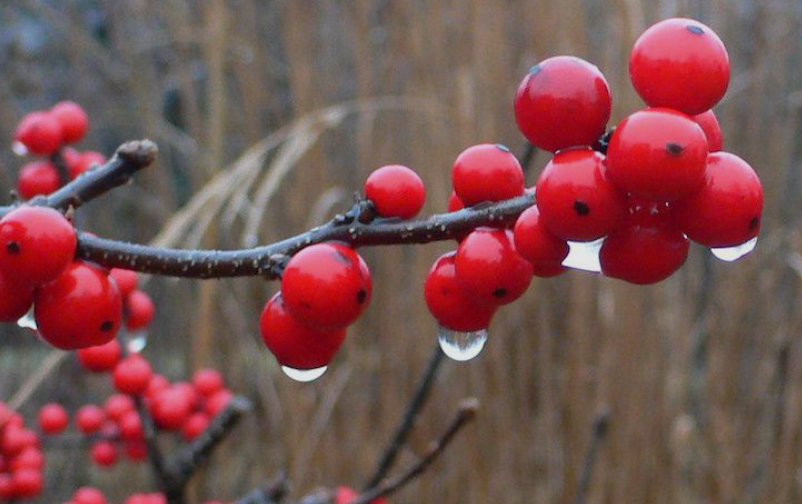
The many types of red fruit in American stores and gardens get their color from just 4 pigments. Strawberries, cherries, and apples are red because of anthocyanins. Tomatoes and watermelon rely on lycopene, dragon fruit and prickly pear on betalains, and peppers on a pigment called capsanthin.
Knowing which pigment is at work explains a great deal. Anthocyanins need sunlight and cool nights, which is why apples color best in fall and why the shaded side of a fruit stays pale. Lycopene needs warmth instead and stops forming in extreme heat.
The pigment also affects the kitchen. Anthocyanins dissolve in water and bleed into batter and juice, while lycopene stays in the flesh and is absorbed better after cooking. Betalains stain hands and cutting boards a deep magenta.
This list covers 105 red fruits, from berries and orchard fruits to citrus, tropical fruits, and garden crops that are fruits in the botanical sense. Each description gives the flavor and notes what the red color does or does not say about ripeness. Growing regions and seasons refer to the United States unless noted.
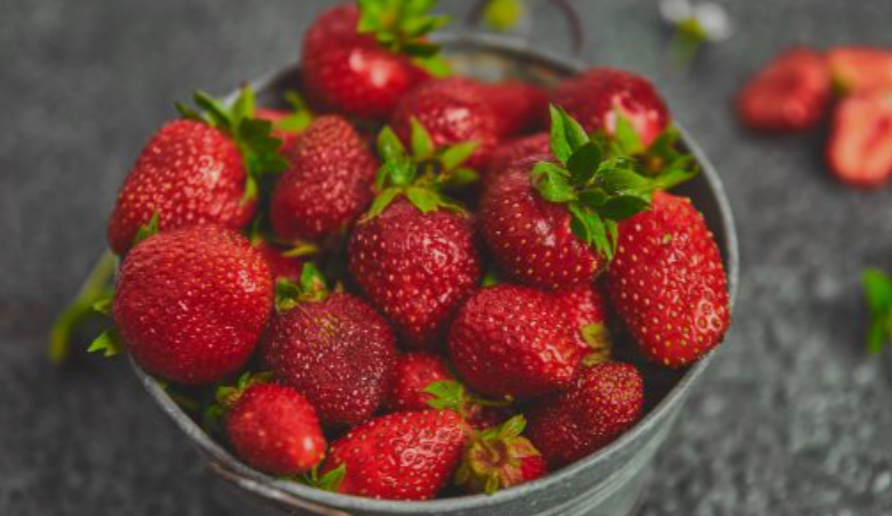
1. Strawberry
Strawberry is the most popular red berry in the United States, and California grows about 90 percent of the national crop. The red part is a swollen flower base, and the true fruits are the roughly 200 tiny seeds on the surface. The flavor is sweet, bright, and strongly aromatic.
The color comes from anthocyanins and is a dependable guide. A strawberry does not ripen after picking, so white shoulders near the stem will stay white and sour. Fully red berries with fresh green caps are the ones to buy.
2. Alpine Strawberry
Alpine strawberry is a small woodland species with berries about the size of a fingernail. The flavor is far more concentrated than that of supermarket strawberries, with a floral note. Plants form neat clumps and produce no runners.
The berries turn deep red and soften when ripe, and they detach with a light touch. They are too delicate to ship, so they are almost entirely a garden crop. Plants bear a few berries at a time from June until frost.
3. Red Raspberry
Red raspberry is a cluster of about 100 tiny, juicy segments, each holding a seed. The berry slips off its core when picked, leaving a hollow center. Washington leads in berries for processing, and California leads in fresh fruit.
Anthocyanins give the berry its color, which deepens from pink to rich red as sugar rises. A ripe berry pulls free without resistance. Raspberries do not ripen further once picked and keep only 2 to 3 days.
4. Cranberry
Cranberry is a native bog fruit, and Wisconsin grows about 60 percent of the American crop. The berries are firm, glossy, and extremely tart. Only about 5 percent are sold fresh, and the rest become juice, sauce, and dried fruit.
Each berry holds 4 small air pockets, which is why cranberries float when growers flood the beds at harvest. Cool fall nights bring on the deep red color. A fresh cranberry is hard enough to bounce.
5. Lingonberry
Lingonberry is a small, tart berry from a low evergreen shrub of northern forests. It grows wild in Alaska and the far northern states, where it is also called mountain cranberry. The flavor resembles cranberry but is slightly less sharp.
The berries ripen from white to bright red in late summer and fall. They contain a natural preservative, so they keep for weeks under refrigeration. Most are cooked into the preserves served with Scandinavian dishes.
6. Red Currant
Red currant is a translucent, glossy berry that hangs in long strings on a compact bush. It is sharply tart, with small, soft seeds. Jelly, sauces, and syrups are its main uses.
The berries on a string ripen from top to bottom, so the whole cluster is picked once the last berry turns red. They are ready in late June and July. Some states restrict the plants to protect white pines from a rust disease.
7. Red Gooseberry
Red gooseberry is a grape-sized berry with faint stripes and a tangy skin over sweet flesh. Varieties such as ‘Hinnomaki Red’ are sweet enough to eat fresh. The bushes are thorny and prefer cool summers.
Gooseberries start green and hard, and red varieties darken as they sweeten. Underripe fruit is picked for pies, and fully colored fruit is eaten raw. The harvest comes in July.
8. Nagoonberry
Nagoonberry, or Arctic raspberry, is a small, dark red berry that grows on ankle-high plants in Alaska and northern Canada. Its flavor is often described as the finest of any wild berry, like raspberry with a hint of pineapple. Each plant bears only a few fruits.
The berries are ripe when deep red and soft, usually in August. They cling to the plant and come off with the cap attached. Pickers rarely gather enough to sell, so most are made into jam at home.
9. Loganberry
Loganberry is a cross between a raspberry and a blackberry that appeared by accident in a California garden in 1881. The berries are long, dark red, and distinctly tart. Oregon has grown most of the commercial crop.
The fruit stays red when ripe and does not turn black like its blackberry parent. It is ready when it softens and pulls away easily, core included. Most loganberries go into pies, juice, and preserves.
10. Tayberry
Tayberry is another raspberry and blackberry cross, bred in Scotland and released in 1979. It is larger and sweeter than the loganberry, with a strong aroma. The cone-shaped berries can reach 1.5 inches long.
Ripe fruit turns from bright red to deep reddish-purple. The berries are too soft to harvest by machine or ship, so they are grown in home gardens. They ripen in July in the Pacific Northwest.
11. Wineberry
Wineberry is an Asian raspberry that now grows wild across the eastern states, where it is considered invasive. A sticky, red-haired husk covers each berry until just before it ripens. The fruit is shiny, orange-red, and pleasantly tart.
The husk peels back to reveal the berry when it is ready in July. Ripe fruit is slightly sticky to the touch. Foragers pick it freely, since removing fruit helps slow its spread.
12. Thimbleberry
Thimbleberry is a native raspberry relative of the West and the upper Great Lakes, with large, maple-shaped leaves and no thorns. The berry is a flat, soft, red cap that fits over a fingertip. The taste is sweet-tart, with many tiny seeds.
It turns from pink to bright red and falls apart at a touch when ripe. That softness makes it impossible to sell fresh. Jam from Michigan’s Upper Peninsula is the best-known product.
13. Salmonberry
Salmonberry is a wild raspberry relative of the Pacific Northwest that grows along streams from Alaska to northern California. Its large, glossy berries ripen to red, orange, or gold on different bushes. The taste is mild and slightly watery.
Because color varies from plant to plant, softness is the better ripeness test. A ripe berry comes away with no pull. It is among the first wild berries of the year, ready from May to July.
14. Red Huckleberry
Red huckleberry is a translucent, bright red berry about a quarter inch wide from the coastal forests of the Northwest. The shrub often grows straight out of rotting stumps. The fruit is tart and juicy, similar to a mild cranberry.
The berries turn clear red and soften slightly when ripe in July and August. They do not darken further, so pink berries are simply unripe. They make a bright red jelly and pie filling.
15. Teaberry
Teaberry is the fruit of wintergreen, a creeping evergreen of eastern forests that stands only 4 to 6 inches tall. The pea-sized red berry is dry and mealy, with a clear wintergreen flavor. It once flavored a well-known chewing gum and still flavors a pink ice cream sold in Pennsylvania.
The berries turn red in October and stay on the plant through winter, often tasting better after frost. They can be picked from under the snow. They are edible in small amounts.
16. Bunchberry
Bunchberry is a dwarf dogwood only 6 inches tall that carpets northern forests from Maine to Alaska. It bears a tight cluster of scarlet berries at the center of a whorl of leaves. The fruit is edible but bland, with a crunchy seed.
The clusters turn bright red in late summer and are easy to spot on the forest floor. They are most often mixed with tastier berries to stretch a batch of jam. Their high pectin helps other fruit set.
17. Bearberry
Bearberry, or kinnikinnick, is a flat evergreen groundcover of the northern states, the Rockies, and the West Coast. Its small red berries are dry, mealy, and nearly tasteless. Bears and grouse eat them in quantity, which explains the name.
The berries redden in August and persist through winter. Cooking softens them and brings out a mild sweetness. They are safe to eat but are valued more as survival food than as a treat.
18. Highbush Cranberry
Highbush cranberry is the fruit of a native viburnum shrub of the northern states and is not related to true cranberries. The translucent red berries hang in clusters and each holds one flat seed. The flavor is tart and makes a good substitute for cranberry in sauce and jelly.
The berries turn red in September, but they taste better after a frost softens them. They give off a musty smell while cooking that disappears in the finished jelly. Fruit often hangs on the shrub all winter.
19. Red Chokeberry
Red chokeberry is a glossy, quarter-inch berry from a native shrub of the eastern states. It is edible but strongly astringent, drying the mouth the way an unripe persimmon does. Sugar and cooking tame it for jelly.
The fruit reddens in September and persists into winter because birds avoid it. Astringency eases somewhat after several frosts. The berries are rich in the same anthocyanins found in the better-known black chokeberry.
20. Buffaloberry
Buffaloberry is the small red fruit of a thorny, silver-leaved shrub native to the northern Great Plains. Only female plants bear, and the berries crowd the branches in late summer. It was an important food for Plains tribes, who served it with bison meat.
The fruit is edible but sour and reportedly becomes sweeter after a frost. Color alone does not mean it is ready, since the berries turn red weeks before they sweeten. It makes a well-regarded jelly.
21. Goumi
Goumi is an oval red berry dusted with tiny silver speckles, borne on a long stalk. It ripens in June, earlier than most other berries. The flavor is tart and slightly astringent, with one soft seed.
The berries turn red about 2 weeks before they are truly ripe. They are ready when dark red, soft, and easy to pull off. The shrub is grown in home gardens and is not invasive.
22. Autumn Olive
Autumn olive is a red berry with silver flecks from an Asian shrub that has invaded roadsides and fields across the eastern states. The fruit is sweet-tart and makes excellent jam and fruit leather. A single large shrub can carry several pounds.
Unusually for a berry, its red comes from lycopene, the tomato pigment, and it contains many times more than a tomato does. The berries ripen in September and October and sweeten after frost. Picking the fruit is encouraged, but planting the shrub is not.
23. Goji Berry
Goji berry is a small, oblong, orange-red fruit from a shrub in the tomato family. It is most familiar dried, when it looks like a red raisin and tastes mildly sweet with a slight bitterness. Fresh berries are juicy and more herbal.
The color comes from carotenoids, not anthocyanins. Berries ripen a few at a time from midsummer until frost and are ready when fully red and soft. The shrub grows in zones 5 to 9 and bears in its second or third year.
24. Barberry
Barberry is a small, oblong, very tart red berry best known in its dried form. Dried barberries are scattered over rice dishes in Persian cooking, where they add sharp, bright bursts of flavor. American shoppers find them in Middle Eastern groceries.
The berries ripen red in fall and are dried in the sun or shade to hold their color. The common barberry shrub was removed from much of the Midwest beginning in 1918 because it hosts a rust disease of wheat. Dried fruit should be bright red, since brown berries are old.
25. Schisandra
Schisandra is the fruit of a woody vine from northeastern Asia that bears hanging clusters of small red berries. It is called the five-flavor berry because it tastes sweet, sour, salty, bitter, and pungent at once. The berries are usually dried and brewed as tea.
The clusters turn bright red in late summer and are picked whole. The vine is hardy to zone 4 and grows in shade. Most varieties need both a male and a female plant to fruit.
26. Rose Hip
Rose hip is the fleshy seed case that forms after a rose flower fades. Large, tomato-shaped hips from rugosa roses are the best for eating, with a tart, fruity flavor. They are very high in vitamin C.
Hips turn orange-red in late summer and sweeten after the first frost. The seeds inside are covered with irritating hairs that must be strained or scraped out. The flesh is used for tea, syrup, and jelly.
27. Hawthorn Berry
Hawthorn berry, or haw, is a small red fruit built like a miniature apple, with mealy flesh around hard seeds. Hundreds of hawthorn species grow across North America. The flavor is mild, a little sweet, and a little tart.
Haws ripen in September and October and often hang on thorny branches into winter. They are rich in pectin and are cooked into jelly and fruit leather. A larger Asian species is made into the candy sold as haw flakes.
28. Mayhaw
Mayhaw is the fruit of hawthorn trees that grow in the swamps and river bottoms of the Deep South. The cranberry-sized fruit is too tart to eat raw. It makes a clear, rosy jelly that is a regional specialty from Georgia to east Texas.
Unlike other hawthorns, it ripens in late April and May, which gave it the name. Pickers traditionally scoop the floating fruit off the water with nets. Louisiana has named mayhaw jelly an official state jelly.
29. Rowan Berry
Rowan berry is the orange-red fruit of the mountain ash, a small tree of northern forests and city streets. The berries hang in heavy, flat clusters. Raw fruit is bitter and can upset the stomach.
Cooking breaks down the bitter compound, and the berries make a tart jelly traditionally served with game. They are picked after the first frost, when the bitterness has eased. Flocks of waxwings and robins strip the trees in winter.
30. Agarita
Agarita is a pea-sized red berry from a spiny evergreen shrub of the Texas Hill Country and the Southwest. The leaves are as sharp as holly, which makes hand picking painful. The fruit is tart and juicy and makes a prized local jelly.
The berries ripen in April and May, well ahead of other wild fruit. The usual harvest method is to spread a sheet under the bush and beat the branches with a stick. Fully red berries drop first.
31. Staghorn Sumac
Staghorn sumac bears upright, cone-shaped clusters of small, fuzzy, crimson fruits. The fuzz is coated with tart acids that taste like lemon. Soaking the clusters in cold water produces a pink, sour drink.
The clusters are at their best in August, when deep red and before heavy rain washes the acid away. A lick of a finger rubbed on the fruit confirms the tartness. Poison sumac is unrelated in appearance, with white, drooping berries in swamps.
32. Bing Cherry
Bing is the leading sweet cherry in the United States, developed in Oregon in 1875. It is large, firm, and heart-shaped, with dark mahogany skin and deep red flesh. Washington State grows most of the crop.
Anthocyanins color both the skin and the juice, and darker fruit is sweeter. Cherries do not ripen after harvest, so pale red Bings will stay tart. Green, flexible stems show that the fruit is fresh.
33. Montmorency Cherry
Montmorency is the standard tart cherry, used for pies, juice, and dried fruit. It has bright red skin over clear, yellow flesh and nearly colorless juice. Michigan grows roughly 70 percent of the national crop.
The fruit is ready when it turns evenly bright red and pulls away from the pit and stem. Machines shake the trees in July, and the soft cherries are processed within hours. Fresh tart cherries are rarely sold outside growing regions.
34. Pin Cherry
Pin cherry is a native wild cherry of the northern states with bright red fruit only a quarter inch wide. Each cherry hangs on a long, thin stem and is mostly pit. The flesh is very sour and is used for jelly and syrup.
The fruit turns translucent red in July and August, and birds take it quickly. The tree is also called fire cherry, because its buried seeds sprout in great numbers after a forest fire. Seeds can stay alive in the soil for decades.
35. Nanking Cherry
Nanking cherry is a bush cherry from northern China that survives winters to zone 2. Its bright red fruits are about half an inch wide and sit close to the branches on very short stems. The flavor is juicy and tart-sweet.
The cherries ripen in late June and July and are ready when they turn fully red and soften. They are too soft to ship or store. Gardeners on the northern plains grow the shrub in hedges and windbreaks.
36. Cornelian Cherry
Cornelian cherry is the olive-shaped red fruit of a large shrub in the dogwood family. It tastes like a sour cherry with a hint of cranberry and holds one long pit. It is cooked into preserves, syrup, and sauces.
The fruit turns bright red in August but is still astringent at that stage. It is fully ripe a week or two later, when it darkens and falls from the branch. Many growers gather the fruit from the ground.
37. Barbados Cherry
Barbados cherry, also called acerola, is a glossy, three-lobed red fruit about 1 inch wide. It is one of the richest natural sources of vitamin C, with roughly 30 times the amount in an orange by weight. The flavor is tart and juicy.
The fruit goes from green to bright red in only 3 to 4 weeks after flowering. Slightly underripe fruit holds the most vitamin C, while fully red fruit is sweeter. It grows in South Florida, South Texas, and Hawaii.
38. Surinam Cherry
Surinam cherry, or pitanga, is a small fruit with 8 ribs that make it look like a tiny pumpkin. It ranges from orange-red to deep crimson. The taste is sweet-tart with a resinous note that people either enjoy or dislike.
Color is the key to flavor, since orange fruit is sharp and resinous and dark red fruit is much sweeter. Ripe fruit drops into the hand at a touch. The shrub is a common hedge in Florida, where it has also become invasive.
39. Cherry of the Rio Grande
Cherry of the Rio Grande is a Brazilian fruit that looks and tastes much like a sweet cherry. The oblong fruit is about 1 inch long and ripens to dark red or purple-red. It is grown by hobbyists in Florida and California.
The fruit colors quickly, turning from green to dark red in about 3 weeks in spring. It is sweetest when it darkens and softens slightly. The small tree tolerates brief cold to about 20 degrees.
40. Santa Rosa Plum
Santa Rosa is a red-skinned plum introduced by the California breeder Luther Burbank in 1906. It has purplish-red skin and amber flesh that turns red near the skin. The skin is tart, and the flesh is sweet and aromatic.
The plum is ripe when the skin is fully colored and the fruit gives slightly at the tip. A dusty white bloom on the skin is natural and a sign of careful handling. It ripens in June and July.
41. Elephant Heart Plum
Elephant Heart is a large, heart-shaped plum with mottled, dark red skin and blood-red flesh. It is another Burbank variety, released in 1929. The juice is deep red and very sweet.
The skin often looks dull or greenish-bronze even when the fruit is ready, so softness is the better guide. The red flesh gets its color from anthocyanins, which stain. It ripens in late summer and frees easily from the pit.
42. Cherry Plum
Cherry plum is a small, round plum about 1 inch wide that comes in red and yellow forms. It is one of the earliest plums to ripen. The flesh is juicy and sweet, and the skin is tart.
The red-leaved ornamental plums planted along streets belong to this species and bear the same edible fruit. Fruit is ready when fully colored and slightly soft, often in June. It is used for jam and for eating fresh.
43. American Plum
American plum is a wild plum native across the central and eastern states, where it forms thorny thickets. The fruit is about 1 inch wide and ripens red with a yellow blush. The skin is tough and sour, and the flesh is sweet.
Plums ripen in August and September and are ready when they soften and drop. Plains tribes dried them for winter food. Today they are used mostly for jelly and fruit butter.
44. Indian Blood Peach
Indian Blood is an heirloom peach with dark, fuzzy skin and crimson flesh streaked with red. The flesh clings to the pit and has a tart, rich flavor. It has been grown in the South for centuries.
The skin is so dark that the usual background-color test does not work. Ripeness is judged by a slight give and a strong aroma. It ripens late, in August and September, and is favored for canning and pickling.
45. Red Nectarine
Red nectarine is a smooth-skinned peach, and modern varieties have been bred for skin that is almost entirely red. The flesh may be yellow or white and is sweet, firm, and aromatic. California grows nearly all of the American crop.
That full red skin is a marketing trait and says nothing about ripeness. Where a patch of background color shows, it should be yellow or cream, not green. Otherwise a slight give and a sweet smell are the tests.
46. Jujube
Jujube, also called Chinese date, is a small oval fruit that ripens from green to mahogany red. Fresh, it is crisp and sweet like a dry apple. Left to wrinkle, it becomes chewy and date-like.
The color change marks the stages clearly, and fruit that is half green and half red is already sweet enough to eat crisp. Fully red, wrinkled fruit is best for drying. The tree thrives in the heat and drought of Texas, the Southwest, and California.
47. Red Delicious Apple
Red Delicious began as a chance seedling on an Iowa farm in the 1870s and was the top American apple for most of a century. It is tall and tapered, with 5 bumps on the bottom and very dark red skin. The flesh is mild, sweet, and low in acid.
Growers selected ever-redder strains over the decades, and flavor and texture suffered. The apple now colors fully well before it is ripe, so color tells nothing about eating quality. It lost the top spot to Gala in 2018.
48. Gala Apple
Gala is a New Zealand apple from the 1930s and has been the most-produced apple in the United States since 2018. It is small to medium in size, with red-orange stripes over a yellow background. The taste is mild and sweet, with thin skin.
The background color is the ripeness guide, shifting from green to creamy yellow. Redder strains such as Royal Gala hide that background, which makes judging harder. Gala is harvested early, starting in August.
49. Fuji Apple
Fuji was bred in Japan in the 1930s from two American apples, Red Delicious and a Virginia variety called Ralls Janet. It is dense, crisp, and among the sweetest apples sold. The skin is pinkish-red over yellow-green.
Fuji is a late apple, picked in October, and it needs a long season to develop sugar. It also stores exceptionally well and can stay crisp for close to a year in controlled storage. Fruit with a yellow background is sweeter than fruit with a green one.
50. Honeycrisp Apple
Honeycrisp was developed at the University of Minnesota and released in 1991. Its cells are unusually large, which makes the flesh break with a loud, juicy snap. The flavor balances sweetness with mild acid.
The skin is mottled red over yellow, and the amount of red depends on sun and cool nights. DNA testing later showed that the parents originally recorded for the apple were wrong. It became Minnesota’s state fruit in 2006.
51. McIntosh Apple
McIntosh was found as a seedling on an Ontario farm in 1811 and became the classic apple of New England and New York. It has tender white flesh, a tart flavor, and a strong aroma. The skin is red with green patches.
It is an early fall apple, picked in September, and softens quickly in storage. The flesh breaks down when cooked, which makes it ideal for applesauce. It is a parent of Empire, Cortland, and Macoun.
52. Cosmic Crisp Apple
Cosmic Crisp is a cross of Honeycrisp and Enterprise made at Washington State University in 1997. It reached stores in 2019 after 2 decades of testing. The apple is large, very crisp, and both sweet and tart.
The skin is dark red with tiny pale dots that reminded tasters of stars, which inspired the name. The cut flesh is slow to brown. It keeps its quality in cold storage for 10 to 12 months.
53. Jonathan Apple
Jonathan is a small to medium, bright red apple that originated in New York in the 1820s. It has a spicy, tart flavor and juicy flesh. It has long been a favorite in the Midwest for pies and cider.
The fruit colors bright red over a pale yellow background and ripens in September and October. It does not store as long as newer varieties. It is a parent of Jonagold and Idared.
54. Rome Apple
Rome is a large, round, glossy red apple that originated in southern Ohio in the early 1800s. Eaten raw, it is mild and somewhat mealy. Baked, it holds its shape perfectly and its flavor deepens.
The thick skin colors evenly red late in the season, in October. That same thick skin helps it keep for months. It is the standard choice for whole baked apples.
55. Empire Apple
Empire is a cross of McIntosh and Red Delicious bred in New York and released in 1966. It combines the sweetness of one parent with the tartness of the other. The flesh is crisp, white, and juicy.
The skin is deep red with a waxy shine, and the apple resists bruising. That toughness makes it a popular lunchbox fruit. It is picked in late September and October.
56. Winesap Apple
Winesap is an heirloom apple grown in the eastern states since at least the early 1800s. It is deep red, firm, and juicy, with a spicy, wine-like tang. For generations it was a leading apple for cider and winter storage.
The fruit colors dark red late in fall and keeps until spring in a cool cellar. Its flavor actually improves after a month or two of storage. It is now found mostly at orchards and farm stands.
57. Braeburn Apple
Braeburn was discovered as a chance seedling in New Zealand in 1952. It is firm and crisp, with a sweet-tart flavor and a hint of spice. The skin shows red-orange streaks over a yellow-green background.
The background turns from green to yellow as the fruit matures, and that shift matters more than the red streaks. It holds its shape well in baking. Braeburn is a parent of the newer Jazz and Envy apples.
58. Red-Fleshed Apple
Red-fleshed apples carry anthocyanins in the flesh as well as the skin. ‘Hidden Rose’, found in Oregon, has pale skin over bright pink-red flesh, and the newer Lucy Rose is red inside and out. The flavor is tart and berry-like.
The interior color cannot be seen from outside, so the label is the only guide. The pigment holds up in baking and turns pies and sauce pink. These apples appear in stores for a short season in late fall.
59. Dolgo Crabapple
Dolgo is a crabapple brought from Russia to South Dakota in 1897 for its extreme cold hardiness. The oval fruits are about 1.5 inches long and bright crimson. They are tart but pleasant, unlike most crabapples.
The fruit turns fully red in August and September and should be picked before it softens. It contains so much pectin that jelly sets without any added. The jelly is a clear ruby red.
60. Red Anjou Pear
Red Anjou is a maroon-red form of the green Anjou pear, found as a natural mutation in Oregon in the 1950s. It is egg-shaped, juicy, and mildly sweet, with a hint of citrus. It is sold from fall through spring.
This pear does not change color as it ripens, which catches many buyers out. The reliable test is gentle thumb pressure near the stem. Once the neck gives slightly, the pear is ready.
61. Red Bartlett Pear
Red Bartlett is a red-skinned form of the Bartlett pear, discovered on a single branch in Washington State in 1938. It has the same buttery flesh and strong aroma as the yellow original. It is a summer pear, harvested in August.
Unlike Red Anjou, this pear does signal ripeness with color. The skin brightens from dark, dull red to a vivid red as it softens. It bruises easily when ripe and should be eaten promptly.
62. Starkrimson Pear
Starkrimson is a crimson pear with a thick, stubby stem and mild, floral, very juicy flesh. It originated as a red-skinned branch on a green pear tree in Missouri in the early 1950s. It is one of the first pears of the season.
The skin turns from deep crimson to bright red as it ripens. The window between ripe and overripe is short, only a day or two. It is sold from August to November.
63. Blood Orange
Blood orange is the only common citrus colored by anthocyanins, which give its flesh a red to maroon tint. The flavor is orange with a note of raspberry. ‘Moro’ is the darkest variety, and ‘Tarocco’ is the sweetest.
The pigment forms only when nights turn cold, so color varies widely by year and region. A red blush on the rind hints at dark flesh but does not guarantee it. California fruit is in season from December to April.
64. Ruby Red Grapefruit
Ruby Red grapefruit appeared in 1929 as a single red-fleshed branch on a pink grapefruit tree in South Texas. It became the first grapefruit to receive a U.S. patent. Red grapefruit was named the state fruit of Texas in 1993.
The flesh is colored by lycopene, the tomato pigment, and it is sweeter and less bitter than white grapefruit. Later varieties such as ‘Rio Red’, released in 1984, are redder still. The red fades somewhat late in the season.
65. Red Finger Lime
Red finger lime is a slender citrus from Australia, 2 to 3 inches long, now grown in California. Its pulp consists of tiny, firm beads that pop like caviar. The beads in red varieties range from pink to deep red.
The fruit is ripe when it detaches easily and the beads spill out freely when it is cut. The flavor is sharp and lime-like. Chefs use the pearls as a garnish for seafood and cocktails.
66. Pomegranate
Pomegranate holds several hundred seeds, each wrapped in a juicy, ruby-red sac. The ‘Wonderful’ variety makes up nearly all of the American crop, which grows in California’s San Joaquin Valley. The juice is sweet-tart and rich in anthocyanins.
A pomegranate does not ripen after harvest. Ripe fruit feels heavy and has slightly flattened, angular sides where the seeds press against the leathery rind. The season runs from October through January.
67. Flame Seedless Grape
Flame Seedless is a round, crisp, bright red table grape released by federal breeders in California in 1973. It is sweet with a light tartness and has a firm snap. It is one of the first red grapes of the season, picked from late spring into summer.
Grapes do not ripen after harvest, so sweetness is fixed at picking. The red sits only in the skin and depends on warm days and cool nights. Green, flexible stems are the best sign of freshness.
68. Crimson Seedless Grape
Crimson Seedless is an elongated, firm red grape released in 1989. It ripens late and carries the California season from August into November. The flavor is sweet and mild, and the skin is fairly thick.
Its color develops slowly, and hot weather can leave it pale pink. A pale bunch can still be fully sweet, so taste matters more than shade. It stores for months, which keeps it in stores through winter.
69. Catawba Grape
Catawba is a native American grape with pinkish-red skin that slips easily off the pulp. It has the strong, musky flavor typical of eastern grapes. It was the country’s leading wine grape in the mid-1800s.
It ripens late, in October, and needs a long season to color and sweeten. Vineyards along Lake Erie and in New York’s Finger Lakes still grow it. It is used for juice, jelly, and pink sparkling wines.
70. Watermelon
Watermelon is about 92 percent water and gets its red flesh from lycopene. Serving for serving, it supplies more lycopene than a raw tomato. Florida, Georgia, Texas, and California lead in production.
The red is hidden, and a watermelon does not ripen after cutting from the vine. The spot where it rested on the ground should be creamy yellow, and the melon should feel heavy. A dried, brown tendril near the stem is another good sign.
71. Red Kiwi
Red kiwi is a newer type with smooth, thin skin and yellow flesh that has a red starburst around the core. It is sweeter than green or golden kiwi, with a berry-like flavor. The fruit is smaller and has a short season.
Anthocyanins produce the red center, which is invisible from outside. Ripe fruit gives slightly under the thumb. It began reaching a few American markets in the early 2020s.
72. Red Banana
Red banana is shorter and plumper than the yellow kind, with a maroon to purple peel. The flesh is creamy and pale pink, with a faint raspberry note. Most are imported from Central and South America.
The peel deepens to dark maroon when ripe and may show a few dark spots. Fruit with a lighter, brick-red peel is still starchy. A ripe red banana gives gently when squeezed.
73. Red Dragon Fruit
Red dragon fruit is a cactus fruit with pink skin, green scales, and deep magenta flesh full of tiny black seeds. It is sweeter than the white-fleshed type, with a mild, earthy, berry-like taste. It is grown in California, Florida, and Hawaii.
The color comes from betalains, the same pigments found in beets, and it stains readily. Ripe fruit has bright, even skin and gives slightly when pressed. The tips of the scales begin to dry and brown at peak ripeness.
74. Red Prickly Pear
Red prickly pear is the egg-shaped fruit of a paddle cactus common across the Southwest. The flesh is magenta, juicy, and full of hard seeds, with a flavor like watermelon and bubblegum. It is another fruit colored by betalains.
The skin carries nearly invisible spines that must be burned or scrubbed off before handling. Fruit is ripe from August to October, when it turns deep red and twists off easily. The juice is used in syrup, candy, and drinks.
75. Lychee
Lychee has a bumpy, leathery, pinkish-red shell around translucent white flesh and a single glossy seed. The flavor is sweet and floral, like a perfumed grape. South Florida leads the country in production.
The main season is June through July, and the fruit will not ripen off the tree. The shell turns brown within a few days of harvest, so red color signals freshness more than ripeness. Brown fruit can still be good inside if it was picked recently.
76. Rambutan
Rambutan looks like a lychee covered in soft, flexible hairs, and its name comes from a Malay word for hair. The flesh is similar but slightly creamier and less floral. Hawaii grows a small crop, and most of the rest is imported from Central America.
Ripe fruit is bright red with hairs that are still firm and partly green at the tips. Blackened, brittle hairs mean the fruit is old. Like lychee, it does not ripen after picking.
77. Pulasan
Pulasan is a close relative of rambutan with a thicker, dark red rind covered in short, blunt knobs. The flesh is sweeter than rambutan and separates cleanly from the seed. The fruit is opened by twisting it in both hands.
It turns from yellow-green to deep red when ripe and is picked at full color. It is almost never exported, so few Americans have tasted it. It remains a fruit of home gardens in Southeast Asia.
78. Tommy Atkins Mango
Tommy Atkins is the most widely sold mango in the United States, a variety that originated in Florida in the 1920s. It is large and oval, with a dark red blush over green and orange skin. The flesh is mildly sweet, firm, and somewhat fibrous.
The red blush shows where the sun hit the fruit and has nothing to do with ripeness. A ripe mango gives slightly under pressure and smells fruity at the stem. The variety dominates stores because its thick skin survives shipping.
79. Strawberry Guava
Strawberry guava is a small, round, dark red fruit about 1 to 1.5 inches wide. The flesh is white, juicy, and tart-sweet, with a flavor that hints at strawberry. The seeds are small, hard, and edible.
The skin turns from green to deep red when ripe, and the fruit softens and drops. It is eaten fresh or made into jelly. The shrub is a serious invasive plant in Hawaii and Florida.
80. Red Mombin
Red mombin, widely known as jocote, is a small oval fruit from Central America with thin red skin and a large seed. Ripe fruit is sweet, soft, and a little spicy. It is sold fresh and frozen in Latin markets.
The fruit is eaten at 2 stages, each with its own following. Green fruit is crunchy and sour and is eaten with salt, while red fruit is sweet. The color change takes only a few days.
81. Wax Apple
Wax apple is a bell-shaped tropical fruit with glossy, waxy skin in shades from pink to deep red. The flesh is crisp, airy, and watery, with a mild sweetness like a light pear. It is a backyard fruit in South Florida and Hawaii.
Darker fruit is generally sweeter, and the best varieties are nearly maroon. It bruises at a touch and keeps only a few days. The whole fruit is edible, including the skin.
82. Malay Apple
Malay apple is a pear-shaped, dark red fruit with white, spongy flesh and a faint rose scent. It is known in Hawaii as mountain apple and arrived there with the first Polynesian settlers. The tree is also famous for its bright magenta flowers.
The skin turns from pale pink to deep red at ripeness. The fruit bruises so easily that it is seldom sold beyond local markets. It is eaten fresh and has a mild, refreshing sweetness.
83. Ackee
Ackee is the national fruit of Jamaica, a red, pear-shaped pod that splits open to show 3 shiny black seeds. Each seed sits on a cream-colored lobe, which is the only edible part. Cooked ackee is soft and mild and resembles scrambled eggs.
Ripeness here is a matter of safety, because the fruit must only be picked after the fruit has naturally opened. Unripe ackee contains a toxin that causes severe illness. For that reason only approved canned and frozen ackee may be imported into the United States.
84. Coffee Cherry
Coffee cherry is the red fruit that surrounds coffee beans, which are its seeds. The thin layer of pulp is sweet, with a taste like hibiscus and watermelon. The dried skins are brewed into a tea called cascara.
Only fully red cherries produce good coffee, so the best farms pick by hand in several passes. Green and overripe fruit lower the quality of the crop. In the United States, coffee is grown in Hawaii, Puerto Rico, and a few California orchards.
85. Miracle Fruit
Miracle fruit is a small red berry from West Africa with a mild taste of its own. Its pulp contains a protein that binds to the tongue and makes sour foods taste sweet. The effect lasts 30 to 60 minutes.
The berries turn bright red when ripe and are used fresh or freeze-dried. After eating one, a lemon tastes like lemonade. The shrub is grown as a novelty in Florida and in containers elsewhere.
86. Tamarillo
Tamarillo, or tree tomato, is an egg-shaped fruit from the Andes with glossy red skin. The flesh is tangy and bold, something like a tart tomato crossed with passion fruit. The skin is bitter and is always removed.
Red varieties are more acidic than gold ones and are favored for cooking. The fruit is ripe when fully colored and slightly soft. The name was invented in New Zealand in 1967 to help market the crop.
87. Roselle
Roselle is a tropical hibiscus grown for the fleshy, deep red cups that enclose its seed pods. Those cups are not true fruits, but they are harvested and used like one. They taste tart, like cranberry, which gave the plant the nickname Florida cranberry.
The cups are picked about 10 days after the flower fades, while still plump and crisp. They are brewed into the red drink known as agua de Jamaica or sorrel. The color comes from anthocyanins and holds well in tea.
88. Natal Plum
Natal plum is the red, oval fruit of a thorny evergreen shrub widely planted in Southern California and Florida. It is 1 to 2 inches long, with a flavor like a sweet cranberry. The flesh contains harmless milky sap and a few small seeds.
Only the fully ripe, soft, red fruit is edible, and the rest of the plant is toxic. Ripe fruits appear a few at a time through much of the year. They are eaten fresh or cooked into jelly and sauce.
89. Gac
Gac is a spiky, orange-red gourd from Southeast Asia about the size of a small melon. The part that is eaten is the oily, blood-red pulp around the seeds. It has a mild, slightly nutty taste and is used mainly for its color.
That pulp contains many times more lycopene and beta-carotene than tomatoes or carrots. The fruit is ripe when the rind turns fully red-orange. American shoppers find the pulp frozen in Asian markets, where it is bought to tint sticky rice for holidays.
90. Strawberry Tree Fruit
Strawberry tree fruit is a round, bumpy, red berry about 1 inch wide from an evergreen tree common in West Coast landscapes. It looks like a strawberry but tastes mild and slightly sweet, with a gritty, mealy texture. In Portugal it is distilled into a traditional brandy.
The fruit takes a full year to ripen, passing from green to yellow to orange to red. Only the deep red, soft fruits are worth eating. They ripen in fall, at the same time the tree flowers again.
91. Cocoplum
Cocoplum is a plum-sized fruit from a native shrub of South Florida’s coasts and swamp edges. Different plants bear red, purple, or white fruit. The thin layer of flesh is mild, slightly sweet, and a little cottony.
Red-fruited forms turn from pale pink to deep red when ripe and soften slightly. The fruit is usually cooked into jelly. The seed kernel inside is edible when roasted and tastes like almond.
92. Jamaican Cherry
Jamaican cherry is a small, round, red berry about half an inch wide from a fast-growing tropical tree. Its soft, juicy pulp holds thousands of tiny seeds and tastes remarkably like cotton candy. The tree grows in South Florida yards.
Berries turn from green to yellow to bright red over a few days and are picked red. They are far too soft to sell. A mature tree fruits nearly year-round in a frost-free climate.
93. Beefsteak Tomato
Beefsteak tomato is a large slicing type that often weighs 1 pound or more. Botanically it is a berry, with many small seed chambers spread through meaty flesh. The flavor is rich and balanced between sweet and acid.
Lycopene makes it red, and the pigment stops forming above about 85 degrees. Heat waves leave fruit with yellow-orange shoulders for that reason. A tomato picked at first blush will finish ripening on the counter with full flavor.
94. Cherry Tomato
Cherry tomato is a bite-sized type about 1 inch wide that grows in long clusters. It is the sweetest class of tomato, with a high ratio of sugar to acid. A single plant can bear hundreds of fruits.
Fruits on a cluster ripen from the stem end outward, so each one is picked as it turns fully red. Heavy rain after a dry spell causes ripe fruit to split. Picking a day early avoids most cracking.
95. Roma Tomato
Roma is a plum-shaped tomato with thick walls, few seeds, and little juice. Those traits make it the standard for sauce, paste, and canning. The plants are compact and ripen most of their crop within a few weeks.
The fruit should be deep, even red with no green at the shoulders before cooking. Lycopene is absorbed far better from cooked tomatoes than from raw ones, especially with a little oil. A long simmer concentrates both color and flavor.
96. Currant Tomato
Currant tomato is a wild species from the coast of Peru and Ecuador with fruit the size of a pea. The tiny tomatoes have an intense, sweet-tart flavor. The sprawling vines can reach 8 feet or more.
The fruits ripen bright red in long sprays and are picked by the cluster. They drop easily when ripe and reseed freely in the garden. This species is a close relative of the wild ancestor of all garden tomatoes.
97. Red Bell Pepper
Red bell pepper is a fully ripe green pepper left on the plant for an extra 2 to 3 weeks. Ripening turns it sweet and removes the grassy bitterness. It also raises the vitamin C content well above that of a green pepper.
The red comes from capsanthin, a pigment found only in peppers. The extra time on the plant is the reason red peppers cost more. A ripe pepper is glossy, firm, heavy, and evenly colored.
98. Pimiento
Pimiento is a heart-shaped sweet red pepper with thick, juicy walls and a rich aroma. It is the red stuffing in green olives and the base of the pimento cheese spread popular across the South. Georgia was the center of American pimiento canning for much of the 1900s.
The pepper is harvested only when fully red, since its sweetness develops late. It is sweeter and more aromatic than a red bell pepper. Most of the crop is roasted, peeled, and packed in jars.
99. Paprika Pepper
Paprika pepper is a long, thin-walled red pepper grown to be dried and ground into the spice. Varieties range from sweet to hot, and Hungary and Spain are the best-known sources. In the United States it is grown in New Mexico and California.
Color is the entire point of this crop, and buyers grade it by pigment content. Pods are left on the plant until deep red and partly dry to build the most color. Ground paprika fades in light, so it keeps best in a dark cupboard.
100. Cayenne Pepper
Cayenne is a slender, wrinkled hot pepper 4 to 6 inches long. It rates 30,000 to 50,000 Scoville heat units, roughly 10 times hotter than a jalapeño. It is sold dried, ground, and in Louisiana-style hot sauces.
The pods turn from green to bright red over about 2 weeks and are picked red for drying. Red pods are hotter and more flavorful than green ones. Whole pods can be strung and air-dried in a warm, dry room.
101. Fresno Pepper
Fresno pepper was developed in California in the 1950s and named for the city of Fresno. It looks like a jalapeño but has thinner walls and a fruitier, smokier flavor. Heat ranges from 2,500 to 10,000 Scoville units.
It is one of the few hot peppers routinely sold red in supermarkets. Red fruit is hotter and sweeter than the green stage. The thin walls make it good for salsa and quick pickles but poor for stuffing.
102. Red Jalapeño
Red jalapeño is simply a jalapeño left on the plant until it ripens fully. It is sweeter and slightly hotter than the familiar green stage, at 2,500 to 8,000 Scoville units. Small tan cracks on the skin are normal and often indicate more heat.
Red jalapeños are the pepper behind 2 pantry staples. Smoked and dried, they become chipotles, and ground fresh with garlic, they form the base of sriracha-style sauce. Ripening takes several weeks longer than the green harvest.
103. Red Habanero
Red habanero is a small, lantern-shaped pepper with intense heat and a fruity, floral aroma. It measures 100,000 to 350,000 Scoville units. Mexico’s Yucatan Peninsula is its main growing region.
The pepper ripens from green to red, and the fruity flavor develops fully only at the red stage. A related strain called ‘Red Savina’ held the world record for heat from 1994 to 2006. Gloves are advisable when cutting it.
104. Thai Chili
Thai chili, or bird’s eye chili, is a thin pepper only 1 to 2 inches long that points upward on the plant. It delivers sharp, quick heat of 50,000 to 100,000 Scoville units. It is essential in Southeast Asian cooking.
Both green and red stages are used, with red fruit slightly sweeter. The plants are compact and can bear more than 100 peppers each. Birds eat the red fruit freely because they cannot sense the heat.
105. Red Okra
Red okra bears burgundy pods on red-stemmed plants, and the pods are the fruit of the plant. The best-known variety, ‘Red Burgundy’, was developed at Clemson University and won an All-America Selections award in 1988. The flavor is the same as green okra.
The red is anthocyanin, and it turns green when the pods are cooked. Like green okra, pods are typically harvested by cutting at three to four inches in length, before they toughen. Raw or quickly pickled pods keep their color.
Key Takeaways
- Red fruits come in many forms, including berries, drupes, citrus fruits, tropical fruits, and tree fruits.
- Common examples include strawberries, raspberries, cherries, red apples, pomegranates, watermelon, and red grapes.
- Fruit color can range from bright scarlet and crimson to deep red, burgundy, and reddish-purple depending on the species and stage of ripeness.
- Many red fruits contain naturally occurring pigments such as anthocyanins and carotenoids, which contribute to their distinctive colors.
- Red fruits vary widely in flavor, ranging from sweet and juicy to tart, acidic, mildly spicy, or intensely aromatic.
- Some red fruits grow on trees and shrubs, while others develop on vines, herbaceous plants, or climbing plants.
- Not every red-colored fruit is edible, so unfamiliar fruits should be correctly identified before being eaten.