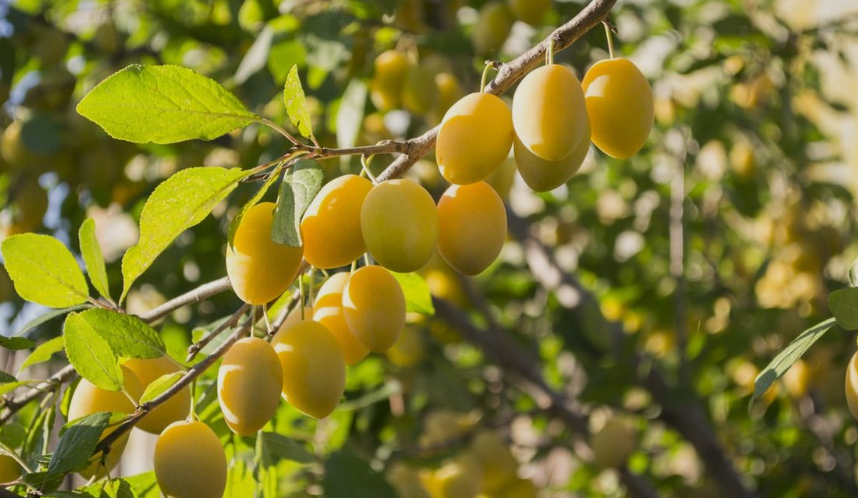
The many types of yellow fruits sold in American stores share a color but not a reason for it. In most of them, yellow appears when green chlorophyll breaks down and uncovers the carotenoid pigments that were there all along. In a few, such as yellow raspberries and yellow watermelon, the fruit is yellow because a red pigment is missing.
That difference matters at the store. For a banana or a Bartlett pear, yellow is a reliable sign that starch has turned to sugar. For a lemon or a pineapple, the color says very little about what is inside.
Some fruits even break the rule in the other direction. Summer squash and lemon cucumbers are best while pale, and a cloudberry is unripe when red and ready when it turns amber. Knowing which pattern a fruit follows prevents a lot of disappointing purchases.
This list covers 65 yellow fruits in 6 groups, from citrus and tropical fruits to orchard fruits, melons, berries, and garden crops that are fruits in the botanical sense. Each entry describes the flavor and explains what the yellow color does or does not reveal about ripeness. Growing regions and seasons refer to the United States unless noted.
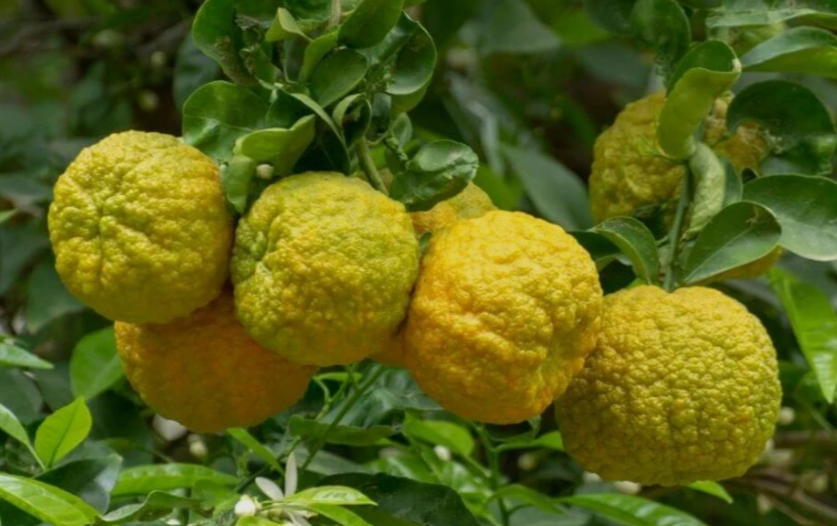
1. Lemon
Lemon is the standard yellow fruit, grown mainly in California and Arizona from the ‘Eureka’ and ‘Lisbon’ varieties. The juice is sharply sour, with about 5 to 6 percent citric acid. The rind holds fragrant oil that carries much of the flavor.
Yellow tells little about a lemon, because growers pick by size and juice content and not by color. The rind turns yellow in response to cool nights, so lemons grown in the tropics often stay green when ripe. A heavy fruit with fine-textured skin is the better sign of quality.
2. Meyer Lemon
Meyer lemon is a cross between a lemon and a sweeter citrus, brought from China in 1908 by a USDA plant explorer named Frank Meyer. It is rounder than a regular lemon, with thin, smooth skin. The juice is sweeter and far less acidic.
Here the color is a useful guide, since the rind deepens from yellow to a rich egg-yolk gold at full ripeness. The thin skin bruises easily, which kept the fruit out of stores for decades. Most of the crop is harvested from November through March.
3. Ponderosa Lemon
Ponderosa lemon is a giant, bumpy fruit that commonly weighs 1 to 2 pounds. It arose as a chance seedling in Maryland in 1887 and is thought to be a lemon and citron cross. The rind is thick, and the juice is as sour as a true lemon’s.
A single fruit can supply enough juice for several pies. The fruit turns from green to clear yellow over many months and can hang on the tree long after ripening. It is grown mostly as a backyard and container novelty.
4. Citron
Citron is one of the 3 ancestral citrus species from which lemons, limes, and many others descend. The fruit is large and oblong, often 6 to 12 inches long, and made up mostly of thick white pith. There is very little juice.
The rind is the useful part, and it is candied for fruitcake and holiday breads. The fruit is harvested once it turns fully yellow and fragrant. A whole citron can perfume a room for 2 weeks.
5. Buddha’s Hand
Buddha’s hand is a form of citron that splits into 5 to 20 finger-like sections. It contains no pulp, no juice, and no seeds at all. The entire fruit is rind and mild, sweet pith.
It is used for zest, candied peel, and infusions, and often simply as a natural air freshener. Bright, even yellow signals that the fragrance is at its peak. California growers harvest it from late fall into early winter.
6. Yuzu
Yuzu is a small, bumpy, intensely aromatic citrus from East Asia with a flavor between lemon, mandarin, and grapefruit. It holds many seeds and little juice. Cooks use the zest and juice in sauces, desserts, and drinks.
The fruit turns from green to yellow in November and December, and both stages are used. Fresh yuzu cannot be imported into the United States, so the domestic supply comes from California groves. The tree is unusually cold-hardy and survives brief drops to around 10 degrees.
7. Bergamot
Bergamot is a sour, pear-shaped citrus about the size of a lemon. Its juice is too bitter for most uses, but the oil in its rind gives Earl Grey tea its flavor. Most of the world’s commercial crop grows in one coastal region of southern Italy.
The rind shifts from green to yellow through winter, and oil producers often harvest before the color change is complete. Small plantings exist in California. Fresh fruit shows up in specialty markets from December to February.
8. White Grapefruit
White grapefruit has a pale yellow rind and straw-colored flesh, with a sharper, more bitter taste than pink and red types. The grapefruit first appeared in Barbados in the 1700s as a natural cross of pomelo and sweet orange. ‘Marsh’, a seedless Florida variety from the 1860s, remains the standard white.
Rind color is a poor guide to sweetness, because the fruit turns yellow months before the flesh reaches its peak. Grapefruit left on the tree keeps getting sweeter into spring. Weight for size is the better test.
9. Pomelo
Pomelo is the largest citrus fruit, typically 6 to 10 inches across and 2 to 4 pounds. It has a very thick, spongy rind around firm, mild, sweet segments with almost no bitterness. It is another of the 3 ancestral citrus species.
The rind goes from green to pale yellow, but many varieties are fully ripe while still greenish. California and Florida supply the American market from November to March. The segments are peeled out of their tough membranes before eating.
10. Oroblanco
Oroblanco is a seedless cross of pomelo and white grapefruit with sweet, low-acid flesh. University breeders in California made the cross in 1958 but did not release the variety until 1980. The name means white gold in Spanish.
This fruit is sweet even while the rind is still green, which confuses first-time buyers. The rind is thick, so the edible portion is smaller than the fruit suggests. It is sold from late fall through winter, sometimes under the name Sweetie.
11. Key Lime
Key lime belongs on a yellow list because the ripe fruit is yellow, not green. It is small, only 1 to 2 inches wide, with thin skin, many seeds, and very aromatic juice. Stores sell it green because it ships better at that stage.
Yellow Key limes are juicier and slightly less acidic than green ones. Commercial groves in the Florida Keys were largely wiped out by a hurricane in 1926, and most of today’s supply comes from Mexico. The juice is pale yellow, which is the natural color of a true Key lime pie.
12. Banana
Banana is the most eaten fresh fruit in the United States, at more than 25 pounds per person each year. Nearly all of them are the ‘Cavendish’ variety, shipped green from Central and South America. The flesh is soft, sweet, and mild.
No fruit shows ripeness through color more clearly. As the peel turns from green to yellow, the starch inside converts to sugar. Brown freckles on the peel mark the sweetest stage, which is best for baking.
13. Plantain
Plantain is a large, thick-skinned cooking banana that is starchy and firm where a dessert banana is sweet. It is a staple across the Caribbean and Latin America and is sold in most American supermarkets. It is almost always cooked.
Color tells the cook what dish to make. Green plantains are fried into crisp, savory chips and tostones, while yellow ones are sweet enough to fry as maduros. A fully black peel means the fruit is at its sweetest, not spoiled.
14. Pineapple
Pineapple is a compound fruit formed from 100 to 200 small berries fused around a central core. The ‘MD-2’ variety, introduced in 1996, now dominates American stores because it is sweeter and less acidic than older types. Most of the supply comes from Costa Rica.
The shell turns golden from the base upward, but color is a weak guide. A pineapple has no starch reserve, so it does not get sweeter after harvest, whatever its color. A sweet smell at the base and a heavy feel are better tests.
15. Honey Mango
Honey mango, also sold as Ataulfo, is a small, kidney-shaped variety from southern Mexico. It weighs 6 to 10 ounces and has smooth, buttery flesh with almost no fiber. The seed is thin, so there is more fruit than the size suggests.
Unlike red-blushed mangoes, this one signals ripeness plainly by turning deep golden yellow. Slight wrinkling of the skin means it has reached full sweetness. The season runs from March through July.
16. Papaya
Papaya has soft, orange or salmon flesh with a musky sweetness and a cavity of peppery black seeds. Hawaiian types weigh about 1 pound, while Mexican types can reach 5 pounds or more. A virus-resistant variety released in 1998 saved the Hawaiian crop from collapse.
The skin changes from green to yellow as the fruit ripens, and it keeps ripening on the counter. A papaya that is three-quarters yellow and yields to gentle pressure is ready. Green papaya is used as a vegetable in salads.
17. Starfruit
Starfruit, or carambola, is a waxy, 5-ridged fruit that slices into perfect stars. It is crisp and juicy, with a flavor between grape, pear, and citrus. South Florida and Hawaii grow the American crop.
The fruit is sweetest when fully yellow with a trace of green on the ridge tips, and it is overripe once it turns orange. One caution is serious, because people who have been diagnosed with kidney disease should not eat star fruit without a doctor’s approval. The whole fruit is edible, skin and seeds included.
18. Yellow Dragon Fruit
Yellow dragon fruit is a cactus fruit from Colombia and Ecuador with knobby yellow skin and white flesh. It is smaller than the pink-skinned kinds and has larger, crunchier black seeds. It is also the sweetest dragon fruit by a wide margin.
The skin turns from green to bright yellow when ripe, and the thorns are brushed off before sale. A slight give under the thumb means it is ready. The flesh is scooped out with a spoon and eaten chilled.
19. Golden Kiwi
Golden kiwi has smooth, bronze, nearly hairless skin and bright yellow flesh. It is sweeter and less tart than green kiwi, with a tropical flavor. The current commercial variety was introduced in 2012 after disease destroyed its predecessor.
The yellow is on the inside, so the skin offers no color clue. Ripe fruit gives slightly when pressed, like a peach. A single golden kiwi supplies more than a full day’s vitamin C.
20. Jackfruit
Jackfruit is the largest fruit that grows on a tree, commonly weighing 10 to 60 pounds. The spiky rind encloses dozens of yellow, fleshy bulbs that taste like a blend of banana and pineapple. It is grown in South Florida and Hawaii.
The rind turns from green to yellow-brown and gives off a strong, sweet smell when ripe. The spikes also flatten and the fruit sounds hollow when tapped. Unripe green jackfruit has a neutral flavor and is cooked as a meat substitute.
21. Yellow Passion Fruit
Yellow passion fruit is the larger, more acidic cousin of the purple type and is known as lilikoi in Hawaii. The smooth shell holds orange-yellow pulp around crunchy black seeds. Most of the crop is pressed for juice.
The fruit drops from the vine when ripe, so growers gather it from the ground. A wrinkled shell is a good sign, since the pulp sweetens as the skin dries. It grows in Hawaii, Florida, and Southern California.
22. Yellow Guava
Yellow guava is the common guava of the tropics, a round or pear-shaped fruit with white or pink flesh. It has a strong, musky perfume and small, hard, edible seeds. By weight it carries about 4 times the vitamin C of an orange.
The thin skin changes from light green to yellow at ripeness, and the fragrance becomes obvious from across a room. A ripe guava gives under light pressure like a ripe pear. It grows in Florida, Hawaii, and Southern California.
23. Loquat
Loquat is a small, oval fruit, 1 to 2 inches long, with downy yellow-orange skin and a flavor between apricot and citrus. It grows in clusters on an evergreen tree common in yards from California to Florida. Each fruit holds 1 to 5 large, glossy brown seeds that are not eaten.
The tree flowers in fall, so the fruit ripens in early spring, ahead of nearly everything else. Full yellow-orange color with no green means it is ready. Loquats bruise too easily to ship, which is why they are seldom sold.
24. Canistel
Canistel, also called egg fruit, has bright yellow-orange skin and dense flesh with the texture of a hard-boiled egg yolk. The flavor is sweet and rich, often compared to baked sweet potato or custard. It is grown on a small scale in South Florida.
The skin goes from green to glossy yellow, and the fruit should then soften for several days before eating. Unripe flesh is chalky and astringent. It is most often blended into milkshakes and ice cream.
25. Yellow Mombin
Yellow mombin is a small, oval fruit about 1.5 inches long, with thin yellow skin around a large, fibrous seed. The thin layer of flesh is juicy and tart-sweet. It is popular in Puerto Rico, the Caribbean, and Central America.
Fully yellow fruit falls from the tree and is gathered from the ground. It is eaten fresh or made into juice, jam, and frozen treats. In the mainland United States it appears mostly as frozen pulp in Latin markets.
26. Nance
Nance is a round, cherry-sized yellow fruit with a strong, pungent aroma that some compare to cheese. The flavor is a mix of sweet and sour, with oily, pale flesh around a single stone. It is native from Mexico through Central America.
Like mombin, it is collected after it turns yellow and drops. It is used in drinks, ice cream, and desserts. American shoppers usually find it frozen or packed in syrup in jars.
27. Abiu
Abiu is a smooth, bright yellow fruit from the Amazon region, 3 to 4 inches long with a small point at one end. The translucent white flesh tastes like caramel custard. It is grown in small numbers in Hawaii and South Florida.
Color matters here, because fruit with any green left contains a sticky latex that glues the lips. Fully yellow fruit is cut in half and eaten with a spoon. It keeps only a few days after picking.
28. Cashew Apple
Cashew apple is the juicy, pear-shaped stalk that swells above the cashew nut, and it is not a true fruit in the botanical sense. It may be yellow or red, 2 to 4 inches long, with sweet but astringent juice. The nut hangs from its lower end.
The skin is so thin that the fruit spoils within a day of harvest, so it is never shipped fresh. In Brazil it is pressed into a popular juice. The shell of the raw nut contains a caustic oil related to the irritant in poison ivy.
29. Langsat
Langsat is a Southeast Asian fruit that grows in grape-like clusters on the trunk and branches. Each round fruit is 1 to 2 inches wide, with thin, pale yellow, leathery skin. Inside are translucent segments that taste like a sweet, mild grapefruit.
The skin turns from green to pale yellow when ripe, sometimes with brown speckles. The seeds are very bitter and should not be bitten. A small crop is grown in Hawaii.
30. Pepino Melon
Pepino melon is not a melon but a relative of the tomato and eggplant from the Andes. The teardrop-shaped fruit is 4 to 6 inches long, golden yellow with purple streaks. The flavor resembles a mild cantaloupe crossed with cucumber.
The background color is the ripeness sign, shifting from pale green to golden. Purple streaks appear earlier and mean nothing on their own. California growers supply it from late summer through fall.
31. Babaco
Babaco is a seedless relative of papaya from the highlands of Ecuador. The 5-sided fruit grows about 12 inches long and is entirely edible, skin included. Its flavor suggests strawberry, pineapple, and papaya, with a slight fizz.
The fruit ripens from green to full yellow, one ridge at a time. It can be picked once yellow streaks appear and finished on the counter. It grows in coastal California, where summers are mild.
32. Golden Delicious Apple
Golden Delicious is a sweet, mild, thin-skinned apple found as a chance seedling on a West Virginia farm. A nursery bought the original tree in 1914 for $5,000. It is unrelated to Red Delicious and is a parent of Gala, Jonagold, and several other major varieties.
The skin moves from green to pale yellow to deep gold as the apple matures. Greenish fruit is crisper and tarter, while fully golden fruit is sweeter and softer. The thin skin bruises and shrivels quickly, so cold storage matters.
33. Opal Apple
Opal is a bright yellow apple bred in the Czech Republic from Golden Delicious and a variety called Topaz. It is crunchy and sweet with a tangy finish. In the United States it is grown by a single orchard company in Washington State.
Its best-known trait is that the cut flesh resists browning for hours without any treatment. The color is a clear, even yellow, often with a rough tan patch near the stem. It reaches stores from late fall through spring.
34. Bartlett Pear
Bartlett is the leading American pear and the main variety used for canning. It has the classic pear shape, very juicy flesh, and a strong, sweet aroma. Most of the crop comes from Washington, Oregon, and California.
It is one of the few pears that changes color as it ripens, going from green to yellow at room temperature. Pears ripen from the inside out, so gentle pressure near the stem is the final check. A fully yellow Bartlett should be eaten within a day or two.
35. Asian Pear
Asian pear is round like an apple, with crisp, grainy, very juicy flesh and a light, sweet flavor. Yellow-skinned varieties such as ‘Shinseiki’ and ’20th Century’ are smooth, while others are brown and russeted. California, Oregon, and Washington grow most of the domestic supply.
These pears ripen on the tree and are ready to eat when sold. Yellow-skinned types shift from green to clear yellow at maturity. They bruise easily, which is why each one is often wrapped in a foam sleeve.
36. Quince
Quince is a lumpy, golden-yellow fruit covered with gray fuzz that rubs off easily. Raw quince is hard, dry, and astringent, and it is almost always cooked. Long cooking turns the pale flesh a deep rose-pink.
The fruit is ripe when it turns from green to full yellow and gives off a strong, floral perfume. It is rich in pectin and sets easily into jelly and paste. The word marmalade comes from the Portuguese name for quince.
37. Yellow Peach
Yellow peach has golden flesh colored by carotenoids and a tangy flavor that balances sugar with acid. White peaches, by comparison, taste sweeter because they have less acid. California grows most of the American crop, followed by South Carolina and Georgia.
The red blush on a peach says nothing about ripeness, since it depends on variety and sun exposure. The background color is the real signal, and it should be yellow with no trace of green. A ripe peach also smells sweet at the stem end.
38. Yellow Nectarine
Yellow nectarine is simply a peach without fuzz, the result of a single recessive gene. It tends to be slightly smaller, firmer, and more aromatic than a peach. Nearly all American nectarines come from California.
The same rule applies as with peaches, so buyers should check the yellow background and ignore the red. Smooth skin shows scuffs and bruises more readily than fuzzy skin does. Firm fruit will soften in 2 to 3 days on the counter.
39. Shiro Plum
Shiro is a round, translucent yellow plum introduced by the California breeder Luther Burbank in 1899. It is extremely juicy, with a mild, sweet flavor and thin skin. The flesh clings to the pit.
The fruit turns from green to clear yellow, sometimes with a pink blush, and softens quickly once ripe. It is among the earliest plums, ready in July in most regions. The tree is hardy in zones 5 to 9 and bears heavily.
40. Mirabelle Plum
Mirabelle is a tiny plum, about 1 inch wide, with golden skin that develops red freckles in the sun. It is very sweet and is prized for tarts, jam, and fruit brandy. Most of the world’s crop grows in one region of northeastern France.
The freckles are the ripeness sign, appearing as the fruit reaches full sugar. Ripe fruit drops when the tree is shaken, which is how it is harvested. Fresh Mirabelles are rare in American stores, but the trees grow well in home gardens in zones 5 to 8.
41. Rainier Cherry
Rainier is a yellow cherry with a red blush, clear flesh, and colorless juice. It dates to a university breeding program where a scientist crossed the Bing and Van cherries in 1952, both of which are dark red. The variety was released in 1960.
It is sweeter than most red cherries and costs more because it bruises easily and shows every mark. The yellow background should be creamy and not greenish. Washington State grows most of the crop, which is harvested in June and July.
42. Canary Melon
Canary melon is an oval melon with a bright yellow rind and pale, nearly white flesh. The flavor is sweet with a slight tang, somewhere between honeydew and pear. A typical fruit weighs 4 to 5 pounds.
The rind deepens from pale to rich yellow and develops a slightly waxy feel at ripeness. The blossom end should give a little when pressed. It keeps for several weeks, which is longer than a cantaloupe lasts.
43. Casaba Melon
Casaba is a round melon with a pointed stem end and a wrinkled, furrowed yellow rind. The white flesh is mild and juicy, with a hint of cucumber and almost no aroma. It is named for a town in Turkey and is grown in California.
Because it has no scent, color and touch are the only guides. A ripe casaba is fully golden yellow with no green, and the blossom end yields slightly. It ripens in fall and stores well into winter.
44. Korean Melon
Korean melon is a small, oblong fruit of about 1 pound, bright yellow with white stripes running end to end. The white flesh is crisp and lightly sweet, between honeydew and cucumber. The thin skin and the seeds are both edible.
A deep yellow rind with clean, white stripes marks a ripe fruit. Pale or greenish melons were picked too early and will not sweeten. Asian grocery stores carry it through the summer.
45. Golden Honeydew
Golden honeydew has the same sweet, pale green flesh as ordinary honeydew under a smooth, bright gold rind. It weighs 4 to 6 pounds and has a small seed cavity. The texture is firm and very juicy.
The gold rind makes this melon easier to judge than the green type, which hides its ripeness. A deep, even gold with a faintly sticky surface means the sugar is high. The blossom end should smell sweet.
46. Yellow Watermelon
Yellow watermelon looks like any other watermelon outside but has yellow flesh inside. It lacks lycopene, the red pigment, and tastes sweeter and more honey-like than most red types. Yellow-fleshed melons are in fact older than red ones.
The yellow is hidden, so the usual watermelon tests apply. The ground spot where the melon rested should be creamy yellow, not white. Stores label these melons by variety, such as ‘Yellow Doll’ or ‘Yellow Crimson’.
47. Golden Raspberry
Golden raspberry is a red raspberry with a natural mutation that blocks red pigment. The berries are sweeter and lower in acid, with a hint of apricot. ‘Anne’ and ‘Fall Gold’ are the main garden varieties.
Ripe berries turn deep gold, often with a pink blush, and slip off the core without pulling. Pale yellow berries are not ready. They are too soft to ship far, so farmers markets are the usual source.
48. Yellow Gooseberry
Yellow gooseberry is a grape-sized berry with translucent skin and faint stripes. Dessert varieties such as ‘Hinnomaki Yellow’ are sweet, with a flavor close to apricot. The bushes are thorny and grow best in cool northern states.
The fruit shifts from hard green to soft gold when ripe. Green gooseberries are picked early for pies, while golden ones are eaten fresh. Some states restrict the plants because they can host a disease of white pines.
49. Goldenberry
Goldenberry, also called Cape gooseberry, is a marble-sized orange-yellow berry wrapped in a papery husk. It comes from the Andes and has a sweet-tart, tropical flavor. Colombia is the leading exporter.
The husk is the ripeness sign, turning from green to dry and tan as the berry inside turns gold. Unripe green berries are toxic and should not be eaten. Stores sell the fruit both fresh and dried.
50. Ground Cherry
Ground cherry is a North American relative of goldenberry, with a smaller, paler, sweeter fruit in the same kind of husk. The flavor recalls pineapple and vanilla. It has been used for pies and preserves in Pennsylvania Dutch kitchens for generations.
The name describes the harvest, because ripe fruit drops to the ground inside its husk. Fruit still on the plant is not ready. It is an easy annual garden crop that bears about 70 days after transplanting.
51. Cloudberry
Cloudberry is an amber-gold berry shaped like a raspberry that grows wild in northern bogs. In North America it is found in Alaska, northern Canada, and a few spots in New England. The flavor is tart and floral, and the berries are rich in vitamin C.
This fruit ripens in reverse, starting red and hard and finishing soft and golden. Each plant bears only 1 berry, so picking is slow. It is almost never farmed and is usually sold as jam.
52. Salmonberry
Salmonberry is a wild fruit of the Pacific Northwest that looks like a large, glossy raspberry. Berries on different bushes ripen to golden yellow, orange, or red. The taste is mild and a little watery.
Color varies by plant, so softness is the better test. A ripe berry pulls free with no resistance. It ripens from May to July along streams from Alaska to northern California.
53. Sea Buckthorn
Sea buckthorn bears small, golden-yellow to orange berries packed tightly along thorny branches. The juice is extremely sour, with a flavor like tart citrus and passion fruit. The berries contain several times the vitamin C of oranges.
The berries reach full color in August and September and cling so tightly that whole branches are often cut and frozen to harvest them. They are pressed into juice and blended with sweeter fruit. A few farms on the northern plains grow the crop.
54. ‘Yellow Wonder’ Alpine Strawberry
‘Yellow Wonder’ is an alpine strawberry with small, creamy-yellow berries about the size of a thumbnail. The flavor is intense and aromatic, with a note of pineapple. The plants form tidy clumps and send out no runners.
Birds tend to ignore the berries because they never turn red. Gardeners judge ripeness by softness, scent, and seeds that have darkened from green to tan. The plants are grown from seed and fruit from June until frost.
55. Kadota Fig
Kadota is a yellow-green fig with thick skin, amber flesh, and very few seeds. It is one of the oldest known fig varieties and is the main type used for canning and preserves. California grows nearly all of the American crop.
The skin lightens from green to yellowish as the fruit ripens, and the fig droops on its stem. A drop of syrup at the small opening on the bottom is the surest sign. Figs do not ripen after picking, so the timing has to be right.
56. Barhi Date
Barhi is the one date commonly eaten fresh at its yellow stage, when it is crunchy like an apple. The flavor at that point is sweet with a slight astringency and a hint of cinnamon. It is sold still attached to the strand in late summer.
Most dates are harvested brown and soft, so the yellow Barhi surprises many shoppers. Left at room temperature, it softens and browns into a very sweet, caramel-like date. The crop comes from the desert valleys of Southern California.
57. Pawpaw
Pawpaw is, in the words of the university that leads research on it, the largest edible fruit that is native to the United States. The fruit is 3 to 6 inches long with custard-like flesh that tastes of banana and mango. It grows wild in 26 eastern states.
Skin color is not a reliable guide, since ripe fruit ranges from green to yellow with dark flecks. Softness and a strong, fruity aroma are the real tests. Ripe pawpaws last only 2 to 3 days, which keeps them out of supermarkets.
58. Maypop
Maypop is the fruit of a hardy native passionflower vine found across the Southeast. It is the size of a hen’s egg, with a thin shell around sweet-tart pulp and many seeds. The name comes from the sound the hollow fruit makes when stepped on.
The shell turns from green to yellowish and wrinkles when the fruit is ready, and it usually drops from the vine. Smooth, green fruit is sour and unripe. The vine survives winters in zones 6 to 9 by dying back to its roots.
59. Mayapple
Mayapple is a woodland plant of eastern forests that produces a single, lemon-shaped fruit under its umbrella leaves. The ripe fruit is about 2 inches long, with a tropical, lemony flavor. It ripens in July and August.
Color is a safety matter here, because only the fully yellow, soft fruit is edible. Green fruit, the seeds, the leaves, and the roots are all poisonous. Even ripe pulp should be eaten in small amounts with the seeds removed.
60. Chickasaw Plum
Chickasaw plum is a wild plum native to the South and the southern Great Plains, where it forms dense thickets. The cherry-sized fruits ripen yellow to red, often on the same tree. The skin is tart, and the flesh is sweet.
Fruit ripens from May to July, earlier than most cultivated plums. Yellow fruit that has begun to soften is ready for picking. It is used mainly for jelly and is an important food for wildlife.
61. Osage Orange
Osage orange is the one fruit on this list that people do not eat. It is a wrinkled, yellow-green ball, 4 to 6 inches wide, that weighs 1 to 2 pounds and oozes sticky white sap. The tree is native to a small area of Texas, Oklahoma, and Arkansas.
The fruit turns yellow-green and falls in September and October. Farmers planted the thorny trees as living fences across the Midwest before barbed wire arrived in the 1870s. Scientists think extinct giant mammals once ate the fruit and spread the seeds.
62. Yellow Tomato
Yellow tomato is a true fruit in the botanical sense, and varieties range from the large ‘Lemon Boy’ to the small heirloom ‘Yellow Pear’. The flavor is mild and sweet. These tomatoes lack lycopene, the pigment that makes others red.
Yellow tomatoes are often called low-acid, but tests show their acidity is about the same as red ones. They taste milder because they contain more sugar. Full, even color and a slight give mark a ripe fruit.
63. Yellow Bell Pepper
Yellow bell pepper is a fully ripened pepper from a variety bred to turn yellow instead of red. It is sweeter and fruitier than a green pepper, with no bitterness. By weight it holds more than 3 times the vitamin C of an orange.
Every bell pepper starts green, and the yellow color means it stayed on the plant 2 to 3 weeks longer. That extra time is why yellow peppers cost more. A ripe pepper is glossy, firm, and evenly colored.
64. Yellow Crookneck Squash
Yellow crookneck squash is a summer squash with a curved neck and thin, bright yellow skin. The flesh is tender and mild, with soft, edible seeds. Squash of this type was first domesticated in North America.
This is a fruit that is eaten unripe, so yellow does not mean mature. It is picked at 4 to 6 inches, while the skin is still glossy and easily pierced. Left on the plant, it becomes hard, warty, and too tough to eat.
65. Lemon Cucumber
Lemon cucumber is a round heirloom cucumber the size of a tennis ball, introduced to American gardens in 1894. Despite the name, it tastes nothing like lemon. The flavor is mild and sweet, with thin skin and no bitterness.
It is another fruit that should be picked before it looks ripe. The best stage is pale lemon-yellow at 2 to 3 inches across. Deep golden fruit is overmature, with tough skin and hard seeds.
Key Takeaways
- Yellow fruits come in many shapes, sizes, flavors, and textures, ranging from familiar fruits such as bananas and lemons to less common tropical varieties.
- The yellow color of fruit can come from natural pigments such as carotenoids and flavonoids, which contribute to the color and, in some fruits, antioxidant properties.
- Some yellow fruits are naturally yellow when ripe, while others develop yellow or golden tones as they mature from green or other colors.
- Yellow fruits vary considerably in taste, from sweet fruits such as mangoes and yellow peaches to tart options such as lemons and some varieties of passion fruit.
- Many yellow fruits provide important nutrients, including vitamin C, dietary fiber, potassium, and various plant compounds, although their nutritional profiles differ by species.
- Yellow fruits can be eaten fresh or used in juices, smoothies, desserts, salads, sauces, preserves, and other dishes, making them versatile additions to the diet.