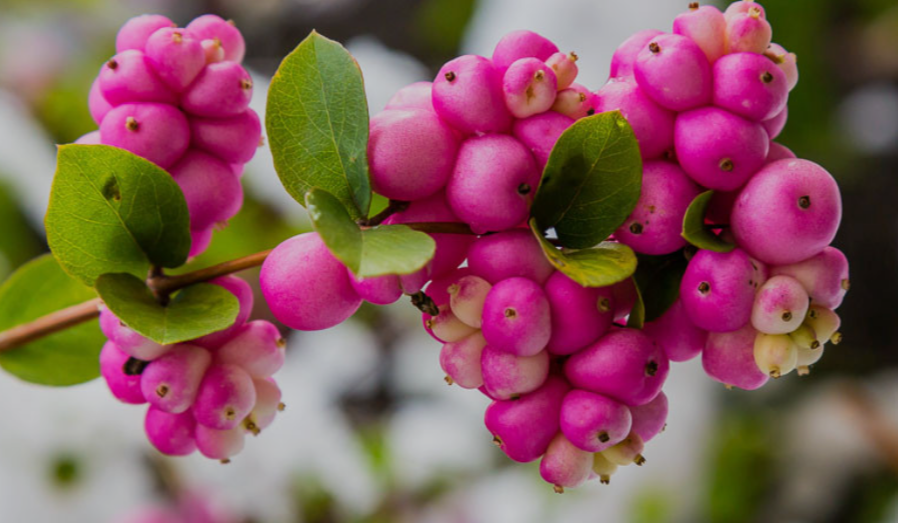
Pink berries can give shrubs an unusual appearance, especially when they develop against green foliage in late summer, fall, or winter. Unlike the more familiar red, orange, purple, and black berries, pink fruits tend to create a softer and less common color effect in the landscape.
Several shrubs produce berries that are naturally pink, while others develop fruits that range from pale pink to rose, coral, or pinkish-red as they mature. In some species, the berries become more colorful as the season progresses, creating a changing display.
These shrubs can be used in borders, woodland gardens, foundation plantings, hedges, wildlife gardens, and informal landscapes. Some also provide food for birds and other wildlife, although the berries of certain ornamental shrubs should not be eaten by people.
Below are 21 shrubs with pink berries, including information about their appearance, fruit color, growth habit, and landscape value.
1. Beautyberry
Beautyberry (Callicarpa spp.) is one of the most recognizable shrubs for brightly colored berries. While many beautyberries produce purple or violet fruits, some species and cultivars can produce pink, lavender-pink, or pinkish berries. The fruits develop in dense clusters around the stems, often creating a striking contrast with the green leaves.
Beautyberry is a deciduous shrub that can become several feet tall and wide, depending on the species and cultivar. It is commonly planted in borders, woodland gardens, and wildlife-friendly landscapes. The berries often remain attractive after the leaves begin to fall, extending the shrub’s ornamental interest into autumn.
2. Pink Coralberry
Pink coralberry (Symphoricarpos spp. and cultivars) produces clusters of small berries that can range from pale pink to coral-pink. The rounded fruits are usually carried along slender branches, creating a delicate appearance rather than the heavy clusters seen on some other berry-producing shrubs. Its pink fruits can become especially noticeable after the foliage begins to thin.
Coralberries are deciduous shrubs that are valued for their adaptability and wildlife appeal. They can tolerate relatively challenging conditions once established and are useful for naturalized plantings, shrub borders, and erosion control. Different cultivars vary considerably in fruit color, so the specific selection is important when looking for pink berries.
3. Snowberry ‘Magical Candy’
Symphoricarpos cultivars sold under names such as ‘Magical Candy’ are notable for their pink to rosy berries. The fruits are relatively large compared with the foliage and are produced along arching stems. Their color gives the shrub a softer appearance than traditional white-fruited snowberries.
This type of snowberry is useful in mixed borders and informal shrub plantings. It is generally deciduous and develops a rounded or spreading growth habit. The berries can persist into the cooler months, providing seasonal interest after many flowering shrubs have finished blooming.
4. Winterberry Holly
Winterberry holly (Ilex verticillata) is best known for its brilliant red berries, but some plants can produce fruits with pinkish, coral, or reddish-pink tones during development. The berries are produced in clusters along the branches and become especially visible after the leaves drop. This makes winterberry particularly valuable for fall and winter displays.
It is a deciduous holly native to wetland and woodland habitats in eastern North America. Winterberry generally performs well in moist soils and can tolerate conditions ranging from full sun to partial shade. Female plants require a compatible male plant nearby for reliable fruit production.
5. Coralberry
Coralberry (Symphoricarpos orbiculatus) produces small rounded fruits that can develop shades ranging from coral and pink to reddish-purple. The berries occur in clusters along the branches and can remain after the leaves have fallen. This gives the shrub a distinctive appearance during the latter part of the growing season.
Coralberry is a spreading deciduous shrub that can form colonies through underground stems. It is useful for naturalized areas, wildlife gardens, and erosion-control plantings. The plant is particularly valuable where a tough, relatively adaptable native shrub is desired.
6. Himalayan Honeysuckle
Himalayan honeysuckle (Leycesteria formosa) produces unusual fruits enclosed by colorful bracts. As the fruits mature, they can develop reddish-purple to dark pinkish shades, depending on the plant and stage of development. The combination of berries and contrasting bracts gives this shrub a distinctive ornamental appearance.
This deciduous shrub is native to parts of the Himalayas and surrounding regions. It can grow rapidly in suitable conditions and prefers moist, well-drained soil with adequate sunlight or partial shade. In some regions, it can spread aggressively, so its suitability should be checked before planting.
7. Rose Hip Shrub
Many rose species produce rose hips that can range from orange-pink to bright red as they mature. These fleshy fruits develop after the flowers fade and are particularly noticeable on shrubs that produce abundant hips. Their colors can contrast strongly with the remaining green foliage.
Shrub roses and wild roses can be useful in hedges, borders, wildlife gardens, and informal landscapes. Rose hips can persist into fall and winter and are eaten by various birds and wildlife. Their appearance and fruit color vary considerably among species and cultivars.
8. Cotoneaster
Some cotoneaster species produce berries that can appear pink, coral, or pinkish-red before reaching their mature coloration. The small fruits are often produced in clusters along arching branches, sometimes in considerable numbers. Their bright fruits can contrast with the shrub’s small, glossy leaves.
Cotoneasters range from low-growing groundcovers to larger upright shrubs. They are commonly used for hedges, slopes, rock gardens, and foundation plantings. Because fruit color varies between species, selecting the right cotoneaster is important if pink berries are the primary goal.
9. Pink-berried Honeysuckle
Certain honeysuckles in the Lonicera group can produce berries that develop pink, coral, or reddish-pink tones. The fruits are generally produced in pairs or small clusters and can stand out against the foliage. Their fruiting display follows the shrub’s seasonal flowering period.
Honeysuckles vary considerably in growth habit, with some forming compact shrubs and others becoming vigorous climbers. Shrubby species can be useful in informal borders and wildlife plantings. However, some honeysuckle species are invasive in parts of North America, so local recommendations should be checked before planting.
10. Pink-berried Viburnum
Several viburnums produce fruits that pass through pink or pinkish stages before becoming red, blue, or black. The clusters can be especially attractive when berries of different maturity stages occur on the same plant. This can create a multicolored display of pink, red, and darker fruits during autumn.
Viburnums are generally adaptable shrubs with attractive foliage and spring flowers. They are widely used in hedges, borders, woodland gardens, and wildlife landscapes. Fruit production is often improved when suitable pollination conditions are available.
11. European Cranberrybush Viburnum
European cranberrybush viburnum (Viburnum opulus) produces clusters of berries that can develop through shades of yellow, pink, and red as they mature. The fruits are particularly attractive when some remain pale while others have turned red. The shrub also has distinctive lobed foliage that can develop strong autumn color.
This large deciduous shrub is commonly grown as an ornamental specimen or hedge. It prefers reasonably fertile soil and consistent moisture, although established plants can tolerate a range of conditions. Its berries can provide food for birds and contribute to the seasonal wildlife value of the garden.
12. Nannyberry
Nannyberry (Viburnum lentago) produces clusters of oval fruits that can pass through green, yellow, pinkish, and red stages before becoming dark blue or black. The transition between colors can make the shrub particularly interesting during late summer and fall. Its fruits are held above attractive green foliage.
Nannyberry is a large native shrub or small tree found in parts of North America. It works well in woodland gardens, naturalized areas, hedges, and wildlife plantings. The plant is relatively adaptable and can tolerate both sunny and partially shaded locations.
13. American Cranberrybush
American cranberrybush (Viburnum trilobum, often treated as a form of Viburnum opulus) produces clusters of fruits that develop through green, pale, pinkish, and red shades. The fruits become increasingly conspicuous as summer transitions into fall. Its maple-like leaves also contribute to the plant’s seasonal display.
This deciduous shrub can become fairly large and is useful for hedges, screens, and wildlife gardens. It generally prefers moist, well-drained soil and good sunlight. The berries can remain on the branches after the leaves have dropped.
14. Japanese Beautyberry
Japanese beautyberry (Callicarpa japonica) produces clusters of small berries that can range from pinkish to purple depending on the cultivar and stage of maturity. The fruits are arranged closely along the branches, creating a distinctive beaded appearance. They become especially noticeable once the surrounding foliage begins to thin.
This deciduous shrub is cultivated for both its foliage and colorful fruit display. It is suitable for mixed borders, woodland-style gardens, and informal plantings. Like other beautyberries, its berries can provide seasonal food for wildlife.
15. Bodinier’s Beautyberry
Bodinier’s beautyberry (Callicarpa bodinieri) is primarily associated with violet or purple berries, but immature fruits can pass through pale pink or lilac-pink shades. The berries are carried in dense clusters around the stems and become increasingly colorful as they mature. The fruiting branches can be particularly attractive in autumn.
This deciduous shrub is grown primarily for its unusual fruit display. It generally prefers full sun to partial shade and fertile, well-drained soil. Several ornamental cultivars have been selected for especially abundant or colorful berries.
16. Japanese Skimmia
Japanese skimmia (Skimmia japonica) can produce clusters of red to pinkish-red fruits, particularly on female plants. The berries are glossy and stand out against the shrub’s evergreen foliage. Their combination with dark green leaves makes the plant useful for adding winter interest.
Skimmia is a compact evergreen shrub that generally prefers partial to full shade and acidic, well-drained soil. It is particularly useful in woodland gardens, shaded borders, and containers. Male and female plants are typically needed for fruit production unless a self-fertile cultivar is grown.
17. Strawberry Tree
Strawberry tree (Arbutus unedo) produces rounded fruits that begin green and can develop yellow, orange, and reddish-pink tones before becoming fully red. During the transition, the fruits can give the plant a pinkish appearance. The rough-skinned fruits are produced alongside the shrub’s small white, urn-shaped flowers.
This evergreen shrub or small tree is native to Mediterranean regions and is valued for its attractive bark, foliage, flowers, and fruit. It prefers sunny conditions and well-drained soil. It is particularly suitable for mild climates where winter temperatures are not excessively cold.
18. Firethorn
Firethorn (Pyracantha spp.) is famous for clusters of orange or red berries, but certain plants can produce fruits with yellow, orange-pink, or reddish-pink coloration during their development. The berries are carried in dense clusters that can cover much of the shrub. Their color becomes increasingly conspicuous as the growing season progresses.
Firethorn is an evergreen or semi-evergreen shrub with thorny branches. It is frequently used for hedges, screens, and wildlife-friendly plantings because of its dense growth and abundant fruit. It should be positioned carefully because the branches can have sharp thorns.
19. Spindle Tree
Spindle trees in the genus Euonymus can produce distinctive fruits that develop from green to pink or rosy shades before opening to reveal brightly colored seeds. The pink outer capsules can remain conspicuous even after the foliage begins to change color. This gives the shrubs a particularly unusual autumn appearance.
Different Euonymus species range from small shrubs to larger plants. They are valued for their colorful fruits and, in some species, excellent autumn foliage. Because some species can spread aggressively or become invasive, local planting recommendations should be considered.
20. Pink-berried Dogwood
Some dogwood shrubs produce fruits that develop through pale or pinkish shades before becoming their mature color. The fruits are often arranged in clusters that contrast with the plant’s foliage. Their seasonal display can be particularly attractive after the shrub has finished flowering.
Shrubby dogwoods are commonly used in naturalistic landscapes, wildlife gardens, and informal borders. Many species are valued not only for their fruits but also for colorful stems and attractive winter structure. Their adaptability makes several species useful for difficult garden conditions.
21. Pink-berried Barberry
Some barberry (Berberis spp.) plants can produce berries with reddish-pink or pinkish tones before the fruits reach deeper red or purple colors. The small berries are usually produced in clusters beneath the foliage. Their contrast with the shrub’s often glossy or colorful leaves can make them noticeable during autumn.
Barberries vary greatly in size, foliage color, and growth habit. They can be used as specimen shrubs, hedges, borders, and security plantings because many have thorny stems. However, certain barberry species are invasive in parts of North America, so the particular species or cultivar should be checked before planting.
Key Takeaways
- Shrubs with pink berries add an unusual splash of color to gardens, especially during late summer, fall, and winter when many flowering plants have finished blooming.
- Beautyberry, coralberry, snowberry, viburnum, rose, cotoneaster, and certain euonymus are among the shrubs that can produce pink, rosy, coral, or pinkish-red fruits.
- Berry color can change as fruits mature, meaning some shrubs may display several shades ranging from pale pink and coral to red, purple, or black on the same plant.
- Many berry-producing shrubs provide valuable food and shelter for birds and other wildlife, making them useful additions to wildlife-friendly landscapes.
- Pink-berried shrubs vary widely in size and growing requirements, with options available for sunny borders, woodland gardens, hedges, containers, and naturalized areas.
- Some species can spread aggressively or have poisonous fruits, so identify the shrub correctly and check local planting recommendations before adding it to your landscape.