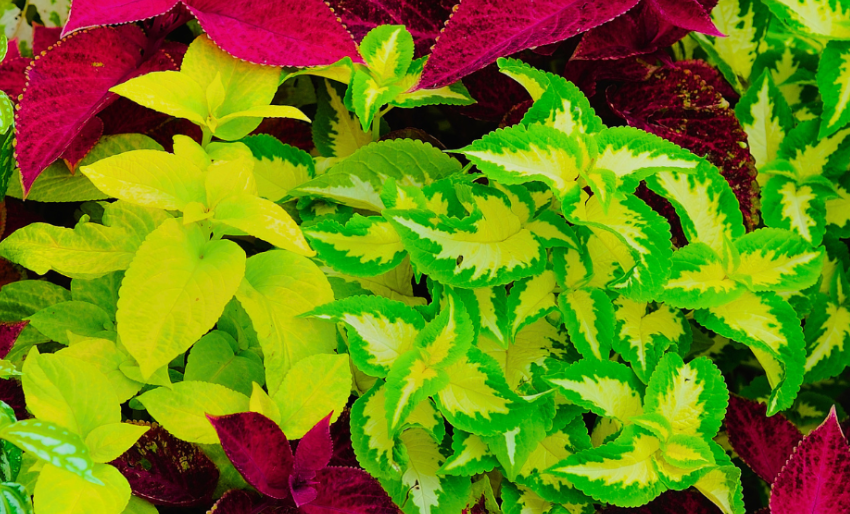
Lime green foliage can instantly brighten a garden, making plants stand out even when they are not in bloom. Unlike flowers, which may appear only for a limited season, colorful foliage can provide visual interest for much longer and can become one of the most noticeable features in a planting scheme.
Plants with lime green leaves come in many different shapes, sizes, and growth habits. Some are compact enough for containers and indoor spaces, while others grow into shrubs, grasses, or larger landscape plants that can fill borders and garden beds.
The bright green color can also be useful when combining different plants. Lime green leaves often create a strong contrast with deep green, purple, burgundy, silver, or blue foliage, helping individual plants stand out rather than blending into the background.
In this article, we look at 17 plants with lime green foliage and explore what makes each one distinctive. The list includes both familiar garden favorites and less common foliage plants, with pictures and useful details to help you identify and choose the right varieties for your space.
Hostas
Hosta ‘Sum and Substance’
‘Sum and Substance’ is a giant hosta with enormous chartreuse-yellow leaves that have a quilted texture and can be well over a foot across. Plants typically stand 30 to 36 inches tall and spread 4 to 6 feet wide, and one record-holding plant measured 114 inches across and 4 feet high. It was named the American Hosta Growers Association’s Hosta of the Year for 2004.
In more sun, the chartreuse leaves change to a medium gold, and it tolerates sun better than most hostas. Lavender flowers appear in midsummer on scapes about 3 feet tall. Clemson Extension notes that the thick, glossy leaves resist slug damage, though the cultivar is more prone to hosta virus X, which has no cure.
Hosta ‘August Moon’
‘August Moon’ is a large hosta with light, yellow-green leaves that turn gold over time if the plant gets enough sunlight. Sources describe it as growing 20 inches to 3 feet tall and up to 5 feet wide. Like most hostas, it’s hardy in zones 3 through 9.
Hostas form clump-like mounds and go completely dormant in fall, and the dying foliage can be removed any time before mid spring. They’re easily divided in spring or fall, though plants may be left alone for years. The gold color develops with sunlight, so avoid deep shade if you want it.
Hosta ‘Gold Standard’
‘Gold Standard’ has heart-shaped chartreuse leaves with a deep green, irregular margin. Garden writers describe the leaves as medium to large and oval, light green with dark green edges. The two-tone pattern makes it a strong contrast plant for shade.
Hostas range widely in size, and Clemson notes that the largest measure 4 feet in height with 20-inch-long leaves. Their leaf colors run from yellow-green to dark green to blue-green. ‘Gold Standard’ sits in the middle of that range, with chartreuse centers and green borders.
Shade Perennials and Groundcovers
Heuchera ‘Lime Rickey’
‘Lime Rickey’ is a coral bells with ruffled, scalloped leaves that emerge a glowing chartreuse in spring and mature to lemon-lime or lime green in summer. It forms a sturdy mound 8 to 18 inches tall and wide, with slender flower stems rising up to 18 inches. Small white flowers appear in late spring to early summer.
It’s hardy in zones 4 through 9, though some sellers list zones 4 through 8, and it’s evergreen in mild winters but herbaceous in colder regions. It does best in partial to full shade, or at least afternoon shade. Trim off withered or tired-looking leaves in spring, and space plants about 18 inches apart.
‘All Gold’ Hakone Grass
‘All Gold’ is a Japanese forest grass with bright golden leaves and narrow green or chartreuse edges, a newer cultivar from Terra Nova Nurseries. It grows only 9 to 14 inches tall and 18 to 24 inches wide, forming a cascading mound that spreads slowly by rhizomes. It makes a good container spiller.
University of Wisconsin Extension notes the grass shows its best gold in partial or dappled shade, while in full shade the color fades to lime green. The species is hardy to zone 4, though many cultivars are listed only to zone 6 and a few have survived in zone 5. In zones 5 and 6, mulch with fall leaves.
Golden Creeping Jenny
Golden creeping Jenny is a trailing groundcover whose almost evergreen foliage changes color with light. University of Wisconsin Extension says the leaves range from lime green to soft chartreuse in shade, to golden yellow in partial or dappled shade, to brassy gold in full sun. It also produces bright yellow, cup-shaped flowers.
It may burn out in full sun in southern areas. Seed capsules form rarely, so the golden form doesn’t spread by seed as readily as the green type. It’s a good trailing plant for containers, window boxes, and hanging baskets, or for cascading over a wall, though slugs can damage the leaves.
‘Gold Heart’ Bleeding Heart
‘Gold Heart’ is a bleeding heart whose pink flowers pop against bright chartreuse leaves. It’s hardy in zones 3 through 9 and grows quickly to about 3 feet in the early-season garden. The color pairing gives spring borders a lively start.
‘White Gold’ offers the same chartreuse foliage with pure white blooms, and ‘Ruby Gold’ has golden leaves with red flowers. Both are early-season plants. Place them where the foliage can shine against darker neighbors.
‘Angelina’ Sedum
‘Angelina’ is a mat-forming, evergreen sedum with needle-shaped foliage that ranges from chartreuse to golden yellow, turning amber in autumn and winter. It grows only 4 to 6 inches tall and spreads 12 to 24 inches, and in a good location it may spread 2 feet in a season. It won the 2002 Iowa State University Perennial Award for Best New Introduction.
Yellow star-shaped flowers appear in summer. Sources list hardiness from zones 3 to 9 or 5 to 9, and it’s drought tolerant, deer and rabbit resistant, and best in full sun with well-drained soil. It does best with little or no foot traffic, since its stems break easily and root where they land.
Shrubs and Conifers
‘Limemound’ Spirea
‘Limemound’ is a compact, rounded spirea whose lime-green foliage emerges yellow to bronze in spring. It grows about 24 inches tall with a 3-foot spread, though some sources list 2 to 4 feet. Flat clusters of hot pink flowers appear from late spring into early summer.
It’s hardy in zones 2 through 9 depending on the source, and the leaves turn red to orange-red in fall. It’s best pruned in late winter once the threat of extreme cold has passed. It attracts butterflies and is not particularly attractive to deer.
‘Little Honey’ Oakleaf Hydrangea
‘Little Honey’ is a compact oakleaf hydrangea found in Olympia, Washington, in 1999 as a branch sport of ‘Pee Wee’. Its leaves emerge golden yellow in spring and fade to chartreuse or lime green in summer heat or in more shade. It grows about 4 feet tall and 5 feet wide over time, and takes its time filling out.
White flower panicles 4 to 7 inches long appear in summer, and the leaves turn red, orange, or mahogany in fall. It’s hardy in zones 5 through 9 and prefers dappled sun or afternoon shade, since hot afternoon sun can burn the foliage. Prune after flowering, since flowers form on old wood.
‘Lemony Lace’ Elderberry
‘Lemony Lace’ is a compact elderberry with finely cut, lacy foliage that emerges bright yellow with red edges in spring and matures to chartreuse. It grows 3 to 5 feet tall and wide according to some growers, though others list 4 to 7 feet. In part shade, the foliage turns lime green.
White flowers appear in spring, before or as the leaves emerge, followed by red fruit in fall that feeds birds but isn’t meant for people. It’s hardy in zones 3 through 7, or 3 through 8 according to some sellers, and it’s deer resistant. It tolerates full sun in northern climates but prefers light shade in warmer areas.
‘Dart’s Gold’ Ninebark
‘Dart’s Gold’ is a ninebark with bright golden spring foliage that gardening writers describe as citrus lime, arching out from the stems. Kansas State University lists it among underused and hardy shrubs, at about 4 to 5 feet tall or up to 8 feet. A smaller version, ‘Tiny Gold’, is available for tighter spaces.
A University of California Master Gardener calls it one of the best shrubs for chartreuse and gold leaves. Plant it where its arching form has room. The bright golden color is a spring feature.
‘Golden Spirit’ Smokebush
‘Golden Spirit’ is a smokebush with deep chartreuse leaves instead of the purple or green of most smokebushes. It’s hardy in zones 5 through 8 and grows as an upright shrub with bold leaves. Site it in full sun to part shade.
It has all the features of a smokebush, but the chartreuse foliage sets it apart. The bold leaves make it a strong accent among darker plants. Garden writers call it one of the varieties with deep chartreuse leaves.
‘Lemon Thread’ False Cypress
‘Lemon Thread’ is a false cypress with chartreuse foliage that is evergreen, so it supplies color year round. It’s hardy in zones 4 through 8. The texture looks bold in the garden.
It’s an excellent companion for Japanese maples and dwarf conifers. The evergreen color is useful in winter, when deciduous chartreuse plants are bare. It makes a good focal point in a mixed planting.
Annuals
‘Margarita’ Sweet Potato Vine
‘Margarita’ is an ornamental sweet potato vine with large, heart-shaped, vivid lime-green leaves on vigorous trailing stems. It grows only 4 to 10 inches tall but spreads 3 to 5 feet, and it’s perennial in zones 9 through 11 but grown as an annual elsewhere. It’s heat tolerant, and in the Deep South it can grow up to 36 inches in a week.
The leaves look lime green in full sun and paler in part shade. Cooler temperatures and low humidity keep it more compact. Ornamental sweet potato vines have been bred for foliage rather than tubers, and the starchy tubers that form are a poor choice for eating.
Houseplants
Neon Pothos
Neon pothos is a vining houseplant with bright chartreuse, heart-shaped leaves, one of several pothos cultivars that Penn State Extension lists ranging from bright chartreuse to deep green and variegated forms. Penn State Extension recommends moderate to bright light and average room temperatures of 60 to 80 degrees Fahrenheit. Direct sun will yellow the leaves.
Growers often suggest about 6 hours of indirect light a day to keep the chartreuse color, since the leaves darken in low light. Trim vining stems with sharp scissors just above a node, or cut up to one-third of the length when repotting. Pothos is often mistaken for vining heartleaf philodendron, though pothos leaves emerge cleanly along the stem without a cataphyll.
Lemon Lime Philodendron
Lemon Lime philodendron is a cascading houseplant with glossy, heart-shaped leaves that emerge electric yellow, sometimes with a pink tinge, and mature to lime green. It grows about 12 inches tall with a 6-foot spread and is hardy in zone 10a, so it’s grown indoors in most of the country. It can live about 10 years under good conditions.
Its leaves are larger than those of neon pothos, which is the plant it’s most often confused with. Sources disagree on growth rate, with some calling it fast and others relatively slow. It does best in bright, indirect light, and the lime-green leaves are susceptible to scorching in direct sun.
Key Takeaways
- Lime green foliage adds a bright, fresh appearance to gardens, borders, containers, and indoor spaces.
- Plants with lime green leaves come in many forms, including trees, shrubs, perennials, grasses, and houseplants.
- Bright foliage can create an attractive contrast when planted alongside darker green, purple, blue, or burgundy-leaved plants.
- Most lime green foliage plants need adequate light to maintain their vibrant color, although light requirements vary by species.
- Soil, watering, temperature, and humidity needs differ widely, so each plant should be grown according to its specific requirements.
- Some lime green plants are naturally colorful, while others may develop brighter or darker foliage depending on growing conditions.