Mortgage Lifter Tomato: The Heirloom That Paid Off a House
Mortgage Lifter is one of the most famous heirloom tomatoes in America, a huge, meaty pink beefsteak with a story as big as its fruit. According to legend, a self-taught West Virginia gardener bred it in the 1930s, sold the seedlings to eager neighbors, and used the money to pay off a $6,000 mortgage. Few vegetables carry a better origin story, and fewer still have a name that tells you exactly why they were grown.
The tomato itself lives up to the attention, though the details are more complicated than the legend suggests. Sources disagree on how large the fruit really gets, how long it takes to ripen, and even who developed it in the first place. Knowing where the numbers diverge helps gardeners set realistic expectations for a plant that needs a long season and strong support.
This guide covers the history of Mortgage Lifter, how it was bred, and how to identify it. It then looks at fruit size and days to maturity, the strains you’ll find today, and the practical challenges of growing a very large tomato. It closes with advice on harvesting, using, and saving seed.
The Legend of Radiator Charlie
The story centers on Marshall Cletis Byles of Logan, West Virginia, better known as Radiator Charlie. Byles ran a radiator repair shop at the bottom of a steep hill where trucks often overheated, and the nickname stuck. A University of California Master Gardener account says he had no formal education, having worked in cotton fields from the age of 4, but he loved to garden.
Byles wanted a large, meaty tomato that could feed a family, even though he had no experience breeding plants. He started with four of the biggest tomatoes he could find: German Johnson, a beefsteak, an Italian variety, and an English variety. Rutgers reports that he crossed the largest tomatoes he could find with the German Johnson, and that the profits from selling plants let him pay off the $6,000 mortgage on his home.
How the Breeding Worked
Accounts describe an unusual setup. Byles planted a German Johnson in the center of a circle of other tomato plants, with Tomato Dirt reporting a total of 10 plants in the circle. Using a baby’s ear syringe, he hand-pollinated the German Johnson with pollen from the plants around it.
He then saved seed from the best fruit and repeated the process for six years until he had a stable variety. That’s a lot of patience for a hobbyist, and it explains why the result was so uniform and productive. The University of California Master Gardeners say he paid off his mortgage in six years, and Restoration Seeds reports that gardeners drove as far as 200 miles to buy his seedlings, which sold for $1 each in the 1940s.
A Competing Origin Story
Not every source agrees that Byles started from scratch. The same University of California account notes that one source claims the cultivar was developed by William Esther of Barboursville, West Virginia, in 1922, and that Esther registered the name in 1932. Another plant guide echoes that claim, saying he registered the name several years before Radiator Charlie and his Mortgage Lifter.
Whether the tomato began with Esther or Byles, the Radiator Charlie version is the one that spread. In 1985, Byles shared his seed with the Southern Exposure Seed Exchange, which recorded an interview with him and has helped keep the variety alive ever since. He lived to be 97, and his grandson recorded him talking about his life and the tomato.
Identifying Mortgage Lifter
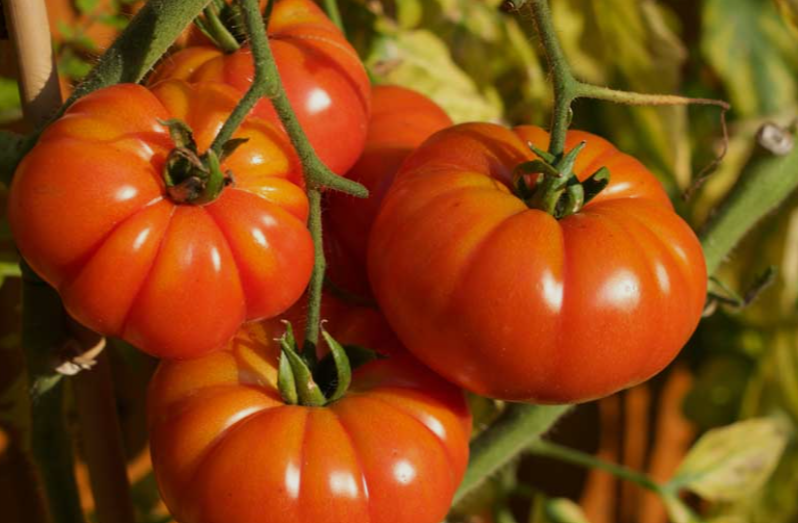
Mortgage Lifter produces large, slightly flattened beefsteak fruit with a pink to pink-red color. Rye Record describes the tomatoes as meaty and flavorful with few seeds, and the plants as productive, disease resistant, and continuing to bear until frost. Tomato Dirt calls it a deep pink beefsteak and notes that it’s especially popular with gardeners in the mid-Atlantic.
The plant is indeterminate, so it’s a vigorous vine that keeps growing and setting fruit all season. North Carolina State’s extension leaflet puts indeterminate tomatoes at 5 to 8 feet tall, and with fruit this heavy, staking is required. A sturdy cage or trellis, tied at regular intervals, keeps the vine from collapsing under its own crop.
How Big Is It Really?
Fruit size is where sources disagree most. The University of California Master Gardeners list the fruit at 16 to 32 ounces, and Tomato Dirt gives 1 to 2 pounds. A Rutgers variety list gives a smaller figure, around 15 ounces for a late-season open-pollinated type.
Other sources claim much larger fruit. Rye Record says the variety averages 2.5 pounds and can reach 4 pounds, and a regional newspaper article on Byles says tomatoes average 2 to 4 pounds. Burpee is quoted as saying fruit can reach up to 4 pounds. The practical takeaway is that 1 to 2 pounds is typical, bigger fruit is possible in a long, warm season, and the biggest numbers come from seed sellers and storytellers rather than trials.
Days to Maturity
Mortgage Lifter is a late tomato. Gardener’s Path lists 79 days from transplant, Tomato Dirt says 85, and the University of California lists 80 to 90. Another plant guide gives 83 days for an improved red strain, and Colorado State University Extension lists the variety at about 95 days.
Colorado State counts anything beyond 81 days as late, which puts Mortgage Lifter solidly in that category. Gardeners in short-season regions should start seeds early and use season extenders. Restoration Seeds reports that in zone 7b it starts seeds in mid-March so the fruit ripens to red rather than staying partly orange, and that the plant needs full sun and warm nights to ripen fully.
Growing Mortgage Lifter
This tomato needs full sun, rich soil, and a long season. Heat matters for fruit set, and the University of Maryland reports that pollination can be disrupted when daytime temperatures exceed 90 degrees Fahrenheit and nights stay above 70. Shade cloth that blocks about 30 percent of sunlight can help during heat waves.
Because the plant is vigorous, give it room and strong support. The University of Georgia notes that staking gives extra security against wind and heavy fruit loads, and Cornell’s research describes pruning suckers as a season-long chore. Arizona’s extension service says unchecked growth shades the fruit and reduces airflow, which matters for large tomatoes that need time and warmth to ripen.
Problems With Giant Fruit
Large-fruited tomatoes are more prone to a few physical problems. Blossom-end rot, the sunken dark patch on the bottom of the fruit, comes from calcium not reaching the developing tomato, and University of Wisconsin Extension says the best prevention is consistent, uniform watering. It recommends mulching 2 to 3 inches deep and avoiding large applications of nitrogen fertilizer.
Cracking is another common issue. The same source says fruit cracking is associated with large variations in soil moisture, and Mississippi State’s extension service notes that inconsistent watering can be the culprit and that some varieties are more prone to cat facing. Uneven watering is the main thing you control, so a drip line or soaker hose helps heavy-fruited plants.
Strains and Modern Versions
The original is now identified as Radiator Charlie’s Mortgage Lifter, while other strains have been bred from it. Tomato Dirt lists Red, Yellow, and Bi-Color versions. The same plant guide describes an improved red version with increased disease resistance and more uniform fruit that ripens to red rather than pink-red, listed at 83 days.
The University of California Master Gardeners describe Mortgage Lifter as fairly disease resistant, with VFN resistance, though that claim varies by strain and source. Before buying, check whether the seed or plant is Radiator Charlie’s original or a modern selection, because the two can differ in color, uniformity, and resistance. The original is open pollinated, which means you can save seed from it.
Harvesting and Using the Fruit
Pick when the fruit has developed full pink-red color. Because the tomatoes are so large, a single fruit can fill a sandwich or a salad, and the flesh is dense with few seeds. Urban Farmer’s seed description calls the fruit exceptional for sandwich slices.
Mortgage Lifter has even been turned into a commercial heirloom pasta sauce, according to the University of California Master Gardeners. Rye Record notes that it consistently wins taste tests. Still, one seed company candidly says the variety isn’t always as great as its name, and ripening problems in cool summers can leave fruit partly orange, so flavor depends on season and site.
Mortgage Lifter vs. Other Big Heirlooms
Mortgage Lifter isn’t the only giant heirloom, and comparing it with its peers puts its numbers in context. Brandywine dates to 1885 and can reach 24 ounces on a plant that takes 80 to 100 days, according to Wikipedia’s variety list, while Cherokee Purple runs 8 to 12 ounces in 70 to 80 days. Mortgage Lifter’s reported 80 to 95 days puts it with the slowest of the group, which explains the long-season warnings.
What sets it apart is the mix of size and reputation rather than any single measurement. Few other heirlooms carry a story so tied to a place and a person. That story is a big part of its enduring popularity.
Why the Story Matters
Mortgage Lifter survives because people kept growing, saving, and sharing it. Heirloom advocate Craig LeHoullier says heirlooms are living things that will go extinct unless they are grown, saved, and shared, a message the University of California Master Gardeners repeat in their account. Byles’s decision to hand his seed to a small seed exchange in the 1980s is exactly the kind of sharing that keeps a variety in circulation.
The tomato also shows how a backyard breeding effort can last. Six years of selection by an amateur produced a stable variety that’s still sold today. For gardeners, that’s a reminder that open-pollinated tomatoes are worth saving.
Seed Saving and Buying Plants
Because the original Mortgage Lifter is an open-pollinated heirloom, seed saved from your plants should produce similar fruit. Southern Exposure Seed Exchange, which received the seed from Byles in the 1980s, is the most often cited source for the Radiator Charlie version. Many seed companies and garden centers carry Mortgage Lifter, so ask whether the line is the original or a selection.
Buying a plant locally can help, since a nursery in your region is likely to stock transplants suited to your season. If you start your own seed, plan ahead for the long season. Restoration Seeds starts its plants in mid-March in zone 7b so the fruit has time to ripen fully.
The Bottom Line
Mortgage Lifter earns its fame with a story that’s as memorable as its fruit. It’s a late, vigorous, heavy-bearing beefsteak that needs sun, strong support, and steady water, and it rewards patience with big, meaty tomatoes. Whether the credit belongs to Radiator Charlie or someone else, this West Virginia heirloom remains a classic worth growing.