Sungold Tomato: The Orange Cherry Tomato Gardeners Plant First
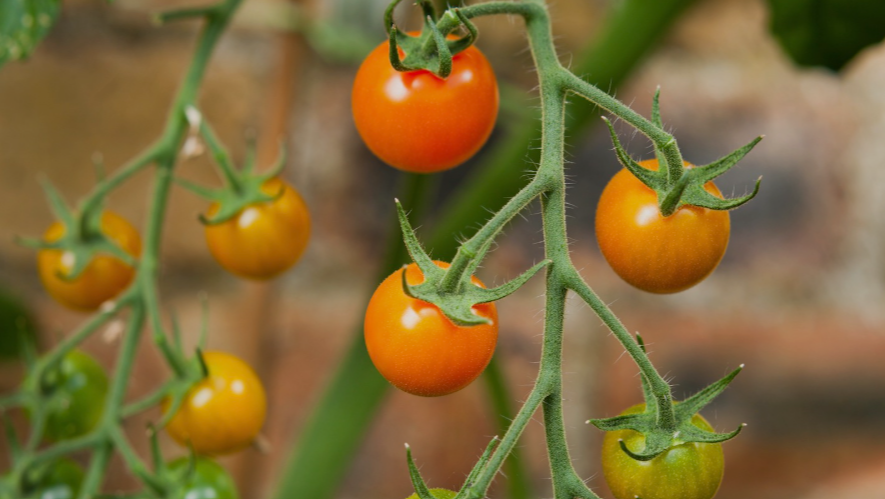
Sungold is a golden-orange cherry tomato that has become the benchmark for sweetness in the home garden. Its bite-size fruits ripen early, hang in long clusters, and taste so sweet and tropical that many gardeners eat them straight off the vine before they ever reach the kitchen. Seed catalogs and extension lists place it at or near the top of nearly every cherry tomato recommendation.
Part of that reputation comes from a short list of measurable traits. Sungold matures in about 55 to 65 days from transplanting, produces clusters of 10 to 20 fruits, and, in a University of California trial of 20 cherry varieties, reached 8 to 10 on the Brix sugar scale, in the same range as the sweetest varieties tested. Its weaknesses are just as specific, namely a tendency to split and no resistance to late blight, which is why growers who plant it do well to know both sides.
This guide covers Sungold’s origin and breeding, how to identify it, and what the sweetness numbers actually show. It then compares it with similar orange and yellow cherries and looks at disease resistance and cracking. It closes with practical advice on growing, supporting, and harvesting the fruit.
Origin and History
Sungold is an F1 hybrid developed by the Tokita Seed Company of Japan. Seed company histories differ on the dates, with one source placing its Japanese release in 1989 and others describing its introduction to British and American gardeners in 1992. In Britain, the seed house Thompson and Morgan distributed it after taste trials dubbed it the sweetest tomato ever, and the Royal Horticultural Society soon gave it an Award of Garden Merit.
Hybrid parentage is closely guarded in the seed trade, so no one outside the breeder knows exactly what went into it. Gardening writers have speculated that the Brandywine heirloom is among its parents, but that remains speculation. What’s clear is that Sungold was bred, not discovered: it’s a first-generation cross, which matters for anyone hoping to save seed.
Identifying Characteristics
Sungold fruits are round, golden-orange cherry tomatoes about half an inch to an inch across and roughly an ounce in weight. In the University of California’s 20-variety cherry trial, Sun Gold fruit averaged about 7.3 grams, placing it among the smaller fruits in the test. The skin is thin, and the flesh is juicy with a flavor most often described as sweet, slightly acidic, and citrusy.
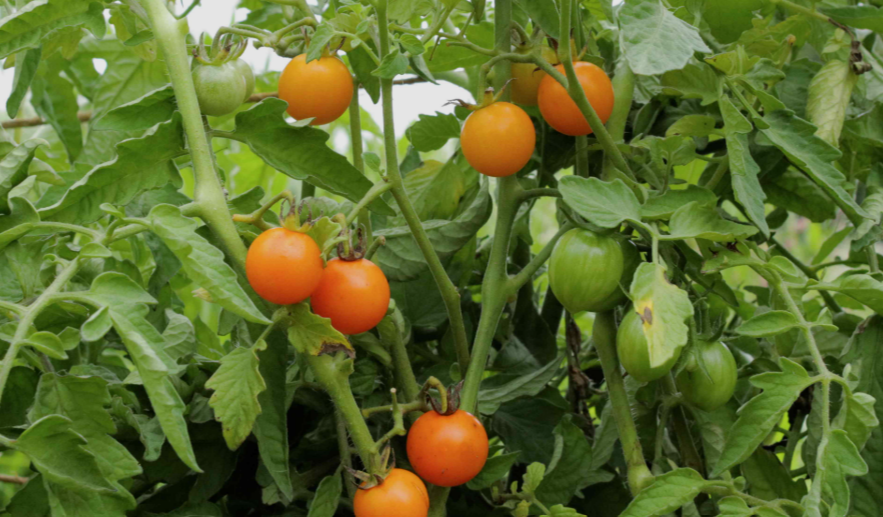
The plant is indeterminate, so it’s a vigorous vine that keeps growing, flowering, and ripening fruit until frost. North Carolina State’s extension leaflet puts indeterminate tomatoes at 5 to 8 feet tall, with a fruit cluster forming on the stem between every third leaf. University of Florida guidance notes that most cherry tomatoes are indeterminate, and Sungold follows that pattern, with fruit borne in long, loose trusses.
How Sweet Is Sungold?
Sweetness in tomatoes is measured in Brix, which approximates the percentage of soluble solids, mostly sugar, in the juice. The University of California Cooperative Extension trial of 20 cherry varieties found that the sweetest ones fell in the 8 to 9 Brix range, with Sun Gold at 8 Brix at one location. At another sampling in the same trial, Sun Gold increased to 10 Brix, while a standard variety, BHN 151, stayed low at 5.0.
Those numbers show two things. First, Sungold is genuinely among the sweetest cherry tomatoes tested, comparable to varieties like Sugar Snack and Santa. Second, sweetness varies with site and season, so the 8 to 10 range is a better guide than any single claim. Ohio State’s extension service calls the fruit very sweet, and Texas A&M AgriLife lists it as a very sweet yellow cherry.
Days to Maturity and Yield
Seed sources list Sungold at about 55 to 65 days from transplanting, and the University of California Master Gardeners list it at 57 days. In Colorado State’s system, anything under 69 days counts as early, so Sungold falls squarely in the early range. That speed makes it a good choice for short-season gardens and for a second planting in warm regions.
Heavy production is a hallmark, but the exact numbers vary by grower and site. The University of California trial recorded yields for each variety, and Sun Gold did not top the yield ranking even as it ranked high for sweetness. A single plant can still bear for months in a long season, and the fruit arrives in clusters of 10 to 20.
Sungold vs. Similar Orange Cherries
Several cherry tomatoes compete directly with Sungold. Sunsugar is an orange hybrid that University of Delaware Botanic Gardens lists as indeterminate at about 62 days, and Ohio State calls it medium-sized and very sweet. Sweet Gold, which the University of California lists at 70 days, grows 5 to 7 feet tall and has a full, sweet flavor.
Washington State University Extension notes that a newer variety, Esterina, is sweeter and more crack resistant than Sungold. A red version marketed as Sungold Select Red followed the original yellow-orange fruit. Which one is best depends on whether you value maximum sweetness, crack resistance, or color.
What the Flavor Tastes Like
Sungold’s flavor is the reason it’s grown. Plant guides describe it as very sweet with a slight acidity and a citrusy, almost tropical note, which balances the sugar instead of making it cloying. That balance of sugar and acid is what keeps people reaching for another fruit.
The University of California trial adds a useful detail: some of the sweetest cherry tomatoes were also the smallest. Fruit weights for the sweetest varieties ranged from 4.5 to 8 grams, with Sun Gold at about 7.3 grams. Small fruit concentrates sugar, so a Sungold tends to taste sweeter than a larger slicer even at the same ripeness.
Where Sungold Struggles
No variety is perfect, and Sungold has three clear weak spots. It splits when watering is uneven, it has no resistance to late blight, and its pollination can suffer when temperatures stay above 90 degrees by day and 70 by night. Gardeners in humid, rainy, or very hot regions may find a different variety performs better.
Knowing the limits helps you plan around them. A rain shelter protects against late blight in wet climates, shade cloth blocking about 30 percent of sunlight eases heat stress, and steady watering reduces splitting. For gardeners who need crack resistance above all, Washington State’s suggestion of Esterina is a good alternative.
Disease Resistance
Sungold carries resistance to tomato mosaic virus and Fusarium wilt. Tokita lists high resistance to tomato mosaic virus races 0 to 2 and Fusarium wilt race 1, while some US seed catalogs describe the virus resistance with different terminology. One European source also reports resistance to tomato yellow leaf curl virus.
It has no resistance to late blight, so gardeners in wet regions should consider a rain shelter or good airflow. Standard cultural practices still matter. The University of Georgia notes that light pruning in a dense canopy lets air and sun reach the plant, and the same principle applies to a vigorous cherry vine like Sungold.
The Cracking Problem
Sungold’s thin skin gives it a delicate bite, but it also makes the fruit prone to splitting. Seed company guidance links cracking to uneven and excessive watering, and Gardenia.net advises choosing Sungold when exceptional sweetness matters more than crack resistance or seed saving. Washington State’s note that Esterina is more crack resistant implies that Sungold splits more readily.
Several practical steps help. Water evenly, mulch to hold moisture steady, and harvest fruit promptly once it turns fully orange. Because splitting follows uneven moisture, a drip line or regular schedule beats occasional heavy soaking.
Growing Sungold
Sungold needs full sun and rich, well-drained soil. Start seeds indoors, where tomato seeds typically germinate within 5 to 10 days at 70 to 80 degrees Fahrenheit, and transplant outdoors after the last frost. Because it’s indeterminate, it needs a strong stake, cage, or trellis, and the University of Georgia notes that staking gives extra security against wind and heavy fruit loads.
Heat matters too. The University of Maryland reports that pollination and fruit formation can be disrupted when daytime temperatures exceed 90 degrees Fahrenheit and nights stay above 70, and shade cloth blocking about 30 percent of sunlight can help. Because Sungold matures in about 57 days, it’s a good choice for warm areas that enjoy a second season of tomatoes in fall. In containers, Mississippi State’s extension service recommends a pot at least a foot deep with drainage holes. Mississippi State also suggests feeding container tomatoes with a water-soluble fertilizer about every 2 weeks. Keep in mind that Sungold is a full-sized indeterminate vine rather than a dwarf, since Arizona’s extension service notes that only dwarf varieties stay at 3 to 4 feet, so a large pot and a tall support are both needed.
Pruning, Support, and Harvest
Pruning an indeterminate cherry tomato is a season-long task. Cornell’s research describes removing suckers to keep the plant manageable, and Arizona’s extension service notes that pruning can increase the size and number of fruits while unchecked growth shades the fruit and reduces airflow. High-yielding cherry tomatoes like Sungold are reported to grow well with several shoots, so a looser approach than a single stem is common.
Harvest when the fruit is fully golden-orange and comes off the stem with a gentle pull. The tomatoes keep ripening in long trusses, so expect to pick every few days once production begins. Ripe fruit is most often eaten fresh as a snack or tossed into salads, which is where its sweetness shows best.
Seed Saving and Buying Plants
Because Sungold is an F1 hybrid, seeds saved from your plants won’t produce identical fruit. Seed from a hybrid can revert toward either parent, so the sweetness, color, and disease resistance you liked may not carry over. Gardeners who want true Sungold should buy fresh F1 seed or plants each year.
Look for the name Sungold or Sun Gold on the label, since both are used and refer to the same hybrid. Be careful with similar names such as Sunsugar and Sweet Gold, which are different varieties. Reputable sellers list the F1 designation, and extension plant lists are another good guide to local performance.
The Bottom Line
Sungold earns its popularity with early, heavy, sweet fruit that ranks among the best cherry tomatoes in university trials. Its trade-offs are just as clear: thin skin that splits with uneven watering, and no resistance to late blight. Give it sun, steady water, strong support, and a little pruning, and it will repay you with golden clusters from midsummer to frost.